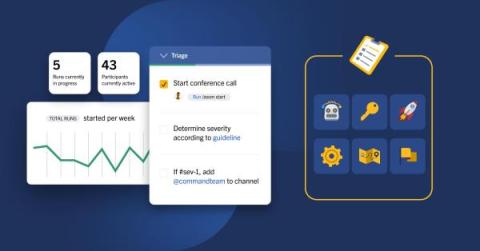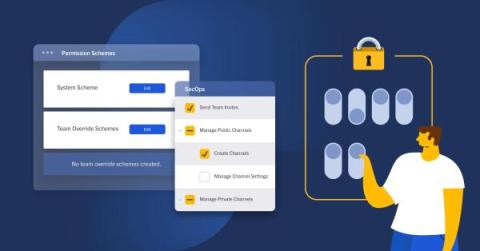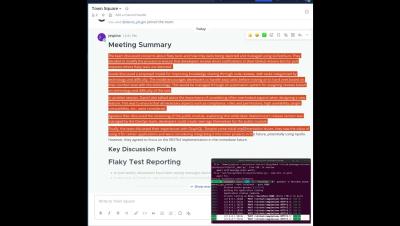
Mattermost Playbooks are configurable checklists that power team workflows with automation and real-time messaging. At a high level, Playbooks help teams work through recurring workflows efficiently, making sure all important tasks are taken care of while keeping teams aligned.
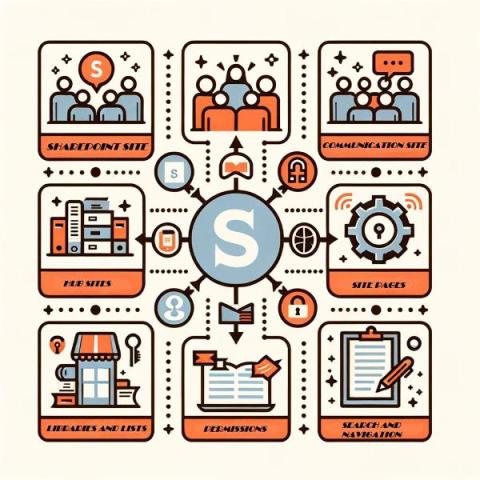
In the realm of collaborative digital environments, SharePoint Online emerges as a quintessential platform fostering seamless interactions, data sharing, and project coordination among teams. As part of the Microsoft 365 suite, it encapsulates a rich array of features tailored to meet the diversified needs of modern organizations.

Understanding limitations and challenges scaling Prometheus in modern cloud-native environments. Here we delve into long-term retention, downsampling, high availability, and other challenges.
This third part of the “Implementing Backstage” series explains how to integrate Backstage with existing tools and plugins. If you’re at an earlier stage of your Backstage implementation, the two previous installments in this series focus on getting started and using the core features. If you’re looking for a more general introduction to Backstage, you can read the first article in the “Evaluating Backstage” series.
The Edinburgh South Gyle colocation data centre is the largest and most connected in Scotland, and one of the most connected north of London. In fact, there are 27 carriers available at the centre — more than double the number that any of our other data centres have. In fact, it’s so large and well-connected that we refer to it as the UK’s Northern Connectivity Hub. But what does that mean for your business - and how can you benefit from the colocation services available?
While some businesses operate entirely in the cloud, some still have IT infrastructure they need to house. Others are moving from solely cloud environments to a colocation model. From air conditioning systems to networking facilities, there is a lot that goes into looking after IT infrastructure.
As businesses continue to expand their digital footprints, the demand for efficient and secure data management solutions has never been greater. Colocation, the practice of housing servers and IT infrastructure in third-party data centres, has emerged as an attractive option for enterprises seeking enhanced scalability, reliability, and cost-effectiveness. However, before making a decision on colocation, it is vital to carefully assess the financial aspects associated with this service.
For CFEngine we manage several public and private repositories of code in GitHub for our Open Source and Enterprise products. In order to ensure quality we run many checks on the code both with nightly builds as well as on each pull request. We use a Jenkins server for nightlies which also includes more extensive deployment tests on all of the platforms we support. Previously we had used Travis for many of these checks but that system started to show its age and limitations.
In a rapidly expanding, highly distributed cloud infrastructure environment, it can be difficult to make decisions about the design and management of cloud architectures. That’s because it’s hard for a single observer to see the full scope when their organization owns thousands of cloud resources distributed across hundreds of accounts. You need broad, complete visibility in order to find underutilized resources and other forms of bloat.
Operational resilience is an increasing area of focus and scrutiny for regulators of the banking and financial services industry. In the European Union, the Digital Operational Resilience Act (DORA) looms on the near horizon - with equivalent regulatory frameworks slowly but surely rolling out across the globe.
In an era dominated by data-driven decision making, monitoring tools play an indispensable role in ensuring that our systems run efficiently and without interruption. When considering tools like Netdata and Prometheus, performance isn't just a number; it's about empowering users with real-time insights and enabling them to act with agility.
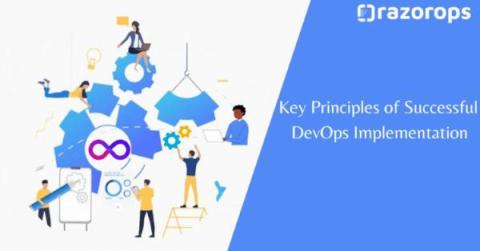
Software development, DevOps has emerged as a game-changer. It’s not just a buzzword; it’s a cultural and technological shift that allows organizations to accelerate their software delivery while maintaining high quality and reliability. However, successful DevOps implementation is not merely about adopting a set of tools or following a predefined set of rules. It’s a holistic approach that requires a deep understanding of key principles.
In the dynamic landscape of modern IT operations and Incident Management, choosing the right tool is paramount to ensuring the resilience of your organization. Opsgenie, a popular Incident Response and Alerting platform, has been a go-to choice for many. However, as businesses grow and requirements evolve, exploring Opsgenie alternatives becomes essential in the quest to find the perfect fit for your unique operational needs. In this blog, we'll embark on a journey to uncover and evaluate some compelling alternatives to Opsgenie, helping you navigate the vast sea of options and make an informed decision that aligns perfectly with your team's workflows and objectives.
October might be a spooky month, but we’re doing our best to make incidents less scary. We released a number of updates this month that focus on two main areas: Let’s jump in.
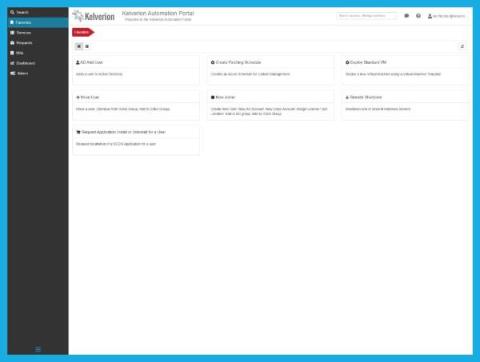
The shift in remote working has seen an increase in demand to utilize smartphones to host meetings, check emails and message colleagues on Microsoft Teams. Keeping up with this trend, the Kelverion team have created a mobile app version of our popular Self-Service Automation Portal, which previously has been a web-based solution typically used on a desktop device. The portal is available for iPhone devices and can be downloaded from iOS app store.
SharePoint Online (SPO) has become a cornerstone for many organizations seeking a robust, scalable, and collaborative platform. It’s a place where teams can seamlessly work together, share documents, and enhance their workflow efficiency. However, while SPO offers a plethora of benefits, the cost associated with its usage can be a potential hurdle, especially for businesses with large volumes of data.
Missed the last Netdata updates? Here is what is new.
Don: The debate is over - how should you structure your software teams? That question is now answered in this year's State of DevOps report 2023. Other questions answered include: How does AI affect my company and team performance? How can we quantify the impact of culture on performance burnout? What even is culture in the first place? All these things are included in the State of DevOps report 2023. We have a very special guest, Eric Maxwell from the DORA group, to offer his takes on the report.
Microsoft SharePoint stands as a robust web-based collaboration platform that has become indispensable for a myriad of organizations aiming for a streamlined and effective workflow management. Its seamless integration with Microsoft 365 unfolds a vista of functionalities, among which the feature of real-time notifications or alerts shines prominently.
From an IT perspective, technologists generally agree that the ability to monitor and have visibility into the IT stack across every one of their applications is essential with the now-permanent remote and hybrid work models. It also stems from the fact that digital transformation and IT growth has accelerated by seven years since the pandemic in 2020, analysts say.
The fast-paced nature of modern software development means developers are capable of deploying changes to production multiple times a day. But, while DevOps allows development teams to deliver new features faster, increased deployment frequency can make it more difficult to stay on top of security threats. It only takes one malicious or incompetent change to dramatically increase the risk exposure of an application.
What better motivation to start adopting a technology than the need to completely replace the alternative. From a world driven on limited resources like gas, coal, and oil to wind, hydro, nuclear, geothermal, and solar… we find ourselves, as a species, evolving past a first generation we envisioned as abundant, but turned sparse. Adopting IPv6 networking is another version of this same story.
In the modern digital workspace, collaboration and security are paramount. Microsoft has been at the forefront of providing solutions that enhance these aspects of organizational operations. Two such solutions are SharePoint Online and Azure Active Directory (Azure AD). SharePoint Online, a cloud-based service, empowers organizations to create, share, and manage documents and content in a collaborative environment.
From the science fiction fantasies of the mid-20th century to today's reality, AI's journey has been a blend of innovation and apprehension. As we contemplate the future of AI, it’s interesting to look back at the early days of AI, how far it’s come and what we might yet expect. AI has the potential to be of huge benefit but could be disruptive in the wrong hands, particularly in the realm of cybersecurity. A Brief History and Development of AI.
Our 1st blog in our series on securely consuming OSS. Today, I'll give an overview of some of the most common types of attacks from consuming OSS. Open-source software (OSS) fuels innovation. Over 96% of commercial applications rely on at least one OSS component (Synopsys, 2023). At Cloudsmith, we champion OSS and understand its indispensable role in today's software landscape. However, the escalating threat of supply chain attacks targeting OSS demands a robust defence.
systemd journals play a crucial role in the Linux system ecosystem, and understanding the importance of the logs contained within is essential for both system administrators and developers.
In the digital era, effective document management is a cornerstone for operational efficiency in organizations. With a surge in data generation and collaboration needs, having a robust system to store, manage, and share documents is imperative. SharePoint Document Libraries emerge as a pivotal tool in this regard, offering a myriad of features to streamline document management, enhance collaboration, and uphold information governance standards.

You'll often hear the term "containers" used to refer to the entire landscape of self-contained software packages: this includes tools like Docker and Kubernetes, platforms like Amazon Elastic Container Service (ECS), and even the process of building these packages. But there's an even more important layer that often gets overlooked, and that's container images.
As systems increasingly shift towards distributed architectures to deliver application services, the roles of monitoring and observability have never been more crucial. Monitoring delivers the situational awareness you need to detect issues, while observability goes a step further, offering the analytical depth to understand the root cause of those issues. Understanding the nuanced differences between monitoring and observability is crucial for anyone responsible for system health and performance.
Organizations in Europe are currently facing the challenge of reducing energy consumption and improving sustainability in light of the European Green Deal. The EU Green Deal has been approved by the European Commission which focuses on decreasing greenhouse gas emissions by 55% compared to the 1990 levels by 2030. Europe is striving to be the first climate-neutral continent by 2050.
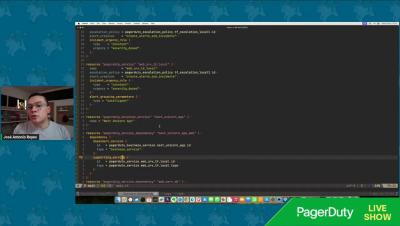
Escalation policies are essential for making sure that incidents are quickly addressed and resolved. They provide a systematic approach to automate alerts, guaranteeing that no incident goes unnoticed. Let’s get you started, shall we? An escalation policy is a way to automate alerts and assure that incidents are never missed. The first point of contact for an incident is through an alert that is sent according to the escalation policy.
CloudNatix is an infrastructure monitoring and optimization platform for VMs, containers, and other cloud resources. Customers can use CloudNatix’s Autopilot feature to automatically configure and run infrastructure optimization workflows that allocate and run their resources more efficiently. CloudNatix can take action to auto-size Kubernetes and VM workloads, defragment Kubernetes clusters, and create harvest pods from unused VMs, among other key optimizations.

Build or buy? An age-old decision that gets made dozens of times a year. It’s quite possibly one of the most important decisions you make as an company. It impacts roadmaps, productivity, team structure, and customer satisfaction (you know, just a few little things). There are a lot of factors to consider, one of the most prominent being cost. So, what exactly are the costs you need to consider when building your own incident management solution?
In today’s digital-first business landscape, collaborative platforms like Microsoft SharePoint are not merely a convenience but a necessity. They facilitate seamless interaction, information sharing, and collective project management across geographically dispersed teams. However, the enhanced connectivity and accessibility come with a set of security challenges.
Building a culture of incident response is not just about solving problems; it is about creating stronger teams, empowering individuals, and fostering a more resilient and thriving workplace. How do you achieve this culture and improve your incident management processes? Let’s dive in;
It is now the de facto standard for companies to operate across numerous regions and cloud-accounts. The reasons for this vary, and depending on where you sit in the organization, these reasons may be more or less apparent to you.
Nagios is an open-source monitoring system that has become indispensable for system administrators and DevOps teams across the world. However, like any other software, you’re bound to come across errors with Nagios. In this article, we’re going to take a look at some common errors and how to solve them, along with the pros and cons of Nagios, and why MetricFire is the perfect alternative for monitoring.
Dear Current and Future Moogsoft Customers, I am happy to announce that Dell Technologies has acquired Moogsoft on September 17, 2023. This is good news for existing and future Moogsoft and Dell customers. Earlier this year Moogsoft embarked upon raising capital to accelerate growth.
As Kubernetes continues to dominate the container orchestration landscape, ensuring the reliability and stability of applications running on this platform is paramount. Testing in a Kubernetes-native environment demands specialized tools that understand the intricacies of containerized deployments. Enter TestKube, a powerful testing framework designed specifically for Kubernetes.
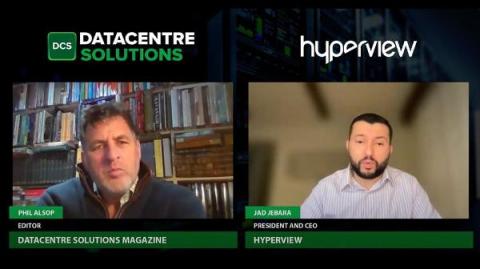
In an exclusive Digitalisation World podcast, our CEO, Jad Jebara, delves deep into the ever-evolving hybrid infrastructure landscape. Join us as we explore how companies are strategically optimizing application performance and the infrastructure that fuels their digital ambitions.
Network Operations might never be the same. But then again, why would anyone want it to be? The power of automation and orchestration can bring incredible value to the Network Operations Center (NOC), including the business-critical call to get proactive and ahead of the incidence response and management game. It’s more than a towering volume of events – it’s the complexities involved, too.
Platform engineering has been one of the hottest keywords in the software community in recent years. As a natural extension of DevOps and the shift-left mentality it fosters, platform engineering is a subfield within software engineering that focuses on building and maintaining tools, workflows, and frameworks that allow developers to build and test their applications efficiently.
In this second episode, we explore a crucial element of your migration strategy - the Application Owner Interviews, a feature within Tidal Accelerator. These interviews are a game-changer, helping you make your migration not just IT-efficient but also business-driven.
In the modern web-app space, there’s been a trend going around that I like to describe as “getting back to basics”. It seems as though over the years, the tooling and complexity around building web-apps has gotten more and more complex. In that time, we’ve strayed further from browser primitives into highly abstracted and javascript-heavy solutions to solve problems our browsers solved back in the 90’s.
Boosting the transparency of your load balancer traffic is advantageous. Web applications continually pass information back and forth, yet some of this important data is often hard to get during transit. And while the perceived “black box” nature of networking seems overwhelming, what if you could peek behind the curtain to better understand your traffic?
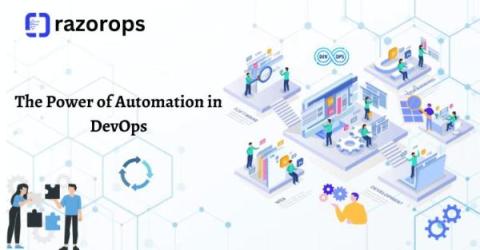
In the ever-evolving world of software development and operations, DevOps has emerged as a game-changer. DevOps, short for Development and Operations, is a set of practices and principles that bridge the gap between these two traditionally siloed domains, fostering collaboration and accelerating the delivery of high-quality software. At the heart of DevOps lies automation, a powerful force that revolutionizes the way software is developed, tested, and deployed.
SharePoint Online (SPO) has become a linchpin in fostering collaborative work environments in the modern digital age. Its robust features provide a platform where individuals can share, manage, and collaborate on content seamlessly. As SharePoint Online continues to evolve, understanding its limits and boundaries is crucial for administrators to ensure optimal performance and user satisfaction.
Most development teams know that testing the application layer of a system (a.k.a the codebase) is of vital importance. Testing the data layer (the database) is just as important. To perform database testing, you construct queries to assert and validate the database operations, structures, and attributes required by the application connecting to the database.
Office 365, also known as O365, has become a cornerstone for enterprise productivity. With different plans such as Office 365 E1, E3, and E5, organizations can tailor their licensing to meet specific needs. This article delves into the nuances of Office 365 Enterprise Licensing, aiming to provide a clear understanding to help you make an informed decision.
Group Messages (GMs) allow for quick and/or infrequent interactions with three to seven users. In Mattermost v9.1, there are two new quality-of-life updates aimed at enhancing user experience.
It's one of the most dreaded words among Kubernetes users. Regardless of your software engineering skill or seniority level, chances are you've seen it at least once. There are a quarter of a million articles on the subject, and countless developer hours have been spent troubleshooting and fixing it. We're talking, of course, about CrashLoopBackOff.
In today’s increasingly data-driven business landscape, security and compliance are more important for enterprise software than ever before. In an age where high-profile data breaches and regulatory violations seem to make headlines more frequently, enterprises must prioritize the protection of sensitive information while ensuring compliance with an exceedingly complicated labyrinth of legal and industry-specific requirements.
Access-related challenges form a significant portion of the common issues encountered within SharePoint environments. These challenges can manifest in numerous forms, including denied access to resources, unresponsive buttons, or dysfunctional links. Unveiling the root causes and solutions to these access challenges is crucial for maintaining a seamless SharePoint user experience.
Chances are, you’re familiar with the strategy of adding an additional “9” to service level agreements (SLAs) to boost the experiences your organization provides. With plenty of ways to do so, there’s one that particularly stands out among the others: Service Blueprinting. Banking executive Lynn Shostack in 1984 first described a service blueprint in a Harvard Business Review publication.
The Digital Operational Resilience Act (DORA) is set to significantly impact the financial sector. Coming into full effect in 2025, this EU regulation will set new standards for information and communications technology (ICT) risk management. In this landscape, how can financial firms ensure they’re not only compliant, but also operationally resilient?
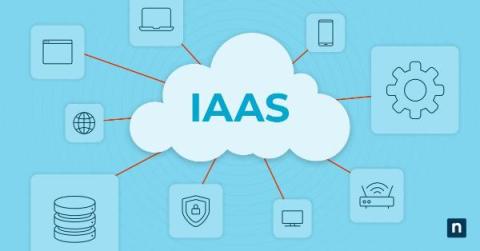
In the ever-evolving landscape of cloud adoption, resource virtualization has emerged as a transformative force, revolutionizing the way businesses operate and offer services. At the heart of this revolution lies the concept of Infrastructure as a Service (IaaS), which offers a spectrum of service models designed to meet the diverse needs of every company.
Monitoring CPU temperature is crucial for ensuring the smooth and efficient functioning of computer systems. As processors become more powerful, they generate more heat, which can lead to performance issues, system instability, and even hardware damage. Overheating is a common problem faced by many computer users, especially those who engage in resource-intensive tasks like gaming or running complex software.
Efficient monitoring and visualization of performance metrics are paramount for ensuring seamless user experiences and reliable system operations. Grafana and Graphite, two powerful open-source tools, form an unbeatable combination when it comes to monitoring and analyzing time-series data. Grafana provides a robust and flexible platform for visualizing data, while Graphite acts as a scalable and efficient backend for storing and retrieving metric data.
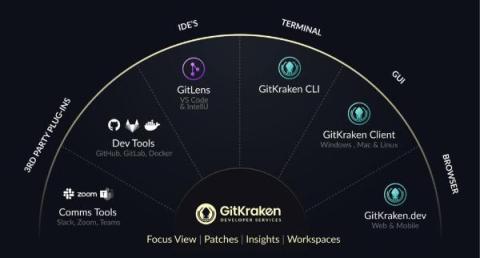
Hey, Matt from GitKraken here. I’ll admit, we’re a tad obsessed with developer productivity. Tools like GitKraken Client and GitLens are great for helping any developer go further, faster. But building software is most often a team sport. So over the past year, customers of all sizes have been imploring us to fill two important voids.
Are your CI/CD pipelines at risk? They might be if you use long-lived, static credentials and tokens. Long-lived, static credentials and tokens are one of the most common causes of data breaches in cloud environments. CI/CD tools need access to cloud services to publish artifacts, deploy software, and access resources on their cloud provider. So, they need credentials. It's tempting to hard-code them. But that's a bad idea.
To excel in embedded development in 2023, it is essential to have a solid understanding of build systems, continuous integration, and deployment strategies. This workshop by Percepio training partner Jacob Beningo aims to provide a comprehensive primer on these practices, equipping participants with the knowledge and skills necessary to tackle complex firmware projects with confidence.
In today’s digital age, the need for efficient document storage and collaboration tools is more pressing than ever. Microsoft, being a leader in the enterprise solutions sector, offers two standout products in this category: SharePoint and OneDrive. While both tools hail from the same Microsoft family and integrate seamlessly with other Microsoft 365 apps, they serve distinct purposes. Let’s delve deeper into the nuances of each and understand their primary differences.
This second last part of the “Implementing Backstage” series explains how to use the Kubernetes plugin in Backstage using real-world scenarios. The previous installments covered getting started, using the core features, integrating with existing tools using plugins, and security and compliance. If you’re entirely new to Backstage and want to learn more, you can read the first entry in the “Evaluating Backstage” series.
This final part of the “Implementing Backstage” series focuses on how to deploy Backstage on Kubernetes. This tutorial is a direct continuation of Using the Kubernetes Plugin in Backstage, which you should complete before tackling this one. The other installments in this series covered getting started, using the core features, integrating with existing tools using plugins, and security and compliance.
This is the fourth part of the “Implementing Backstage” series and explores how to ensure your Backstage application is secure and how Backstage can contribute to more secure practices in general. The previous installments focused on how to get started, using the core features, and integrating with existing tools using plugins. If you’re unfamiliar with Backstage and need an introduction, check out part one of the “Evaluating Backstage” series.
Amazon Simple Email Service (SES) is a cost-effective email service provided by AWS. It is by far the cheapest option available out there. Comparing the cost of sending emails with SES and other services like SendGrid or Mailchimp, it can be 100x cheaper. However there is a catch. Using SES directly, you will not get some of the features you might need to control the bounce rate of your emails.
Kubernetes integrations are now available for AutoSys, dSeries, and Automic Automation. It wasn’t that long ago that teams in many organizations started dipping their toes into the world of containers and microservices. It didn’t take long for this approach to application development and orchestration to take hold, and for Kubernetes to emerge as a dominant, broadly used technology.
As software engineers, we all know that troubleshooting often involves sifting through heaps of data points — scanning metrics, reading logs, checking resource status and analyzing events. We manually connect the dots, and if we're experienced enough, we might spot an issue that's about to become a problem. At StackState, we've faced these same challenges.
Telecommunication (Telco) companies everywhere share a similar vision: future-proofing their organizations for an unpredictable era of challenges and opportunities in an unreliable economy. Rebounds from the pandemic started out slow and patchy, and leading up to present day, moves like inflation-laced price increases and merger and acquisition (M&A) deals have ramped up share prices across the global telecoms sector to climb back up from 2020’s rock bottom.
Kubernetes has been around for nearly 10 years now. In the past five years, we’ve seen a drastic increase in adoption by engineering teams of all sizes. The promise of standardization of deployments and scaling across different types of applications, from static websites to full-blown microservice solutions, has fueled this sharp increase.
In this article, we are going to discuss how to set up Kafka monitoring using Prometheus. Kafka is one of the most widely used streaming platforms, and Prometheus is a popular way to monitor Kafka. We will use Prometheus to pull metrics from Kafka and then visualize the important metrics on a Grafana dashboard. We will also look at some of the challenges of running a self-hosted Prometheus and Grafana instance versus the Hosted Grafana offered by MetricFire.
Grafana is one of the most popular dashboarding and visualization tools for metrics. The Grafana Dashboards are a very important part of infrastructure and application instrumentation. In this post, we will deep dive into Grafana dashboards. We will create a Grafana dashboard for a VM’s most important metrics, learn to create advanced dashboards with filters for multiple instance metrics, import and export dashboards, learn to refresh intervals in dashboards and learn about plugins.
In the realm of collaborative platforms, SharePoint Online stands as a robust solution that continually evolves to meet the dynamic needs of modern enterprises. The 2023 updates have notably elevated the platform’s capabilities, particularly in terms of file and document management and integration with other Microsoft 365 offerings.
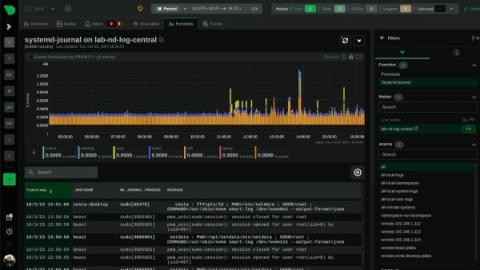
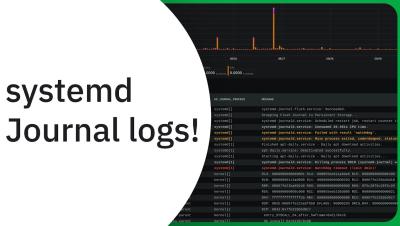
Today, we released our systemd journal plugin for Netdata, allowing you to explore, view, search, filter and analyze systemd journal logs. Like most things about Netdata, this is a zero-configuration plugin. You don’t have to do anything apart from installing Netdata on your systems.This is key design direction for Netdata, since we want Netdata to be able to help even if you install it mid-crisis, while you have an incident at hand.
According to the latest Crowdstrike report, in 2022 cloud-based exploitation increased by 95%, and there was an average eCrime breakout time of 84 minutes. Just as significantly, in 2021, the Biden administration passed an executive order to improve the nation’s cybersecurity standards. There are also upcoming laws like DORA in the European Union. So, increased cyber attacks and legislative pressures mean you need to (a) actively protect against threats and (b) prove that you are doing so.
Software development, the evolution of DevOps has been nothing short of revolutionary. What began as a simple concept has transformed into a best practice that is reshaping the way organisations develop, deploy, and maintain their software. In this blog post, we will take a journey through the evolution of DevOps, from its humble beginnings to its current status as an indispensable part of modern software development.
Many DevOps teams work proactively to meet security and compliance standards. They consider security best practices when developing software with open source components, scanning code for vulnerabilities, deploying changes, and maintaining applications and infrastructure. Security is a key feature of many of the tools they’re using, and the policies and industry standards they’re following.
Today Canonical announced the release of Ubuntu 23.10, codenamed “Mantic Minotaur”, available to download and install from https://ubuntu.com/download. “In this release we’ve raised the bar for what secure by default means for Ubuntu and set the stage for our next Long Term Supported release.” said Oliver Smith, Senior Product Manager for Ubuntu at Canonical.
If you’re sick with a cold then measuring your body temperature is a wise move or maybe if things are really bad a visit to a doctor might result in testing vs. what are considered “normal” levels in order to diagnose the issue; seasonal flu or infection? To improve our health after picking up a bad bug, we do things that affect our situation back to normal levels once again where we can then declare ourselves healthy.
The intersection of economic uncertainty and digital transformation presents a unique challenge for businesses. With the fear of a recession looming overhead, there’s no doubt that choppy waters await, but what does this mean for IT when tech spending can significantly impact the bottom line? While IT spending is a priority for many, businesses are still seeking ways to reduce non-essential spending and upgrade outdated infrastructure.
While some smaller companies may only need to use standard access controls to shore up systems, large organizations — particularly those with strict security, confidentiality, and compliance requirements — often require advanced functionality that gives them more authority over which users can access what systems and when.
The benefits of automating deployments for your Java Spring Boot application are undoubtable. Not only is it possible to set up images and run tests or compatibility checks before updating the production environment, but CI/CD providers like CircleCI take a step further by streamlining the entire delivery process from code changes to deployment. Many teams assume that the specifics of their development stack or deployment process will make automation difficult to achieve.
Grafana is a visualization tool that allows you to see and analyze all of your metrics in one unified dashboard. Grafana can pull metrics from any source, display that data, and then enable you to annotate and understand the data directly in the dashboard. Grafana dashboards are designed to allow you to visualize information in a ton of ways, from histograms and heatmaps to world maps. Grafana also has an alerting feature that can communicate with you through Slack, PagerDuty, and more.
You've just made it through a particularly tough incident. It was a short outage affecting a subset of customers, so not exactly the end of the world, but bad enough that it involved multiple people across a number of teams to resolve. Either way, the incident was well managed, and the dust has settled. Now what? Most guidance would say that putting together a post-mortem document is a good idea, given the severity of the incident. You've also done this, so what's next?
The G2 Fall 2023 Reports are in! And while leaves are on the verge of tumbling downward, HAProxy's acclaim across multiple categories, market levels, and global segments has only risen. For companies looking for—or migrating from—a load-balancing solution, HAProxy delivers simple adoption, scalable performance, strong security, and observable operation. Altogether, across six product categories HAProxy featured in 58 reports and won 30 badges, including “Momentum Leader”.
In today’s digital age, the most effective organizations are using data to fuel innovation and accelerate business strategies. Data continues to be at the heart of business growth. Organizations increasingly rely on technology to manage and store their data. Questions about ownership, control, and security have emerged — leading to the rise of a concept known as data sovereignty. In this post we’ll explore.
A Dark Network Operations Center (NOC) is one that runs with no IT staff … at least that’s how it’s been defined up until now. But there’s more to interpret. Large, complex networks rely on the NOC — the core of network infrastructure — to keep them healthy and resilient. The NOC’s function allows employees, customers, partners, and other network users to rest a bit easier, and its integrity and accuracy gives them peace of mind.
Continuous integration (CI) is the process of integrating changes from multiple contributors to create a single software project. A key component for a smooth CI pipeline is testing. Tests prove that the code does exactly what it says on the tin and that it’s safe to merge the code into the central repository. Tests also anticipate edge cases and ensure that the code handles such cases in a deterministic manner.
The new law, SB 253, aims to bring more transparency and accountability to the public about how big businesses contribute to climate change. It also hopes to encourage companies to reduce their emissions and align with the state’s ambitious climate goals. By 2030, California plans to lower its greenhouse gas emissions by 40% below what they were in 1990.
One of Kubernetes' killer features is its ability to seamlessly update applications no matter how large your deployment is. Did a developer make a code change, and now you need to update a thousand running containers? Just run kubectl apply -f manifest.yaml and watch as Kubernetes replaces each outdated pod with the new version.
In the digital world, SharePoint holds a significant position, being a highly robust platform that caters to a multitude of collaborative needs. Among the rich features it offers, SharePoint Groups stand out as a fundamental building block for creating a conducive collaborative environment. These groups not only enhance interaction among team members but also provide a structured framework for managing permissions and access to resources.
In today’s ever-evolving digital landscape, data is the new gold. And with the advent of generative AI in cloud services, businesses have a unique chance to transform their data in powerful new ways.
This release of the collection will feature a whole set of possibilities to deploy a complete Icinga 2 environment. Before diving deep into the collection, a quick recap of all roles which were available and which are included in the current release v0.3.0. New Roles in v0.3.0 To further enhance the Icinga 2 installation process via Ansible those roles are vital for a successful deployment. The Icinga DB is the future backend of Icinga 2, this can be handled with our icingadb and icingadb_redis roles.
Over the last several months, AI has been everywhere in the technology space and far beyond. Since it directly affects the tech ecosystem, however, it’s no surprise that developers have harnessed artificial intelligence to create tools that boost productivity and enhance workflows. Artificial intelligence is essentially a computer’s ability to perform tasks at the same level (and often beyond) as intelligent beings.
“Why bother with it? I let it run in the background and focus on more important DevOps work.”— a random DevOps Engineer at Reddit r/devops In an era where technology is evolving at breakneck speeds, it's easy to overlook the tools that are right under our noses. One such underutilized powerhouse is the systemd journal. For many, it's a mere tool to check the status of systemd service units or to tail the most recent events (journalctl -f).
DevOps practices in software development have revolutionized the way updates are released. However, many companies entrenched in ITIL practices find it challenging to seamlessly integrate with the DevOps practice of Continuous Integration and Continuous Delivery/Deployment (CI/CD). This is because ITIL focuses on stability, which suits older systems, while DevOps is ideal for modern setups with its agile, automated practices.
In the realm of enterprise solutions, Microsoft SharePoint has emerged as a cornerstone for fostering collaboration and managing content. Originating back in 2001, SharePoint has meticulously evolved, aligning itself with the changing dynamics of the corporate world. Today, it stands as a robust platform enabling organizations to create, manage, and share content in a highly secure environment.
When a headhunter reached out to me about the CEO role at Cloudsmith (where I started in August!), one of the first things I did was sign up for a trial account. The product's depth and sophistication really impressed me, and contributed to my decision to go ahead with the interviews. (Glad I did.) They were right; our web interface is still largely a Django web app, tightly coupled to the back end, and you can see the Bootstrap showing everywhere.
In 2022, Ofcom, a UK regulator, began its market study into the cloud industry to investigate the dominance that hyperscalers, especially AWS and Microsoft, hold over the industry and the limits this creates for customers. This investigation follows concerns surrounding customers feeling “locked in” to a single provider, potentially leading to inflated prices in the market¹.
Monitoring the performance and health of web applications is paramount for ensuring a seamless user experience. Flask offers developers the flexibility to build dynamic applications. However, as applications grow in complexity, so does the need for efficient monitoring solutions. This is where Grafana and Graphite come into play.


Most IT firms build their empire on Kubernetes, for its amazing flexibility and super scalability. RedHat OpenShift Container Platform (formerly OpenShift Enterprise) is a hybrid cloud application platform powered by Kubernetes, which initially only operated on-premise, and has been open to service for more than nine years.
Microsoft Office 365, often simply referred to as Office 365, represents a significant shift in the way we approach work in a digital environment. It’s a subscription service that ensures you always have the most up-to-date modern productivity tools from Microsoft. This suite of services and applications goes beyond the traditional software suite to offer a wide range of tools and solutions to modern-day challenges faced by organizations and individuals alike.
Databases in one form or another are almost an inseparable part of modern applications. A popular one among them is MySQL on which this article will focus. But how to monitor MySQL? This article will give an introduction to this topic.
Prometheus is a very popular open-source monitoring and alerting toolkit originally built in 2012. Its main focus is to provide valid insight into system performance by providing a way for certain variables of that system to be monitored. Prometheus displays the performance of these variables as a graph to allow its users to see their system’s performance at a glance.
In our last blog, we talked about the importance of setting memory requests when deploying applications to Kubernetes. We explained how memory requests lets you specify how much memory (RAM for short) Kubernetes should reserve for a pod before deploying it. However, this only helps your pod get deployed. What happens when your pod is running and gradually consumes more RAM over time?
If you’ve ever found yourself juggling multiple code versions and branches, desperately needing a toolkit to keep things organized, you’re in good company. We understand the challenges of version control, and that’s where these Git clients for Mac come into play.
Grafana is an open-source platform for metric analytics, monitoring, and visualization. In this article, we will explore the basics of Grafana and learn how to deploy it to Kubernetes. You will find specific coding examples and screenshots you can follow to deploy Grafana.
Grafana is an open-source visualization and analytics tool that lets you query, graph, and alert on your time series metrics no matter where they are stored - Grafana dashboards provide telling insight into your organization. All data from Grafana Dashboards can be queried and presented with different types of panels ranging from time-series graphs and single stats displays to histograms, heat maps, and many more.
Collecting metrics about your servers, applications, and traffic is a critical part of an application development project. There are many things that can go wrong in production systems, and collecting and organizing data can help you pinpoint bottlenecks and problems in your infrastructure. In this article, we will discuss Graphite and StatsD, and how they can help form the basis of monitoring infrastructure.
The telecommunications industry today is focused on delivering advanced, reliable connectivity and the highest possible performance to consumers, all while getting ahead of the cutthroat competition. And accomplishment in these key areas comes with its fair share of challenges for communications service providers (CSPs) to meet customer expectations.
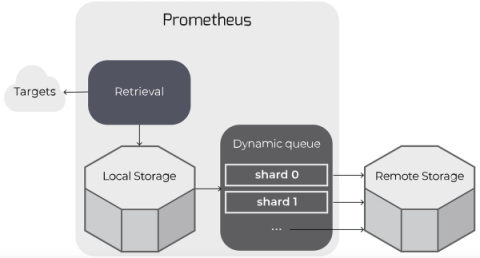
Prometheus can be configured to read from and write to remote storage, in addition to its local time series database. This is intended to support long-term storage of monitoring data.
In Episode 1, we delve into the critical topic of overcoming “Analysis Paralysis” during cloud migration. We will explore how Tidal Accelerator can help organizations break free from the shackles of over-analysis and guide them towards successful cloud migration.
When it comes to building and delivering modern web applications, the importance of continuous integration cannot be overemphasized. With the rapid pace of software development, ensuring that every change in your codebase is thoroughly tested and seamlessly integrated into your project is essential for maintaining a robust and dependable application.
SharePoint, born from the tech giant Microsoft, is not just another application; it’s a robust platform that’s been transforming the way businesses handle their internal processes for years. At its core, SharePoint is designed to streamline collaboration and document management. But what does that mean in layman’s terms? Imagine a vast digital library, where instead of books, you have documents, images, videos, and other digital content.
If you work with Kubernetes, you know that any number of issues can pose a serious threat to the stability and security of your deployments. One that's subtly damaging is configuration drift, which occurs when the actual state of how your system is set up — its configuration — strays from the way you defined. Configuration drift in Kubernetes can happen when people make changes manually, systems aren't synchronized properly or monitoring falls short.
No one wants to be on the receiving end of the blame game—especially in the wake of a major incident. Sure, you know you were the one who made the final change that caused the incident. And hopefully, it was a small one that didn’t cause any SEV-1s. Still, the weight of knowing you caused something bad should be enough, right? Unfortunately, sometimes fingers get pointed, your name gets called, and suddenly, everyone knows that you’re the person who created more work for everyone.
This article is the second installment of the “Implementing Backstage” series and focuses on how to use Backstage’s core features. Backstage has an extensible plugin architecture in active development and large community support and offers simplified tool management, workflow optimization, and time-saving features. However, to reap these benefits, you need to know how to use Backstage’s core features, including its software catalog, templates, documentation, and search.
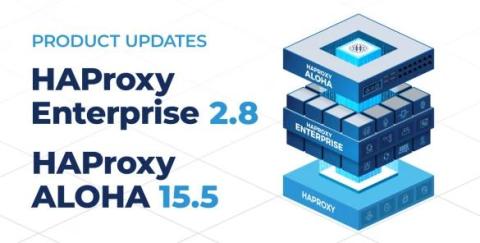
HAProxy Enterprise 2.8 and HAProxy ALOHA 15.5 are now available. Users of our enterprise-class software load balancer and hardware/virtual load balancer appliance who upgrade to the latest versions will benefit from all the features announced in the community version, HAProxy 2.8, plus some features that enhance the flexibility of our enterprise security options to meet even more use cases.
Microsoft recently announced changes to Azure Active Directory. Today’s article covers the changes, providing sources for considerations, and how Exoprise’s service solutions will be affected.
Understanding the impact of each of your deployments is crucial, especially as they become increasingly frequent. Chances are, your team is either aiming to increase shipping velocity or has already started deploying "continuously" (which is to say, multiple times a day). The biggest tech teams at the likes of Amazon and Google deploy thousands of times daily, and Atlassian has found that 75% of enterprise DevOps teams call deployment frequency their most important success criteria. And while CD comes with a host of well-established benefits, it also introduces a heightened risk of introducing new errors and issues.
Prometheus is a platform for real-time systems and event monitoring and alerting. The Prometheus project is free, open-source, and available on GitHub. Originally developed at SoundCloud, Prometheus became a project of the Cloud Native Computing Foundation in 2016, alongside other popular frameworks such as Kubernetes. The core of the project is the Prometheus server, which acts as the system’s “brain” by collecting various metrics and storing them in a time-series database.
This tutorial provides an easy-to-understand introduction on how to run your mobile gaming CI/CD in the cloud using CircleCI, GameCI, and Unity.
Building and deploying highly scalable, distributed applications in the ever-changing landscape of software development is only half the journey. The other half is monitoring your application states and instances while recording accurate metrics. There are moments when you wish to check how many resources are being consumed, how many files are under access by the specialized process, etc. These metrics provide valuable insights into our tech stack execution and management.
Observability is a critical aspect of modern software development and infrastructure management. It involves the ability to gain insights into the internal workings of your systems, applications, and services through monitoring and collecting relevant data. With the increasing complexity of technology stacks and the need for real-time visibility, observability has become a fundamental requirement for businesses across various industries.
With the ever-increasing demand for digital services, organizations face the questions of how will they keep up and where will they store and access their data and applications. The evolution of hosting options from on-premise infrastructure to colocation, cloud, and hybrid deployments has provided a diverse set of choices for organizations, and it is critical to select the option that best suits your unique needs.

Virtana’s AI-powered platform is at the forefront of IT infrastructure management, offering a comprehensive suite of tools and services that empower IT leaders to make informed decisions on how to forecast demand and streamline operations. The rapid evolution of technology has ushered in an era of complexity and dynamism that IT leaders must navigate effectively.
I was visiting Queenstown, New Zealand last week amidst the horrible floods which quickly escalated. As an incident responder myself, I was amazed at the operations and how fast responders on the ground acted in evacuating and clearing the grounds. Over 100 people were evacuated in the middle of the night with zero casualties. A commendable job. Here are some observations I made and what we can learn as incident responders ourselves..
The past decade has seen a drastic growth in the adoption of public cloud. One of the primary reasons for this is its cheaper infrastructure and ease of scale. With such rapid adoption of public cloud, the need for infrastructure automation also arises. This is because teams want to quickly provision infrastructure and automate tasks that previously took weeks in the case of traditional data centers, down to minutes in the public cloud.
So, you’ve spent some money and you’re the proud owner of a shiny new AIOps tool that helps improve your Network Operations. Network alarms are now usable, but with all the constant monitoring, supervision, and incident management, your Network Operations Center (NOC) is still overwhelmed. It’s time to pull out another stop.
In the age of customization, SharePoint’s ability to provide a personalized experience is pivotal for user engagement. Just like a tailor-made suit fits better than a generic one, a SharePoint interface tailored to individual users resonates more deeply.
You’re in the incident channel rocking yet another incident. Comms are flowing, resolution is in sight, the team is grinding, and you’re feeling good. Then…
In the ever-evolving world of software engineering, the landscape is constantly shifting. New technologies emerge, best practices evolve, and how we build and run software continues to change. However, when it comes to incident alerting, it often feels like we're stuck in the past.
It’s been another busy few months here at Gremlin. Overall, our team has been working on feature improvements to enable teams to measurably improve the reliability of their systems, whether that’s through broadening platform support so you can run Gremlin in more places, making it easier than ever to identify reliability risks, or improving reporting so you can manage reliability programs effectively at enterprise scale. Here’s a summary of what’s new.
Continuous Integration/Continuous Deployment (CI/CD), the ability to adapt swiftly to fluctuating workloads is paramount. Kubernetes, with its dynamic orchestration capabilities, offers an invaluable toolset for achieving seamless scalability. This article explores the concept of Kubernetes autoscaling and its pivotal role in optimising CI/CD pipelines.
Azure File Share is a cutting-edge service offered by Microsoft’s Azure platform. This robust solution allows seamless integration of serverless file sharing capabilities accessible through industry-leading protocols such as SMB, NFS, and Azure Files REST API. When effectively utilized, Azure File Share can drastically improve the file-sharing experience for cloud-based and on-premises deployments. In the realm of Dynamics 365 Business Central SaaS, it has demonstrated unparalleled benefits.