Operations | Monitoring | ITSM | DevOps | Cloud

How is Agentic AI fundamentally different from earlier automation?

Autonomous operations has been the goal for years. But most “automation” never got us there—it just helped teams keep up. Now that’s changing. Agentic AI introduces a fundamentally different model:– Purpose-built agents, not static workflows– Real-time decisioning, not predefined rules– Collaboration across agents, not isolated tasks Instead of automating steps, agentic AI enables systems to **reason, adapt, and act**—at a speed and scale humans simply can’t match. That’s what turns autonomous operations from a long-standing ambition into something actually achievable.

When we say "Observability AI Reckoning," what are we actually talking about?

We’ve spent the last decade collecting more telemetry. Now AI is analyzing it. Here’s the catch: AI needs the full dependency chain to reason correctly. If it sees spans but not storage contention… Services but not Kubernetes scheduling… Frontend metrics but not downstream providers… It will confidently optimize the wrong thing. AI doesn’t lower the need for observability. It raises the standard.

What is Virtana Application Observability and how is it different?

Application Observability, Built for Hybrid Reality Modern applications don’t live in one place. A single transaction might span: Traditional APM shows you the trace. But hybrid reality doesn’t stop at the service layer. True application observability ties transactions to the infrastructure that actually delivered them across cloud, on-prem, and everything in between. Because in hybrid environments, the root cause rarely lives in just one tier.

What does investigation look like when data lives in multiple tools?

War rooms don’t fix fragmentation. They expose it. Incident hits. App checks traces. Infra checks hosts. Cloud checks dashboards. Network checks packets. Everyone sees their layer. No one sees the system. So we guess. Rollback. Add capacity. Freeze change. The noise stops. The constraint doesn’t. Modern failures don’t live in tools. They live in dependencies. If your platform can’t follow a transaction across hybrid and AI infrastructure — to the exact constraint — you don’t have observability.

Millions of Metrics. Zero Clarity.

Millions of metrics. Zero clarity. That’s the reality many IT teams are facing today. As environments grow more complex, telemetry explodes. Millions of records generated every hour. Dozens of specialized tools for network, storage, Kubernetes, cloud, AI workloads. Each tool is good at its domain. But none of them answers the real question: Where should I focus right now? Fragmented visibility creates predictable failure modes.

What feels different about enterprise IT operations today compared to even 3-5 years ago?

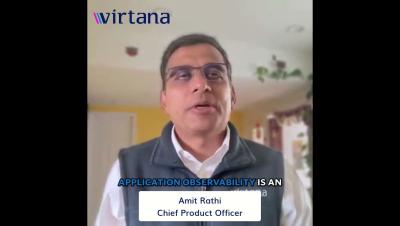
Speed isn’t the problem. Speed without shared visibility is. AI compressed release cycles, multiplied dependencies, and pushed accountability to teams who no longer own the full stack. The result? Faster change. Slower resolution. Higher risk. This is why MTTR is moving the wrong way...and why observability has to evolve. : Amit Rathi.

Every CIO is asking the same question: Am I Next?

Every CIO is asking the same question: Am I next? We’ve seen it across cloud providers, carriers, and global platforms—organizations with enormous scale and investment still experience public, business-impacting outages. The risk isn’t lack of effort. It’s the growing gap between AI-driven complexity and the ability to see, understand, and resolve issues fast enough to protect availability commitments.