


|
By Pulsant
Half of organisations spent more on public cloud than they had planned for last year. According to IDC research, reported by ITPro, 59% expect the same to happen again this year. That gap between what businesses expect to spend and what they actually spend is usually what starts the repatriation conversation. It is also where the next miscalculation begins.

|
By Pulsant
Blagomir Petrakiev, Data Centre Services Engineer in Maidenhead, made the move from automotive customer service to data centre operations after studying for his Cisco Certified Network Associate (CCNA) certification. In this Q&A, Blagomir shares what it’s like working behind the scenes at Pulsant, from infrastructure checks and remote hands tasks to learning new skills and building a career in digital infrastructure.
|
By Pulsant
What does a typical day look like for the people working behind the scenes of a data centre? From hardware installations and cabling to troubleshooting, customer requests and supporting critical works, every shift brings something different. In this 'day in the life', Leon Strong, Data Centre Services Engineer for Maidenhead, shares what it’s like to work in a hands-on technical role, what they enjoy most and their advice for anyone considering a career in data centre engineering.
|
By Pulsant
What's in this article? For over a decade, the enterprise IT narrative was simple: move everything to the public cloud. Yet as enterprise architectures have matured, many UK technology leaders have discovered that hyperscale cloud environments do not always deliver the outcomes they expected. The promises of seamless scalability and lower total cost of ownership often come with trade-offs that become more apparent over time.

|
By Pulsant
For more than a decade, the prevailing wisdom in enterprise IT was simple: move everything to the public cloud. Hyperscale platforms promised unlimited scalability, lower costs, agility and freedom from the burdens of managing infrastructure. Cloud-first has been rapidly gaining momentum as the de facto path to a modern digital footprint. Until now.

|
By Pulsant
UK data centre occupancy hit 91% in 2024, according to Arizton market data, and new capacity is not arriving fast enough to close the gap. Grid connection wait times for new projects now run between five and 15 years, reports Data Center Dynamics, and Savills has attributed the 11% year-on-year drop in new capacity delivery to power constraints rather than a lack of demand or investment. Rising wholesale energy costs are addingpressure to an already tight market.
|
By Pulsant
Hyperscale providers are nothing if not consistent in their temptation of enterprise IT buyers. They bombard leaders with a simple message: migrate to the public cloud, shut down data centres, and enjoy both financial savings and operational agility. However, as UK enterprises have scaled their digital footprints, a more nuanced reality has bitten. Public cloud costs have swollen.
|
By Mark Lewis
For more than a decade, the prevailing wisdom in enterprise IT was simple: move everything to the public cloud. Hyperscale platforms promised unlimited scalability, lower costs, agility and freedom from the burdens of managing infrastructure. Cloud-first has been rapidly gaining momentum as the de facto path to a modern digital footprint. Until now.

|
By OpsMatters
The last few years have seen AI conversations dominated by the need for investment in hyperscale infrastructure as firms race to build ever larger training models. But as those conversations evolve, the emphasis is shifting to the next phase of AI adoption, focusing on the scaling of use cases and real-world value.

|
By Pulsant
When on-premises capacity runs short, public cloud tends to be the first option infrastructure teams reach for. It is quick to provision, removes the hardware procurement problem, and sidesteps the question of what to do with an ageing estate. What it does not settle is whether migrated workloads will perform as the business requires once they are live in production, or whether the recovery design has kept pace with where services now sit.

|
By PulsantUK
What does it take to move from AI experimentation to real-world adoption, and where does sovereign AI fit into the picture? In Episode 2 of Season 2 of Perspectives from the Edge, Andrew Dutton,Enterprise Sales & Marketing Director at SCC, joins Pulsant’s Wendy Shearer to explore the challenges businesses are facing as AI moves from experimentation into production and scale.

|
By PulsantUK
What does sovereign AI really mean when the hardware powering it is made somewhere else? And how is AI changing where data centres need to be built? In the first episode of Series 2 of Perspectives from the Edge, Rob Cooper, Head of Data Centre Advisory at CBRE, joins Pulsant’s Wendy Shearer to explore the rapidly changing AI infrastructure market. CBRE is a global real estate and infrastructure advisory firm, with a specialist team focused on the data centre sector.

|
By PulsantUK
Is your infrastructure strategy ready for the global memory shortage? The global RAM and storage market is experiencing unprecedented disruption, driven by soaring AI demand, constrained manufacturing capacity and increasing geopolitical pressures. But what does this mean for UK organisations planning their technology investments? In this webinar, Pulsant's Ian Butler is joined by Paul Atkins, VP of Data Solutions at HPE, and Steve Spittal, Technology Director at Pulsant, to discuss how businesses can navigate the ongoing memory shortage and build resilient infrastructure strategies.

|
By PulsantUK
Who really owns your data? Data sovereignty has become one of the defining issues shaping digital infrastructure, cloud strategy and AI adoption. But what does it actually mean, and why has it become a board-level discussion for so many organisations? In Episode 4 of Perspectives from the Edge, Pulsant's Wendy Shearer is joined by Steve Jewell, CEO of Nine23, to explore data sovereignty and its relationship to security, resilience and digital transformation.

|
By PulsantUK
Data sovereignty wasn’t a major topic just a few years ago and now it’s becoming a major economic opportunity for regions across the UK. In this clip from Perspectives from the Edge, Katie Gallagher OBE from Manchester Digital discusses why the conversation around data sovereignty has shifted, and how the rise of AI is accelerating demand for trusted regional digital infrastructure. As organisations rethink where data is stored, processed and governed, regions like Manchester are increasingly well placed to benefit through investment, innovation and digital skills growth.

|
By PulsantUK
Manchester is one of the UK’s leading tech ecosystems – but how did it get there? In this episode, Pulsant’s Wendy Shearer speaks with Katie Gallagher from Manchester Digital about Manchester’s rise as a powerhouse for UK tech, data sovereignty, innovation, talent and inclusive growth. Discover how the region has evolved from its strong industrial heritage into a thriving digital economy now home to major FTSE 100 companies and six unicorn businesses.

|
By PulsantUK
In this teaser for an upcoming episode of Perspectives from the Edge, Wendy Shearer, Director of Partners & Ecosystems at Pulsant, speaks with Kate Gallagher, Managing Director at Manchester Digital, about how Manchester has become one of the UK’s leading technology ecosystems and a model for regional innovation and growth.
|
By PulsantUK
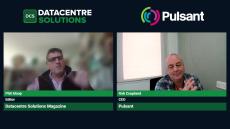
Join Pulsant CEO Rob Coupland in an exclusive interview with Phil Alsop, Editor at Data Centre Solutions (@datacentres), as they explore Pulsant’s £10 million investment in the Milton Keynes data centre. This upgrade delivers high-density, sovereign computing capacity, helping businesses accelerate AI and tech projects while keeping data secure and local. Rob also shares plans to expand this high-density model across the UK, supporting enterprise AI at scale and boosting local economies.

|
By PulsantUK
In the latest Platform Insight interview, Pulsant CEO Rob Coupland discusses Pulsant’s evolution into the only truly UK‑wide, interconnected data centre platform. The conversation with Nicola Hayes of @PlatformMarketsGroup explores the growing momentum behind edge and sovereign infrastructure, and why real‑world enterprise demand is shaping the next phase of AI. If you want to understand where the UK digital infrastructure landscape is heading – and why regional platforms matter more than ever – this is a must‑watch.

|
By PulsantUK
Perspectives from the Edge: Episode 2 Data sovereignty isn't a solo effort. It's a symphony. Data sovereignty is moving fast up the agenda. But who's orchestrating it? The second episode of Perspectives from the Edge explores the subject through an analyst’s laser lens, in conversation with Kate Hanaghan, Chief Research Officer at TechMarketView. Find out how AI and platform consolidation make data harder to control, how to bake sovereignty into your business from the start – and why the organisations getting it right treat ecosystems as a strategy, not just a procurement exercise.
- October 2026 (1)
- September 2026 (4)
- August 2026 (5)
- July 2026 (7)
- June 2026 (2)
- May 2026 (6)
- April 2026 (4)
- March 2026 (7)
- February 2026 (2)
- January 2026 (3)
- December 2025 (4)
- November 2025 (5)
- October 2025 (5)
- September 2025 (6)
- August 2025 (4)
- July 2025 (1)
- June 2025 (2)
- May 2025 (1)
- April 2025 (1)
- March 2025 (2)
- February 2025 (2)
- January 2025 (2)
- December 2024 (4)
- November 2024 (1)
- October 2024 (5)
- September 2024 (1)
- July 2024 (1)
- June 2024 (3)
- May 2024 (2)
- April 2024 (2)
- March 2024 (1)
- February 2024 (1)
- January 2024 (5)
- December 2023 (1)
- November 2023 (2)
- October 2023 (4)
- August 2023 (2)
- July 2023 (3)
- June 2023 (7)
- April 2023 (2)
- November 2022 (3)
- October 2022 (2)
- August 2022 (3)
- February 2022 (2)
- January 2022 (1)
- December 2021 (1)
- November 2021 (2)
- October 2021 (4)
- September 2021 (3)
Pulsant is the UK’s premier digital edge infrastructure company providing next-generation cloud, colocation and connectivity services. With a network of 12 strategically located edge data centres, Pulsant brings the advances of edge computing within reach of 95 per cent of the UK population.
Our edge infrastructure platform is used by businesses across the UK to build, connect and deploy the hybrid workloads they need to reach their digital goals and drive competitive advantage.
Edge benefits:
- Edge Data Centres: Our network of owned and operated colocation facilities are within low latency reach of the UK's major cities.
- Agile Connections: Interconnection across all of our locations is delivered by a private high-speed network giving reliable, scalable and high-capacity coverage to businesses across the whole of the UK.
- Hybrid Cloud: Hybrid cloud services combine public and private cloud ensuring the right edge workload can run in the best location, with automation, security and cost management handled through a single platform.
- Flexible Contracting: Our finance model allows costs to move between Pulsant services. Help to reduce spiralling costs and preparing our clients for the transformation towards edge computing.
The next generation of cloud, connectivity and data centres.