
Operations | Monitoring | ITSM | DevOps | Cloud

Connecting Reservations and Guest Communication: Why System Integration Matters

Restaurants lose valuable service time when reservation records and guest conversations sit in separate systems. Staff members repeat questions, miss updates, and spend busy periods checking availability instead of serving arriving guests. Integration connects these tasks, giving each interaction a current booking record and a clear follow-up path. The result is faster communication, fewer avoidable errors, and better visibility for managers. The operational difference becomes clearest during booking, changes, and high-volume service.

Digital ID Arrives at the Till: What the Alcohol Rule Change Means for Checkout Integrations

For years, proof of age at an alcohol till in England and Wales meant something you could hold in your hand: a passport, a photocard driving licence, a PASS card. That's no longer the whole list. Since mid-September 2026, licensed premises can accept certified digital proof of age from a customer's phone.

ilert now supports a native Bleemeo integration

Bleemeo monitoring now connects natively to ilert, linking threshold detection to on-call management and alerting. DevOps, SRE, and IT operations teams get a direct path from a breached threshold to the phone of the engineer who can fix it, and back to a clean slate once the problem is gone.

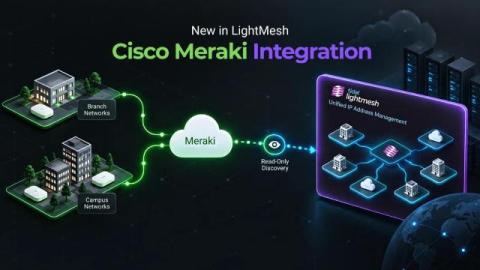
New in LightMesh: Cisco Meraki Integration

Some features start on a roadmap. Others start with a recurring customer request: Can LightMesh connect to Meraki? That request kept coming up. Now the answer is yes. LightMesh supports Meraki sites with multiple VLANs or a single LAN through the new cloud integration for Cisco Meraki. Appliance addressing from Dashboard syncs into LightMesh as subnets (with VLAN ID when Meraki provides one), and device or client LAN IPs only when they fall inside those CIDRs.

Troubleshoot and secure your code faster with Datadog's Bitbucket Cloud Source Code integration

Developers and SREs who use Bitbucket Cloud often need to move between their source code, observability data, test results, and security findings to investigate a problem. Connecting an error or slow method to the correct repository, file, and commit takes time. Teams may also discover vulnerabilities, infrastructure misconfigurations, coverage regressions, or flaky tests only after code has progressed further through the software development life cycle, when remediation is more disruptive.

Industrial Processing Equipment: Key Factors Before You Invest

Industrial processing equipment affects production speed, labor demand, product consistency, and operating expense. An unsuitable purchase can cause stoppages, difficult cleaning, excessive wear, or limited capacity. Yet many buyers move forward without fully understanding the conditions their equipment must handle. Taking time to evaluate a few key factors upfront can prevent costly mistakes after installation.

Epic EMR Integration Explained: Benefits, Challenges, and Best Practices

Connecting a hospital's primary record system to modern software takes effort. A solid Epic EHR integration connects Epic directly with external clinical, operational, patient-facing, and digital health tools. Why bother? Unconnected software creates dangerous friction. When clinical platforms operate in isolation, patient care stalls. Teams seeking clarity on how to integrate epic with our application quickly realize that reliable interoperability ensures data access, supports coordinated workflows, and keeps operations running.

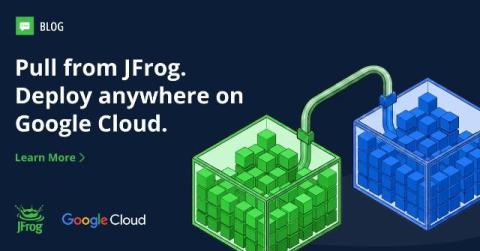
JFrog Artifactory Now Integrates Natively with Artifact Registry in Google Cloud

Teams running containerized workloads on Google Cloud have long relied on JFrog as their single source of truth for container images. The missing piece has been getting Google Cloud’s own runtime services — like Cloud Run and Google Kubernetes Engine (GKE) — to pull directly from JFrog for every container image pull. I’m happy to say that the gap is now closed. Artifact Registry in Google Cloud has introduced a new repository mode called Connector that addresses this requirement.

8 best AI tools for musicians in 2026: from lyrics to music video

The best AI tools for musicians in 2026 now cover songwriting, song generation, editing, music videos, and release preparation. That matters in a recorded-music market that grew 6.4% to $31.7 billion in 2025 and reached 837 million paid streaming subscription accounts. I reviewed eight platforms as parts of one release pipeline, focusing on handoffs, operational risk, and whether the artist finishes with a publishable release.