Operations | Monitoring | ITSM | DevOps | Cloud

The latest News and Information on Log Management, Log Analytics and related technologies.

7 lessons for IT leaders on using observability to monitor AI applications

What it takes to prove AI value with LLM observability Over six months, the Elastic IT team ran internal AI applications that returned $2.5 million in operational time to the business.1 A conversational support assistant moved us from zero digital resolution, where anything complex became a ticket, to 30% of support interactions closing without one.

Multi-Agent Orchestration for SRE: AURA Runs a Model per Specialist

Give one agent every tool and every incident is a question of trust. This one hands each job to a worker that can only reach what that job needs. One AURA configuration defines a coordinator and three specialist workers. Qdrant stores the runbooks, Prometheus measures workload health, and Kubernetes provides inspection and remediation, and each of the three is wired to one worker.

Full-Pipeline Blueprints Are Here: Source, Processors, and Destination in One Click

Blueprints launched as processor bundles, and that solved the repetitive middle of the problem. But the middle was never the whole job. You still had to know which source type to add, which parameters mattered, how to batch for your backend, and how to route it all together. That changes now. The first two cover the two requests we hear most.

From alert to answer: a hands-on investigation with trace analysis in Mezmo

Authored by Sven Delmas, VP of Research at Mezmo I wanted to know what Mezmo's new trace features feel like with real telemetry behind them, so I built the smallest honest rig I could: the OpenTelemetry demo application running in a local Kubernetes-in-Docker cluster on my machine, one collector, and one deliberately simple Mezmo pipeline.

SEO isn't just a marketing KPI anymore. It's a security one.

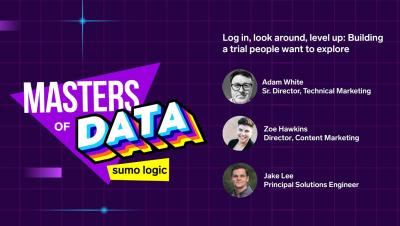
On this episode of Masters of Data, we sat down with Patrick Kobly, who runs security for a boutique MSSP serving fintech, crypto, and gaming clients, to dig into how phishing has evolved past the obvious tells. Kobly walks through how attackers spin up reverse proxies behind Cloudflare, route through residential IPs to dodge reputation-based blocking, and can take a fake domain from registration to full attack in under five hours. The conversation turns into an unexpected case for treating SEO as a security discipline, since search rank and AI-generated results are now part of the attack surface too.

Splunk Pricing in 2026: Full Cost Breakdown (and How to Cut It)

Splunk charges you in one of two ways: by how much data you send it each day, or by how much compute your searches and dashboards use. Security teams pay for both the platform and Splunk Enterprise Security, the app that turns Splunk into a SIEM, which is priced separately on top. This guide breaks down every part of a 2026 Splunk bill, works through a real, sourced pricing example, and lays out the ways to bring the number down, including the one lever many teams overlook.

From retrieval to agents: 5 takeaways on production architecture for AI agents

How context engineering creates production-ready agentic AI What if the AI strategy you spent the past year building is already being measured by a completely different set of rules? I recently joined Amy Machado, senior research manager at IDC and Jim Malone, senior contributing editor at CIO Marketing Services, for a webinar where we explored how buyer expectations, architectural requirements, and evaluation criteria are shifting as enterprises move from search-driven experiences to agentic AI.

Olly says Hi: Scheduled tasks now report to Slack and email

An agent that only speaks when spoken to is a tool you have to remember to use. Olly has run on a schedule for a while now, working a saved prompt hourly, daily, weekly, or monthly and writing its findings into a chat with its own run history. Those scheduled tasks are now wired into the Coralogix Notification Center, so Olly delivers that output itself, allowing Olly to reach out to Slack or email, out of the box.

Making Machine Data Easier to Onboard, Prepare and Trust with AI-Powered Data Management

Every investigation, detection, dashboard, and AI-assisted workflow depends on one thing: data that teams can trust. But as environments grow more distributed, the data behind those experiences gets harder to manage. New applications, cloud services, security tools, infrastructure, and network devices constantly generate machine data, and each new source can introduce new formats, missing fields, inconsistent mappings, and pipeline changes that require expert attention.