

|
By Bruce Johnston
As AI accelerates software development and expands its scale, Deutsche Bank is taking a leading role in ensuring the technology can be adopted safely, securely, and responsibly across regulated industries. As an investor, Deutsche Bank’s Corporate Venture Capital arm participated in Kosli’s Series A funding round, reinforcing the bank’s view that automated governance will be a key enabler of AI-assisted software delivery in regulated industries.

|
By Bruce Johnston
In April, Anthropic disclosed that its new AI model, Claude Mythos, had found a vulnerability in OpenBSD that survived 27 years of human review. Mozilla used the same model to find 271 security flaws in Firefox in a single evaluation pass.
|
By Bruce Johnston
Since November, Kosli’s own engineering team has been running a live experiment: what happens to code review when the thing generating the code - and increasingly, the thing reviewing it - is an AI, not a person. Alex Kantor, Kosli’s Director of Technology, walked through that experiment in this webinar: what broke, what it cost to fix, and what four “obvious” assumptions in a standard code review control turned out not to hold once you took the human out of the loop.
|
By Bruce Johnston
Norsk Tipping is Norway’s state-owned gaming operator, running 2,500 to 3,000 production releases a year across iOS, Android, web and backend systems. Like every regulated organisation at scale, the platform team has to hold two things in tension: maintain strict deployment controls that stand up to audit, and keep the path to production open so that 100 engineers can ship safely.
|
By Jon Jagger
Kosli recently released kosli evaluate trail, a command that evaluates selected attestations in a Kosli trail against a Rego policy file. We used it to build a complete and useful solution for tracking Snyk container vulnerabilities for cyber-dojo (an open-sourced browser based online tool for practising TDD which Kosli uses for demos). You’ll read about what we built, why we built it, how we tested it, and specifically.
|
By Dan Grøndahl
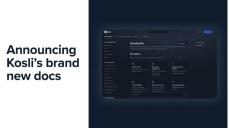
Good docs are how developers work with a product, from first look to daily use. That’s been true for a long time, and it’s becoming more true as developers increasingly hand that work to agents on their behalf. During the last quarter, we’ve been migrating docs.kosli.com from a static Hugo site to Mintlify, and now it’s finally live. Early reactions from our customers: “A marked improvement over the old docs in layout and usability.” “Looking sharp!”
|
By Alex Kantor
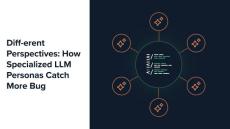
We’ve built a multi-LLM PR reviewer that runs on every pull request in a couple of our own repos. Two independent models look at each change in parallel, each wearing a set of “persona hats” tuned to a specific area of the codebase. They compare notes, duplicates get stripped out, and the PR author ends up with a single review comment rather than a wall of noise.
|
By Steve Tooke
Kosli gives your organization a complete picture of software delivery - every build, scan, deployment, and compliance event tracked. Until now that picture was most useful to the people managing governance. However, developers shipping code had to ask someone else what versions of their code were running, how long it was taking to get to production, or what their deployment frequency was. Repositories change that.
|
By Bruce Johnston
Today, Kosli and Adaptavist announce a strategic partnership to help regulated enterprises automate governance for AI driven software delivery - making it automated, continuous, and evidence-driven rather than a manual checkpoint that sits apart from DevOps and CI/CD. Adaptavist brings deep enterprise DevOps transformation expertise: assessment and strategy, DevSecOps integration, developer experience, and implementation across Atlassian, GitLab, and AWS.
|
By Steve Tooke
If you’re evaluating compliance controls against your Kosli trail data today, there’s a good chance you’ve written some glue code to make it work. A script that pulls trail data from the API. Another that downloads attestations one by one. Something that mangles the JSON together into a shape that your chosen compliance engine can evaluate. And then that engine itself, whether it’s OPA, a custom Python script, or something else, installed and configured in your pipeline.

|
By Kosli
Dog-walk thoughts on vulnerabilities at scale More CVEs are being found, disclosed and weaponised faster than ever. For a small team with one product, that's manageable: a CVE lands, you fix it. But if you're running thousands of applications across tens of thousands of repos, "the teams will handle it" stops working. It becomes a governance problem.
|
By Kosli
AI coding tools are in use across regulated industries, producing workable code faster than humans can review. It’s a shift that’s raising difficult questions that haven’t been fully answered yet. What does governance look like when AI agents are writing the code, reviewing each other’s work, and fixing their own findings? How do you prove what code is running and whether it passed your checks? Who’s accountable for change approvals, audits, incidents?

|
By Kosli
Defining a control in a policy document is easy. Proving that every build was evaluated against it - and that nothing non-compliant ever reached production - is the hard part. Kosli's new Controls feature closes that gap. Every control is defined in Kosli, every build is evaluated against it, and deployments are gated automatically when the evidence isn't there. That means: Every control decision is recorded as evidence, build by build Coverage shows exactly where a control is enforced across your environments.
|
By Kosli
AI is moving fast, and it’s tempting to believe it can automate software governance end to end. But compliance and security aren’t probabilistic problems. They don’t accept “close enough.” They don’t accept summaries. They can’t tolerate hallucinations. Governance depends on facts. Irrefutable, provable evidence of how systems actually changed.
|
By Kosli
Most governance models focus on what happens before production. Approvals. Tickets. Change records. But software delivery doesn’t end at deploy. Runtime is where change management is validated. It’s where systems prove whether controls actually work and where risk becomes real. If governance stops at deployment, you’re not managing change. You’re managing intent. In this video, Mike Long (CEO & Co-founder, Kosli) explains why runtime is the true source of control, why approvals alone don’t reduce risk, and how modern teams build governance that reflects reality, not paperwork.
|
By Kosli
In regulated environments, slow change is often blamed on process. In reality, it’s caused by missing, fragmented, or untrusted proof. Screenshots. Tickets. Manual approvals. Evidence assembled after the fact. In this video, we show what changes when compliance policies are embedded directly into release workflows — and when immutable, machine-readable evidence is captured automatically across CI/CD.
|
By Kosli
ServiceNow is the system of record for change and approvals in most regulated enterprises. But when evidence lives elsewhere — scattered across CI tools, scanners, tickets, and screenshots — approvals slow down and audits become painful. Developers waste hours chasing proof. CABs approve changes without confidence. Auditors reconstruct history months later. In this video, Matt Bailey shows what changes when evidence is produced continuously, directly from the delivery pipeline, and linked into ServiceNow workflows.

|
By Kosli
Scan results aren’t the end — they’re the input to the next control. Evidence must be tied to fingerprints so it’s reusable.
|
By Kosli
The industry standard for release control is painfully manual: long-form policy documents, ServiceNow forms, human approvals, meetings, and tickets that take days or even weeks to close. In this video, Mike Long (CEO & Co-founder, Kosli) explains the difference between manual release control and an automated, zero-trust model where evidence is collected automatically, provenance identifies the artifact, and approvals can be fully codified.
|
By Kosli
Evidence isn’t something you produce at the end — it’s something every control generates for the next one. In this video, Mike Long (CEO & Co-founder, Kosli) explains how vulnerability scans produce evidence tied to the artifact fingerprint and the policy file used, and how that evidence becomes an input to downstream controls like release approvals. This is the core of reusable, continuous compliance.
|
By Kosli
Supply chain Levels for Software Artifacts (SLSA) is a security framework that assists in ensuring the integrity of software artifacts throughout the software supply chain. The Open Source Security Foundation (OpenSSF) introduced SLSA in 2021 to protect software from sources through deployment by helping organizations to counter critical threats. SLSA provides a model for improving supply chain security and integrity, and offers guidance for solving issues related to developer or build systems as exploitable security vectors.
- October 2026 (1)
- September 2026 (1)
- July 2026 (5)
- May 2026 (1)
- April 2026 (5)
- February 2026 (4)
- January 2026 (7)
- December 2025 (6)
- November 2025 (10)
- October 2025 (2)
- August 2025 (1)
- July 2025 (2)
- June 2025 (6)
- May 2025 (1)
- April 2025 (1)
- March 2025 (2)
- February 2025 (4)
- November 2024 (3)
- October 2024 (3)
- September 2024 (2)
- August 2024 (3)
- July 2024 (1)
- June 2024 (1)
- May 2024 (2)
- April 2024 (2)
- March 2024 (4)
- January 2024 (6)
- December 2023 (5)
- November 2023 (8)
- October 2023 (8)
- September 2023 (3)
- August 2023 (2)
- July 2023 (1)
- June 2023 (4)
- May 2023 (9)
- April 2023 (7)
- December 2022 (8)
- August 2022 (1)
- March 2022 (1)
Deliver secure software changes at scale and deploy to production with speed and compliance.
Kosli records an easily searchable history of all your changes from commit to production, so you can quickly find the change you need. Move beyond GitOps and understand how your pipelines and environments are really changing.Continuous monitoring in your runtimes and pipelines:
- Release software with continuous compliance and zero day audits: Kosli records changes in your environments and pipelines as they happen. Get compliance status in real time and export all the evidence you need for an audit to CSV.
- Track deployments with full cycle security: Kosli connects what’s running in production with what was qualified in your pipelines. Get alerts for undocumented workloads and any deviations from your security policies.
- Pinpoint the exact change you need when you need it: Kosli gives you a searchable database of every change made to your systems. Get the answer you need by asking better questions in the browser or the command line.
- Real-time observability for devs and engineers: Tired of trying to figure out which change broke everything? Need to know where your commit is? Get the ability to see how your environments and pipelines are actually changing and quickly locate the change you need.
Faster changes. Stronger security. Painless audits.