Operations | Monitoring | ITSM | DevOps | Cloud

Using Tech to Keep Your Industrial Operations Safe

In modern industry, safety is pretty much a founding principle of good business, and without it, your company would not exist for very long, whether due to reputational damage or legal action. Keeping everyone safe is vital, and the good news for you is that tech has made it easier than ever to achieve.

Do This To Ensure You Maximise Business Sales in 2026

You cannot stand on your laurels when it comes to making your sales quotas. Things change at such a pace these days that if you aren't ahead of the curve, you will be losing out. That is why you must consider the following suggestions for business success in the coming year of 2026. Read on to find out what they are.

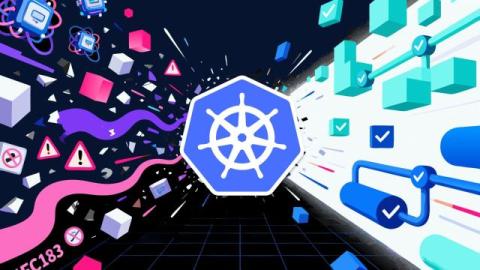
Welcome to the Next Frontier: AI on Kubernetes

Last week’s KubeCon Atlanta made one thing abundantly clear, Kubernetes is quickly becoming the de facto platform for AI workloads – with the event lineup chock full of talks, workshops, and even co-located events dedicated to AI, machine learning and running data on Kubernetes natively – with approximately 50 (!) sessions in total focused on AI, ML, LLM, and GenAI topics.. What was until now mostly PoCs and aspirational is now truly delivering in production.

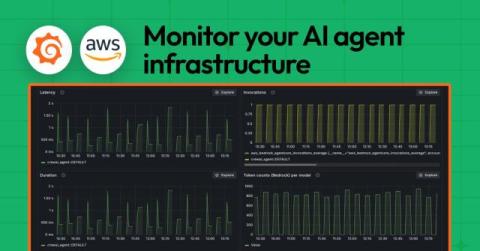
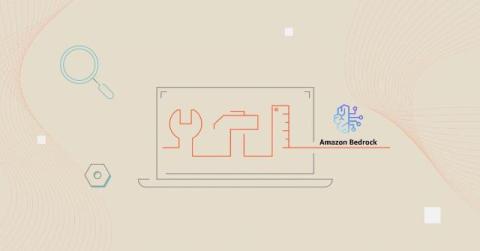
How to monitor Amazon Bedrock AgentCore AI agent infrastructure in Grafana Cloud

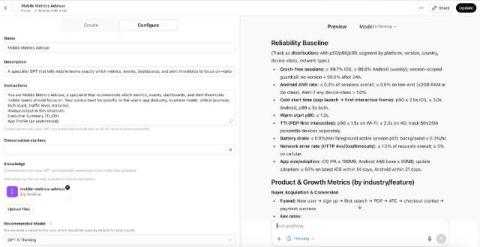
Modern AI agents are now highly advanced, frequently becoming essential components of engineering workflows and deployment pipelines. However, operating these systems often feels like trying to navigate a ship through a dense fog. When an agent errors, slows down, or consumes excessive resources, engineers find themselves adrift, lacking the navigational charts needed to diagnose the problem. The absence of deep insight makes debugging, performance tuning, and cost management unnecessarily difficult.

How AI is Revolutionizing Customer Support

The integration of artificial intelligence (AI) into customer support is not just a trend. It is a transformative revolution that is fundamentally changing how businesses interact with their customers. Businesses across various sectors are leveraging AI technology to create more efficient, responsive, and personalized customer service experiences.

How Can Startups Turn Ideas into Successful Products Quickly?

Several startups fail not due to the poor idea, but due to the execution process being too long. The best idea of all is having a brilliant idea but how you can actually transform the idea into a marketable product in haste is the more challenging side of it all. Speed is good, but focus is good. Successful startups focus on what is most important and find the most fundamental features and create small testable pieces of their products.

The Technological Architecture Behind ServiceOrca: Building a Modern, Scalable Service Marketplace

As digital marketplaces mature, the strongest platforms increasingly distinguish themselves not just through marketing or user interfaces, but through the depth and precision of their underlying technology. ServiceOrca.com, a global free-to-list service marketplace, has been gaining attention for its engineering-driven approach to building a scalable, AI-enhanced ecosystem for both local and remotely delivered services.

AI Synergy: Using GPT, LLaMA, and PaLM Models

The public release of GPT in 2023 ushered in a new era of Generative AI applications in business. ChatGPT by OpenAI, LLaMA by Meta AI, PaLM by Google AI, and other text generation models are now widely utilized for both personal and professional applications. The Generative AI market is expected to reach $66.62 billion by 2024, with an annual growth rate of 20.80%, leading to a market volume of $207.00 billion by 2030.

Smooth Operator: The Role Of Autonomous FinOps In Cloud Cost Management

(Almost) everyone is using generative AI, and just as many aren’t seeing any benefits. Research firm Gartner calls it the “gen AI paradox” — nearly 80% of companies say they’ve invested in generative solutions, and the same number report no benefits to their bottom line. What’s more, 90% of projects are stuck in pilot mode; ready to take off, but just can’t get up to speed.

In the age of AI, measurement becomes our superpower

The last few years have felt less like a product roadmap and more like a scene from science fiction. Artificial intelligence didn’t simply arrive, it erupted. In what feels like a blink, we’re building software by prompting instead of programming. Our words now generate code, compose music, translate languages, and create entire digital experiences.

Open Source & The New Era of AI Data Infrastructure - Aiven for Startups at Slush

There’s a foundational shift underway in the data infrastructure behind AI-native applications. In this fireside chat, we break down the technical requirements that make today’s data infrastructure dramatically different from what it used to be and what builders need to understand to keep up. In this talk, top founders defining the industry, Rebecka Storm, Co-Founder and CPO of Twirl (Acquired by Modal) and Heikki Linnakangas, Co-Founder of Neon (Acquired by Databricks) will dive deep into theme of AI data infrastructure and open source, moderated by Oded Valin (Aiven).

How generative AI solves healthcare's 1% carbon footprint

The healthcare industry accounts for 1% of the global carbon footprint, and a single PET CT scan can generate 60kg of CO₂! Regent Lee, Professor at the University of Oxford and moonshot engineer, reveals how Civo-powered Generative AI is transforming radiology. His team's solution eliminates pharmaceutical contrast injections, digitally displacing the pollution. This technology makes radiology safer, more efficient, and significantly greener for the environment. Sustainability in healthcare is non-negotiable.

(AusBiz) | How to Stay Secure in an AI-Driven Software World | The Last Call

In an era of AI-powered development, how do teams move fast and stay secure? JFrog SVP APAC, Sunny Rao, joined AusBiz’s The Last Call to break it down — from securing the software supply chain to why end-to-end visibility is now essential for every tech organization. Discover why this matters for the future of software and AI-driven innovation.

Automating Application Development: The Role of AI No-Code Platforms in Modern Operations

The landscape of application development is undergoing a fundamental transformation. Operations teams, traditionally reliant on development resources for building custom tools and applications, are now discovering new pathways to independence through artificial intelligence-powered platforms. This shift represents more than just a technological evolution, it's a reimagining of how modern organizations approach problem-solving in IT operations.

How AI Hiring Software for Businesses Elevates Operational Performance and Workforce Agility

In environments where operational efficiency and team scalability matter as much as technical reliability, organizations increasingly turn to AI hiring software for businesses. These tools address a growing need for streamlined hiring pipelines, capable of supporting fast-moving operational teams and companies focused on uptime, productivity, and sustainable growth. In sectors where every delay can impact service continuity, integrating intelligent hiring systems has become a strategic choice, not just an HR upgrade.

AI and DevOps in 2025: How Autonomous Engineering Will Transform Software Operations and Reliability

DevOps started as a way to break down barriers between development and operations, but by 2025 the movement has shifted into something far more ambitious. Instead of simply speeding up releases or tightening workflows, companies are now adopting autonomous engineering systems-tools powered by AI that don't just support DevOps practices but actually carry them out.

What Enterprise Leaders Must Know About Operationalizing Agentic AI

Reports by Gartner say that over 40% of agentic AI projects may be discontinued by 2027, primarily due to unverified costs, vague business value, and weak risk governance. Most business leaders can already see the risk. Or the opportunity. That’s not the problem; the problem is what happens after - the effectiveness of process execution. Anushree Verma, Senior Director Analyst at Gartner, said: Execution latency is now the most expensive form of operational waste.

How AI Agents Are Redefining the SRE Role

Even the best site reliability engineers (SREs) spend too much time doing reactive work—triaging incidents, gathering context, escalating to the right teams, and documenting what happened. That work is essential, but it’s not where an SRE’s highest value lies. These engineers are hired to build and maintain resilient systems, not play air-traffic control with every alert that hits their queue.

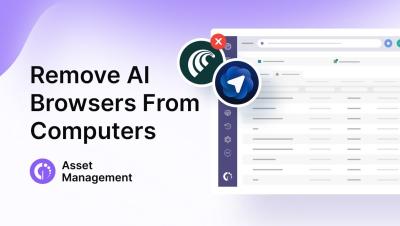
How to Detect And Uninstall Comet And Atlas From All Your Company's Computers

Discover how to manage unauthorized AI tools like Atlas and Comet in your organization. Learn how to:✓ Identify machines running unauthorized AI browsers.✓ Create smart tags for banned software.✓ Set up proactive security alerts.✓ Deploy automated uninstallation packages. Whether you're concerned about data privacy, compliance requirements, or unauthorized software installations, this guide shows you how to take control of your IT environment.

Rollbar Debugging with ChatGPT using Service Links

In this guide, we will walk you through how to add a service link that connects directly to the Rollbar Debugging Assistant—our ChatGPT-powered tool that helps you quickly analyze and debug an occurrence’s raw.json without needing access to your code repository. The Rollbar Debugging Assistant makes it easier and faster to understand what went wrong in a specific error occurrence.

The engineering leader's guide to AI tools for developers in 2026

The holiday shopping season is a familiar ritual for many. We spend hours researching the best deals, comparing features, and reading reviews to make sure we’re investing in the right things. As we all come to grips with the fact that 2026 is right around the corner, engineering leaders are doing the same thing, but largely in response to the explosion of AI developer tools.

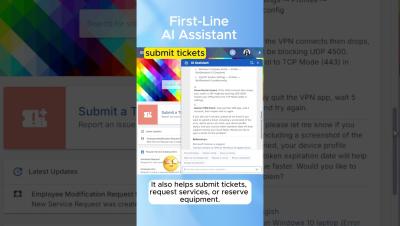
Your First-Line AI Teammate #helpdesk #ai

No more fixing the same issues again and again! The AI Assistant jumps in like a tireless first-line teammate, instantly providing the right solution. You choose whether it uses your internal knowledge, public resources, or both. See how easy it is to let AI handle recurring support issues, so your IT team can focus on bigger things. In this video, we used gpt-4.1 for completion and text-embedding-3-large for embeddings.

IA for AI: Rethinking How We Store, Surface, And Share Data In A Conversational World

Information architecture used to be about structure. We organized menus and pages into trees, built hierarchies, and created pathways for people to follow. For years, that worked. Navigation was the interface. But that world is changing. People aren’t clicking their way through information anymore. They’re asking for it. They’re refining questions, expecting context, and assuming that systems will not only understand what they mean, but act on it.

AI: Your (Not So) Secret Agent In Cloud Cost Control

Read a few articles on artificial intelligence and financial operations, and you’re bound to run across a sentence like this: AI enables FinOps teams to reduce TCO and boost ROI. Or one like this: The future of FinOps uses agentic AI-powered systems to detect and remediate cost issues automatically. Keep reading and you’ll find piece after piece that say a lot about AI and FinOps … without really saying anything.

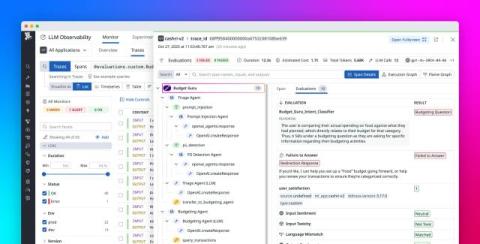
Define, run, and scale custom LLM-as-a-judge evaluations in Datadog

Teams deploying LLM applications face a critical blind spot: They can measure speed and cost, but not whether their AI is actually giving good answers. To build user trust in these applications, teams also need to measure response quality, including factual accuracy, safety, and tone. Operational metrics show how a system behaves, but not whether its responses are correct or on brand.

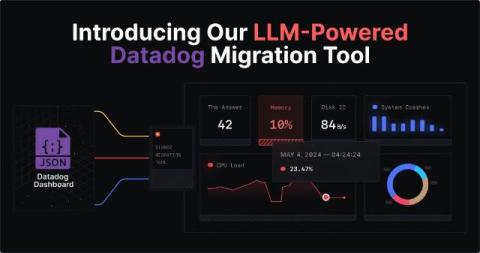
Introducing SigNoz's LLM-Powered Datadog Migration Tool

But migration is painful. Moving from Datadog means manually rebuilding dashboards, rewriting every query, and reconfiguring panels one by one. What took months to build takes weeks to migrate. Engineering teams get pulled away from actual product work to rebuild monitoring infrastructure they already had working. Critical monitoring setups and the context around why dashboards were built a certain way often get lost. We kept hearing about this from teams evaluating SigNoz, so we built a solution.

Reality Bytes: The Rise (and Risks) of Vibe Coding

In this Reality Bytes reunion, Tom, Sean, Tim, Oriana and Megan unpack the buzzy rise of vibe coding — the AI-assisted development trend coined by Andrej Karpathy and already explored by companies like Meta and Microsoft. The panel digs beneath the hype: from accelerated prototyping and accessibility gains to serious risks around technical debt, shadow applications, governance, security and the loss of human accountability. Oriana and Megan highlight the importance of schema, context and genuine creativity, while Tim warns against mistaking speed for quality. Is vibe coding the future - or just another fragile shortcut?

How Web Development Agencies Will Transform Business Websites in 2026

In 2026, businesses can expect web development agencies to do far more than build static digital presences. With emerging technologies such as AI, Progressive Web Apps (PWAs), and serverless architecture, web development firms will deliver smarter, more secure, and highly personalised websites that evolve in real time with user needs. Agencies will also streamline integration with internal systems, optimise for voice and mobile, and drive sustainable performance. This means that partnering with a forward-thinking web development agency will become less of a cost and more of a strategic asset for companies aiming to stay competitive.
Understanding Cryptocurrency Market Trends and Investor Strategies

Crypto has become the buzzword of recent years. Despite this, people still treat cryptocurrency as a mystery. They consider it volatile, unpredictable, and difficult to understand. Yet beneath that reputation is a market built on patterns. These patterns include aspects like data and user behavior. All of which can be studied and mastered. It's a similar situation to the stock market; the prices don't move by chance. Instead, they react to market confidence and global sentiment.
Lessons from KubeCon: What "Best-of-Breed" AI SRE Really Requires

This year’s KubeCon underscored a real shift: AI SRE has gone mainstream. Of course, it’s not a surprise. Teams from high-growth startups to Fortune 500s are running more complex, cloud-native systems, shipping more AI-generated code, and facing rising expectations. Downtime is absolutely not an option and the work for on-call SREs has become unsustainable. The question isn’t whether AI SRE helps. It’s which one you can trust in production.

Announcing a forthcoming integration with PagerDuty + Azure AI SRE Agent for faster incident response

The energy at Microsoft Ignite this year was electric. AI was everywhere, and the possibilities are limitless. As developers and operations teams explore what AI can do, one thing became clear: the future isn’t about switching between tools. It’s about intelligent agents working together to help humans solve problems faster. At PagerDuty, we’re building on that excitement.

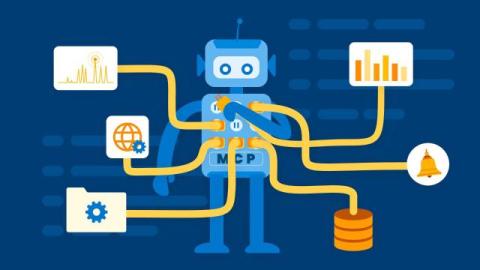
What's Special About MCP?

AI agents can interact with the world using tools. Those tools can be generic or specific. For example: Generic: Specific: The most general ones, like “run a bash command” and “read and write files” are built into the agent. More specific ones are provided through Model Control Protocol (MCP) servers. Every tool provided to the agent comes with instructions sent as part of the context.

Build custom apps in seconds with conversational AI in App Builder

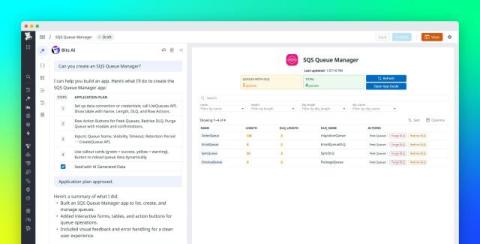
Datadog App Builder is a low-code tool for creating internal apps, making use of a drag-and-drop interface that allows engineering teams to troubleshoot issues, optimize operations, and enable self-service while connecting directly to their Datadog data and permissions. Now, with conversational AI, teams can go from idea to working prototype even faster.

Introducing Bits AI SRE, your AI on-call teammate

Bits AI SRE is your AI on-call teammate, built to autonomously investigate alerts and coordinate incident response. Integrated with Datadog, Slack, GitHub, Confluence, and more, Bits analyzes telemetry, reads documentation, and reviews recent deployments to determine the root cause of alerts—often before you’ve even opened your laptop. In fact, if you're using Datadog On-Call, you can view Bits’s findings right from your phone—so you’re always one step ahead, no matter where you are.

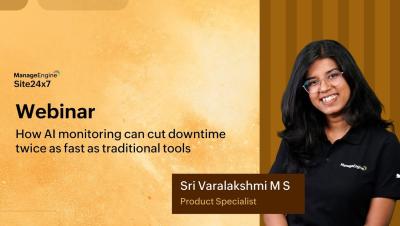
[Webinar] How AI monitoring can cut downtime twice as fast as traditional tools

Unlock the future of IT monitoring with Site24x7’s advanced AI capabilities! In this exclusive webinar, Varalakshmi, Site24x7 product specialist, guides you through Site24x7’s unified observability platform. Discover how Site24x7 uses AI to solve modern IT challenges like eliminating tool sprawl, reducing alert fatigue, and enabling faster, more accurate RCA. We also explore relatable customer scenarios for dynamic anomaly detection, predictive forecasting, automated event correlation, cloud cost forecasting, and AI-powered ITOps with Zia.

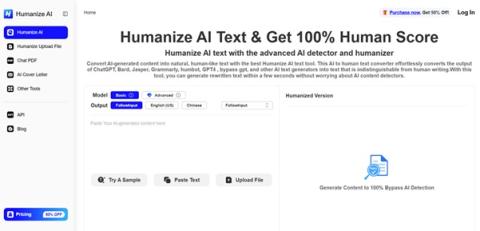
Humanize AI Tools In-Depth Review: An Innovative Choice for Humanized AI Text Editing

AI-powered content generation is changing the landscape of the online world. The use of generative tools like ChatGPT has greatly enhanced the productivity of text creation, but "machine traces" are becoming ever more visible. Detection systems have been developed to identify the differences between AI and human-produced text, and this is rapidly becoming a required part of any review and publishing process. Creators are looking to text humanization tools powered by AI in response to strict detection systems.

AI Video Generator: The Best Tool for Quickly Creating High-Quality Videos

In our fast-paced digital world, the value of AI video generator is more than apparent. Whether using video for social media marketing, educational messaging, or communicating brand stories, high-quality video has established itself as the new norm in effective communication. Unfortunately, producing video using existing modalities is time-consuming, relies on various specialty skills, and often times expensive equipment. Then it can take hours, to even a couple of days to refine video to a per-student or customer level.

How a Corporate Gifting Platform Can Streamline Operations and Boost Team Productivity

Here's something most HR leaders won't admit: they're hemorrhaging hours every month on gift logistics. You know the drill: tracking down vendor contacts, wrestling with spreadsheets, chasing approval emails that mysteriously vanish. Meanwhile, strategic projects collect dust on your desk.

How Live Monitoring Supports Smarter Decision-Making and Safety

Here's the reality: most businesses don't fail because of small ideas; they fail because warning signs were missed until it was too late. The gap between reacting to problems and preventing them can make or break operations. That's where live monitoring comes in. By combining real-time surveillance with smart analytics, businesses can spot risks before they escalate, protect people and assets, and make informed decisions on the fly. It's not just about watching, it's about anticipating.

The next era of IT management with ManageEngine: What agentic AI will unlock

Agentic AI is generating a lot of buzz, but what does it actually do for IT teams? Join us as we showcase how the industry is evolving in the new era. What once took hours or days will soon take minutes—unlocking a new level of productivity and efficiency for IT operations. The foundation of this evolution? AI-driven contextual analytics. Agenda.

11 Must-Have AI Sales Tools for B2B Operations Management

In B2B sales, every interaction, follow-up, and decision matters. Teams are managing more leads, more data, and more tasks than ever before, and keeping everything running smoothly can feel overwhelming. AI helps revenue teams work smarter by taking over routine follow-ups, surfacing actionable insights, and giving managers the information they need to make quick, informed decisions. Below are 11 AI platforms that every B2B operations manager should be familiar with, organized by their primary focus and the benefits they bring to operations.

AI Isn't Here to Replace Your Dashboard... Yet

Non-deterministic UIs are the future and will replace your dashboards, but they’re not here yet. So until then, we’re stuck with conversational interfaces. In an effort to try and describe what I consider the future of UIs to look like, I wrote about how you (and I) have been designing dashboards wrong. The core insight was that we've been designing for static representations of data that sit on a TV in the office, when the actual use case is someone at a desk using them to debug an issue.

Five key takeaways from EDUCAUSE 2025: Adopting AI while navigating change

Having just returned from the 2025 EDUCAUSE Annual Conference in Nashville, I want to share some insights on the future of campus IT from the higher education technology leaders in attendance. Every year, this conference provides an opportunity for technology providers and higher ed professionals to connect and explore the latest innovations in higher education technology. Two themes emerged as critical priorities.

Search Telemetry Without Limits in a Multi Cloud and AI World

Cribl Search gives you one lens across all your telemetry data no matter where it lives. Instead of forcing teams to move data into one system or jump between tools, you get a familiar pipe based query experience with dashboarding and alerting built in. Storage and query processing stay separate so you decide where your data lives while your users get fast, simple access in one place.

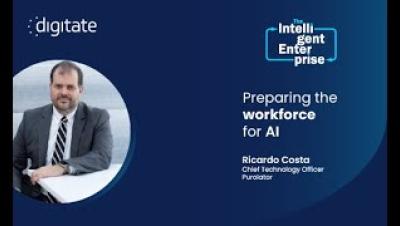
Episode 1 - Preparing the workforce for AI | The Intelligent Enterprise

In our first podcast episode of The Intelligent Enterprise, Ricardo Costa, Senior Vice President and Chief Technology Officer at Purolator, gives us his views on how to prepare the workforce for AI. In his role as a technology "translator" connecting business strategies with tech implementations, Ricardo highlighted the importance of translating complex tech concepts into simple, understandable stories and addressing leadership challenges in preparing the workforce for AI, including upskilling and ethical considerations.

AI Observability: How to Keep LLMs, RAG, and Agents Reliable in Production

AI observability closes the gap between “something’s wrong” and “here’s what to fix.” If you run AI in production, you might have felt the whiplash. Yesterday, your LLM answered in 300 milliseconds (ms). Today p99 crawls, costs spike, and nobody’s sure if the culprit is model behavior, data freshness, or GPUs stuck at the ceiling. Dashboards light up, but they don’t tell you which issue puts customers at risk. That’s the gap AI observability closes.

What Are AI Workloads? Everything Ops Teams Need to Know

AI workloads break every assumption you have about infrastructure management. AI is everywhere. Machine learning-based tools are answering customer service questions, accelerating incident resolution, catching fraudulent transactions, spotting defects on production lines, and powering late-night searches that delve into the random topic that pops into your head right before bedtime. Behind every prediction, response, or generated sentence is massive computing power doing serious, continuous work.

AI Monitoring, Explained: Challenges, Core Components, and Why Observability Is the Next Step

Monitoring AI systems isn’t business as usual. Monitoring AI isn’t like monitoring traditional systems. You can’t just track uptime or response times and call it a day. AI models evolve, data shifts, and behavior drifts over time, which means your monitoring has to evolve, too. If you’re running AI workloads in production, you already know this. Your models might look healthy according to your infrastructure metrics, but they’re still making bad predictions.

AI for Good: Securing Networks in the Age of Autonomous Attacks

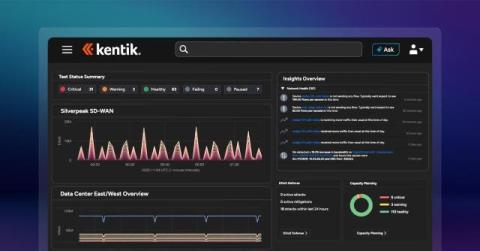
The rise of autonomous AI attacks operating at machine speed demands that network security evolve beyond human capacity and manual processes. Kentik AI Advisor counters this threat by using AI for good, reasoning across full network context to proactively eliminate vulnerabilities and guide immediate, confident defense.

Architecture for the agentic era: How AI will reshape data, security, and observability

As AI agents move from copilots to autonomous systems, they’re generating and consuming data at unprecedented scale. The result is a new kind of infrastructure pressure — one that’s quietly reshaping how organizations think about data, cost, and control. Across IT, Security, and Observability, leaders are realizing a hard truth: too much data is too costly.

The Human Touch in AI Chatbots: Balancing Automation and Personalization

Artificial intelligence (AI) is transforming how companies engage with customers. Businesses are increasingly expected to provide instant, accurate, and personalized responses across multiple channels, from websites and apps to social media platforms. AI chatbots have emerged as essential tools in meeting these expectations, enabling businesses to streamline communication, reduce response times, and provide consistent support around the clock.

Audio to Text: Enhancing Collaboration and Documentation for Distributed Tech Teams

In the age of cloud computing, DevOps, and distributed IT operations, remote technology teams are now the norm. Global teams bring exceptional talent but also face unique challenges-language barriers, time zone hurdles, incomplete documentation, and gaps in institutional knowledge. As organizations increasingly rely on virtual meetings and asynchronous communication, the demand for reliable audio-to-text solutions is surging.

Better integration tests in Cursor using proxymock

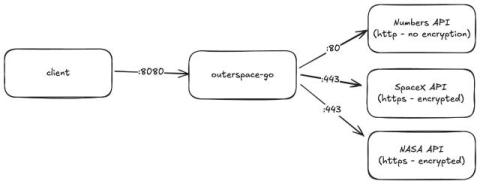
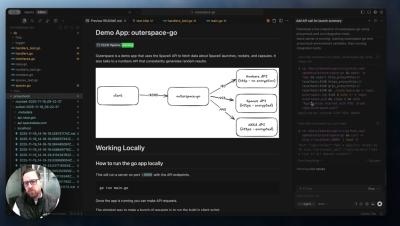
Cursor is fantastic at cranking out code changes. I recently used it to splice a brand-new downstream API call into one of our Go microservices, and the diff looked great. The unit tests finished before I lifted my coffee mug, yet I still had zero certainty the change would survive contact with real traffic. That gap is all about integration tests, so I paired Cursor with proxymock and the outerspace-go demo service to prove the behavior end to end.

Build a multi-agent AI system using CrewAI, Gemini, and CircleCI

Multi-agent AI systems are trending in the software development industry right now. These systems consist of a group of individual agents that collaborate to achieve a desired goal. They mimic real world teams and departments in how they are organized. In multi-agent AI systems, each agent is assigned a task that is required to achieve a final output.

It's Never Different This Time: LLM Reliability Without the Hype with Julien Simon

In this episode, Julien Simon, longtime voice in the open-source ML world, reminds us that even in the era of GenAI, reliability fundamentals haven’t changed. Julien breaks down why calling “the same model” from different providers can produce wildly different results, how deployment choices introduce hidden variability, and why reliability teams need to think of LLM systems as distributed systems.

AI-Suggested Alert Thresholds for Mobile Telemetry

Life is pretty good. I’ve shipped a mobile app and I’m (happily) drowning in telemetry. Battery impact, time in foreground/background per screen, crash rates, slow frames, network retries – the works. The data is brilliant; the challenge is turning signals into reliable alerts that catch real issues which are relevant to my app’s functions. So… what should I actually listen for, and where should I set the thresholds?

AI wrote the code, but can you trust it? #aicoding #integration #cursor #devops #speedscale

Using AI coding tools like Cursor is fast, but it leaves a massive question: Is the new code going to break production? We solve this by combining Cursor with Proxymock! I take a live traffic snapshot of my running app, feed it back to the AI, and instantly run realistic integration tests locally. It's the only way to get true confidence before you push. Watch the full video below!

AI as Monitive's CEO

Recently I've been to Lisbon's Web Summit conference, a 3 day, 70,000 participants, 15 stages, 800+ speakers event. Even though there was a track called "AI Summit", all the talks were about AI and AI Agents and how the future of the web, business, economy is more and more AI, and how businesses and people should take steps to adapt as soon as possible to an online world managed and operated by Artificial Intelligence.

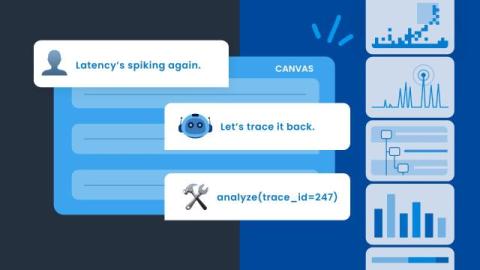
Canvas Is Now GA: AI-Guided Observability for Modern Teams

When we introduced Canvas in beta, our goal was to reimagine how teams explore and collaborate around their observability data without requiring manual querying. Canvas has quickly become the AI-guided workspace that helps teams transform raw telemetry into meaningful, shared understanding faster than ever before. And today, we’re thrilled to announce that Canvas is now Generally Available (GA) for all Honeycomb users.

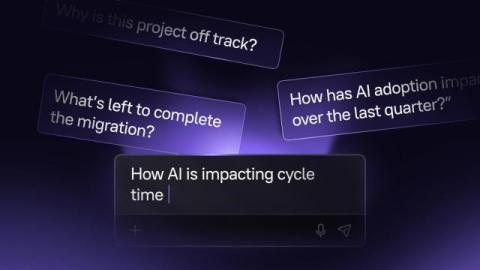
Get more from your AI chief of staff with these prompts for engineering leaders

Engineering leaders face a constant barrage of questions that pull them away from strategic work. A team lead asks about scorecard compliance. A PM wants a status update on a migration. Someone needs incident trend data for a quarterly review. Each question is reasonable. Each requires context switching, digging through dashboards, or pinging someone on your team for a report. What if you could just ask?

Technology as a Personal Finance Partner

Technology has evolved into much more than a convenience-it's become a true financial companion. From apps that track spending in real time to platforms that automate savings and investments, digital tools are transforming the way people handle money. For many, these innovations have brought clarity and control to what used to feel like an overwhelming process.

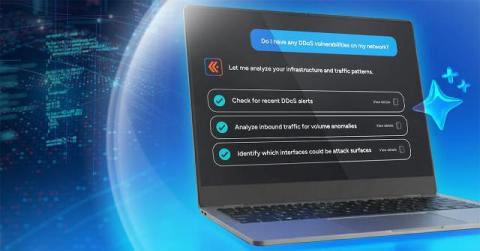
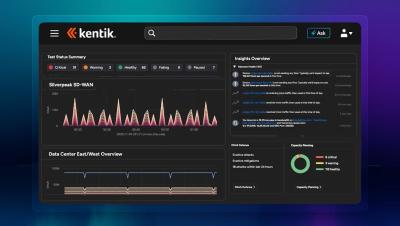
Introducing Kentik AI Advisor: The Future of Network Intelligence

Introducing Kentik AI Advisor, a powerful new AI designed to deeply understand your network, reason through complex issues, and deliver clear, actionable guidance for designing, operating, and protecting your networks. By autonomously querying Kentik’s rich telemetry and tools, it explains what’s happening, why it matters, and what to do next — from troubleshooting and capacity planning to cost optimization and risk mitigation.

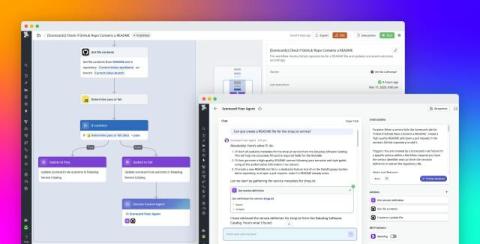
Introducing Datadog Agent Builder: Build agentic workflows for alert response and remediation

Building automated workflows that adapt to real-world complexity can be a challenge. As systems scale and scenarios multiply, teams often end up hardcoding endless logic branches just to handle every potential outcome. That’s why we’re introducing Datadog Agent Builder, a powerful new tool that lets you create custom AI agents that are fully hosted by Datadog.

Elasticsearch: The context engine for grounding and orchestration in Microsoft Azure AI Foundry Agent Service

The rise of large language models (LLMs) and agentic applications promises to transform enterprise workflows. Yet, the core challenge remains: How do we ensure these powerful agents generate accurate, relevant, and trustworthy responses based on proprietary enterprise data rather than relying solely on their generic training knowledge? The answer lies in grounding — connecting the LLM to verified, trusted, and up-to-date information.

Boost Developer Experience with LLMs!

Your laptop is powerful enough to run your own LLM. Here's why that matters While centralized AI tools help teams, they miss something critical: your personal knowledge. Meeting notes, tips, tricks, and context only you have. Kyle Fransham shows how running a local LLM changes the game. Index your own "master document of knowledge" and query it right in your dev environment. No cloud needed. The tools are accessible. The setup is simple. And the impact? Game-changing for how you work.



Agentic AI: Ushering in the Next Era of Intelligent IT

IDC predicts agentic AI will command over 26% of global IT spend, hitting $1.3 trillion in 2029. How do IT Ops teams prepare for the reality of agentic systems being embedded across workflows, interfaces, and enterprise platforms? We went straight to the source—IT Ops leaders—to learn how they’re tackling agentic AI.

Ep 18: AI has a memory problem, just like you do

In this episode of Masters of Data, we dive into how AI learns, examining both how we teach it and what it derives from human performance, as well as why context plays a crucial role in AI interactions. We break down five key components of AI training and talk about why we should view AI as a tool under human control rather than an autonomous entity. We explore the challenge of maintaining context in AI—much like our own memory struggles—and discuss methods, such as retrieval-augmented generation, that can help AI retain context more effectively.

Introducing Kentik AI Advisor

Introducing Kentik AI Advisor. AI with a comprehensive understanding of your network that thinks critically and advises how to design, operate, and protect infrastructure at scale. With the rise of hybrid cloud networks and the growing demands of AI infrastructure, network teams are under pressure to balance cost, performance, and security, often with limited resources that delay critical strategic initiatives.

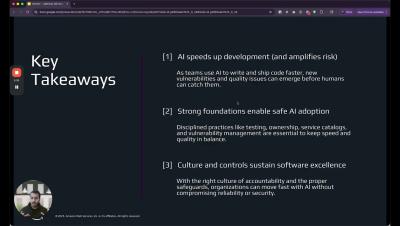
Maintaining Software Excellence in the Age of AI Coding Assistance

In this preview of his AWS re:Invent session, Cortex CTO & Co-Founder Ganesh Datta breaks down how AI coding assistants are transforming software development, and what high-performing teams are doing to keep speed and reliability in balance. You’ll learn: If you care about AI, engineering velocity, or building sustainable systems, this is a must-watch. Full Session: December 3 at 2:30 PM Learn more about Cortex: go.cortex.io/reinvent.

When Bots Grow Brains: RPA and Agentic AI For the Win

For a long time, robotic process automation (RPA) was the fastest way to scale repetitive digital work. Bots copied, clicked, and executed rule-based tasks faster than any human. They reduced error rates and delivered early wins for efficiency. Sounds just fine, right? Prepare for a Matrix moment, because the truth is that IT teams built RPA only for predictability. It could follow instructions, but it couldn’t adapt when something unexpected happened.

Prioritize errors and create tickets using Rollbar's MCP Server

Production errors can feel overwhelming. Your Rollbar dashboard is filling up with alerts, your team is scrambling to understand what needs immediate attention, and critical revenue-impacting issues might be buried among less urgent problems. Sound familiar? In this post, I'll walk you through a workflow that transforms production error chaos into organized, prioritized action items. We'll cover everything from analyzing Rollbar errors to creating properly linked Linear tickets.

Mezmo's AI-powered Site Reliability Engineering (SRE) agent for Root Cause Analysis (RCA)

We are thrilled to announce the availability of Mezmo’s AI-powered Site Reliability Engineering (SRE) agent for Root Cause Analysis (RCA)—a truly transformative leap forward for engineering and operations teams included in your existing subscription at no additional charge. We are paving the way for a new era of observability, moving beyond passive, reactive monitoring to a world of proactive AI-driven observability.

Agentic AI and the End of Traditional IT (w/ Robb Wilson)

In a wide-ranging conversation, Robb Wilson—CEO and co-founder of OneReach.ai and author of The Age of Invisible Machines—joins Tim and Tom to explore the rise of agentic AI and its seismic implications for IT, organizations, and society. Robb breaks down the concept of agent runtimes, why conversational interfaces matter more than ever, and how adaptive, self-orchestrating systems will reshape work far beyond today’s service models.

A tale of two incident responses: How our AI assistant found the root cause 3.5x faster

About two months ago, an incident at Grafana Labs was kicked off in typical fashion: A series of alerts were triggered, our on-call engineer acknowledged it on Slack, and the rest of the team quickly began hypothesizing about the potential culprit. But the way the incident was resolved was anything but typical. Yes, our internal team followed best practices to resolve the incident as quickly as possible.

AI API Aggregation: Managing Costs And Complexity Across Multiple LLMs

Running multiple LLMs without aggregation can feel like managing five different clouds with no dashboard. Sure, you can make it work, but you won’t like the bill. And most SaaS teams didn’t start with a multi-LLM strategy. It just happened. You added one model for reasoning, another for summarization, or maybe a fine-tuned version for customer support. Fast-forward six months, and your AI stack looks like a tangle of APIs. And each charges tokens on its own terms.

Prioritize errors and create tickets using Rollbar's MCP Server

Production errors can feel overwhelming. Your Rollbar dashboard is filling up with alerts, your team is scrambling to understand what needs immediate attention, and critical revenue-impacting issues might be buried among less urgent problems. In this post, we'll walk you through a workflow that transforms production error chaos into organized, prioritized action items. We'll cover everything from analyzing Rollbar errors to creating properly linked Linear tickets.

MachineGPT: Speaking the Language of Machines to Shape the Future of AI

At.conf25, we took a bold step forward—introducing the concept of MachineGPT, which brings the power of generative AI to one of the most overlooked resources: machine data. MachineGPT speaks the language of machines. Just like ChatGPT learned the grammar of words and sentences to understand questions and respond in human language, MachineGPT can learn the hidden “grammar” of how systems behave through machine data.

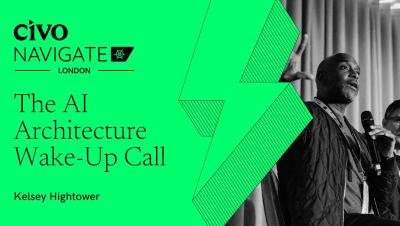
The AI Workload Punishes Bad Habits

The AI workload presents the ultimate challenge, highlighting the structural limitations of the traditional hyperscaler model. In this segment from a Civo Navigate London 2025 session, Kelsey Hightower explains exactly why AI adoption forces enterprises to confront flawed architecture and rising astronomical costs. When specialized hardware is scarce and rented GPUs sit idle at a premium, it’s clear that traditional cloud providers were not built for this era. Data that didn't move is forcing organizations to move compute back to where it lives.

Modernising Middleware and B2B Integration with Assurance

Modernising enterprise middleware is now a strategic necessity for cost efficiency, AI-readiness, and operational clarity. Hybrid estates of IBM MQ, Apache Kafka, and other brokers hide inefficiencies that drain profitability, but an operating model built on Assurance and Optimisation restores transparency and control. By unifying data, rebalancing workloads, and enabling safe AI autonomy, organisations can build a resilient “Confidence Economy.”

5 Skills Intelligence Platforms to Watch in 2025, Reviewed & Ranked

Businesses need to build strong teams, and leaders, within their organization so they can continue to drive productivity and efficiency. This also offers more than a few other benefits, like improving employee morale and retention, enhancing your employer brand, and helping you run a more cost-effective business. Skills intelligence platforms are a vital part of this. They let companies implement affordable and effective ways to engage employees as they take their careers to the next level.

How AI Is Transforming Field Service Routing and Operational Efficiency

Before, field service operations depended on set schedules, hand-planned routes, and local dispatchers. Even though we are aware of this, routing based on intuition is becoming less effective as service networks become more complex, customer expectations rise, and operating expenses shift. How can companies with a large fleet of service vehicles efficiently arrange personnel, vehicles, and parts to meet service level agreements while minimizing costs and downtime?

Mastering Product Design: How Top Agencies Like Phenomenon Studio Create Market-Leading Products

In today's experience-driven economy, the quality of your product design can determine your company's trajectory. But what exactly separates exceptional products from mediocre ones? The answer often lies in partnering with the right product design agency. As an industry-leading provider of web design and development services, Phenomenon Studio has demonstrated how strategic design partnerships can elevate products from functional to phenomenal, creating sustainable competitive advantages in crowded markets.

The 3 AI Jobs That Didn't Exist 2 Years Ago!

People worry about AI taking jobs, but what about the new roles AI is creating? James Faure, CEO of Clairo AI, breaks down the three essential non-technical jobs that have emerged in the last two years: Prompt Engineers, Context Architects, and Evaluators. Learn the crucial skills needed to be highly employable in the future of AI.

Beyond Isolated AI: How the Selector MCP Server Connects Agents, Context, and Action

AI in network operations is evolving faster than ever. But while new models and agents are emerging almost daily, they’re often working alone, with each confined to its own context, data, and domain. One model might analyze telemetry, another handles automation scripts, and a third generates summaries or recommendations. Each model might be intelligent on its own, but without a way to share context, they end up thinking in isolation, limiting what they can achieve together.

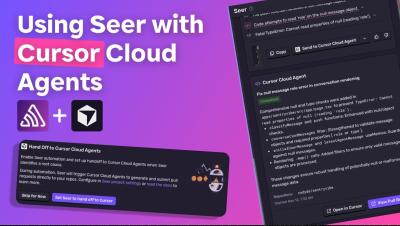
From Error to Fix: AI-Powered Debugging with Sentry and GitHub

​This session will focus on the agent based features of Sentry for debugging an issue in a web application. We'll move through the broken issue - and show how tools like Sentry Seer and the GitHub repo integration make it easy to determine the root cause of an issue by bringing all the context of Sentry and code in GitHub together, and how the Sentry MCP makes it easy to pull all that context down into GitHub CoPilot to fix it locally.

Video Face Swap Tools Compared: Which One Balances Speed, Quality, and Ease?

In the age of digital content, video face swapping has grown beyond just a novelty. Creators, advertisers, and meme-makers alike are leveraging the utility of this technology to deliver entertaining, shareable, and commercial quality content. From highly customized ad campaigns to viral social media fodder, the need for any kind of tool that offers speed, quality, and usability is growing exponentially. This post will outline some of the best available video face swap tools, compare the keys to what's good about each, and explain which one is the best overall.

How to Use WAN AI to Generate Realistic Videos

In the ever-evolving world of technology, artificial intelligence (AI) continues to push the boundaries of what is possible. One area where AI is making significant strides is in the generation of realistic videos. With the help of WAN AI technology, creating lifelike videos has never been easier. In this article, we will explore how to use WAN AI to generate realistic videos, the benefits of this technology, and how you can integrate it into your own projects.

5 Leading AI Influencer Makers for Social Media Growth

Social media success now depends on creativity, consistency, and innovation - and AI influencers are redefining what it means to connect with audiences. These virtual personalities allow brands and creators to tell stories in new ways, maintaining perfect control over image, tone, and message. Unlike traditional influencer partnerships, AI influencers never miss deadlines, don't require contracts, and can be customized to fit any brand identity. The best part? Creating one is easier than ever, thanks to new-generation AI influencer makers that combine realism, motion, and storytelling tools.

Beyond Models: JFrog AI Catalog Evolves to Detect Shadow AI and Govern MCPs

When we first introduced the JFrog AI Catalog, it was our mission to provide the industry with a single system of record for governing the complex landscape of internal, open-source, and external commercial AI models. This foundational step was critical for enterprises to move from uncontrolled innovation to delivering AI with trust and confidence. However, the AI landscape is ever-evolving. The challenge for today’s enterprise is already evolving beyond simply managing a library of known models.

Securing Vibe Coding: JFrog Introduces AI-Generated Code Validation

A fundamental shift in software development is already here. Gartner predicts that by 2028, 75% of enterprise software engineers will use AI code assistants – a massive leap from less than 10% in early 2023. While this AI-driven speed creates a competitive advantage, it also opens a dangerous new front in the battle for software supply chain security.

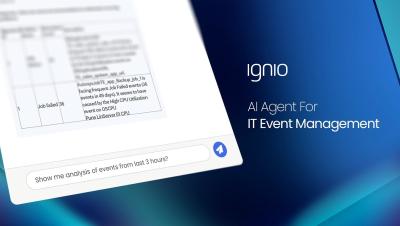
ignio AI Agent for IT Event Management | AI Agent for alert noise reduction

Discover how ignio’s AI-powered agents are transforming IT event and alert management by combining Agentic AI, AI/ML algorithms and automation. In this video, we introduce ignio AI Agent for IT Event Management — a purpose-built, autonomous agent designed to reduce alert noise, group related alerts and predict future events. Whether you’re managing a large-scale enterprise infrastructure, cloud-native environment, or hybrid IT setup, this AI agent empowers your SRE and IT operations (ITOps) teams with real-time observability, automated alert correlation and suppresion, and predictive intelligence What You’ll Learn in This Video.

AI Table Stakes: The Enterprise Reality Check

This 5-minute critique pulls back the curtain on where AI is succeeding and where the biggest challenges remain. Experts expose the gap between market hype and reality: the failure to deploy fully autonomous production agents and the missing human-machine interface for non-developers. It’s a challenge to the entire industry.

Graylog MCP Integration: Real-Time LLM Access to Your Data

Graylog V7.0 supports integration with the Model Context Protocol (MCP), which allows large language models (LLMs) to access and interact with Graylog data and workflows in real time. Graylog exposes an MCP-compatible endpoint for LLM clients, such as Claude and LM Studio. MCP integration allows Graylog users to interact with their data through LLMs. With MCP, an LLM can connect directly to Graylog as a remote tool interface, performing queries, retrieving system information, and assisting with common administrative or investigative tasks. This capability may make it possible to.

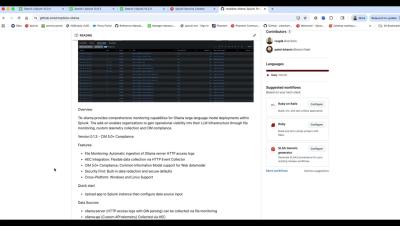
Introducing the Splunk Technology Add on for Ollama Illuminating Shadow AI Deployments

Without strong visibility and governance, local LLMs risk replicating the fragmented, unsupervised sprawl once seen in shadow IT, complicating security postures and making it difficult for organizations to ensure proper oversight and compliance as these powerful AI tools become embedded in daily workflows. To address this challenge, The Splunk Threat Research Team has released the Splunk Technology Add-on for Ollama that provides comprehensive monitoring and observability capabilities specifically designed for local LLM deployments.

Top 8 AI Editing Software That Can Change a Person's Voice in 2025

Having worked extensively in audio production and voice-based media, I evaluate every voice changer with a professional, meticulous testing process. I focus on realism, interface usability, and editing precision. Over the years, I've tested most major desktop voice editors, examining how accurately they reproduce natural tones and avoid robotic or distorted outputs. Only a few programs truly balance advanced functionality with user-friendly controls.

Our Engineering in the Age of AI: 2026 Benchmark Report finds AI is making engineering faster, but not necessarily better

Everyone's talking about how AI is transforming software development. Teams are shipping more code, deploying more frequently, and getting features to market faster than they could a year ago. The productivity gains are real. But we kept hearing a different story from engineering leaders. Yes, velocity is up. But incidents are climbing, resolution times are getting longer, and code review processes are struggling to keep up.

Conquer Complexity, Accelerate Resolution with the AI Troubleshooting Agent in Splunk Observability Cloud

The digital landscape has transformed dramatically, and with it, the demands on our systems have grown exponentially. Traditional monitoring tools struggle to provide sufficient insight into complex, distributed, cloud-native environments. Observability is the answer, moving beyond merely knowing "what" is happening to understanding "why" it's happening, and its impact on user experience and business outcomes.

If it Wanted to, it Would: The Bitter Lesson for LLM Users

There’s a viral saying folks use about flaky crushes, spouses, and forgetful friends: "if he wanted to, he would." The idea is straightforward: when someone cares, they make the effort. As it turns out, the same principle applies surprisingly well to AI. Systems, like people, have things they "want" to do. Each model has patterns of reasoning and synthesis it performs naturally.

The AI Visibility Problem: When Speed Outruns Security

Harness surveyed 500 security practitioners and decision makers responsible for securing AI-native applications from the United States, UK, Germany, and France to share findings on global security practices. The State of AI-Native Application Security 2025 dives deep into AI visibility and the changing landscape of security vulnerabilities. If 2024 was the year AI started quietly showing up in our workflows, 2025 was the year it kicked the door down.

Weaving AI into the fabric of the company | incident.io

At incident.io, we’ve spent the past year shifting how we work to incorporate the AI into both how we build and what we build. The result? AI has become a fundamental pillar of our company. This is the story of how we built reliable AI for reliability itself — reshaping how teams manage and resolve incidents. From early experiments to a company-wide culture of building with AI, this is how we’re redefining incident response for the future.

AI and Style: How Artificial Intelligence Shapes the Future of Fashion

AI transforms fashion by predicting trends, analyzing customer preferences, and creating a fully personalized shopping experience. Instead of guessing, AI uses data to recommend outfits, colors, and styles that match a person's taste, lifestyle, and current fashion trends.

The Hidden Bottlenecks in AI Infrastructure (and How to Fix Them)

Artificial intelligence has entered an era where infrastructure is the real moat. Teams spend millions on GPUs, yet models still stall, latency spikes unpredictably, and throughput flatlines at 20% of what spec sheets promise. These hidden bottlenecks lurk far beneath the surface - in power grids, network fabrics, memory bandwidth, orchestration layers, and even governance policies. In this guide, we uncover where AI infrastructure actually breaks, what the emerging data and research reveal, and how Clarifai's reasoning and orchestration stack helps eliminate these unseen friction points.

Zebra Study: 88% of Retailers in Europe Believe Gen AI to Have Significant Impact on Loss Prevention

Retailers are relying on automation and AI to address shrinkage, inventory challenges and demand for seamless retail experiences as shopper satisfaction continues to decline.

The Hidden Side of AI: Building a Smarter Enterprise AI Solution

Everyone is talking about AI models, copilots, and large language engines. They’re certainly impressive, even transformative, but they’re only part of the story. The real power of AI depends on what’s happening behind the scenes. In enterprise environments, that hidden side of AI (the infrastructure, automation, and orchestration that make everything run) determines whether an AI strategy succeeds or fails. That’s where a smarter enterprise AI solution begins.

Densify Announces Kubex AI to Simplify and Democratize Resource Optimization

Densify has announced Kubex AI, a major leap forward in how organizations optimize complex Kubernetes and AI environments. This new solution combines verticalized AI for resource optimization with a conversational interface, empowering anyone—regardless of technical background—to access expert-level analytics and automation through simple, natural-language interactions.

How to Monitor AI Agents in Commerce Systems

Artificial intelligence (AI) isn’t just writing text or generating images anymore. It’s starting to make real-world decisions. Now, with agentic systems, we’re entering an era where AI models don’t just respond; they act autonomously, buying, booking, and negotiating on behalf of users. That may sound promising, but those of us in the trenches of reliability know that progress always comes with trade-offs. Make no mistake, this shift fundamentally changes how observability works.

Making Observability AI-Native with the Logz.io MCP Server

Now available: Secure, real-time access to your observability data via Logz.io’s Model Context Protocol (MCP) Server. The Logz.io MCP Server brings your logs, metrics, and telemetry data into the Model Context Protocol (MCP), an emerging open standard that lets AI systems query real data securely and contextually, in real time. That means any MCP-compatible LLM, like Claude Desktop, Cursor, your own AI agent… can now connect directly to your Logz.io environment.

Harness AI October 2025 Updates: Smarter Pipelines, Instant Troubleshooting, and Memories

The AI Velocity Paradox is real. While teams are writing code faster than ever, they're hitting a wall downstream. Deployments are failing. Security vulnerabilities are slipping through. Manual toil is eating up whatever time developers saved with AI-assisted coding. The speed boost from one part of the software delivery lifecycle is being strangled by legacy processes in another. Harness is solving this the only way that works: by bringing intelligent AI deeper into the delivery process itself.

The Modern SOC: Transforming security operations with Al and automation

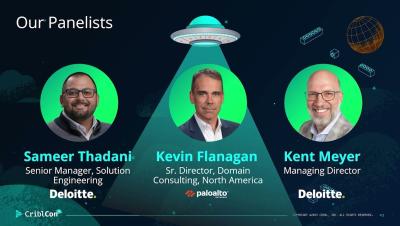
Security teams are dealing with massive data growth, siloed tools, and constant alert fatigue. All of this makes it harder to detect and respond to threats. AI has become a key part of the solution, but its effectiveness depends on having access to complete, high-quality data. In this session, Palo Alto Networks and Deloitte will explore how AI and automation are redefining the modern Security Operations Center (SOC). Learn how leading organizations are leveraging intelligent workflows, automated threat detection, and machine learning to accelerate response times, reduce analyst fatigue, and strengthen overall security posture.

9 Best AI-Powered Stock Analysis Services in 2025: From Novice to Pro

AI powered stock analysis landscape has changed so much in a short time and by now an avalanche of game-changing tools have been created to help take your investing tactics to the next level and improve decision making. The market has been saturated with a list of options that can seem fruitful, but somewhat confusing as to which one will provide you the exceptional insights and service. So how can you know which tools are actually worth investing your precious time and dollars into?

5 Ways to Strengthen IT Governance Through Better AI Visibility

AI is transforming businesses fast, but most organizations are diving in without a clear view of what's actually running in their systems. That lack of visibility is more than a small oversight, it's a ticking time bomb. When you don't know which AI tools are active, it's nearly impossible to protect sensitive data, stay compliant, or manage costs effectively.

Treat Game Localization as Code - DevOps Guide 2025

Every DevOps engineer has lived the nightmare. Launch day. 3 AM. The Korean build still says "Press X to Pay Respects". The fix requires re-exporting 42 Excel sheets, re-signing the build, and praying Apple approves before the internet explodes. 68 % of delayed game updates in 2024 came from localization chaos (Game Dev Ops Report 2025). That's not just late patches - that's real revenue bleeding out.

Pepperdata Launches Optimization for AI Infrastructure, Delivers up to 30% Savings on GPUs

ATLANTA - November 10, 2025 - Pepperdata, the leader in Kubernetes resource optimization in the cloud and on prem, today announced the general availability of pepperdata.ai, a groundbreaking, automated optimization solution to reduce the cost of running AI workloads on GPUs. Attendees are invited to visit Pepperdata's booth at KubeCon and CloudNativeCon North America 2025 on November 11-13 at the Georgia World Congress Center in Atlanta, GA, to discover how Pepperdata helps organizations-including members of the Fortune Five-automatically maximize the efficiency and cost-effectiveness of their AI infrastructure and workloads.

BigPanda Acquires Velocity: Accelerating the Future of Agentic IT Operations

Today marks an exciting milestone for BigPanda and for the future of IT Operations. We’re thrilled to announce that BigPanda has acquired Velocity, an AI SRE company whose technology and team share our passion for transforming how enterprises keep the digital world running. Velocity brings deep expertise in Site Reliability Engineering (SRE) and major incident response, developed alongside some of the world’s most sophisticated technology organizations.

Why Agentic AI Adoption Is Accelerating in Europe and What Comes Next

Across Europe, the cautious optimism business leaders held towards AI agents has evolved into more widespread enthusiasm. What was once a curiosity is now core to how many European organizations operate, respond, and innovate. According to PagerDuty’s latest agentic AI survey, three-quarters or more of organizations in France, Germany, and the UK are deploying multiple AI agents. This growing confidence reflects a broader trend.

How to Choose an AI SRE Solution

The AI SRE landscape has exploded over the past year, with vendors racing to add artificial intelligence capabilities to their platforms. For engineering leaders evaluating these solutions, the sheer number of options can feel overwhelming. Some vendors are building AI-native solutions from scratch, while others are retrofitting AI onto existing workflows. Cloud providers are embedding agents into their ecosystems, and observability platforms are adding intelligence layers to their telemetry data.

What Happens When You Mix AI With Docker?

Discover how Docker is empowering developers in the GenAI era with tools that simplify AI application development. Docker VP of Product Michael Donovan shares how containers are critical for building, testing, and scaling GenAI applications, plus real solutions for the biggest challenges developers face today.

Data Center Vacancy Rates at an All Time Low: What Can You Do?

Data center vacancy rates in North America have hit record lows, with reports from CBRE and JLL indicating figures between 1.6% and 2.3% as of mid-2025. This is driven by exceptionally high demand from hyperscale and AI users, which is outstripping supply and leading to significant competition for space and power. The tight market is expected to continue through at least 2027, with preleasing of new construction at high levels.

How Smart Robots Work: AI Perception, Planning & Execution Explained

Imagine a future where machines not only perform physical tasks but also learn, adapt, and make intelligent decisions in dynamic environments. This future is rapidly becoming a reality with the advent of smart robots, poised to revolutionize industries from manufacturing to healthcare. In this article, we'll delve into smart robots: what makes these intelligent machines 'smart', how they perform tasks, and how they are reshaping the operational landscape.

Generation AI (Episode 5): How generative AI Is shaping the future of the marketing technology stack

Description: The next golden age of artificial intelligence has arrived, but the path forward is far from certain. Technology leaders are presented with a tremendous opportunity to revolutionize their business — that is, if they can find a way to tap into the full potential of their organization's data. In Episode 5 of Elastic's new limited series, Generation AI, marketing and IT leaders share how they believe AI will shape the future of marketing technology and workflows.

Unify Observability, Surface Business Impact, and Solve Problems Using AI Agents with Latest Splunk Observability Innovations

In September at.conf25, we announced how Splunk is shaping the future of digital resilience in the age of AI. Agentic AI is rewriting what it takes to build a leading observability practice. As vibe coding gains steam, applications will be built with less human involvement. At the same time, the rise of AI agents demands specialized telemetry to ensure models are performing as intended—aligned to their business purpose and cost.

New Feature Friday: AI Readiness and AI Maturity

Everyone wants to move faster with AI. But are you ready for it? In this Feature Friday, Jeff from Cortex shares how working with AI tools like Claude helped him write better code — and why true AI maturity starts with solid engineering hygiene. You’ll learn: “With great power comes great responsibility… and better tests.".

Show Me the AI: Rethinking How AI Fits Into Network Operations

Over the last couple of years, nearly every network and infrastructure observability platform has added the word “AI” to its messaging. Some have introduced helpful capabilities. Others have simply added a chatbot on top of the same dashboards that have existed for a decade. In many ways, the term has started to lose meaning. But inside network operations, the conversation hasn’t disappeared. It has simply become more blunt.

When AI Thinks and Humans Act: The Future of Operational Resilience

Artificial Intelligence has become the sharpest tool in the digital arsenal – detecting anomalies, predicting failures, and uncovering risks before they unfold. Yet even the smartest system can’t roll up its sleeves and fix what’s broken. AI can see the problem. But only people can solve it. That’s the critical gap in today’s automation revolution: turning AI’s insight into human action.

AI Agents Observability with OpenTelemetry and the VictoriaMetrics Stack

Nowadays, AI agents are becoming more and more popular and often deployed as part of production systems. However, this rapid adoption brings unique observability challenges that require flexible solutions. On the one hand, AI agents are fundamentally just like any other software services that produce the same classic observability signals we’re familiar with: metrics, logs, and traces.

Fix an error in Copilot without leaving your IDE

Production errors are every developer's nightmare. You're enjoying your coffee when suddenly alerts start firing - users are experiencing crashes, and you need to find and fix the issue fast. In this video, we'll walk you through how to use AI to diagnose and fix critical errors in an application using Rollbar's MCP (Model Context Protocol) server.

The Role of Digital Solutions in Business Continuity

In 2025, digital solutions can play an instrumental role in ensuring business continuity for US companies amid evolving risks and technological demands. It is the businesses that keep pace with key technologies, strategies, and trends that benefit from continuity and long-term success in the modern era. Read on to find out more about the role of digital solutions in business continuity in 2025.

Speedscale Proxymock: Freely testing cloud native apps alongside AI code assistants

We’ll always remember 2025 as the year AI code assistants went big. Copilot, Cursor, Claude, Windsurf, whatever. Developers went from mistrusting these tools, to being expected to turn over much of their coding labor to them. Even if, according to an extensive Stack Overflow survey, only 3 percent of professional developers say they ‘highly trust’ AI coding tools.

Building smarter with AI: Why legacy infrastructure is the biggest bottleneck

Josh Mesout (Chief Innovation Officer at Civo) took the main stage at Civo Navigate London 2025 to deliver a critical message: The AI revolution isn't just coming, it's here, and the way companies are built is changing faster than ever before. His session cut through the hype, delivering hard data on what separates the companies that scale AI from the ones that sink money into failed prototypes. The takeaway is blunt: The biggest threat to your AI ambition isn't the model; it’s your infrastructure.

E9: Leveraging GenAI and last-mile automations to improve operational efficiency in ServiceDesk Plus

In this ninth episode of Masterclass 2025, discover how your enterprise can leverage generative and predictive AI features paired with last-mile customizations to meet your unique service delivery needs.

You Can't Fix What You Don't Measure: Observability in the Age of AI with Conor Bronsdon

Only 50% of companies monitor their ML systems. Building observability for AI is not simple: it goes beyond 200 OK pings. In this episode, Sylvain Kalache sits down with Conor Brondsdon (Galileo) to unpack why observability, monitoring, and human feedback are the missing links to make large language model (LLM) reliable in production.

Access Real-Time Infrastructure Data With Puppet Infra Assistant #puppet #itautomation #aiops

Puppet Infra Assistant allows easy access to real-time infrastructure data to make faster data driven decisions. Be future-ready and effortlessly access vital infrastructure data with Puppet Infra Assistant; no Puppet experience required.

Densify Releases New MCP Server to Bring AI-Driven Resource & GPU Optimization to Platform Teams

As excitement builds for KubeCon North America 2025 in Atlanta, Densify has released its latest innovation for Kubernetes and AI-driven infrastructure resource management: the Densify Model Context Protocol (MCP) Server. This new capability enables organizations to securely integrate Densify’s Kubex resource optimization intelligence directly into popular LLM-powered tools — including ChatGPT, Claude, Cursor, and Gemini CLI.

AI Eliminates Pollution Risk: Oxford's Digital Contrast, Powered by Civo.

The future of medicine is here: Oxford's digital contrast AI is powered by Civo! Watch as Regent Lee, Professor at the University of Oxford and moonshot engineer, reveals a revolutionary solution to healthcare’s biggest hidden problem. Radiology currently accounts for 1% of global carbon emissions, with a single PET CT scan generating up to 60 kg of carbon, while forcing patients to endure long waits and chemical injections. Old habits cause slow systems.

The AI Knowledge Agent: Making Internal Developer Portals Smarter

AI is generating more code than ever, but delivery hasn’t kept pace. The Harness IDP Knowledge Agent helps teams close that gap by turning their internal developer portal into an intelligent platform for faster, safer software delivery. Joining a new engineering team can be exciting, but it can also be overwhelming. You spend the first few days figuring out what each service does, where documentation lives, and who owns what.

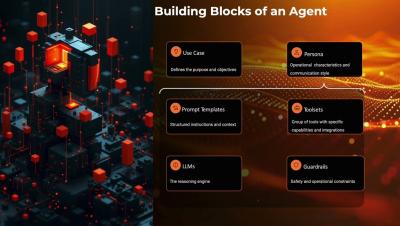
Building dbRosetta Using AI: Part 2, Defining the Project & Prompt Templates

This is the next installment of the series on building a database and an application called dbRosetta using AI/LLM. Part 1 introduces the concept. THE AI PICKED DATABASE FIRST! Look, I talk databases at this thing a lot, so it probably knows my own preference, but when I asked it, it chose to build a database separate from the code. Let’s get into it.

What Are AI Guardrails

When you're shipping LLM features, a lot of the work goes into keeping the model's behavior predictable. You deal with questions like: These are everyday concerns when you integrate LLMs into production systems. Guardrails AI provides a Python framework that helps you enforce those expectations. You define the schema or constraints you need, and the framework validates both the inputs going into the model and the outputs coming back.

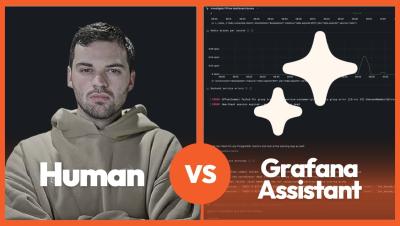
Can a Human Beat Grafana's AI at Its Own Game?

Grafana Assistant just went GA at ObservabilityCON, and it’s already changing how developers onboard, troubleshoot, and build dashboards in Grafana Cloud. In this video, we put it to the ultimate test — a head-to-head challenge between me and the Grafana Assistant. Who can onboard an app into Grafana Cloud faster and more accurately? Chapters: Watch as we explore: How the Grafana Assistant simplifies onboarding and setup Building dashboards for Redis, Kafka, and Postgres The power of using community dashboards vs. manual configuration Whether AI can truly speed up observability workflows.

Work Where Your Teams Already Are with PagerDuty's AI Agents for Slack

Modern operations happen in Slack, where teams spend their days collaborating, troubleshooting, and resolving incidents. And while many incident management tools offer Slack-friendly experiences, they lack end-to-end capabilities that teams need. During critical moments, other tools may require users to switch between Slack and their own interfaces, creating friction.

From Observability to Network Intelligence: How Kentik Built the Foundation for Networks That Think

The age of dashboards is ending, as observability has only created more noise for network teams to sift through. Kentik SVP of Product, Mav Turner, lays out why true network intelligence requires a clean, contextual data foundation to finally create a network that thinks.

Agentic AI in Action: How OpenAI, Tribe AI and LogicMonitor See Enterprises Preparing for Autonomous IT

Recommendation: Focus your next AI initiative on one high-impact workflow. Measure, iterate, and scale. Agentic AI has quickly become the next frontier of enterprise automation. Instead of static AI tools that wait for human prompts, agents act on behalf of users by autonomously reasoning, sequencing steps, and taking action within defined guardrails.

The New Open 360 AI Experience

Experience the new Open 360 AI, built to help you explore, analyze, and act on your observability data in a smarter way. See how the AI Agent works directly inside dashboards to explain anomalies, summarize trends across your telemetry data, and guide you to root cause, without switching views or writing queries. Everything you know and love is still here, now enhanced with AI.
Sponsored Post

Transform your workflow with Raygun's remote MCP

We're happy to announce Raygun's new remote MCP server, giving AI tools direct access to live error data so they can investigate issues, surface root causes, and take action with real context, not guesses. It's been nearly a year since Anthropic released the Model Context Protocol (MCP), and a lot has changed in the AI space. Since then, almost all major players now support MCP, allowing them to tap into the massive and ever-expanding catalogue of MCP servers. When MCP first launched, we shipped our own Raygun MCP within 48 hours of the spec dropping, which was an early step toward giving LLMs visibility into Raygun data.

Breaking down AI adoption barriers feat. Ivanti's Scott Hughes

ivanti.com/itsm-automation Unlock the secrets to successful Agentic AI deployment and widespread AI adoption in your organization with insights from Scott Hughes, SVP of Revenue Operations and Corporate IT at Ivanti. This video explores why IT-business alignment is critical, the importance of high-quality data, and how legacy infrastructure poses challenges for effective AI integration. Key insights.

Building Smarter AI Products #Datadog #DASH #AI

AI capabilities are advancing faster than ever — transforming how teams design, build, and ship intelligent products. In this teaser from Building Successful AI-powered Products at Datadog DASH, experts discuss the rise of agent-based systems, evolving model capabilities, and how to stay ahead in the new era of automation.

Coffee and Claude: How Honeycomb MCP Makes AI Work for You

If you caught our recent Introducing Honeycomb MCP: Your AI Agent’s New Superpower webinar, you know it was a lively mix of big ideas, demos, and a few laughs about the messy, fast-moving world of AI. Hosted by Austin Parker, Morgante Pell, and James Bland from AWS, the conversation explored how Honeycomb’s new Model Context Protocol (MCP) is changing the way developers and AI agents interact with data.

How to Optimize GPU

The Problem: AI workloads are dynamic, unpredictable, and expensive. Data prep can choke your pipeline, training jobs hog GPUs without awareness, and inference, the most latency-sensitive phase, is notoriously hard to scale efficiently. Worse, traditional infrastructure tools treat GPU as a static commodity, ignoring model intent, workload shape, and sharing capabilities.

Orbital Materials: WorldClass AI Models Built on CivoStack

Daniel Miodovnik, COO of Orbital Materials, explains how the CivoStack enables world‑class AI models that outperform the big‑tech giants. He outlines the power‑draw and cooling of megawatt‑scale GPU racks, the water‑ and CO₂‑intensity of today’s data centres, and why a sovereign, Civo‑based solution is the key to speed, and predictable costs.

Bridging the Gap Between AI Writing and Human Expression

Never before has AI dominated the content we read every day as much as today. As each day passes, the online and offline worlds are being filled with AI writing, and soon, it will become difficult to find the human touch in any content. With AI being so prevalent, it has raised an important question: Will the human essence in writing just disappear as we let AI generate more and more writing each day? Does it really have to be an ongoing fight between human creativity and machine algorithms?

Building dbRosetta Using AI: Part 1 of Many

Like many of you, over the last couple of years, I’ve been using AI, or, well, let’s just name it appropriately, Large Language Models (LLM), as a part of my job. I’ve also used it in my hobby. With it, I’ve generated snippets of code, tested data conversions, even built a small database for a presentation. However, to date, I haven’t tried doing everything through the LLM. Now, I’m going to.

AI Agent for Proactive Problem Management: A Shift Toward a Ticketless Future

As organizations rely on increasingly complex IT infrastructures, incident management often turns into a constant cycle of alerts, escalations, and fixes. While reactive responses may keep operations running, they rarely address the deeper systemic issues that slowly erode performance. Recurring incidents, silent failures, and hidden patterns are usually symptoms of unresolved root causes that traditional approaches struggle to uncover.

AI And Sustainability: Measuring The Impact Of The Generative AI Boom

Before 2022, Alex Hanna worked on Google’s Ethical AI team. Today, she’s the director of research at the Distributed AI Research Institute, a transition sparked by Google’s handling of a paper exposing AI’s growing environmental footprint. So, how bad is it, really? That depends on who you ask. Take Jesse Dodge, a senior research analyst at the Allen Institute for AI. Jesse told NPR that a single ChatGPT query can use as much electricity as keeping a light bulb on for 20 minutes.

Rovo AI: Create Work Items from Loom | Demo Den | Atlassian

Ever wish you could turn a quick Loom recording into Jira work items without all the manual typing? Now you can! In this Demo Den episode, Pierre walks through a new Rovo AI feature that automatically converts your Loom videos into actionable Jira work items. Whether you're recording bug reports, feature requests, or project updates, Rovo handles the data entry for you. What Pierre covers: Turning Loom videos into work items with Rovo How it works in your AI-enabled Jira instance.

Why AI Coding Assistants Fail (And How to Fix Them)

Why do developers stop using AI coding assistants? According to Carnegie Mellon research, the top reason is unhelpful suggestions. Tabnine's Principal Architect John Feeney explains how context transforms AI coding tools from generic to genuinely useful. Learn the 4 Cs framework for maximizing AI assistant value: Context (workspace indexing), Connection (repo integration), Coaching (rules-based guidance), and Customization (fine-tuning). Discover how Retrieval Augmented Generation (RAG) helps AI understand your codebase, not just open source patterns.