


|
By Lucian Daniliuc
If you spend any time around Claude, Cursor, or ChatGPT lately, you have seen the letters “MCP” show up everywhere. Every tool suddenly has an MCP server. It sounds like another acronym you are supposed to already understand. Here is the plain version, and then why it actually matters for something as unglamorous as uptime monitoring.

|
By Lucian Daniliuc
Most uptime tools tell you a site is down by sending you an email. That is fine until you actually need it to work. Email is slow when it matters most, it lands in spam or a Promotions tab on exactly the wrong morning, and your code cannot do anything with it. You cannot route an email to your on-call channel, fan it out to SMS, or have a script react to it. You read it, then you go do the thing by hand. A webhook fixes all of that.

|
By Lucian Daniliuc
Here is a failure mode that has bitten me more than once. CI goes green. The deploy step says success. Slack gets the little checkmark. And the site is down anyway. It happens because “the deploy script exited 0” and “users can actually reach the service” are two different claims, and most pipelines only check the first one. The container started, sure.
|
By Lucian Daniliuc
Most uptime tools assume you will log into a dashboard, click around, fill in a form, and set up an alert. That is fine, until you are three terminals deep shipping a feature and the last thing you want is another browser tab. So we built Monitive to work the other way around. It speaks API first, and it ships an MCP server. If you already live inside Claude, Cursor, or any MCP-aware tool, you can create and check monitors by just asking, in plain English. No dashboard required.
|
By Lucian Daniliuc
This one is a story, so bear with me. Back in March, I was on a run on Koh Phangan, an island in Thailand. Thirty degrees, blazing sun, the kind of heat where your brain either shuts off or runs unusually clear. Mine went with clear. I was turning over a question I had been sitting with for a while: how do you stay relevant in a world that is leaning hard into AI agents? The actual road. Thirty degrees, golden hour, and a question about staying relevant. Somewhere on that run, two ideas landed.

|
By Lucian Daniliuc
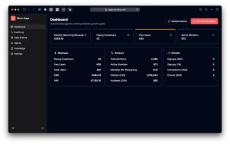
The AI sidekick called Dossinth I'm building is starting to take shape. So far, it became a moderately useful CRM, with a nice dashboard, and event log, daily briefing (which I am also receiving by email), account management and knowledge base. It's less AI and more CRM. For now. Here's a quick tour...

|
By Lucian Daniliuc
The AI saga continues. I feel like every business felt like they had to add some AI into their product to stay relevant, but reality shows us that's not the case. Same thing at Monitive. Not looking to add AI to our service until it proves its usefulness. However, using it as an internal tool is all doable. I am still not 100% convinced of its usefulness, but I am hoping to radically improve my relationship with our customers, and - thus - the service itself.
|
By Lucian Daniliuc
It's starting to take shape. We have a dashboard, we're collecting some metrics, and I'm getting a daily briefing every morning. Also, I have an event log where all the events are going into (the spine of the system), and there's a knowledge base which consists of a GitHub repository which is vectorized and indexed. Its first use is adding context to Herald, the agent that sends me the morning briefing. More details to come.

|
By Lucian Daniliuc
Continuing my adventure to have Monitive being run by AI Agents, I had some brainstorming sessions with... well... AI. I was impressed about the maturity of the discussions one can have with ChatGPT 5.1 Pro and Claude Code Opus 4.5.

|
By Lucian Daniliuc
Recently I've been to Lisbon's Web Summit conference, a 3 day, 70,000 participants, 15 stages, 800+ speakers event. Even though there was a track called "AI Summit", all the talks were about AI and AI Agents and how the future of the web, business, economy is more and more AI, and how businesses and people should take steps to adapt as soon as possible to an online world managed and operated by Artificial Intelligence.
|
By Monitive
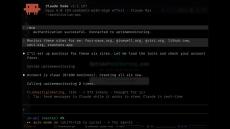
Create and manage uptime monitors without leaving your editor. In this demo I connect Claude Code to UptimeMonitoring's MCP server with one command, then just ask it to monitor six sites. It creates all six, runs the first check, and reports back, then shows the live monitors in the dashboard. What UptimeMonitoring is: MCP is a thin layer over a normal REST API; if you'd rather curl + cron, that path is first-class.

|
By Monitive
Is your site up? Stop wondering and start monitoring. Here's a quick intro about Monitive, what we do, why we do it, and more important, why do YOU need it if you own a website.
Monitive is an uptime monitoring service, where users sign up and input their website address, which we check every minute, from a random location around the world, and instantly notify them when their site is down.
Monitive is the most easy to use uptime monitoring service ever. You don't need to install anything, since Monitive runs ''in the cloud''. Built by humans, both for the non tech-savvy and for elite engineers.
Benefits:
- Stay Focused: Focus on growing your business and let us keep an eye on your website. Feel free to ignore your phone. If something isn't right, we will call you. One less thing to worry about.
- Save Money: Finally, you'll be the first to know when your website or services are down. By acting quickly, you will save money, your reputation and improve your business.
- Set It and Forget It: The setup takes under 30 seconds. Type your name, email, phone number and your website's URL. We will take it from there and monitor your website every minute from 6+ locations.
- Get powerful insights: Weekly and monthly uptime reports ensure you get clarity on your websites' performance. Take action and keep up your SLA, including website response time (latency).
Detect downtime before your customers do.