Operations | Monitoring | ITSM | DevOps | Cloud

Cavalry or cattle? Let the machine decide

Long before dashboards and decibel-loud alerts, there were watchtowers. Every kingdom worth its salt had them, men perched on hills, lighting fires to signal the moment they spotted something suspicious on the horizon. It was, in its time, a fine system. The trouble was that watchmen, being human, occasionally mistook a herd of cattle for an invading army, or a dust storm for smoke, and lit their fires anyway.

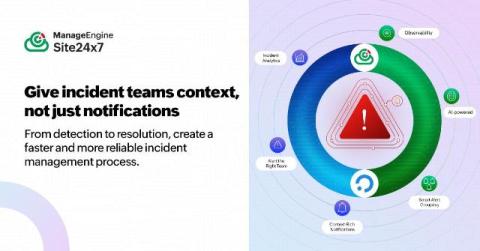
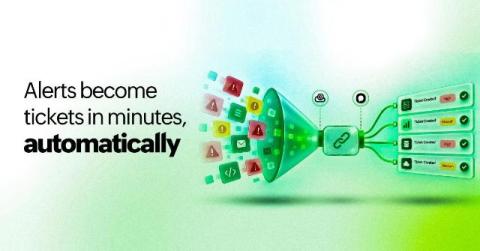
How to build a resilient incident management workflow using ilert

Your payment API suddenly returns 503 errors. Within seconds, your infrastructure monitors, application checks, and dependency monitors begin generating their own alerts. And while the dashboards keep flashing, the clock is still running. Your customers are waiting, internal teams are asking for updates, and engineers are trying to separate the real problem from the noise before the situation gets worse.

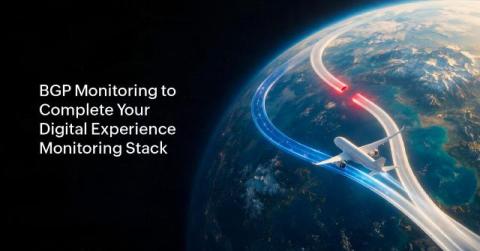
BGP monitoring: Fixing the blind spot in your digital experience monitoring stack

Without Border Gateway Protocol (BGP) monitoring, your digital experience monitoring (DEM) stack can't detect the route hijacks, leaks, or instability that prevent users from reaching your applications. Most DEM stacks miss this entirely, and that gap is where some of the most damaging, hardest-to-diagnose outages happen.

How to install Kubernetes using OpenShift's CLI | Site24x7

Running Kubernetes on Red Hat OpenShift adds powerful enterprise capabilities—but also introduces operator-driven workloads, stricter RBAC and SCC policies, and platform-specific complexity. In this video, learn how Site24x7 enables platform-aware monitoring for OpenShift environments, helping DevOps and platform teams gain complete visibility without blind spots.

ManageEngine CloudSpend tutorial: Cost allocation report for AWS, Azure, and GCP

Learn how to use the Cost Allocation report in ManageEngine CloudSpend to accurately split, track, and attribute your multi-cloud spend across AWS, Azure, and GCP. This step-by-step tutorial shows you how to create a cost allocation, choose accounts, apply labels, configure allocation levels, and read the hierarchical allocation report by cloud, account, and region. Cost allocation is the foundation of FinOps. It tells you exactly which teams, projects, and cost centers are driving your cloud bill so you can charge back, budget, and optimize with confidence.

AI-powered monitoring with Site24x7's Zia

In this video, you'll learn how to integrate Large Language Models (LLMs) with Site24x7 using Bring Your Own Key (BYOK), Zoho Key Services (ZKS), and Microsoft Azure OpenAI. Discover how Zia helps you analyze outages, understand performance issues, identify root causes, and get monitoring insights using simple natural-language queries. What you'll learn.

Site24x7 Free Training Series - Session 1: Introduction, Website Monitoring, RUM & DRA

Welcome to Day 1 of the Site24x7 Training Program! This is the first session in our 5-part training series covering every module of Site24x7. In this session, we introduce the platform and take a deep dive into: Website Monitoring Real User Monitoring (RUM) Digital Risk Analyser (DRA) Session 1 – Introduction & Website Monitoring, Real User Monitoring, Digital Risk Analyser.

How Agentic AI speeds up troubleshooting application issues

One night, Daniel Rizzy was the only person awake on Zylker’s IT team, and the clock was already running. He was also the only thing standing between a P1 outage and 10,000 customers. Rizzy works nights for ZylkerXchange, Zylker’s foreign currency exchange app. He lives on the city’s outskirts, where the air is clean and quiet, and the night shift suited that life. Most nights, nothing happened. Some nights, everything did.

Improving MTTR with AIOps: Myth or Fact?

There was a version of daily life, not long ago, that ran entirely on physical effort. Booking a trip meant a visit to a travel agent. Ordering lunch meant walking to a restaurant or calling and hoping someone picked up. Buying something for the home meant a trip to the store and a checkout queue. Paying a bill meant visiting a bank branch and engaging with a teller. None of it was instant, and nobody expected it to be.