


|
By Dallon Robinette
During an incident, the answers an engineer needs are spread across tools. Telemetry sits in one place, configurations in another, and tickets in a third. Building a complete picture means knowing which tool holds which piece and how to query each one, usually under time pressure. Rosetta is the conversational interface for Selector Foundry, the agentic NetOps platform built on Selector’s existing AIOps and Observability solution.
|
By Dallon Robinette
Network operations teams have heard plenty about AI this year. Most of it answers the alert in front of it, then hands the rest of the incident back to an engineer. Someone still has to correlate the evidence, find the cause, prepare the fix, and prove it held. This week, we announced Selector Foundry, the agentic NetOps solution built into the Selector platform. Foundry adds a team of specialized AI agents on top of the full-stack observability and AIOps foundation our customers already run.
|
By Dallon Robinette
Every network engineer carries an instinct that outsiders mistake for caution: a change in one place can travel. Reroute a path, push a policy, drop an interface, and the effect can ripple across campus, data center, WAN, and cloud before the first alert is read. The blast radius of a network change is the reason operators move deliberately, and it is the single most important thing an AI agent takes on the moment it is allowed to act on the network instead of merely describe it.
|
By Dallon Robinette
It is 2:14 a.m. An agent has correlated a latency spike to an asymmetric routing condition and is ready to reroute traffic away from the affected path. The plan looks right. The only question that matters to the on-call SRE is whether to let it run, and that question is not really about the agent. It is about whether the picture the agent reasoned from is complete enough to trust at 2 a.m. with production on the line.

|
By Dallon Robinette
Most CSP assurance roadmaps now carry an AI line item. Fewer have a clear answer for what that AI actually runs on. Over the past year, the working question across operators and vendors has narrowed to something practical: how to put agents to work in assurance while keeping operators in control.

|
By Dallon Robinette
Every vendor in networking has an agent story right now. The useful question for an operations leader is which of those agents can plan, act, and verify against a trustworthy model of the network, and which are assistants that retrieve and suggest, then leave the decision to a person. The direction of travel is settled.

Selector named in the 2026 Gartner Reference Architecture Brief: Next-Generation Enterprise Networks
|
By Dallon Robinette
A reference architecture is a set of design decisions made explicit, and the interesting parts are usually the consequences the authors chose to name. Data center, campus, WAN, cloud, and edge each run on their own platforms, often from different vendors, and the architecture takes that fragmentation as its starting point rather than a problem to wish away.
|
By Dallon Robinette
Walk into a network operations center this year and the useful AI is not running the place. It is doing three specific jobs, and doing them well: cutting an alert storm down to the one incident that matters, pointing at the likely cause, and deciding what deserves a human’s attention first. That is where AI in NetOps pays for itself right now. The part worth noticing is that all three jobs lean on the same thing.
|
By Dallon Robinette
For roughly fifteen years, operating a network has meant living inside a vendor dashboard. An engineer’s skill was, in large part, the ability to read those panels quickly and act on what they showed. Gartner’s read in “The Future of NetOps Is Agentic” is that this arrangement is closing, and sooner than most teams have staffed for.
|
By Dallon Robinette
Network teams have never been short on expertise. What they are short on is time. As enterprise environments stretch across on-premises infrastructure, cloud, and service-provider domains, the work of investigating issues, validating changes, and coordinating a response across tools and teams has outrun what human-driven operations can sustain.
|
By Selector
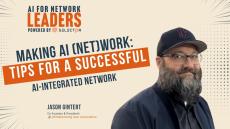
AI in network operations has moved past the demo. In some shops it's already cutting detection time and clearing the alert noise that used to bury the engineering team. In others, a promising rollout has quietly stalled the moment it met production. That difference between the two rarely comes down to the model, it comes down to how the AI gets integrated into the network and most importantly, the team around it.

Built to amplify: how Lumen is rethinking teams and technology in the AI era by Greg Freeman | AIFNL
|
By Selector
Last year, Lumen shared its AIOps roadmap. This year: two updates. First, how Lumen's thinking on AI-era org design has shifted — including why the instinct to cut junior headcount is a trap, and what sustainable team structures look like instead. Second, what Lumen built as a result: a single AI core (AskGreg) extended into a customer-facing email agent (NORA), a chatbot, and an in-progress voice agent — all leveraging the same modular platform. Live video demos show the system diagnosing network problems from alarm data and driving real-time network decisions. The closing thesis ties it together.
|
By Selector
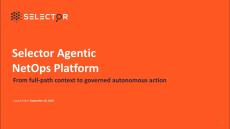
Get a sneak peek video of how Selectors Agentic platform is going to transform modern network operations.

|
By Selector
A leading communications service provider partnered with @selector1327 to create an operational twin of its network, enabling faster root cause analysis and improved operational efficiency across a massive, multi-domain infrastructure.

|
By Selector
Unify cloud, network, and infrastructure telemetry into a single shared intelligence layer to get to root cause faster.
|
By Selector
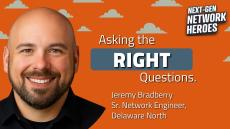
What can decades of hands-on operational experience teach us about the future of AI-driven networking? In this episode of Next-Gen Network Heroes, host Bob Slevin sits down with Jeremy Bradberry, Senior Network Engineer at Delaware North, for a conversation that spans everything from legacy manufacturing systems and mainframes to modern AI-assisted network operations. Jeremy shares how his early career working in industrial environments shaped the way he approaches networking today, giving him what he calls an “X-ray vision” into how technology connects directly to business operations.

|
By Selector
What happens when decades of operational experience meet modern AI-driven networking? In the latest episode of Next-Gen Network Heroes, Bob Slevin sits down with Jeremy Bradberry, Senior Network Engineer at Delaware North, to explore how network engineers can modernize infrastructure without losing sight of the operational realities behind the technology. Jeremy shares lessons learned from working on legacy manufacturing systems, how AI is helping engineers analyze data and automate workflows faster than ever before, and why strong standards still matter in today’s AI era.

|
By Selector
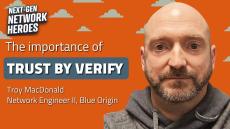
Most people think great network engineers are defined by technical expertise. This episode challenges that idea. Because what Troy McDonald shows is that the real differentiator isn’t just technical skill—it’s the ability to translate complexity into clarity. From military operations to enterprise networks, one lesson keeps showing up.
|
By Selector
What does it take to succeed in networking when complexity is constantly increasing, and change never slows down? In this episode of Next-Gen Network Heroes, host Bob Slevin sits down with Troy (David) MacDonald, a network engineer at Blue Origin and former U.S. Army Chief Warrant Officer, to explore a career that spans from infantry beginnings to designing and managing large-scale, mission-critical networks.
|
By Selector
AIOps is ushering in a new era in which enterprise operations are fully autonomous under the supervision of operations staff. However, this shift requires an evolution of current practices and technologies. In this comprehensive guide, we present a four-stage model for embracing AIOps, going from the lowest level to the highest visionary state.
- October 2026 (1)
- September 2026 (4)
- August 2026 (5)
- July 2026 (6)
- June 2026 (4)
- May 2026 (13)
- April 2026 (15)
- March 2026 (3)
- February 2026 (5)
- January 2026 (1)
- December 2025 (1)
- November 2025 (3)
- October 2025 (6)
- August 2025 (8)
- July 2025 (5)
- June 2025 (2)
- May 2025 (4)
- April 2025 (3)
- January 2025 (1)
- November 2024 (1)
- October 2024 (3)
- September 2024 (7)
- August 2024 (8)
- July 2024 (1)
- June 2024 (2)
- April 2024 (3)
- March 2024 (1)
- February 2024 (1)
Selector uses artificial intelligence, machine learning, and LLM-driven, self-serve analytics to provide instant access to actionable insights and reduce MTTR by up to 90%.
Selector AI is the industry leading AIOps platform designed to provide instant, real-time actionable insights for managing multi-domain network and application infrastructures. By bringing together multiple sources of data into one easy to use platform, IT teams can troubleshoot network issues faster, avoid downtime, reduce MTTR and improve efficiency.
Platform Features:
- Anomaly Detection: Uncover underlying issues sooner with machine learning insight.
- Event Correlation: Identify related issues across multiple data sets to get to root cause.
- Smart Alerting: Cut through alert fatigue with automatic event prioritization.
- Selector Copilot: Leverage your collaboration tools to access analytics.
- Log Analytics: Consolidate and analyze all log data for greater insight.
- Integrations: Integrate easily with your preferred or legacy tools.
The World’s 1st Unified Monitoring and AIOps Platform.