
Operations | Monitoring | ITSM | DevOps | Cloud

Free Space APIs: Useful Data for Building Smarter Applications

Space data is no longer limited to government agencies, research institutions, and specialist aerospace companies. Developers can now use APIs to bring satellite imagery, orbital information, astronomy data and other space-related datasets directly into their applications. Free space APIs are particularly useful when testing an idea or building a prototype without committing to expensive infrastructure from the outset. The right option, however, depends heavily on the type of data you actually need.

Day 2 Operations for AI-Generated Code: What Changes When You Didn't Write It

We have all watched AI speed up the way we write software. With tools like Copilot and ChatGPT, developers can spin up boilerplate, write complex functions, or draft entire micro services in minutes instead of days. It feels like magic. But there is a silent catch that we do not talk about enough: writing the code is only Day 1. The real challenge is Day 2 operations, which is everything that happens after that code is deployed.

React Native Is Not the Risk in Healthcare App Development. Poor Architecture Is.

Healthcare technology leaders keep hearing the same warning: React Native adds risk to clinical, patient, and operational apps. That view misses the real issue. Risk does not come from the framework. It comes from weak architecture, loose integration design, unclear data ownership, and release models that treat healthcare like retail.

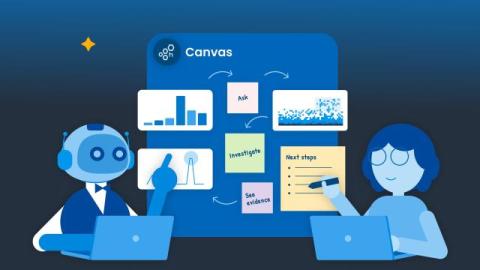
How Canvas Powers the AI Agent Development Feedback Loop

For teams building AI agents, the feedback loop should already be a familiar idea: watch how the agent behaves, find what needs improvement, ship a change, and measure the result. In theory, each turn builds on the last until the loop becomes a flywheel and your agent is getting more effective with each turn. In practice, many of us are still in reaction mode. A user reports something strange, costs spike, or an eval score drops.

The Missing Step in Mobile Release Operations: Store Screenshot Management

Mobile release teams are used to managing code, builds, test results, signing credentials and deployment approvals. Store screenshots often sit outside that system. They are treated as a final design request, passed between product, marketing and engineering in a collection of chat messages and shared folders.

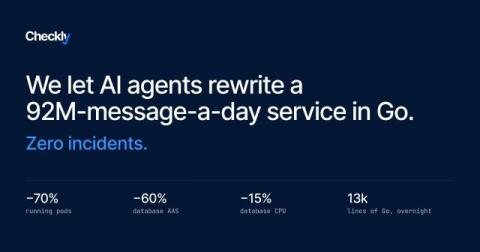
We Let AI Agents Rewrite a 92M-Message-a-Day Service in Go. Zero Incidents.

Our Results Daemon processes about 92 million messages a day. We recently rewrote it from Node.js to Go, and we let Claude Code write it. We wanted to know whether we could trust an agentic rewrite for a critical, high-throughput production service rather than a prototype. It shipped with zero incidents, a 70% reduction in running pods, and a lighter database load.

Developer Self-Service Pipelines with Harness IDP

Developer self-service pipelines fail most often at the handoff between resource provisioning and production deployment. A service catalog might let developers scaffold a new microservice in seconds, but if they still need to file tickets to wire up CI/CD, provision environments, or update deployment configurations, the value proposition collapses. The friction reappears exactly where velocity matters most: the path from code commit to running production workload.

How ArcSonic Tech Limited Approaches System Architecture Reviews for Scalability Readiness

Most systems fail to scale, not because the team didn't work hard enough, but because the architecture was designed for the load it had rather than the load it would eventually face. The features worked. The performance was acceptable. The code was clean enough. But the structural decisions made early - about how data flows, how services communicate, where state lives - created ceilings that only became visible when the traffic arrived.

Top 6 Multi-Agent Orchestration Tools for Software Teams

Software teams have already seen what single-agent tools can do. They can draft code, explain unfamiliar functions, summarize pull requests, generate tests, and clean up documentation. Those tasks are useful, but they do not solve the larger coordination problem that slows down engineering work.

Why Organisations Emulate Legacy Systems Instead of Rewriting Them

There is a persistent assumption in technology that old systems should be replaced. Legacy is treated as a synonym for obsolete, and the instinctive response to an ageing system is to rewrite it in something modern. Yet across industry after industry, organisations running critical legacy systems repeatedly choose a different path: rather than rewriting, they emulate. Understanding why reveals a great deal about how risk, cost, and continuity actually weigh against the appeal of a clean rewrite, and why emulation is so often the wiser engineering decision.