Operations | Monitoring | ITSM | DevOps | Cloud

Introducing Agent Studio and Autonomous Agents in InvGate Service Management

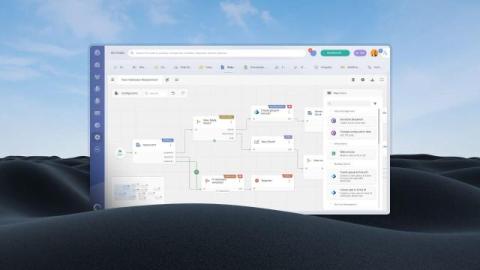
When AI knows how to resolve a ticket, teams still need a way to decide how much it can do on its own. Today, that often means choosing between keeping a human in charge of every action or giving the AI broad autonomy. There’s no practical middle ground, so teams get stuck wherever they started, usually the most conservative setting. Even when AI already knows the right answer, the ticket still ends up in a human’s queue.

New Digital Asset Inventory Capabilities in InvGate Asset Management

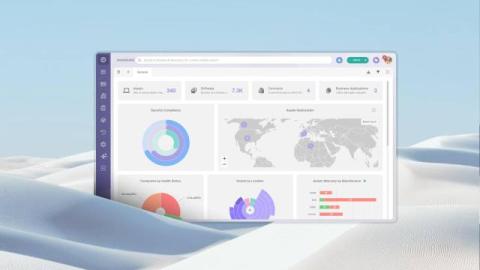
InvGate Asset Management now tracks certificates, AI agents, automation workflows, and scripts as native Configuration Items (CIs). Each one carries the ownership, lifecycle fields, alerts, and change history already applied to hardware and software records. The components that run daily operations without appearing in any inventory now have a place in one. These four CIs are a starting point rather than the full definition of a digital asset.

How to Manage Shadow IT in 2026: Detection, Policy And Control

Shadow IT is any hardware, software or IT resource running inside your organization that the IT department never approved, never configured and, in most cases, does not know exists. It covers the file sharing account someone opened with a departmental card, the personal laptop plugged into the office network, and the AI assistant installed on a work machine last Tuesday. None of it is necessarily malicious, and all of it sits outside every control you have.

IBM Warranty Check: How to do it And How to Automate it

An IBM warranty check sounds like a ten second task: type in the serial number, read the expiration date. In practice, a lot of people hit a sign in screen or a result telling them the machine cannot be found. The reason is rarely the serial number itself. Most hardware that people still call IBM is serviced by Lenovo today, so half of these lookups happen on the wrong website.

ITSM Maturity Model: The 5 Levels And Where AI Fits at Each One

An ITSM maturity model is a practical framework for measuring where your Service Management stands across people, processes, technology, and governance, then turning that baseline into a prioritized improvement plan. Most models describe five levels — from ad hoc to optimized — with clear characteristics and outcomes at each stage. This guide explains the levels, how to assess your current state, how to map capabilities to ITIL 4 practices, and actionable steps to get started.

InvGate Updates: AI Hub Reports, VSA in Slack, Asset Leasing and more

New updates are now available across InvGate Service Management and InvGate Asset Management. Watch the video for a quick look at our latest additions, including the AI Hub Reports to measure your Virtual Service Agent’s performance and the ability to interact with the Virtual Service Agent directly within Slack. We’ve also introduced an asset-based lease cost model for hardware contracts and added granular control over location and people access permissions by role.

InvGate Asset Management as an AMDB: CI Dependencies And The Complete Asset Record

Ask an IT administrator what they mean when they say they need a Configuration Management Database (CMDB), and more often than not, they are describing something else entirely: knowing what assets they have, who is responsible for each one, and what breaks if one of them fails. That is the job of the Asset Management Database (AMDB), the lifecycle record built to answer exactly those questions.