

|
By Rollbar
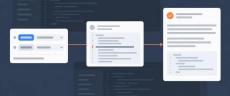
Until now, someone on your team had to start every root cause analysis in Rollbar. An alert fires, they open the item, read enough of the stack trace to decide it deserves an investigation, and start the analysis by hand, after dropping whatever they were doing. With Agent Automation, Resolve, Rollbar’s AI agent for root cause analysis and fixes, takes over that step. You write a rule once in Project Settings, and when an error matches it, Resolve starts the analysis on its own.
|
By Rollbar
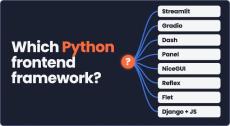
Search "best Python frontend framework" on Google and you'll get the same page over and over: a listicle ranking Streamlit, Gradio, Dash, NiceGUI, Reflex, and Flet, followed by a paragraph on each and a score out of ten that doesn't mean anything. None of them tell you which one to use for your project.
|
By Rollbar
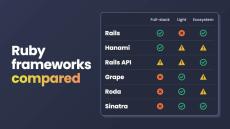
Search "best Ruby frameworks" and Google will give you a dozen posts that all say the same thing: a table ranking Rails, Sinatra, Hanami, Grape, and Roda, followed by a paragraph on each. None of them tell you which one to use for your project. That's because a ranking doesn't fit this problem. These frameworks aren't better or worse versions of each other. They're built for different jobs. Rails optimizes for full-stack productivity. Hanami optimizes for architectural boundaries.

|
By Rollbar
Laravel and Ruby on Rails are both full-stack, batteries-included MVC frameworks with an ORM, a templating engine, a CLI, and a shared philosophy: going from an empty folder to a working app shouldn't take fifty decisions first. Laravel wins when your team already lives in PHP, or when you want the largest possible pool of developers, packages (code other people have already written for common tasks), and hosting options to choose from.
|
By Rollbar
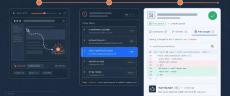
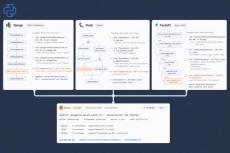
Your error monitoring tool found a bug. Now what? For most teams, the answer is the same thing it has been for years: copy the stack trace, find the file, read the code, build a mental model of what went wrong, write the fix, write or update a test, push, and wait for CI. That process hasn’t changed much since error tracking became a category. The tools got better at telling you something broke. They never got better at fixing it.
|
By Rollbar
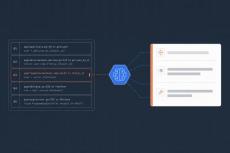
Your Python app is throwing errors in production right now. Some of them are obvious: a 500 response, an angry Slack message from support. But most are quiet. A background task swallows an exception. A race condition surfaces only under load. A third-party API returns unexpected data and your code handles it by not handling it. If you’re relying on log files and user reports to find these, you’re debugging after the damage is done.
|
By Rollbar
When an error appears in production, the hardest part often isn’t seeing what broke. It’s understanding why. That’s why we built Root Cause Analysis (RCA). It helps connect the dots between an error and its likely cause, so you can spend less time investigating and more time moving forward. Until now, RCA was only available through plans that included AI credits. Starting today, free plan users can purchase an AI credit subscription and use RCA without changing plans.
|
By Rollbar
Every few months a new "we migrated off Spring Boot" post washes across r/java or DZone. The numbers are always impressive. 60% memory reduction, 85% faster startup, cloud bill cut in half. The comments are always full of developers convinced they should be doing the same thing. Is Spring Boot really that bad now? I decided to do my own research. I read every credible public migration case study I could find. I ran benchmarks. I built the internal business case for switching two of our services.
|
By Rollbar
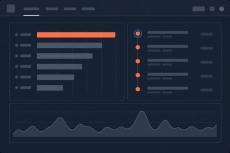
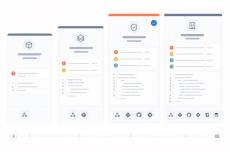
Your version and deploy health data no longer lives on separate pages. Versions and Deploys are now Dashboard cards, visible by default the next time you open Rollbar. Errors, versions, and deploys in one view, no more tab-hopping to piece together release health.
|
By Rollbar
You’re comparing error monitoring tools. You’ve narrowed it down to two or three options. Now you need to know what this actually costs before you bring it to your team. Here’s what Rollbar costs, what’s included at each tier, and how it compares to Sentry and Datadog on pricing. No sales pitch, just the math.
|
By Rollbar
Setting up Rollbar with your NodeJS application with custom parameters and people tracking.
|
By Rollbar
Setting up Rollbar with your NextJS application with custom parameters and people tracking.
|
By Rollbar
Setting up Rollbar with your Ruby on Rails application with custom parameters and people tracking.
|
By Rollbar
Setting up Rollbar with your Javascript application with custom parameters, people tracking, and session replay.
|
By Rollbar
Setting up Rollbar with your Javascript application in under a minute, with Session Replay included.
|
By Rollbar
For many engineering teams, Slack is the nerve center of daily work. It’s where incidents are discussed, decisions are made, and collaboration happens in real time. But when it comes to error alerts, Slack can quickly turn from helpful to overwhelming with noisy, context-poor notifications that developers learn to ignore. By integrating Rollbar with Zapier AI, teams can transform raw error data into clear, actionable, and meaningful Slack messages, resulting in faster triage, less alert fatigue, and smoother developer workflows.
|
By Rollbar
Context switching is one of the biggest hidden productivity killers in debugging. Jumping between multiple open browser tabs slows momentum and increases cognitive load, especially when you’re trying to diagnose an issue under pressure. Google Chrome's new split screen feature, paired with Rollbar Debugging Assistant, enables a faster, more focused way to troubleshoot errors without constantly losing your place.
|
By Rollbar
Front‑end bugs are notoriously hard to reproduce. By the time an error shows up in your monitoring tool, the most important context is already gone: *what the user actually did*. By letting an AI agent like Copilot analyze Rollbar's session replay data directly, teams can move from *“something broke”* to *“here’s exactly why it broke”* in minutes, not hours.

|
By Rollbar
In this video, we cover how you can use Rollbar, Zapier AI, and Google Sheets to create a completely automated reporting pipeline—one that generates weekly reports of Rollbar occurrences, organizes them in Sheets, and arms PMs with insights they can use to guide roadmap decisions, reduce risk, and improve user experience.
|
By Rollbar
How do you turn raw error payloads into clean, meaningful ticket summaries without touching a line of code? Engineering teams rely on fast, accurate error context to resolve issues efficiently. Rollbar does a great job capturing rich payload data at the moment an error occurs, but getting that data into your issue-tracking workflow can still require manual triage—especially if you want clean, human-readable summaries in Jira.

|
By Rollbar
Anything we can do to make debugging more efficient will lead to major cost and time savings. Currently, developers have to sift through alerts to pinpoint the root cause of errors and these alerts don't always contain meaningful data to help solve the problem. By grouping errors, developers have the opportunity to clear away the noise and focus on the bugs that are truly causing the most problems, making the task faster and more efficient.
- September 2026 (3)
- August 2026 (2)
- June 2026 (2)
- May 2026 (2)
- April 2026 (2)
- March 2026 (4)
- February 2026 (3)
- January 2026 (2)
- December 2025 (12)
- November 2025 (6)
- October 2025 (2)
- September 2025 (1)
- August 2025 (1)
- June 2025 (1)
- May 2025 (2)
- April 2025 (1)
- March 2025 (5)
- February 2025 (10)
- January 2025 (2)
- December 2024 (9)
- November 2024 (2)
- September 2024 (1)
- August 2024 (1)
- July 2024 (3)
- June 2024 (1)
- April 2024 (2)
- March 2024 (1)
- January 2024 (3)
- December 2023 (2)
- November 2023 (2)
- October 2023 (5)
- September 2023 (4)
- August 2023 (3)
- July 2023 (1)
- June 2023 (2)
- May 2023 (5)
- April 2023 (1)
- March 2023 (6)
- February 2023 (3)
- December 2022 (1)
- October 2022 (1)
- July 2022 (1)
- June 2022 (2)
- May 2022 (2)
- March 2022 (3)
- February 2022 (1)
- December 2021 (1)
- November 2021 (2)
- October 2021 (15)
- September 2021 (5)
- August 2021 (6)
- July 2021 (6)
- June 2021 (5)
- May 2021 (5)
- April 2021 (1)
- March 2021 (3)
- February 2021 (1)
- November 2020 (2)
- October 2020 (1)
- August 2020 (1)
- July 2020 (1)
- June 2020 (1)
- May 2020 (2)
- April 2020 (1)
- March 2020 (2)
- February 2020 (3)
- December 2019 (6)
- November 2019 (3)
- October 2019 (1)
- August 2019 (3)
- July 2019 (3)
- May 2019 (1)
- April 2019 (1)
- March 2019 (1)
- February 2019 (3)
- January 2019 (3)
- December 2018 (2)
- November 2018 (2)
- October 2018 (3)
- September 2018 (2)
- August 2018 (4)
- July 2018 (2)
- June 2018 (1)
- May 2018 (1)
Rollbar provides real-time error monitoring, alerting, and analytics for software developers. It collects and analyzes errors in web and server applications, so developers can find and fix them faster. Rollbar's live feed is used to detect errors and exceptions in real-time, especially useful immediately after deploys.
Use Rollbar to:
- Get live, granular, and contextual application error data
- Perform real-time root cause analysis on production errors
- Share a common monitoring diagnostic tool across Dev and Ops
Catch errors before your users do. Resolve errors in minutes, and deploy with confidence.