Operations | Monitoring | ITSM | DevOps | Cloud

Lifting Equipment Operations: Safety Monitoring and IoT-Enabled Maintenance

A tower crane lifts ten tons of steel 50 meters up. A gantry crane in a shipyard moves containers weighing 40 tons. A winch pulls a vehicle onto a flatbed. These operations have one thing in common: failure is not an option. Lifting equipment operates in some of the most demanding environments on earth. Construction sites, shipyards, mines, and warehouses all depend on it. When a crane fails or a sling breaks, the results can be catastrophic. Here is how technology improves safety and uptime.

Icinga Web 2.14, Security Releases, and Module Updates

We are shipping a new batch of Icinga Web ecosystem releases today. Icinga Web 2.14 is the headline, bringing the baseline for two-factor authentication support, configurable password policies, a configurable Content Security Policy, and a round of developer tooling improvements that have been in the works for a while. Icinga Certificate Monitoring 1.4, Icinga Reporting 1.1, and Icinga PDF Export 0.13 join it with PHP 8.5 support across the board and a set of focused improvements for each module.

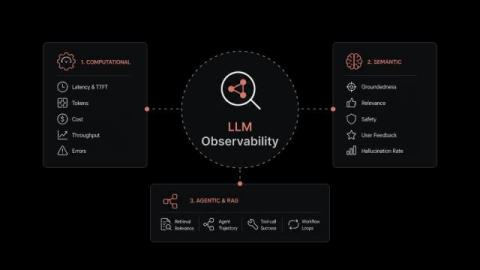
Observability for LLM Apps and Agents: OpenLIT SDK + VictoriaMetrics observability stack

Many “LLM observability with OpenTelemetry” tutorials stop at a single chat.completions span. That works for a demo, but it leaves gaps once an agent fans out into 30 tool calls, two vector-DB queries, three handoffs, and a 90-second tail latency you need to attribute. This post wires the OpenLIT SDK (50+ instrumentations, OTel GenAI semantic conventions, one line of code) into the full VictoriaMetrics observability stack and shows query examples that turn agent telemetry into decisions.

Unified Observability: Moving IT Teams from Reactive to Predictive

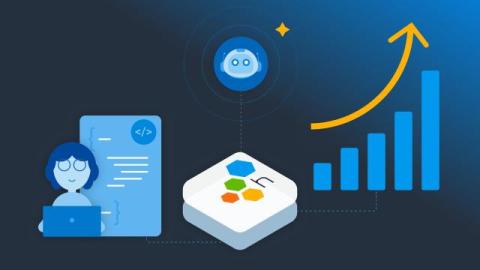
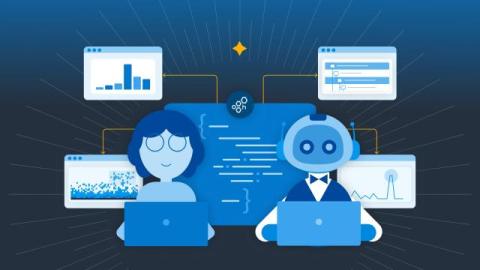
What does it take to stop an outage before it starts? In many cases, the warning signs are already there, scattered across different monitoring tools, which makes it difficult to see the full picture before issues escalate. When an incident occurs, engineers often spend valuable time piecing together metrics, logs, traces, and alerts to determine the root cause. Every minute spent investigating extends the outage and increases its business impact.

DevOps with Kubernetes: How to Reduce Cluster Toil and Complexity

Has Kubernetes made your DevOps team faster, or just busier? Most teams adopt it for speed and portability, and they get both. What arrives with it is a quieter cost: the operational weight of running the cluster day to day. That weight shows up in the manual work the platform was supposed to eliminate. A resource limit set incorrectly can waste infrastructure for months.

June 2026 Early Warning Signals

June 2026 saw major outages across ecommerce, AI, developer tools, and business applications. StatusGator’s Early Warning Signals surfaced many of these incidents before providers updated their official status pages. Of the 1,067 incidents detected by StatusGator in June, only 191 (17.9%) were eventually acknowledged by providers.

Introducing relationships for Service Monitors

Understanding a service outage is easier when you can see what it’s connected to. That’s why we’re introducing Relationships for Service Monitors, one of the most requested features from StatusGator’s hundreds of enterprise IT teams. You can now explore related services directly from the Service Details page by opening the Relationships dropdown.

Monitor Your PHP Applications with AppSignal

Good news for PHP developers: AppSignal monitoring is now available for PHP applications. Our new package brings traces, metrics, and logs from your PHP app into AppSignal, with auto-instrumentation for frameworks like Laravel and Symfony and a foundation built on OpenTelemetry. Already using AppSignal's PHP package and want the latest updates? Migrating is straightforward: remove your current OpenTelemetry setup and follow our new install guide.

Could vs. Should: The First Year Managing an SRE Team

As of today, I’ve drafted this post upwards of 10 times – it’s old enough that the version I first started working on was called “Reflections on 1 Year of SRE Management” (I’m currently at 2.5 years). But everything I learned during that first year became critical for the next.

VDI Monitoring: How to Ensure High-Performance Virtual Desktop Infrastructure

Remote and hybrid work turned virtual desktops from a niche IT choice into a core way employees get their jobs done. When a desktop lives in the data center or the cloud, every logon, click, and screen refresh depends on infrastructure the user never sees. That shift is why VDI monitoring matters: it protects the end-user experience when the desktop is no longer local. The challenge is that a single slow session can have dozens of causes—across compute, storage, network, and the broker layer.

9 Best Azure Monitoring Tools Compared for 2026

When an Azure service slows down or stops responding, you often hear about it from a user before your monitoring says a word. It only gets harder as you scale: Azure now runs about a fifth of the world's cloud workloads (Statista, 2026), and every new service is one more place a failure can hide. By the end, you will have a shortlist for your stack. You will also know which tools to skip, without sitting through nine sales demos to find out.

What is DPDPA Compliance? A Complete Guide

If your organisation handles the personal data of people in India, the DPDPA applies to you and compliance is a legal requirement. The Digital Personal Data Protection Act, 2023 is now backed by the DPDP Rules 2025, and the Data Protection Board of India can impose fines of up to ₹250 crore for a single contravention. The obligation your IT and security teams own most directly is security safeguards under Section 8, and it is one of the first things a regulator looks at after a breach.

What Is NetFlow, and How Does It Reveal Where Traffic Goes?

In this video, learn what NetFlow is and why it's one of the most effective technologies for understanding network traffic. Discover how NetFlow goes beyond basic bandwidth monitoring by showing who is using your network, what applications are consuming bandwidth, and how traffic patterns change over time. Whether you're a network administrator, IT operations engineer, or infrastructure manager, this video explains NetFlow in simple terms and shows how it helps identify bandwidth hogs, troubleshoot slow networks, and make smarter capacity planning decisions.

Autoscaling Checkly Private Location Agents in Kubernetes with KEDA

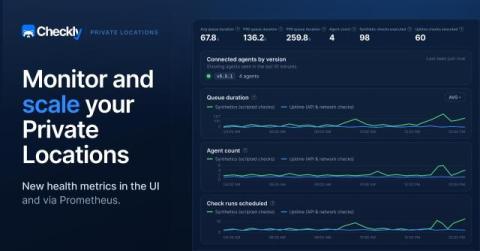
Monitoring load is not always steady. A team might add a new batch of checks or run several ad hoc tests during a rollout. When that happens, your Private Location agents need to pick up more work at once. If there aren’t enough agents available during a burst, checks start piling up in the queue, which can delay or disrupt check execution. But solving this by running a high number of agents around the clock has the opposite problem: most of that capacity sits idle until the next busy period.

ITSM Maturity Playbook Live, Episode 2 | The CMDB is Your Map

Join this 5-part series designed to help IT teams move from reactive, fragmented processes to a more structured, connected way of working. Each session focuses on a core area, from incident resolution and CMDB visibility to employee experience, service catalog design, and change governance, giving you practical frameworks you can apply right away. You’ll walk away with: Faster, more consistent incident resolution.

Any Apple update can break our app. Here's how we find out first.

This is a guest post by Dan Mindru, a Frontend Developer and Designer who is also the co-host of the Morning Maker Show. Dan is currently developing a number of applications including PageUI, Clobbr, and CronTool. It feels like with every release, we are walking a tightrope. We need to keep our app lightweight, stable, and performant, all the while depending on APIs that can shift at any moment (without warning, too!).

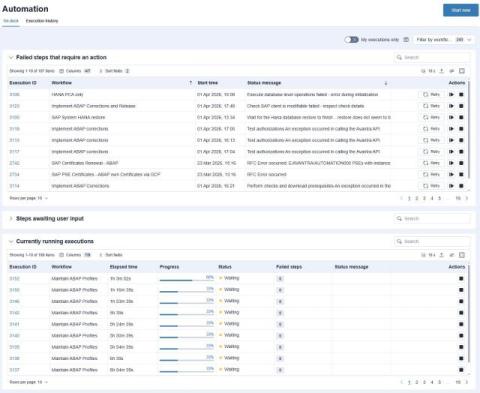
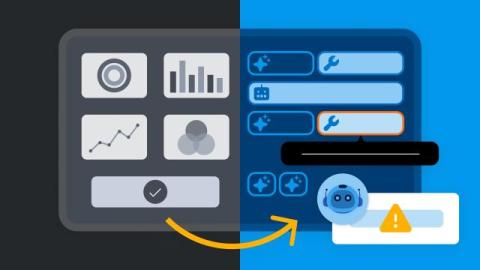
Self-Healing ITOps: Close the Loop From Detection to Resolution

Self-healing ITOps helps restore services faster by combining AI-driven analysis, automation, and recovery validation. Organizations have invested heavily in monitoring, observability, and AIOps. These platforms are effective at identifying issues, but incident resolution is often still a manual process. Engineers still need to investigate alerts, determine the appropriate remediation, and verify that services have recovered.

Overview of Alerts, Real-Time Analysis, & Traceroute

Learn how Uptime.com alerts you the moment a check goes Up or Down, complete with technical details and root cause analysis for API and Transaction checks. Dive into Real-Time Analysis to track outage timelines and get detailed insight into every alert. Plus, see how Traceroute from global or private probe servers helps identify connection issues quickly and accurately. Stay informed. Respond faster. Resolve smarter.

When One Agent Plans and Another Executes, the Planner's View Decides Everything

Split network operations into a planning agent and an executing agent and you have an elegant design on paper. One agent reasons about what should change and validates it. The other carries it out. The elegance is real, and so is the structural consequence: the split puts the entire weight of judgment on the planner. A plan built on a partial view, then executed precisely and at machine speed, is more dangerous than a cautious human who would have hesitated at the part that did not add up.

New in Skylar One - Kyoto: Better Context for Faster, More Confident IT Operations

Modern IT environments do not fail in neat, isolated ways. A network issue in one location can affect a business service somewhere else. A device alert may be the first sign of a larger dependency problem. And when teams are managing infrastructure across data centers, cloud, branches, campuses, and edge environments, the first challenge is often knowing where to look first. The issue is not alert volume alone. It is the missing context between telemetry, service impact, probable cause, and action.

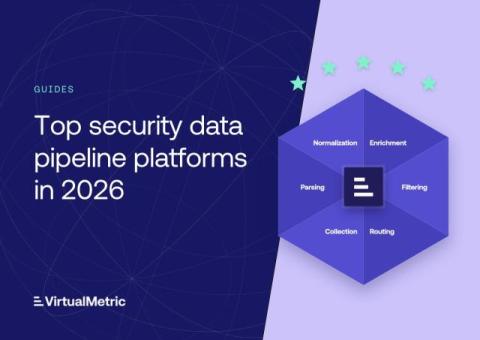
You Can't Detect What You Never Collect: Telemetry Coverage in the Agentic SOC

Every detection rule, every threat hunt, every AI agent you deploy rests on one silent assumption: that the data describing an attack actually reached your tools. When it doesn’t, nothing above it can save you, and no one gets an alert that the data was missing. Security teams invest heavily in the sharp end of the stack: detection content, threat intelligence, response playbooks, and increasingly, AI agents to triage and investigate at machine speed.

How Agentic AI speeds up troubleshooting application issues

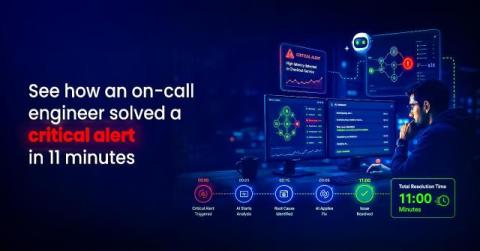
One night, Daniel Rizzy was the only person awake on Zylker’s IT team, and the clock was already running. He was also the only thing standing between a P1 outage and 10,000 customers. Rizzy works nights for ZylkerXchange, Zylker’s foreign currency exchange app. He lives on the city’s outskirts, where the air is clean and quiet, and the night shift suited that life. Most nights, nothing happened. Some nights, everything did.

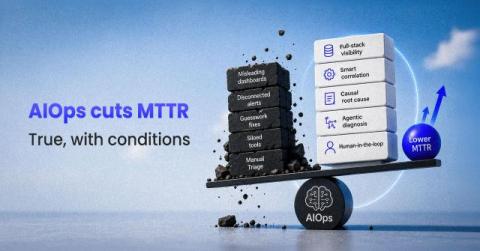
Improving MTTR with AIOps: Myth or Fact?

There was a version of daily life, not long ago, that ran entirely on physical effort. Booking a trip meant a visit to a travel agent. Ordering lunch meant walking to a restaurant or calling and hoping someone picked up. Buying something for the home meant a trip to the store and a checkout queue. Paying a bill meant visiting a bank branch and engaging with a teller. None of it was instant, and nobody expected it to be.

What the World Cup Looks Like in Internet Traffic

The World Cup may be the most-watched event in media history — so what does it look like from inside the network? We dug into ISP traffic data to reveal how Fox Sports peaks during US games, why second halves usually win, and how traffic flows shift for entire nations like Brazil and Iran when their team takes the field.

What's New in InfluxDB and Telegraf: Q2 2026 Product Updates

Summary: Q2 was about giving teams more leverage with less overhead. Between April and June 2026, releases across Telegraf, InfluxDB 3, and InfluxDB 3 Explorer focused on reducing manual work and putting more control directly in their hands as they scale. Telegraf Enterprise reached general availability, giving teams a centralized way to manage, monitor, and support tens of thousands of Telegraf agents.

The Next Enterprise AI Challenge: The Multi-Model Workplace

For the last two years, enterprise AI strategy has largely focused on one thing: adoption. Organizations encouraged employees to experiment with ChatGPT, Claude, Copilot, Gemini, and dozens of emerging AI tools in the hope that productivity gains would naturally follow. CIOs approved pilots, departments launched AI task forces, and leaders pushed teams to integrate AI into everyday work as quickly as possible. But the enterprise AI conversation is beginning to change.

Availability, Performance and Behavior : The Big Picture of Network Intelligence

In this session, we will introduce the third dimension of network monitoring: behavioral intelligence built into the Progress WhatsUp Gold network monitoring solution. Where other tools, like SolarWinds and PRTG, require multiple modules, complex rule-writing, integrations or additional overhead, the WhatsUp Gold solution uses AI-driven behavioral analysis to automatically baseline what’s normal in your network and unveils deviations early.

ServiceNow Pricing Explained for 2026: Plans, Tiers, and Hidden Costs

ServiceNow is a powerful, highly customizable platform built for the complex operations of mid-sized and large enterprises. Its strength is flexibility, with modules spanning IT service management (ITSM), IT operations management (ITOM), HR service delivery, customer service management, and security operations. That modular structure is also why ServiceNow pricing is not sold as a standard price list.

LogicMonitor and Edwin AI: Autonomous IT for Hybrid IT Environments

Autonomous IT starts now with LogicMonitor and Edwin AI, built to help IT teams monitor complex hybrid IT environments, discover root cause faster, reduce downtime, and prevent incidents before they impact revenue or brand reputation. See how LogicMonitor brings AI-powered IT operations, observability, and incident prevention together for modern infrastructure teams.

Monitor DigitalOcean in Grafana with MetricFire

Monitoring your DigitalOcean infrastructure just got easier. MetricFire now integrates natively with DigitalOcean, so you can connect your account and start streaming metrics from Droplets, Load Balancers, Managed Databases, and more directly into Grafana. No agents. No setup overhead. No dashboard stitching. Get full visibility into your DigitalOcean infrastructure from one dashboard, live in minutes.

How AI Agents Are Changing Each Agile SDLC Phase

The Agile software development lifecycle was designed to surface problems early, with short sprints, iterative testing, and continuous integration built on the premise that faster feedback loops produce better software. AI coding tools have changed the velocity equation across every phase of that loop, but the phases designed to catch failures are struggling to keep up because build speed and validation capacity have not accelerated at the same rate, and the gap between them is widening with every sprint.

How Datadog uses AI to build internal software delivery tools and improve system performance

At Datadog, we want our developers to become better at using AI tools with the end goal of building quality software, faster, that generates real value. This includes not only the products and features that our customers use, but also the internal tools that help keep our workflows running smoothly behind the scenes.

DevEx Talks ep 6 - Working Neurodivergent: What Helps, What Doesn't

In this episode, we explore neurodiversity in tech and beyond with guests Carl Alexander and Zach Stepek. They share firsthand experiences of what has helped them thrive as neurodivergent professionals and what has not. Together, they discuss the importance of community as a key factor in empowerment, growth, and long-term success for neurodivergent individuals in both work and life. PlayList Resources for Further Learning.
Reading the agent traces is how you make the call your eval can't

Remember being excited (or dreading, depending on the stage of your career and the company you worked at) about writing unit tests? Or sweating all the details in your end-to-end and integration tests you were sure covered all the use cases your users would hit? These days a lot of UIs are slowly being replaced by a single input field and an agent that promises to deliver the same value a UI would, but with the elegance and pun-ness of a “Jarvis”.

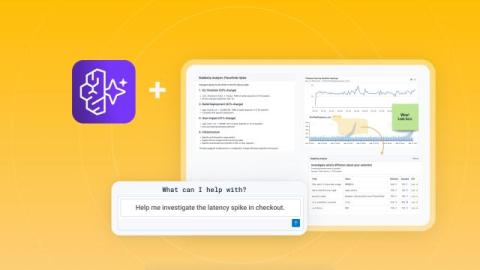
Accelerate investigations with AI in Datadog Incident Response

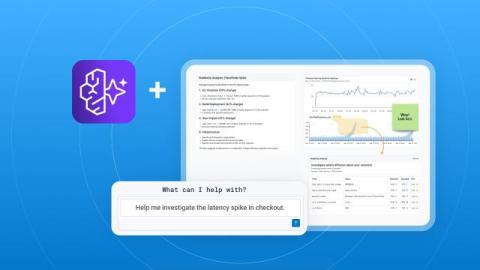
Engineering teams spend much of their incident response time investigating the problem and coordinating the response. Both tasks become harder when telemetry data lives in one place, deployment history is stored in another, and conversations unfold across chat channels and incident bridges. Responders often spend the first part of an incident rebuilding context before they can begin testing hypotheses and working toward resolution.

A Four-Step Blueprint for Faster Root Cause Analysis: A Logz.io Webinar

Incident investigations take so long not because the fix is hard, but because finding the right fix is. Most engineers spend 20 to 60 minutes just understanding what’s wrong before they can act, not fixing anything, just trying to see the full picture. The framework that changes this has four steps: Orient, Isolate, Hypothesize, and Verify, and the order matters more than the tools.