Operations | Monitoring | ITSM | DevOps | Cloud

How Network Documentation Software Keeps Network Diagrams Current

When did anyone last open your network diagram and trust what it showed? A diagram drawn in a static drawing tool is accurate on the day it is saved. One quarter, two circuit upgrades and a hardware refresh later, it describes a network that no longer exists. Nothing warns you that this has happened. The file still opens, still prints, and still gets attached to change requests, which is what makes it risky during an incident.

Storage Monitoring Tools and the KPIs Behind Each Failure Domain

When an application slows down, how long does it take to confirm whether storage caused it? The answer depends entirely on whether anything is collecting from the array itself. The server dashboard reports healthy CPU and memory, the network graphs look clean, and the array holding the data says nothing at all. Storage failures announce themselves late.

How to Monitor Docker Containers You Cannot Rebuild or Redeploy

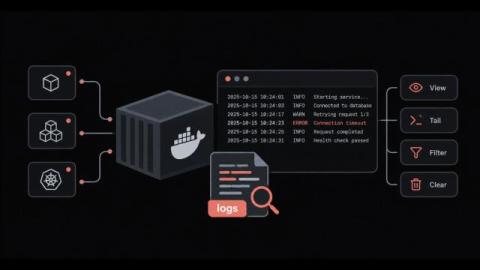
How long would it take you to get one new line of code into the container running your payment service? In a lot of organizations, the answer runs to weeks, because the change has to clear a build owner, a test cycle, and a release window that nobody wants to open early. That timeline is why so much monitoring advice fails on contact. Most of it opens by telling you to add a library, rebuild the image, and push a new version. If you could do that this afternoon, you would have done it already.

How eBPF Observability Monitors Docker Containers Without a Rebuild

How many containers are running in your production environment right now that nobody can see inside? A vendored service, a compiled binary, an application whose build pipeline left with the developer who wrote it: each one runs, serves traffic, and reports nothing. Instrumenting those workloads means a code change, a rebuild, and a redeploy, and on these containers none of the three are available.

10 Best Session Replay Software & Tools for 2026

Some frontend bugs never get fixed because nobody can prove they happened. The user cannot describe what they clicked, and the error log shows nothing. The best session replay software closes that gap by rebuilding the visit itself. If you want the mechanics first, our guide to what session replay is covers how the recording is built and played back. Choosing between the tools is the harder part, because three very different kinds of product now sell the same feature.

A Practical Guide to Core Web Vitals Optimization for Better UX and Faster Conversions

When a page starts losing customers, how long does it take to find out which one? The evidence lives in your visitors' browsers, and standard infrastructure tooling measures servers instead. A speed test run from an office machine answers a different question entirely. Pages that clear every internal check can still turn away a quarter of the people who reach them.

10 Best Real User Monitoring Tools Compared for 2026

Most IT teams learn their application feels slow when a customer complains. Server metrics never measure what a person on a phone waits for. The best real user monitoring tools close that gap by collecting timings from your users' browsers. Choosing one got harder this year, because the measurement standard moved. In this blog, we compare the best tools for real user monitoring, including their pros, cons, and key features. By the end you will know which one fits your stack.

Top 10 Digital Experience Monitoring Tools in 2026

Server dashboards can look healthy while users wait. Only 51% of the 1,000 most popular mobile sites pass Core Web Vitals, according to the HTTP Archive's 2025 Web Almanac. Closing that gap is the job of digital experience monitoring tools. Some watch customers on your website and mobile apps, others watch staff on laptops and virtual desktops, and a third watches the network in between. Pick the wrong type and you lose a review cycle.

CCPA Compliance for IT Teams: How to Handle Data Subject Requests on Time

How many privacy requests is your organization working on right now, and how many of them are still inside their legal deadline? The answer usually lives in several places at once. Shared mailboxes hold some, web forms hold others, and legal keeps a tracker of its own. That scattering is the problem. A CCPA request carries a hard statutory deadline and a documentation duty behind it, yet privacy work is the one regulated workload in most organizations that never entered the service management system.

What Is Session Replay? How It Works, What It Records, and When It's Legal

A customer reports that checkout failed twice before they gave up, then stops replying to the support thread. What do you actually have to work with? A timestamp, a browser string, and a description written by someone who was not looking at the console. Session replay answers the question that ticket cannot. It rebuilds that single visit in the browser and plays it back step by step, so the click that failed, the field that rejected input, and the script error that fired alongside it appear in sequence.