Operations | Monitoring | ITSM | DevOps | Cloud

How Global Hiring Helps Remote Teams Access Hard-to-Find Tech Talent

Remote work has done more than just redefine the workplace. It has fundamentally changed the way companies have hired employees for decades. Employers used to be limited to hiring from a talent pool of individuals who are geographically proximate to the company's physical location. That was painful enough back then. Today? With local talent wars for developers, DevOps gurus, and cybersecurity pros turning into absolute bloodbaths, sticking to your local backyard is a recipe for stalled roadmaps.

Does Your Membership Data End Up in Three Places at Once?

Ask an association administrator where the member list lives and the answer is rarely a single system. It is usually a database of some kind, plus a spreadsheet that somebody maintains for the board, plus whatever the email tool has stored, plus a payment processor holding its own version of everyone's contact details.

NIS2 is here, and it applies to more companies than owners think

If your company has 50 or more staff, or turns over more than €10 million, and it works in one of the 18 sectors listed in the EU's NIS2 directive, you are almost certainly in scope. National transposition deadlines passed in October 2024, and enforcement has been building since. Checking where you stand takes under an hour. Here is that hour, and a first week that does not begin with a purchase order.

Building Quality and Compliance Systems That Hold Up to an FDA Inspection

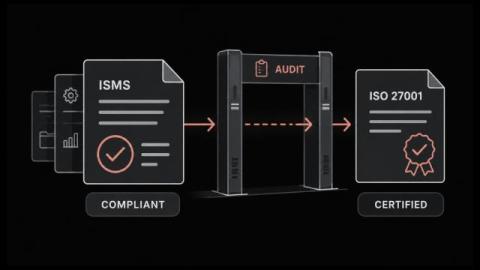
For any company operating in an FDA-regulated industry, the inspection is the moment of truth. It is when the quality and compliance systems a company has built, or failed to build, are examined by investigators trained to find exactly the gaps a company hopes it does not have. A successful inspection reflects systems that were designed to withstand scrutiny; a difficult one, with findings and follow-up, reflects systems that were not. The difference is rarely luck. It comes down to whether a company has built genuine, robust quality and compliance systems well before an inspector ever arrives.

Why Financial Services Teams Need Continuous Compliance Evidence

Financial services regulators increasingly expect organizations to demonstrate that controls operate continuously, not just on audit day. Yet many firms still rely on point-in-time reviews and manually assembled evidence, creating compliance gaps, operational overhead, and unnecessary risk exposure. Continuous configuration enforcement helps address both the regulatory and operational challenge by generating evidence as changes occur. Back to top.

ZTNA Security for Cloud Application Access: A Practical Overview

Nowadays, the average enterprise runs hundreds of cloud applications spanning from software-as-a-service platforms, infrastructure hosted in public cloud accounts, to internally built applications deployed on cloud infrastructure. So each of these has a different login flow, a different permission model, and an often completely independent definition of what a secure session looks like.

HOA Tech Trends: Managing Communities Faster

Community association leaders face growing administrative demands as modern neighborhood operations become more intricate. Modern technology helps volunteers and board members manage daily tasks with far greater speed and precision. Adopting tailored software reduces manual paperwork and improves operational clarity across the entire neighborhood. Leaders can allocate time toward long range planning instead of spending late evenings chasing routine documents and payment receipts.

The Future of Third-Party Risk Management and Vendor Security

Your supply chain is only as secure as its weakest vendor. You may have world-class security inside your own walls, but the moment an attacker compromises one of your third-party suppliers, they can walk straight into your systems through a trusted connection. That's the reality businesses face today, and that's why choosing the right platform is essential. Black Kite for cyber supply chain risk has emerged as one of the most comprehensive solutions available for organizations that need real, continuous visibility into their vendor ecosystems, not just a one-time compliance checkbox.

How to ensure compliance with private cloud providers in regulated sectors

The compliance question isn't "are we using a private cloud?" Rather, it’s "does our private cloud actually do what compliance requires?" Private cloud has a reputation for solving compliance problems that it doesn't always deserve. The logic seems straightforward: keep data off shared public infrastructure, maintain more direct control, and satisfy the auditors.

Message Broker Compliance: HIPAA Security Rule, PCI-DSS & SOC 2 for Apache ActiveMQ

A healthcare technology company routes patient appointment notifications through ActiveMQ. A payment processing firm uses ActiveMQ to bridge its order management system to its payment gateway. A SaaS provider includes ActiveMQ in the architecture scope for its annual SOC 2 Type II audit.