
Operations | Monitoring | ITSM | DevOps | Cloud

The latest News and Information on Databases and related technologies.

How Linux readahead works, and the two ways to change it

Most of the time, when we read a file, we do not think much about what happens underneath. You ask for some bytes, you get some bytes. But when getting data off the disk efficiently is at the core of what your application does, what happens underneath starts to matter a great deal, and two identical read() calls can differ enormously in what they cost. So in this post we are going to look at one of the Linux kernel’s optimizations for reading files: readahead.

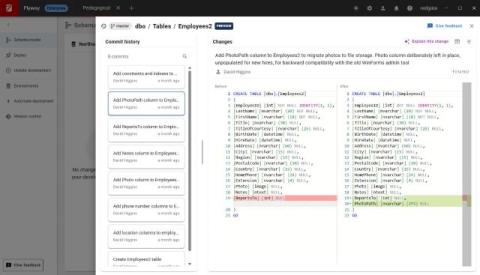
Oracle database DevOps: automating schema changes for Oracle

Learn how to safely automate Oracle schema changes. Discover what makes Oracle database DevOps unique. Automating Oracle schema changes safely means considering what makes Oracle different. A real Oracle database DevOps practice pairs version-controlled changelogs and pipeline integration with policy-as-code protection, pre-flight checks, and tested rollback scripts, so schema changes deploy with the same speed and safety as application code.

Database governance in the AI era: Framework, risks and best practices

AI database governance can get overlooked when teams rush to connect AI tools to production data. IBM’s 2025 research found that 97% of organizations that reported a breach involving an AI model or application lacked proper AI access controls. The risk is easy to see. Give an AI agent too much access and it can expose or alter data in seconds. Feed it poor-quality data and it may produce a confident but incorrect answer.

Announcing Redgate Flyway Enterprise's advanced capabilities for Snowflake now in Preview

Snowflake has become a core part of how many teams store, model, and analyze their data. As more of the business comes to depend on Snowflake, the schema needs the same governance and control as any other production system. Too often, schema change in Snowflake happens through ad hoc scripts, tribal knowledge, or direct access in Snowsight.

Test PostgreSQL With the Queries Your App Actually Runs

The first number from my local PostgreSQL 16 test was roughly 1,600 statements per second. It looked impressive. It was also the least useful result in the run. The useful part was the workload. It came from queries the demo app had actually sent: the same prepared statements, parameters, reads and writes. A synthetic benchmark tells you how PostgreSQL handles a synthetic workload. It does not tell you whether your migration just broke the UPDATE your app depends on.

What's new in dbForge 2026.2: New PostgreSQL Debugger, visual editors, broader context for AI Assistant, and much more

Here comes dbForge 2026.2, a new release of our ever-evolving ecosystem of AI-powered database lifecycle management solutions—and it’s packed with useful updates you definitely shouldn’t miss! These include a brand-new embedded PostgreSQL Debugger in dbForge Studio, handy visual object editors for PostgreSQL, broader context awareness in dbForge AI Assistant, enhanced SQL development and schema comparison capabilities, and a new, simplified product activation flow.

How to Use an ER Diagram Tool to Design Relational Databases

Database documentation often goes stale the same way. Someone draws a diagram during initial design and exports it to a wiki. The schema keeps changing, but the picture does not. Months later, a new engineer compares the diagram to the live database and has to work out which details are still accurate. The fix is to update documentation whenever the schema changes. An entity-relationship diagram (ERD), a visual map of tables and how they connect, can serve as both a design aid and a shared reference. It stays useful only if the team maintains it.

What is PostgreSQL? Features, uses, and benefits

The PostgreSQL database went from a platform developers respected to the one they reach for first. Today, it’s used by over 55.6% of all developers and 58.2% of professionals, powering everything from SaaS startups to AI platforms. For many new projects it’s now the default choice. But what pushed PostgreSQL ahead of so many alternatives? This guide answers that question by explaining what PostgreSQL is, how it works, and what makes it different from other databases. Table of contents.

Announcing the Flyway Docker provisioner, now in Preview in Flyway Enterprise

"Why do I need to give Flyway this extra database?" That's one of the most common blockers we hear from users setting up a Flyway project. Flyway has long had a concept of a build database or shadow database that is a dedicated sandbox database for Flyway to do background work in. It's required for Flyway to be able to simulate what running a set of migrations will do to a database.