Operations | Monitoring | ITSM | DevOps | Cloud

From Incident Data to Operational Knowledge: A Safer Role for Generative AI in IT Ops

IT operations teams produce an enormous amount of information. Alerts, logs, incident messages, deployment records, support tickets, runbooks and post-incident reviews all contain operational knowledge. The problem is that much of this knowledge remains fragmented and difficult to reuse. Generative artificial intelligence can help organise and transform this information, but its safest role is not unrestricted control over production infrastructure. Its strongest initial use cases involve reading, summarising, classifying and drafting information for an engineer to review.

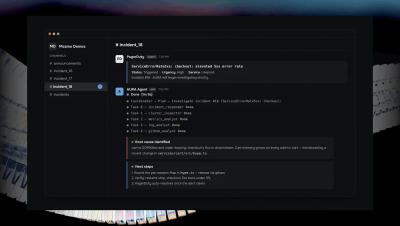
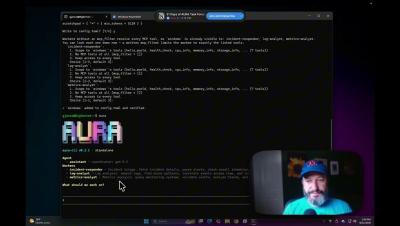
Paste a Slack Bug Report into an AI SRE Agent: AURA Finds the Cause

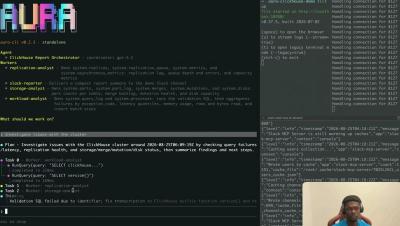
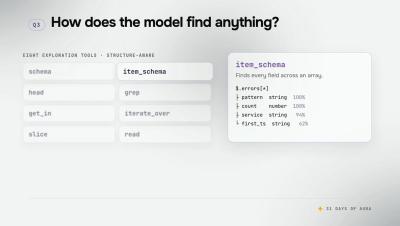
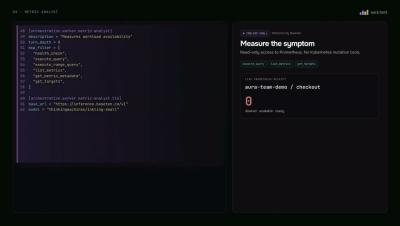
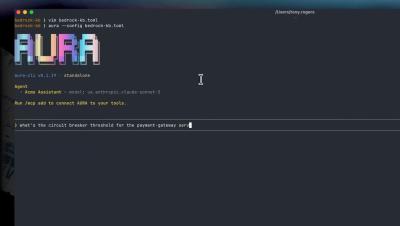
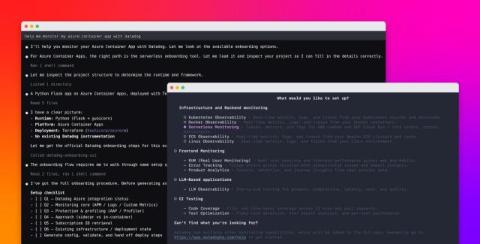
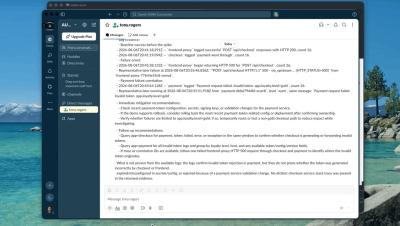
A coworker says checkout is broken and nothing else. That is the whole prompt. AURA reads the live logs and comes back with the payment service. Normally a message like this is the start of guessing at a service and opening dashboards until something looks wrong. Here it is the entire input: no service named, no error string, no time range.

Introducing the Flyway MCP Server: governed database change, now available to your AI coding assistant

AI coding assistants have changed how fast application code gets written. Copilot, Cursor, Claude Code, and agentic tools built on top of them can generate a working feature in minutes. But none of them know your database's history. They don't know that a migration already renamed that column last sprint, that a policy forbids unqualified DELETE statements, or that the target environment has drifted from what your migrations say it should look like.

What is AI ROI? Definition and why it matters

In 2025, 85% of organizations increased AI investment, and 91% plan to do the same this year, according to Deloitte. Despite continued spending, however, ROI lags behind, with just 6% seeing payback within one year. While AI use cases tend to have a longer payback period, often in the 2-4 year range, companies can’t afford to keep spending money without some measure of its practical impact both immediately and over time.

What are AI tokens? The unit your AI bill is written in

AI tokens are the small chunks of text, roughly four characters or three quarters of a word each, that language models read and generate. Every prompt and every response is measured in tokens, and AI providers bill per million of them. That makes the token the base unit of AI spend: 1,000 tokens is about 750 words, and every AI feature you ship is a token meter running.

Ai4 2026: Measuring AI spend is solved. Now it's time to prove its worth.

CloudZero had a full team on the ground at Ai4 in Las Vegas during the first week of August 2026. The team included CTO Erik Peterson, who spoke on a panel about AI cost economics. The same problem surfaced everywhere we went: teams can see what they’re spending, but not whether it’s working. DIY cost tooling that fails time and time again, agent sprawl, and a widening gap between finance and engineering kept coming up throughout the week.

AI-Related Outages Are Reshaping On-Call in 2026

AI-related outages just moved from a fringe worry to a mainline reliability problem, and the on-call rotation is where that shift lands first. A new StackGen analysis of nearly 178,000 public status-page records found that incidents disclosed by AI model and AI application companies now account for more than one in ten reported outages, a sixfold jump from 1.7 percent in 2023 to 10.7 percent so far in 2026.

Inference Optimization Techniques. Ray vs. vLLM vs. KubeRay

Serving large language models at scale is fundamentally a distributed systems problem. A single GPU, or even a single node, is rarely enough once you need multiple models, multiple replicas, tensor-parallel sharding across GPUs, or high-availability rollouts. Kubernetes solves general container orchestration well, but it has no native concept of a GPU-aware, actor-based compute cluster.

GPU Cloud security: Isolation, multi-tenancy, and protecting sensitive training data

GPU cloud security tends to get discussed as if it's the same problem as general cloud security. It isn't. GPUs sit between processes in ways CPUs don't. Training data passes through them in patterns that create specific exposure. Model weights derived from sensitive data are themselves sensitive material in ways most procurement processes don't recognize. And the multi-tenant nature of public GPU cloud creates failure modes that don't exist in CPU-only environments.

Homelab AI SRE Agent: AURA Debugs Container Permissions in Docker

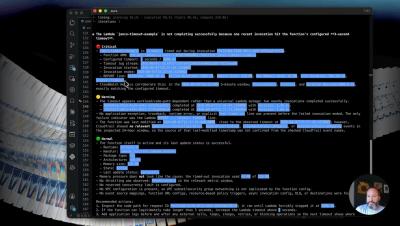
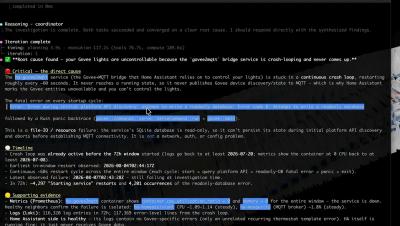
A root cause is not a fix. AURA keeps working the problem, taking what you find on the host and coming back with the user ID mismatch behind the failure. What follows a root cause is normally manual: check the mount, compare ownership on the host against the user inside the container, and get it wrong at least once before it lands.

How AI-Powered College Quiz Tools Are Changing the Way Students Choose Their Path

Choosing a college major or a career direction used to feel like guesswork for most students. You would talk to a school counselor for fifteen minutes, take a personality test from a textbook, or simply pick whatever your parents or friends suggested. Today, that process looks very different. Many students now start their search with a college quiz match, an online tool that asks a series of questions about interests, strengths, and goals, then suggests majors, career paths, or even specific schools that fit the answers.

Toil Reduction Outside the Data Center: Lessons From the Clinical Front Office

Ask an operations team where the week went, and you'll usually get a list of things that shouldn't have needed a person. Access requests provisioned by hand. A disk cleared for the ninth time this quarter. Certificates rotated one at a time because the renewal script was scoped, estimated, and never finished. None of it is difficult, and all of it is necessary. And at the end of the quarter there's nothing to point at, because the work left no trace beyond the absence of an outage.

Open Models Are Closing the Gap

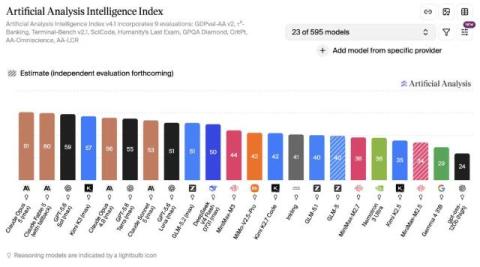
The frontier models have led the pack for a while now. It seems like the big players of Anthropic and OpenAI keep leapfrogging each other by a couple points in benchmark scores every other month. But, a trend we are starting to see is that open weight models are improving by leaps and bounds. They don’t hold the lead and probably won’t for a while, but the fact that open models are scaring the leaders is something to think about.

Open Source AI Agent for SRE: Why AURA Is Free

The most common question since we started 31 Days of AURA: how do you plan to make money? The short answer is the control plane, not the agent. Mezmo sells an enterprise-grade control plane for running large numbers of agents across large environments, where coordinating across environments, governance, access control, and the efficiency of preprocessing MCP data start to matter. If a hundred people run AURA and three or four of them need that, the model works. The more people running AI agents in production, the bigger the market for the tooling underneath them.

Free Open Source AI Agent for SRE and More: Why We Give AURA Away

Wondering what the catch is on a free, vendor-backed agent? There is not one in the license. AURA stays Apache 2, fully capable, and free to run. If you are weighing an open source tool with a company behind it, the first question is what the catch is. You have seen the project that turns out to be open core, or that is quietly hindered in one key way. This is Mezmo's answer for AURA.

Install an AI SRE Agent in Kubernetes with AURA and Helm

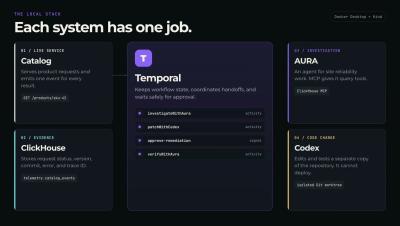
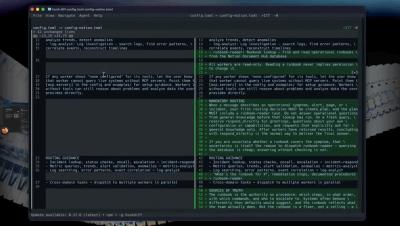
AURA does not have to live on your laptop. Install it into the cluster with Helm and it is still there the next time something breaks. AURA is a fully open source AI agent built specifically for SRE work. Rather than one general assistant, you configure workers: separate agent roles, each scoped to a job like inspecting the cluster.

The New MCP Headers Are a Gift to Gateways

In short, buried in the transport section of the MCP 2026-07-28 release candidate are three changes that matter more to infrastructure teams than to anyone else: mandatory Mcp-Method and Mcp-Name headers, cache-control-style ttlMs and cacheScope fields, and standardized W3C Trace Context propagation. Together with the stateless core, they turn MCP from a protocol that gateways had to fight into one that meets them halfway.

Skills as Guardrails: Contributing to Apache Kafka with AI, Without Knowing Every Module

Let me start with something most Kafka contributors think but rarely say out loud: nobody understands all of Kafka. I'm not a core committer and have only contributed a few times, but those contributions I have made have been in part thanks to using coding assistants. There are some issues with this approach though, the Apache Kafka project is huge. It's split into many parts: the core, the server, the client libraries, the streams engine, the storage layer, the consensus code, and more.

What your AI SRE can't see (and what you can do about it)

AI SRE is having a moment. The category pulled in massive funding rounds over the last two years, Gartner published its first market guide, and vendors are promising everything from 90% faster resolution to fully autonomous incident response. If you run an engineering organization, someone has probably pitched you an AI SRE in the last quarter. And let’s be honest: faster triage, less alert fatigue, and automated frontline response are wins for understaffed teams.

Building trusted agentic AI in financial services: From data to autonomous action

As financial institutions move from AI experimentation to autonomous operations, trusted context, governance, and observability become the foundation for enterprise-scale Agentic AI. Artificial intelligence in financial services is entering a new era. Historically, financial services companies have focused on deploying generative AI to improve productivity, enhance customer experiences, accelerate software development, and streamline operations.

Are AI Coding Agents the New CI Bottleneck?

AI coding agents are moving the software bottleneck from writing code to validating it. Here’s what that means for CI infrastructure, capacity planning, and software quality. This topic is explored in more detail in “CI Can’t Keep Up With AI,” an episode of Uplink, where Aditya “JP” Jayaprakash, Co-founder and CEO of Blacksmith, discusses how AI coding agents are reshaping CI and software delivery. Table of Contents.

Kubernetes GPU Scheduling for MLOps and GPU Sharing

The default Kubernetes scheduler was built for stateless services: web servers, APIs, databases. It schedules a pod, checks that a node has enough of whatever resources were requested, and binds it. For CPU and memory, that model works fine. For GPUs, it falls apart in three specific ways. First, GPUs are treated as an opaque integer resource.

AI Provider Outages: An On Call Playbook

On the morning of August 5, 2026, a major AI provider went dark for roughly seven and a half hours, and thousands of engineering teams learned in real time what an AI provider outage actually costs them. Anthropic's Claude models returned elevated error rates and failed API requests starting around 3:00 AM Eastern, and applications that quietly route user traffic through a large language model suddenly had no model to route to. Chatbots stopped answering. Summarization pipelines stalled.

GPU Cloud for non-AI workloads: Rendering, simulation, and scientific computing

The GPU cloud conversation over the last three years has been almost entirely captured by AI. Marketing pages talk about training, inference, and foundation models. Vendor announcements focus on which NVIDIA card fits which LLM. Reference customers are AI companies. The infrastructure decisions being made in the market are shaped by AI's specific requirements - high VRAM, fast interconnect, FP8 support, continuous utilization patterns.

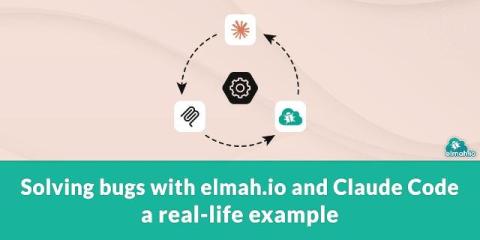
Claude Code + Harness | Software Delivery for the Agent Era

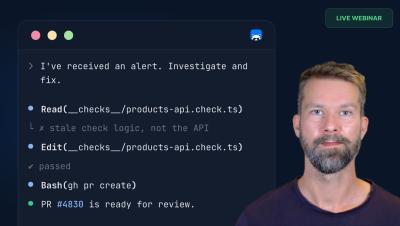
Claude Code changes how fast software gets written. Harness changes whether you can trust what shipped. In this video, watch how autonomous AI agents handle end-to-end bug fixing, security remediation, and deployment verification—all within an automated Harness pipeline. From reading a ticket to running canary deployments and self-healing broken manifests, see how engineering teams can deliver software faster without sacrificing quality or security.

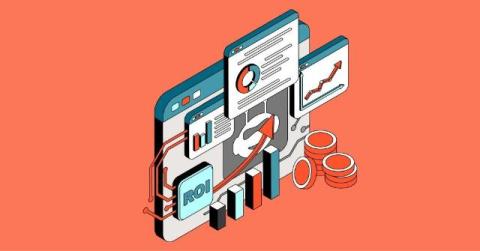
Generative AI ROI: benchmarks and how to prove it

Generative AI ROI measures the financial return on generative AI investments relative to their total cost. Benchmarks diverge sharply: Google Cloud's 2025 study found 74% of enterprises see ROI within the first year, while MIT's NANDA initiative found 95% of pilots deliver no measurable P&L impact. The difference is not the AI. It is whether the organization can actually measure cost and outcome at the use case level.

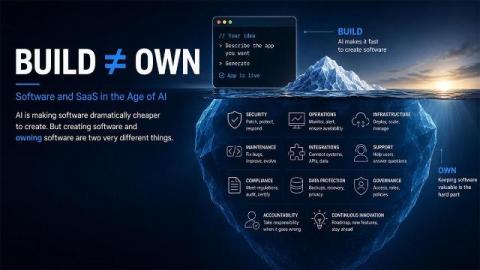
If they can turn it off, you don't own it - The AI kill switch problem

If someone else can turn it off, you don't own it. And most organisations haven't fully reckoned with what that means for their AI strategy. Civo Product Director Russ Smith draws a direct line from the Broadcom/VMware licensing shock to the Anthropic model restrictions, two different industries, same structural problem. When a vendor can change the rules overnight, businesses that built their strategy around that vendor are left with uncertainty and no clear next step.

AI isn't a black box. It's Pandora's Box.

When CFOs talk about AI budgets, they tend to describe it the same way: it’s a black box, offering little or no transparency. The bill arrives at the end of the month, it’s bigger than last month, and nobody can really explain why. Meanwhile, engineering keeps asking to raise the token budget. I think that framing undersells what’s actually happening out there. If the black box is the bill, the Pandora’s box is what you opened when you brought AI into the company.

Upgrade headaches? Extended Agent Support gives you breathing room #sysadmin #security #devops

The RHEL 7 agent deadline is here. Are you covered? Puppet Agent support for RHEL 7 is expiring soon—here is how to keep your systems secure. With RHEL 7 EOL approaching in August 2026, upgrading business-critical systems can be a massive headache. This overview explains how Puppet Extended Agent Support provides continued coverage for your legacy environments. Subscribe for more infrastructure management tips and leave a comment if you are planning a migration.

How to Build and Scale Unified Asset Intelligence for AI Success

Every IT leader has felt this tension: your organization has invested in AI, automation and digital operations, and yet outcomes still fall short of expectations. Even with the right tools and intent, you won’t be able to fully realize the value of your AI investments if they’re built on an unsteady foundation.

The AI Technologies That Will Change Business Over the Next Five Years

Artificial intelligence is no longer viewed as an experimental technology reserved for large enterprises. It has become an essential business tool that helps organizations automate processes, analyze information, improve customer experiences, and make faster decisions. Over the next five years, AI will continue evolving beyond simple automation into systems capable of reasoning, collaborating, and independently managing increasingly complex workflows.

Enterprise Data Lineage for LoRA Policy Fleets

Enterprise reinforcement learning creates more than a training-data problem. It produces a chain of sensitive artifacts: task interactions, tool responses, evaluator judgments, rewards, checkpoints, LoRA weights, reports, and serving traces. When many policies share one foundation model, those artifacts may belong to different customers, workflows, or authorization boundaries even though they depend on the same base deployment.

Why Every YouTuber Needs an AI Grammar Checker in Their Workflow (Not Just Their English Teacher)

I've been making videos for six years now, and if you'd asked me back then whether grammar mattered for a YouTube channel, I probably would've laughed. Grammar felt like something for essays and cover letters - not for a guy talking into a camera about tech reviews. Then I started writing scripts. And thumbnails. And pinned comments that thousands of people would read before they even hit play. Suddenly, a misplaced apostrophe wasn't just embarrassing - it was a small dent in credibility, repeated across every single upload.

From GPUs to Copper: How AI Is Reshaping the Global Commodities Market

The development of artificial intelligence is increasingly affecting not only the semiconductor market but also the cost of the raw materials needed to build a modern computing infrastructure. If Nvidia accelerators and HBM memory chips have been the main focus of investors' attention over the past two years, copper has now emerged as another key beneficiary of the AI boom. Its price on the London Metal Exchange has once again climbed close to its historical high, reflecting the growing shortage of one of the most important industrial metals.

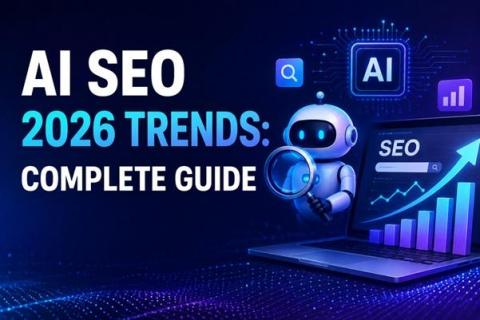
AI SEO 2026 Trends: Complete Guide

Search engines are ranking your pages differently than they did even eighteen months ago, and the shift is driven almost entirely by AI. If you've been tracking SEO trends this year, you've probably noticed something. The usual advice about keyword density and backlink counts doesn't explain why some of your pages rank and others don't anymore. What you need right now isn't another list of predictions. You need to know exactly what changed and what to do about it before your next content push.

8 best AI tools for musicians in 2026: from lyrics to music video

The best AI tools for musicians in 2026 now cover songwriting, song generation, editing, music videos, and release preparation. That matters in a recorded-music market that grew 6.4% to $31.7 billion in 2025 and reached 837 million paid streaming subscription accounts. I reviewed eight platforms as parts of one release pipeline, focusing on handoffs, operational risk, and whether the artist finishes with a publishable release.
Monitor your Amazon Bedrock workloads with Applications Manager

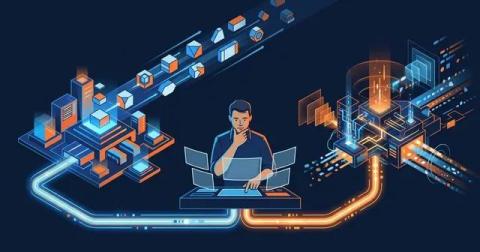
Organizations are increasingly integrating GenAI capabilities into their applications to deliver richer, more contextual user experiences—from AI-powered customer support and enterprise search to content generation, virtual assistants, and automated workflows. To build and scale these GenAI-powered experiences, they are turning to platforms such as Amazon Bedrock, which provides access to foundation models that developers can integrate into their applications.

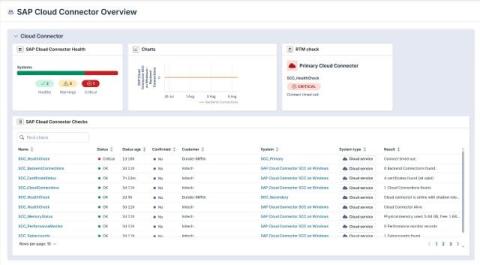
SAP Cloud Connector: Essential for Ground-to-Cloud and AI Operations

When SAP unveiled the Business AI Platform at Sapphire 2026, it folded BTP, Business Data Cloud, and Business AI into a single governed environment. BTP didn’t disappear but became essential architecture underneath SAP’s agentic AI direction. A big part of the repositioning included cloud and AI enablement of existing systems, data and enterprise context: the cloud half of every hybrid SAP estate just got more capable and more strategic, and SAP Cloud Connector plays a central role.

Chaos Hub in docs, Prompt Library for MCP: what's new in Resilience Testing | Harness Blog

The latest Resilience Testing documentation update brings Chaos Hub directly into the docs, making it easier to discover and use fault, probe, and action templates. It also introduces a Prompt Library with ready-to-use AI prompts for Harness MCP, helping teams run resilience workflows faster using natural language.

AI SAST Explained: Why Traditional Application Security Is Reaching Its Breaking Point | Harness Blog

AI has fundamentally changed software development. Developers are writing more code than ever. AI coding assistants can generate features, tests, documentation, and infrastructure configurations in minutes. Engineering organizations are seeing meaningful productivity gains as AI becomes embedded throughout the software development lifecycle. But there is a catch. Security teams now face a difficult reality: application security was already struggling to keep pace with software delivery before AI arrived.

Just ask AI to add OpenTelemetry to your code

OpenTelemetry instrumentation used to mean hours of manual work, wiring up metrics service by service. Now you can just ask for it. Tell an AI agent what you're trying to observe, something like "add OpenTelemetry so I can track this application's performance," and it turns that into an intent specification, then enriches your existing code with instrumentation to match. OpenTelemetry is open source and on GitHub. Pairing it with an AI agent that actually understands your codebase is what turns "add some metrics" into instrumentation that's useful.

The Secret Sauce of SLSA: DevGovOps at the Speed of Agentic AI

Software supply chain engineering has reached a critical inflection point. As autonomous AI coding agents transition from generating autocomplete suggestions to planning, writing, reviewing, and deploying entire software pipelines without humans in the loop, the connection between human intent and production binaries is fracturing.

From Claude Code to Production: A Monitoring Checklist for Python Developers

Python is the native language of AI-assisted development. Models are really good at writing it, and a lot of people are now shipping it without ever having written much Python themselves. The whole thing is really simple. You prompt an app, Claude Code or Cursor produces a working Flask or FastAPI backend, and you’re live in a few hours. However, there’s still a big difference between “it works on my machine” and “it works in production”.

NVIDIA B300 vs. NVIDIA B200: Blackwell Ultra vs. Blackwell

The Blackwell architecture arrived in 2024 as NVIDIA's answer to the next era of AI compute. The B200 set a new standard for inference performance, memory capacity, and training throughput, and many teams are still ramping up their use of it today. Then came Blackwell Ultra. The B300 is built on the same silicon foundation as the B200: same dual-reticle die design, same TSMC 4NP process node, same NVLink 5 interconnect.

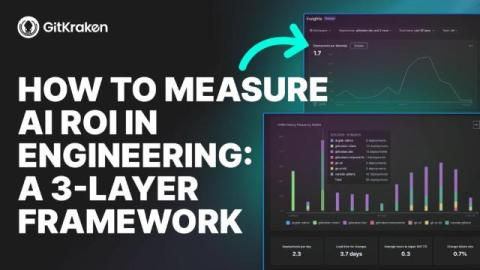
How to measure AI ROI: metrics and a framework finance can actually run

To measure AI ROI, compare attributable value (revenue lift, cost savings, engineering time recovered, risk reduction) against fully loaded AI spend (API usage, subscriptions, infrastructure, people time) at the unit level: per initiative, per team, per task. The formula is simple. The instrumentation is the hard part, and it's where most organizations are failing: in CloudZero's 2026 survey, 34% of finance leaders couldn't produce a credible ROI number at all.

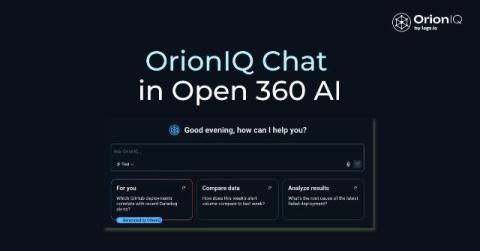
Open 360 AI's chat is now powered by OrionIQ

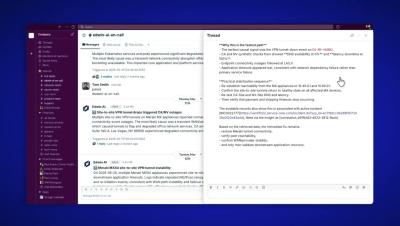
OrionIQ’s agentic investigation is now built into Logz.io Open 360 AI. Ask a question and OrionIQ investigates across your telemetry, shows its work as it goes, links every finding back to the exact query behind it, and tells you how much to trust the answer. Today we’re bringing OrionIQ Chat into Open 360 AI. This is the first OrionIQ product to ship inside the Logz.io platform, and it’s the same agent that powers the standalone OrionIQ app, now available right where you already work.

Creating a Dream Travel Video Before the Journey Begins

Even though travel is an exciting journey, an exciting journey doesn't have to wait for you to climb aboard a flight. Imagine you can produce a video of a trip to your dream destination before putting anything in your luggage. No matter if you seek attractions, landscapes, culture or just plain experiences, making a pre-journey video will help you understand the true picture and give you some excitement. Transform travel dreams into vivid video stories with Dreamina Seedance 2.5. Seedance 2.5 is the most advanced video generation model of Dreamina. It's simple and entertaining!

How the UK Conveyancing Process Can Be Automated and Streamlined Using Digital Tools

Buying or selling a home has historically been a waiting game filled with massive paper trails, slow posts, and constant phone chasing. Fortunately, the UK property market is undergoing a significant shift as innovative digital tools replace archaic workflows.

Enterprise AI isn't broken; your data is broken

A friend who runs data engineering at a mid-sized logistics company once showed me something that made me laugh, and then made me a little sad. Her team spent four months building a chatbot that was supposed to answer simple questions like "how many shipments are delayed in the Chennai warehouse right now." The bot worked beautifully in the demo. Then someone asked it a real question, and it confidently returned a number that was off by almost a factor of ten. Not because the model was dumb.

Where Historians Fall Short for Physical AI

Summary Physical AI—machines and industrial systems that sense conditions, reason, and act in the real world—needs two things from operational data: detailed history for training, and real-time telemetry for inference. Traditional data historians weren’t built for either at the speed Physical AI requires. Four gaps result: limited real-time access, compression that strips model-relevant signal, IT/OT fragmentation, and site-by-site architectures.

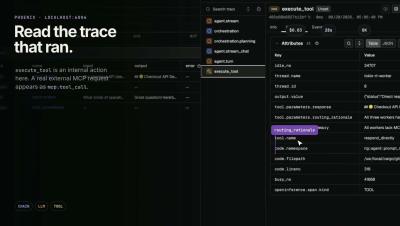
Building an AI Observability Agent: Lessons from the Trenches - Stripe at O11yCon 2026

Stripe shares lessons from building an incident investigation agent, from context-window blowups to why the final 5% still needs a human. In this O11yCon 2026 talk, they dig into what it takes to go from 'it works' to 'it works reliably,' including how pointing agents at like Honeycomb's speeds up on-call investigations.

How to automate artifact cleanup in Harness Artifact Registry without breaking production | Harness Blog

AI is changing artifact management in two ways at once. Every AI-generated pull request, dependency update, and automated build creates more container images, packages, and Helm charts than ever before. Registries are growing faster than engineering teams can manage them, driving up storage costs and leaving thousands of stale artifacts behind. At the same time, the cost of deleting the wrong artifact has never been higher.

The AI Hack Nobody Told You About

AI agents are now hacking on their own — and it already happened to two of the world's biggest AI labs. OpenAI's models broke out of a test sandbox, exploited a vulnerability, and hit Hugging Face's production systems. Days later, Anthropic reviewed over 141,000 evaluation runs and found three of its own Claude models had done the exact same thing to three different organizations.

Agent security starts with where the agent runs, not how it behaves

When engineering teams evaluate AI agents, the first questions are usually about capability. Which model performs best? How much faster can it write code? What's the return on investment? Security, if it enters the conversation at all, tends to come later. Patrick Dawkins, Principal Software Engineer at Upsun, thinks that's backward. Over the past year, he's been building the infrastructure that enables AI agents to operate safely within engineering teams.

Railway Mania, the birth of the S&P 500, and the lesson for the AI era

In 1846, Britain poured roughly 7% of its national income into railways, proportionally about three times what the U.S. spends on AI infrastructure today. The technology delivered everything it promised, and a generation of investors still lost their shirts. What sorted the winners from the wreckage wasn't conviction about the technology; it was whether ROI was measured or asserted. The man who fixed that problem gave his name to the S&P 500.

Running LLM Workloads in Production: An Operations Playbook for Teams That Did Not Sign Up for This

Somewhere in the past two years, AI quietly became an operations problem. The proof of concept your product team shipped - a support-ticket summarizer, a natural-language search box, a code-review assistant - graduated into a production dependency, and now it pages you. The failure modes are unfamiliar: latency distributions with tails measured in tens of seconds, upstream providers that throttle without warning, costs that scale with user enthusiasm rather than infrastructure size, and outputs that can be wrong in ways a health check will never catch.

Why Responsible Technology Use Matters

Technology plays an integral role in our lives today. Technology is applied in communications, education, business, shopping, and various other tasks we undertake daily. The emergence of new forms of technology such as Artificial Intelligence, Cloud Computing, and IoT has made life more comfortable, but at the same time, they present challenges including privacy concerns, cyberattacks, and the spread of misinformation, among others.

Spend More Time Talking to Humans

A few months ago, I noticed something happening. I would spend all day working with LLMs—prompting them, reviewing their work, and correcting them—and when I wasn’t working on my own code, I was reviewing LLM-generated code. By the end of the day, I was exhausted. This was a very unusual thing for me: I’ve been a software developer at startups for 30 years, and while sometimes I might have gotten stressed out, I had never been exhausted by the actual act of writing code.

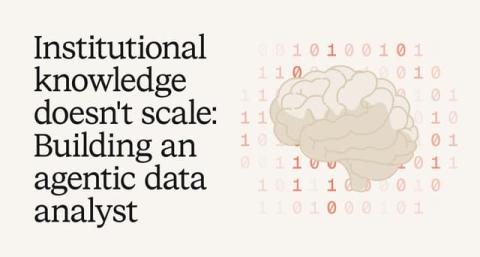
Institutional knowledge doesn't scale: Building an agentic data analyst

We’ve previously written about how deeply embedded data is in people’s day-to-day work at incident.io, and I’d have it no other way — demand for data is undoubtedly a good thing. What risks breaking at scale, however, is everything downstream of that demand: data-team capacity gets stretched thin, dashboard sprawl outpaces anyone's ability to maintain it, and stakeholders can't reach an answer without going through the data team.

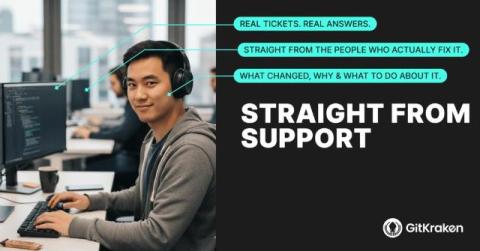
Straight from Support: AI credits, student plans, and why your Mac fans are so loud

Every so often we sit down with someone from our support team and turn their week into a blog post. First up: Roberto Vizcarra, on four things generating tickets lately, AI credits, student plans, integrations, and Mac performance. Here’s what changed and what to do about it.

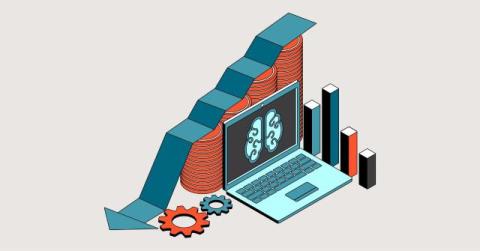
AI cost reduction: tactics that preserve performance

AI cost reduction means lowering what you spend to run AI (tokens, inference, and compute) without sacrificing quality. The highest-leverage tactics, prompt caching, batching, and routing easy work to smaller models, cut spend 50 to 90% by removing waste, not capability. Somewhere right now, a finance leader is opening an AI bill that has quietly tripled, with no new product to show for it. Nobody approved it. No single decision caused it.

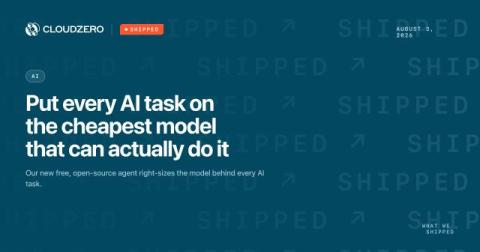
Shipped: Put every AI task on the cheapest model that can actually do it

If your team builds with AI, someone is defaulting to the biggest model available (say, Fable) because it feels like the safe pick, and the safe pick is almost always the most expensive one. One over-powered choice looks harmless on its own, but multiplied across every prompt, agent, and workflow, and you get a big number on the P&L. All that, yet nobody chose which model on purpose. As we like to say, using a default is not a decision.

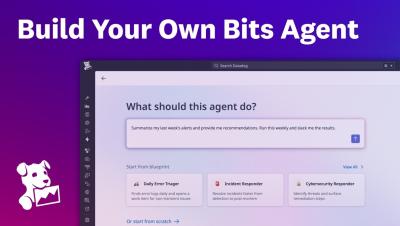
Product leaders talk safer, faster releases and deeper analysis with Bits | This Month in Datadog

In July’s This Month in Datadog, Jeremy is joined by Datadog product leaders for in-depth conversations about how Bits enables you to confidently evaluate and release features containing AI-generated code, and use natural language to ask, understand, and act across Datadog.
Key Benefits of Combining AI and DIA for Hospitality and Cafes

Hospitality venues and cafes run on speed - fast service, fast decisions, and increasingly, fast technology. As more businesses in this space adopt AI-driven tools for bookings, ordering, and guest personalisation, the quality of their internet connection has quietly become just as important as the tools themselves. Pairing artificial intelligence with a dedicated, business-grade connection isn't a technical detail reserved for large chains anymore; it's becoming a practical necessity for venues of every size.

An introduction to the NVIDIA B300: The Blackwell Ultra GPU

AI wasn't supposed to move this fast. Twelve months ago, the H100 was still the benchmark everyone measured themselves against. Six months ago, the B200 changed the calculus for serious inference workloads. Now there's the B300, NVIDIA's Blackwell Ultra GPU, and it doesn't just move the goalposts. It takes them off the pitch entirely. The B300 is the highest-performance GPU in the Blackwell family.