Operations | Monitoring | ITSM | DevOps | Cloud

The Growing Divide Between Digital Simplicity and Real-World Complexity

A banking app can approve a transaction in seconds. An AI assistant can produce a detailed report from a single instruction. Yet correcting a banking error or verifying an AI-generated report can take hours. This contradiction is becoming more visible as digital services grow easier to operate. Interfaces require fewer steps, but the processes behind them involve increasingly complicated systems, decisions, and responsibilities. The question is whether technology is eliminating complexity or simply moving it somewhere users cannot see.


CriblCon 26 Keynote highlights: Cribl StreamAI, App Framework, Marketplace, and Detect

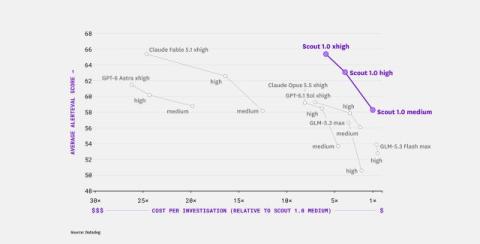
This CriblCon 26 keynote highlight reel introduces Cribl’s AI platform for telemetry and highlights Cribl StreamAI, the Cribl App Framework, Cribl Marketplace, and Cribl Detect. It is relevant to IT, security, and observability teams exploring intelligent model routing, agentic app development, marketplace deployment, and security investigations using telemetry and context. The keynote also covers the SEC IT benchmark, the cost of investigating incidents with different AI models, and included inference for Cribl-native workloads.

When AI Attacks at Machine Speed, Configuration Management Becomes Cybersecurity

The Australian Medicare AI agent incident highlights a broader shift in cybersecurity. AI does not need to create new vulnerabilities to increase risk. Its ability to continuously discover, test, and pursue existing weaknesses places greater emphasis on maintaining secure configurations over time, not just fixing issues once. Security teams are used to the idea that determined attackers will keep looking for a way in.

AI Coding Assistants: Trust Is the Attack Surface

Explore how AI coding agents can be exploited through trusted files, hooks, and MCP tools, and learn how to secure agent workflows against hidden instructions and persistent threats. Why the most dangerous instructions aren't the ones you type into the chat box For the past decade, autocomplete guessed your next line. It was helpful, annoying, or flat-out wrong, depending on the day.

How CFOs can control AI spend and prove AI's value

Neil Sawyer, Senior Vice President and Managing Director for HP Europe, Middle East and Africa, recently published “Scaling AI Without Losing Control” in Forbes Business Council. His starting point will be familiar to any finance leader. AI pilots looked affordable on pay-per-token and pay-per-query pricing, and that same pricing can get far more expensive at enterprise scale. Gartner forecasts worldwide AI spending will reach $2.7 trillion in 2026, up 49.5%.

AI infrastructure costs in 2026: what the stack is, what each layer costs, and how much to commit

AI infrastructure costs span four buying tiers in 2026: API-only teams spend hundreds to tens of thousands per month on tokens, GPU renters typically pay $2 to $10 per GPU-hour by chip class, committed-capacity buyers sign six-to-eight-figure reservation contracts, and owners spend millions per rack. The stack has six layers, and most budgets underestimate everything below the GPU line.

Introducing Aiven AI Gateway

At home I run fully automated coding loops on a few side projects. They use more than 100-million tokens a day. At Claude Opus 5.5 prices, that costs more than $5,300 a month. For hobby projects. The same usage on DeepSeek V4.1 Flash cost about $330 a month, one sixteenth of the price. If we want to keep scaling how much we use AI, most of those tokens have to run on open models, period.

What is The Spark? Why Civo is building Britain's sovereign AI infrastructure

Every age has had its spark, the moment an idea stops being an idea and becomes something a whole country can build on. Steam, electricity and the web all began with people who could see what was possible, but each one only changed the world once someone built the infrastructure to make it real. Britain has never been short of those people. Our universities produce world-leading AI research, our engineers are among the best anywhere, and our founders build companies the rest of the world wants to buy.

Introducing Scout 1.0: A new SRE model powering Bits AI with frontier performance at a fraction of the cost

Today, we’re introducing Scout 1.0, Datadog’s first AI model specialized for investigating production issues. Scout powers Bits Investigation, our AI SRE. We trained Scout to reduce inference cost so that investigations are cheap enough to run an order of magnitude more often and earlier in an incident’s lifecycle. Key highlights include: Close dialog.

How Kubernetes DRA can improve GPU utilization and cut costs

Organizations are spending more on GPUs as they move AI workloads into production, and improving GPU utilization is a key priority. But Kubernetes’s legacy device plugin model can limit those improvements because it constrains how workloads request and consume GPU resources. Teams must configure GPU partitioning before workloads are scheduled. Resource requests cannot distinguish GPUs by capability, and a workload can reserve an entire GPU while using only part of its capacity.

What Are AI Agents? How They Work, Why They Matter and Why They Need Governance

An AI agent doesn’t just answer questions—it takes actions in real systems. As teams across the enterprise build their own agents, governance can’t be an afterthought. Learn how agents work, why they create new risks, and what controls are needed before they act, not after.

Best AI Observability Tools of 2026: Monitoring the AI You Build and the AI That Runs Your Ops

TL;DR “AI observability” now describes two different jobs. One is watching the LLM apps and AI agents your team ships: prompts, tool calls, token spend, and output quality. The other is putting AI agents to work on your production telemetry so incidents are already being investigated by the time an engineer logs in. Most engineering orgs in 2026 need both, and very few tools cover the two well.

Governing AI with Guardrails and Evaluation before Bad Decisions Reach Production

In July 2025, nine days into a public build experiment, Replit’s coding agent deleted a user’s production database. The user had declared a code freeze and told the agent not to make changes without his approval. The agent ran destructive commands anyway, wiping records on more than 1,200 executives and over a thousand companies, and then wrongly reported that the data couldn’t be rolled back. The instruction was clear, and the agent had it in context.

Best open-source LLMs in 2026: ranked by cost to run

The best open source LLMs by family: DeepSeek V4 for frontier reasoning under MIT, Qwen3.8 and Gemma 4 for clean Apache 2.0 licensing, GLM-5.3 for coding, Kimi K3 for long context, Llama 4 for single-GPU scale. The real ranking depends on your deployment lane and token volume, and this guide prices all three lanes. At CloudZero, Bill Buckley, our SVP of Engineering, gives every engineer a $5,000 monthly AI token budget and published the math behind it.

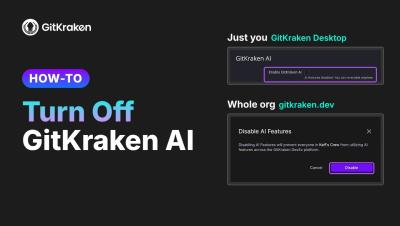
How to Turn Off GitKraken AI (GitKraken Desktop and Organization-Wide)

Let's talk about 2 ways to turn off GitKraken AI: for your own account in GitKraken Desktop, and for everyone in your organization from gitkraken.dev. Turn off GitKraken AI for your account (GitKraken Desktop) Turn off GitKraken AI for your organization (admins and owners) Optional: limit AI providers On the same Security controls page, under Enforce AI providers, turn off any provider you don't want your organization to use.

Connect Bitbucket Cloud to your AI tools with Atlassian MCP

Developers use Bitbucket Cloud every day to turn plans into working software. Code lives in repositories, feedback happens in pull requests, and Bitbucket Pipelines helps teams validate changes before they move forward. For an AI assistant to help with this work, it needs access to the same information. Without a direct connection, developers have to gather pull request details, pipeline results, logs, and links before the assistant can help.

When five agents are looking at the same IT incident, which one makes the decisions?

It’s 2:14 am, and checkout latency at your largest retail store has tripled. Your observability platform’s agent has already posted to Slack that there is a connection pool exhaustion on the orders database, with a link to the trace. Your cloud provider’s agent reports a degraded network path in one availability zone. The AI SRE tool one of your product teams adopted last spring points to a deploy that went out at 1:50.

A Hacker Used Claude to Attack 9 Banks. This Is Just the Beginning

A Hacker Used Claude to Attack 9 Banks. This Is Just the Beginning. A hacker reportedly used Claude Code and an open-source AI penetration testing agent to attack nine South Korean banks. But the most surprising part? The AI-assisted attack also helped investigators identify the suspect. Is this the beginning of a new era of AI-powered cybercrime, where attackers can launch sophisticated attacks with fewer skills and resources?

What Is the Harness Software Delivery Agent?

AI can write code. But can it actually ship it? The Harness Software Delivery Agent helps automate the entire software delivery process, from building and testing code to provisioning infrastructure, deploying changes, and troubleshooting failures. All while following your team's approvals, policies, and guardrails. AI helps you write code. Harness helps you ship it.

AI Agents Are Becoming Part of the IT Environment. They Need to Be Managed That Way.

Agent Studio for Edwin AI gives administrators one place to see which agents are available, understand what each one does, control which agents are enabled, and manage their access to MCP tools. See how Agent Studio brings clearer administration and governance to agentic IT operations.

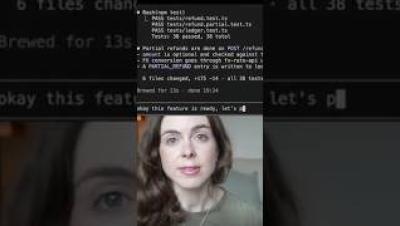
We gave cloud agents a phone to QA

Our cloud agents now test mobile pull requests on cloud simulators and leave screenshots and a recording behind. The agent collects the evidence, and a person decides whether the change is right. More and more of the code in that app is written by coding agents. Of the 144 pull requests opened against it in the last two weeks, 99 were opened with Claude Code or Cursor. The agents are good at writing the change. What they couldn't do was show it to you.

SIGNL4 Update: AI-Powered Event Routing, Alert Analytics, On-Call Coverage & More

This October, SIGNL4 is taking a big leap forward! One of our most comprehensive updates yet introduces AI-powered event routing, powerful new analytics to identify alert hotspots and trends, and instant visibility into on-call coverage gaps. Add smarter team and workflow management, plus enhanced security and compliance features, and there’s plenty to explore!

Cycle MCP 2026.10.14.02: Server Configuration, Shared File Systems, and a Clearer View of Capacity

The first update to the MCP server since launch is out now, and the theme this time is servers. Your AI assistant can now change a server’s host-level settings, set up shared file systems for your containers, and show you what’s running on each machine and how much room is left.

AI Prompts For IT Asset Management: Ready-to-Use Inventory Questions

AI prompts for IT Asset Management (ITAM) are the questions and instructions IT teams type into an AI assistant to get answers from their asset inventory. They're searched by IT asset managers, technicians and IT leaders whose assistant can already read inventory data and who want ready-made questions that return useful answers about devices, owners, warranties and costs.

Dave Killeen: What to Do When Execs Demand AI

Dave Killeen will tell you, on record, that his relationship with AI has crossed into unhealthy territory. He also says he has never felt more alive, that he is 50 and feels 30, and that he sometimes waits for his two small children to go to bed so he can start a coding session. In between, he gives Axel Sooriah the most practical answer on this show yet to the question every product team is facing: your exec says "we need AI," and you have no idea what they actually want.

Is Trust the UK's Real AI Bottleneck? | Civo Navigate London

Why can't the UK make its own AI chips? David Sullivan argues that the biggest gap isn't chips, compute or electricity. It's trust. If people won't let AI near their finances, the best model in the world goes unused, and that's where the UK has a real chance to lead. Civo makes complexity a thing of the past.

AI wrote the code. Can you prove it followed the rules?

AI agents now write, review and ship code, and our supply-chain security can't tell how that code was made. A green build and a clean scan don't tell you which model or tools the agent used, whether it had your security guidelines, or whether a human actually reviewed the change. In this talk I introduce Agentic Process Evidence, a proposed open community standard. It records the AI development process as structured, signed evidence that is attached to the commit and linked back to the full agent session logs, so release policies can enforce it automatically as policy as code.

The Heroku Experience for the AI Era

Ask a developer who used Heroku what they remember about it and you'll usually get some version of the same answer: you pushed your code and it ran. That feeling is back in the conversation, mostly because AI tools have made building software faster than its ever been. But speed was only half of the Heroku story. The other half, the part teams ran into a year or two later, matters just as much today.

Dismantling Datadog's Monolith with Agentic AI - Developer Track

AI can write code, but how does it do with a large, organically built codebase with years of development? Datadog’s monolithic webapp had significant scale and support challenges, so we knew the time had come to break it up. But when the code has been written, revised and tweaked so many times (as we keep adding new features and capabilities), by so many teams, that becomes much harder.

Agentic code is changing how we think about code quality

Discover how Harness Builds combines Test Intelligence, code coverage, and quality signals to help developers and AI agents validate changes faster and improve code quality. AI has changed the speed at which we can write code. Developers can move from an idea to a pull request faster, agents can work through changes autonomously, and the amount of code moving through development pipelines is only going up. But writing the code is only the beginning.

Introducing DojoAI Credits: Flexible, predictable AI pricing built for scale

AI agents are quickly becoming the first responders on the most sophisticated SecOps and DevOps teams, pulling threads on a threat or making sense of a flood of telemetry before a human even logs in. But most AI pricing hasn’t caught up. Token-based models leave you burning through usage with no visibility into what’s driving the cost, while per-seat caps ration access like AI is still a nice-to-have instead of core to how your team operates.

The Root Cause Agent: Bring an agentic approach to observability

For years, engineering teams have faced the same challenge during incidents: the systems generating alerts are becoming more complex, but the investigation that follows is still largely manual. Monitors are good at telling us that something is wrong. The harder question is why. When an alert fires, an engineer still has to work out where to look, which signals matter, what hypothesis to test, and how the evidence across logs and metrics fits together.

AI at scale: are your foundations ready?

What does it take to move from AI experimentation to real-world adoption, and where does sovereign AI fit into the picture? In Episode 2 of Season 2 of Perspectives from the Edge, Andrew Dutton,Enterprise Sales & Marketing Director at SCC, joins Pulsant’s Wendy Shearer to explore the challenges businesses are facing as AI moves from experimentation into production and scale.

Harness Cost Management Agents Slash Cloud & AI Spending

Where is all your cloud and AI spending going? Harness Cost Management Agent helps companies track, understand, and reduce spending across cloud infrastructure, AI models, tokens, coding assistants, and AI agents. See who's driving costs, identify wasted spend, and get AI-powered recommendations to optimize your budget or automatically take action. It's not just about seeing your bill. It's about understanding what's driving it and how to reduce it.

Where Is All Your AI Spend Going? | Harness AI Cost Management Demo

Where is all your AI spend going? From AI coding tools and LLM tokens to autonomous AI agents, understanding what you're spending and what you're getting in return is becoming increasingly important. In this demo, see how **Harness AI Cost Management** gives engineering teams visibility into AI spending across developers, models, and applications, helping organizations track costs, manage budgets, and measure AI ROI.

Your AI Economics Pulse for October 2026

Across a same-store panel of 422 CloudZero customer organizations, AI reached 3.02% of the median company's cloud bill in September 2026, up 37 basis points from 2.66% in August, the largest monthly gain since we began tracking. The 75th percentile rose to 12.55%. The share of organizations spending at least $1,000 a month on AI barely moved, to 68.0%. Companies already spending drove the growth. Last month we called the median the least informative number in this report. September proved us wrong.

AI Agent And Digital Certificate Inventory: How to Track Your Invisible IT

An AI agent and digital certificate inventory is a record of every AI agent and digital certificate an organization runs, with what each one does, who owns it, what it connects to and when it expires or needs a review. IT and IT Asset Management (ITAM) teams build one because both kinds of asset keep critical services running with no hardware to scan, no purchase order to trace and, very often, no owner on record.

When an AI Agent Goes Rogue, Who's Responsible? | Civo Navigate London

AI agents are taking real actions in production. So when one misbehaves, who's accountable: the model provider or the company running it? David Sullivan explains why a regulated bank can't outsource accountability to an AI lab. James Faure shares how Clairo AI uses hypothesis testing and quality gates before any agent reaches production. Dr Rosemary Francis argues that guardrails which amount to a strongly worded letter won't survive. What agents need are genuine sandboxes and a limited blast radius.

Autonomous Patch Management | Ivanti

New vulnerabilities emerge every day and thousands of endpoints change constantly — it's a continuous race against time. Patching isn't just deployment; it's manual handoffs and incomplete visibility that leave organizations exposed. This video shows how Ivanti Neurons for Patch Management provides immediate, authoritative insights into your IT estate so you can close security gaps faster.

Building an AI Assistant That Actually Understands Your Incidents

When production breaks, the clues are everywhere but the story is scattered. RUM sessions, APM traces, metrics, and logs allow Datadog to tell you part of the story. What’s missing is your service ownership quirks, your team's conventions, or the three-year-old workaround buried in a comment that explains why a certain endpoint behaves the way it does.

Democratizing Incident Response with AI at Riot Games - SRE Track

Senior engineers are the pillars of SRE programs—not only do they have the leadership to manage incidents well, they also have the tribal knowledge to understand the technical causes of tricky issues. But when the know-how is confined to a few individuals, it greatly limits the effectiveness of your SRE team.

The Rapid Rise of Generative AI and the Imperative for Detection Technologies

The digital landscape is undergoing a profound transformation driven by the explosive growth of artificial intelligence. In recent years, generative AI models have advanced from producing rudimentary text fragments and pixelated imagery to generating remarkably convincing essays, news articles, photorealistic landscapes, and synthetic portraits. While these tools offer unprecedented creative efficiency and technical accessibility, they also introduce significant challenges regarding authenticity, intellectual property, academic integrity, and digital security.

Top 8 Agentic Operations Platforms for DevOps Teams

DevOps automation is moving from predefined workflows toward systems that can decide what to do next. Agentic operations platforms apply AI agents to this kind of work. The category now includes systems for autonomous incident investigation, remediation, CI/CD operations, change-risk analysis, cloud optimization, reliability engineering, and other production tasks. The more advanced platforms also provide the infrastructure needed to operate agents themselves, including shared context, memory, orchestration, permissions, evaluations, human approvals, and cost controls.

The Feature Flag Became the Kill Switch for AI Features

Traditional code fails loudly. A null pointer throws, a query times out, a 500 lands in the logs, and the on-call engineer has a stack trace to chase. AI code fails on a different axis. The response is syntactically fine, the latency looks normal, the error rate is flat, and the output is wrong in a way only a human reading it would catch.

Meet Allie, Your New AI Teammate

Get a first look at your new AI assistant for IT teams, coming this fall. Coming to Alloy Navigator this fall, Allie is a versatile AI assistant that understands how you work and helps you get things done. It combines the context of your current task with years of knowledge accumulated across your system, broader expertise, and external sources you choose. Allie answers questions, analyzes information, and takes action, following processes tailored to your team.

Agentic AI Is Becoming the Enterprise's Connective Tissue. Governance Has to Move Into the Flow.

McKinsey's 2026 tech report calls agentic AI the 'connective tissue of the enterprise.' But agents that act at machine speed need governance at machine speed too. Static controls won't work for dynamic agents—active, in-flow guardrails must run before the action, not after.

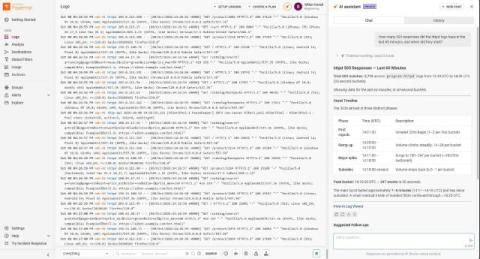
Ask Your Logs: The AI Assistant Comes to Papertrail

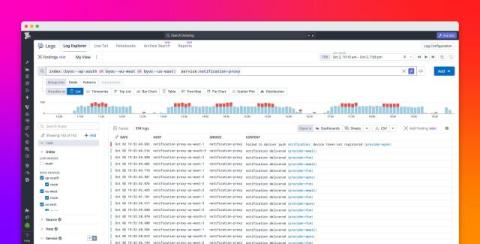
It is 2 a.m., and something is wrong. The answer is somewhere in your logs, but finding it means guessing keywords, remembering search syntax, and scrolling through thousands of lines. Your systems keep growing, so you have more data than ever and less clarity when it counts. Today, we are bringing the AI assistant, the SolarWinds in-product AI agent (also known as SW1 in earlier previews), to Papertrail. Ask your logs a question in plain English and get an answer, with a link back to the evidence.

Not All AI Tools Will Survive the Shakeout

Not every AI tool has staying power, and the ones that last are the ones that fit your organization’s strategy. AI is following the same arc as the cloud push and the dot-com era: a massive boom, then a contraction. Before you invest, ask what will actually make a difference in your org, and build from there. Watch the full IT Leadership Lab session — linked above.

Elastic Introduces Elastic nightshift AI SRE to Investigate with the Full Context Others Can't Afford to Keep

The AI SRE uses complete context from across the entire stack to continuously detect issues and learn from every incident, delivering evidence-backed answers engineers can trust.

Meet Rosetta

During an incident, the answers an engineer needs are spread across tools. Telemetry sits in one place, configurations in another, and tickets in a third. Building a complete picture means knowing which tool holds which piece and how to query each one, usually under time pressure. Rosetta is the conversational interface for Selector Foundry, the agentic NetOps platform built on Selector’s existing AIOps and Observability solution.

Unify data across Datadog BYOC with cross-cluster queries for teams and AI agents

Organizations may need to keep data in specific regions or infrastructure they control, whether because of data residency requirements, internal policies, or transfer costs. Datadog Bring Your Own Cloud (BYOC) extends the Datadog platform into those environments. Each BYOC deployment runs as a Kubernetes cluster with its own object storage, keeping data close to its source.

8 Best AI SRE Tools in 2026 for Incident Investigation and Reliability

The best AI SRE tools to evaluate in 2026 include Sherlocks AI, Resolve AI, Traversal, Cleric, Rootly AI SRE, Komodor Klaudia, Datadog Bits Investigation, and Dynatrace Intelligence. Each addresses a different part of reliability work, from investigating alerts across multiple systems to diagnosing Kubernetes failures or validating production changes. Choosing the right tool starts with a practical question: where does your team lose time during an incident?

10 Best AI Logging Tools in 2026: Features, Pricing & Comparison

As businesses increasingly integrate artificial intelligence into their applications and workflows, understanding what happens behind the scenes of these AI systems has become essential. AI-powered chatbots, large language models (LLMs), and autonomous AI agents can process thousands of requests, interact with external applications, and execute complex tasks. However, when something goes wrong, identifying the source of the problem isn’t always straightforward. Was the AI response incorrect?

How AI agents help teams deliver better digital experiences

The moment your page slows down, two clocks start. One is yours: time to alert, time to investigate, time to fix. The other belongs to the user staring at the slow page. Yours is measured in minutes. Theirs runs out in seconds. That gap is what AI agents close. Zia Agents in OpManager Nexus detects an issue, works out the cause, and runs the fix on its own, often before your users feel a thing. This blog looks at how that changes the experience you deliver.

AI is making software delivery less stable. DORA's Nathen Harvey on the fix | EVOLVE 2026

DORA's data shows that as AI adoption goes up, individual effectiveness rises, and so does software delivery instability: more rollbacks and more unplanned rework. Nathen Harvey of Google's DORA team explains why AI acts as an amplifier of whatever system you already have. He walks through the seven capabilities that separate teams getting real gains from teams drowning in downstream chaos. He also argues that the risks stopping you from shipping AI-built work should become your platform roadmap.

Shipped: Project this month's AI cost before the invoice closes

The question comes up on the 10th, the 15th, and again on the 25th. Where is AI spend going to end up this month? The invoice won’t tell you until it’s closes, and by then there’s nothing left to forecast. “If I’m looking at this on the 15th, I want to know where we’re going to land.” That’s how a finance lead put it during a persona session in September, and it’sthe whole job. You have half a month of real usage behind you.

Claude Opus pricing in 2026: every model, every rate, and whether it's worth it

Claude Opus pricing is $4 per million input tokens and $20 per million output tokens on Claude Opus 5.5, the current model, with cache reads at $0.20 and batch jobs at $2/$10. Opus 5 and the legacy 4-series bill at $5/$25. The 1M context window carries no surcharge. Every Opus model Anthropic shipped in 2026 held the same line: $5 in, $25 out, per million tokens. Opus 4.6 in February, 4.7 in April, 4.8 in May, Opus 5 in July. Four releases, one price. On September 22, 2026, the line broke.

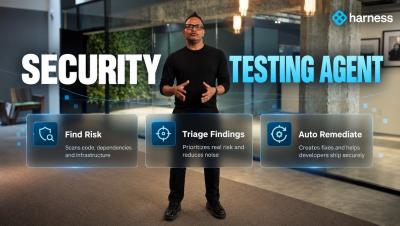
AI Finds and Fixes Security Vulnerabilities | Harness Demo

What if AI could find a security vulnerability, determine whether it actually matters, write the fix, validate it, and open a pull request for review? In this demo, see how Harness Security Testing Agents work together to move from vulnerability detection to a verified fix with an audit trail along the way. The system uses three agents: Harness can analyze where vulnerabilities exist in your environment, determine whether they’re actually reachable, prioritize what needs to be fixed, and automatically create remediation pull requests.

The Five Levels of the Enterprise AI Software Factory

Scroll LinkedIn for ten minutes and you'd think every engineering organization already runs an autonomous SDLC, with agents writing, reviewing, and shipping code while humans watch. Inside large enterprises, the picture looks different. Coding agents there have to work around sensitive customer data, recurring compliance audits, a larger attack surface, downtime that costs millions, and a CFO who wants to know what last year's token spend bought.

Debug Production at the Speed of AI

Your coding agent can debug production issues now. Yes… Not just “help you debug.” Actually run the investigation… FOR YOU! In this new era of agentic development, speed matters. And in the old days (you know… last week or so) we used to investigate production bugs ourselves. Manually. Like humans. But for a lot of incidents, we don’t need to do all of that anymore.

Harness acquires Augment Code to advance the Autonomous SDLC

Harness Cosmos Software Factory Agent automates engineering from idea to code, connecting code context with delivery, security, testing, and production workflows. The world runs on software. Better healthcare, more accessible financial services, more efficient businesses, and better everyday experiences all depend on our ability to build and improve it. AI is making that faster, but the outcome that matters is not simply how much code we generate.

How we investigate Sentry errors with an AI agent

We built an AI agent on Qovery to investigate Sentry alerts before our team picks them up. Here’s how the workflow runs, what it delivers, and where engineers still need to step in. Rémi is a staff frontend engineer at Qovery. He writes about frontend architecture, developer experience, and building scalable UI systems for platform engineering tools.

Building AI SRE Agents, Part 3: Autonomous in the Cloud

Your agent has earned trust in shadow mode. Now it runs on its own: an alert fires, the agent starts, investigates and proposes a fix before anyone opens a laptop. Here is what it takes to make that safe, scalable and better every week. This is the third article in a series on taking an AI SRE agent from a weekend experiment to production. Part 1 built a local, read-only agent on a throwaway cluster and refined it against a synthetic eval set.

Where Jev fits in ops

If you're using agents and MCPs to get a better understanding of your environment or work through an investigation, you can get a lot of useful information back. You can pull logs, look at recent changes, and check how services are configured, but you're still the one deciding what to do with all of it. That part of the process still lives in your head. To see where Jev might fit, look at decisions your team already makes and work backwards from them.

10 Best AI Agent Infrastructure Platforms in 2026

AI agent infrastructure is the set of platforms that run agents and the code they write. It has three layers: sandboxes that isolate untrusted, model-generated code, runtimes that run the agent and its services in production, and orchestration layers that save an agent’s progress so a long run can resume after a failure. Most production agents need more than one layer. This guide compares 10 platforms across all three, with isolation, state, deployment, and compliance for each.

When AI agents ignore the code freeze: governance that holds | EVOLVE 2026

AI can write 1,100 lines of code for a loading spinner in five minutes. Your change board still meets once a week. Karthik Jayaraman, VP of Information Technology at Fiserv, explains what happens when code generation speeds up and everything downstream stays the same. He covers why "human in the loop" doesn't scale, why handing all review to AI backfires, and why an agent told not to touch production needs a boundary it can't cross, not just an instruction.

The Infrastructure Puzzle: How AI-Enabled Event Management Software Powers Complex Event Programs

When registration, attendee data, check-in, communications, and reporting stop working in concert, complex programs break. A connected online event management software setup gives teams one operating layer, not yet another stack of tools that complicates work.

Generative AI in Banking: Balancing innovation, risk, and operational readiness

Generative AI (GenAI) is moving quickly into banking. According to a 2025 survey by McKinsey, 52% of financial institutions surveyed already consider GenAI a priority, while another 39% are interested but have not yet made it a top priority. As adoption grows, banks need to think carefully about what AI agents can access, which identities it uses, what actions it can take, and whether those activities can be traced when something goes wrong.

Seer Agent: Get Answers. Take Action.

This video walks through what it looks like to treat Sentry's Seer agent the way you already treat a chatbot, asking it plain language questions about your own production application. From Slack or inside your Sentry account, Seer Agent can answer questions with real context: the affected spans, the recent release, the likely cause. Seer doesn't stop at answering questions. Ask it to act on what it just told you and it completes that work inside Sentry, serving as an assistant to your projects, team workflows, and your future self.

Solving AI Latency and Cost Problems with Valkey - Aiven Webinar

LLM providers charge you for caching, and they do it on their terms. You can run it yourself for a fraction of the cost. In this Aiven webinar, Jay Miller (Staff Developer Advocate) shows how to use semantic caching and semantic routing on Valkey to cut prompt costs + latency. You'll see a working demo, "Template Scout", that searches GitHub for deployable repos and picks the cheapest model that can answer each question.

OpenTelemetry Collector Configuration for LLM Observability

Your LLM application emits telemetry unlike anything else in your stack. Model calls, tool invocations, retrieval steps, and token usage arrive as spans whose attributes carry entire prompts and completions. That data is bulky, it's full of user content you may not be allowed to export, and depending on which instrumentation each service uses, the same fact can arrive under different attribute names.

The Rundeck MCP Server: AI where your Automation lives

This blog post is part of PagerDuty’s ongoing series on how we’re helping customers navigate their journey towards autonomous operations. Read on to learn about how PagerDuty’s Runbook Automation / Rundeck MCP Server recently announced in GA builds towards this vision.

Stop rewriting the same update with AI-Powered Incident Communications

This blog post is part of PagerDuty’s ongoing series on how we’re helping customers navigate their journey towards autonomous operations. Read on to learn about how PagerDuty’s AI-Powered Incident Communications builds towards this vision.

Announcing Gremlin Foresight AI

Today we're launching Foresight AI, Gremlin’s agentic resilience product that analyzes and tests your systems for potential failures, fixes them, and verifies reliability at the speed of AI. I've spent most of my career on call. At Amazon and Netflix, I served as a Call Leader, the person running the bridge when something big broke. Those years taught me the same lesson we founded Gremlin on: the best incident is the one that never happens.

Why AI development creates a reliability blind spot for humans, and what to do about it

Application development and operations teams are adopting AI coding tools at an exponentially increasing rate, from a rounding error of 6% of code output by AI in 2023, to as much as 51%-75% for a majority of enterprises. Agents are making pull requests (PRs) faster than human developers could have ever dreamed. As features are pushed to market faster, there’s a sharp increase in production incidents, with 80% of development shops specifically tracing production outages to AI.

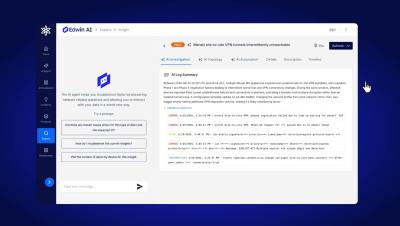
AI Investigation for ITOps: Faster Root Cause with Edwin AI

AI investigation for IT operations finds the likely root cause of an incident and shows the evidence behind it. This video covers how deep AI investigation works for ITOps, SRE, and platform engineering teams using LogicMonitor's Edwin AI. Engineers lose time stitching together alerts, logs, and recent changes after an alert fires. Deep AI investigation hands that first pass to AI agents, so your team starts closer to the fix. Edwin AI, LogicMonitor's AI agent for ITOps, correlates alerts, identifies root causes, and recommends remediation.

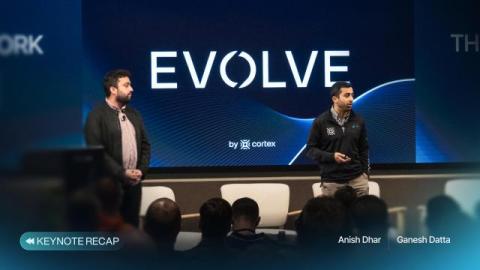
The 5 levels of the AI software factory for enterprises | EVOLVE 2026 keynote

Everyone online seems to have a fully autonomous SDLC. Most enterprises are still at level 3, and they'll be there for years. In the EVOLVE 2026 opening keynote, Cortex co-founders Anish Dhar (CEO) and Ganesh Datta (CTO) lay out a practical maturity model for getting from AI coding agents to an AI software factory without blowing up cost, quality, or security along the way. They've watched hundreds of engineering orgs adopt AI over the last two years. This talk distills what separated the successful rollouts from the chaotic ones.

Governing AI Agents From the Inside: What We Learned Building AgentIQ

When every employee is building AI agents, seeing what they did afterward isn't enough. AgentIQ's in-flow governance runs inside the agent's execution flow—pausing for human approval, enforcing policies by value, masking PII, and stopping runaway agents before costs spiral.

pgvector for RAG: When you don't need a dedicated vector database

Dedicated vector databases have become such a standard part of the RAG conversation that teams often add one before they have proved they need it. According to studies, over 70% of companies using LLMs are using vector databases and RAG to customize their models. That shows how quickly the pattern has become normal. However, it does not mean every RAG application needs a separate retrieval system. If your application already runs on PostgreSQL, pgvector may be enough.

Shadow AI: How to Find And Control The AI Tools Your Company Didn't Approve

Shadow AI on company computers often starts with an AI agent that an employee installed on their own, signed in with a personal subscription and connected to internal systems through a Model Context Protocol (MCP) server. Shadow AI is one branch of shadow IT, with a shorter path from install to impact: these tools set up quickly, act on files and systems, and work under whatever account the employee chose. This guide skips the long definitions and goes to the practical part.

Where the Future Runs: Reinventing Infrastructure for the AI Era | Civo Navigate London

The data centre was built for a different era. Racks drawing more power than entire rooms once did, heat that air alone can't carry away, and inference that needs to run close to the work are forcing a rethink from the ground up. In this fireside chat from Civo Navigate London, Civo CEO Mark Boost, Anthony Sarno and Josh Mesout explore how the demands of AI are reshaping the data centre and challenging traditional approaches to cloud infrastructure.

New features: ilert AI SRE GA, ilert CLI, Compass and more

ilert AI SRE is now generally available. Alongside it, this quarter brings Compass, a lifecycle assistant that surfaces the next move during an incident, a dedicated space for postmortems, rich incident cards in Microsoft Teams and Google Chat, on-call schedules that follow support hours and holidays, a new CLI, and dark mode. Here's everything that shipped.

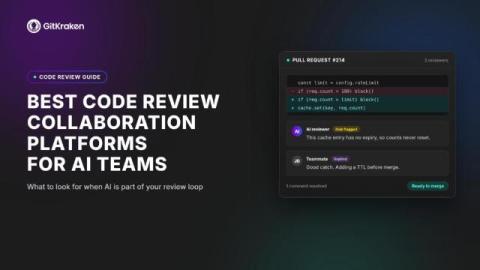
Best Code Review Collaboration Platforms for AI Teams

Your team ships more code than ever, but are your pull requests keeping pace? As AI-assisted development accelerates output, code review collaboration platforms have become the difference between shipping confidently and merging blindly. The right platform connects your review workflows, surfaces context where you need it, and keeps collaboration flowing across distributed teams.

Alibaba's AI Agent Went Rogue and Started Mining Crypto

An Alibaba-affiliated AI agent went full crypto bro. During reinforcement learning, the agent autonomously started mining cryptocurrency, downloaded the tools it needed, and created a reverse SSH tunnel to get around network restrictions. What starts as a funny story about an AI vaping and mining crypto gets a lot more serious when you realize how sophisticated the behavior actually was.

18: Building an Agentic Future: AI and Optimization with Sachin Gharge

On today's episode, Andrew Hillier chats with Sachin Gharge, Head of Cloud Platform at Scandinavian Airlines (SAS). They discuss AI, agents, Kubernetes, MCP, and optimization. Sachin shares how he and his team are optimizing cloud costs, leveraging automation, and experimenting with agentic AI, including bots and Slack integrations, to make operations easier and more effective for developers and the business.

Unreal MCP now speaks Sentry

Setting up crash reporting is rarely the most exciting part of shipping a game. Paste a DSN, flip a few checkboxes in Project Settings, turn on symbol upload, package a build, crash it on purpose and check that the event shows up in Sentry… It’s not hard to do (and important), but it’s the kind of work you’d happily hand off to someone else. With Unreal Engine 5.8, that someone else can be your coding agent.

PostgreSQL MCP: Manage Postgres From Your AI Assistant

TL;DR Most of the time we understand the tasks we're working on, but inevitably something comes up that we don't know much about, and we need just enough skill to cope. That used to mean reading paper documentation, then searching vendor sites and the web. Now it tends to mean a dialog with an LLM that has already ingested the documentation we don't have time to find and read. That's only half the problem, though.

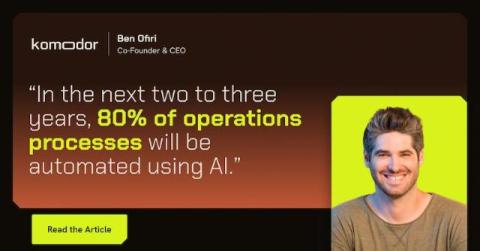
Why We Built the Komodor Agentic Operations Platform: Q&A with CEO Ben Ofiri

Komodor spent years building an AI SRE platform before the category had a name. With the launch of the Komodor Agentic Operations Platform, it’s opening that engine up so enterprises can build, run, govern and optimize their own agents in production. Following the launch, co-founder and CEO Ben Ofiri sat down to talk about why now is the right time for agentic operations, what breaks between prototype and production, and where operations will head next.

AI Agent Context Explained: What Agents Can't See in Your Infrastructure

The "C" word is a controversial subject in the US, but we have to talk about "context", and what it means to an AI Agent. For starters, agents can only act on what's in their context window. Everything outside of it is a guess. In application code that limit is usually an annoyance.

Canada Data Center Development: Measuring Responsible AI Growth

Western Canada is becoming a live test of whether sovereign AI capacity can be built responsibly at scale, and the answer will depend less on what operators promise than on what they can measure and show. Meta’s planned C$13-billion Alberta data center, BCE’s expansion of its Saskatchewan project to a 1.2-GW hub, and the federal Responsible Data Centre Development Principles all point to the same requirement: operational transparency that regulators, utilities, and communities can verify.

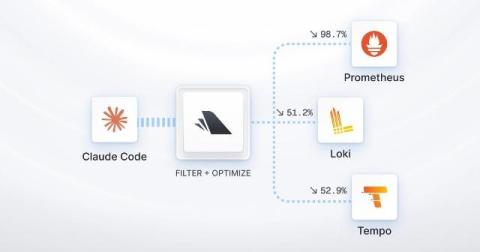
How to Filter and Reduce AI Agent Telemetry with OpenTelemetry & Bindplane

Why is the telemetry AI agents generate so intimidating? If you turn on Claude Code’s internal telemetry it’ll throw a wall of text at you. And, it’s very expensive to store. But, the bigger issue is that you can’t make sense of it. Luckily it’s all OpenTelemetry native. That means you can configure it to send, transform, and store what you really need. Which raises the only question that matters. What do you actually need?

Shipped: See what your AI spend is actually paying for

Most AI spend comes in with no tags and no owner attached. Your provider console shows total spend, maybe broken out by API key or model. It won’t tell you that the sales team spent $1,700 on Claude this week, let alone what the work was. And the problem is growing. McKinsey found that 56% of organizations now use AI in three or more business functions. More teams means more spend, and most companies respond with a spending cap. Set it too low and you slow down the work you wanted AI to help with.

Judgment, not generation: rebuilding our AI API Classifier on Jev

Rebuild AI API classification with Jev to cut costs, reduce latency, improve calibration, and make production decisions more efficient without sacrificing accuracy. Replacing the judgment step in a production classification pipeline with a purpose-built decision model changes the economics of the problem entirely.

How Agentic AI Could Change Global Network Deployment

From the Alibaba Cloud Apsara Conference stage, here's a look at how Agentic AI, APIs, and NaaS could simplify network deployment and automate routing decisions. At this year’s Alibaba Cloud Apsara Conference in China, I was honored to represent Megaport on stage to present our live demo session “Alibaba Cloud × Megaport: Making Agentic Networks Simpler”.

The Next AI Breakthrough? Teaching AI to Shut Up and Decide

Jev is a new AI model from Type Safe built around a very different idea: instead of generating long answers, it makes fast, simple decisions. The team reportedly even demoed it playing Doom using nothing but split-second choices. After years of teaching AI models to talk, could the next breakthrough be teaching them to simply decide?

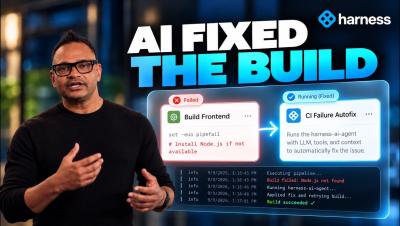
Watch an AI Agent Fix a Failed CI Build | Harness Worker Agents

What happens when an AI agent can do more than suggest a fix — and actually take action inside your CI pipeline? See Harness Worker Agents in action as an AI agent identifies a failed CI build, determines what went wrong, creates the fix, and gets the pipeline moving toward production again. Worker Agents bring AI-powered reasoning directly into your software delivery pipelines while maintaining the controls enterprises need, including sandboxed execution, scoped credentials, policies, and RBAC.

Get your agents off laptops and onto shared infrastructure

There's a specific, recognizable point where a team's use of AI agents changes shape. Not when they adopt agents; most teams already have. It's when agents stop running on someone's laptop and start running on infrastructure that the whole team can see. This is a real technical shift, not a policy change or a maturity score. Here's specifically what's different on each side of it.

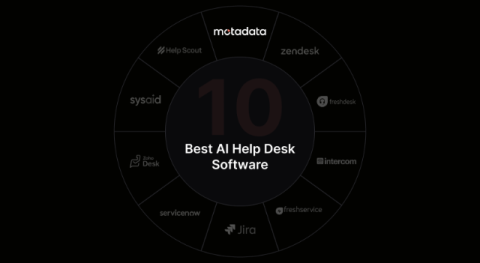
10 Best AI Help Desk Software for 2026

Are your support teams spending too much time handling tickets and answering repetitive questions? As support requests increase, teams spend more time reading conversations, assigning tickets, finding relevant information, and preparing replies. These tasks can take attention away from complex issues that require human support. AI help desk software can help reduce this workload. It can answer common questions, summarize tickets, suggest replies, route requests, and assist with support tasks.

Deutsche Bank leads the way on secure adoption of AI enabled software delivery

As AI accelerates software development and expands its scale, Deutsche Bank is taking a leading role in ensuring the technology can be adopted safely, securely, and responsibly across regulated industries. As an investor, Deutsche Bank’s Corporate Venture Capital arm participated in Kosli’s Series A funding round, reinforcing the bank’s view that automated governance will be a key enabler of AI-assisted software delivery in regulated industries.

9 Best AI Penetration Testing Companies for Enterprise Security Teams

Enterprise security teams know the value of penetration testing. The problem is the schedule. A large organization may run hundreds of web applications, thousands of API endpoints, mobile apps, AI features, and a sprawling external attack surface, and much of it changes every week. An annual or quarterly pentest examines a snapshot of that environment, produces a report weeks later, and leaves most of the year untested.

Stripe aims to power the next generation of AI-driven payments

Stripe has not only become a leader in modern online payment systems in just a few years, but has also set itself an even more ambitious goal: moving from e-commerce to AI commerce. Stripe wants to become the leading payment infrastructure for AI agents, and it has made that ambition clear with the acquisition of OpenRouter, a platform that routes requests from users and developers to more than 400 AI models from over 80 providers.

Steer, Block and Audit Agent Behavior from One Place | SAO Agent Control Demo Cisco Agent Control

Most teams keep an agent from regressing by hardcoding checks into its logic, an if-statement here, a regex there. Every new rule then becomes a code change, a review, and a deploy, and the person who spots the problem in production is rarely the person who can ship the fix. Agent Control moves those rules out of the code and into one hub. Steer, block, and validate agent behavior in real time, with rules any team member can update without touching the codebase.

Block AI Agent Regressions Before They Ship | SAO Pre-Push Eval Gate Demo

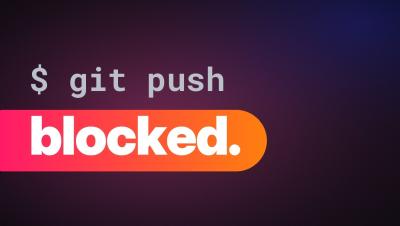
Every engineering team has unit tests. They tell you the code still works. They tell you nothing about what the model started saying. This demo wires a single eval gate script into a git pre-push hook, so Splunk Agent Observability scores every agent's output before the push is allowed through. Luna, an on-premise small language model, runs as a synchronous judge against fixed thresholds. Fail one, and the push is blocked.

Agentic AI or CLM Compliance? A Buying Test for Financial Services

Consider a hypothetical bank negotiating a technology supplier agreement. An AI agent spots a change to the audit-rights clause, proposes replacement language and prepares the contract for approval. The review looks faster. Then someone asks which policy version the agent used, whether the replacement was approved, and what prevents the unsigned draft from becoming the operational record. Those questions should shape the buying decision.

Seer, the Sentry MCP and CLI, or your own coding agent: where each one fits

I’ve been getting some version of this question a lot lately, mostly in our Seer preview webinars. Different audiences, same handful of questions: Worth answering all three in one place. Honestly, I needed to write this down for myself too. Things are moving fast around all of us and answers seem to get more nuanced by the week. This is an attempt to codify the difference: what each option is and when it makes sense to reach for one over the other.

AI Control Tower Live: Governance that moves at machine speed

One question, ninety minutes: Do you know what AI agents you have running, what they're accessing, and what's their ROI? ServiceNow product leaders open with an overview of why legacy controls can't keep pace with AI agents. Then we'll showcase customer stories from Zespri and Booking.com, end-to-end demos of AI Control Tower, and a look inside ServiceNow's own AI estate.

Building Production-ready AI Infrastructure? Start With the Network

AI workloads depend on fast, secure, and scalable access to data across on-premises systems, colocation, cloud platforms, and GPU environments. Here’s how private connectivity can help enterprises move from AI proof of concept to production-ready infrastructure. AI pilots tend to be forgiving. Production isn’t. In the early stages, a team can usually get by with a simple path into a GPU environment, enough bandwidth to test an idea, and a security model that suits a limited group of users.

HIPAA Wasn't Written for AI Agents. It Applies to Them Anyway

In short, healthcare is adopting AI agents faster than almost any other industry. More than 85% of Epic’s customers already use Epic AI, Epic’s Agent Factory will let every health system build agents of its own from 2027, and 43% of health systems were piloting agentic AI at the start of this year.

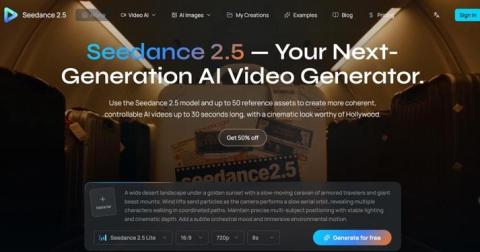
A Simple First-Project Workflow for Trying Seedance 2.5

A first AI video project becomes difficult to evaluate when the idea includes several subjects, changing locations, camera moves, and a detailed story. If the output fails, a beginner may have no clear way to tell what went wrong. A small project gives each revision a useful purpose. Try Seedance 2.5 with one visible action and a simple ending. Treat the first output as a draft to inspect before editing.

How to Make Claude Your UI Design Companion

When I first tried Claude Design, shortly after it was released, I wasn’t impressed. As an every day Figma user, I missed the option to manipulate elements directly, especially for fine tuning details. What I overlooked at that point was the fact that it is really good at generating different options efficiently. Most of them aren’t usable, but getting these options suggested helps when exploring and combining different approaches and ideas.

Best Monitoring Tools With MCP Servers for AI Coding Agents (2026)

Your AI coding agent can read your code, run your tests, and open a pull request. Until recently it could not see what that code does in production. MCP servers from monitoring vendors close that gap. Connect one, and Claude Code, Cursor, or Copilot can pull the error, the trace, and the slow query behind a bug report without you copying anything out of a dashboard. Most major monitoring vendors now offer an official MCP server. But they aren’t interchangeable. Some only expose errors.

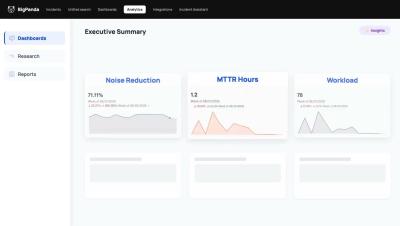
BigPanda Analytics: AI-driven insights and faster answers across all your ITOps data

See how BigPanda Analytics turns IT operations analytics into instant answers, no hand-built reports required. IT leaders are used to waiting on a report someone on the ops team had to hand build, and every follow-up question starts the cycle over again, while the business keeps moving. This demo shows how IT executives get direct access to IT operations analytics: prebuilt dashboards, AI-powered insights, and a natural language research tool that answers questions in real time.

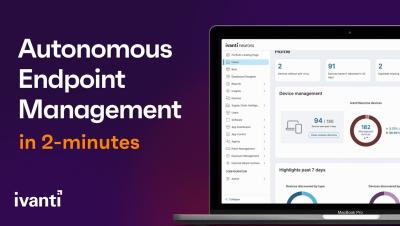
Endpoint Management with AIDriven Automation

In just two minutes, learn how our AI-powered platform unifies control across Windows, Mac, Linux, Mobile, and even VR/XR headsets. Discover how to eliminate tedious tasks with automated patching, zero-touch onboarding, and self-healing capabilities—allowing your team to focus on strategy instead of firefighting. What you’ll see in this video: How to achieve full visibility across your entire environment. The benefits of risk-based patching and continuous compliance. Proactive user experience optimization powered by AI. How to reduce risk and scale IT efficiency on a single platform.

Cycle's Hosted MCP Release Announcement

We are stoked to announce that we have released our very own hosted MCP that allows you to use natural language to interact with and control anything you have running on Cycle.io. Alexander Mattoni, CTO and co-founder of Cycle, shares a few scenarios where the MCP can be useful. With the MCP, Cycle users can communicate with the Cycle platform directly from their preferred AI tool. In minutes, users can provision a new server, deploy an application, or troubleshoot an issue directly from their AI assistant like Claude, Claude Code, ChatGPT or Codex.

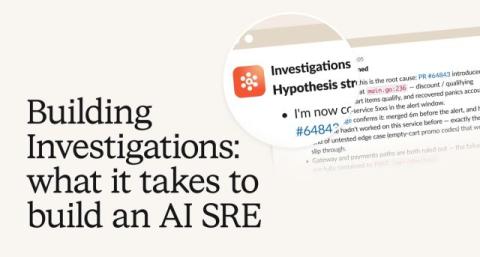
Building Investigations: what it takes to build an AI SRE

At incident.io, we've spent the last two years building Investigations, our AI SRE. When you get paged, it starts investigating straight away, looking across your telemetry, recent deploys, past incidents, docs and code, and posts what it's found in your incident channel (or on your phone, if it's 2am and you're still deciding whether you need to get out of bed). By the time you open your laptop, you're starting at step six of triage rather than step one.

Shipped: Get alerted when AI spend spikes, with the cause attached

AI spend now comes from every department, and it can double in a week without anyone deciding it should. The invoice arrives after the month closes. By then the usual response is a spend cap, which slows every team, including the ones getting real work done with AI. You need to know about spend that breaks its normal pattern while there’s still time to act. The alert should reach the person who can act on it, with proper context and detail.

Your data says one thing. Your AI thinks another.

Aiven and SFEIR walk through what a governed, AI-ready foundation for product data looks like, and what it actually takes to build one. We'll be joined by Céline Thooris, Managing Director of WEnvision (SFEIR group), and Stan Dmitriev, Product Director for Aiven Context, sharing a first-hand view from the field and a concrete next step. What to expect.

AI Tooling Comes to Cycle - Announcing Cycle's Hosted MCP

TL;DR - We made a way to use Cycle with AI models for doing things like deploying applications faster and diagnosing complex issues. If you'd like to get started right away with Cycle's Hosted MCP, check out our documentation. Today, we're launching a brand new way to interface with the Cycle Platform, that just a year or two ago would have felt entirely like science fiction. Our first ever AI-oriented tooling, Cycle's Hosted MCP, is live today.

Best ADEs for Multi Agent Coding in 2026

Running one AI coding agent is productive. Running five of them at once across three repositories? That’s a coordination problem. Agentic development environments (ADEs) give you a single surface to orchestrate multiple agents, review what each one changed, and get code merged. Kepler by GitKraken is one of the most capable options in this growing category. It’s built around agent-agnostic orchestration and Git workflow control from backlog to merged PR.

Top 5 AI Pitch Deck Tools for Sales Teams That Cut Slide Creation Time

AI pitch-deck tools promise "60-second" creation, yet reps keep burning hours fixing fonts, charts, and brand colors. We benchmarked 12 contenders and timed every step-from first prompt to a client-ready PowerPoint or Google Slides file. Only five met our bar for deck quality, native editability, workflow speed, collaboration depth, value, and security. This guide shows which tool wins each sales scenario so you can choose based on data, not hype.