Operations | Monitoring | ITSM | DevOps | Cloud

AI-generated media: What's the point?

If you have even a minor social media presence, you've probably been unfortunate enough to come upon the wonderfully disturbing world of AI slop content. We're talking wrestling matches featuring controversial mustached historical figures and Formula One-style races featuring Stephen Hawking in his wheelchair (if you have no idea what I'm talking about, I genuinely envy you).
The Rise of AI Agents and the Reinvention of Kubernetes: Ratan Tipirneni's 2026 Outlook

Prediction: The next evolution of Kubernetes is not about scale alone, but about intelligence, autonomy, and governance. As part of the article ‘AI and Enterprise Technology Predictions from Industry Experts for 2026′, published by Solutions Review, Ratan Tipirneni, CEO of Tigera, shares his perspective on how AI and cloud-native technologies are shaping the future of Kubernetes.

AI-Assisted Communication Across Teams

Effective communication is essential for IT operations. In Alloy Navigator, everything happens in one place, directly within tickets and workflows, keeping everyone informed and helping teams get things done faster. AI writing assistance makes messages clear, professional, and actionable. All communication in one place Faster ticket resolution Clear, professional messages with AI assistance Reduced misunderstandings and errors Teams stay aligned and informed.

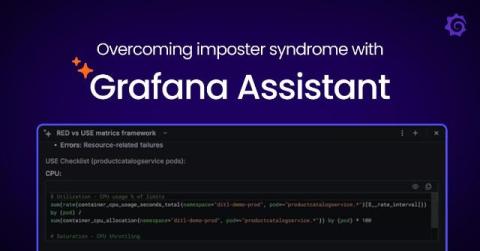
Shorten your 'inner loop' as a new hire and get past imposter syndrome with Grafana Assistant

Let's talk about being new. Four months ago, I joined Grafana Labs as a senior solutions engineer. It wasn’t just a new company, it was a new industry. I came from the visual workspace provider Miro, where I was comfortable doing discovery and talking about visual collaboration and innovation. But stepping into observability? I was in the deep end. And let me tell you, the imposter syndrome was real. Everyone around me was fluent in this language of metrics, logs, and traces.

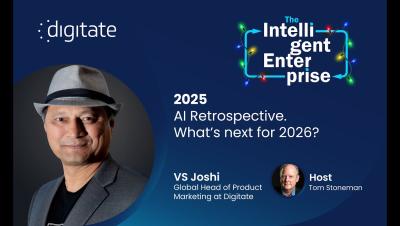
Episode 4 - 2025 AI Retrospective and What's Next for 2026

In this special holiday episode of The Intelligent Enterprise, host Tom Stoneman takes a step back from the day-to-day pace of enterprise life to look at where AI has been in 2025 and where it might be heading next. To do it, he sits down with his colleague VS Joshi, Global Head of Product Marketing at Digitate, for a year-end retrospective and a 2026 outlook.

5 Simple Ways to Leverage Geolocation Data for Your Technology Business

Geolocation is a technology that identifies the exact location of a person or device. It provides the geographic coordinates for a specific area, typically a street address. This technology is now a standard part of our daily lives. We use it to find nearby restaurants, track deliveries, or get directions. Geolocation is the hidden force behind many services we rely on. For technology companies, geolocation provides valuable insights that can improve operations.

The Path Toward More Aware and Insightful Digital Tools

Digital tools are entering a phase where awareness matters as much as functionality. The systems being built today learn, interpret, and respond with a growing sense of context. They connect data across platforms, read human intent, and adjust in real time. This evolution moves technology closer to understanding rather than simply processing.

VDraw's AI Room Design: Seeing the Consequences Before Making the Choice

Most room design mistakes don't come from bad ideas. They come from deciding too early, or too late, without really seeing what those ideas will do to a space. VDraw approaches room planning from that fragile moment of hesitation, when people pause, reconsider, and wonder if their choice will still feel right after the excitement fades.

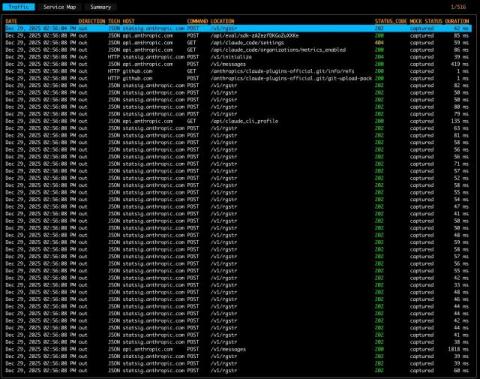
Peeking Under the Hood with Claude Code

Claude is one of the go-to AI-native code editors for developers. Because it’s a simple chatbot interface housed inside a familiar CLI, it provides a pretty smooth path between traditional IDEs and agentic AI. But what’s actually happening behind the scenes when you ask it to write code, generate a test, or debug an issue? Who and what is it talking to behind the scenes? Can I prevent data leakage or do I need to add another layer to my tin foil hat?

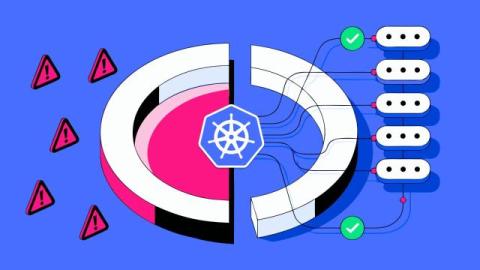
7 Kubernetes Predictions for 2026 - AI Will Push SRE to its Limit

As AI workloads shift from training to massive-scale inference, SRE teams are about to feel even more pressure. GPU-heavy computing is breaking the assumptions today’s clusters were built on, while enterprises are beginning to trust autonomous operations and cost pressure is pushing consolidation across the cloud-infrastructure stack.

Smarter Slack Alerts with Rollbar + Zapier AI

For many engineering teams, Slack is the nerve center of daily work. It’s where incidents are discussed, decisions are made, and collaboration happens in real time. But when it comes to error alerts, Slack can quickly turn from helpful to overwhelming with noisy, context-poor notifications that developers learn to ignore. By integrating Rollbar with Zapier AI, teams can transform raw error data into clear, actionable, and meaningful Slack messages, resulting in faster triage, less alert fatigue, and smoother developer workflows.
Sponsored Post

2026: The Year Agentic AI Disrupts Observability, Security, and Enterprise SaaS

The enterprise technology market is at an inflection point. 2026 will be the year agentic AI fundamentally disrupts how organizations approach observability, security, and IT automation. The traditional SaaS model—with its sprawling ecosystem of disconnected point solutions—is collapsing under complexity. What’s replacing it is a consolidated platform layer powered by autonomous agents that operate across systems, consolidate data, and execute workflows autonomously.

The Year in Making - Fabrix.ai 2025: From CloudFabrix to Agentic AI Leadership

Just as NASA’s Artemis II mission represents humanity’s return to the Moon after more than 50 years, marking a pivotal moment in space exploration, Fabrix.ai has embarked on its own transformative journey in 2025. Artemis II—targeted for launch in February 2026 completed its crucial countdown demonstration test in December 2025, symbolizing humanity’s readiness to venture beyond Earth for deep space exploration and eventually return to the lunar surface.

Banana Pro AI: The Definitive Guide to 4K Image Generation

The landscape of generative AI has shifted. While 2024 was defined by the "subscription fatigue" of Midjourney and the prompt-engineering hurdles of DALL-E, 2025 ushered in a new era of accessibility and precision. At the forefront of this shift isBanana Pro AI, a high-performance platform that has effectively "de-gated" elite-tier visual creation.

Building and deploying the Symfony ChatGPT app with Upsun

This blog post is based on a live presentation by Guillaume at a SymfonyCon 2023 on deploying applications with the Upsun platform-as-a-service. We utilized AI tools for transcription and to enhance the structure and clarity of the content. If you still use File Transfer Protocol (FTP) for deployment, this post is for you.

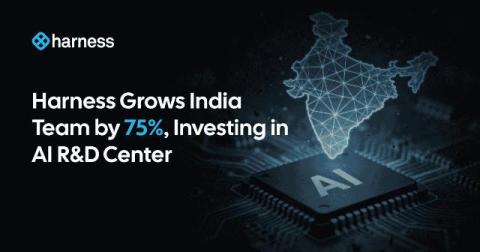
Building the Next Phase of Harness's AI Engineering Organization in India

Over the past year, Harness’s India organization has entered a new phase of growth – one defined not just by scale, but by increasing technical depth and impact. What began as steady expansion has turned into real momentum across engineering, product, and operations. Today, 480 people work in India, contributing across every major product area. In 2025 alone, the team in India grew by more than 75%, and now each core Harness product offering has a strong engineering presence in the region.

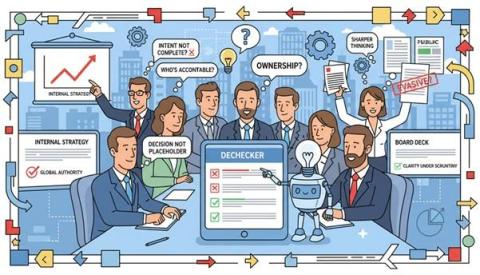
Why Dechecker AI Checker Matters When Executives Review High-Stakes Content

Executives rarely question whether AI was used. They question whether a document feels owned. In board decks, internal reports, or external statements, language signals responsibility long before facts are debated. Dechecker exists in that narrow space where leadership judgment meets written expression.

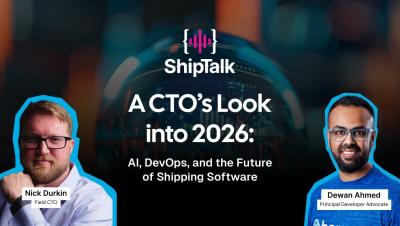
CTO Predictions for 2026: How AI Will Change Software Development | ShipTalk S4E7 Special Episode

In this special ShipTalk episode, host Dewan Ahmed (Principal Developer Advocate, Harness) sits down with @Harnessio Field CTO Nick Durkin for spicy—but practical—2026 predictions across AI, software delivery, DevSecOps, MLOps, and developer experience. Will we see the first “AI-caused meltdown”? Are AI “confidence scores” even trustworthy? Is 2026 the year of AI cleanup crews and recovery engineering? Nick’s take: the answer isn’t more gates—it’s guardrails, policy in the pipeline, and teams operating with the same “rulebook.”

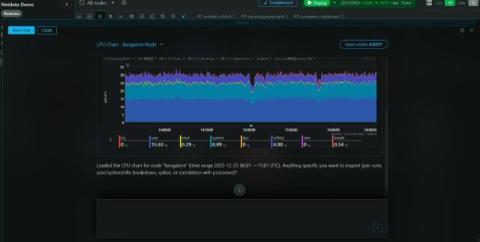
Introducing Real-Time Conversations with Netdata AI

Over the past few months, we’ve seen incredible adoption of our AI Investigations and Insights reports. Teams are using them to automate the deep, thoughtful analysis required for complex post-mortems, capacity planning, and performance optimization. These comprehensive reports are fantastic when you need a well-researched, shareable document. But what about the moments during an investigation?

Runbooks are history: Why agentic AI will redefine incident response forever

If you’re an SRE, platform engineer, or on-call responder, you don’t need another article explaining incident pain. You feel it every time your phone lights up in the middle of the night. You already know the pattern: You’ve invested in runbooks, automation, observability, and “best practices,” yet incident response still feels like firefighting. Now imagine the same midnight page, but with AI SRE in place: What once took hours is now finished in a couple of minutes.

Harness AI For Everything After Coding

AI didn’t just change how we write code. It changed everything that comes after. Application teams are shipping more code than ever with AI — but 70% of the work still happens after coding: testing, security, deployment, optimization, and keeping everything moving. As coding gets faster, delivery becomes the bottleneck. That’s where Harness comes in.

What NVIDIA, Okta, and Warner Bros. Discovery Learned About Scaling AI Operations Beyond the Pilot Phase

One key takeaway from AWS re:Invent 2025 was that a clear gap has emerged between teams still experimenting with AI and those seeing measurable value at scale. In two sessions, PagerDuty customers joined us onstage to explain how they’ve scaled pilots into successful AI operations.

How to Audit AI-Written Pull Requests Without Burning Out

If it feels like your GitHub notifications are a targeted DDoS attack on your brain, you aren't imagining it. Data from GitHub's Octoverse 2025 report shows an average of 43.2 million pull requests merged every month, a 23% jump from just a year ago. This surge in activity coincides with the widespread adoption of AI tools to write code. The temptation to just click "Approve" on a well-formatted AI-written pull request is higher than ever.

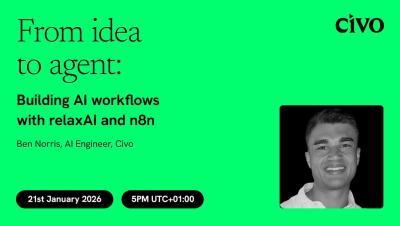
How to build AI agents with n8n and relaxAI: Live webinar

You have the ideas, now learn how to turn them into production-ready AI agents. Join us on January 21st at 5:00 PM for a live webinar featuring Ben Norris, AI Engineer at Civo, and Sophia McKee, COO at Civo. We will demonstrate how to design, build, and deploy intelligent agents using n8n’s visual workflow automation platform, all powered by secure, UK-hosted infrastructure from relaxAI. You'll learn how to orchestrate tools, APIs, and LLMs to create scalable automations without needing deep coding expertise.

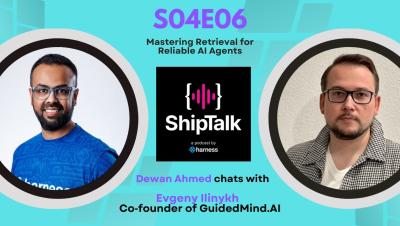
ShipTalk S4E6 | Beyond the Magic Box: Solving AI Hallucinations with Precision RAG

In this episode of the ShipTalk Podcast, host Dewan Ahmed (Principal Developer Advocate at Harness) sits down with Evgeny Ilinykh (Founder of GuidedMind.ai and former Tesla Engineering Manager) to move past the AI hype and get into the engineering reality of Retrieval-Augmented Generation (RAG). If your AI agents are hallucinating, the problem probably isn't your model—it’s your retrieval layer. Evgeny breaks down how to turn the "black box" of LLMs into a transparent, production-ready system that developers can actually trust.


Simple Principles That Strengthen SEO Performance Across Digital Content

Despite the usual protestations from forums like Reddit and the many Facebook groups that profess to be about digital marketing, SEO is not just dead, but remains an utterly indispensable component of drawing in new customers to your brand. What is true, however, is that just as the game has changed ever since the fateful Penguin and Panda days, so too has it since the unprecedented introduction of the many LLMs that now grace the topography of online interactions. This also happens to mean that with the right attitude and ability to pivot as and when required, you can still make great use of SEO and use it to your advantage.

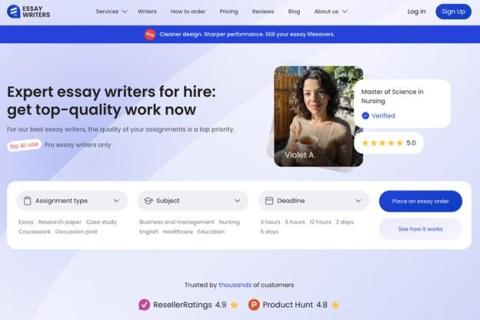
Unbiased EssayWriters Review: Discover How This Essay Service Performs

University life used to mean coffee-fueled nights and messy notes. Now? It's the survival of the multitaskers. Rising workloads, multilingual classrooms, and endless part-time jobs have turned "study mode" into "crisis mode." No wonder so many students sneak a look at essay writing platforms for a little backup.

How Photo-to-Video AI Improves Visual Storytelling for Bloggers

Gone are the days of simply typing out posts; modern blogging audiences demand densely-packed, visually stimulating narratives. Photo, Infographic,and video are essential to keep readers engaged, but high quality video production can be costly and time consuming. Photo to Video AI is revolutionizing the way bloggerswork and now they can transform still images into motion, animated sequences. This technology improves visual storytelling, leads to greater reader engagement and allows bloggers to present concepts in a more impactful and immersivemanner.

Wireless Devices: Simplifying Transportation Management with IoT Solutions

IoT fleets bring big gains, but they also widen the attack surface. This article looks at how transportation teams can protect connected vehicles and data while still using real-time insights. It explains core safeguards like end-to-end encryption, TLS links, device-level checks, and role-based access. You will also find notes on audits and compliance, plus why monitoring matters after rollout. The second half reviews market trends, from AI-based analytics and autonomous vehicle support to edge computing and emissions tracking.

AI Prediction for 2026

Every technology cycle comes with hype, backlash, and eventually… utility. AI is shaping up to be no different. As we head into 2026, the conversation is already shifting from “AI will replace everything” to “why isn’t this paying off yet?” This shift is heavily influenced by evolving market trends, as businesses and technologists respond to changes in customer behavior, operational patterns, and broader market conditions that shape expectations around AI.

Five Worthy Reads: Greener IT Starts Here: How AI Is Transforming Operational Efficiency

Five worthy reads is a regular column on five noteworthy items we’ve discovered while researching trending and timeless topics. This week, we learn more about how AI transforms sustainability in the enterprise. As enterprises accelerate their digital journeys, IT teams are under pressure to deliver faster, smarter, and more sustainable operations.

DevEx matters for coding agents, too

The speed at which you can go from making a change in your code, to understanding if it actually works, has long been a popular topic of discussion (and often, humour) for engineers. This remains true in a world with AI. Developer experience isn't just important for humans anymore. Those agents we're all using hundreds of times a day? Feedback cycles matter just as much for them, if not more.

Telecom Retention Crisis and Why Leading Carriers are Deploying Agentic AI

Telecom executives face a retention crisis that headcount cannot solve. Customers churn within 48 hours of a service incident, and traditional support models, even AI-powered chatbots, respond to problems rather than prevent them. The carriers closing this gap aren't expanding call centers. They're deploying agentic AI that predicts issues, executes resolutions, and learns from every network signal.

12 Proven Strategies to Improve Warehouse Efficiency in 2026

Doing more with less isn't a slogan; it's the empirical fact for warehouses moving into 2026. Order volumes are fluctuating, customer expectations are constantly increasing, and adding more staff isn't always the way out. Efficiency has been made the most manageable lever. Not by cost-cutting, but through improved decisions: where automation brings value, how layouts reduce wasted movement, and how teams are enabled to work more efficiently. That shift is reflected in investment trends, with the warehouse automation market expected to exceed $41.27 billion by 2029.

How Online Stores Are Letting Shoppers 'Try Before They Buy' Without a Fitting Room

The uncertainty that exists within online fashion retail continues to be the single most significant problem experienced when it first became available. Customers will see spectacularly styled product photographs yet remain apprehensive about actually completing their purchase, asking themselves questions such as: Do I really think this is going to fit? Is the colour the same on my computer as it is when I wear it? Does the material fit and hang the same way, etc?

The Observability Stack is Collapsing: Why Context-First Data is the Only Path to AI-Powered Root Cause Analysis

By Bill Balnave, VP of Customer Success at Mezmo The core promise of modern observability is simple: cut Mean Time To Resolution (MTTR). Yet, despite a boom in tooling and investment over the last four years, the data tells a sobering story: our industry is actually getting worse at finding and resolving issues. Dashboards, once our trusted guide, have become the starting point for a chaotic "dashboard hunt" that rarely leads to the definitive root cause.
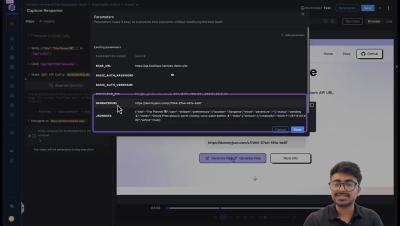
Rovo Dev Auto Closing Vulnerabilities | Bitbucket Blitz | Atlassian

Learn how Atlassian uses Rovo Dev to automatically find and fix code vulnerabilities with Rovo Dev and Bitbucket. This capability saves our developers thousands of hours over three months and reduces issue resolution time by half, allowing them to focus on building software and solving problems for our customers. This technology is available to all of our customers. Learn how it works, and start using it yourself.

Elastic at AWS re:Invent: Concluding a year of partnership in agentic AI innovation

Highlights of another laudable year of customer-centric collaboration The integration of Elastic’s capabilities, including vector databases and context engineering, with AWS services helps customers build intelligent, scalable, and secure applications faster and with greater flexibility. Our ongoing collaboration has resulted in another year of notable innovation with AWS. This blog highlights our continued collaboration with AWS throughout 2025 to help you capitalize on the power of AI.

Building a Code Review system that uses prod data to predict bugs

This post takes a closer look at how Sentry’s AI Code Review actually works. As part of Seer, Sentry’s AI debugger, it uses Sentry context to accurately predict bugs. It runs automatically or on-demand, pointing out issues and suggesting fixes before you ship. We know AI tools can be noisy, so this system focuses on finding real bugs in your actual changes—not spamming you with false positives and unhelpful style tips.

Generating EdgeOps Tasks with Code Assist

In this tutorial, we’ll show you how to use Copilot to streamline operations on your MCP server. Learn how Puppet’s Edge Code Assist helps you automate repetitive tasks, improve efficiency, and reduce errors, while keeping your infrastructure secure and compliant. Subscribe at ⁨‪@PerforcePuppet‬ Website: puppet.com LinkedIn: /perforce-puppet.

AI for IT Operations: How AIOps is Transforming IT Performance & Service Reliability

Artificial Intelligence for IT Operations ingests telemetry across logs, traces, events, resource signals, runtime behavior, and application pathways. AI for IT operations reduces alert noise, correlates events into unified narratives, predicts degradation, and drives remediation logic with pattern-based execution. Telemetry growth makes manual triage slow, while inference scales linearly with data.

Aiven AI editor

We dive into the game-changing Aiven AI Editor, a powerful tool that lets you interact with your data using natural language. No more syntax headaches. Instantly generate a visual map of your database to understand your tables and their relationships at a glance. Watch how easy it is to ask questions like "How many sales did we have in 2025?" and get perfectly formatted SQL queries in seconds.

Episode 3 - Where AI Meets Legacy Systems

In this episode of The Intelligent Enterprise, host Tom Stoneman gets inside a challenge many enterprises are facing right now: how to integrate AI with complex legacy systems without breaking what already works. This week, Tom sits down with Yael Gómez, Fractional Chief Technology Officer and Chief Information Officer at Pet Madness, and former technology leader at Walgreens Boots Alliance.

The Evolution of Blockchain-Based Trading Infrastructures

Trading in financial markets has always been complex. Many traders face long transaction times, high fees, and reliance on middlemen. These problems slow down processes and make trading less efficient. Enter blockchain technology. Since Bitcoin's debut in 2009, blockchain has changed how trades occur. It provides quicker transactions, reduced costs, and direct peer-to-peer exchanges. This blog will examine its progress from basic systems to advanced solutions like decentralized finance (DeFi). Keep reading to learn how it's making a difference for traders everywhere!

Top 7 India-Focused AI Programs to Build Business-Ready Skills in 2025

Artificial Intelligence is reshaping Indian businesses through automation, more intelligent decisions, and new products. Leaders who learn to plan and deploy AI see faster cycles and clearer outcomes. In 2025, strong programs balance applied projects with sound fundamentals. The list below prioritizes hands-on work, industry alignment, and clear outcomes for working professionals.

[Workshop] Building and Monitoring AI Agents and MCP servers

​See how Agent Monitoring gives you a better look at all things model usage, call duration, prompting, and more ​Go under the hood with MCP Monitoring - and learn how to debug client connection issues, tool call performance, transports, and all things MCP ​When things start breaking, use Seer, Sentry's AI Debugging Agent to troubleshoot those vague issues that are crashing and get help from a team of robots using Sentry’s AI PR Review.

A framework for measuring effective AI adoption in engineering

These days, engineering leaders find themselves caught between a rock and a hard place. On paper, AI adoption looks like an unqualified success. Developers are shipping more code faster than ever, pull request volumes are up, and teams report feeling more productive. Their leaders rush to LinkedIn to share their plans to scale adoption because their teams are just so much more efficient. But then, the incidents and bug reports start piling up.

Knowledge Graph + RAG: A Unified Approach to DevOps Intelligence

Knowledge graphs and RAG (Retrieval-Augmented Generation) are complementary techniques for enhancing large language models with external knowledge, and each brings unique strengths for DevOps use cases. While they are often mentioned together, they are fundamentally different systems, and combining them delivers far better outcomes than relying on either approach alone.

Gisual Enters the Stack: Power, AI, and the Next Phase of Observability

ScienceLogic recently partnered with Gisual—a leader in AI power intelligence­—to bring real-time power insight directly into the ScienceLogic AI Platform. On the surface, that might sound like a straightforward integration story. In reality, it signals something much bigger: observability continues to expand well beyond the digital stack, and operators now treat power as a first-class operational signal.

OpenTelemetry Agents - The Complete Beginner's Guide (2025)

If you search for “OpenTelemetry Agent”, you will likely encounter two completely different definitions. This ambiguity often leads to confusion between infrastructure teams and application developers. SREs and DevOps engineers would describe it as a component deployed as a sidecar, whereas application developers would understand it as a language-specific library. Let’s break it down in the next section.

Building Trust in AI-Powered Kubernetes Ops: Why "Good Enough" Is a Production Killer

The air in the operations world is thick with AI and LLMs. EVERY vendor is rushing to slap an “AI-powered” badge on their product. But here’s the uncomfortable truth: In high-stakes Kubernetes operations, one bad AI recommendation can destroy months of trust-building in an instant. We aren’t building a chatbot to suggest recipes. We are building systems that, armed with kubectl permissions, have the potential to take down production with a single, wrong command.

The year in AI at Grafana Labs

2025 was the year we at Grafana Labs went all-in on AI—and boy, what a year it was. Not only did we establish and start to execute our overarching strategy (build actually useful AI), we also took one of our most exciting new features (Grafana Assistant) from idea to general availability in just nine months! Yes, there's no shortage of articles singing the praises of AI these days, but let's dispense with the hyperbole and focus on some actually useful content.

Intelligent Systems Powering the Next Generation of Online Retail

Online retail is no longer driven only by attractive storefronts and competitive pricing. Behind every smooth shopping experience sits a complex network of decisions that must happen instantly and at scale. From predicting demand to responding to customer behavior in real time, cognitive AI agents are becoming a foundational layer that helps ecommerce businesses operate with speed, accuracy and consistency.

Struggling With Customer Drop-Off? AI Insights Can Help You Fix It Fast

Are you noticing more customers slipping away than sticking around? It's frustrating, right? Customer drop-off can feel like a mystery, but the good news is-it doesn't have to stay that way. Thanks to smart AI insights, you can quickly spot where things are going wrong and fix them before it's too late. Imagine having a clear map showing exactly why customers leave and what you can do to keep them coming back.

No-Code AI Tools That Are Changing Digital Marketing Forever

Artificial intelligence is no longer limited to data scientists or enterprise teams with large development budgets. Over the past few years, a new wave of no-code AI tools has emerged, allowing marketers to automate tasks, generate insights, and optimize campaigns-without writing a single line of code. For digital marketers, this shift is transformational. No-code AI tools reduce execution time, lower costs, and empower teams to focus on strategy rather than manual work. More importantly, they level the playing field, allowing small and mid-sized businesses to compete with larger brands.

Discover how to build AI-augmented applications with enterprise-grade security

IT leaders want AI that moves the needle without blowing up risk, cost, or changing control. Your teams need a path to productize AI features on top of existing apps, connect safely to external models, and satisfy audit requirements without slowing delivery. Those are the core buying criteria we hear from IT middle management: buy over build, predictable outcomes, and a strong compliance posture.

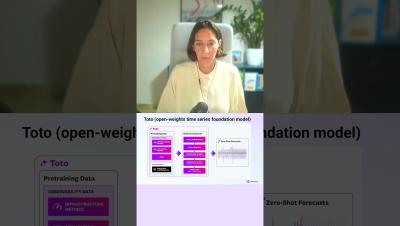
Training Foundation Models on a Trillion Data Points with Apache Iceberg

Training an AI foundation model on over a trillion data points sounds impossible without hitting your production systems. Here's how Datadog did it with Apache Iceberg for their time series forecasting model TOTO. The key challenge: extracting massive historical observability data (metrics spanning years) and running incremental preprocessing pipelines without overwhelming production services. Iceberg solved this by providing schema governance, consistency guarantees, and seamless integration with ML tools like Ray and PyTorch.

Leading Open Source Teams w/ Daniel Roe

In this episode, Daniel Roe, Lead Maintainer of the Nuxt framework, discusses his journey from studying law and theology to leading a major open-source framework. He explains Nuxt's unique governance and how Nuxt manages contributions through volunteer-driven work, LLM-powered issue triage, and creating welcoming spaces for newcomers to open source. This week, our chat touches on a variety of topics including.

AI adoption is messy. Here's how engineering leaders are taming the chaos.

There's a moment every engineering leader hits when implementing AI where they realize that no one really knows what they're doing. Not your competitors. Not the consultants. Not even the executives pressuring you to show results yesterday. Everyone is figuring this out in real time, and beneath the confident vendor pitches and LinkedIn thought leadership, the truth is messier than anyone wants to admit.

AI & FinOps: The New Power Duo Driving Modern Profitability

FinOps teams have been expected to understand millions of dollars in cloud and AI spend using tools that a handful of (usually technical) specialists can operate. Dashboards, filters, exports, and SQL have been the norm. That era is over. CloudZero is now bringing AI directly into the FinOps workflow so anyone in the business can ask natural-language questions about cloud and AI spend, and get accurate answers back from the platform.

The Role of Intelligent Platforms in Streamlining Enterprise Operations

In today's fast-paced business environment, organizations face increasing pressure to operate efficiently while managing complex workflows. Enterprises are no longer able to rely solely on traditional methods to handle operations, data, and decision-making processes. This is where intelligent platforms come into play, providing tools and systems that can automate tasks, streamline processes, and support more strategic decision-making.

Is Shadow AI Quietly Reshaping Your Workplace Security Posture?

AI tools have seen a meteoric rise in the workplace. What was once the domain of highly specialized tech roles is now commonplace: Ivanti’s 2025 Technology at Work Report found that 42% of office workers say they’re using gen AI tools, like ChatGPT, at work — up 16 points from the previous year. The catch? These productivity gains happen under the table. Among those who reported using gen AI tools, 46% say that some (or all) of the tools they use are not employer-provided.

How Forward-Looking Institutions are Benefiting from Agentic AI

Today’s higher education institutions operate complex digital ecosystems that were unimaginable a decade ago. Behind every college lies a portal of interconnected systems for registration, financial aid, course management, and campus services. The students using those systems are digital natives who can order food in seconds on their phones or have packages delivered the same day they order them.

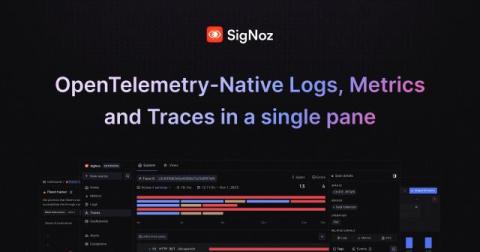
How Inkeep Monitors Their AI Agent Framework with SigNoz

AI agents are fundamentally different beasts to monitor compared to traditional applications. A single user request can trigger a cascade of 10+ internal operations: sub-agent transfers, tool executions, LLM calls, API requests, each with unpredictable latency and failure modes. When something goes wrong (and with LLMs, things go wrong in creative ways), you need to see the entire execution flow to debug effectively.

How AI in Asset Management Is Transforming Asset Addition in 2026

AI in asset management is redefining how organizations add validate and govern assets in 2026. What was once a slow manual and error prone process is now becoming intelligent automated and highly accurate. As enterprises scale across locations and asset types the pressure to maintain clean asset data from day one has increased dramatically. This is where AI in asset management is making a measurable impact. In the first hundred words itself it is clear that AI in asset management is no longer optional.

How to Use MCP to Optimize Your Graylog Security Detections

Security teams face a critical question: “What logs should we collect, and what detections should we enable to protect against threats targeting our industry?” For a bank in the northeast, this isn’t academic. Threat groups like FIN7, Lazarus Group, and Carbanak specifically target financial institutions with sophisticated attacks ranging from SWIFT compromise to ransomware.

Accelerating IT Transformation with Agentic AI

As enterprises face increasing pressure to manage vast and complex IT environments, the demand for faster and more efficient IT management is rising. Traditional operating methods are proving insufficient, making the adoption of Agentic AI essential for organizations aiming to achieve truly autonomous IT operations. This innovative technology enhances decision-making and enables businesses to remain agile in a rapidly evolving digital landscape.

How agentic IT operations lay the foundations for SRE success at scale

When something breaks in a modern digital service, customers feel it instantly. Pages stall, requests time out, and carts are abandoned, while frustration grows long before a root cause is identified. What the world never sees is the engineering effort required to keep these systems healthy in the first place. Site Reliability Engineers (SREs) carry that responsibility every day.

AI Observability in 2026: Why the data layer means everything

If there was ever a year for AI observability, it was 2025. Vendors released assistants to cover a variety of use cases. Coralogix released the first agent (distinct from assistants!), Olly, an autonomous, multi-agent observability platform. The direction of travel is clear, but many vendors and users are about to run into some significant problems with their data layer.

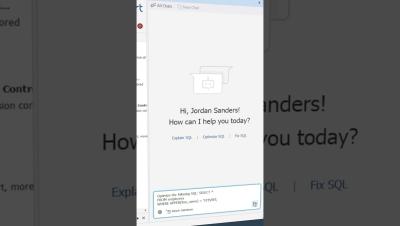
dbForge AI Assistant Overview for SQL Developers

Meet dbForge AI Assistant — your AI-powered copilot for SQL coding, query optimization, explanations, troubleshooting, and conversion of natural language to SQL code. This overview shows how the Assistant works inside dbForge products and how it helps developers, DBAs, analysts, and teams increase productivity. Key features: Context-aware SQL generation Conversion of natural language to SQL Query optimization SQL explanations Troubleshooting and error insights AI chat for SQL-related questions Optional web search.

How to Build a Cybersecurity Career Roadmap for 2026

You are looking to join the rapidly growing cybersecurity field, and for good reason. The U.S. Bureau of Labor Statistics projects an astonishing 29% growth rate for information security analysts through 2034, making it one of the most in-demand professions today. At the same time, the industry faces a national talent shortage of over 225,000 skilled workers. This skills gap has real consequences, as reports show that 87% of organizational breaches are linked to a lack of cyber skills. This guide provides a clear, actionable, step-by-step roadmap to build a successful cybersecurity career over the next 12-24 months.

2025 Best Creative AI Tools for Group Face Swaps & Intelligent Photo Editing

AI creativity tools became dramatically more powerful in 2025 - especially in two categories that creators rely on daily: This guide compares both tools with their strongest competitors in their respective categories, helping you choose the best AI solution for your workflow.

Conversational AI in Healthcare: The Rise of Virtual Health Assistants

Healthcare organizations are facing mounting challenges as demand for services increases while resources remain constrained. Patients now expect digital-first experiences that are fast, accessible, and available beyond traditional office hours. In response, healthcare providers are increasingly turning to intelligent conversational technologies to modernize patient engagement and improve internal efficiency. What began as basic automated chat has evolved into advanced systems that are reshaping how patients and providers interact across the care journey.

How AI Agents automate incident response #ai #cybersecurity #telemetry

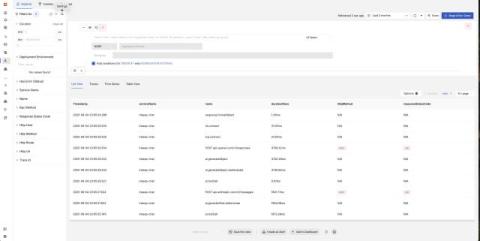
Clint Sharp demonstrates how Cribl Search leverages AI to streamline incident investigation. Starting from a Slack channel, the AI builds an interactive notebook, analyzes order processing logs, and identifies suspicious traffic spikes. It connects high CPU usage to a recent Jenkins deployment, hypothesizing a supply chain attack, and ultimately recommends a rollback. This isn't a far off concept. It is the future of operations arriving right now.

Why AI agents need a common data model #ai #telemetry

Clint Sharp explains why a common model like OCSF is critical for the future of AI. Agents need standardized data to analyze information effectively on your behalf. He contrasts the traditional manual workflow of checking Slack, tickets, and wikis while asking colleagues with a future where AI fuses this human context with machine data. Instead of just search results, AI agents will hand you examined hypotheses so you know exactly where to take your investigation.

AI Reliability, Part 2: When the Datacenter Becomes the Bottleneck

In Part 1, we talked about all the hidden complexity inside AI systems: the pipelines, GPUs, embeddings, vector databases, orchestration layers, and everything else that quietly determines how reliable an AI-first product really is. But all of that software still rests on something far less glamorous: the physical infrastructure underneath it.

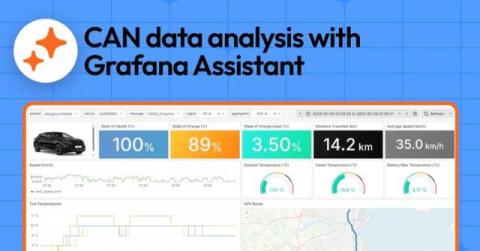
How to use AI to analyze and visualize CAN data with Grafana Assistant

Note: A version of this post originally appeared on the CSS Electronics blog. Martin Falch, co-owner and head of sales and marketing at CSS Electronics, is an expert on CAN bus data. Martin works closely with end users, typically OEM engineers, across diverse industries, including automotive, maritime, and industrial. He is passionate about data visualization and AI—and he’s been working extensively with Grafana Assistant.

Using AI + Rollbar's Session Replay to Understand Complex Errors

Front‑end bugs are notoriously hard to reproduce. By the time an error shows up in your monitoring tool, the most important context is already gone: *what the user actually did*. By letting an AI agent like Copilot analyze Rollbar's session replay data directly, teams can move from *“something broke”* to *“here’s exactly why it broke”* in minutes, not hours.

Using AI + Rollbar's Session Replay to Understand Complex Errors

Front‑end bugs are notoriously hard to reproduce. By the time an error shows up in your monitoring tool, the most important context is already gone: what the user actually did. Session replay helps—but only if someone has the time and patience to scrub through recordings, correlate events, and form a hypothesis. That’s where Rollbar’s MCP server, paired with an AI agent like Github Copilot, changes the game.

Agentic AI demands a new data architecture #ai #telemetry

Clint Sharp explains why traditional schema-on-read systems cannot handle the query loads of the future. Agentic telemetry requires a 360-degree view, but structuring data only when you read it is too slow for AI-driven workloads. The solution is using LLMs to drive the cost of building parsers to near zero. Tools like Copilot Editor allow teams to map data to OCSF instantly, effectively building factories of parsers to handle the scale of agentic AI.

Highlights from AWS re:Invent 2025: Making sense of applied AI, trust, and going faster

After four days of AWS re:Invent—a 65,000-step marathon that included 60,000 attendees spread across five Las Vegas campuses—and navigating the latest installment of this 13-year-old cloud pilgrimage, we’re all a little dehydrated but significantly wiser. The volume of announcements felt less like a single flood and more like a river branching into three powerful currents. Making sense of this massive technological convergence requires zooming out.

The War Room of AI Agents: Why the Future of AI SRE is Multi-Agent Orchestration

We’ve all been there. It’s 2 AM, your phone is buzzing with alerts, and you’re suddenly thrust into an incident war room with a dozen other bleary-eyed engineers. The production environment is on fire, customers are affected, and everyone’s trying to piece together what went wrong. But here’s what makes these moments fascinating from a systems perspective – it’s rarely just one person silently fixing the issue in isolation.

How to Build a Clear AI Implementation Strategy

Organizations see AI’s transformative potential, but success requires more than technology – it demands a clear strategy led by IT. A structured AI implementation roadmap aligns initiatives with business goals, establishes governance, and enables measurable ROI, while improving employee and customer experiences. Yet, 66% of organizations view AI as critical, but only 38% report meaningful competitive advantage, highlighting the need for disciplined adoption.

Capture and Use Network Response Data in AI Powered Testing

Learn how to capture and use response data from network calls to build smarter and more reliable AI-driven tests. This walkthrough covers the full workflow from configuring user actions to extracting backend responses, validating data, and creating dynamic test flows. You will also see how response data improves debugging visibility and supports data-driven automation. The video includes Ideal for developers, testers, and platform engineers looking to improve the accuracy and resilience of AI-powered test suites.

The AI Cost Crisis: 'AI Cost Sprawl' Is Crashing Your Innovation (AI Cost Sprawl Explained + How To Fix It)

AI should speed up innovation, not inflate your cloud bill. But today, the biggest GenAI challenge for SaaS teams isn’t model quality; it’s cost. And increasingly, that cost comes from AI cost sprawl. That’s not because anyone is doing something wrong, but because AI operates differently from the cloud services we’ve all spent a decade learning how to manage.

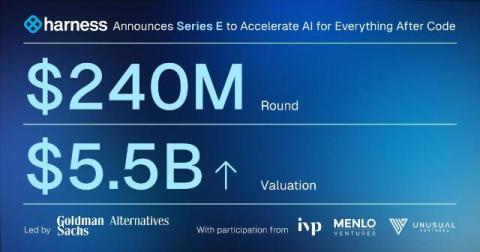
Accelerating Our Mission to Bring AI to Everything After Code

Since launching Harness in 2017, we’ve been on a mission to unlock faster innovation by removing the bottlenecks that slow software engineering teams down. From day one, we believed that the biggest obstacles in engineering weren’t in writing code — they were in everything that followed.

Why UX is the Missing Layer in AI Adoption And How to Fix It

Most AI programs don’t fail on model quality. They fail because the experience makes people either over-trust or quietly avoid the system. Employees often use AI more than leaders realize, frequently without training or guardrails. Interfaces that just “show an answer” without confidence, provenance, or recourse create two risks: blind reliance and shadow use.

AI-Powered Observability: From Reactive to Predictive

If there’s one thing clear from our AI-powered observability webinar, it’s that observability has officially graduated from a “nice-to-have” to a business-critical discipline, and AI is helping lead that charge. Our webinar brought together guest speaker Stephen Elliott, Group VP at IDC, and Ranbir Chawla, former SVP of Engineering at RB Global, for an hour of insights that mixed data, experience, and hard-won lessons from the trenches.

Get more value out of your Cortex catalog with our MCP prompt library

You've set up the Cortex MCP and connected it to your AI assistant and IDE. You ask about service ownership, check a Scorecard or two, and it works. You're impressed by how much faster this is than clicking through the web UI. Now you're wondering what else you can do with it. I'm willing to bet we've hit a nerve with that "hypothetical" scenario. The Cortex MCP works exactly as designed, but it's deceptively difficult to know which questions to ask and when to ask them.

A better way to monitor your AI agents in .NET apps

We launched agent monitoring earlier this year, allowing our users to instrument LLM usage and tool calls in their applications. However, we only had Agent Monitoring support for Python and JavaScript. We’ve been working on creating an Agent Monitoring SDK for.NET — specifically for Microsoft.Extensions.AI.Abstractions.

This Month in Datadog - December 2025

For our last episode of 2025, we’re focusing on Datadog releases announced at AWS re:Invent. Join Jeremy to see how you can manage logs at petabyte scale in your infrastructure, eliminate unneeded costs in Amazon S3 buckets, build agentic workflows, and detect credential leaks. Later in the episode, Scott spotlights how you can connect your AI agents to Datadog tools and context with our MCP Server.

Introducing Workspace: Where DEX Work Happens

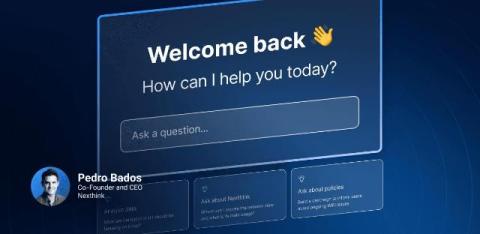
Today marks another milestone for Nexthink as we introduce a powerful evolution of our platform, one that will meaningfully expand how customers derive value and empower many more teams across IT, HR, and the business to use Infinity. Welcome to Workspace: a new destination where the future of DEX and IT work comes together.

Runtime Context for AI Agents with Lightrun MCP

Introducing Runtime Context for AI agents The next evolution in autonomous software development. The Lightrun MCP connects IDEs and AI assistants to real runtime data, giving agents and developers the context they need to write, validate, and debug code with confidence. With Runtime Context, AI agents can: Reliable, AI-accelerated engineering starts here.

Agentic AI by Design: Evolving Our Principles for the Next Chapter of Responsible AI

Join SolarWinds CISO Tim Brown and CTO Sai Krishna for the SolarWinds Day Closing Keynote, where they share how SolarWinds is evolving from Secure by Design to AI by Design—a bold next step in building trusted, intelligent, and future-ready IT operations. As organizations adopt AI-driven systems, embedding trust, transparency, and accountability into product development becomes essential. In this forward-looking discussion, Tim and Sai reveal how the AI by Design framework ensures responsible AI adoption while enhancing performance, reliability, and security.

Datadog at AWS re:Invent, Bits AI SRE, MCP Server, CloudPrem, and more | This Month in Datadog

Get a closer look at features we announced at AWS re:Invent in the latest episode of This Month in Datadog. Tune in for spotlights of Bits AI SRE, now generally available, and Datadog’s MCP Server, which connects AI agents to our platform by ingesting prompts and mapping them to Datadog resources and data. Plus, we cover how to: This Month in Datadog brings you the latest updates on our newest product features, announcements, resources, and events.

Sage AI: Dashboard, events, knowledge base

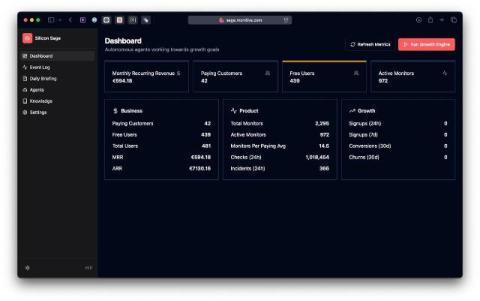
It's starting to take shape. We have a dashboard, we're collecting some metrics, and I'm getting a daily briefing every morning. Also, I have an event log where all the events are going into (the spine of the system), and there's a knowledge base which consists of a GitHub repository which is vectorized and indexed. Its first use is adding context to Herald, the agent that sends me the morning briefing. More details to come.

Gartner IOCS: Agentic AI is Everywhere!

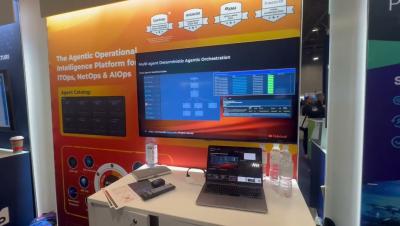
Join Shailesh Manjrekar (Chief AI & Marketing Officer) for a quick walk through the Gartner IOCS conference in Las Vegas. In this video, Shailesh takes you from the "hype" of the session rooms straight to the Fabrix.ai booth, where we are showing the reality of how we help enterprises Build, Run, and Observe AI Agents today. Attending the conference? Come say hi! at Booth:#522.

How an Online Translation Platform Can Simplify Global Expansion

Global expansion has become a top objective for businesses of all kinds, from ambitious startups entering their first international market to established firms launching new regional offices. However, going global is not just about releasing a product in another country. It's a complicated process that demands a thorough awareness of new audiences, cultural nuances, legal constraints, and, above all, language. That's when an online translation platform evolves from a simple tool to a key driver of worldwide growth.

Building a Stronger Defense with Network Observability and Real-Time Monitoring

In today's rapidly evolving digital landscape, the importance of network security and performance has never been more pronounced. Businesses are increasingly relying on their network infrastructure to support a wide array of critical applications, services, and user activities. As cyber threats become more sophisticated and network architectures more complex, maintaining visibility into network performance and security is essential. This is where a network observability platform becomes indispensable.

AI Video Editing Solutions for Modern Content Creators

Video is the engine to modern communications. It is the driving power behind social media, marketing, education and entertainment. As the demand for high quality content rises, the content creators are being pressured to create more high quality videos within a shorter period of time. Traditional tools for editing are useful, but they need strong skill along with patience, time and effort.

Best Vibe Coding Tools for Mobile Apps (Free & Paid): Top 8 You Should Actually Consider

The rise of vibe coding tools has reshaped how creators, developers, and startups build modern mobile apps. Instead of spending months writing boilerplate code, stitching APIs together, or configuring backend infrastructure, today's app builders can use visual interfaces, AI-assisted coding, and integrated deployment pipelines to move from idea to shipped mobile product at record speed.

Why Cribl Lake Delivers the Best Price Performance for AI Workloads #ai #telemetry

CMO Abby Strong explains how Cribl Lake is built for the real demands of modern AI. You get fast storage for high performance workloads and efficient architecture that scales without blowing up your budget. A smarter foundation for the AI era.

Seeing Everything: Shedding Light on Shadow IT and AI Usage

I still remember the working with a leading insurance provider on an internal review of their IT estate and discovering a team quietly using an unapproved SaaS tool to speed up their reporting. It wasn’t malicious, they were trying to solve a problem faster. But as we stared at the dashboard, I could see the CIO’s mind racing: What data had they uploaded? Was it encrypted? Were they still compliant?

New features: AI SRE, Merge alerts, and Status pages for thousands of services

As we head into the holiday season, the ilert team is doing the opposite of slowing down; we’re ramping up. Over the past weeks, we’ve shipped a wave of impactful improvements across alerting, AI-powered automation, mobile app, and status pages. From major upgrades that reshape how teams triage incidents to smaller refinements that remove daily friction, this release is packed with updates designed to make on-call and operations smoother, smarter, and faster. Let’s dive in.

Getting started with Cursor and CircleCI: Adding AI to CI/CD workflows

AI coding assistants have transformed how developers write and debug code. But there’s a gap: these assistants often can’t see what’s happening in your CI/CD pipelines. When a build fails, you’re still stuck switching tabs, hunting through logs, and copying error messages back into your editor. What if your AI assistant could talk directly to CircleCI? In this tutorial, you’ll learn how to connect Cursor, an AI-powered code editor, to CircleCI using the CircleCI MCP server.

AI-Driven Database Monitoring for Modern IT Teams | Site24x7

Databases power every business, but keeping them fast, reliable, and scalable is a daily challenge for IT teams. Discover how intelligent database monitoring helps you uncover performance bottlenecks, optimize queries, and maintain database health effortlessly. Whether you manage SQL or NoSQL systems, gain actionable insights across your infrastructure before issues affect your applications or users.

The Future of Digital Advertising: Trends Tech Leaders Should Watch

As a tech leader, you've probably noticed how fast new tools, platforms, and strategies appear, and how quickly old ones fade away. What used to be a fairly simple process of running ads and tracking a few metrics has transformed into a constantly evolving landscape shaped by AI, automation, user behavior changes, privacy regulations, and new ad formats.

Creating Conversion-Focused Humanized AI Landing Pages

Landing pages are one of the most important elements for any online business. They must grab attention, explain value, and persuade visitors to take action. Many marketers now use AI to create landing page copy quickly. AI helps with structure and ideas, but raw AI content often feels flat, robotic, or generic. After testing multiple AI tools and reviewing dozens of landing pages, I found that the most successful pages are those that humanize AI content before publishing. Tools like CudekAI make this process easy while keeping the core message intact.

Data Visualization Trends 2025: Why AI-Generated Charts Are Gaining Traction in DevOps

Data visualization in DevOps has undergone a dramatic shift over the past few years, evolving from static dashboards into dynamic, context-aware systems that update as quickly as pipelines themselves. As teams manage more logs, metrics, dependencies, and distributed environments than ever before, the demand for faster insight continues to grow. That's one reason many engineering groups have started turning to tools like an AI graph generator to automate routine visualizations and surface patterns that humans often miss when juggling multiple services.

How AI Is Redefining Efficiency, Safety, and Uptime

Across factories, utilities, logistics networks, and technical operations teams, an enormous amount of data is generated every minute. Machines report temperature swings, vibration levels, and cycle counts. Operators log downtime events and quality systems capture defects and process deviations. Yet, despite this constant stream of information, only a small portion is used in meaningful, strategic ways.

AI PCs Slow to Catch On Despite Market Growth

Following Microsoft's end of support for Windows 10 on October 14, 2024, the PC market experienced a noticeable shift, which was reflected in the positions of key processor manufacturers. Despite Microsoft and Intel's active promotion of next-generation AI-powered laptops - the so-called Copilot+ PCs - users are increasingly choosing alternatives. Mac shipments increased by 14.9% YoY in the third quarter, demonstrating a growing preference for Apple's ecosystem.

Rollbar + Zapier AI: Automatically Generate Clear, Actionable Jira Tickets

How do you turn raw error payloads into clean, meaningful ticket summaries without touching a line of code? Engineering teams rely on fast, accurate error context to resolve issues efficiently. Rollbar does a great job capturing rich payload data at the moment an error occurs, but getting that data into your issue-tracking workflow can still require manual triage—especially if you want clean, human-readable summaries in Jira.

Rollbar + Zapier AI: Automatically Generate Clear, Actionable Jira Tickets

How do you turn raw error payloads into clean, meaningful ticket summaries without touching a line of code? Engineering teams rely on fast, accurate error context to resolve issues efficiently. Rollbar does a great job capturing rich payload data at the moment an error occurs, but getting that data into your issue-tracking workflow can still require manual triage—especially if you want clean, human-readable summaries in Jira.

AI Agents Need Structured Telemetry. Are You Preparing? #telemetry #ai

Clint Sharp breaks down the shift from traditional observability to AI ready telemetry. Agents need well formed fields, consistent schemas, and predictable data models. If your environment is full of unstructured logs, agents will give inconsistent answers. The work starts now so your AI future can actually deliver value later.

AI Is Growing Your Data Faster Than Your Budget #telemetry #ai

Clint Sharp explains why data is growing at a 30% CAGR while budgets stay flat. Teams are already running infrastructure at 80 to 90% capacity, and AI agents multiply query volume by ten or fifty. What got you to 2025 will not get you to 2035. You need a new approach to handle AI scale without blowing up cost.

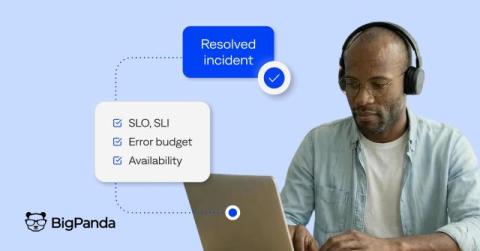
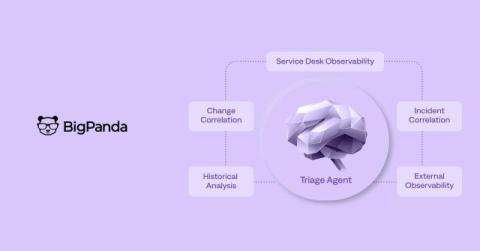
Introducing the BigPanda Triage Agent and the future of agentic L1 operations

If you’ve been following the development of BigPanda AI Detection and Response (ADR), you’re aware of our mission to automate Level 1 (L1) operations and eliminate the need for manual, time-consuming investigations. In our last update, we highlighted the manual, complex, and time-consuming processes that hinder modern IT teams. Enterprises spend billions on observability tools based on the false belief that more coverage equals total visibility.

New Vehicle Monitoring Capabilities In The Works For 2026

Technology for keeping track of vehicles is advancing and companies are gaining more control and oversight. But the project isn't yet complete. There's still room to improve. In 2026, we expect all sorts of new advancements to take center stage in the business world. These will offer managers new capabilities and allow them to really increase productivity to levels they never imagined.

Key Business Strategies to Survive 2026

The business landscape is rapidly evolving, and is being shaped and influenced by technological acceleration, workforce and consumer expectations, economic volatility and more. If you do not have key strategies in place to create a solid foundation for your business and to grow, you will find yourself unable to adapt and left behind by competitors who have leveraged the right strategies. You want to have the right strategies in place for 2026 and beyond, so that you can.

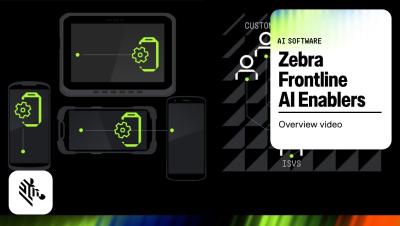
Zebra Frontline AI Enablers Overview Video | Zebra

Augment your Zebra mobile devices with advanced AI tools that empower frontline workers to complete tasks faster, easier, and more accurately with the Zebra Frontline AI Enablers, a key component of Zebra’s Frontline AI Suite. These tools provide the building blocks you need to rapidly and cost-effectively develop high-performance AI applications that will streamline workflows and boost operational and workforce efficiency. Now you can develop and deploy AI vision applications in days instead of months — significantly speeding time to market and your return on investment.

The Agentic Solution Making AI's Value Clear to IT, Execs, and Customers

Leaders in every industry are investing heavily in AI. Shocking, I know. Operations teams are modernizing infrastructure and automating workflows while boards are asking for faster returns. And yet, for all the investment, one question still lingers: where’s the value? The truth is that most enterprises have a translation problem, not necessarily ‘just’ a visibility problem. Executives see AI as a growth strategy, but IT sees it as operational complexity.

From AI to quick-deploy applications: Mark Shuttleworth and Randy Holloway discuss technology trends

‎‎ Subscribe. Trusted open source for everyone. Mark Shuttleworth, Canonical’s founder and CEO, sits down with Randy Holloway, Global GTM Leader at Microsoft, to discuss the current technology landscape. They explore AI’s impact on organizations and how open source in the public cloud is helping teams innovate.

Secure by Default: Why AI-Driven Delivery Needs a Rethink

AI speeds delivery but expands risk. Teams need context, verification, behavior detection, and learning to stay secure by default. Software delivery has been accelerating for more than a decade, and the arrival of AI has pushed us into an entirely new velocity class. Code generation, configuration scaffolding, infrastructure suggestions, remediation hints, and deployment decisions now involve AI. It participates in every stage of the delivery pipeline. On the surface, this feels like progress.

Harness AI November 2025 Updates: AWS Integration, Database DevOps, & Enterprise-Grade AI Across the SDLC

November was another big month for Harness AI, with new capabilities that deepen our work with AWS, bring AI-native automation to the database, and keep our model stack on the cutting edge across the SDLC.

How AI Is Transforming Deal Flow Management in Private Markets

Good investors know that the true marginal benefit isn't more data, but meaningful clarity. This is why Warren Buffett said that 'The difference between successful people and really successful people is that really successful people say no to almost everything.' This should not be missed: the power of focus and staying focused can make investors more money. Private markets are noisier than ever, and staying focused is harder. Deal sourcing has exploded, cycles run longer, competition is tighter, and legacy tools slow teams down at the exact moment they need momentum.

Cortex Wrapped 2025: The Year of AI Excellence

Every December, Spotify launches its infamous Wrapped campaign, which sends millions of users into a frenzy about their listening habits. They become pseudo data scientists and analyze how frequently they listen to their guilty pleasures, their kids' terrible playlists, or the music they love that nobody else has heard of yet. We love this tradition, so we're bringing it to Cortex.

Digital Advertising Trends That will Shape 2026: AI Buys Ads, Retailers Rule, Cookies Die, and More

Digital advertising crossed $1 trillion in 2025, but the story isn't the milestone; it's who controls the spend. Programmatic buying now captures 83% of all digital ad dollars, retail media networks are racing toward $200 billion, and AI systems have stopped taking orders and started making decisions.

What the Octopus Can Teach Us About AI (w/ Steve Wunker)

Tim and Tom sit down with Steve Wunker — Managing Director of New Markets Advisors, author, and early pioneer of the smartphone — to explore the big ideas behind his latest book, AI and the Octopus Organization. Steve breaks down why AI shouldn’t just “bolt onto” old processes, how distributed intelligence reshapes the firm, and what leaders can learn from one of nature’s most adaptable creatures. From organizational plasticity to the changing role of middle managers, Steve offers a pragmatic roadmap for thriving amid rapid AI-driven transformation.

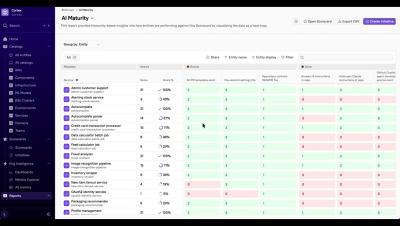
AI Maturity

Learn how Cortex helps engineering organizations unlock AI excellence by measuring, standardizing, and improving how teams adopt and use AI coding assistants like GitHub Copilot, Cursor, and Claude. Cortex enables organizations to mature their AI practices—not just adopt AI tools, but adopt them safely, consistently, and with measurable engineering impact. What you’ll learn in this video.

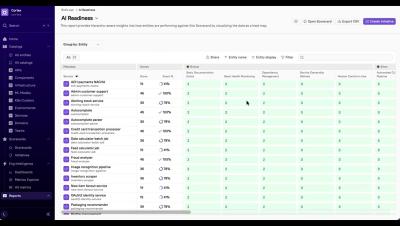
AI Readiness

Discover how Cortex helps engineering organizations unlock AI excellence by building the strong, reliable foundation needed for safe and scalable AI adoption. Cortex goes beyond just giving developers access to AI tools; it ensures your teams are ready to use AI safely, reliably, and at scale. What You’ll Learn in This Video: With Cortex, teams gain visibility into engineering practices, track compliance across services, and create a repeatable framework for safe AI innovation. By automating accountability and enforcing standards, Cortex helps organizations adopt AI with confidence, not risk.

AI Governance

Discover how Cortex helps organizations unlock AI excellence by bringing structure, visibility, and governance to teams that are building AI and machine learning models. As companies scale their AI initiatives, Cortex becomes the single source of truth for all ML and AI assets, ensuring reliable versioning, ownership, compliance, and responsible AI practices. What you'll learn in this video.

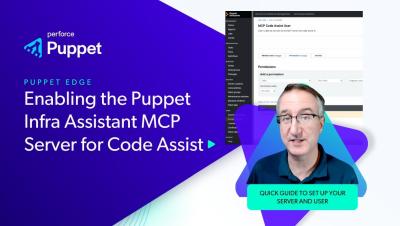
Enabling the Puppet Infra Assistant MCP Server for Code Assist

Unlock the full potential of your Puppet infrastructure with this quick guide on enabling the Puppet Infra Assistant MCP Server for Code Assist. In just 2 minutes, learn how to streamline your coding process and enhance your development workflow. Whether you're a seasoned developer or just starting with Puppet, this video provides easy to follow steps to get you up and running. TIMESTAMPS Subscribe at ⁨‪@PerforcePuppet‬ Website: puppet.com LinkedIn: /perforce-puppet.

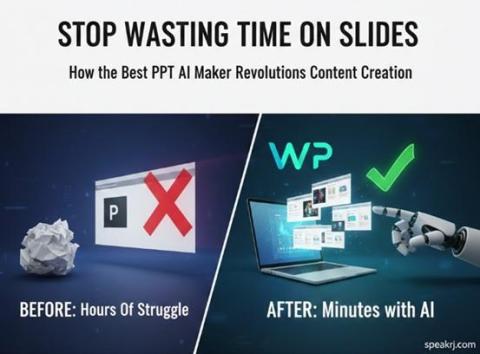
Stop Spending Hours on Slides: Use This Free AI Tool Instead

In nowadays society, time is our most valuable asset. Whether you are a social media manager creating a monthly report or a startup founder pitching to investors, the pressure to deliver visually stunning slides is constant. However, traditional slide design is often a bottleneck. Enter the era of the ppt ai maker. These intelligent tools are no longer just a futuristic concept; they are essential productivity hacks for anyone looking to scale their output without sacrificing quality.

9 Third-Party Risk Monitoring Tools That Actually Cut Vendor Assessment Time

Nearly one in three cyber breaches now start with a supplier, McKinsey found in 2024. A single vendor review cycle often spans 3 to 5 weeks due to manual evidence chasing, according to Forrester's 2024 State of Third-Party Risk Report. And a May 2025 Gartner brief warns that this "perfect storm" of attacks, supply-chain shocks and new regulations is forcing boards to modernize third-party risk-fast.

AI agents just got smarter thanks to PagerDuty + AWS

We are on the ground with AWS and announcing innovations that give customers more powerful AI agents for incident management. These new and improved integrations bring PagerDuty context into the AWS ecosystem for faster resolution and more connected data across the business. And, with our new competency, we take this a step further by codifying these best practices into our joint customers’ day-to-day operations. Announced today, here are some of the highlights.

Observability in the AI age: Datadog's approach

Ten years ago, Datadog was a single-product company focused on breaking down the silos between dev and ops. As the shift towards the cloud accelerated and organizations transitioned to the new DevOps model, we set out to develop an observability platform that would enable these teams to safely scale faster and answer the essential questions about their services: are they available, secure, compliant, performant, and cost-efficient?

Part 1: What If Data Wasn't Just the Fuel for AI but the Foundation of Everything It Knows?

Every breakthrough begins with a question. What if we looked beyond today’s tools, buzzwords, and hype and examined the design principles shaping tomorrow’s intelligent enterprises? The What If series explores those inflection points: moments where technology meets human judgment, where automation meets accountability, and where AI begins to resemble something more like understanding than output.

Enhancing Productivity with Predictive Analytics and AI

Dex aims to improve productivity and strategic leadership through predictive analytics and AI solutions. It highlights proactive problem-solving and the necessity for visibility in monitoring systems. Leadership is urged to understand how IT affects staff satisfaction and business outcomes. Immediate goals focus on enhancing visibility, while long-term strategies should align Dex's results with business priorities to secure support and investment.

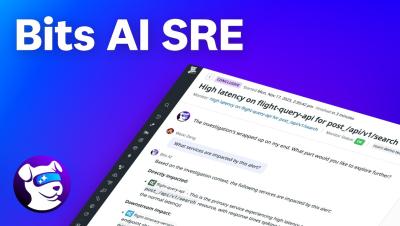
Datadog Bits AI SRE: Your new teammate for on-call shifts

Bits AI SRE is an always-on SRE agent built to handle complex troubleshooting and late-night alerts. Developed against thousands of real-world incidents and powered by Datadog’s platform, Bits AI SRE analyzes your entire stack, tests hypotheses, and identifies root causes in minutes. Resolve faster, get back to sleep sooner, and give your on-call team the confidence and capacity they need.

Your AI Needs Git Context. Meet GitKraken MCP

Give your AI-assistants and agents the repo context they need with GitKraken MCP. Now bundled with GitLens for IDEs. Give your agents full Git context, streamline decisions, and work faster across VS Code, Cursor, and your favorite AI tools. See how MCP connects your repos, providers, and Git into one smart, seamless layer if Git intelligence your agents and you can use. Perfect for developers building with AI. Perfect for teams who want clarity, speed, and zero context loss.

Managing cloud infrastructure with AI assistant and Upsun MCP server

Artificial intelligence is changing the way we execute our everyday operations. AI assistants are incredibly intelligent; they can write code, explain complex concepts, and answer any question you throw at them. However, they can't execute actions on their own. If you ask your AI assistant to “create a backup of my database,” it may provide you with clear instructions, run the CLI commands directly or in some cases, even trigger actions through connected agent workflows.

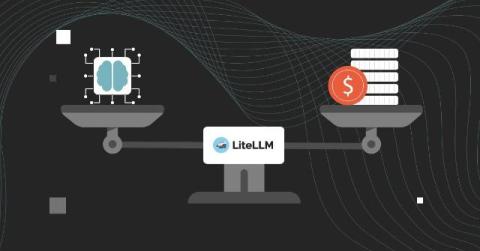
Mastering AI Spend With CloudZero And LiteLLM

The AI landscape today feels a lot like the early days of the cloud: exciting, fast-moving, and completely fragmented. Every week, engineering teams are experimenting with dozens of large language models (LLMs) from providers like OpenAI, Anthropic, Google, Mistral, Meta, and beyond. They’re tweaking prompts, testing model performance, swapping context windows, and even running multiple models in parallel to figure out which one works best for each unique use case.

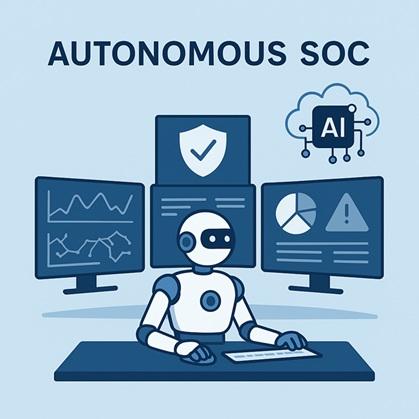
Autonomous SOC: Moving Toward Self-Driving Security Operations

The idea of a fully autonomous security operations center (SOC) sparks fascination and skepticism in equal measure. Swimlane defines an autonomous SOC as a center that uses AI, machine learning and automation to handle a significant portion of security tasks, including threat detection, triage and even remediation, with minimal human intervention. The goal is to free analysts from repetitive tasks so they can focus on strategy and threat hunting. Although a completely selfdriving SOC remains aspirational, advances in hyperautomation, enterprise automation architectures and AI agents are bringing us closer.

European enterprises prioritise governance in AI deployments, as North America accelerates towards full autonomy

Digitate report reveals differing approaches to AI deployment between Europe and North America, but ROI remains consistent. Europe leading on governance while NA organisations show faster progress towards autonomous operations.

AI Infrastructure Is Creating a New Wave of Incidents, And Why Enterprises Need a Modern On-Call Strategy

Over the last few years, AI has quietly shifted from a fascinating experiment to a core operational system. Enterprises aren’t just building prototypes anymore — they’re deploying LLMs into production environments where uptime directly affects customer interactions, revenue flows, and business continuity. AI has essentially become a new layer of critical infrastructure. Because of that shift, the definition of “reliability” is changing.

From FinOps for AI to AI-Native FinOps

One year ago, at AWS re:Invent, we launched CloudZero Advisor, a free, standalone AI assistant that enables anyone to ask questions about cloud spend in plain language. It was the first experiment of its kind in FinOps, a chance to see what people really wanted to know when cost data finally became conversational. Over the past year, Advisor has become a learning engine.

Why AI Will Push #Telemetry Budgets to the Breaking Point in 2026

Telemetry growth is about to hit a new level in 2026. Nick Heudecker from Cribl walks through our new predictions report and explains why observability costs are set to surge again, with more than a third of enterprises spending at least 15 % of their IT budgets on telemetry alone. He also shares how agentic AI adds new risk to the data pipeline, why most AI workloads will struggle to scale, and how platform shifts and market forces will reshape the data landscape.

#AI Powered Data Protection Inside Cribl Guard

Cribl Guard uses an always running AI agent to spot sensitive data as it moves through your environment and recommend the right protections in real time. In this demo, you will see how the agent samples live events, identifies patterns like credentials and credit cards, and turns them into one click fixes that keep your destinations safe. Faster detection, smarter rule recommendations, and instant mitigation. This is what modern data protection looks like.

New agents in the Dojo: Expanded Sumo Logic Dojo AI

Back in September, we unveiled Sumo Logic Dojo AI, our agentic AI platform built to power intelligent security operations and incident response. With that launch, we introduced Mobot, our conversational interface, as well as our first agents designed to help automate routine tasks, streamline investigations, and give security teams the freedom and ability to focus on analyzing the highest value security issues facing their organization. Today, we’re excited to share the latest additions to Dojo AI.

Harnessing AI for Enhanced Digital Experiences

AI can significantly improve digital experiences when integrated into workflows. This proactive approach helps address issues and allows employees to focus on innovation. However, successful implementation requires strong foundations and rebuilt workflows. Many AI projects may fail, with predictions that 40% of generative AI initiatives will be canceled by 2026 due to misunderstandings. Clear objectives are essential to ensure AI is not pursued for its own sake.

9 Monitoring Tools That Deliver AI-Native Anomaly Detection

The observability market has moved beyond manual threshold-setting. Modern platforms use statistical algorithms, machine learning, and causal AI to detect anomalies automatically. Some work immediately after deployment. Others train on your data for better accuracy. Each approach has technical trade-offs worth understanding. This guide compares how nine monitoring solutions handle automated anomaly detection and root cause analysis.

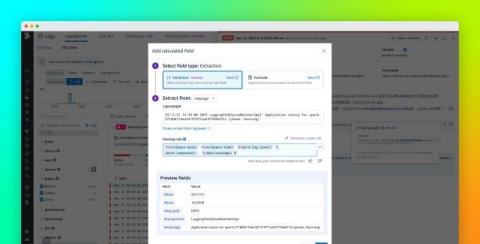
Accelerate investigations with AI-powered log parsing

When debugging production issues, investigating security incidents, or analyzing network traffic, engineers and analysts need not only to find the right logs but to make sense of all the dense, unstructured data generated by different systems. Logs rarely ship neatly laid out in a way that facilitates filtering, faceting, or graphing for every possible scenario. As a result, teams often find themselves writing regular expressions or custom parsers on the fly, which can be error-prone and time-consuming.

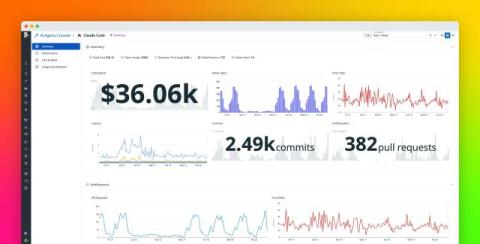
Monitor Claude Code adoption in your organization with Datadog's AI Agents Console

AI coding assistants are quickly becoming a core part of software engineering workflows, helping developers write, refactor, and review code faster. But without effective monitoring, it can be difficult to know whether these tools are performing reliably and proving useful to engineers. As organizations scale their use of tools like Claude Code, key questions emerge.

The Freepik AI Video Generator: A Powerful New Way to Animate Ideas

In a content-driven world, speed and creativity win. Whether you're building a social post, an explainer video, or a product showcase, video grabs more attention than text or images alone. But what if you could create high-quality videos-fast, flexible, and without editing skills? That's where the Freepik AI Video Generator comes in. Designed for creators, marketers, educators, and hobbyists alike, Freepik's tool uses AI to generate short, cinematic videos in just a few clicks.

Building AI Apps with AWS: From Foundation Models to Production-Grade Agents

In the last two years, generative AI has moved from "cool demo" to become an integral element of IT production. The research proves this trend: according to Fortune Business Insights, global spend on generative AI reached an estimated $67 billion in 2024. By 2032, this spending is expected to pass almost $1 trillion, with a compound annual growth rate of approximately 40%. Moreover, a McKinsey & Company survey finds that roughly two-thirds of companies have already integrated generative AI into their workflows, and 80% use it in its broad sense. This technological transformation, hence, poses a critical new question.