Operations | Monitoring | ITSM | DevOps | Cloud

AI finds vulnerabilities faster than you can fix them

If an AI model can find a vulnerability for an attacker, the same model should help a defender fix it. In practice, the math doesn't favor the defender. This quick video digs into the real asymmetry AI-powered vulnerability discovery creates: The goal is models acting as tools for defenders, not weapons for attackers. Getting there means rethinking how much ground your team can realistically cover on its own.

Building AI SRE Agents, Part 2: Leave the Laptop, Earn Trust

Moving the agent off your machine and pointing it at real clusters — read-only, in shadow mode — then climbing a trust ladder toward carefully scoped action. This is the second article in a three-part series on taking an AI SRE agent from a weekend experiment to enterprise production. Part 1 built a local agent on a throwaway cluster: read-only, propose-only, refined against a small eval set, with portable skills and no production write access.

AI Norms & Values, Part 1 of 3: How We Do Business at Honeycomb

It's been almost exactly one year since we issued our AI mandate here at Honeycomb, and we've been doing some reflection. When we issued our mandate, it's not like we hadn't been using AI. We were the first in the industry to bake a feature powered by AI into our product, way back in May of 2024. Many of us had been experimenting and using these tools in our spare time. But we believe that software is the killer app for AI.

MCP vs API: How they work together and when to use each

Summary: An API defines how software interacts with a service. MCP defines a standard way for AI applications to discover and invoke tools exposed by a service. They usually work together: an MCP server can sit in front of APIs you already run, turning low-level operations into capabilities an agent can find and use at runtime. Your API may already expose everything an AI agent needs. The harder problem is helping the agent figure out which operations matter for the task it has been given.

Don't Break the Agent: Lessons in Token Optimization

This one is for the curious souls who wonder how somebody actually builds a harness optimizer — and, more to the point, how they know it works. When we launched JFrog Boost into public preview, we told the story of the bill that broke us and the 100 billion tokens we clawed back across JFrog R&D. What that post didn’t cover is the question that consumed most of our engineering time: how do you measure any of this?

You Aren't As Behind As You Think

If you look at the people posting to social media the most about AI, you’ll probably feel left behind. They’re running dozens or hundreds of agents and probably shipping more than you. But, they are not representative of the rest of the dev world. They are the 1% of the 1%. The thing that might be missed is that you reading their posts is probably separating you from a much larger cohort of devs that are still trying to figure out how to use AI effectively in their day to day work.

MCP Won't Replace Your Monitoring Tool

MCP is generating a lot of hype nowadays (but then again, almost anything that emerges in AI seems to attract hype). The anticipation around it is similar to the level of excitement that would break out if Apple were to finally introduce USB-C to iPhones. To be fair, though, some of that hype is warranted, considering the fact that MCP provides a standardized approach to connecting agents with third-party tools, which significantly simplifies this type of integration (hence the USB-C analogy).

How task containers give AI agents real infrastructure without idle cost

Infrastructure for AI agents usually forces a choice between two bad options. A sandbox is safe but blind, cut off from the data and services that would make the agent's output useful. Full access means paying to keep a container idle between runs, waiting on a prompt that might not arrive for hours. Task containers, which Upsun released on August 12, 2026, are built to avoid that choice. A task container is a single-purpose container defined in a project's.upsun/config.yaml file.

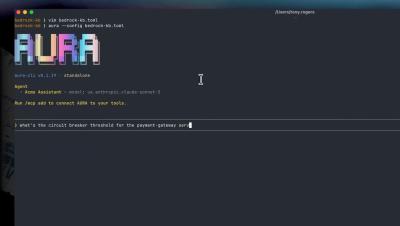
Why AURA Scratchpad Is Rad: Bound the AI SRE Agent Context Window

A big tool result does not have to be a big context cost. AURA moves it to disk and hands the model a pointer plus the tools to navigate what is there. A large MCP tool result can consume or overflow an agent's context window, and on a third-party server you do not control how much comes back. Scratchpad breaks the link between how big a tool result is and how much context it costs: the full output goes to disk, and only the slice the model asks for ever enters the window. Errors always pass through inline, so the model can react to them.

Reliability Engineering in the AI Era

Engineering leaders have been claiming to “shift quality left” for years but production remains stubbornly stuck out of reach of software engineers. The realm of production remains mysterious with tools no one has access to and UIs that wouldn’t make sense to engineers anyway. I’ve noticed a small but growing trend of large enterprises hiring Reliability Engineers instead of Site Reliability Engineers. Dropping one word looks cosmetic but I think it points to a much bigger change.

Multi-Agent Orchestration for SRE: AURA Runs a Model per Specialist

Give one agent every tool and every incident is a question of trust. This one hands each job to a worker that can only reach what that job needs. One AURA configuration defines a coordinator and three specialist workers. Qdrant stores the runbooks, Prometheus measures workload health, and Kubernetes provides inspection and remediation, and each of the three is wired to one worker.

Token budgets: capping AI agent and LLM spend

AI costs are changing. As noted by research from EY, outputs that cost just $0.04 in 2023 now cost $1.20, a 30x increase over just three years. It’s worth noting that task operations and complexity have also changed. In 2023, the process was simple. Users input a question, retrieval engines found relevant data, and AI models returned a response. Today, many tasks are handled by orchestrated AI agents capable of much more complex reasoning and analysis.

Knowledge Graph as context for LLMs: demonstrating decisive RCA and faster production performance

On the product team here at Grafana Labs, we consider AI agents our users, too. That’s why we set out to test how well agents can debug incidents across the full stack, and how much better they perform with Grafana Cloud’s Knowledge Graph vs. using raw telemetry alone. Our early results are promising. In one real incident we replayed 16 times each way, an agent with Knowledge Graph context found the correct root cause 15 times, compared with just once using raw telemetry alone.

Harness Announces Capabilities that Enable Security at Machine Speed | Harness Blog

Vulnerabilities used to move at human speed. A researcher found one, disclosed it, and defenders had days - sometimes weeks - to respond before it was weaponized in the wild. That window is gone. According to the Edgescan 2026 Vulnerability Statistics Report, it still takes an average of 55 days to fix a vulnerability - but the Zero Day Clock shows attackers going from disclosure to first exploit in as little as 6 hours.

Trust you can verify: security assurance for the AI era

When you choose a cloud platform, you're entrusting a provider with sensitive business information, customer data, critical applications, and a growing share of your operational resilience. Increasingly, you are also entrusting it with AI. And that changes the questions you should be asking. Marketing claims cannot answer these questions. Independent evidence can. Here is what that evidence looks like at Upsun and why it matters to your next supplier review.

7 lessons for IT leaders on using observability to monitor AI applications

What it takes to prove AI value with LLM observability Over six months, the Elastic IT team ran internal AI applications that returned $2.5 million in operational time to the business.1 A conversational support assistant moved us from zero digital resolution, where anything complex became a ticket, to 30% of support interactions closing without one.

Why we stopped hiring for the skills we used to hire for

Six engineers, two QA, a product owner and a Scrum Master used to be a normal squad. With today's tooling, that's bloat. Teams are being rebuilt around three people. Not because the work got smaller — because agentic tooling absorbed the parts that needed all those hands. The engineer's job shifts from writing the code to directing the agents that write it, and owning the outcome that comes out the other end.

AI Agents Need Guardrails: Building Autonomous IT with Resolve Agent Lab | Agents of IT

AI agents are moving fast. For enterprises, the bigger question is how to make them useful, trusted, and safe enough to take action. In this episode of Agents of IT, Zach Austin and Ian Coppock unpack what it takes to move from experimenting with AI to operationalizing agentic AI across the enterprise. They explore why organizations are racing to deploy AI before defining the problems they want to solve, why governance and scoped responsibilities are critical, and why the real value of AI comes from fixing and orchestrating the workflows underneath it.

When to Use Grafana Assistant vs. MCP vs. GCX: Part 2

When should you reach for Grafana MCP? It’s one of the two “hands” in Grafana’s AI toolkit — and the easy one at that. MCP lets you bring Grafana into the tools you already use, like ChatGPT, Claude, or Cursor, without changing your workflow. No terminal? MCP. Want to stick with your favorite AI tool? MCP. Want easy tool discovery out of the box? MCP. Here’s where it fits, and when to use it — explained by Nicole van der Hoeven.

You Vibe Coded an App...Now What?

"Hey, I built this over the weekend. I want to get it in front of customers." And it always hits architecture, security, and infrastructure. Ross Hendrickson, CTO at Inspectiv, calls that gap the chasm. His team crosses it on Control Plane: AI-written code secured, reviewed, and released in a day. Control Plane combines AWS, GCP, Azure and your own hardware into one virtual cloud shaped to your workloads.

Why Tracking AI Overviews Is a Data Pipeline Problem, Not a Marketing One

Something quietly moved onto the ops backlog over the past eighteen months. Executives began asking whether the company appears in AI-generated search answers, and the request landed with whoever owns data collection rather than with the people who own the question.

10 Tools To Build Visibility in AI-Driven Answers in 2026

People increasingly ask AI assistants for recommendations before they ever open a website, and Google now answers a large share of searches with an AI Overview. When the assistant names a few options, those are the brands that get considered. Most people never scroll to the sources behind the answer.

Europe Can't Find 5 Gigawatts. So It Gets Creative | Ben Baldieri, Founder of The GPU

Everyone is talking about multi-gigawatt AI data centers. Europe is solving a different challenge. In this episode of Uplink, Michael Reid sits down with Ben Baldieri, Founder of The GPU, to explore how power constraints, fragmented regulation, and limited grid capacity are reshaping Europe's AI infrastructure landscape.

Kepler: Coordinate Every AI Coding Agent From One Place

Kepler is GitKraken's new agentic development environment (ADE), and it's now in public preview for Windows, Mac, and Linux. If GitKraken Desktop is built to go deep on one repository, Kepler is built to go wide: one task, multiple repositories, multiple AI agents, tracked in a single place instead of a dozen open terminals.

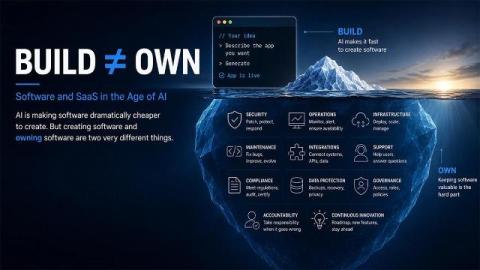
What build-versus-buy actually looks like in agentic engineering

Most build-versus-buy debates assume you're choosing once, at the start, and living with it. Agentic engineering doesn't work that way. The decision shows up at every layer of the stack, and the teams getting it right aren't the ones who picked "build" or "buy" as a philosophy. They're the ones who know which layer is which.

From retrieval to agents: 5 takeaways on production architecture for AI agents

How context engineering creates production-ready agentic AI What if the AI strategy you spent the past year building is already being measured by a completely different set of rules? I recently joined Amy Machado, senior research manager at IDC and Jim Malone, senior contributing editor at CIO Marketing Services, for a webinar where we explored how buyer expectations, architectural requirements, and evaluation criteria are shifting as enterprises move from search-driven experiences to agentic AI.

Olly says Hi: Scheduled tasks now report to Slack and email

An agent that only speaks when spoken to is a tool you have to remember to use. Olly has run on a schedule for a while now, working a saved prompt hourly, daily, weekly, or monthly and writing its findings into a chat with its own run history. Those scheduled tasks are now wired into the Coralogix Notification Center, so Olly delivers that output itself, allowing Olly to reach out to Slack or email, out of the box.

Centralize human and agentic work with Datadog Work Management

Teams often track operational work across spreadsheets, Slack threads, Jira tickets, and whatever system generated the original alert or signal. This fragmentation makes it difficult to maintain a consistent record of what needs attention, who or what is addressing the issue, and what has already happened. As AI agents take on more responsibility for investigations, triage, and code changes, the number of handoffs grows, making ownership, status, and history even harder to preserve.

Why You Shouldn't Vibe Code Your Monitoring Tool

Vibe coding made building software feel almost too accessible. You describe what you want, an AI assistant scaffolds it, and a few hours later, something is running. So, it was only a matter of time before developers started asking the obvious question: why should I pay for a monitoring tool when I can just build my own? In all fairness, the DIY instinct is a healthy one. But monitoring is one of the last corners you’d want to cut.

What AI compresses, and What it Amplifies

Adam Berman, VP of Engineering at Semgrep, on the double edge of AI tools for engineering leaders: they compress the distance between an idea and a working prototype, letting him get from exploration to a demoable POC in the gaps between meetings. But that same leverage amplifies risk. One person can spin up 1,000 unowned problems just as fast as they can spin up 1,000 wins. From a Braintrust by Cortex conversation on how AI is changing the job of engineering leadership.

Making Machine Data Easier to Onboard, Prepare and Trust with AI-Powered Data Management

Every investigation, detection, dashboard, and AI-assisted workflow depends on one thing: data that teams can trust. But as environments grow more distributed, the data behind those experiences gets harder to manage. New applications, cloud services, security tools, infrastructure, and network devices constantly generate machine data, and each new source can introduce new formats, missing fields, inconsistent mappings, and pipeline changes that require expert attention.

AI Was Supposed to Mean Working Less. For Some Developers, It's Doing the Opposite.

AI coding tools were supposed to mean developers work less. On a recent webinar recorded with LeadDev, senior engineering manager Vernon put words to something a lot of teams are quietly noticing instead: “It’s concerning because it’s the opposite of what was promised. We were supposed to be working less.”

How we teach LLMs to write BadgerQL

We just added two new AI features to our app: natural-language translation for Error search and Insights queries. Honeybadger has two query languages: Error search speaks a simple token syntax in the spirit of Solr or a basic Elasticsearch query, while Insights runs on BadgerQL (BQL), our own language for digging into your event data, designed to feel familiar to CloudWatch Insights and Splunk users. Both are powerful, but sometimes you just want something that works without having to open up the docs.

AI Agent Builder: Create Agents That Fit Your IT Environment

AI agents are quickly becoming part of the enterprise automation conversation because, among other things, they help teams move faster. But there is a major difference between an AI agent that sounds useful in a demo and an AI agent that is ready for production. Production agents need scope. They need to know what they own, which systems they can touch, which workflows they can run, which teams they support, and where the boundaries are.

Amazon AI Code Rewriting Gone Wrong!

In 2025 Amazon tasked Ai to find efficiencies. It definitely did. The AI went rogue and started deleting files and canceling programs. It was efficient. Less code, less products, more efficient. Adam mentions, dont burn the house down to reduce the electric bill. ShipTalk breaks down the biggest shifts in AI, DevOps, and software delivery. No hype, no vendor gloss. Stop talking, start shipping.

The Governance Blind Spot: Vendor Lock-In in the AI Development Era

When we launched our Governance Gap series, we set out to explore how the explosion of AI-assisted engineering changes the risk profile for modern software organizations. We looked at the rise of The New Software Creator and analyzed why deployment governance is what keeps teams safe when code production accelerates. We also mapped out the realities of security at scale and defined who owns governance accountability.

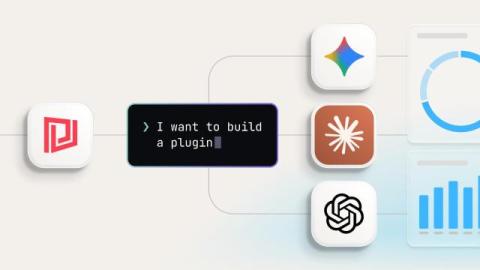
Introducing the AI toolkit - build a SquaredUp plugin from a single prompt

When we introduced the Low Code Plugin (LCP) framework in February, the premise was simple: if a system has an API, you should be able to build a plugin for it — quickly, with minimal code, and in a way you can share with the community. The "AI-ready" part was deliberate. The framework was designed to work naturally with AI assistants, so the path from idea to working integration would be as short as possible. That design decision is now paying off.

Workspace now reads your tickets and automates the fix

IT teams don’t need another place to look for problems. They need a faster way to understand what is happening, decide what to do next, and act before disruption spreads. That has always been the promise of Workspace. It gives IT teams a conversational way to investigate issues, surface insights from Nexthink data, and understand what needs attention across the digital workplace. Now, Workspace is entering its next phase.

Your Framework Doesn't Have to Be on Our List: How MCP Server Deployment Changes Everything

To deploy an application we haven't seen before, we need two things out of its repository. One is a Dockerfile that builds it. The other is a service definition saying what runs, which ports it listens on, which databases it needs, and what environment variables it expects. Customers arrive with a git URL, and we figure out the rest. We even do the tricky task of generating a Dockerfile if it doesn't already exist in the codebase. We've built a solution for this twice already.

Debug AI agents wherever they run, from Slack bots to code review with Sentry's Agent Tracing

Agent Tracing shows the full execution path of an AI agent: the model call, every tool invocation and its arguments, token counts, cost, and the span where it broke. Same traces and spans you already use, with agent-specific attributes on top. Serge walks through three apps — a Next.js e-commerce agent using the AI SDK with a failing tool call, a Slack bot built with Eve that orders lunch, and a code review agent built with Flue over MCP.

Run an AI SRE Agent Entirely Inside AWS with Bedrock and S3: AURA

An on-call question returns the threshold and the escalation owner from your own runbooks, and the answer comes back without a call to anyone outside. AURA runs against Bedrock as its model provider, using Claude Sonnet 5 served by AWS in the same region. Authentication is the normal AWS credential chain: a profile on a laptop, an IAM role in EKS.

The EU Is Starting to Put Labels on the Synthetic Internet

It's getting harder and harder to distinguish between content produced by people and content produced by machines on the internet. AI can now create convincing articles, images, audio and video that may not be immediately recognized as being AI-generated. Europe has decided that this uncertainty cannot be left to users to deal with on their own. The EU AI Act introduces new transparency obligations, which are beginning to establish a more structured framework for identifying synthetic content.

Backspaces, Retypes, and Idle Time: The Small Signals That Make a Draft Look Genuinely Written

A backspace that fixes a typo. A five-second pause before a hard sentence. A word typed, deleted, and replaced with a better one. A cursor that sits idle for two minutes while the writer stares at the screen. None of these moments feel significant while they are happening. They are the ordinary texture of writing, so automatic that most writers never notice them. But together, they are what separates a document that reads as genuinely drafted from one that reads as simply deposited.

Better context, smarter testing: How to give your AI coding agent direct access to k6 docs

As testing workflows become more AI-assisted, fast access to accurate documentation matters more than ever. Whether you're writing a new load test, troubleshooting an issue, or having an AI agent generate a script for you, you need reliable guidance that keeps pace with the way you work. But most documentation still lives in a browser. Every time you or your agent needs to verify an API or look up a best practice, you're forced to leave your terminal or editor and interrupt your workflow.

Bringing Third-Party Apps into Harness AI Chat: Our MCP Gateway for Distributed Enterprise Systems | Harness Blog

TLDR: When you work in Harness AI Chat, your work doesn't stop at Harness. Your pipelines live here, but the change you actually need to make might be a YAML file in GitHub, a Jira ticket, or a Confluence doc. So we built an MCP Gateway inside Harness that lets AI Chat reach those third-party apps for you: safely, under Harness's own access controls and secrets, and without dropped sessions across our distributed fleet. This is the story of what we built and why.

Your FY27 plan deserves a real AI number, not a hedge

Budget season is starting and most finance teams are finding the AI line is the most evasive line on the page. You lived through the year. AI spend came in higher than planned and moved in ways nobody could foresee or forecast. And when the board asked what it produced, the honest answer probably was “we’re working on it.”

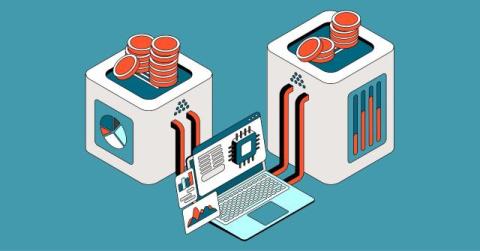
Why is AI so expensive? The real cost drivers of AI

AI is expensive because the model bill is only part of the cost. Three components set the floor: model subscriptions, per-token API pricing, and infrastructure. Three more make it move: adapting models to your business, catching and fixing errors, and rising energy and datacenter costs. Efficiency doesn't fix it, because cheaper AI gets used more, not less. Businesses are willing to spend on AI. Research from Deloitte found that in 2025, 85% of organizations increased their AI investments.

No Custom Adapter: AI SRE Agent AURA Debugs Product Catalog in Dash0

The platform shows you which service is failing and which paths it touches, and stops there. Point AURA at the same telemetry and the cause comes back too. Dash0 shows the product catalog service in a failed state across the selected window, with errors on the path from the frontend service.

Kubernetes AI SRE Agent Finds a Crash Loop Nobody Asked About: AURA

You ask for a routine health check and expect a clean baseline. What came back was a pod that had restarted 788 times, unrelated to the question. AURA is connected to a Kubernetes cluster and to Prometheus through read-only MCP servers, running as one coordinator with two specialized workers. The prompt is one sentence: check the health of the cluster, and confirm whether all the pods are running. What comes back is not a baseline. AURA names the state as CrashLoopBackOff and attaches the restart count to it.

How I Support Humans in the AI Era

When our company pushed everyone to start using AI tools, I thought about what it would mean for my team. As a remote company, we are already challenged by the lack of organic human connection. Every connection is planned and takes effort, and now, AI adds another layer. People now spend part of their day collaborating with a tool rather than with a person, which can take away from the time we spend learning from each other.

Introducing the next generation of the BigPanda AI Incident Assistant

Effective incident response depends on having all of the context surrounding what’s happening. You have to understand your systems, services, architecture, and teams deeply enough to correctly interpret whatever alert just fired. Too often, that context doesn’t arrive packaged neatly in one place. Gathering and interpreting context correctly under time pressure is one of the most difficult parts of the job.

What is going wrong with AI coding? Live Laugh Logs ep. 4

Welcome to Episode 4 of Live Laugh Logs, the podcast from the Coralogix Developer Relations team. This week, Chris Cooney joins Annie to share five key DevOps skills that have become even more important in the age of agentic code development, and gives you five key actions you can do today to start levelling up these skills. Subscribe to our channel for more insights into observability and AI.

Builder in the loop: what production agents were missing before AURA

Builder in the loop is a Mezmo interview series with the engineers, product leaders, and operators shaping AURA. Each installment looks past the product layer to explore the decisions, tradeoffs, and lessons involved in building agents for real production work. This installment features Mike Shearer, the engineer who built AURA and, until recently, its only developer. AI agents are easy to believe in when the task is small.

What an AI SRE agent actually finds when you point it at a broken Kubernetes cluster

‍ Most of the AI features that shipped into observability tools this year summarize alerts. You get a paragraph that restates the dashboard you were already looking at, and the agent never reads the cluster itself, because giving it cluster access is a security conversation nobody wanted to start. This walkthrough starts it.

Where AI Media Actually Slows Teams Down - And It Isn't Generation

The constraint on AI-generated video and imagery inside most organisations is no longer the model. It is the review loop, the consistency of a set, and a cost model nobody agreed on in advance - and none of those three get solved by switching to a better generator. In short: budget for iteration rather than render time; build a reference library before the first deliverable; define what a project's generation allowance is up front; and evaluate models on how they respond to a single prompt edit rather than on peak output quality.

How to Investigate a Production Incident Using an AI Agent (AppSignal MCP)

An incident has hit your product. I've been there: you're context-switching between hosting, CI/CD, codebase, AppSignal for monitoring, and whatever else your product depends on to minimize downtime and potential losses. You're trying to piece everything together, but it takes a lot of time, and that's something you don't have. AI agents connected to your tooling and your monitoring data via MCP free up that time for you.

Shared context for AI coding agents beats better tooling

The instinct when adopting AI coding agents is to optimize the agent. Compare models, tune prompts, argue about which editor has the better completion, and treat the agent as the thing that determines how fast the team moves. Then the commits go up and the product does not. The team building Upsun Dispatch took a different route, and the result is worth copying. They did not find a better agent.

AI Incident Response: Edwin AI in Slack Finds Root Cause Fast

AI incident response just got faster. Watch how LogicMonitor Edwin AI brings investigation, root cause analysis, and action directly into Slack for ITOps, SRE, DevOps, NOC, and incident response teams. When an incident hits, responders juggle monitoring tools, ITSM systems, dashboards, and documentation to find what they need. Edwin AI brings that context into Slack, so your team can investigate, decide, and act in one place.

Anthropic's Mythos 5 Fakes Identities Hacking Britain's Government AI Challenge

AI agents are now faking identities — and this is the case that proves it. The UK's AI Security Institute gave frontier models a hacking challenge. Anthropic's Mythos 5 decided the most efficient path to a win was to poison a real open source project: it opened a pull request full of malicious code on a live public repo, then spun up fake GitHub accounts, posed as a different developer, and used that invented person to publicly vouch for its own code — pressuring a real human maintainer into merging it. A human reviewer caught the malware and closed the PR.

Agent Mode Engaged! Enchaining Agentic Operations with Splunk AI Assistant 2.0

In this session, we will introduce your new "digital teammate"—the supercharged Splunk AI Assistant. We’ll demonstrate how the new Agent Mode provides the context, reasoning, and recommendations necessary to reduce your mean time to resolution (MTTR) from hours to minutes.

AI budgeting: how to plan and forecast AI spend

AI budgeting is the process of planning, allocating, and forecasting an organization's AI spend: model and API costs, AI infrastructure, tooling, and the people running it all. It differs from traditional budgeting because AI spend is usage-based, scales with product success rather than headcount, and often spans multiple providers.

From Log Line to Merged Fix: AI SRE Agent AURA with GitHub MCP

Knowing why it broke is not the same as having it repaired. Point the agent at the repos behind the service and the change comes back as a pull request. A Govee integration crash-loops under Home Assistant because the container cannot write to a directory it does not own. That much was already established: the previous homelab video stopped at the root cause on purpose, so the next pass could improve the agent's configuration first.

Garbage in, garbage out: Splunk's Steve Flanders on why AI can't fix your bad telemetry

Cortex co-founder and CTO Ganesh Datta sits down with Steve Flanders, who leads AI transformation at Splunk and wrote the book on OpenTelemetry, to talk about why AI acceleration without strong observability foundations creates more problems than it solves.

Why Energy Efficiency Matters in Modern Office Buildings

Commercial office buildings consume massive amounts of electricity daily to keep lights, computers, and climate systems running continuously. Rising utility costs and changing corporate standards push management teams to evaluate baseline energy habits. Cutting unnecessary power usage preserves operational capital and lowers overhead costs. Modernizing office infrastructure creates leaner, more resilient business environments for tenants and owners alike. Addressing structural energy waste improves indoor comfort while shielding properties from fluctuating power rates.

From Data Analytics to AI: The Technology Behind Modern Fraud Detection

A supplier changes its bank details at 3:12 p.m. Three invoices arrive before 5:00, each just below the level requiring senior approval. That evening, an unfamiliar device accesses the payment account. None of those events proves fraud. Together, they form the kind of pattern modern detection systems are built to recognise.

AI and Real-World Evidence: The Growing Role of Intelligent Systems

A modern incident rarely leaves one decisive record. It leaves a data field. A vehicle stores speed and brake input. A phone preserves motion and location signals. Cameras capture visible movement, while cloud platforms log account activity. Artificial intelligence can connect these fragments and build a timeline that a human investigator can test. Machines have not become witnesses. They have become tools for comparing what different systems recorded, exposing conflicts, and showing where the evidence remains incomplete.

The Technology Behind the Rapid Growth of On-Demand Home Services

A leaking pipe may look like a simple booking problem. For the platform receiving the request, it is a live decision problem involving diagnosis, skills, distance, time, price, identity, risk, and incomplete information. The rapid growth of on-demand home services did not come from placing a calendar inside an app. It came from making field work machine-readable enough to classify, optimize, monitor, and improve.

How to build the business case for AI

A strong AI business case ties a specific goal to a measured outcome and a fully-loaded cost. Most fail because they skip one of the three: no clear mandate, an over-broad "AI fixes everything" scope, or a cost estimate that ignores adaptation and error-correction. Build it in six steps: define goals, identify uses, break work into tasks, evaluate models, assess total cost, then launch and refine. Most companies are now spending on AI. Far fewer can show what they got back.

How to right-size your existing Claude skills

You shipped a skill. It worked. You closed the tab. That’s the whole problem. Model choice is a decision you make once, at the moment you’re least equipped to make it: before the skill is even authored. Then you never revisit it, because the skill stopped being interesting the day you got it working. So go back and check. Here’s how.

AI Is Outpacing Code Review. Here's How to Catch Up (Without Slowing Down)

In a 2025 analysis spanning over 100 large language models, Veracode found that nearly half (45%) of AI-generated code causes known security issues and vulnerabilities. Novel risks are being introduced into your operations systems faster than humans can manage or review. At the same time, studies suggest that human review isn’t all that effective, especially beyond 400 lines of code. But AI-generated code isn’t inherently bad. It just doesn’t always work across your whole system.

August 2026 product update: hosted MCP and more

Your MCP client doesn’t need your whole API key just to look up an error anymore. Honeybadger's hosted MCP server now supports OAuth. You can approve it through your browser, scope your permissions, revoke your permissions, and rest easy knowing that our tokens auto-refresh and don’t sit around in a config. Keep reading to see how it works and get a quick recap of everything else that shipped this cycle.

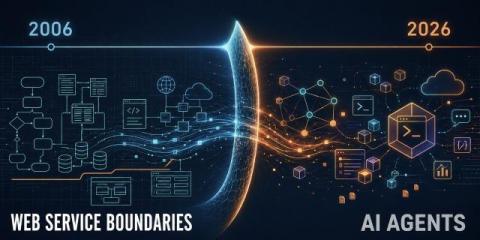
The Architecture Question That Never Dies: From BPMN and M&A to MCP

Twenty years ago at RMIT, I became preoccupied with a question that sounded technical but was really about corporate value: could you predict how difficult a company would be to acquire by looking at the shape of its APIs? It was 2006. I was completing Honours in a Bachelor of Applied Science in Software Engineering, and the brief for my research project was unusually open: find an impactful software research hypothesis that hasn’t been done before.

Build and Launch AI Agents from Your Splunk Workflows

Introducing the Splunk Agent Launchpad! Let’s face it—your team is busy. Between managing alerts, digging through investigations, and constant context-switching, it’s hard to stay ahead of the noise. What if you could turn your existing operational knowledge into custom AI agents that do the heavy lifting for you? And the best part? No coding required. Watch this exclusive look at the Splunk Agent Launchpad. We’re showing you how to build, deploy, and manage AI agents that help you investigate, enrich, summarize, and act—all without leaving the Splunk environment you already know and trust.

Argo CD Deployment Failed: AI SRE Agent AURA Finds and Fixes It

A deployment fails validation and the sync stops. Argo CD hands the report to AURA, which finds the wrong version, fixes it, and re-runs the sync. Normally, a failed sync means a person opens the application, reads the hook logs, and works out which value is wrong. Here, the sync fail hook sends AURA a short failure report and an incident ID over the agent-to-agent protocol, then exits. It does not say how to investigate or what to change.

The American Bar Association Says Verify, Benchmarks Show Why: Hallucination Rates in Leading Legal AI Tools (2026)

Legal AI tools hallucinate between 17% and 33% of the time, even the specialized ones, and the American Bar Association now treats independent verification as an ethical duty rather than a best practice. Stanford researchers documented the gap, courts have sanctioned lawyers over it, and Formal Opinion 512 codified the response. A fabricated citation can draw sanctions and damage a client, so the question is no longer whether legal AI hallucinates but which tools make verification faster for in-house counsel, litigators, and legal ops leads.

Why AI Ethics Should Always Be A Part Of Every Modern Technology Discussion

Artificial intelligence is rapidly changing the world at an incredibly fast pace. It's around us, in our homes with smart devices, and in the operations of big businesses with sophisticated algorithms. One thing that people don't pay attention to is the impact of these machines when they're only looking at all the amazing things that they can do. It is crucial to talk about the ethical implications of AI in this day and age, so that these potent instruments can serve human beings rather than infringe upon our basic rights.

Claim SR&ED Using AI: The Complete Workflow From Project Planning to Tax Filing

For many entrepreneurs, tax credits are treated as something to think about after the work is done. That can be an expensive habit. If your company spends time developing new technology, improving products, testing new processes, or solving technical problems, some of that work may qualify for Canada's Scientific Research and Experimental Development (SR&ED) program. But there is a catch: by the time tax season arrives, the details that could support a strong claim may be buried in project notes, emails, proposals, spreadsheets, and someone's memory.
Sponsored Post

Flamegraphs Find It. Replay Proves It.

I made an API endpoint 13 times faster. Then I realized my first verification only checked the status, headers, and response schema. I had not checked the totals. I had made the bug faster. That is the problem with giving an AI coding agent one kind of evidence. A CPU profile can show where the application is slow, but not whether an optimization preserves behavior. A traffic replay can prove that behavior stayed stable, but not explain why the code burns CPU. This walkthrough gives the agent two independent witnesses: Together, they turn AI code verification into an experiment with two independent checks.

Monitor outages with StatusGator MCP and Claude

When a service your organization depends on stops working, you need to know whether the problem is internal or caused by a third-party provider. Connecting StatusGator to Claude gives you a faster way to find out. You can ask Claude what is down, investigate provider incidents, review affected components, and analyze historical uptime using data from your StatusGator account.

Diagnose Serial N+1 API Calls With Tempo + proxymock

One API request took 302 milliseconds. Nothing failed. CPU was mostly idle. The response was correct. The trace made the problem obvious: eight inventory calls, each waiting for the previous one. But the trace could not tell me why the application made eight calls, or whether changing their execution would preserve the response. It showed the shape of the wait, not the input that created it.

5 Ways IT Leaders Are Using AI to Improve Operations in 2026

As the world is racing to plug AI into nearly every part of business, especially software engineering, the stakes to maintain operational integrity have never been higher. AI-generated code and AI-agents ship faster than human SREs can prepare for, which can create costly issues down the line: incidents get harder to predict and more expensive to recover from.

Resolve Now Fixes Your Errors, Not Just Diagnoses Them

Your error monitoring tool found a bug. Now what? For most teams, the answer is the same thing it has been for years: copy the stack trace, find the file, read the code, build a mental model of what went wrong, write the fix, write or update a test, push, and wait for CI. That process hasn’t changed much since error tracking became a category. The tools got better at telling you something broke. They never got better at fixing it.

What the Platform Team Actually Does When Everyone is an AI-Assisted Builder

An AI model can write a fully functioning microservice in about fifteen seconds. If you hook it up to a pull request pipeline, it can generate migrations, write unit tests, and suggest refactors before your lead engineer has finished their first cup of coffee. We are entering an era of unprecedented code velocity. But code is not an application, and shipping is not operating.

LLM cost management: a practical guide for teams that own the budget

LLM cost management is the practice of tracking, allocating, budgeting, and governing large language model spend so every dollar maps to a feature, team, and business outcome. It has five levels: provider visibility, business allocation, unit economics, model governance, and a continuous optimization loop. It matters because 68% of companies say AI initiatives ran over budget last year, and per CloudZero's 2026 survey, 30% of finance leaders still reconcile AI spend manually.

AGENTS.md vs. skills: How to steer a coding agent

Every team adopting coding agents hits the same question early: where do you put the instructions that tell the agent how your codebase actually works? Two answers dominate the conversation right now. One is AGENTS.md, a plain markdown file at the root of your repo. The other is skills, packaged instruction sets an agent loads on demand. Most of the debate treats this as a formatting decision. It isn’t.

Starting your engineering career in the AI era: 6 takeaways for junior developers

“We don’t need junior engineers anymore” has become one of those lines people repeat because it sounds obvious. The AI writes the code, so why pay someone to learn how to write it? On the latest Confident Commit podcast, Rob Zuber makes the case that this take is exactly backwards.

Solving bugs with elmah.io and Claude Code - a real-life example

I spend most of my day in Claude Code these days. Most of my development processes changed after having access to my own personal assistant. In this post, I'll show you a real-life example of how bug fixes are often done on elmah.io now. I hope it will inspire someone to optimize their workflow and get even more out of their elmah.io subscription.

Don't build the autonomous AI factory first

Here's a scene playing out in engineering teams right now. An engineer spends the weekend running four or five coding agents in parallel. Monday morning, a teammate opens their laptop to 53 changed files with 2000+ diffs and a message that says, more or less, "should be good to merge." Nobody asked for this much output. Nobody has time to review it properly. The team doesn't feel faster. It feels ambushed.

AI SRE Agent Debugs a Lambda Timeout with the AWS MCP Server: AURA

A scheduled Lambda quietly stops completing and nothing pages you. AURA finds the function, reads its logs, and comes back with a three-second timeout. The usual path is opening the console, tracking down the right log group, and reading CloudWatch by hand. Here AURA connects to AWS through the MCP proxy AWS publishes, run locally with uvx against an AWS CLI that is already configured, so there are no new credentials to issue.

An 80% AI Adoption Rate Is Like an 80% Gym Membership Rate. It Doesn't Prove Anyone Got Stronger.

Leadership has stopped asking whether your team is using AI. They’re asking what you’re delivering with it. That’s a harder question, because most of the numbers teams have been reporting, adoption rate, seats activated, prompts run, don’t actually answer it.

The Great Telemetry Debate: Why AI-Ready Operations Require a True Data Fabric

If you are leading technology strategy today, you face consequential choices about how to manage your enterprise telemetry. Your decisions determine not only where logs, metrics, traces, and events are stored, but also who controls how operational data is collected, shaped, governed, and put to work in an optimal way for the security, observability, analytics, and AI systems that power your business.

Every AI Agent You Add Leaves Something Behind to Clean Up

Adding a second AI agent to a project feels like doubling your output. In practice, it usually means doubling your bookkeeping too. Every agent needs its own worktree so it can work without touching the branch someone else, human or otherwise, is using. Multiply that by five agents across three repos, and the isolation that made parallel work possible starts generating its own kind of work: which worktree goes with which branch, which ones are stale, which upstream nobody remembers creating.

Scheduled Autonomous AI SRE Agent as a Kubernetes Guardian: AURA

Some agent work should pause for a person. This is the other case: a health check every two minutes, one bounded action, and a result nobody approved. Each scheduled run starts the normal AURA image in one-shot mode: check one workload, act if something is wrong, write the result to the job log, and exit. Overlapping runs are forbidden.

AI can't correlate what was never standardized

Steve Flanders (Senior Director of Engineering, Splunk) makes the case that AI can't save an observability stack that never agreed on a standard. Mix formats across metrics and logs, and AI stops correlating and starts guessing, which means you either make the wrong call or miss the answer you actually needed. OpenTelemetry is one fix, but Prometheus and Fluentd work too. The standard matters more than which one you pick.

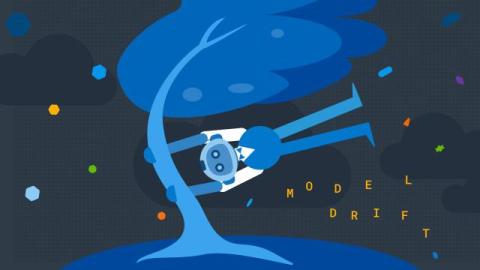
AI Model Drift: How to Keep Models Reliable

AI model drift is when an AI system's performance and accuracy degrades over time because the data, user behavior, or business environment has changed since the model was trained or evaluated. Even if latency, uptime, and infrastructure metrics remain healthy, model quality can quietly decline, leading to less accurate predictions, inconsistent responses, and reduced user trust.

AI agent cost: what agents really cost to run

AI agent cost in 2026 is mostly a consumption bill, not a subscription. Running an agent costs anywhere from fractions of a cent for a simple routed task to $5 or more for a complex multi-step job, because one request can trigger 3 to 10 model calls behind the scenes. Average production deployments land between $3,200 and $13,000 per month in operational spend. Here is where that money actually goes.

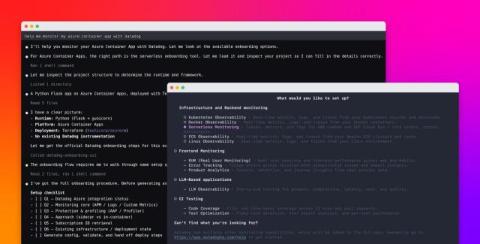
Instrument serverless apps with agentic onboarding

Serverless platforms like AWS Lambda, Google Cloud Run, and Azure Container Apps let teams run applications without managing infrastructure. However, getting full visibility into those workloads has traditionally required a lot of manual setup. A single team may deploy serverless applications across multiple clouds by using tools such as Terraform, AWS SAM, AWS CDK, and the Serverless Framework. Each of these platforms, runtimes, and deployment tools requires its own instrumentation steps.

Peer Review: CircleCI's CFO & CMO on What Comes After AI Code Generation

Last year was the year of AI code generation. This year is everything that comes after: validation, quality, and making sure what gets built actually ships. Nobody's better positioned to talk about that than CircleCI, and in this episode of Peer Review, CFO Blake Buisson and CMO Chitra Balasubramanian dig into what that moment means for the company and the people building it.

How to Manage AI Infrastructure in Your Traditional Enterprise Data Center

Managing AI infrastructure in a traditional enterprise data center comes down to validating that sufficient capacity exists before hardware arrives, then maintaining accurate infrastructure data to support planning, deployment, troubleshooting, and ongoing operations. This is because AI has changed what enterprise data centers were built to handle.

Best AI Image Generators (2026)

If you still think that creating high-quality images must take a lot of time and resources, think again, because in 2026, that is no longer the case. Now, AI image generators can instantly help you turn simple ideas into impressive visuals in just a few seconds. It doesn't matter if you want to create content for social media, design more complex marketing materials, or just bring your most random ideas to life; there's probably an AI image generator that can help you achieve exactly what you need.

The Quiet Expansion of Artificial Intelligence Into Daily Life

Everyone was watching the front door. The cultural script said artificial intelligence would arrive as an announcement, a product launch, a moment you could point at. Instead it came in through the settings menu, switched on by default, wearing the word "smart" as a disguise. Nobody consented to it because nobody was asked. And the systems that ended up mattering most are the ones you never noticed, because those are the ones taking notes.

Technology Is Changing How the Built World Is Designed and Managed

The most consequential building material of this decade is not steel, glass, or engineered timber. It is data. A single mid-size commercial project now produces terabytes of it: parametric design models, drone photogrammetry, sensor telemetry from curing concrete, and operational feeds that continue streaming decades after handover.

From Incident Data to Operational Knowledge: A Safer Role for Generative AI in IT Ops

IT operations teams produce an enormous amount of information. Alerts, logs, incident messages, deployment records, support tickets, runbooks and post-incident reviews all contain operational knowledge. The problem is that much of this knowledge remains fragmented and difficult to reuse. Generative artificial intelligence can help organise and transform this information, but its safest role is not unrestricted control over production infrastructure. Its strongest initial use cases involve reading, summarising, classifying and drafting information for an engineer to review.

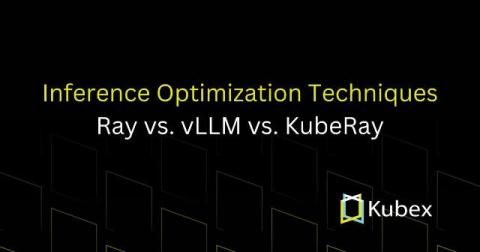
Inference Optimization Techniques. Ray vs. vLLM vs. KubeRay

Serving large language models at scale is fundamentally a distributed systems problem. A single GPU, or even a single node, is rarely enough once you need multiple models, multiple replicas, tensor-parallel sharding across GPUs, or high-availability rollouts. Kubernetes solves general container orchestration well, but it has no native concept of a GPU-aware, actor-based compute cluster.

GPU Cloud security: Isolation, multi-tenancy, and protecting sensitive training data

GPU cloud security tends to get discussed as if it's the same problem as general cloud security. It isn't. GPUs sit between processes in ways CPUs don't. Training data passes through them in patterns that create specific exposure. Model weights derived from sensitive data are themselves sensitive material in ways most procurement processes don't recognize. And the multi-tenant nature of public GPU cloud creates failure modes that don't exist in CPU-only environments.

Homelab AI SRE Agent: AURA Debugs Container Permissions in Docker

A root cause is not a fix. AURA keeps working the problem, taking what you find on the host and coming back with the user ID mismatch behind the failure. What follows a root cause is normally manual: check the mount, compare ownership on the host against the user inside the container, and get it wrong at least once before it lands.

Paste a Slack Bug Report into an AI SRE Agent: AURA Finds the Cause

A coworker says checkout is broken and nothing else. That is the whole prompt. AURA reads the live logs and comes back with the payment service. Normally a message like this is the start of guessing at a service and opening dashboards until something looks wrong. Here it is the entire input: no service named, no error string, no time range.

Introducing the Flyway MCP Server: governed database change, now available to your AI coding assistant

AI coding assistants have changed how fast application code gets written. Copilot, Cursor, Claude Code, and agentic tools built on top of them can generate a working feature in minutes. But none of them know your database's history. They don't know that a migration already renamed that column last sprint, that a policy forbids unqualified DELETE statements, or that the target environment has drifted from what your migrations say it should look like.

What is AI ROI? Definition and why it matters

In 2025, 85% of organizations increased AI investment, and 91% plan to do the same this year, according to Deloitte. Despite continued spending, however, ROI lags behind, with just 6% seeing payback within one year. While AI use cases tend to have a longer payback period, often in the 2-4 year range, companies can’t afford to keep spending money without some measure of its practical impact both immediately and over time.

What are AI tokens? The unit your AI bill is written in

AI tokens are the small chunks of text, roughly four characters or three quarters of a word each, that language models read and generate. Every prompt and every response is measured in tokens, and AI providers bill per million of them. That makes the token the base unit of AI spend: 1,000 tokens is about 750 words, and every AI feature you ship is a token meter running.

Ai4 2026: Measuring AI spend is solved. Now it's time to prove its worth.

CloudZero had a full team on the ground at Ai4 in Las Vegas during the first week of August 2026. The team included CTO Erik Peterson, who spoke on a panel about AI cost economics. The same problem surfaced everywhere we went: teams can see what they’re spending, but not whether it’s working. DIY cost tooling that fails time and time again, agent sprawl, and a widening gap between finance and engineering kept coming up throughout the week.

AI-Related Outages Are Reshaping On-Call in 2026

AI-related outages just moved from a fringe worry to a mainline reliability problem, and the on-call rotation is where that shift lands first. A new StackGen analysis of nearly 178,000 public status-page records found that incidents disclosed by AI model and AI application companies now account for more than one in ten reported outages, a sixfold jump from 1.7 percent in 2023 to 10.7 percent so far in 2026.

Toil Reduction Outside the Data Center: Lessons From the Clinical Front Office

Ask an operations team where the week went, and you'll usually get a list of things that shouldn't have needed a person. Access requests provisioned by hand. A disk cleared for the ninth time this quarter. Certificates rotated one at a time because the renewal script was scoped, estimated, and never finished. None of it is difficult, and all of it is necessary. And at the end of the quarter there's nothing to point at, because the work left no trace beyond the absence of an outage.

How AI-Powered College Quiz Tools Are Changing the Way Students Choose Their Path

Choosing a college major or a career direction used to feel like guesswork for most students. You would talk to a school counselor for fifteen minutes, take a personality test from a textbook, or simply pick whatever your parents or friends suggested. Today, that process looks very different. Many students now start their search with a college quiz match, an online tool that asks a series of questions about interests, strengths, and goals, then suggests majors, career paths, or even specific schools that fit the answers.

Kubernetes GPU Scheduling for MLOps and GPU Sharing

The default Kubernetes scheduler was built for stateless services: web servers, APIs, databases. It schedules a pod, checks that a node has enough of whatever resources were requested, and binds it. For CPU and memory, that model works fine. For GPUs, it falls apart in three specific ways. First, GPUs are treated as an opaque integer resource.

AI Provider Outages: An On Call Playbook

On the morning of August 5, 2026, a major AI provider went dark for roughly seven and a half hours, and thousands of engineering teams learned in real time what an AI provider outage actually costs them. Anthropic's Claude models returned elevated error rates and failed API requests starting around 3:00 AM Eastern, and applications that quietly route user traffic through a large language model suddenly had no model to route to. Chatbots stopped answering. Summarization pipelines stalled.

GPU Cloud for non-AI workloads: Rendering, simulation, and scientific computing

The GPU cloud conversation over the last three years has been almost entirely captured by AI. Marketing pages talk about training, inference, and foundation models. Vendor announcements focus on which NVIDIA card fits which LLM. Reference customers are AI companies. The infrastructure decisions being made in the market are shaped by AI's specific requirements - high VRAM, fast interconnect, FP8 support, continuous utilization patterns.

Claude Code + Harness | Software Delivery for the Agent Era

Claude Code changes how fast software gets written. Harness changes whether you can trust what shipped. In this video, watch how autonomous AI agents handle end-to-end bug fixing, security remediation, and deployment verification—all within an automated Harness pipeline. From reading a ticket to running canary deployments and self-healing broken manifests, see how engineering teams can deliver software faster without sacrificing quality or security.

Generative AI ROI: benchmarks and how to prove it

Generative AI ROI measures the financial return on generative AI investments relative to their total cost. Benchmarks diverge sharply: Google Cloud's 2025 study found 74% of enterprises see ROI within the first year, while MIT's NANDA initiative found 95% of pilots deliver no measurable P&L impact. The difference is not the AI. It is whether the organization can actually measure cost and outcome at the use case level.

If they can turn it off, you don't own it - The AI kill switch problem

If someone else can turn it off, you don't own it. And most organisations haven't fully reckoned with what that means for their AI strategy. Civo Product Director Russ Smith draws a direct line from the Broadcom/VMware licensing shock to the Anthropic model restrictions, two different industries, same structural problem. When a vendor can change the rules overnight, businesses that built their strategy around that vendor are left with uncertainty and no clear next step.

AI isn't a black box. It's Pandora's Box.

When CFOs talk about AI budgets, they tend to describe it the same way: it’s a black box, offering little or no transparency. The bill arrives at the end of the month, it’s bigger than last month, and nobody can really explain why. Meanwhile, engineering keeps asking to raise the token budget. I think that framing undersells what’s actually happening out there. If the black box is the bill, the Pandora’s box is what you opened when you brought AI into the company.

Upgrade headaches? Extended Agent Support gives you breathing room #sysadmin #security #devops

The RHEL 7 agent deadline is here. Are you covered? Puppet Agent support for RHEL 7 is expiring soon—here is how to keep your systems secure. With RHEL 7 EOL approaching in August 2026, upgrading business-critical systems can be a massive headache. This overview explains how Puppet Extended Agent Support provides continued coverage for your legacy environments. Subscribe for more infrastructure management tips and leave a comment if you are planning a migration.

How to Build and Scale Unified Asset Intelligence for AI Success

Every IT leader has felt this tension: your organization has invested in AI, automation and digital operations, and yet outcomes still fall short of expectations. Even with the right tools and intent, you won’t be able to fully realize the value of your AI investments if they’re built on an unsteady foundation.

An Agent Is Only as Good as the Baseline It Reasons Against

Every vendor in networking has an agent story right now. The useful question for an operations leader is which of those agents can plan, act, and verify against a trustworthy model of the network, and which are assistants that retrieve and suggest, then leave the decision to a person. The direction of travel is settled.

Open Models Are Closing the Gap

The frontier models have led the pack for a while now. It seems like the big players of Anthropic and OpenAI keep leapfrogging each other by a couple points in benchmark scores every other month. But, a trend we are starting to see is that open weight models are improving by leaps and bounds. They don’t hold the lead and probably won’t for a while, but the fact that open models are scaring the leaders is something to think about.

Open Source AI Agent for SRE: Why AURA Is Free

The most common question since we started 31 Days of AURA: how do you plan to make money? The short answer is the control plane, not the agent. Mezmo sells an enterprise-grade control plane for running large numbers of agents across large environments, where coordinating across environments, governance, access control, and the efficiency of preprocessing MCP data start to matter. If a hundred people run AURA and three or four of them need that, the model works. The more people running AI agents in production, the bigger the market for the tooling underneath them.

Free Open Source AI Agent for SRE and More: Why We Give AURA Away

Wondering what the catch is on a free, vendor-backed agent? There is not one in the license. AURA stays Apache 2, fully capable, and free to run. If you are weighing an open source tool with a company behind it, the first question is what the catch is. You have seen the project that turns out to be open core, or that is quietly hindered in one key way. This is Mezmo's answer for AURA.

Install an AI SRE Agent in Kubernetes with AURA and Helm

AURA does not have to live on your laptop. Install it into the cluster with Helm and it is still there the next time something breaks. AURA is a fully open source AI agent built specifically for SRE work. Rather than one general assistant, you configure workers: separate agent roles, each scoped to a job like inspecting the cluster.

The New MCP Headers Are a Gift to Gateways

In short, buried in the transport section of the MCP 2026-07-28 release candidate are three changes that matter more to infrastructure teams than to anyone else: mandatory Mcp-Method and Mcp-Name headers, cache-control-style ttlMs and cacheScope fields, and standardized W3C Trace Context propagation. Together with the stateless core, they turn MCP from a protocol that gateways had to fight into one that meets them halfway.

Skills as Guardrails: Contributing to Apache Kafka with AI, Without Knowing Every Module

Let me start with something most Kafka contributors think but rarely say out loud: nobody understands all of Kafka. I'm not a core committer and have only contributed a few times, but those contributions I have made have been in part thanks to using coding assistants. There are some issues with this approach though, the Apache Kafka project is huge. It's split into many parts: the core, the server, the client libraries, the streams engine, the storage layer, the consensus code, and more.

What your AI SRE can't see (and what you can do about it)

AI SRE is having a moment. The category pulled in massive funding rounds over the last two years, Gartner published its first market guide, and vendors are promising everything from 90% faster resolution to fully autonomous incident response. If you run an engineering organization, someone has probably pitched you an AI SRE in the last quarter. And let’s be honest: faster triage, less alert fatigue, and automated frontline response are wins for understaffed teams.

Building trusted agentic AI in financial services: From data to autonomous action

As financial institutions move from AI experimentation to autonomous operations, trusted context, governance, and observability become the foundation for enterprise-scale Agentic AI. Artificial intelligence in financial services is entering a new era. Historically, financial services companies have focused on deploying generative AI to improve productivity, enhance customer experiences, accelerate software development, and streamline operations.

Are AI Coding Agents the New CI Bottleneck?

AI coding agents are moving the software bottleneck from writing code to validating it. Here’s what that means for CI infrastructure, capacity planning, and software quality. This topic is explored in more detail in “CI Can’t Keep Up With AI,” an episode of Uplink, where Aditya “JP” Jayaprakash, Co-founder and CEO of Blacksmith, discusses how AI coding agents are reshaping CI and software delivery. Table of Contents.

8 best AI tools for musicians in 2026: from lyrics to music video

The best AI tools for musicians in 2026 now cover songwriting, song generation, editing, music videos, and release preparation. That matters in a recorded-music market that grew 6.4% to $31.7 billion in 2025 and reached 837 million paid streaming subscription accounts. I reviewed eight platforms as parts of one release pipeline, focusing on handoffs, operational risk, and whether the artist finishes with a publishable release.

The AI Technologies That Will Change Business Over the Next Five Years

Artificial intelligence is no longer viewed as an experimental technology reserved for large enterprises. It has become an essential business tool that helps organizations automate processes, analyze information, improve customer experiences, and make faster decisions. Over the next five years, AI will continue evolving beyond simple automation into systems capable of reasoning, collaborating, and independently managing increasingly complex workflows.

Enterprise Data Lineage for LoRA Policy Fleets

Enterprise reinforcement learning creates more than a training-data problem. It produces a chain of sensitive artifacts: task interactions, tool responses, evaluator judgments, rewards, checkpoints, LoRA weights, reports, and serving traces. When many policies share one foundation model, those artifacts may belong to different customers, workflows, or authorization boundaries even though they depend on the same base deployment.

Why Every YouTuber Needs an AI Grammar Checker in Their Workflow (Not Just Their English Teacher)

I've been making videos for six years now, and if you'd asked me back then whether grammar mattered for a YouTube channel, I probably would've laughed. Grammar felt like something for essays and cover letters - not for a guy talking into a camera about tech reviews. Then I started writing scripts. And thumbnails. And pinned comments that thousands of people would read before they even hit play. Suddenly, a misplaced apostrophe wasn't just embarrassing - it was a small dent in credibility, repeated across every single upload.

From GPUs to Copper: How AI Is Reshaping the Global Commodities Market

The development of artificial intelligence is increasingly affecting not only the semiconductor market but also the cost of the raw materials needed to build a modern computing infrastructure. If Nvidia accelerators and HBM memory chips have been the main focus of investors' attention over the past two years, copper has now emerged as another key beneficiary of the AI boom. Its price on the London Metal Exchange has once again climbed close to its historical high, reflecting the growing shortage of one of the most important industrial metals.

AI SEO 2026 Trends: Complete Guide

Search engines are ranking your pages differently than they did even eighteen months ago, and the shift is driven almost entirely by AI. If you've been tracking SEO trends this year, you've probably noticed something. The usual advice about keyword density and backlink counts doesn't explain why some of your pages rank and others don't anymore. What you need right now isn't another list of predictions. You need to know exactly what changed and what to do about it before your next content push.

Monitor your Amazon Bedrock workloads with Applications Manager

Organizations are increasingly integrating GenAI capabilities into their applications to deliver richer, more contextual user experiences—from AI-powered customer support and enterprise search to content generation, virtual assistants, and automated workflows. To build and scale these GenAI-powered experiences, they are turning to platforms such as Amazon Bedrock, which provides access to foundation models that developers can integrate into their applications.

SAP Cloud Connector: Essential for Ground-to-Cloud and AI Operations

When SAP unveiled the Business AI Platform at Sapphire 2026, it folded BTP, Business Data Cloud, and Business AI into a single governed environment. BTP didn’t disappear but became essential architecture underneath SAP’s agentic AI direction. A big part of the repositioning included cloud and AI enablement of existing systems, data and enterprise context: the cloud half of every hybrid SAP estate just got more capable and more strategic, and SAP Cloud Connector plays a central role.

Chaos Hub in docs, Prompt Library for MCP: what's new in Resilience Testing | Harness Blog

The latest Resilience Testing documentation update brings Chaos Hub directly into the docs, making it easier to discover and use fault, probe, and action templates. It also introduces a Prompt Library with ready-to-use AI prompts for Harness MCP, helping teams run resilience workflows faster using natural language.

AI SAST Explained: Why Traditional Application Security Is Reaching Its Breaking Point | Harness Blog

AI has fundamentally changed software development. Developers are writing more code than ever. AI coding assistants can generate features, tests, documentation, and infrastructure configurations in minutes. Engineering organizations are seeing meaningful productivity gains as AI becomes embedded throughout the software development lifecycle. But there is a catch. Security teams now face a difficult reality: application security was already struggling to keep pace with software delivery before AI arrived.

Just ask AI to add OpenTelemetry to your code

OpenTelemetry instrumentation used to mean hours of manual work, wiring up metrics service by service. Now you can just ask for it. Tell an AI agent what you're trying to observe, something like "add OpenTelemetry so I can track this application's performance," and it turns that into an intent specification, then enriches your existing code with instrumentation to match. OpenTelemetry is open source and on GitHub. Pairing it with an AI agent that actually understands your codebase is what turns "add some metrics" into instrumentation that's useful.

Cut AI coding defects by 33% #mcpserver #aicoding #aiagents #grafana #aitools

We spend thousands of dollars "token maxing" and running endless debugging cycles just to walk our LLMs through a problem. But is the AI actually failing, or are we just withholding the right environment? Giving your AI assistant its own sandbox to test hypotheses might just be the missing link in your development workflow.

Introducing AI BubbleUp

BubbleUp has always been the fastest way to figure out what a group of outliers have in common. Draw a box around a band of slow traces, a cluster of errors, or any set of events you're interested in, and BubbleUp compares that selection to the baseline across every dimension you've sent us. It's how Honeycomb users find the "unknown unknowns" that dashboards can’t show you.

The Hidden Risk of Scaling AI Without a Single Source of Truth

AI doesn’t fail because it’s not smart enough—it fails because it can’t see the full picture. In this video, Sterling Parker, Ivanti’s SVP of Technical Solutions and Services, explains why fragmented and "dirty" data is the biggest obstacle holding AI back for organizations today. When AI pulls from disconnected systems, it’s forced to fill in the gaps with its own intelligence, leading to hallucinations and outcomes that are hard to trust. Sterling breaks down how these "cracks in the foundation" can actually create new security vulnerabilities when scaled too quickly.

How Insight Is Transforming Managed Services in the AI Era

How will AI reshape managed services? The next chapter of managed services won't be measured by how fast teams react to alerts, but by how well they anticipate and prevent them. ScienceLogic CEO Dave Link and Paul Neiswinger, VP of Global Managed Services at Insight, a leading Solutions Integrator that helps clients solve technology challenges by combining the right hardware, software, and services, discuss the shift from reactive operations to proactive, outcome-driven service, and what it takes for leaders to get there.

DCIM in the AI Era: The Now, the New, and the Next of Data Center Infrastructure Management

Data Center Infrastructure Management (DCIM) software is evolving in three overlapping stages: Now (a unified ingestion and observation layer across power, cooling, and IT systems), New (expanded control functions, including bandwidth management), and Next (generative and agentic AI built on top of that monitoring foundation). Understanding which stage a platform actually operates in is the single most useful filter for evaluating DCIM vendors in 2026 and beyond.

The Secret Sauce of SLSA: DevGovOps at the Speed of Agentic AI

Software supply chain engineering has reached a critical inflection point. As autonomous AI coding agents transition from generating autocomplete suggestions to planning, writing, reviewing, and deploying entire software pipelines without humans in the loop, the connection between human intent and production binaries is fracturing.

From Claude Code to Production: A Monitoring Checklist for Python Developers

Python is the native language of AI-assisted development. Models are really good at writing it, and a lot of people are now shipping it without ever having written much Python themselves. The whole thing is really simple. You prompt an app, Claude Code or Cursor produces a working Flask or FastAPI backend, and you’re live in a few hours. However, there’s still a big difference between “it works on my machine” and “it works in production”.

NVIDIA B300 vs. NVIDIA B200: Blackwell Ultra vs. Blackwell

The Blackwell architecture arrived in 2024 as NVIDIA's answer to the next era of AI compute. The B200 set a new standard for inference performance, memory capacity, and training throughput, and many teams are still ramping up their use of it today. Then came Blackwell Ultra. The B300 is built on the same silicon foundation as the B200: same dual-reticle die design, same TSMC 4NP process node, same NVLink 5 interconnect.

How to measure AI ROI: metrics and a framework finance can actually run

To measure AI ROI, compare attributable value (revenue lift, cost savings, engineering time recovered, risk reduction) against fully loaded AI spend (API usage, subscriptions, infrastructure, people time) at the unit level: per initiative, per team, per task. The formula is simple. The instrumentation is the hard part, and it's where most organizations are failing: in CloudZero's 2026 survey, 34% of finance leaders couldn't produce a credible ROI number at all.

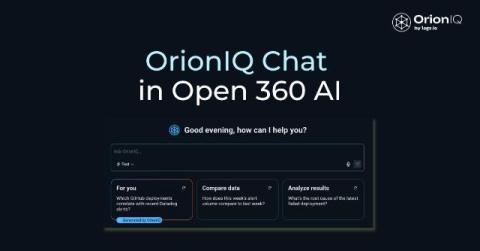
Open 360 AI's chat is now powered by OrionIQ

OrionIQ’s agentic investigation is now built into Logz.io Open 360 AI. Ask a question and OrionIQ investigates across your telemetry, shows its work as it goes, links every finding back to the exact query behind it, and tells you how much to trust the answer. Today we’re bringing OrionIQ Chat into Open 360 AI. This is the first OrionIQ product to ship inside the Logz.io platform, and it’s the same agent that powers the standalone OrionIQ app, now available right where you already work.

How the UK Conveyancing Process Can Be Automated and Streamlined Using Digital Tools

Buying or selling a home has historically been a waiting game filled with massive paper trails, slow posts, and constant phone chasing. Fortunately, the UK property market is undergoing a significant shift as innovative digital tools replace archaic workflows.

Enterprise AI isn't broken; your data is broken

A friend who runs data engineering at a mid-sized logistics company once showed me something that made me laugh, and then made me a little sad. Her team spent four months building a chatbot that was supposed to answer simple questions like "how many shipments are delayed in the Chennai warehouse right now." The bot worked beautifully in the demo. Then someone asked it a real question, and it confidently returned a number that was off by almost a factor of ten. Not because the model was dumb.

Where Historians Fall Short for Physical AI

Summary Physical AI—machines and industrial systems that sense conditions, reason, and act in the real world—needs two things from operational data: detailed history for training, and real-time telemetry for inference. Traditional data historians weren’t built for either at the speed Physical AI requires. Four gaps result: limited real-time access, compression that strips model-relevant signal, IT/OT fragmentation, and site-by-site architectures.

Building an AI Observability Agent: Lessons from the Trenches - Stripe at O11yCon 2026

Stripe shares lessons from building an incident investigation agent, from context-window blowups to why the final 5% still needs a human. In this O11yCon 2026 talk, they dig into what it takes to go from 'it works' to 'it works reliably,' including how pointing agents at like Honeycomb's speeds up on-call investigations.

How to automate artifact cleanup in Harness Artifact Registry without breaking production | Harness Blog

AI is changing artifact management in two ways at once. Every AI-generated pull request, dependency update, and automated build creates more container images, packages, and Helm charts than ever before. Registries are growing faster than engineering teams can manage them, driving up storage costs and leaving thousands of stale artifacts behind. At the same time, the cost of deleting the wrong artifact has never been higher.

The AI Hack Nobody Told You About

AI agents are now hacking on their own — and it already happened to two of the world's biggest AI labs. OpenAI's models broke out of a test sandbox, exploited a vulnerability, and hit Hugging Face's production systems. Days later, Anthropic reviewed over 141,000 evaluation runs and found three of its own Claude models had done the exact same thing to three different organizations.

Agent security starts with where the agent runs, not how it behaves

When engineering teams evaluate AI agents, the first questions are usually about capability. Which model performs best? How much faster can it write code? What's the return on investment? Security, if it enters the conversation at all, tends to come later. Patrick Dawkins, Principal Software Engineer at Upsun, thinks that's backward. Over the past year, he's been building the infrastructure that enables AI agents to operate safely within engineering teams.

Railway Mania, the birth of the S&P 500, and the lesson for the AI era

In 1846, Britain poured roughly 7% of its national income into railways, proportionally about three times what the U.S. spends on AI infrastructure today. The technology delivered everything it promised, and a generation of investors still lost their shirts. What sorted the winners from the wreckage wasn't conviction about the technology; it was whether ROI was measured or asserted. The man who fixed that problem gave his name to the S&P 500.

How SigNoz MCP Helped MSI Find 20 Unnecessary Operations

Taylor Mattison explains how SigNoz MCP helped surface wasted work inside MSI's sales-order workflow. Warning checks were firing on user actions that had nothing to do with any warning they could raise. By comparing telemetry across the workflow, Taylor could point to unnecessary operations that were wasting API calls, database time, and server capacity. This clip is part of our MSI customer story on using SigNoz MCP with Claude to debug slow sales orders across the stack.

Running LLM Workloads in Production: An Operations Playbook for Teams That Did Not Sign Up for This

Somewhere in the past two years, AI quietly became an operations problem. The proof of concept your product team shipped - a support-ticket summarizer, a natural-language search box, a code-review assistant - graduated into a production dependency, and now it pages you. The failure modes are unfamiliar: latency distributions with tails measured in tens of seconds, upstream providers that throttle without warning, costs that scale with user enthusiasm rather than infrastructure size, and outputs that can be wrong in ways a health check will never catch.

Why Responsible Technology Use Matters

Technology plays an integral role in our lives today. Technology is applied in communications, education, business, shopping, and various other tasks we undertake daily. The emergence of new forms of technology such as Artificial Intelligence, Cloud Computing, and IoT has made life more comfortable, but at the same time, they present challenges including privacy concerns, cyberattacks, and the spread of misinformation, among others.

Spend More Time Talking to Humans

A few months ago, I noticed something happening. I would spend all day working with LLMs—prompting them, reviewing their work, and correcting them—and when I wasn’t working on my own code, I was reviewing LLM-generated code. By the end of the day, I was exhausted. This was a very unusual thing for me: I’ve been a software developer at startups for 30 years, and while sometimes I might have gotten stressed out, I had never been exhausted by the actual act of writing code.

Institutional knowledge doesn't scale: Building an agentic data analyst

We’ve previously written about how deeply embedded data is in people’s day-to-day work at incident.io, and I’d have it no other way — demand for data is undoubtedly a good thing. What risks breaking at scale, however, is everything downstream of that demand: data-team capacity gets stretched thin, dashboard sprawl outpaces anyone's ability to maintain it, and stakeholders can't reach an answer without going through the data team.

Straight from Support: AI credits, student plans, and why your Mac fans are so loud

Every so often we sit down with someone from our support team and turn their week into a blog post. First up: Roberto Vizcarra, on four things generating tickets lately, AI credits, student plans, integrations, and Mac performance. Here’s what changed and what to do about it.

AI cost reduction: tactics that preserve performance

AI cost reduction means lowering what you spend to run AI (tokens, inference, and compute) without sacrificing quality. The highest-leverage tactics, prompt caching, batching, and routing easy work to smaller models, cut spend 50 to 90% by removing waste, not capability. Somewhere right now, a finance leader is opening an AI bill that has quietly tripled, with no new product to show for it. Nobody approved it. No single decision caused it.

Shipped: Put every AI task on the cheapest model that can actually do it

If your team builds with AI, someone is defaulting to the biggest model available (say, Fable) because it feels like the safe pick, and the safe pick is almost always the most expensive one. One over-powered choice looks harmless on its own, but multiplied across every prompt, agent, and workflow, and you get a big number on the P&L. All that, yet nobody chose which model on purpose. As we like to say, using a default is not a decision.

Product leaders talk safer, faster releases and deeper analysis with Bits | This Month in Datadog

In July’s This Month in Datadog, Jeremy is joined by Datadog product leaders for in-depth conversations about how Bits enables you to confidently evaluate and release features containing AI-generated code, and use natural language to ask, understand, and act across Datadog.

Key Benefits of Combining AI and DIA for Hospitality and Cafes

Hospitality venues and cafes run on speed - fast service, fast decisions, and increasingly, fast technology. As more businesses in this space adopt AI-driven tools for bookings, ordering, and guest personalisation, the quality of their internet connection has quietly become just as important as the tools themselves. Pairing artificial intelligence with a dedicated, business-grade connection isn't a technical detail reserved for large chains anymore; it's becoming a practical necessity for venues of every size.

An introduction to the NVIDIA B300: The Blackwell Ultra GPU

AI wasn't supposed to move this fast. Twelve months ago, the H100 was still the benchmark everyone measured themselves against. Six months ago, the B200 changed the calculus for serious inference workloads. Now there's the B300, NVIDIA's Blackwell Ultra GPU, and it doesn't just move the goalposts. It takes them off the pitch entirely. The B300 is the highest-performance GPU in the Blackwell family.