Operations | Monitoring | ITSM | DevOps | Cloud

The latest News and Information on Status Pages and related technologies.

Error Budget in SRE: The Complete Guide (2026)

An error budget is the acceptable amount of unreliability permitted by your SLO over a defined time window. It is not a target. It is not a stretch goal. It is a hard ceiling that, when breached, should trigger a pre-agreed organizational response — feature freezes, postmortems, or infrastructure investment. The formula is blunt: Error Budget = 1 - SLO Target Error Budget (time) = (1 - SLO Target) × Window Duration For a 30-day window: That last number should make you uncomfortable.

Cloud Outage History: Six Years of Recurring Failures

Cloud infrastructure has never been more reliable in theory. In practice, the last six years of cloud outage history have delivered some of the most disruptive incidents on record. Not because cloud providers got worse, but because the systems built on top of them got larger, more interconnected, and more brittle in ways that don't show up until everything breaks at once.

Get deeper insights with historical outage reports

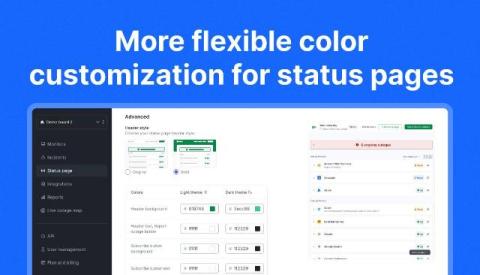
StatusGator now includes a new Outage Reports tab on the service monitor detail page, giving users more visibility into recent service disruptions directly where they monitor services. Users can now quickly review recent outage activity for a specific monitored service without leaving the detail page.

AWS outage takes down more than 150 cloud services

On May 7th and 8th, 2026, Amazon Web Services (AWS) experienced an outage affecting Amazon Elastic Compute Cloud (EC2) in the dreaded US East 1 region. The original region of AWS located in Northern Virginia, us-east-1 or just “US East” as it is known, has been the subject of some of the internet’s most high profile and destructive outages and remains Amazon’s least reliable region.
Sponsored Post

How to Reduce MTTR When Third-Party Services Go Down

Most MTTR guides assume the problem is in your infra. For modern apps, it's often not - it's Stripe, AWS, Auth0, or another vendor. Vendor status pages lie by omission. The lag between impact and acknowledgment can stretch to an hour or more. You need two runbooks, proactive vendor monitoring, and graceful degradation baked in before the 3 AM page hits. This post shows you exactly how.

Major .de Outage: DNSSEC Failure at DENIC Takes Down German Domains

On May 5, 2026, a major.de outage disrupted access to websites across Germany and Europe. The incident, caused by a failure at DENIC, the operator of the.de top-level domain, resulted in widespread DNS resolution failures. This was not a typical service outage. It was a failure at the DNS layer that made entire domains unreachable. As DNS caches expired, more services went offline, creating the appearance of a spreading outage across unrelated companies.

April 2026: IsDown Users Saved 16.5 Hours with Early Outage Detection

In April 2026, IsDown's early detection system gave users a 3.6-hour head start on a major outage — plenty of time to implement workarounds before the vendor even acknowledged the problem. Across 45 early detections, our users saved a collective 16.5 hours by knowing about outages an average of 22 minutes before official status pages were updated.

April 2026 Early Warning Signals

April saw widespread disruptions across SaaS platforms, developer tools, and cloud services, with login failures, pipeline issues, and general service outages among the most common problems. StatusGator’s Early Warning Signals consistently identified these incidents ahead of official provider updates. In several cases, the lead time was significant. Bitbucket pipeline failures were detected 1 hour 17 minutes before acknowledgment, while Claude performance issues surfaced 59 minutes early.