Operations | Monitoring | ITSM | DevOps | Cloud

With Agent Automation, Nobody Has to Start Root Cause Analysis by Hand

Until now, someone on your team had to start every root cause analysis in Rollbar. An alert fires, they open the item, read enough of the stack trace to decide it deserves an investigation, and start the analysis by hand, after dropping whatever they were doing. With Agent Automation, Resolve, Rollbar’s AI agent for root cause analysis and fixes, takes over that step. You write a rule once in Project Settings, and when an error matches it, Resolve starts the analysis on its own.
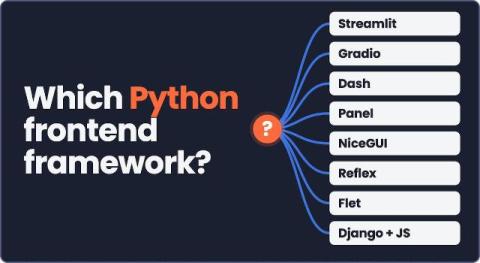
Which Python Frontend Framework Is Best? Use This Decision Tree

Search "best Python frontend framework" on Google and you'll get the same page over and over: a listicle ranking Streamlit, Gradio, Dash, NiceGUI, Reflex, and Flet, followed by a paragraph on each and a score out of ten that doesn't mean anything. None of them tell you which one to use for your project.

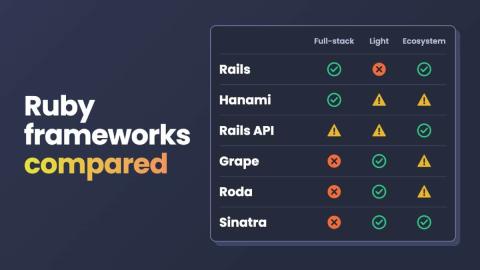
Which Ruby Framework is Best? Use This Decision Tree

Search "best Ruby frameworks" and Google will give you a dozen posts that all say the same thing: a table ranking Rails, Sinatra, Hanami, Grape, and Roda, followed by a paragraph on each. None of them tell you which one to use for your project. That's because a ranking doesn't fit this problem. These frameworks aren't better or worse versions of each other. They're built for different jobs. Rails optimizes for full-stack productivity. Hanami optimizes for architectural boundaries.

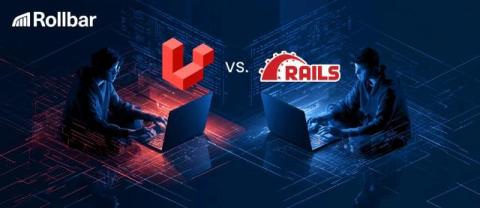
Laravel vs. Ruby on Rails

Laravel and Ruby on Rails are both full-stack, batteries-included MVC frameworks with an ORM, a templating engine, a CLI, and a shared philosophy: going from an empty folder to a working app shouldn't take fifty decisions first. Laravel wins when your team already lives in PHP, or when you want the largest possible pool of developers, packages (code other people have already written for common tasks), and hosting options to choose from.

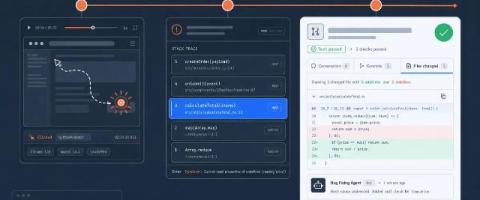
Resolve Now Fixes Your Errors, Not Just Diagnoses Them

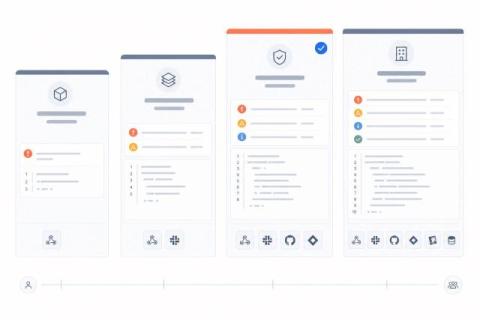
Your error monitoring tool found a bug. Now what? For most teams, the answer is the same thing it has been for years: copy the stack trace, find the file, read the code, build a mental model of what went wrong, write the fix, write or update a test, push, and wait for CI. That process hasn’t changed much since error tracking became a category. The tools got better at telling you something broke. They never got better at fixing it.

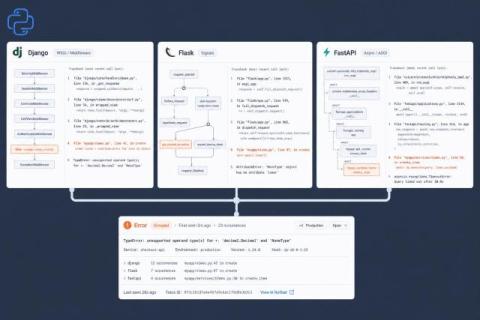
Python Error Tracking for Django, Flask, and FastAPI: A Practical Setup Guide

Your Python app is throwing errors in production right now. Some of them are obvious: a 500 response, an angry Slack message from support. But most are quiet. A background task swallows an exception. A race condition surfaces only under load. A third-party API returns unexpected data and your code handles it by not handling it. If you’re relying on log files and user reports to find these, you’re debugging after the damage is done.

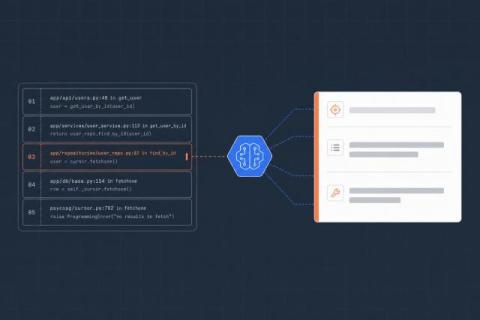
You don't need a paid plan to use AI Root Cause Analysis

When an error appears in production, the hardest part often isn’t seeing what broke. It’s understanding why. That’s why we built Root Cause Analysis (RCA). It helps connect the dots between an error and its likely cause, so you can spend less time investigating and more time moving forward. Until now, RCA was only available through plans that included AI credits. Starting today, free plan users can purchase an AI credit subscription and use RCA without changing plans.

There Is No Good Spring Boot Alternative (Unless You're Doing One of These Three Things)

Every few months a new "we migrated off Spring Boot" post washes across r/java or DZone. The numbers are always impressive. 60% memory reduction, 85% faster startup, cloud bill cut in half. The comments are always full of developers convinced they should be doing the same thing. Is Spring Boot really that bad now? I decided to do my own research. I read every credible public migration case study I could find. I ran benchmarks. I built the internal business case for switching two of our services.

Rollbar Pricing Explained: Plans, Features, and What You Actually Pay

You’re comparing error monitoring tools. You’ve narrowed it down to two or three options. Now you need to know what this actually costs before you bring it to your team. Here’s what Rollbar costs, what’s included at each tier, and how it compares to Sentry and Datadog on pricing. No sales pitch, just the math.