Operations | Monitoring | ITSM | DevOps | Cloud

Create an Operational Risk Policy in JFrog Curation

Protect your organization from the next software package hijacking with JFrog Curation! Learn how to create an operational risk policy in JFrog Curation that flags immature package versions. This walkthrough reviews the available operational risk conditions, explains why brand-new or outdated releases can carry supply chain risk, and shows how a Dry Run action lets you measure a policy's impact on developers before you switch it to Block.
Create a Legal Risk Policy in JFrog Curation

Protect your proprietary code with JFrog Curation! Learn how to create a legal risk policy that blocks packages with licenses you don’t want developers using. In this demo, we build a policy for the GNU AGPL license, add a waiver for a package covered by a commercial license, and configure how waiver requests are handled. Read more about it in the JFrog Docs.

Configure Your JFrog Curation Service

Learn how to configure the JFrog Curation service for the first time. This video walks through each setting on the Curation General page, including turning on Curation, connecting package types, compliant version selection and notifications, and explains what each one does. Creating Curation policies and advanced coverage are covered in separate videos. Read more about it in JFrog Docs.

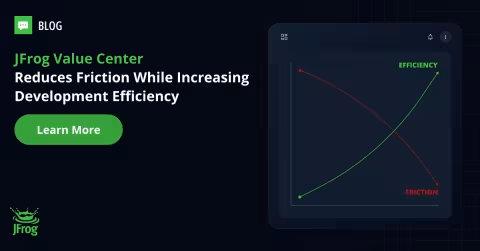
JFrog Business Value Center: Celebrate the ROI of Your Software Supply Chain

You already know the effectiveness of the JFrog Platform – blocking risky packages, speeding up builds, securing the supply chain, providing end-to-end governance and so much more. But when it comes time to renew the license, a new VP may ask: “What are we actually getting in return?” or finance wants to understand the ROI: can it really be proven by the numbers?

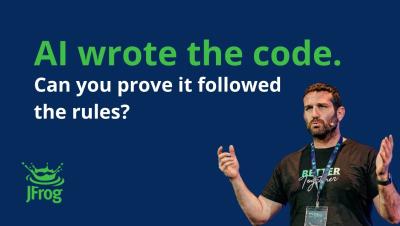
AI wrote the code. Can you prove it followed the rules?

AI agents now write, review and ship code, and our supply-chain security can't tell how that code was made. A green build and a clean scan don't tell you which model or tools the agent used, whether it had your security guidelines, or whether a human actually reviewed the change. In this talk I introduce Agentic Process Evidence, a proposed open community standard. It records the AI development process as structured, signed evidence that is attached to the commit and linked back to the full agent session logs, so release policies can enforce it automatically as policy as code.

JFrog Artifactory Supports LuaRocks Hosting for NGINX, OpenResty and Kong

If your NGINX/OpenResty servers or Kong gateways pull Lua modules straight from public luarocks.org, one upstream outage can stall every build and deploy that depends on a “rock”. With LuaRocks support in JFrog Artifactory, you host and proxy those modules from a private LuaRocks registry you control, using the native experience you expect, not a bolted-on workaround.

JFrog Agent Power for AWS Kiro

JFrog is bringing software supply chain governance to AWS Kiro. Operating as a power plugin within Kiro, JFrog delivers package safety, agentic access to the JFrog platform, and the JFrog AI Catalog. With simple setup, AI agents make supply chain aware decisions right inside the IDE, ensuring dependencies come directly from Artifactory rather than unverified public registries.