Operations | Monitoring | ITSM | DevOps | Cloud

How to Cut Cloud Compute Costs Without Rewriting Your Apps

The fastest way to cut cloud compute costs is to stop paying for capacity your workloads do not use. Right-size CPU and memory to real usage, scale idle workloads to zero, and make cost policy a platform default instead of a quarterly review. Control Plane does all three at the platform level: Capacity AI right-sizes running workloads, autoscaling scales idle ones to zero, and customers typically spend 30 to 50 percent less on compute than running directly on AWS, GCP, or Azure.

Platform Engineering Without a Platform Team: How Growth-Stage SaaS Companies Get Production-Grade Infrastructure

If your team is outgrowing a simple PaaS and you do not want to spend a year or more building a platform engineering function, adopt a platform that operates Day 2 for you. Control Plane patches and upgrades the platform, autoscales and right-sizes workloads, and runs them active-active across regions and clouds under a 99.999% SLA. It runs natively on AWS, GCP, and Azure, and on your own clusters or on premises through Bring Your Own Kubernetes.

Build a Feature and Release It In a Day

AI-generated code security is the part nobody plans for. Ross Hendrickson, CTO of Inspectiv, on what happens after the AI writes it. He can think of a feature and ship it the same day, generating more code than a week of writing it by hand would have produced. The vulnerabilities don't disappear along with the typing. Something still has to review what was generated, secure it, and get it out the door without becoming the new bottleneck.

Best Cloud Disaster Recovery Solutions for 2026

Most disaster recovery plans are designed to survive infrastructure failures — a zone goes down, a region becomes unavailable — but assume the cloud provider itself stays up. That assumption fails more often than engineering teams expect, and when it does, the gap between a team that keeps running and a team writing incident reports isn’t luck: it’s whether DR was an architectural default or a runbook nobody has tested.

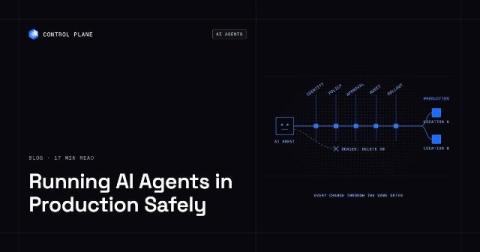
AI Agent Infrastructure: Where to Run Agents in Production

Run production AI agents on infrastructure with hardware-level isolation, sub-second sandbox restarts, and a compliance posture that already covers PCI DSS, HIPAA, and GDPR, so a single misbehaving agent can’t touch another workload or your audit trail. Control Plane runs every agent workload in a Kata Containers sandbox on a per-workload Firecracker microVM, with Capacity AI packing resources and scaling workloads dynamically to cut compute cost 30-50%.

What Sovereign Cloud Means for Architecture, Data Residency, and Compliance

Sovereign cloud is a system design problem. It asks where workloads run, where data lives, who can administer the system, which legal authorities can compel access, who controls encryption keys, and where backups, telemetry, and control-plane metadata land. Selecting a region answers only part of that problem.

Five-Nines Uptime Architecture: What Single-Region, Multi-Region, and Multi-Cloud Designs Can Deliver

99.999% availability allows about 5 minutes 15 seconds of downtime per year, or about 26 seconds per month. That budget includes every failed deploy, certificate expiry, DNS misconfiguration, and provider incident in the request path. One regional outage lasting an hour consumes more than 11 years of five-nines budget. This guide explains which architecture tiers can reach that number, which cannot, and why.

Top 10 Managed Kubernetes Services

Kubernetes has become a standard foundation for modern containerized applications, but operating clusters still requires significant engineering work. In the CNCF’s 2025 annual cloud native survey, published in January 2026, 82% of container users reported running Kubernetes in production. As adoption matures, the question for many teams is no longer whether to use Kubernetes, but how much of the operational burden they want to own.

Cloud Migration Strategies, the 6 Rs, and How to Avoid Getting Stuck Mid-Move

Consider a platform team that spends four months building a thorough migration plan. Its pilot, a stateless order-status API, runs on AWS within three weeks. Six months later, that API is still the only workload in the cloud. In this scenario, the blockers are not exotic technical failures.