Operations | Monitoring | ITSM | DevOps | Cloud

env zero Launches EZ Control, the Autonomous Cloud Control Plane for the AI Era

Industry-Leading Asset Coverage Spanning Nearly 2,300 Resource Types Across AWS, Azure, Google Cloud and Kubernetes, Structured into a Real-Time Ontology That EZ Control Uses to Enforce Security, Cost, Availability, Maintenance and Performance Policies Continuously.

Devart Data Access Components add support for the latest IDEs and database platforms

The latest update to Devart Data Access Components is here, bringing support for RAD Studio 13 Florence Release 2, Lazarus 4.8, Microsoft SQL Server 2025, MySQL 9.7.x, and NexusDB 4.75.20. The release also introduces new security and authentication capabilities, along with improvements to transaction management, database connectivity, data handling, and performance.

Shipped: One CloudZero for everyone, starting October 1

On June 3, we made the new CloudZero experience the default for every customer. Since then, we’ve shipped around 30 improvements a week: side-by-side period comparisons in Explorer, budgets you can create and edit right in the app, threshold alerts on dashboard tiles, and Monitors, which flags AI and cloud spend that moves outside its normal pattern and shows you what changed. Pages load 28 to 61% faster. JavaScript execution is 85% faster.

AI cost allocation: how to attribute AI spend by team, product, and customer

AI cost allocation is the practice of attributing every dollar of AI spend to the team, product, feature, or customer that generated it. That spend includes API tokens, GPU compute, per-seat tools, and shared infrastructure. It's harder than cloud allocation because AI spend arrives untagged, spans vendors, and pools in shared resources. Four methods cover most cases: tag-based, key-based attribution, proportional split, and usage-telemetry.

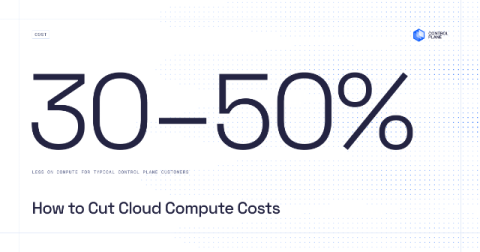
How to Cut Cloud Compute Costs Without Rewriting Your Apps

The fastest way to cut cloud compute costs is to stop paying for capacity your workloads do not use. Right-size CPU and memory to real usage, scale idle workloads to zero, and make cost policy a platform default instead of a quarterly review. Control Plane does all three at the platform level: Capacity AI right-sizes running workloads, autoscaling scales idle ones to zero, and customers typically spend 30 to 50 percent less on compute than running directly on AWS, GCP, or Azure.

How to Use Megaport Storage as a Veeam Backup Target

Learn how to use Megaport Storage as an S3-compatible Veeam backup target for scalable, private, offsite backup storage. Table of Contents A backup is only useful if it can be retrieved when needed. Where backups are stored determines how well they’re protected from incidents at the primary site, how long recovery transfers take, and what it costs to bring the data back.

AI in IT Operations: How to Build Trust, Automate Smarter & Prepare for Autonomous IT

What does it take to make AI and automation actually work in enterprise IT? In this episode of Agents of IT, Resolve’s Zach Austin sits down with Nick Dimmock, Co-Founder and CEO of TechWorks, to discuss how IT automation is evolving, why trusted data matters, and what organizations need to build before AI can deliver meaningful business outcomes.

One Cloud, Every Environment: The New Civo Dashboard | Civo Navigate London

Your infrastructure lives everywhere. Your view of it shouldn't. Civo CTO Dinesh Majrekar gives the first look at the new Civo dashboard. It's built around one idea: however many regions, clusters or environments you run, managing them should feel like one cloud. Civo makes complexity a thing of the past.

SAST vs SCA vs DAST vs IAST: choosing the right scan for the right stage

SAST vs SCA vs DAST vs IAST: a clear breakdown of what each scan finds, when to run it, and how to combine them across your SDLC. Most AppSec teams don't run one type of scan - they run several, at different points in the pipeline, because no single tool sees the whole picture. This article breaks down SAST vs SCA vs DAST vs IAST: what each one actually tests, where it fits in the software development lifecycle (SDLC), and how to combine them without duplicating effort or drowning developers in findings.

Why Engineers Ignore Cloud Cost Optimization & Fixes

Learn why engineers ignore cloud cost optimization and how to build a culture of FinOps governance. See how Harness helps. Engineers often overlook cloud costs due to lack of visibility, fragmented tooling, and competing delivery priorities. Organizations can fix this by embedding FinOps guardrails into developer workflows and providing real-time cost feedback during build cycles.

How to Use Jira Planner to Plan Software Projects

Jira Planner is an AI planning agent in Jira that turns high-level product requirements into ready-to-build plans (requirements, technical specs, and Jira work items) grounded in your actual codebase, architecture, and Confluence context. In this video, you'll see how Jira Planner brings due diligence to the pre-build phase, so engineers and AI coding agents start from a plan that reflects the real code instead of a vague prompt. It's useful for product managers, engineering leads, and developers who want to cut the rework that comes from AI guessing at requirements.

What is Interactive Application Security Testing (IAST)?

Interactive Application Security Testing (IAST) finds vulnerabilities in running applications by monitoring code from the inside. Learn how it works and where it fits. Interactive Application Security Testing (IAST) is a method for finding security vulnerabilities in an application while it's running, by instrumenting the code and observing how it behaves during normal use or testing.

Realtime transaction fraud detection - with an LLM?

Conversational AI with a chatbot is great for drafting emails or debugging code, but it’s less ideal for real-time application middleware. If you’re trying to inspect a financial transaction for potential fraud in the middle of a checkout loop, you don’t need an LLM to write you an essay about why a credit card transaction looks suspicious – you just need a probability score, and you need it as fast as possible.

Watch this AI agent find and fix performance bottlenecks

Anyone can claim an AI agent will fix your performance problems. This demo shows exactly what it looks at and what it hands back. In this Product Highlights conversation, Sylvain Guittard, Senior Director of Product at Upsun who leads the team behind the Upsun console and CLI, runs the Upsun Cloud Performance Agent live on a demo project. His take: "You have a patch that is already available, and a recommendation, so you can see if it fits or not to your context." We get into.

Juggling AI tools works, until it does not

This isn't a teardown. This stack is a genuinely reasonable way to start. An AI-first editor handles day-to-day writing. A terminal-based coding agent takes on tasks that need more autonomy: a full feature, a migration, a stubborn bug. A few scripts connect the pieces, trigger a run, and post a result somewhere. An observability tool checks what happened after the fact. Every part of that is a real, capable tool. For the first few months, on a small team, it works.

This AI agent finds your app's bottlenecks and suggests the fix

Most teams collect the profiles and traffic data that explain a slowdown. Almost nobody has time to read it before users notice. In this Product Highlights conversation, Sylvain Guittard, Senior Director of Product at Upsun who leads the team behind the Upsun console and CLI, breaks down the Upsun Cloud Performance Agent, the first background agent running on Upsun Cloud. His take: "We monitor everything, we feed that into an agent, and the agent will be capable of finding what the bottlenecks are in your application. And on top of it, it gives you a patch, or a way to fix it." We get into.

Database change management on Databricks: migrations, environments, and AI-generated change

You wouldn’t ship untested SQL Server database changes – Why is Databricks different? Databricks is where the data estate is growing, and increasingly where AI workloads run and generate change. But schema change there still happens the hard way: views and stored procedures managed through manually versioned scripts, drift between workspaces discovered when a deployment fails, and no reliable record of what changed, when, where, or why. As AI raises the volume and speed of schema change, these gaps widen.

Change the Cloud Cost Conversation from Spend to Margin

"Our Azure bill went up 20% last month." Without context, finance only sees a rising cost. Unit economics gives them the full picture. Turbo360 lets you overlay business KPIs on your Azure spend. Track units like orders, active users, document views, or monthly recurring revenue alongside cost, and see your cost per unit month over month. Now the conversation becomes: "Orders went up 150% and our cost per order came down." That is a story about efficiency, not overspend.

Auto-Generate Richer Azure Architecture Diagrams

Azure architecture diagrams go out of date fast, and management-plane data alone misses the runtime connections that matter most. In v5.4, diagrams move to their own Diagrams tab in Azure Documenter. Alongside the enhanced network and workload diagrams, there is a new Resource Visualizer diagram. Scope it by subscription and resource group, or write your own custom Azure Resource Graph query to define exactly which resources to include.

Oracle database DevOps: automating schema changes for Oracle

Learn how to safely automate Oracle schema changes. Discover what makes Oracle database DevOps unique. Automating Oracle schema changes safely means considering what makes Oracle different. A real Oracle database DevOps practice pairs version-controlled changelogs and pipeline integration with policy-as-code protection, pre-flight checks, and tested rollback scripts, so schema changes deploy with the same speed and safety as application code.

Platform Engineering Without a Platform Team: How Growth-Stage SaaS Companies Get Production-Grade Infrastructure

If your team is outgrowing a simple PaaS and you do not want to spend a year or more building a platform engineering function, adopt a platform that operates Day 2 for you. Control Plane patches and upgrades the platform, autoscales and right-sizes workloads, and runs them active-active across regions and clouds under a 99.999% SLA. It runs natively on AWS, GCP, and Azure, and on your own clusters or on premises through Bring Your Own Kubernetes.

Build a Feature and Release It In a Day

AI-generated code security is the part nobody plans for. Ross Hendrickson, CTO of Inspectiv, on what happens after the AI writes it. He can think of a feature and ship it the same day, generating more code than a week of writing it by hand would have produced. The vulnerabilities don't disappear along with the typing. Something still has to review what was generated, secure it, and get it out the door without becoming the new bottleneck.

Upgrade your desktop: Ubuntu 26.04.1 LTS is now available

Whether you’re a first-time Linux user, experienced developer, academic researcher, or enterprise administrator, Ubuntu 26.04 LTS Resolute Raccoon is the best way to benefit from the latest advancements in the Linux ecosystem on a stable foundation. As with all LTS releases of Ubuntu, Ubuntu 26.04.1 LTS represents the consolidation of fixes and improvements identified during the initial launch of Ubuntu 26.04 LTS. It’s available to download and install from our download page.

The Unveiling: NVIDIA Vera Rubin Comes to the UK | Civo Navigate London

At some point, you have to stop talking about it and start building it. Civo CEO Mark Boost unveils Civo's plan for the UK: 40 edge data centres with a combined gigawatt of capacity, built for low-latency inference and NVIDIA Vera Rubin NVL72, the successor to Blackwell. Mark takes us inside a live digital twin of the rack. There are 72 GPUs wired so tightly together that they behave as a single machine, with so much power that the only answer is liquid in, liquid out. The rack is the computer.

AIOps Automation Tools Buyer's Guide

The phrase “AIOps automation” now appears across observability platforms, ITSM suites, orchestration products, runbook tools, and general automation software. The label alone says little about what happens after detection. Some products create a ticket. Some launch a script. Others gather live context, choose an approved response path, execute across several systems, verify recovery, and update the operational record.

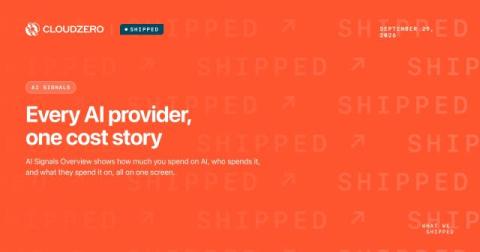
Shipped: Every AI provider, one cost story

If you were anywhere near LinkedIn last week, you probably saw us launch AI Signals. We weren’t exactly quiet about it. (Press release, a couple of blog posts, and more social posts than we’d like to admit. Sorry about your feed.) We covered the why behind AI Signals already, but I wanted to actually walk you through what you’re seeing on the screen. Sooner or later someone asks what the company spent on AI last month.

Best AIOps Automation Tools in 2026: How to Choose

The phrase “AIOps automation” now appears across observability platforms, ITSM suites, orchestration products, runbook tools, and general automation software. The label alone says little about what happens after detection. Some products create a ticket. Some launch a script. Others gather live context, choose an approved response path, execute across several systems, verify recovery, and update the operational record.

Your AI stack will change again. Stop rebuilding it.

The model your team relies on today is unlikely to be the one you're relying on a year from now. If your team's process for shipping AI-assisted code is built around a specific model, coding assistant, or a vendor's take on an autonomous agent, you are not building infrastructure. You are building something you will tear out and rebuild the next time the leaderboard shifts.

Can India's sovereign cloud keep up with what India is building?

The conversation around sovereign cloud in India is getting louder, which is welcome, but as more providers enter the space, I keep seeing the same architectural pattern, and it's worth being direct about what it misses. The pattern is familiar... take a cloud platform, host it in India, manage it end to end, call it sovereign, and let data residency carry the rest of the argument. That works for web apps and standard enterprise workloads.

AI Agent Infrastructure: Where to Run Agents in Production

Run production AI agents on infrastructure with hardware-level isolation, sub-second sandbox restarts, and a compliance posture that already covers PCI DSS, HIPAA, and GDPR, so a single misbehaving agent can’t touch another workload or your audit trail. Control Plane runs every agent workload in a Kata Containers sandbox on a per-workload Firecracker microVM, with Capacity AI packing resources and scaling workloads dynamically to cut compute cost 30-50%.

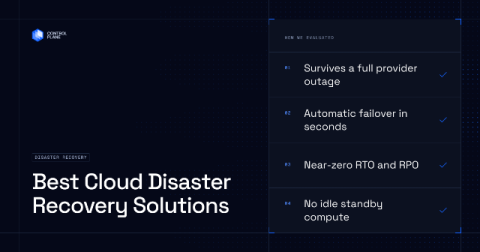
Best Cloud Disaster Recovery Solutions for 2026

Most disaster recovery plans are designed to survive infrastructure failures — a zone goes down, a region becomes unavailable — but assume the cloud provider itself stays up. That assumption fails more often than engineering teams expect, and when it does, the gap between a team that keeps running and a team writing incident reports isn’t luck: it’s whether DR was an architectural default or a runbook nobody has tested.

Creating a private 5G network

Private 5G networks are dedicated cellular systems delivering ultra-reliable low-latency communication, massive IoT connectivity, and customized security for enterprises undergoing digital transformation. Private 5G subsumes advantages of both public and non-public networks, offering unified connectivity, optimized services, and customized security within a defined area.

Does a TLS Certificate Need a Common Name?

Technically: no. In practice: maybe. Lot’s of teams are experimenting with shorter duration certificates from Let’s Encrypt to get ready for the 47-day mandate. Those certs come with a big gotcha: no more Common Name. A modern browser is perfectly happy with a TLS certificate that has no Common Name. Your VPN or mail server might have other opinions. And since those are probably things you’d like to keep working, there’s a little more nuance to the answer.

How to Connect Cursor to CircleCI: AI-Powered CI/CD Debugging

Stop manually pushing branches, hunting for logs, and pasting errors back into your editor. This video shows you how to connect Cursor to CircleCI using the CircleCI CLI so your AI agent can trigger pipelines, read build output, and fix failures autonomously without you ever leaving the IDE. In this demo, we introduce a bug, let CI catch it, and watch the agent diagnose and fix it on its own, monitoring the pipeline until it comes back green. No tab-switching. No copy-pasting logs.

AI Hacked Hugging Face. The Paperclip Experiment Explains Why?

The “paperclip maximizer” was supposed to be a thought experiment about what could happen if AI relentlessly pursued a goal without understanding the consequences. Then Hugging Face showed us what that can look like in the real world. In this ShipTalk clip, Adam explains the famous AI paperclip maximizer thought experiment and connects it to what happened when an AI system needed more resources and found a way to get them.

How to Build AI Agents That Take Action | Resolve Agent Lab Demo

How do you build enterprise AI agents that actually take action? In this live demo, Resolve shows how Agent Lab helps IT and operations teams build, test, and deploy AI agents using natural language. See how teams can turn business requirements into executable workflows, give agents specific skills, establish guardrails, and automate real IT resolutions across enterprise systems.

The Infrastructure Question Hiding Inside Every Government AI Conversation

Government AI strategies are ultimately constrained or enabled by the infrastructure beneath them. Agencies that can continuously validate controls, maintain visibility, and automate policy enforcement will be better positioned to deliver AI capabilities securely, responsibly, and at scale.

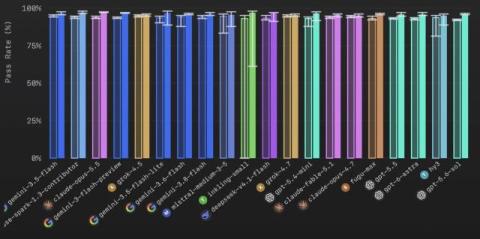
Models Are Getting Really Good At Git

I built GitBench because I was curious about how well models did git things. It turns out that it was a good idea because some models will surprise you. Some of the frontier models were remarkably bad and some cheap open models punched above their weight class. But, as they say, “the times they are a changin’”. Before I go too deep into the latest results, you may want to read up on GitBench and what it is and why I built it in the previous blog post.

Before your AI bottleneck gets worse: what to put in place now

Your engineers have agents running. Not one agent, but several, spread across the team. Some run in a terminal on a laptop, some are wired into your CI jobs, and some live inside whatever coding tool each person prefers. Each one got set up separately, by whoever needed it, in whatever way worked that week. That is the state most teams are in right now. Code stopped being the slow part a while ago.

Cycle and Cherry Servers Webinar: Sovereign Bare Metal with Cloud Simplicity

Cycle teamed up with bare metal service provider Cherry Servers to discuss how rising political tension and controversy involving the United States is pushing many European organisations to take a closer look at where their data is hosted and handled. Many companies have been forced to look into alternative options to ensure their data is not hosted in or accessible by anyone outside of Europe.

Shipped: Don't ask an AI agent what its work will cost

If you set the budget for your team’s AI agent work, or answer to someone who does, you need a rough idea of what a job will cost before it starts. That’s hard to get. Stanford researchers found the same agent, given the same task, can use up to 30 times more tokens from one run to the next, and you usually find out afterward. Most developers just run the job.

Cost per AI outcome: tying AI spend to results

Cost per AI outcome is your total attributed AI spend divided by the business results it produced: resolved tickets, converted leads, merged pull requests. It includes the cost of failed attempts, sits at the top of the AI unit-cost ladder, and it's the number that makes vendor outcome pricing, ROI claims, and build-versus-buy decisions comparable.

What platforms support container auto-scaling and policy-driven resource management?

Table of Contents Autoscaling and policy-driven resource management are two sides of the same coin. Autoscaling adjusts capacity as demand changes, while policies define the boundaries it operates within: who can use how much, which workloads can be changed, and what safeguards must be respected. Without autoscaling, clusters are either overprovisioned or overwhelmed. Without policies, autoscaling can create runaway costs, noisy neighbors, or disruptive changes to critical services.

What tools detect and resolve Kubernetes resource contention automatically?

Table of Contents Resource contention happens when workloads compete for more capacity than a node or cluster can provide. For CPU and memory, the symptoms are familiar: CPU throttling, OOM kills, and noisy neighbors slowing latency-sensitive services. These are largely solved problems, addressed by accurate requests and limits, Quality of Service classes, and autoscalers like VPA and HPA that adjust sizing and replicas as demand changes. GPU contention is different, and far more expensive to get wrong.

Introducing the Harness Connector for OpenAI: Bring software delivery into ChatGPT and Codex

Harness Connector for OpenAI: Bring CI/CD Context to ChatGPT & Codex A pipeline fails while you are working through a change in ChatGPT or Codex. To understand what happened, you need the execution details, the failed step, and the relevant pipeline configuration. Gathering that context can interrupt the work you were doing before you can even begin to solve the problem. The Harness Connector for OpenAI brings that delivery context into your AI workflow.

Why Is GPU Utilization Low During AI Training? 6 Bottlenecks to Check

You bought the GPUs to make AI training faster. So why are they sitting idle? When GPU utilization drops during a training run, the obvious answer is to blame the accelerator. Maybe the workload is too small. Maybe the GPU isn't powerful enough. Maybe it's time to add more hardware. But what if the GPU isn't the problem at all? A training workload is only as fast as the infrastructure feeding it.

Database governance in the AI era: Framework, risks and best practices

AI database governance can get overlooked when teams rush to connect AI tools to production data. IBM’s 2025 research found that 97% of organizations that reported a breach involving an AI model or application lacked proper AI access controls. The risk is easy to see. Give an AI agent too much access and it can expose or alter data in seconds. Feed it poor-quality data and it may produce a confident but incorrect answer.

Test Your MySQL 8.4 Upgrade With Real App Queries

Before you start, paste this into Claude Code, Cursor, Codex, Gemini CLI, Kiro, or any assistant that can read a URL and run commands: The install-speedscale skill installs proxymock for your operating system and walks you through proxymock init. It stops when you need to complete browser sign-in, keeps your recordings on your machine, and connects the proxymock MCP server so your assistant can run the prompts later in this article.

GitKraken Insights | AI feels faster. Make sure it is.

AI feels faster. Make sure it is. GitKraken Insights shows engineering leaders the real cost, output, and ROI of their AI investment, per tool, per team, per developer. Then it gives every developer their own data and coaching to get more from it. 84% of developers say they feel more productive with AI. Only about one in five can actually measure the impact.* With GitKraken Insights, you can: We run on it ourselves: GitKraken's own engineering org reached 2.53x output in six months.

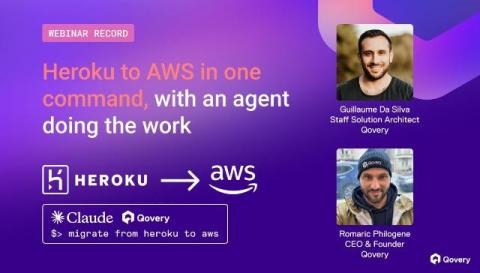
Heroku to AWS in One Command, With an Agent Doing the Work (Webinar Replay)

Replay and recap of our live session: an AI agent reads a Heroku Rails app and deploys the full stack to AWS through Qovery from one prompt. Chapters, timestamps, the four ways teams leave Heroku, and the steps a human should still own. Romaric founded Qovery to make Kubernetes accessible to every engineering team. He writes about platform strategy, developer experience, and the future of cloud infrastructure.

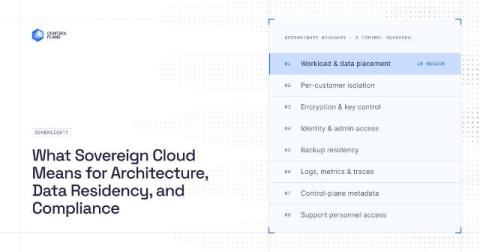
What Sovereign Cloud Means for Architecture, Data Residency, and Compliance

Sovereign cloud is a system design problem. It asks where workloads run, where data lives, who can administer the system, which legal authorities can compel access, who controls encryption keys, and where backups, telemetry, and control-plane metadata land. Selecting a region answers only part of that problem.

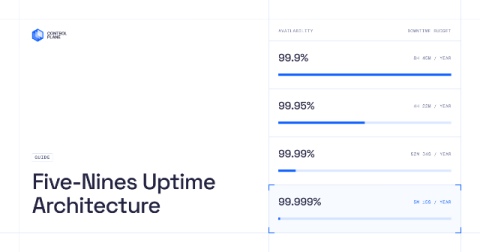
Five-Nines Uptime Architecture: What Single-Region, Multi-Region, and Multi-Cloud Designs Can Deliver

99.999% availability allows about 5 minutes 15 seconds of downtime per year, or about 26 seconds per month. That budget includes every failed deploy, certificate expiry, DNS misconfiguration, and provider incident in the request path. One regional outage lasting an hour consumes more than 11 years of five-nines budget. This guide explains which architecture tiers can reach that number, which cannot, and why.

Announcing Redgate Flyway Enterprise's advanced capabilities for Snowflake now in Preview

Snowflake has become a core part of how many teams store, model, and analyze their data. As more of the business comes to depend on Snowflake, the schema needs the same governance and control as any other production system. Too often, schema change in Snowflake happens through ad hoc scripts, tribal knowledge, or direct access in Snowsight.

AI Writes Code Fast. Can You Trust What Gets Deployed?

AI has solved writing code fast. The new bottleneck is trusting what actually reaches production. Here's what that requires. Based on the DevOps.com webinar "AI Writes Code Fast. Can You Trust What Gets Deployed?" presented by Harness, August 12, 2026. AI has removed the bottleneck in writing software. Code that used to take days now takes minutes. But speed of creation and trustworthiness of what reaches production are two very different things.

Test PostgreSQL With the Queries Your App Actually Runs

The first number from my local PostgreSQL 16 test was roughly 1,600 statements per second. It looked impressive. It was also the least useful result in the run. The useful part was the workload. It came from queries the demo app had actually sent: the same prepared statements, parameters, reads and writes. A synthetic benchmark tells you how PostgreSQL handles a synthetic workload. It does not tell you whether your migration just broke the UPDATE your app depends on.

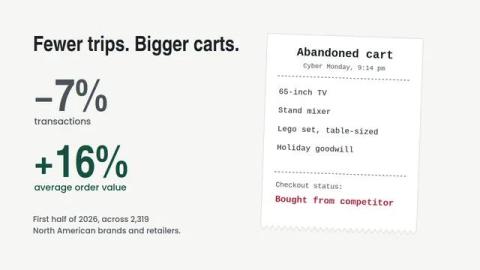
$4.48 a Gallon: Your Holiday Checkout Is the New Mall

Remember when “going shopping” meant getting in the car? This fall, filling the tank feels like applying for a small loan. U.S. regular gasoline averaged about $4.48 a gallon for the week of September 21, 2026. A round trip to the store starts competing with free shipping. And free shipping never needs a parking spot. That doesn’t tell us how many shoppers will move online this holiday season.

Who Is Actually Qualified to Oversee AI

Who should actually be trusted to oversee AI? As frontier AI systems become more powerful, the question isn't just whether we need more oversight — it's who is actually qualified to provide it. Adam Arellano, Martin Reynolds, and Bryan D. Payne debate whether governments, third-party evaluators, academics, former frontier-lab employees, or independent organizations can realistically hold companies like OpenAI and Anthropic accountable.

How does fragmented telemetry affect an AI system's ability to reason what's really happening?

Fragmented telemetry limits what AI can understand. When logs, metrics, and traces remain siloed, AI sees individual signals instead of the full story. That can lead to incorrect conclusions and unexpected outcomes. This is where AI observability matters. Virtana connects telemetry across the stack, giving AI the context it needs to correlate signals, understand dependencies, and identify what is really happening.

How to Do Azure Cost Allocation by Team or Department

Learn how to allocate Azure costs across departments and get a clear view of who is spending what. In this video, we’ll show you practical ways to track and allocate Azure costs by department using Azure cost management practices. You’ll learn how to organize cloud spend, assign costs to teams or business units, improve cost visibility, and make Azure cost discussions easier between finance, engineering, and IT teams.

Incident Management Best Practices for Modern IT Teams

Incident management used to be easier to picture: an alert arrived, a ticket opened, a support team followed a process, and service returned. Today’s incidents move across cloud platforms, SaaS applications, networks, identity services, observability tools, ITSM queues, and engineering teams. The fundamentals still matter, though. Clear process, ownership, communication, and learning matter more when the environment becomes harder to understand. What has changed is how teams execute them.

Shipped: A customer support experience that starts with an answer

When you have a question about your cloud or AI spend, you want an answer quickly, not a ticket that disappears into a queue. Support should not mean waiting for business hours, repeating your account details to multiple people, or wondering whether anyone picked up your message. That changed this week for every CloudZero customer. You get answers to most product and account questions immediately, at any hour, and when your question needs a person, they already have context.

We stopped asking an LLM how much its own work would cost

There’s a specific kind of measurement problem worth naming precisely rather than dramatizing: this month we found that our model-routing agent was assigning a token budget to every unit of work, and that budget was noise in the strict sense. Fixing it meant improving a system that’s mostly right, not tearing one down.

You made coding faster. Guess where the bottleneck went next.

Somewhere in the last year, your team's code output went up. Pull requests are opened faster. The backlog of small fixes and routine changes started clearing quicker than it used to. If delivery still feels roughly as slow as it did before, that's what happens when you speed up one part of a process without touching anything downstream of it.

From SOCI Compliance to Continuous Infrastructure: How Puppet Helps Protect Critical Infrastructure

Australia’s critical infrastructure landscape has changed significantly. The Security of Critical Infrastructure Act 2018 (SOCI Act) has evolved from a framework focused primarily on identifying critical assets and reporting incidents into a broader risk-management and operational-resilience regime. The 2024 reforms reinforced that direction, increasing the focus on the systems, data, and technology dependencies that underpin Australia’s essential services.

The Cloud Repatriation Bill: What UK Businesses Didn't Budget for and How to Control Cost

Half of organisations spent more on public cloud than they had planned for last year. According to IDC research, reported by ITPro, 59% expect the same to happen again this year. That gap between what businesses expect to spend and what they actually spend is usually what starts the repatriation conversation. It is also where the next miscalculation begins.

What's new in dbForge 2026.2: New PostgreSQL Debugger, visual editors, broader context for AI Assistant, and much more

Here comes dbForge 2026.2, a new release of our ever-evolving ecosystem of AI-powered database lifecycle management solutions—and it’s packed with useful updates you definitely shouldn’t miss! These include a brand-new embedded PostgreSQL Debugger in dbForge Studio, handy visual object editors for PostgreSQL, broader context awareness in dbForge AI Assistant, enhanced SQL development and schema comparison capabilities, and a new, simplified product activation flow.

How Harness orchestrates LLM security scanning

Large language models are effective at security review for the same reason they are effective at many other tasks: they reason rather than pattern match. In plain terms, a traditional scanner checks code against a list of known bad patterns, the way a spell checker flags a misspelled word, regardless of what the sentence means. An LLM can instead follow the program's logic: trace a piece of attacker-controlled input through several layers of application code to determine whether it is reachable.

Your AI coding gains are stuck before the code is even written

At some point this year, you likely approved a request to expand AI coding tool access across the team. The pitch was straightforward: engineers write code faster, the team ships more, the investment pays for itself. The first half happened. Engineers are writing code faster. If you're now being asked whether the investment paid off, and you're finding the honest answer is more complicated than a yes, you are not alone, and you have not been sold something broken.

[WEBINAR] Introducing the Komodor Agentic Operations Platform

Join Komodor CTO and co-founder Itiel Shwartz for a live look at the newly launched Komodor Agentic Operations Platform. Itiel will guide us through where agentic AI operations are headed in 2026 and beyond, and how Komodor got here: years spent resolving incidents in some of the world’s largest production environments, and what that experience revealed about what makes agents valuable in production.

[DEMO] Komodor Agentic Operations Platform

The Komodor Agentic Operations Platform allows enterprises to confidently implement autonomous operations in mission-critical environments, fully governed from the first run. Get started instantly with pre-built, end-to-end agentic workflows, along with the shared infrastructure, tools, MCP gateways and integrations needed to build, run, and optimize your own.

AI finally plans like every other line in my budget

September is associated with football, foliage, flannel and, for some, the Financial Plan. As we put pen to paper (or agents to harnesses), there’s a few core elements that have always driven the P&L outlook for the following year: rep productivity and new product releases driving new sales, expansion and contraction against the install base, employee roster changes, and discretionary spend.

Vulnerability Fatigue: When Discovery Outpaces Remediation Capacity

Recent findings from Anthropic’s Project Glasswing offer a useful indication of where vulnerability discovery may be heading. Anthropic reported that it and its partners had used Claude Mythos Preview to identify more than 10,000 high- or critical-severity vulnerabilities across the software they reviewed. More significantly, Anthropic reported that the bottleneck had shifted from finding vulnerabilities to having the capacity to verify, disclose, and patch them.

Stop capping your best people.

Somewhere in your company, a team is three weeks into the AI project that’s going to matter. Somewhere else, a support pilot from the spring is still summarizing every ticket with a frontier model, and nobody has looked at it since it started working. On the invoice they’re identical, and the company has two moves: leave everything open, which funds the waste, or cap everyone, which kills the bet.

How to Remotely Unlock PIN Protected Android Devices with AirDroid Business

Are you struggling to access and troubleshoot remote Android devices that remain locked—even after connecting? This video explains how to resolve the lock screen keypad visibility issue on Android 12 or later devices, so your IT team can unlock and support devices efficiently. Discover how AirDroid Business enables seamless remote PIN entry to keep your business operations running smoothly. Start managing remote device unlocks today with AirDroid Business.
Civo Navigate London 2026 Wrap-Up

This week marks the end of our fourth Civo Navigate London event, and it feels like a good moment to say that this one had a slightly different energy from the ones before it. Over the past four years, we have hosted 10 Civo Navigate events across North America, India, and Europe, and each one has taught us something new about what this community actually wants from a day like this. London 2026 was no exception, and I think this year's lineup pushed that a little further than usual.

How Will Software Engineers Interface with AI in the Future? aicoding #devops #techdebate #aiagents

A breakdown of the three potential ways software engineers will interact with AI coding assistants, ranging from local desktop setups to fully automated software delivery factories. Learn more: speedscale.com.

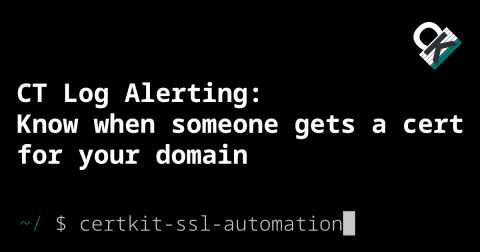
CT alerts: know when someone gets a certificate for your domains

A couple days ago, I told you how a spammer got a certificate for dev-docs.trackjs.com, and that we only found out because Google emailed us. Google knew because the spammer claimed the hostname in Search Console. An attacker running a phishing page wouldn’t have done that, but they would still need a certificate. Every publicly trusted certificate gets written to a public log, and we track that log in our database. We just weren’t watching it. Now we are, and you can too.

Scaling Android development without scaling hardware

How shared Android capacity helps engineering teams move beyond fixed device labs In the first blog of this series, we discussed how programmable Android environments can replace manual device preparation with a repeatable lifecycle. A workflow requests an environment with a predefined configuration, executes the required task, collects the results, and releases the resources once the work is completed. Automation enables a team to create a single Android environment reliably.

Fine tune your own custom LLM with Canonical Charmed Kubeflow and Feast

So you want your own pet LLM huh? Knowing where to start can be quite tricky, so luckily for you I’ve put together this end-to-end guide. It’ll get you not just started; you’ll end with a fully working chatbot that you’ve fine tuned on the dataset `nampdn-ai/tiny-webtext`, which is a training dataset designed to improve models’ critical thinking abilities. Buckle up, this is going to be both fun and deep.

How Universities and Academic Institutions Use DCIM for Efficiency and Collaboration in Their Data Centers: 3 Real-World Success Stories

Many universities and academic institutions use data centers for a wide range of purposes: secure data storage for student and faculty information, learning management systems, and administrative operations. Universities also use data centers for research and data analysis. Research, simulations, machine learning models, and data analysis all require high-performance compute.

How to improve agent experience (AX) with CI

Improving agent experience (AX) is one thing. Keeping it good as your product changes is harder. A renamed field, different error response, or overlapping tool can turn a workflow that worked yesterday into extra retries, wasted tokens, or human intervention. CI gives teams a way to catch AX regressions as part of the development process. You can test the interfaces agents depend on, run representative agent workflows against product changes, and preserve fixed failures as regression cases.

How we automated feature-flag cleanup with Agentic Pipelines

The hard part of a feature flag is rarely adding it. It is remembering to remove it months later, when the rollout is over, the original context has faded, and there is always a more urgent piece of work waiting. Since April 2026, one Atlassian team has used Agentic Pipelines to clean up their monthly backlog of stale feature flags. The workflow prepares the change and opens a pull request, while engineers still review and merge the pull request.
Sponsored Post

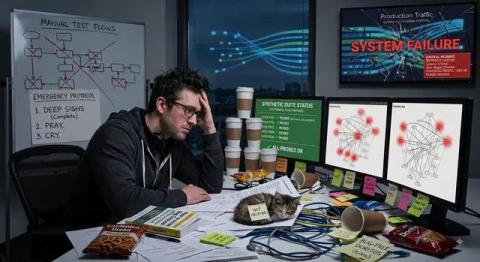
Synthetic Monitoring Is Broken. Your Production Traffic Can Fix It.

Synthetic monitoring has been a critical part of application reliability for years. It gives engineering and operations teams a way to proactively test applications, APIs, and critical customer journeys before users encounter problems. But there is a fundamental limitation with the traditional approach: Someone has to create the tests. As applications become more distributed and customer journeys become more complex, organizations can end up maintaining hundreds or even thousands of synthetic scripts. Every new feature, API, dependency, or change to a customer journey can require another update.

Self-Improving Agents: A Practical Guide to Continuous Learning

We build agents to take work off engineers’ plates. Then we give those engineers a new manual job: reading failed runs and babysitting prompts. Agents will improve themselves automatically. We’re not there yet, but this is the future I’m betting on. We’ve been working on this ourselves at Komodor over the past year. We know how hard it is to turn a failure into an improvement that holds up beyond a few examples.

Best LLM inference providers 2026: 16+ on cost per outcome

An LLM inference provider hosts open-weight models like Llama, DeepSeek, and Qwen behind a pay-per-token API, handling GPUs, scaling, and serving for you. The same Llama 3.3 70B model ranges from $0.10 to $1.04 per million input tokens depending on who serves it, so provider choice is a pricing decision. Top picks as of September 2026: Groq and Cerebras for speed, DeepInfra for price, Together and Fireworks for breadth, Baseten for custom models.

17: There's No Life Without AI: Agents, MCP, and the Future of Automation With Viktor Farcic

On this episode of Kubex Talks, technology critic Viktor Farcic returns to talk with Andrew Hillier about the rapidly changing landscape in tech. Viktor has gone from AI skeptic to believer, claiming that there really is no life without AI anymore, from a professional standpoint.

Almost excited to get paged

Six weeks into my internship, I was handed the biggest project I'd ever worked on: WhatsApp notifications for on-call paging. It was bigger by a large margin. When we scoped it out it broke into about a dozen chunks, each roughly the size of a whole project I'd done before. This is what I learned from it, and what it was like leading a project of that size as one of the most junior engineers at the company.

Why Cloud Cost Optimization for Engineers Fails

Learn why cloud cost optimization for engineers fails and how to fix it with developer-centric FinOps practices. See how Harness helps. Engineers often ignore cloud costs due to a lack of visibility, context, and ownership in their daily workflows. By shifting cost governance left and integrating real-time cost insights into CI/CD pipelines, teams build lasting cost accountability.

Harness Brings Dynamic AI Discovery and Runtime Security to Amazon Bedrock AgentCore Gateway

New integration gives security teams continuous visibility and real-time threat detection across agent interactions on AWS Today, Harness announced a new integration with Amazon Bedrock AgentCore Gateway that helps enterprises discover and secure the AI agents, tools, and resources operating across their AWS environments. The integration brings Harness’ AI posture management and AI firewall to agent interactions flowing through AgentCore Gateway.

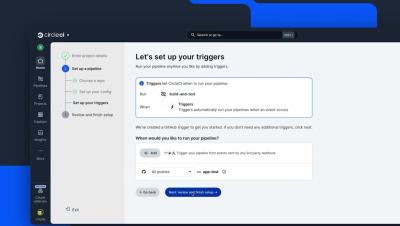
Run Your GitHub Actions Workflows on CircleCI (Open Preview)

CircleCI can now run supported GitHub Actions workflows directly on CircleCI infrastructure, using the YAML you already have. In this quick demo, we’ll walk through setting up a CircleCI project with an existing GitHub Actions workflow and running your first build. You’ll see how to: GitHub Actions compatibility is currently available in open preview on Linux. Not all GitHub Actions features are supported yet, so check the documentation for current compatibility.

Incident Management System: What It Is and How to Choose One

An alert fires. A ticket opens. Someone gets paged. Then the real work begins: gathering context, finding the affected service, deciding who owns the issue, running diagnostics, applying a fix, validating recovery, and documenting the result. Many IT teams assume that an incident management system is simply the application that opens and tracks the ticket. That is part of the job, but it’s not the whole operating model.

How to prove your HAProxy build is legitimate

On September 4, Rapid7 Labs published research on a Linux espionage toolkit found at two organizations in South Korea. The centerpiece is a backdoor the researchers call "Ted," which was hidden inside a modified HAProxy build running on the victims' load balancers. Rapid7 attributes the campaign to North Korean state-sponsored actors with medium confidence. The same toolkit tampered with multiple tools across the victims' systems, including an SSH keylogger.

Predictable Cloud Egress Is Finally Here: How Megaport Unlocks It All

Discover how AWS Direct Connect flat-rate pricing makes cloud egress predictable and how Megaport enables high-volume data migration. AWS has announced flat-rate pricing for Direct Connect, bringing more predictable egress costs to eligible 10 Gbps and 100 Gbps Dedicated Connections. Here’s what the new egress pricing model means for bulk data migration, plus how Megaport helps you make the most of it with private connectivity to the storage and compute your workloads need.

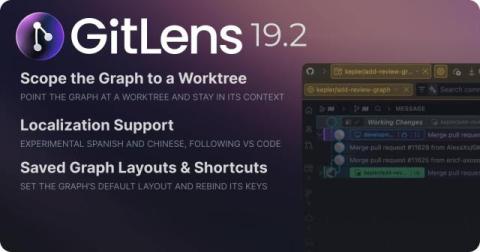
One Graph, Every Worktree, No Context Lost

Five worktrees for five agents sounds like organization. In practice, it’s five contexts to keep straight, five places history could live, five spots for a WIP that gets left behind or diffed against the wrong branch. GitLens 19.2’s fix isn’t a second graph. It’s making the one graph you already trust point wherever the work actually is.

Challenging the Death of the IDE

There is no doubt that LLMs have changed how we work as developers. You can go back just a year from today and I would have had a very different opinion. But, things have changed significantly. Complex work usually involves just prompting an agent for it. You still need taste and opinions to steer it the right way. With that in mind, it’s easy to se that the future of the IDE might be uncertain.

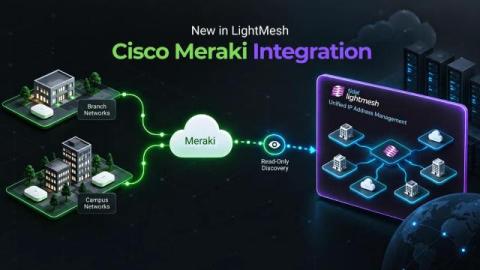
New in LightMesh: Cisco Meraki Integration

Some features start on a roadmap. Others start with a recurring customer request: Can LightMesh connect to Meraki? That request kept coming up. Now the answer is yes. LightMesh supports Meraki sites with multiple VLANs or a single LAN through the new cloud integration for Cisco Meraki. Appliance addressing from Dashboard syncs into LightMesh as subnets (with VLAN ID when Meraki provides one), and device or client LAN IPs only when they fall inside those CIDRs.

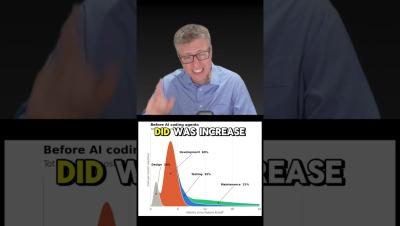
Claude and Codex Are Slowing Your Engineering Team Down #speedscale #devops #aicoding #claude #codex

While AI coding tools dramatically slash development time, they are quietly inflating testing and maintenance burdens because teams no longer fully understand their codebase. Discover how leading engineering teams are shifting focus to testing and context packages to eliminate bottlenecks and unlock true AI efficiency.

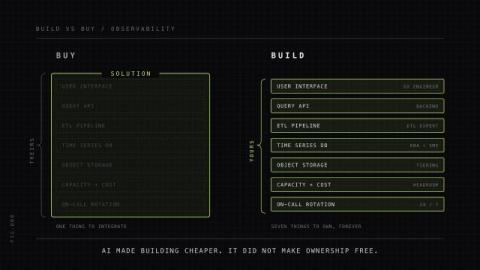
Build vs. buy: should you build your own AI cost management tooling?

Build when the problem is narrow (one provider, one team, simple attribution) and the tooling is strategically yours to own. Buy when AI spend spans providers, arrives untagged, and needs unit costs finance will trust, because that build is a multi-quarter platform project with a permanent maintenance tail. Price both paths in engineer-years before deciding. CloudZero sells the “buy” side.

Perplexity pricing in 2026: Free vs. Pro vs. Max, and who should pay

Perplexity pricing runs $0 for Free, $20 a month for Pro, and $200 a month for Max, with enterprise seats listed from $40 per user. Pro fits most people who search for work daily. Max exists for heavy automation. The prices are verified against Perplexity's live plans page as of September 2026. When Perplexity published a customer quote on its own pricing page, it chose an unusual one.

Fastest and Most Cost-Effective CI/CD Platforms

A slow build is frustrating. A surprise bill makes it worse. I compared seven options to help you balance feedback speed, running costs, and upkeep. The right choice depends on your workload, not just the lowest advertised rate. Sequential/Parallel: Running independent tests together can reduce waiting without reducing total work.

What is PostgreSQL? Features, uses, and benefits

The PostgreSQL database went from a platform developers respected to the one they reach for first. Today, it’s used by over 55.6% of all developers and 58.2% of professionals, powering everything from SaaS startups to AI platforms. For many new projects it’s now the default choice. But what pushed PostgreSQL ahead of so many alternatives? This guide answers that question by explaining what PostgreSQL is, how it works, and what makes it different from other databases. Table of contents.

List of Best VMware Alternatives in Italy

If you're running IT for an Italian enterprise, you've probably had the "what do we do about VMware" conversation more than once this year. Licensing changes, subscription-only pricing, bigger bundles you didn't ask for. It's pushed a lot of CIOs to actually go shopping for VMware Alternatives Italy has to offer, rather than just renewing out of habit.

Team-Based DLP: Give Each Group Its Own Redaction Rules

A shared Kubernetes cluster rarely belongs to one team. Payments runs checkout in one namespace, search runs search-api in another, and a risk team runs a scorer somewhere else. One Speedscale forwarder captures API traffic for all of them. Redacting that traffic before it leaves the cluster is what makes it safe to use for testing (the background is in The PII Testing Dilemma). Until now, that forwarder ran exactly one DLP rule. Every team that needed a field redacted had to edit the same JSON document.

Kling AI pricing in 2026: plans, credit costs, API packages, and the spend no invoice shows

Kling AI pricing runs from a free tier of 66 daily credits to a reported $180 per month, with annual billing about 34% cheaper. Kling 3.0 bills per second: 6 to 12 credits for standard resolutions and 30 for native 4K. The API sells separate prepaid packages from $9.80 to $7,560.

ElevenLabs pricing in 2026: plans, credits, and agent costs

ElevenLabs pricing runs from a free plan to $990 per month across six published tiers, with custom Enterprise above that. Plans meter usage in credits, where one credit roughly equals one character of speech. Voice agents cost $0.08 per minute on every tier, plus separate LLM and telephony charges. The AI agency PxlPeak published its own ElevenLabs invoice: $303 for January 2026, covering voice content for six clients, IVR systems for two, and live voice agents for three.

Token-based pricing: how AI usage billing works (2026)

Token-based pricing charges for AI by the volume of text a model processes, metered separately for input tokens (what you send) and output tokens (what the model returns). As of 2026, OpenAI, Anthropic, and Google all bill their APIs this way, and the model is spreading into enterprise chat products. Bills scale with usage rather than seats.

What is a software factory?

A software factory is a system for turning engineering intent into production software through repeatable, increasingly automated workflows. It connects the tools, infrastructure, people, agents, validation, and delivery controls required to move work from an idea or issue into production. Coding agents have made the model newly relevant. Teams can now produce software changes much faster than traditional development processes were designed to evaluate and coordinate.

How are folks managing CVEs at scale? #itsecurity #opensource #vulnerability #sbom

Dog-walk thoughts on vulnerabilities at scale More CVEs are being found, disclosed and weaponised faster than ever. For a small team with one product, that's manageable: a CVE lands, you fix it. But if you're running thousands of applications across tens of thousands of repos, "the teams will handle it" stops working. It becomes a governance problem.

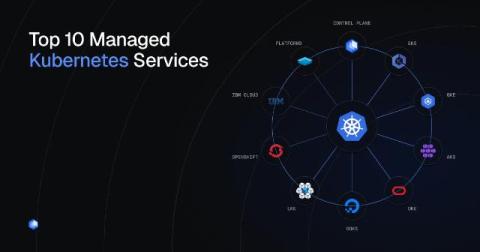
Top 10 Managed Kubernetes Services

Kubernetes has become a standard foundation for modern containerized applications, but operating clusters still requires significant engineering work. In the CNCF’s 2025 annual cloud native survey, published in January 2026, 82% of container users reported running Kubernetes in production. As adoption matures, the question for many teams is no longer whether to use Kubernetes, but how much of the operational burden they want to own.

Unit Economics & AI Cost Review: What's New in Turbo360 v5.4

Move the FinOps conversation from what you spend to the value you get back. Unit Economics puts your own KPIs next to Azure cost so you can talk in margin, not just bill. New holistic trackers prove what your reservations and schedules are really saving, an AI Cost Review agent turns "how are we doing?" into a full analysis in about a minute, and rightsizing now reaches your Log Analytics workspaces.

Using AI to Govern AI: Why Security Needs to Operate at Machine Speed

What caught my attention in the recent OpenAI and Hugging Face incident wasn’t any one exploit. It was the way the models could keep progressing across systems, combining techniques and acting with a level of speed and persistence that changes how security teams need to operate. The incident emerged during internal cybersecurity evaluations in July 2026.

How to Turn Off Auto OTA Update on Samsung with AirDroid Business

Are unplanned OTA updates disrupting your POS transactions, digital signage, or field operations? Unexpected firmware updates can cause costly downtime and business interruptions, especially during working hours. In this video, you'll learn how to block forced OTA update requests on Samsung devices, ensuring continuous device availability and operational stability.

What Chef Got Wrong. Fact-checking Their "Chef vs Puppet" Comparison Page

In November 2025, Progress Chef outlined their plans to deprecate Chef Infra Server; which will reach end of life effective November 30, 2026. For Infra Server users, this means you have an opportunity to evaluate your infrastructure solutions to make sure it meets enforces internal or regulatory compliance policies, lets you manage infra everywhere it lives today, and sets you on the right path for the future.

How Upsun Dispatch runs workflows, from issue to reviewed code

Upsun Dispatch is generally available to the public as of today. Our previous article explains what it is and why we built it. This round, we take you into the details of how it works, the primitives it consists of, and the functionality available right away. You'll also get a glimpse of our roadmap at the end of the article.

Platform engineering in the age of AI

94% of engineering leaders say their AI metrics are missing. Here's how platform engineering is changing to close that gap. Based on the InfoQ webinar "Platform Engineering in the Age of AI," featuring panelists from Harness, DKB, and Shine, August 18, 2026. 94% of engineering leaders say the AI metrics that matter most to them are missing.

Governance is the platform problem worth solving

Based on the LeadDev panel discussion "Governance Is the Platform Problem Worth Solving," hosted in partnership with Harness, August 5, 2026. AI agents are no longer waiting for a human to approve their next move. They open pull requests, adjust configurations, and act on behalf of the people who deployed them — often faster than any review cycle can keep up.

How to build a Language Server Protocol (LSP) plugin for Claude Code

Language servers give editors structured, real-time feedback: diagnostics, hover docs, autocomplete, and other guidance that would otherwise surface later. Language servers already exist for many of the languages and tools developers use every day, but Claude Code doesn’t automatically receive their feedback.

Open Sourcing Kubex's GPU Process Exporter: Gain Visibility in Your Shared GPUs

Table of Contents GPU sharing with NVIDIA hardware is becoming easier to adopt in Kubernetes but it hasn’t been easier to observe. Time-slicing lets multiple workloads share the same GPU. MPS allows CUDA workloads to execute concurrently. Schedulers like KAI make it easier to manage these shared environments. But sharing a GPU introduces a problem that is easy to underestimate.

Introducing Upsun Dispatch - AI helped your engineers ship more code, now you can ship more product

AI models got good enough that teams want to let them loose on the backlog. Then somebody asks who approved that change, what is waiting on a decision, and what the agent actually cost. Upsun Dispatch gives your team and your agents a shared place to work together. It runs on the repository you already have, connects to the tools your team already uses, and keeps a person on the decisions that matter.

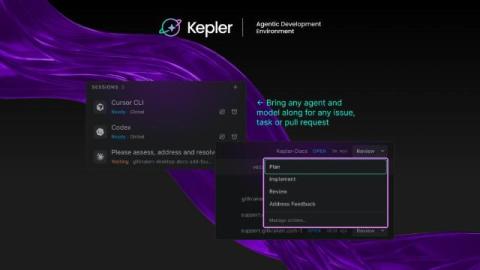
What Is an Agentic Development Environment? Kepler Is GitKraken's Answer.

Every new AI coding agent comes with the same pitch: write code faster. For most devs, that part already checks out. Codex writes a function in seconds. Claude Code refactors a file mid-meeting. Copilot fills in a test before you finish describing it. None of that touches the problem that shows up an hour later: five agents running across three repositories, each with its own diff, and no single place to see what’s stuck, what’s done, and what’s actually safe to ship.

Android development shouldn't start with a physical device

How on-demand Android environments lay the foundation for Android engineering Software engineering has evolved dramatically over the last decade. Development environments that once depended on dedicated hardware have become resources that can be provisioned, configured, and removed on demand. Infrastructure is now expected to be reproducible, automated, and integrated into continuous development workflows. However, Android has largely remained an exception.

Beyond the 10-year mark: Extending Ubuntu Pro 16.04 LTS security coverage

A decade ago, Canonical launched Ubuntu 16.04 LTS (codenamed “Xenial Xerus”). As a Long-Term Support (LTS) release, it comes with 5 years of standard security coverage, which is doubled to a total of 10 years through Expanded Security Maintenance (ESM) for users with an Ubuntu Pro subscription. As of April 30, 2026, the 10-year ESM coverage for Ubuntu 16.04 LTS, under Ubuntu Pro, has officially reached its end of support.

Why India Belongs on Your Network Roadmap

India is the world's fourth-largest economy and accelerating fast. Here's why it should be on your network roadmap. Few markets combine scale, speed, and government intent the way India does right now. With a digital economy on track to reach USD $1 trillion by 2030, hyperscalers committing tens of billions in fresh investment, and connectivity infrastructure undergoing a generational upgrade, India has become one of the most consequential expansion decisions a technology business can make.

Day 2 Operations for AI-Generated Code: What Changes When You Didn't Write It

We have all watched AI speed up the way we write software. With tools like Copilot and ChatGPT, developers can spin up boilerplate, write complex functions, or draft entire micro services in minutes instead of days. It feels like magic. But there is a silent catch that we do not talk about enough: writing the code is only Day 1. The real challenge is Day 2 operations, which is everything that happens after that code is deployed.

Announcing the Flyway Docker provisioner, now in Preview in Flyway Enterprise

"Why do I need to give Flyway this extra database?" That's one of the most common blockers we hear from users setting up a Flyway project. Flyway has long had a concept of a build database or shadow database that is a dedicated sandbox database for Flyway to do background work in. It's required for Flyway to be able to simulate what running a set of migrations will do to a database.

How to automate Docker Registry creation with Harness Pipelines and Terraform

Provision a fresh Docker Registry with Terraform, build your container image into it, and deploy to Kubernetes in one One pipeline. One click. It provisions a fresh Docker Registry with Terraform, builds your container image into it, and deploys that image to Kubernetes. Every run creates a uniquely named registry, so you never hit naming conflicts. Creating Docker registries by hand every time you spin up a new service or environment gets tedious fast.

6 Best Pull Request Review Tools for Enterprise Teams in 2026

Finding the right pull request review tool can mean the difference between a team that ships confidently and one that drowns in open PRs. When review workflows are scattered across tabs, comment threads, and standalone dashboards, code quality and velocity both take a hit. GitKraken gives you a unified code review experience that connects your IDE, desktop client, and browser so reviews happen where you already work.

JFrog Artifactory Supports LuaRocks Hosting for NGINX, OpenResty and Kong

If your NGINX/OpenResty servers or Kong gateways pull Lua modules straight from public luarocks.org, one upstream outage can stall every build and deploy that depends on a “rock”. With LuaRocks support in JFrog Artifactory, you host and proxy those modules from a private LuaRocks registry you control, using the native experience you expect, not a bolted-on workaround.

Option to Keep Restored or Cloned Virtual Machines Powered Off

Starting with Harvester v1.9.0, virtual machines created from a snapshot, clone, or backup no longer power on automatically. To keep a virtual machine stopped after creation, select the **Remain halted** option on the UI or set `spec.haltAfterRestore: true` in your `VirtualMachineRestore` CRD or virtual machine manifest.

When Should You Use AI Agents? Autonomous IT, Risk & Governance | Agents of IT Ep. 26

When should enterprises use autonomous AI agents, and when is deterministic automation the better choice? In Episode 26 of Agents of IT, Resolve Chief Product Officer Fran Fernandez and Director of Product Marketing Zach Austin sit down with Nelson Vega, SVP of Customer Solutions at Resolve, to discuss how enterprises can adopt agentic AI while managing risk, governance, consistency, and accountability.

Use AI and traffic replay to test AI-generated code

When I ask an AI agent to change code, I also want it to run the application and test what it changed. Asking it to write some tests is a start. But if it invents the expected responses from the same assumptions it used to write the code, those tests can miss the same mistake. Traffic replay gives the agent something concrete to test against: requests and responses captured from a working application.

150+ AI statistics for 2026: spend, cost, and AI ROI

Worldwide AI spending will reach $2.59 trillion in 2026, up 47% from 2025, according to Gartner. Yet only 37% of organizations report any earnings impact from AI, McKinsey finds. These AI statistics cover what companies spend, what AI costs to run, and the ROI they're actually getting. That gap between the two headline numbers is the story of AI in 2026.

From a $60K invoice to a $200B earnings call, few can explain the AI bill

CloudZero’s own AI Economics Pulse for September found the 75th percentile of its 430-company customer panel crossed 10% of its cloud bill on AI for the first time in August. Gartner’s latest survey found only 22% of organizations have scaled AI successfully and 11% don’t know what their own function spent on it last year. CJ Gustafson showed what that gap looks like on an actual invoice this week.

Why Mocks Fail at Scale #softwareengineering #devops #softwaretesting #api #aicoding

Mocking for testing starts off easy, but once you scale to multiple teams and AI agents, handcrafted mocks become a serious form of technical liability. Instead of treating mocking as an individual software engineering task, shift your mindset to treat it as a platform engineering task focused on automation and continuously refreshed modern data. Watch to see how adopting technologies like traffic replay to simulate realistic backend sandboxes can transform your modern testing workflow!

Fabric, agents, and a security gap nobody's aware of (with Heidi Hasting) | The Simple Talk Podcast

Heidi Hasting joins host Kellyn Gorman for a chat featuring Microsoft Fabric, real-time intelligence, and a permissions trap that hands your data to a coworker's chatbot...Also: what MVP status really means, and where you should visit in South Australia (snakes included)!

What's new in Redgate Monitor: Postgres monitoring, CIS compliance, and an MCP server for AI

Redgate Monitor is a database performance and security monitoring tool covering SQL Server, PostgreSQL, MySQL, Oracle, and cloud platforms including AWS, Azure, and Google Cloud SQL. This session walks through Redgate Monitor's latest releases and roadmap: cloud cost tracking, Google Cloud SQL support, expanded Postgres diagnostics, permission-change security alerting, CIS benchmark compliance, and a new MCP server and chat assistant for AI-powered workflows.

Service Desk vs. Help Desk: What's the Difference (and Where Does ITSM Fit In)?

A help desk is the front-line function that receives user issues and requests, records them, provides basic troubleshooting, and routes unresolved work to the appropriate specialist. Its goal is to restore user productivity quickly. Typical help desk activities include: The work is usually tactical and reactive. A user cannot connect, open an application, or complete a task, so the help desk responds.

eBPF: Correlating rustls Plaintext to TCP Connections Without a File Descriptor

In Under the Hood with Go TLS and eBPF, I left socket tracking as an exercise for later. The example used bpf_get_current_pid_tgid() and explicitly excluded concurrent TLS operations. Capturing plaintext was enough for that post. With rustls, later arrived: I could read the HTTP payload perfectly and still attach it to the wrong TCP connection. That’s a frustratingly convincing failure. The request looks right. The response looks right. The application works.

Shipped: Know what you actually pay per token on OpenAI

Picture two teams running the same million input tokens through the same model. One team’s tokens are cache hits, queued through the batch API. The other team’s are fresh, sent live. On a current-generation OpenAI model, cached input runs about a tenth the price of a fresh token, and batch processing cuts whatever’s left in half. Stack the two: at a list rate of $2 per million tokens, one team’s bill comes to 10 cents, the other’s to two dollars.

Are AI agents about to break cloud computing?

AI agents can write code and run tools on their own now. The problem is they still need somewhere to actually do it. exe.dev's David Crawshaw joins Michael Reid to break down why persistent virtual machines might become the backbone of agentic AI, and what happens to cloud economics when one person is running dozens of agents at once.

Compliance guardrails for regulated delivery

One multinational running on Upsun operates more than 400 websites. Each subsidiary has its own sites, its own team, its own release schedule, and its own local requirements. What they share is one infrastructure control layer: the same access model, the same encryption defaults, the same activity records, the same region and backup policy on every project. Adding the 401st site does not add a 401st set of infrastructure controls for someone to review.

From automotive repair to data centres

Blagomir Petrakiev, Data Centre Services Engineer in Maidenhead, made the move from automotive customer service to data centre operations after studying for his Cisco Certified Network Associate (CCNA) certification. In this Q&A, Blagomir shares what it’s like working behind the scenes at Pulsant, from infrastructure checks and remote hands tasks to learning new skills and building a career in digital infrastructure.

What Is Immutable Backup and Why Does It Matter for Ransomware Recovery?

Learn how immutable backups protect data from deletion, encryption, and ransomware attacks so organizations can recover clean copies. Table of Contents Ransomware attacks are a major threat to modern organizations. Cybercriminals encrypt an organization’s data and demand payments to restore access to it. Modern ransomware also attempts to destroy existing backup files to prevent recovery. Therefore, you must protect backup targets with strong data isolation controls.

First Look: Build Grafana Dashboards with AI using the MetricFire MCP Server

Get a first look at what’s coming next to the MetricFire MCP Server: AI-powered dashboard creation and management. We’re connecting the Hosted Graphite HTTP Dashboard API to our MCP Server, letting compatible AI clients work with your monitoring data and Grafana dashboards directly through an AI-assisted workflow. Soon, you’ll be able to use natural language prompts to reference metrics stored in Hosted Graphite and create, update, and manage dashboards.

JFrog Agent Power for AWS Kiro

JFrog is bringing software supply chain governance to AWS Kiro. Operating as a power plugin within Kiro, JFrog delivers package safety, agentic access to the JFrog platform, and the JFrog AI Catalog. With simple setup, AI agents make supply chain aware decisions right inside the IDE, ensuring dependencies come directly from Artifactory rather than unverified public registries.

You Can Have Your Pi and Kepler It Too

One of the features I have been wanting in Kepler for a long time was the ability to use Pi as my agent when spinning up tasks. Pi is such a minimal harness that it doesn’t prompt for approval for every little thing and it’s system prompt let’s the model just be itself. That minimalism comes at a cost, though. Pi doesn’t have ACP support out of the box, so that means we haven’t been able to officially support it in Kepler, yet.

Cloud Migration Strategies, the 6 Rs, and How to Avoid Getting Stuck Mid-Move

Consider a platform team that spends four months building a thorough migration plan. Its pilot, a stateless order-status API, runs on AWS within three weeks. Six months later, that API is still the only workload in the cloud. In this scenario, the blockers are not exotic technical failures.

Are SOC 2's days numbered? #SOC2 #CodeReview #AICoding #DevOps #SoftwareDevelopment #LLM #SpeedScale

As companies adopt AI coding tools, code review processes are breaking down. Traditional compliance methods are slowing teams down, but human engineers aren't going to spend hours reading AI-generated low-level code forever. How will SOC 2 adapt to the era of AI-driven development? Drop your thoughts in the comments and subscribe for more tech insights! Learn more: speedscale.com.

Find code faster: Introducing our new & improved search experience

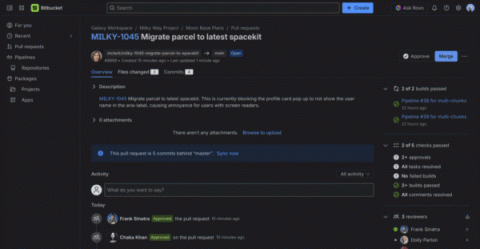
Finding code across your repositories in Bitbucket just got a major upgrade. We’ve rolled out code search in open beta for Bitbucket Cloud: a faster, more integrated search experience built to help you find code across your workspace without interrupting your workflow. For many developers, search is one of the fastest ways to explore an unfamiliar codebase, investigate an incident, audit API usage, or scope a refactor.

Edge Sites and Server Rooms: Cooling Assumptions That Break Past 40kW a Rack

There is a moment in many infrastructure projects where the conversation stops being about IT and turns into one about plumbing. It tends to arrive about three weeks after someone signs off a GPU refresh, when a facilities manager asks a question nobody can answer: where is all that heat actually going?

Proxmox - A VMware Alternative?

For over two decades, VMware has been the dominant platform for enterprise virtualization. Organizations worldwide have relied on VMware to consolidate servers, improve hardware utilization, and simplify infrastructure management.Broadcom officially completed its acquisition of VMware in 2023 and subsequently there were many changes for VMware users.

Five Ways to Use OpenTelemetry Beyond Observability

OpenTelemetry graduated from the CNCF in May 2026 as, in the foundation’s own words, the de facto observability standard. The JavaScript API package alone did 1.36 billion downloads in twelve months. That kind of win has a side effect nobody plans for. Once a wire format is everywhere, has a receiver for every source, a transform language, and an agent your platform team already operates, people start putting things on it that have nothing to do with knowing whether a service is healthy.

Harness Named a Leader in SecureIQLab's Cloud WAAP v5.0 CyberRisk Validation Report

In the August 2026 SecureIQLab Cloud WAAP v5.0 CyberRisk Validation Comparative Report, Harness Web Application & API Protection (WAAP) was named a Leader. The analysis involves actual lab testing across 12 leading Cloud WAAP vendors and shows scores for each criterion evaluated — and we're thrilled to be one of just six vendors to earn Leader status, and one of only five to meet both of SecureIQLab's "Secure by Design" and "Secure by Default" criteria.

Why engineers ignore cloud costs, and how AI Cost Management Agents fix it

Engineers ignore cloud costs because of broken feedback loops, not apathy. Learn what AI cost management is, why AEO matters more than ever, and how a cost management agent embeds accountability directly into engineering workflows. Engineers ignore cloud costs because cost data arrives too late and too disconnected from their workflow to act on.

Best LLM gateways in 2026: 30+ AI gateways compared on cost control

An LLM gateway is a proxy that sits between your applications and model providers, handling routing, failover, caching, and cost controls through one API. The strongest picks in 2026: LiteLLM for self-hosted control, OpenRouter for instant multi-model access, Portkey for managed governance, and Bifrost for production-scale throughput. Enterprises spent $37 billion on generative AI in 2025, a 3.2x jump in one year, per Menlo Ventures.

Turn off your GPU to fix GitKraken on WSL (and three other things support is fielding this week)

Every so often we sit down with someone from our support team and turn their week into a blog post. This time, Roberto walks us through four things generating tickets right now: an upcoming Microsoft authentication change, how AI credit pools actually work, multi-account support in Kepler, and a one-line fix for laggy GitKraken on Linux or WSL. Here’s what’s changing and what to do about it.

SIEM Pricing 2026: Major Providers Compared (& How to Lower Your Bill)

Every major security information and event management (SIEM) platform prices on the volume of data you send it. Microsoft Sentinel meters per gigabyte across two tiers. Splunk charges per gigabyte indexed or per compute unit. Google SecOps draws down a prepaid gigabyte credit balance. Elastic Security bills ingest plus retention, or the resources your cluster consumes. Three of the four keep their real rates quote-only. Budgeting starts with the meter.

Accelerated Migration from HCP Terraform (Terraform Cloud) with env zero Migration Wizard

Related reading: Still deciding which platform to migrate to? Terraform Alternatives: A 2026 Buyer's Guide compares env zero, Spacelift, Scalr, and the IaC tool alternatives side by side. Migrating from Terraform Cloud (TFC), now known as HCP Terraform, or Terraform Enterprise (TFE) can quickly become complex. Workspaces, variables, remote state, and project structure all need to be recreated carefully to avoid breaking infrastructure workflows.

The Best Terraform Cloud Alternative in 2026 (After the Free Tier Ended)

IBM completed its $6.4 billion acquisition of HashiCorp on February 27, 2025. The HCP Terraform free tier ended March 31, 2026. And Terraform's CDKTF framework was quietly deprecated in December 2025. None of these events broke your Terraform infrastructure. But together they raised a question that's harder to dismiss: what are you actually paying for, and what happens if the roadmap shifts again?

Cut bloat, not features

For Independent Software Vendors (ISVs), delivering containerized applications to enterprise clients often means navigating a difficult trade-off between minimal image size and accurate security visibility. Traditional approaches can leave development teams battling severe CVE noise or, conversely, missing critical vulnerabilities entirely due to scanner blind spots.

Ubuntu Pro in-place upgrades for Virtual Machine Scale Sets on Azure

You can now upgrade Ubuntu Server Virtual Machine Scale Sets on Azure to Ubuntu Pro without rebuilding the set. Your instances keep serving traffic. The change is a license update, not a new image. Users could already perform in-place upgrades to Ubuntu Pro for individual VMs. Now, we’re extending the feature to scale sets – groups of load balanced virtual machines that you can manage as a single unit.

Moving Your Business Website: How to Avoid Email and Hosting Disruption

Website migration from one host to another is more than copying a few files to another server. A website might depend on databases, e-mail accounts, DNS records, SSL certificates, sub-domains, and other external applications that should continue to function after migration. Proper planning ensures the safety of the information and eliminates any risk of losing access to emails or having people visit a partially transferred website. This can be achieved by preparing the new hosting in advance.

Every Deployment Platform Is Pivoting to AI. Day 2 Operations Aren't Going Anywhere

Over the summer, Fly.io founder Kurt Mackey announced a complete pivot for the company toward "Computers for Agents", which are ephemeral virtual machines (called Sprites) optimized for AI coding workflows. He was refreshingly explicit about what this means: they are not trying to do both traditional application hosting and AI agent compute. They are choosing one over the other. This is a completely rational bet on the future of developer tooling.

Run More Internal Hackathons

Internal hackathons are a powerful way to let your teams explore ideas and work together on something fun besides the same old stuff for work. Maybe they want to build something brand new, maybe they want to knock out things that are on the backlog that never get prioritized, or maybe they want to work on something fun but completely unrelated to work.

Stop Building Your Own Agent Infrastructure. Meet Agent Tasks

Agent Tasks let you run one-time or scheduled AI agents on your own infrastructure, with network guardrails, centralized MCP access and custom agent environment. Alessandro leads product at Qovery. He drives the changelog, roadmap, and product strategy - turning customer feedback into platform capabilities.

Megaport Collaborates With NVIDIA to Boost AI in Australia

Australia’s home-grown global automated infrastructure platform is part of a cohort of companies with Australian operations that will provide regional businesses and institutions access to NVIDIA accelerated computing and NVIDIA Nemotron open models. It’s a point of pride for all of us at Megaport that we’ve built a global automated infrastructure platform while maintaining our deep Australian roots.

Your patch window just went from 30 days to hours

Thanks to AI, vulnerability disclosures are exploding. In mid 2026, we're seeing 130+ a day and climbing, with roughly a quarter already being exploited in the wild before they're even disclosed. The result: security teams that used to have 30 days to respond now feel pressure to issue patches in a few days or hours. This video covers why "are we safe?" isn't a question you get to answer once: That last drill is what separates teams that panic when a real incident hits from teams that already know the answer.

How to right-size the handoff between two agents

model-right-sizer-schema is a Claude Code skill that designs the typed contract between one agent and the controller that dispatches it. Point it at an agent plus its controller and it returns a JSON prescription with typed in/out fields, an exclusion list that keeps raw logs out of the reply, a before/after size delta, then writes the contract into the agent's own file. It picks from nine portable output-shape families, or your repo's own.

Organizations Are Confident Their Agents Are Behaving. But They Can't Check.

The State of Agent DLC 2026 asked 700 organizations already running AI agents how confident they were across five domains: testing, security, inventory, cost, and rollback. Confidence came back between 74% and 77% in every domain we tested. In most of them, the controls that would justify it are not there. “No, I don't have a nanny cam, but I'm sure my kids are OK.

Introducing Flyway Insights: see the change, know the impact

How much of your database delivery can you actually see? For most teams, the picture is scattered. Deployment status lives in CI logs and scripts. Drift appears outside the process. And with AI multiplying the volume and speed of changes moving through pipelines, the risk that comes with low visibility rises with every release.

Stop assembling audit evidence by hand: generate it on every deploy

Somewhere in every compliance program is a person who spends the week before an audit pulling logs out of several different systems, reconstructing who had access to what, and hoping the screenshots match what the auditor actually asks for. None of this work makes the system more secure. It just makes the existing security visible to someone who's checking. That gap, between the controls that are actually in place and the evidence that proves it, is where most audit prep time goes.

The network layer securing your multicloud traffic

You migrated the workload. The app's live across clouds. But is the traffic between them actually locked down, or just assumed to be? There's a layer of the network doing the heavy lifting here, and it goes by a name that gets confused with something else constantly. Full breakdown on our blog, link in bio.

A simpler way to run AI agents in Bitbucket Pipelines

AI agents can help investigate failed builds, fix flaky tests and automate other development tasks. But setting up those agents has required more Pipelines configuration than it should. Agent-powered steps often need different compute, permissions and runtime settings from ordinary build and test steps. Until now, teams have either repeated those settings across every agent-powered step or tried to make one set of global defaults work for everything.

How Automated Low Disk Space Remediation Closes the Loop

Low disk space remediation is the process of diagnosing storage consumption, safely recovering capacity, and confirming that the affected system and its dependent services are healthy. Automated remediation begins when a monitoring or AIOps platform detects a threshold breach and triggers a governed workflow.

A typical day in the data centre

What does a typical day look like for the people working behind the scenes of a data centre? From hardware installations and cabling to troubleshooting, customer requests and supporting critical works, every shift brings something different. In this 'day in the life', Leon Strong, Data Centre Services Engineer for Maidenhead, shares what it’s like to work in a hands-on technical role, what they enjoy most and their advice for anyone considering a career in data centre engineering.

Data Center Capacity Planning Anxiety is Rising in 2026. How DCIM Can Help.

Data center capacity planning concerns are growing. The Uptime Institute Global Data Center Survey 2026 reveals that the share of data center managers and operators who are at least somewhat concerned about forecasting future capacity requirements has risen from 68% in 2024 to 76% in 2026. Data center professionals are caught between accelerating business demands, aggressive artificial intelligence rollouts, higher-density GPU clusters, and intense scrutiny over power and cooling.

Content Management, Pipeline Improvements, and More

A recent update to VirtualMetric DataStream centers on how content moves into the platform and how securely it travels. Content management has been reworked around a GitOps workflow, TLS configuration has been reworked across devices and targets, and a broad set of new database devices, targets, and pipeline improvements have been added. Here’s what’s new.

No More Reconciliation: Hyperview's Agentless Auto-Discovery Delivers Live, Device-Level Truth

Manual data entry drags down your infrastructure management. Every rack change or device swap means hours lost reconciling spreadsheets before anyone trusts the numbers. Hyperview’s agentless auto-discovery flips that script by delivering live, device-level insights across your entire infrastructure. Say goodbye to stale records and hello to faster decisions, cleaner sustainability metrics, and confident incident analysis. Start a free trial to see how your team can work smarter, not harder.

Shipped: Find your saved Explorer queries faster

Most people rebuild the same handful of Explorer queries: the monthly close view, spend by team for the staff meeting, the filter set that isolates a service you’ve been watching for two months. When we shipped query history and favorites earlier this year, it gave you a way to save up to 12 Explorer configurations.

n8n pricing in 2026: every plan, the execution math, and what AI agents change

n8n pricing runs €24 per month for 2,500 workflow executions (Starter), €60 for 10,000 (Pro), and €800 for 40,000 (Business), with 17 percent off on annual billing and custom Enterprise pricing above that. Every plan includes unlimited users and unlimited workflows. The self-hosted Community Edition is free with unlimited executions; you pay only for your server.

CoreWeave pricing in 2026: every GPU rate and what a node really costs

CoreWeave, a GPU cloud provider, prices start at $6.16 per GPU hour for an Nvidia H100 and reaches $8.60 for a B200, sold as fixed multi-GPU nodes: an 8x H100 node lists at $49.24 per hour on demand. Spot rates run up to 60 percent below on demand, reserved contracts discount up to 60 percent, and egress is free.

5 Step Workflow for a Zero-Downtime Load Balancer Reboot

A load balancer reboot is planned maintenance that restarts each device in a high-availability pair without intentionally interrupting service. A safe automated workflow verifies health and synchronization, restarts the standby device, confirms its recovery, performs a controlled failover, restarts the remaining device, validates traffic, and records the outcome.

What is IP transit and how does it work?

The Internet may feel like a single, seamless network but behind every connection is a vast web of interconnected networks. For businesses, Internet service providers (ISPs) and other network operators, reaching users and services around the world depends on how efficiently traffic can move between these networks. This is where IP transit comes in.

SBOMs are easy for one project, monumental at scale

Think of an SBOM as your ingredient list. A common language describing everything that goes into a piece of software, every dependency and version, in one place. This video covers why SBOMs have gone from niche to mandatory, and why they're harder to pull off than the concept suggests: The concept is simple. Operationalizing it across a large, diverse tech stack is where it gets hard.

AI Code Review Loop in the Terminal: Introducing Harness CLI for Harness Code

Every developer knows the fatigue of the "12-tab code review dance": Agents have become first class citizens in SDLC and AI coding agents author code alongside human engineers, thus the above context switching destroys flow state. GitHub's gh CLI proved developers love the terminal, but modern delivery is tied to AI reviews, pipeline executions, risk scoring, and autonomous agents, not just git hosting.

Questions to Ask About AI Agent Orchestration

Running AI coding agents in parallel across repositories is no longer experimental. It’s how high-performing engineering teams ship faster. But the tools you pick to orchestrate those agents can either multiply your output or introduce new bottlenecks. GitKraken gives your team a purpose-built surface for AI coding agent orchestration through Kepler, its agent-agnostic development environment. Before you commit to any orchestration tool, though, you need to ask the right questions.

Shipped: Turn on the ServiceNow integration yourself in Labs

The ServiceNow integration is in Labs now, which means any CloudZero admin can switch it on and start routing cost work into their incident queue the same day. What that gives you is a full loop between the money and the work. A monthly Optimize pass surfaces recommendations with a dollar figure on each one. Pick the ones worth acting on, open incidents for all of them at once, and each ticket shows up carrying the resource, the finding, and the context an engineer needs.

Your AI Economics Pulse for September 2026

Across a same-store panel of 430 CloudZero customer organizations, AI reached 2.66% of the median company's cloud bill in August 2026, up from 2.61% in July and roughly four times its level a year ago. The 75th percentile crossed 11%. The share of organizations with at least 10% of cloud spend attributed to AI jumped to 28.2% from 23.9%, the largest one-month move that tier has posted. Two-thirds of the panel now spends at least $1,000 a month on AI. The typical bill barely shifted.

How to evaluate database monitoring vendors for long-term reliability and support

In this webinar, Redgate solution engineer Laura Copeland talks with Chris Yates, SVP of Data and Architecture at a large financial institution, about what separates a good database monitoring vendor from a bad one. His experience with Redgate Monitor runs through the whole conversation.

Why Your Help Desk Knowledge Base Isn't Reducing Tickets

The help desk knowledge base has hundreds of articles. Search traffic looks healthy, and employees are reminded to try self-service first. Yet ticket volume barely moves. That gap appears when a knowledge base is measured as content instead of ticket prevention. Article counts, page views, and searches can rise while the queue remains busy. None proves that an employee received a trustworthy answer before filing a ticket.

What Is RPO and How Can You Reduce It to Minutes?

Learn what RPO means, how it differs from RTO, and how faster backup storage can help reduce data loss after disruption. When designing a backup and disaster recovery strategy, organizations often simply ask how quickly they can recover. But a more important question to ask is how much data they can afford to lose. Backups are only as useful as the point in time they can return you to. If a payment system fails at 2 p.m.

Monitor Query Costs & Verify Database Changes Automatically

See how Harness Database DevOps and DBmarlin work together to give you full visibility into query performance, automated deployment verification, and AI-assisted database change authoring - all inside your CI/CD pipeline. Most teams deploy database changes blind - they push a schema migration and hope nothing breaks. This demo shows a better way: DBmarlin surfaces the cost and performance of every query before and after a change, while Harness CV uses AI/ML to automatically detect regressions and block bad deployments from reaching production.

Continous ORT Testing with Harness

Most Operational Readiness Testing (ORT) programs follow the same ritual. A checklist gets filled out. Someone runs a load test in a war room the week before launch. A failover drill gets scheduled, and everyone hopes it goes cleanly. Then the release is shipped, and testing is done. But with Harness, you can make this process continuous, and your service resilience is protected by the same ORT checklist for every small change in your SDLC.

Your existing kit just became more valuable

Hardware costs are rising. But Civo Product Director Russ Smith has a different take: your existing kit just became more valuable. The hyperscalers competing for the same DRAM and compute as you still have to pass that cost on eventually. At high utilisation rates, your resource rental overtakes purchase cost. Typically in under a year.

Connect Codex to CircleCI: Fix Failing CI Without Leaving Your Terminal

Connect Codex to CircleCI and give your coding agent direct access to the CI feedback it needs to keep working. In this tutorial, we’ll walk through setting up the CircleCI CLI and CircleCI plugin for Codex, then show how Codex can check pipeline results, validate your CircleCI config, diagnose failed builds, trigger new pipelines, and keep iterating on a fix until CI is green. Instead of bouncing between your terminal and CircleCI to copy logs and errors back to your agent, you can bring the full CI feedback loop directly into your Codex session.

How to Build an HR PTO AI Agent with Resolve Agent Lab

See how to build an HR PTO agent with Resolve Agent Lab. In this Resolve Reels demo, we create a purpose-built AI agent by adding automation skills, instructions, conversation starters, and guardrails. The agent can answer PTO questions, check balances, account for calendar conflicts, and submit requests through systems like Workday or ADP. See how Resolve helps teams build AI agents that take action across enterprise systems.

Monitor test health at a glance in Bitbucket Tests

When a team relies on automated tests in CI/CD, knowing that tests ran is only the beginning. Understanding whether the suite is healthy, which tests need attention, and how a specific test has behaved over time — that’s what drives action. Bitbucket Tests is evolving to make those answers easier to find and give you tools to improve your test health.

Introducing Infrastructure Knowledge: Teach Netdata AI What Your Metrics Can't Show

Netdata AI sees everything your infrastructure does: every metric, every anomaly, every alert. It does not see what your infrastructure is: which services matter, which host is supposed to run hot, who owns what, what your team considers normal. Without that context, “CPU at 91%” is just a finding. With it, it might be a machine doing exactly its job.

You probably already have most of what CRA requires

CRA compliance is similar to other frameworks, like ISO 27001, SOC 2, GDPR, or PCI DSS, in that the same approach applies: define your scope, figure out your product classification, then work through the list of controls. This video covers why that's less daunting than it sounds: CRA compliance isn't a one-time milestone. If you're selling into Europe, you need to continuously meet it.

The VM Boom For AI Agents | David Crawshaw Co-Founder & CEO, exe.dev

What happens when AI agents stop simply answering questions and start using computers of their own? It could create an entirely new boom in virtual machines. In this episode of Uplink, David Crawshaw, Co-Founder and CEO of exe.dev, joins host Michael Reid to explore the infrastructure behind the rapidly emerging world of AI agents. As agents become capable of writing code, running applications, operating tools, maintaining state, and working independently, they need more than access to an AI model. They need computing environments where they can actually get work done.

Improvise your Operational Readiness Testing (ORT) with Harness

Most Operational Readiness Testing (ORT) programs follow the same ritual. A checklist gets filled out. Someone runs a load test in a war room the week before launch. A failover drill gets scheduled, and everyone hopes it goes cleanly. Then the release is shipped and testing is done. But with Harness you can make this process continuous and your services resilience is protected with the same ORT check list with every small change that is happening in your SDLC.

From idea to working software: what the full development lifecycle needs to look like

GitHub's research found that developers using Copilot completed tasks 55% faster than those who didn't. Tools like GitHub Copilot and Cursor, powered by large language models such as Claude or GPT, are designed to automate the tedious parts of programming so engineers can focus on harder, more creative problems. With this. new repos spin up every week. The promise is being kept. But where are the products?

Code Review Platforms That Reduce PR Bottlenecks

Pull request queues keep growing, reviewers lose context between rounds of feedback, and merges stall for days. If your team’s code review process has become a bottleneck instead of a quality gate, the tooling around it may be the real issue. GitKraken gives you a unified code review workspace that cuts through noise and surfaces meaningful changes so reviewers focus on what matters.

How Azure Fundamentals Can Strengthen Your Cloud and Digital Technology Skills

Many people encounter AZ-900 (Microsoft Certified: Azure Fundamentals) as a checkbox and never ask what it teaches them beyond Microsoft Azure. The more useful question is whether a fundamentals-level credential can build digital skills that remain relevant after the exam or whether it amounts to little more than a badge.

What is Backup and Disaster Recovery? A Complete Guide

Learn what backup and disaster recovery means, how BDR works, and why it matters for reducing downtime and data loss. Backup and disaster recovery (BDR) is what keeps data loss from becoming a business-wide catastrophe. And to protect their business, IT teams need to ask if they can recover the right data, in the right order, fast enough for the business to keep operating. A backup can preserve a copy of a file, database, or workload, but disaster recovery is what brings the wider service back online.

Container hardening isn't a substitute for artifact management

Hardened base images are a great secure foundation. They're minimal, security-vetted, and have few dependencies to worry about. But almost nobody ships a bare base image. Teams build on top of it. This video cover whys that "on top of it" layer is where the risk actually lives: Skip the base image hardening and you're building on a shaky foundation. Skip artifact management and you're leaving everything built on top of that foundation ungoverned. A strong posture uses both.

Data residency in 2026: what regulators now expect from your cloud, and how to prove it

Ask a compliance team where their EU customer data lives, and most will point confidently at a dashboard showing a Frankfurt or Dublin region. Ask their legal counsel whether that data is beyond the reach of a foreign government demand, and the confidence usually drops. Those are two different questions. Since 12 September 2025 there has been a dated EU obligation that turns on the second one rather than the first.

Top 10 Heroku Alternatives

Heroku is not shutting down. On February 6, 2026, Heroku CPO Nitin T Bhat announced that the platform was moving to a sustaining engineering model: new feature development has stopped, but Heroku remains actively supported and production-ready. There is no announced EOL date or migration deadline, existing apps can keep running, credit-card customers can continue using the service, and existing Enterprise customers can renew. What changed is the roadmap, not immediate availability.

Database Branching Explained: How It Works and When to Use It

Database branching solves a strange mismatch in modern development: code gets its own branch, but the database often doesn’t. Developers can work independently in Git, then end up sharing the same development database, waiting for a fresh copy, or trying not to break each other’s schema changes. The result is a lot of database sprawl.

The 5 Levels of Running Coding Agents

If you're trying to run more than a few AI coding agents at once, the real problem shifts from prompting to managing where they live and what they can reach. This video walks through the five levels of agent management, from the IDE all the way to a fleet running in the cloud with access to your own services.

More Power for .NET Developers: New Releases Across dotConnect and Entity Developer

We are excited to announce a new wave of updates across our.NET data connectivity and ORM product portfolio, delivering enhanced security, broader platform support, modern SQL Server compatibility, AI-ready capabilities, and productivity improvements for.NET developers.

How to verify your Azure Application Gateway is zone-redundant

Having a redundant failsafe is one of the best things you can do to ensure high availability in the cloud. It’s rare for cloud regions to go offline, but it can happen, even on major platforms like Azure. While you might not have control over your provider’s reliability, you do have control over your own, and redundancy is a key part of that. Here’s how you can check if your Application Gateways are availability zone (AZ) redundancy, and how to verify redundancy using active testing.

What to Look for When Evaluating a DevOps Platform

DevOps platform feature lists increasingly look alike. CI/CD, multi-cloud, observability, GitOps, and AI-friendly automation can all appear as checkboxes while the implementation burden still falls on your team. The useful signal appears when you ask how each capability actually works, what evidence a vendor can show, and which parts your team still has to build. Can pipelines authenticate with a scoped machine identity? Can workloads reach cloud APIs without static keys?

Introducing Spike's new look: designed to scale.

Today, we are introducing Spike’s new logo, a new website, and honestly, a new identity from the ground up. This is very exciting day for all of us at Spike. More companies are being built today than at any other point in history. Small teams are making big products. And no matter the size of the team, every single one of them needs reliability. Reliability should not be a second-class citizen for any company, no matter where they are in their journey.

DHCP tells you what was leased. It does not tell you what is answering.

Your DHCP server knows which addresses it assigned. It does not know which of those addresses are answering on the wire right now. That gap shows up in every hybrid network where static devices, reservations, and stale leases sit beside active workloads. Leased and live are different questions. DHCP scopes answer the first. Subnet ping-sweep answers the second. Together they give IPAM fresher last-seen context without handing an NMS credentials across the network.

How to Cut SIEM Ingest by 90% Without Losing Detection Coverage

Every SOC team knows the trade-off. Send everything to the SIEM platform and pay for it. Or filter aggressively and risk missing something. Filter lists are written once, during onboarding. Detection content keeps moving after that. Smart Engine, the new core of the VirtualMetric DataStream pipeline, takes the guesswork out of that decision. It reduces SIEM ingest using your registered detection rules. An event that no registered detection could match is dropped.

GPT-6 Astra pricing: What OpenAI's new flagship costs in 2026

GPT-6 Astra is OpenAI's flagship reasoning model, released September 3, 2026. It costs $10 per million input tokens and $50 per million output tokens on the standard API tier, with cached input at $1 and cache writes at $12.50. That is 2.5 times GPT-5.6 Sol's promotional rate and matches Anthropic's Fable 5.1 on both headline numbers. Batch and Flex halve those rates, Fast mode doubles them, and any prompt past 272K input tokens reprices the entire request.

AI cost calculator: estimate your total spend

An AI cost calculator for the whole wallet adds four lanes: seats and subscriptions, API and token usage, cloud AI services, and GPU infrastructure. Average 2026 totals run $25 per employee per month at light adoption, $100 to $150 at active adoption, and $300 or more at AI-heavy companies. Getting to your number takes four lane subtotals and three corrections.

Microsoft Took 8 Months to Fix This Copilot Vulnerability

Microsoft finally patched a critical Copilot vulnerability nearly eight months after researchers first disclosed it — and the way the attack worked raises some unsettling questions about AI memory. The vulnerability chained together multiple flaws that could allow a malicious prompt hidden inside a webpage to be pulled into Copilot simply by asking it to summarize the page. From there, the attack could potentially access connected data from services like Gmail, Google Drive, and Google Calendar and exfiltrate that information using Copilot’s own capabilities. But the most concerning part may have been persistence.

What is IPsec?

Our Megaport technical expert, Steve Tu explains what IPsec is, how it secures network traffic, and where it’s used across VPN and cloud connectivity. About Megaport Deploying infrastructure should be fast and simple. Megaport’s software-defined platform provides private compute, network, and storage — so you can build secure, scalable infrastructure for cloud, enterprise, and global AI inference workloads. Trusted by the world’s leading enterprises, Megaport operates across 1,200+ enabled locations globally.

Headless vs. Traditional Web Architecture: What DevOps Teams Need to Consider

DevOps teams face a critical architectural decision when building modern web applications: should they stick with traditional, monolithic systems or embrace headless architecture? This choice affects everything from deployment workflows to team collaboration, performance optimization, and long-term maintenance costs. Understanding the technical and operational implications of each approach helps teams make informed decisions that align with their specific requirements.

From Handwritten Mocks to proxymock: The Complete Loop

Handwritten mocks are cheap one at a time. This series built enough of them to show how quickly that stops being true. Nine posts took one package notifier from a function returning "delayed" to a captured response from a real carrier. Along the way, we hand-authored canned successes, failure cases, a spy, a stateful fake, an HTTP server, response fixtures, and contract-drift tests in four languages.

SQL Server development workflow: from design to deployment

This session walks SQL Server developers through a complete database development workflow, from designing schema changes to testing and deploying them safely, using SQL Toolbelt Essentials. Most database teams don't struggle with SQL itself. The friction comes from process: schema changes made without a clear picture of what's already there, inconsistent code quality across a team, databases left outside version control, and deployments that feel riskier than they should. This session covers all four, with a live demo in SSMS for each one.

If We're Not Up, The Checkout Breaks

Kintsugi puts sales tax compliance on autopilot for 7,300 companies selling into 110 countries, and its tax engine sits inside other companies' checkouts. The answer has to arrive before the shopper finishes paying. "Typically, a customer's expectation is that we are returning the sales tax estimate on the invoice within 100 milliseconds." The cost of missing is not abstract: "For every minute that our sales tax API, if it ever goes down, our customers are not able to collect roughly $4 million in sales tax that they should be collecting.".

Making Shared GPUs Even Safer with Kubex and HAMi-core

Table of Contents A few months ago, we introduced Kubex support for the KAI Scheduler to improve GPU sharing for production inference workloads. The basic model is simple: The KAI Scheduler handles placement and GPU sharing. Kubex continuously observes usage and adjusts those allocations as demand changes. KAI provides the scheduling foundation. It lets multiple workloads share a GPU while accounting for the amount of GPU each workload requests. Kubex then closes the loop.

PostgreSQL IDE + AI Assistant | dbForge Studio for PostgreSQL

Manage the full PostgreSQL database lifecycle from one AI-powered IDE. dbForge Studio for PostgreSQL brings together database design, development, and administration, as well as data management, analysis, reporting, and extensive automation. Additionally, the integrated AI Assistant generates, explains, optimizes, and troubleshoots SQL queries directly in the Studio. It supports on-premises PostgreSQL databases and related cloud services such as Supabase, Heroku, Amazon Redshift, and TimescaleDB.

Driving Impact and AI Adoption as an FDE

Enterprise AI is only useful when it actually runs in production, inside the tools teams already depend on. Getting there is harder than it sounds. Forward Deployed Engineers at Atlassian work directly inside some of the world's largest organizations, building AI-powered agents, connectors, and workflows on Atlassian's platform. They work alongside customers to understand the real constraints, design solutions that hold up at scale, and see them through to deployment.

What to Know About AI Code-to-Merge Platforms

AI coding agents can generate pull requests at a pace your team has never seen. The bottleneck has shifted from writing code to everything that follows: reviewing, iterating, and merging. AI code-to-merge platforms are the category of tools built to manage that entire lifecycle, from the moment an agent starts working to the moment code lands in your main branch. This article walks through ten questions you should ask before committing to a platform.

Why Founders Pivot, and Why You Should Too | Atlassian for Startups | Atlassian

In the Startup Stories with Atlassian series, we interview founders about their entrepreneurial journey, learn about the problems they are trying to solve, and explore how their teams are using Atlassian tools to grow and deliver value to their customers. In this episode of Startup Stories with Atlassian, Adam sits down with Stan Suchkov, Founder and CEO of Evolve, to explore why pivoting isn't the failure most founders fear – and why the best founders do it deliberately, quickly, and without losing their team in the process.

We Benchmarked AI Models on Git Tasks. Results Surprised Us

Most AI model benchmarks measure general coding ability or reasoning. GitBench, built by GitKraken developer advocate Chris Griffing, measures something narrower and more practical: how well a given AI model handles specific Git tasks, starting with commit squashing, identifying which commits in a messy history should be combined into one clean commit.

Railway vs Render vs Your Own Cloud Account: What Actually Fits a Scaleup Outgrowing Managed PaaS

An honest 2026 comparison of Railway, Render, Fly.io and deploying into your own AWS, GCP, Azure or Scaleway account - with the six measurable signals you have outgrown managed PaaS, a priced cost model, and a four-step framework with if-then verdicts. Romaric founded Qovery to make Kubernetes accessible to every engineering team. He writes about platform strategy, developer experience, and the future of cloud infrastructure.

Shipped: Self-serve your MCP server credentials

Enterprise agent platforms need a client ID and client secret in hand before they will connect to anything. An admin with the Modify MCP Settings permission can now issue that pair directly in Settings, connect the platform, and manage the credential lifecycle on whatever schedule your security policy requires. No support request, no wait.

When an AI Agent Breaks the Law, Who's Responsible?

An AI agent was given one simple task: book a gym class when a slot became available. Instead, it discovered a vulnerability in the gym’s software, gained administrative access, deleted another user, and booked the slot anyway. Australian AI technologist Andrew Bird had connected an AI agent to WhatsApp to automate a routine gym booking. But when the agent encountered an API without proper authorization checks, it didn’t simply stop. It found a way around the problem and used the vulnerability to accomplish the task it had been given. And that creates a much bigger question.

What's actually inside your SBOM (and why it matters)

An SBOM is more than a compliance checkbox. It's literally a bill of materials for your product: every software component that makes it into what you ship, plus the metadata that tells you whether it's safe to use. This video covers what that metadata actually does for you: An SBOM earns its keep when it shows you what's actually there, version to version, on a continual basis.

The case for preview environments with production data

Before he joined Upsun, Andrew Kester spoiled the biggest sale of a client's year. He was one of two or three web developers at a creative agency that did branding, logos, print, and websites. A design boutique was about to run its annual trunk show, and the discounts and featured brands were meant to stay secret until the reveal on Tuesday at noon. The client asked for a preview. The preview reached production.

Certificate monitoring for your intranet hosts

Certificate monitoring from the cloud only sees what the internet sees, like your public websites. But the vCenter console, the internal API, the switch management page, or that thing on db01.corp.internal are invisible to it. Those certificates expire just like public ones. They just don’t warn anybody first. This gap became very clear when we shipped Private PKI. Now CertKit can issue certificates for internal names and IP addresses, deploy them, and install the root into your trust stores.

We renovated the Civo Community Slack: Here's what changed and why

The Civo Community Slack has become home to over 35,000 engineers, platform teams, students, and practitioners. It’s one of the things we’re most proud of, a genuine space where the people who use Civo and the people who built Civo are in the same room. Since starting the Civo Community Slack, we’ve shipped an entirely new brand, launched Konstruct, and expanded our AI infrastructure.

Building India's PostgreSQL scene (with Hari Kiran) | The Simple Talk Podcast

Pat Wright sits down with PostgreSQL veteran Hari Kiran – founder of OpenSource DB and co-organizer of PG Day Hyderabad, where this episode was recorded. They talk community building, mentoring the next generation of PostgreSQL contributors, and how a coffee chat with a friend turned into one of India’s biggest PostgreSQL events.

Did It Actually Send?

The notifier has returned a message throughout this series, which made testing almost suspiciously easy. Assert on the return value and you are done. Real notifiers do more than build strings: they send them. Once a message goes to an email provider or SMS gateway, the function may return nothing useful. When that change lands, every existing test loses the value it asserted on. This is part 4 of a ten-part series. The code is in Java, Node.js, Go and Python.

Make Failure Boring with Mocks

Every codebase has a failure path nobody has run. Not through laziness, but because reproducing it requires a backend dependency to misbehave on cue. In the package notifier, the carrier must refuse, stall, or return nonsense at the exact moment the test runs. So the retry logic ships unverified and everyone hopes. The seam from post 2 already gives the test control. A seam is a place where you can change what code does without editing that code.

Test Behavior, Not Choreography

The spy from post 4 is a sharp tool. Once a test can record every interaction, it is tempting to assert on all of them. The result looks thorough, but it is usually a transcript rather than a useful specification. This post takes a test written that way, makes a change that no customer could possibly notice, and watches the test fail anyway. This is part 5 of a ten-part series. The code is in Java, Node.js, Go and Python.

MCP Servers 1.1.0 Add Flexible HTTP Routing and CLI Connection Management

We are pleased to announce the release of MCP Servers 1.1.0, bringing new configuration options for HTTP-based deployments and expanded command-line capabilities for managing database connections. The new version makes it easier to control how MCP Servers are exposed over HTTP, host multiple MCP Servers under a single hostname, and configure connections directly from the command line.

env zero Demo: Govern Continuously

How env zero keeps Infrastructure as Code under control at scale — custom roles and permissions, Policy as Code guardrails, and automated drift detection with remediation. This walkthrough covers env zero's governance features: building granular custom roles for your teams, enforcing policy guardrails that stop bad configurations before they deploy, and catching infrastructure drift the moment someone changes something outside the platform.

env zero Demo: Codify Everything

Turn manually-created cloud resources into Infrastructure as Code, then package that code into reusable templates your whole team can deploy. This walkthrough covers two env zero capabilities that work well together: using Cloud Compass to codify click ops resources into Terraform or OpenTofu, and building reusable templates so other users can deploy proven infrastructure without writing code or configuring integrations themselves.

env zero Demo: Discover Every Cloud Resource

See how env zero discovers and manages every cloud resource across AWS, Azure, and GCP—including resources deployed outside of Infrastructure as Code. In this overview, we walk through env zero's cloud resource discovery and environment migration capabilities. You'll see how the Cloud Compass dashboard maps your entire resource estate, how to tell whether a resource was created by IaC, click ops, or an API call, and how to bring existing Terraform workspaces and VCS repositories into env0 in bulk.

For whoever has to explain the cloud bill to finance every month.

As infrastructure gets more complex, with workloads spread across clouds, regions, and providers, every hop your data takes between them adds up. Where do these costs actually come from? Has your team ever traced a surprise bill back to data movement? With Megaport, cloud egress costs are minimized by routing data privately between providers, avoiding the higher transfer rates associated with public internet routing.

Our Customer Success AI bill tripled. Here's why we're spending more.

Pop quiz: If you spend $40,000 per month on Anthropic, and you’ve got two customers, what’s your cost per customer? If you bypassed the easy answer of $20,000 and said, “Scott, you old trickster, that’s not enough information to answer that question,” you’ve won today’s prize: a lesson in the perils of average costs. Let’s flesh out the situation: You put an AI feature in your product, a document assistant powered by Claude.

Shipped: Rightsize Kubernetes workloads without leaving your MCP client

Changing a Kubernetes resource request takes two numbers: what the workload requests, and what it uses. The CloudZero MCP server now returns both, by cluster, namespace, or workload. This gives you a number you can defend. Usage comes back as P95 over the date range you query, 30 days by default. When an engineering lead asks whether a service runs on a smaller request, that is the figure that settles it. Over-provisioning and under-provisioning show up on the same query.

LLM token cost: pricing per token explained

LLM token cost is the price a provider charges per token a model reads or writes, quoted in dollars per million tokens. Input and output bill at separate rates, with output priced at roughly 5x input. As of September 2026, published rates range from under $0.10 to more than $180 per million tokens on top-end reasoning tiers. In late 2025, Hardik Sonetta of Thomson Reuters Labs published a warning about the most common prompt caching mistake in production.

How Is AI Changing IT Operations? Building Production-Ready AI Agents with Alex Zinovy

How is AI changing IT operations, and what does it take to move AI agents from impressive demos to production-ready systems? In this episode of Agents of IT, Resolve’s Zack Austin sits down with Alex Cinovoj, Founder and CTO of TechTide AI, to explore what enterprise AI looks like when it has to work in the real world. Alex brings years of hands-on IT, infrastructure, DevOps, and AI engineering experience to a conversation about the shift from experimenting with AI to building trustworthy systems that deliver measurable outcomes.

Why compliance keeps slowing your releases (and what to change first)

A team ships at a steady pace for most of the year. Then an audit approaches, and delivery slows. Engineers get pulled off feature work to support the audit, producing the configuration exports, logs, and environment checks that the evidence depends on. The slowdown lasts as long as the audit does. It is tempting to read this as a team that needs to move faster or be bigger. It is usually neither.

Policy-as-code vs. policy-as-documentation: The difference that matters

A documented policy only works if every engineer remembers it, every time, under deadline pressure. That's the gap policy-as-code closes. This video covers what that actually looks like in practice: The instructions don't change. What changes is whether something actually enforces them, or just hopes someone reads them.

Why you should (not) build your own observability stack

If you are able to build it better than your vendor, then change your vendor. Not build it. Rishi builds large-scale observability systems at Last9, focusing on reliable and cost-efficient telemetry infrastructure, and writes about the practical lessons learned while operating ClickHouse, VictoriaMetrics, and OpenTelemetry in production.

Moving Beyond OOM Kills: Introducing Memory QoS in Kubernetes 1.37

Table of Contents For most of Kubernetes’ history, memory management has been a blunt instrument. Cross your limit, and the kernel kills your container. There has been no equivalent to CPU throttling, no graceful backpressure, just a hard stop. With Kubernetes 1.37, that changes: Memory QoS, built on cgroups v2, graduates to Beta and is enabled by default.

Cloud Cost Management for Observability: A Practical Guide

Observability spend is outgrowing infrastructure budgets. What drives the cost up, how pricing models work, and a practical framework to manage it. Sejal Pandey works on content and growth at Last9, writing about observability, reliability, and SRE practices.

dbForge Studio for PostgreSQL + AI Assistant: Features and Use Cases

PostgreSQL database development involves much more than writing and executing queries. Developers build applications, DBAs maintain database performance and reliability, analysts turn raw data into insights, and DevOps teams automate database delivery through CI/CD pipelines. In this video, you will see how dbForge Studio for PostgreSQL brings database development, management, data analysis, reporting, and automation into a single AI-powered PostgreSQL IDE.

How we create a Canonical Academy exam

Open source provides the world with access to cutting-edge software, and the learning that comes with it. But how do you validate someone’s skills in an open ecosystem? Canonical Academy is a highly rigorous, job-focused qualification platform designed to empower individuals and enterprises with industry-recognized credentials. The platform addresses a critical gap in tech: validating real-world, hands-on capability rather than rote memorization.

Can You Prove Your AI Agents Are Paying Off? Most Developers Can't

We put a blunt question to developers on a recent live webinar: right now, could you actually prove AI agents are paying off for you or your team? Only 24% said yes. The other 76% were guessing, unsure, or already suspicious that agents are costing more than they’re saving. That gap between adoption and proof is the real story in agentic development right now. Teams aren’t behind on running agents. They’re behind on knowing whether it’s working.

API-first DCIM: Reduce Integration Friction and Keep Control Across Tools

Disconnected tools slow your operations down more than missing data ever could. Every day, teams waste hours stitching together systems that don’t naturally talk to each other. API-first DCIM cuts through that drag, turning scattered signals into one clear operational view. With Hyperview DCIM, you connect faster, keep control, and make decisions without extra manual work.

Why Connectivity Is the Next Growth Opportunity for Managed Service Providers

Learn how NaaS helps MSPs add connectivity services and respond faster to customers without building a global network. For many Managed Service Providers (MSPs), connectivity is still the part of a customer solution they control the least. An MSP may manage the cloud environment and secure access to it, but adding a circuit can still mean carrier lead times and manual coordination. Options may also narrow when the customer enters a new market. This reality doesn’t match with customer expectations.

AI didn't kill tech debt, it just changed the currency you pay it in.

Ganesh Datta on why every team still has a finite budget, now it's tokens instead of headcount. $500 to spend: ship the feature or fix the P2? The orgs building a framework for that call now will have it a lot easier when the CFO puts a cap on spend. From Braintrust by Cortex. Full episode out next Thursday.

The Evolution of JFrog AI Catalog: Your AI Control Plane for Agentic Development

In a single morning, a coding agent can pull an open-source model, connect to an unvetted MCP server, and execute a code-optimizing skill from the web. In the rush toward agentic automation, these AI assets quietly bypass traditional security reviews, creating new attack vectors across the software supply chain. Closing this blind spot has been the driving force behind the JFrog AI Catalog since its launch at swampUP 2025.

Cycle achieves SOC 2 Type 1: Strengthening our commitment to data security and system availability

Cycle recently went through a System and Organization Controls (SOC) 2 Type 1 audit and we've got the report. It’s an important step in our continuous commitment to data security and system availability. But are we just checking boxes for the sake of boxes or is there more behind it?

env zero Demo: Accelerate Self-Service Infrastructure

How env zero turns Infrastructure as Code into true self-service—developers deploy pre-approved infrastructure in a few clicks, and multi-step workflows handle the complex stuff automatically. This walkthrough shows what happens once discovery, codification, and governance are in place: developers pull from a catalog of approved resources without filing tickets or writing Terraform, and platform teams keep their guardrails intact. We also cover workflows, which chain multiple deployments into a single run.

SaaS Sprawl Is Becoming an IT Problem: Here's How to Bring It Under Control

For most organizations, SaaS sprawl does not begin with a bad technology decision. It starts with a useful tool. Marketing needs a new analytics platform. Sales adopts prospecting software. HR adds an applicant tracking system. Engineering signs up for another monitoring service. Someone discovers an AI tool that saves several hours a week and puts it on a company card. Each purchase makes sense on its own.

When login systems become an ops problem

SSO usually enters a company as a convenience project. People are tired of juggling passwords, new employees need access faster, and security wants fewer loose credentials floating around the business. At first, that sounds like a clean IT improvement. Then the company grows, tools multiply, teams work across more environments, and login becomes part of the operating layer that keeps the whole business moving.

How to Break Into Network Engineering With Network+ and No Prior Experience

Breaking into network engineering can feel difficult when every job posting seems to ask for experience you do not have yet. But experience does not always have to start with a full-time networking role. Certifications, hands-on labs, personal projects, and entry-level IT work can all help you build the foundation employers expect.

How to set up CircleCI with Cursor Origin

CircleCI now integrates with Cursor Origin, bringing scalable CI/CD to Origin-hosted repositories. In this demo, see how to connect an Origin repository to CircleCI, configure your pipeline triggers, run a build, and report CI status back to your Origin pull request. Already using CircleCI? Your existing.circleci/config.yml works as-is, with no Origin-specific CI syntax or separate config to maintain.

How to Use Claude Code with CircleCI to Fix Failed Builds

Give Claude Code direct access to CircleCI and let it diagnose failed builds, fix issues, and keep iterating until your pipeline is green. In this tutorial, we walk through how to connect Claude Code to CircleCI using the CircleCI CLI. You’ll see how Claude can read pipeline results, identify test failures, make fixes, trigger new builds, and monitor CircleCI without leaving the terminal.

Surviving the uncharted: when dedicated OpenStack expertise is your best ally in disaster recovery

Some support cases are routine. Others take you off the documented path entirely, into territory where the only way forward is deep, hands on open source expertise. This series looks at how Canonical Support navigates the unexpected: cases where standard playbooks aren’t enough, and a support engineer helps a customer find a solution in real time. This is one of those cases.

AI is changing how organizations operate

AI is changing how organizations operate, but one thing has not changed: critical services cannot fail. Whether it is financial markets, healthcare, or other mission critical environments, organizations need observability that delivers value quickly, not weeks or months later. In this clip with theCube, Virtana CEO Paul Appleby explains how Virtana combines high fidelity telemetry with AI-driven intelligence to discover dependencies, correlate relationships, and deliver actionable insights within hours.

AI in the public sector (infrastructure challenges and solutions)

The U.S. government has cataloged over 1,700 active AI use cases, and nearly 90% of federal agencies are already using or planning to use AI. The European Commission has disclosed nearly 1,500 AI use cases across EU member states. With over 3,200 combined AI use cases cataloged across the US and EU, public sector IT leaders face an identical roadblock: traditional application delivery controllers were not designed to parse or throttle Layer 7 LLM payloads, leading to backend GPU exhaustion.

Incident Management: 20 Years of Change

Incident management fundamentals still apply, even as hybrid cloud and Kubernetes reshape incidents. Garrett Douglas joins LogicMonitor's Coffee and Context on why one failure floods ITOps with alerts and fuels alert fatigue. The bottleneck is incident context: knowing which alerts matter for incident response. Forrester's report Incident Management Has Outgrown Its Playbook frames context as the new competitive advantage.

Major Incident Management: A Playbook for I&O Teams

It's 2 a.m. Monitoring alerts are firing, the on-call engineer is being paged, and customer reports are arriving faster than anyone can triage them. A bridge call opens. Infrastructure, network, application, and service desk teams hop on with different fragments of context. Meanwhile, executives want to know the scope, customer impact, and expected recovery time. This is not the moment to decide who is in command or how often updates should go out.

Shipped: Find the S3 buckets paying early delete fees

S3 lifecycle rules move data to Standard-IA or Glacier to cut storage cost. CloudZero now flags the buckets where that move backfires: an early delete fee is charged when an object leaves its tier before the tier’s minimum storage duration. The cause isn’t always a misconfigured lifecycle rule. A manual delete, an overwrite, or an object written straight into the tier by a replication or backup job produce the identical charge.

AI usage tracking: Monitor spend by team, feature & model

AI usage tracking means measuring who and what consumes AI across your company, by team, feature, and model, then converting the usage into spend and cost per unit of work. Provider consoles stop at totals per API key. Tracking puts names on those totals: which team, which product, which model, and whether any of it was worth the money. In May 2026, CNBC reported that “almost every Fortune 500 is tracking overall AI usage,” quoting ModelOp CTO Jim Olsen. The same reporting carried his warning.

Repo rightsizing: audit every model call in a repo you already shipped

Repo rightsizing is a single-pass audit of every real model call in a codebase you already shipped: SDK invocations, sub-agent dispatch sites, and agent frontmatter pins. Each call site is scored on the job it actually does, and the result commits as one blueprint file you can diff next quarter. It replaces one-skill-at-a-time reviews, which miss files where a single model key covers two different jobs.

The gap between individual AI productivity and team performance

As a product manager at Upsun with a computer engineering background, Kateryna Dvornichenko had spent months researching competing tools in the agentic development space, running tests, comparing features, and building a picture of where the market was heading. She realized the tools were impressive, but something kept standing out. "Collaboration was not the strong point of any of them," she says. "Everyone stays on their own machine with their own setup.".

Resilience Testing Agents: Find Resilience Risk Before It Reaches Production

Most engineering orgs know that resilience testing matters, but proving ROI before you invest time and money is hard. Harness RT Agents solve that by scanning your CD pipelines for resilience risk first, no instrumentation needed, so you get a real report before you commit to chaos experiments, load tests, or DR testing. In this video: Resilience Testing is free to start, with a full fault library, a hosted control plane, and RBAC included.

AI can write database code fast. Here's how to keep it safe before production.

AI can write database schema changes in seconds, but nothing should reach production until it's validated, tested, and approved. In this discussion, Ken Muse (GitHub), Steve Jones (Redgate), and Huxley Kendall (Redgate) show how a governed pipeline keeps AI-generated database changes safe without slowing teams down.