Isolation keeps an agent’s code away from your infrastructure. A smart sandbox also lets the agent into the systems where real bugs live, without handing it the keys.
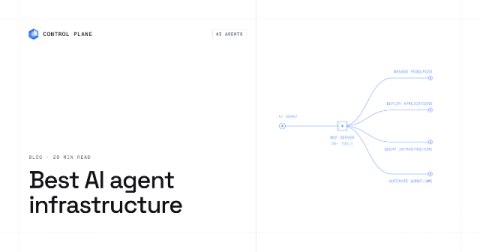
AI agent infrastructure is the set of platforms that run agents and the code they write. It has three layers: sandboxes that isolate untrusted, model-generated code, runtimes that run the agent and its services in production, and orchestration layers that save an agent’s progress so a long run can resume after a failure. Most production agents need more than one layer. This guide compares 10 platforms across all three, with isolation, state, deployment, and compliance for each.
A multi-cloud management platform is software that lets you run, provision, govern, or optimize workloads across two or more environments, such as AWS, Google Cloud, Azure, and your own data centers, from one place. The products in this category do different jobs: some run your applications across clouds, some provision infrastructure as code, some govern hybrid estates, and some optimize cost. Most teams combine two or three.
No one can guarantee that a website or service never goes down. What you can promise is a measured availability target, and with a multi-location, active-active design you can reach 99.999% (five nines), about 5 minutes 15 seconds of downtime a year. That takes redundancy at every layer, automatic health-based failover across regions and ideally providers, safe deployments, failure testing, and outside-in monitoring. Control Plane is built for that tier.
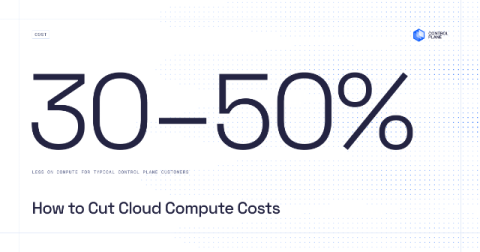
The fastest way to cut cloud compute costs is to stop paying for capacity your workloads do not use. Right-size CPU and memory to real usage, scale idle workloads to zero, and make cost policy a platform default instead of a quarterly review. Control Plane does all three at the platform level: Capacity AI right-sizes running workloads, autoscaling scales idle ones to zero, and customers typically spend 30 to 50 percent less on compute than running directly on AWS, GCP, or Azure.
If your team is outgrowing a simple PaaS and you do not want to spend a year or more building a platform engineering function, adopt a platform that operates Day 2 for you. Control Plane patches and upgrades the platform, autoscales and right-sizes workloads, and runs them active-active across regions and clouds under a 99.999% SLA. It runs natively on AWS, GCP, and Azure, and on your own clusters or on premises through Bring Your Own Kubernetes.
AI-generated code security is the part nobody plans for. Ross Hendrickson, CTO of Inspectiv, on what happens after the AI writes it. He can think of a feature and ship it the same day, generating more code than a week of writing it by hand would have produced. The vulnerabilities don't disappear along with the typing. Something still has to review what was generated, secure it, and get it out the door without becoming the new bottleneck.
Run production AI agents on infrastructure with hardware-level isolation, sub-second sandbox restarts, and a compliance posture that already covers PCI DSS, HIPAA, and GDPR, so a single misbehaving agent can’t touch another workload or your audit trail. Control Plane runs every agent workload in a Kata Containers sandbox on a per-workload Firecracker microVM, with Capacity AI packing resources and scaling workloads dynamically to cut compute cost 30-50%.
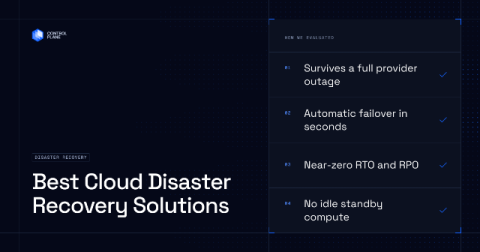
Most disaster recovery plans are designed to survive infrastructure failures — a zone goes down, a region becomes unavailable — but assume the cloud provider itself stays up. That assumption fails more often than engineering teams expect, and when it does, the gap between a team that keeps running and a team writing incident reports isn’t luck: it’s whether DR was an architectural default or a runbook nobody has tested.
I pulled every core-service outage AWS, Azure, and GCP published from January 2025 through September 2026 and measured what each deployment pattern would have saved.