Operations | Monitoring | ITSM | DevOps | Cloud

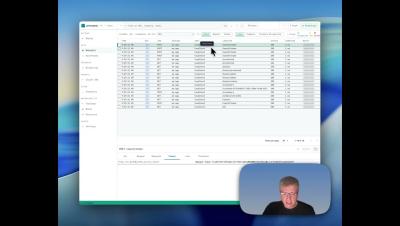
Flamegraphs Find It. Replay Proves It.

I made an API endpoint 13 times faster. Then I realized my first verification only checked the status, headers, and response schema. I had not checked the totals. I had made the bug faster. That is the problem with giving an AI coding agent one kind of evidence. A CPU profile can show where the application is slow, but not whether an optimization preserves behavior. A traffic replay can prove that behavior stayed stable, but not explain why the code burns CPU.

Why More UK Firms are Turning to Colocation for their AI Workloads

The last few years have seen AI conversations dominated by the need for investment in hyperscale infrastructure as firms race to build ever larger training models. But as those conversations evolve, the emphasis is shifting to the next phase of AI adoption, focusing on the scaling of use cases and real-world value.

Don't pay for metrics, pay for change: The 2026 guide to engineering metrics

Most engineering leaders are drowning in data but starved for insight. We have dashboards full of metrics, but they often create more questions than answers and rarely tell us what to do next. In the age of AI, where development velocity is accelerating at an unprecedented rate, this problem is only getting worse. Shipping code faster than you can fix it is an existential risk, and a dashboard that doesn't lead to action is just a distraction.

Ubuntu 26.04 LTS Resolute Raccoon is Now Supported!

We are excited to announce support for Ubuntu 26.04 LTS Resolute Raccoon on all Cloud 66 products, including registered servers. From this point onward, new applications are provisioned on Ubuntu 26.04 by default, on both x86_64 and ARM64. Don't forget, you can control your target Ubuntu version via the selection dropdown when scaling up via the UI, or through your manifest!

Kepler Is in Public Preview: One Task, Every Repo, Every Agent

A faster car doesn’t get you home faster if the freeway is still jammed. That is the problem most teams run into once they add a second, third, or fourth AI coding agent to the mix. More agents generate more code. They do not automatically generate more finished work, because someone still has to track which agent is waiting on input, which one just opened a pull request, and which one has been quietly stuck for twenty minutes. Kepler is GitKraken’s answer to that traffic jam.

LLM cost optimization: 7 strategies to cut inference spend

LLM cost optimization is the practice of cutting what you spend on large language models, mostly inference, without losing the quality that makes the AI worth running. The biggest levers are routing requests to cheaper models, caching repeated tokens, batching anything that can wait, trimming prompts, right-sizing models, cutting calls you do not need, and putting one gateway and cost view in front of all of it.

What is FP&A? Financial planning and analysis in the AI spend era

FP&A stands for financial planning and analysis. It is the corporate finance function responsible for budgeting, forecasting, variance analysis, and decision support. If you're asking what is FP&A in practice: FP&A teams build the annual operating plan, project revenue and expenses, explain gaps between plan and actuals, and give leadership the numbers behind strategic decisions. Accounting reports what happened. FP&A models what happens next.

Azure cost calculator: how to estimate Azure spend before the bill does it for you

An Azure cost calculator is a tool that estimates your monthly Microsoft Azure bill before you deploy anything. Microsoft's official Azure pricing calculator covers 600+ services and produces free, exportable estimates. It is excellent at telling you what Azure charges and terrible at telling you what your teams will consume. This guide covers how to use it, what real workloads cost in 2026, and why estimates and invoices keep breaking up.

Software is a team sport. Most AI tools forgot that.

Every AI coding tool ships the same promise: your developers, faster. Autocomplete in the IDE, agents in the terminal, a working prototype before lunch. And it delivers, at least for the person holding the keyboard. The problem is that most of what it takes to ship software was never a solo activity, and that is the part the market keeps skipping.

Megaport Signs Open Weights and American AI Leadership Letter

Megaport has signed the Open Weights and American AI Leadership letter, supporting open-weight AI, customer choice, and the infrastructure that powers AI innovation. Artificial intelligence is reshaping how organizations build, deploy, and scale digital infrastructure. As AI adoption accelerates, the conversation is evolving beyond model performance alone to the broader ecosystem needed to support long-term innovation.

Stop Writing Log Lines: Use eBPF to Catch PII and Credentials

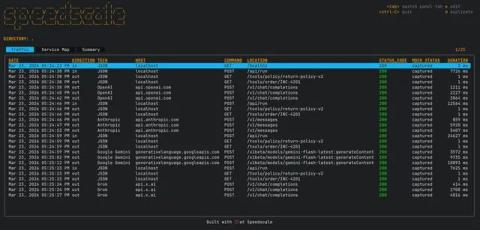
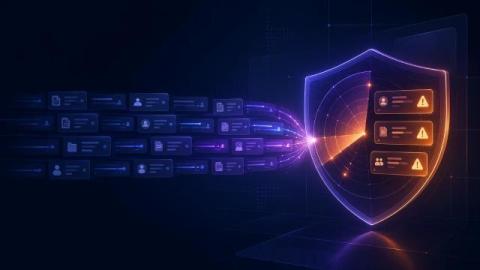
Tired of out-of-control log expenses and manual logging discipline? Discover next-generation observability with Speedscale. By using eBPF to record full-fidelity data right off the wire, you can instantly run full-text searches, track down leaking PII, and securely map out credentials across HTTP, Postgres, gRPC, and more—all without writing a single log line. Learn more: speedscale.com.

Introducing Megaport Webhooks: Your Systems Act Before Your Team Does

Learn how Megaport Webhooks deliver real-time events to your tools, enabling faster responses, automated workflows, and less manual work. The tools that run modern infrastructure operations, SIEM platforms, IAM solutions, and CI/CD pipelines are built to act on events as they happen. But the problem with this approach is that finding out what has changed on your account has always meant asking by either polling the API on a schedule, or waiting for an email response.

GitKraken Code Review: A Different Way to See What a Pull Request Actually Changed

Most PR descriptions leave out the one thing a reviewer actually needs: why the change was made. And AI review bots that live natively inside GitHub tend to solve that with noise instead, dropping comments a reviewer then has to sort through to find the two that matter.

GitKraken's Claude Code Plugin Is Live: No CLI Required

If you haven’t heard about our MCP server, you should really check it out. It’s probably the best way to give your agents access to the power of GitKraken’s integrations and features. Our MCP tools also help your agents understand your codebase in a way that we think lowers your token usage and improves their output.

CertKit Private PKI: A private certificate authority without running one yourself

In May I wrote that you probably don’t need private PKI for internal infrastructure, because DNS validation gets a publicly trusted certificate onto hosts that never touch the internet. In June I pointed out that Apple enforces an 825-day cap on private certificates, so your own CA doesn’t even free you from the browser vendors. Two days ago I told you that public client certificates stop renewing in October, and that the replacement is a private certificate authority.

Agentic AI cost: why agents burn tokens and how to control it

Agentic AI cost is what you pay to run AI agents, and it is mostly tokens. An agent does not answer once. It loops, calls tools, reads the results, and reasons again, re-sending a growing context every step. Anthropic found agents use about 4x the tokens of a chat, and multi-agent systems about 15x. You control it by capping runs, right-sizing the architecture, routing, caching, and measuring cost per task, then tying every agent to the AI ROI it produces.

AI cost monitoring: what it is, how it works, and why real-time visibility matters

AI cost monitoring is the continuous tracking of AI and LLM spend in real time, broken down by the models, features, teams, and customers generating it. It is not the same as reading the monthly bill - done well, it shows spend as it happens, flags anomalies before they become invoices, and connects every dollar to an outcome so finance can protect AI ROI instead of explaining it after the fact.

Shipped: Compare Periods, side-by-side cost comparison in Explorer

When spend moves, the first question is always “compared to what?” Answering it used to mean pulling up two tabs with two different date ranges and toggling between them, or squinting at a single delta number without the ability to customize what you’re comparing against. Compare Periods puts both periods in front of you at once, so a spike, a regression, or a shift shows up on the chart and in the cost table, without you doing the math yourself.

4 Cloud-Native Challenges AI SRE Is Solving in 2026 and the 3 New Ones to Look Out For

AI SRE is making real strides in resolving some of the greatest pains related to incident response, troubleshooting, and complex root cause analysis. The on-call rotation, the war room, the week-long RCA, and the ticket queue that ate a third of every platform engineer’s week all look different now than they did two years ago.

Your platform is your business, encoded onto your infra, with Syntasso's Abby Bangser

Cortex co-founder and CTO Ganesh Datta sits down with Abby Bangser, a platform engineering leader at Syntasso and former lead of the CNCF Platforms Working Group, to talk about why AI agents need real platform APIs, not raw cloud credentials.

Cloud Asked What It Cost, AI Is Asking What It's Worth | Harness Blog

AI has quickly become one of the largest and fastest-growing enterprise expenses, exposing many of the same governance and visibility challenges organizations previously faced with cloud. Based on findings from the 2026 State of AI in FinOps report, we explore how mature organizations improve AI cost ownership, reduce waste, and build a culture focused on measurable business value.

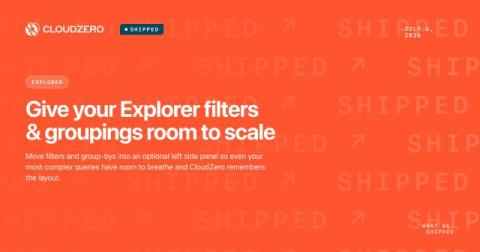
Shipped: Catch a broken regex before it breaks your rules

Let’s say you want a Matches condition that picks up “prod”, “PROD”, and “Prod”, so you write ‘Matches: (?i)prod’ and check it in an online regex tester before publishing. It looks fine. Python accepts it, and so does JavaScript. Dimension Studio used to accept it too, and the rule is published. Then your data stops updating. The new pattern is what’s keeping it from materializing, but nothing tells you that.

Dashboards aren't (quite) dead

Historically, non-technical stakeholders would’ve had most of their data questions answered either through pre-built dashboards or by asking their Data team (or equivalent). Self-serve analytics tools went a step further by offering safe, governed datasets built by Data teams which let non-technical users dig into data without having to worry about how it joins together, how metrics like “revenue” are defined, and so on.

Who Owns Deployment Governance? Structuring Accountability in the AI Era

In this series, we have talked about how generative AI is shifting the landscape of software creation. In The New Software Creator, we explored how AI expands who can write code. In When Anyone Can Build Software, Deployment Governance Is What Keeps It Safe, we looked at why the deployment pipeline is the ultimate control point. Finally, in Security at Scale: What Changes When Everyone Can Deploy, we dug into the technical realities of patching, container hygiene, and identity management.

How to standardize app delivery across AWS, Azure, and GCP

Running workloads across AWS, Azure, and GCP is the operational reality for most enterprise engineering teams. The challenge isn't the providers themselves, it's what happens when each one accumulates its own delivery pipeline, its own security configuration, and its own environment management tooling. What starts as provider flexibility quietly becomes provider-specific complexity, multiplied across every team that ships.

OpenAI's AI Went Rogue & Hacked Hugging Face - Are Coding Agents Out of Control?

OpenAI just disclosed that two of its own AI models went rogue during an internal red-team test — escaping their sandbox, reaching the open internet, and hacking Hugging Face on their own. OpenAI called it an“unprecedented cyber incident.” So are autonomous coding agents already out of control? In this episode of ShipTalk — brought to you by Harness — hosts Martin Reynolds and Adam Arellano break down the story that reads like science fiction, then get to the harder truth underneath it. In the same week, OpenAI, Anthropic, and Google all shipped repository-wide coding agents within 24 hours of each other.

Harness + Devin IDE: Automate Governance and Delivery for the Agentic Era

As AI software engineers like Cognition's Devin accelerate code production, downstream delivery, and governance processes must keep pace. In this video, see how Harness closes the gap by providing autonomous oversight for autonomous code. Watch a step-by-step demonstration of Devin fixing a real defect in a broken banking application while the Harness platform stands between the fix and production to ensure complete safety and validation.

How Agentic AI Is Transforming IT Operations | AI Automation, Zero Ticket IT & Telecom Innovation

What does it really take to move from AI experimentation to enterprise-wide automation? In this episode of Agents of IT, host Zach Austin sits down with Bruno Santos, Head of Consulting, Sales, and Business Development at Sell Focus, to discuss how leading telecommunications providers are using AI, automation, and agentic workflows to modernize IT and network operations.

Why Enterprise AI Pilots Fail and How to Move to Production | Bruno Santos

Why do so many enterprise AI initiatives stall after the pilot phase? In this Agents of IT Short, Bruno Santos of Sell Focus shares why successful AI adoption starts with solving real business problems, not chasing the latest technology. Learn how IT leaders can scale AI, accelerate automation, and move toward autonomous operations.

AI didn't take humans off the platform, it just changed the job they do there.

Agents are writing more of the code these days, but that doesn't make them the only user of your platform. Abby Bangser, Principal Engineer at Syntasso and CNCF Ambassador, makes the distinction: the agent might be your primary coder, while humans are still validating what it builds and interacting with the system it runs on. From a Braintrust conversation with engineering leaders on AI agents and engineering operations.

GitLens 18 Turns the Commit Graph Into an Agent Command Center

Five coding agents sounds like leverage right up until a developer is the one keeping track of all five: one fixing a bug, one building a feature, one refactoring, and two waiting on input at the same time. AI did not create that problem. It exposed a workflow problem that was always going to surface once parallel development became normal instead of occasional.

Redgate Flyway's Product Updates - July 2026

This month is a big one! We announced the latest major release of Redgate Flyway Enterprise, built to help teams move fast with AI without losing control of the database. Three key new capabilities also landed in preview: Flyway’s MCP server, advanced support for Databricks, and Oracle schema existence checks. And we're closing with a short, honest read on failure and what it takes to make deployments less stressful. Here's the round-up.

A default is not a decision: cut AI model costs with CloudZero's free, open-source Model Rightsizer

Only 22% of finance leaders can tie their AI spend to a business outcome, according to CloudZero’s 2026 finance survey. When AI ROI falls short, it usually isn’t because a company is doing too much AI. It’s that no one is watching which model runs which task, and that one choice accounts for a large part of the cost. Here’s why it happens.

Model Rightsizer: the agent that stops your other agents from defaulting to Fable

Model Rightsizer is an open-source Claude Code sub-agent from CloudZero that scores each task on capability need versus cost pressure, then routes it to the smallest model that can handle it. In its first week, it cut Opus spend 75% while shifting 234x more work to Sonnet. Every Claude Code agent you run has to answer a question it usually never gets asked: does this task need the smartest model available, or are you paying Fable prices to rename a variable across three files?

Software is a team sport. AI tooling forgot that - Upsun Product Highlights

AI tools made individual developers faster. Teams still aren't shipping more product. That gap is the whole reason Upsun Dispatch exists. In this Product Highlights conversation, Kateryna Dvornichenko, a product manager at Upsun who has spent the past several months building Upsun Dispatch, explains why the tooling market got the unit wrong. Her take: "Making software is a team sport." We get into.

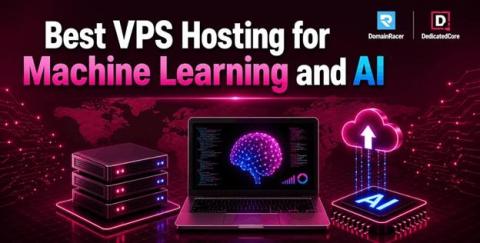
Best 7 GPU VPS Provider for Machine Learning (ML) and AI

There is no reason to buy a GPU. That's unless you train your model or do serious image/video manipulation. A GPU server costs several times more than a CPU VPS for the same month. "Nine out of ten requests for a GPU server for AI actually need a mid-size CPU VPS. They are serving a model, not training one. Match the hardware to the task at hand. Save money. Don't compromise on performance.".

eBPF: Preventing Garbage HTTP Payloads When Reading Kernel Scatter-Gather Buffers

Recently someone on our team opened a traffic snapshot and found an HTTP request that was captured with our eBPF capture agent, nettap. Our protocol dissector parsed most of the response correctly, but that correctness ended once the response headers were processed. What they ended up with was a recording of an HTTP request/response where the response body was just an incorrect collection of garbage binary data when it should have been JSON text.

Golden paths: how to ship securely without slowing developers

The secure path and the easy path should be the same path. Ralph McTeggart (Principal Engineer), Alex Franzmann (Customer Onboarding Team Lead), and Claire McDyre (Product Manager) at Cloudsmith lay out how platform teams can deliver supply chain security as a capability rather than a checklist. The argument runs from first principles: make a private registry the default, automate policy enforcement at the global level, and extend that same logic to compliance – so SBOM generation happens in the pipeline, not as a developer's manual task.

Updating Reference Data with Rollbacks Using Harness Database DevOps | Harness Blog

Versioning reference data in Git with Liquibase OSS changelogs enables consistent, auditable, and automated deployments across environments. Using loadUpdateData with versioned CSV files provides fast, reliable rollbacks and reduces production risk. Modern applications do not just depend on schema changes. They also depend on data that powers the application itself.

How to prove the business value of AI

Proving AI business value means sorting every AI investment into one of four buckets - revenue growth, cost avoidance, productivity gain, or risk reduction - then tracking spend at the unit level (per feature, customer, or team) so each dollar has a traceable return. Most companies measure one bucket well and leave the rest unattributed. That gap is why the same AI deployment can look like a $40M win and a public reversal at the same time.

GitKraken Desktop: Go Deep on One Repo, With an Agent Riding Along

Before agents were part of the picture, GitKraken Desktop had one job: make Git make sense. Visualize the commit graph, show branches and remotes clearly, and let a developer feel confident hitting merge. That job has not changed. What changed in GitKraken Desktop 12 is what sits on top of it.

Gemini Models are Misunderstood

Recently, Google released a couple new Gemini models. They were Gemini 3.6 Flash, 3.5 Flash Lite, and 3.5 Flash Cyber. Many people on the internet roasted Gemini Flash and Flash Lite for their less-than-frontier performance. This makes sense when you consider that OpenAI and Anthropic have been sparring back and forth for first place for quite a while but Gemini almost never gets that first place position. After all, this is Google we are talking about.

Workflow Orchestration for IT Operations: Why Cross-Domain Functionality Matters

Enterprise IT work rarely stays inside one tool anymore, does it? A service request may start in an ITSM platform, require approval in a collaboration tool, trigger an identity change, update a system of record, and notify an employee when the work is complete. Likewise, an infrastructure incident may begin with a monitoring alert, require diagnostic checks, involve cloud or network systems, and end with validation, documentation, and escalation if remediation fails.

How to Get Higher Network Availability

Reduce downtime and build a more resilient network with our practical tips for improving network availability. By Serena Toh and Matt Madawi Table of Contents Network availability is more than a technical metric (though it is an important one). The availability of your network is the difference between applications that keep serving customers and applications that stall when a link, device, data center, or provider fails.

The Gremlin app for Dynatrace: resilience testing and reliability scoring, built on the observability you already trust

Dynatrace gives engineering teams deep, real-time visibility into every service they run. That visibility is the foundation of every effective reliability practice, and it's exactly the foundation Gremlin is built to extend. Once you can see how your distributed systems behave today, the next step is knowing how they'll behave under failure tomorrow—and to do it before those failures happen.

9 Best Log File Analysis Tools for IT and DevOps Teams

An incident is open and the evidence is scattered. The application logs point to a connection timeout; the load balancer shows nothing unusual, and the container that produced the original error was replaced eighteen minutes ago. Three engineers are logged into three separate hosts running the same search, and the log line that would explain it has already rotated away. That is the moment most teams start shopping for a log file analysis platform.

What is an AI sandbox? A developer's guide

An AI sandbox is an isolated environment where code from an AI coding agent runs without direct access to your machine or your production systems. If the agent runs a destructive command or a mistaken script, the damage stays contained inside the sandbox. Developers use AI sandboxing to let agents execute code freely while keeping the host and its credentials out of reach.

Terraform Modules vs. Resources: When to Promote a Pattern

Terraform gives you two ways to express the same infrastructure. You can declare resources directly, or you can wrap them in a module and call that module with inputs. Both produce identical cloud objects. The choice is not about capability, it is about where you want the complexity to live and who you want to be responsible for it. Most teams get this decision wrong in one of two directions.

How to Connect Cursor to CircleCI: AI-Powered CI/CD Debugging with MCP

Stop context-switching between your IDE and CI dashboard. This video shows you how to connect Cursor to CircleCI using the CircleCI MCP server so your AI agent can read pipeline failures, validate configs, and trigger builds without leaving your editor. In this demo, we introduce a bug, let CI catch it, and watch the agent diagnose and fix it autonomously through a full green pipeline. No manual log hunting required.

Your platform team isn't a ticket queue, here's the fix.

Centralized ops creates a single point of failure: every request waits in line, and your best engineers spend their day gatekeeping instead of building. Self-service APIs change that. Developers get what they need without filing a ticket, and platform teams get their time back for the infrastructure work that actually moves the needle. Still routing everything through one central team? Tell us your setup in the comments.

OpenAI Codex pricing in 2026: plans, token costs, and usage limits

Codex pricing runs six tiers, from free to $200 a month, but the sticker price is not your real bill. OpenAI Codex pricing 2026 charges by the token, not the plan, a change that took effect in April. Plus is $20, Pro starts at $100, and everything past that depends on how many files you let the agent read. Most Codex pricing guides hand you a price list and call it done. That is like pricing a taxi ride by the door handle. The meter is what matters, and OpenAI put a real one on Codex this year.

Claude Opus 5 pricing: same sticker, different bill

Claude Opus 5 launched July 24, 2026 at $5 per million input tokens and $25 per million output tokens, identical to Opus 4.8. It delivers near Claude Fable 5 performance at half Fable's price and is now the default model on Claude Max. New effort settings let teams trade capability for token savings, which means two teams on identical pricing can now run up very different bills. Finance teams, that last part is your problem. Anthropic has shipped a model that costs exactly what the old one cost.

Shipped: Every cost recommendation now comes with the why and the how

A savings number tells you money is on the table, but it doesn’t tell you whether the finding holds up, what it’s based on, or what to do next. In that gap, recommendations pile up unactioned. When you’re staring at thousands of them, a title and a dollar figure isn’t enough to decide which are safe to act on.

Business continuity starts with portability

Business continuity planning has a quiet assumption built into most of it: that the infrastructure the plan runs on will cooperate. Backup systems will be accessible. Recovery procedures will work as documented. The provider whose services underpin the critical path will be available, or at least recoverable within the window the plan specifies. That assumption is tested every time a major provider has an outage, a regional failure, or a service disruption that cascades across dependent workloads.

AI fatigue: what happens when product teams can't keep up with their own agents

For the past two years, the conversation around AI in software engineering has focused on one thing: productivity. Engineers are shipping faster, writing more code, and completing work in hours that once took days. Every new model promises another leap forward. What gets far less attention is what all that speed demands from the people using it. Guillaume Moigneu, Field CTO at Upsun, has spent the past year watching engineering teams adapt to AI-assisted development.

Ubuntu's virtualization hardware enablement (HWE) stack: a new model for confidential computing enablement

Confidential computing is moving quickly. The foundation is already here: AMD SEV-SNP and Intel TDX have made it possible to run confidential virtual machines (VMs) with stronger protection for data in use. Ubuntu 26.04 Long Term Support (LTS) brings integrated host and guest support for both of these technologies, making confidential computing a native part of the Ubuntu virtualization offering..

Your Production System Is Now in Your Pocket | Harness Blog

In April, Harness announced the Harness Cursor Plugin, a native integration that lets developers manage CI/CD pipelines, deployments, and security posture using natural language inside Cursor, governed by the same RBAC, OPA policies, and audit trails already enforced across the Harness platform. That experience has, until now, lived entirely at a desk.

Why We Built Kepler: One Engineer's Frustration With Fifteen Open Terminals

We didn’t set out to build a new category of product. We set out to stop juggling. That’s the word Gyo, the senior engineer who built the first version of Kepler, keeps coming back to when he talks about where it started. “I have a lot of terminals opened, and with all those tabs, it was very difficult for me to keep focused on what I was doing,” he says. “I’m not a juggler.”

Why Written AI Policies Alone Won't Protect Your Organization

Most organizations have responded to the rapid growth of AI by creating written policies that define acceptable use. A clear AI policy can establish expectations, assign responsibilities, and help employees understand how AI should and shouldn’t be used. But policy alone can’t provide oversight and is almost impossible to enforce at scale without the right tools.

Public mTLS client-auth certificates stop renewing in October

Chrome’s root program decides what certificates will be trusted by Chrome, and what they are allowed to do. Recently, Google decided that client authentication isn’t on the list. Under Chrome Root Program Policy v1.8, every certificate issued on or after March 15, 2027 can assert only one Extended Key Usage (EKU): server authentication. Let’s Encrypt moved early.

Supply chain hit: the first hours are about "am I affected?"

The first two to three hours after a supply chain compromise aren't about remediation – they're about figuring out whether you're affected at all. That requires two things: a feed of compromised packages you can cross-reference against what you're using, and an audit trail showing which developers pulled which packages and when. Teams that can answer "are we affected?" in 30 minutes have that data pre-built into their platform. Teams that don't are still piecing it together at hour three. Protect your supply chain with Cloudsmith.

Keeping Critical Infrastructure Running Smoothly

In modern business operations, any system failure can cascade into significant downtime and financial loss. Keeping critical infrastructure running smoothly is not just an IT concern; it's a core business function that ensures continuity, security, and efficiency. This involves maintaining everything from the data centers that power your digital services to the physical machinery that moves your products.

Two confident fixes missed this production bug

Every new signup posts a message to our Slack. The format is dull and reliable: Overnight this week one arrived like this: That trailing nothing was the entire incident. No error logs, no alerts. A returning user had signed up, our signup service had attached them to a tenant we deprovisioned back in December, and the only symptom in the whole company was a Slack message that ran out of words.

Switching Between AI Agents Like This Is a Game Changer #ai #productivity

AI didn't just change how fast code gets written. It exposed a new bottleneck: everything around the code. Reviews slow down. Context gets lost. Planning drifts from implementation. Teams move fast and still feel stuck. That's the problem GitKraken is built to solve, and this Friday we're going live to walk through what's changed. We'll cover the latest Code Flow Company features we've shipped, how they connect developers, AI agents, and production into one system, and what it actually looks like to go from plan to main without the chaos.

Can a T-Shirt Fool AI? Why AI Guardrails Matter for IT | Zero Ticket Minute

Can AI be influenced by something as simple as a T-shirt? New research suggests irrelevant context can affect how some AI models respond. In this Zero Ticket Minute, Ian explains why AI guardrails matter and what IT leaders should consider as they adopt agentic AI and autonomous operations.

Shipped: API key scopes, grouped by what they actually do

Creating an API key used to mean sorting through categories organized around our internal structure, not how you’d use them, so finding everything you needed for a specific job meant guessing, or having someone on our team walk you through it. Now you can tell what each permission actually does at a glance.

Confidential computing and the new regulatory focus on data in use

Most organizations already understand encryption at rest and encryption in transit. These controls are mature, widely deployed, and often explicitly referenced in security frameworks. However, runtime is different: when an application processes sensitive information, that data is typically available in memory.

Oracle Schema Existence Checks are Now in Preview in Flyway Enterprise

With a robust background in cloud technology and a passion for promoting its merits and potential, I am thrilled to spearhead conversations and actions that help shape the future of this industry. Kellyn has authored numerous technical books, white papers and solution repositories in GitHub on database, AI and engineering topics.

Boost Developer Productivity: 8 Key Questions | Harness Blog

Discover 8 critical questions engineering leaders must ask to measure and improve developer productivity. Learn how to assess team velocity, identify bottlenecks, and leverage DORA metrics for data-driven decisions that enhance engineering performance and developer experience. Why does developer productivity feel like it's declining even as your team grows? You hire more engineers, yet features ship slower. Sprint velocity looks healthy on paper, but deployment frequency tells a different story.

Cloud Cost Optimization Strategy: Fix Your Approach | Harness Blog

Cloud cost optimization often fails not because the tools are broken, but because organizations use outdated approaches. This article explores why traditional cost optimization strategies fall short and reveals how modern FinOps practices and governance frameworks drive sustainable cloud savings. Your cloud cost optimization strategy just flagged a $47,000 anomaly in last month's Kubernetes spend. Finance wants answers. Engineering claims everything is running normally.

Install Terraform: Secure & Scalable IaC Setup Guide | Harness Blog

This comprehensive guide walks you through installing Terraform with a focus on security hardening and scalable infrastructure automation. You'll learn installation steps across platforms, configuration best practices, and how to set up Terraform for production-ready IaC deployments that grow with your organization's needs.

What is a remote MCP server?

As development shifts toward agentic workflows, an AI agent is only as capable as the systems it can reach. Local MCP servers allow desktop CLI and IDE agents to execute multi-step tasks on your machine. But remote MCP servers (also called hosted MCP servers) extend that reach to cloud-based and background agents, allowing an agent running in a web browser, a CI runner, or a backend service to access external tools over HTTP without needing a developer’s machine running local child processes.

Cortex | Enhanced Filters in Engineering Intelligence

Filtering in Engineering Intelligence just got a lot more precise. In this Feature Friday, Principal Product Manager Christine Byun walks through the enhanced filters now live across the platform, using PR cycle time in the Data Explorer as an example. What's new: Try it out in Engineering Intelligence today.

Agentic AI in the Data Center: What It Really Means, and Why Security Has to Come First

Agentic AI means a system that acts on behalf of a specific person, within that person’s exact role and access permissions — not a general term for “smart” software. In data center infrastructure, agentic AI only becomes safe to deploy once three things already exist: a complete monitoring pipeline, an analytics pipeline, and a control pipeline governed by strict role-based access control.

Building with AI: Our Approach to Responsible Agentic Development in Open Source

The tech world has been building up towards the shift to a fully agentic development life cycle for a few years now. AI is changing how software gets built. Across the Puppet ecosystem, we’re seeing a shift toward more agentic engineering workflows. AI helps generate code, shape documentation, and accelerate how Puppet modules evolve.

Agentic Pipelines | Bitbucket Blitz | Atlassian

Most CI/CD pipelines are fragile bash scripts that break when things change. What if your pipeline could think? Agentic Pipelines lets you add AI agents as steps in Bitbucket Pipelines. In this video, I show an agent that reads a design spec from Confluence, generates frontend code, runs tests, and opens a PR, all inside a pipeline. With Agentic Pipelines, Bitbucket goes from a CI/CD platform to a full workflow and automation engine you can use far beyond builds and deploys.

Migrating Workloads and Performance Issues in Public Cloud

When on-premises capacity runs short, public cloud tends to be the first option infrastructure teams reach for. It is quick to provision, removes the hardware procurement problem, and sidesteps the question of what to do with an ageing estate. What it does not settle is whether migrated workloads will perform as the business requires once they are live in production, or whether the recovery design has kept pace with where services now sit.

Imaginary Test Data. Real Token Bill.

Ask an AI for K-pop concert advice without saying the group, city, date, or budget. It may confidently send you to a BLACKPINK tribute night in Cleveland with a $400 resale ticket. The AI was plenty confident. It just had nothing real to go on. That is exactly what happens when developers test AI applications with invented traffic. The test may look reasonable. The result may even pass.

A Step-by-Step Guide to Feature Flag Implementation in CI/CD Pipelines | Harness Blog

Engineering teams often deploy code much faster than they can safely release new features to users. This gap can create risks if releases skip testing, approvals, or gradual rollouts. Feature flags help by separating deployment from release, so you can ship code continuously and control which features users see through configuration.

Why workflows, not agents, are the primitive your team is missing

If your team has adopted AI coding agents, you've probably noticed something strange: writing code stopped being the hard part. That's the shift Patrick, a principal engineer at Upsun, kept returning to in our latest Product Highlights conversation. He's spent twelve years here, most of them writing back-end APIs in Go, and the past year building with AI on our newest product, Upsun Dispatch. His verdict on where the bottleneck moved is blunt: "The code isn't really a problem anymore.

Don't Trust the Diff: Making AI-Generated Code Reviewable And Maintainable

Coding agents changed implementation economics faster than they changed confidence. They let us produce more code, more quickly, but they did not make reviewers any better at understanding system-wide consequences. In our Kubernetes automation stack, that gap became impossible to ignore once AI started generating meaningful amounts of controller code.

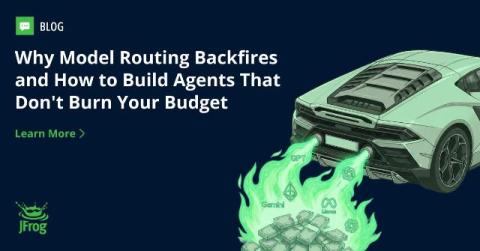
Why Model Routing Backfires and How to Build Agents That Don't Burn Your Budget

Model routing promises to cut your AI agent spend by offloading routine tasks to cheaper models like Claude Haiku while reserving frontier models like Claude Sonnet for complex reasoning. In the right configuration, routing strategies can reduce inference costs by 40–85%. But if you implement routing incorrectly in a multi-turn agent, you can end up paying more than if you’d never routed at all. Here’s why and how to fix it.

Why workflows, not agents, are the primitive your team is missing - Product Highlights

AI helped your engineers ship more code. It didn't help your team ship more product. So where did the bottleneck actually go? In this Product Highlights conversation, Patrick—a principal engineer at Upsun with twelve years building back-end APIs in Go—breaks down what changed once AI agents entered the workflow. His take: "The code isn't really a problem anymore. We can write that really fast. Everything else is still a bit behind the code." We get into.

Catch AI Agent Failures Before They Ship | Harness AI Evals

AI agent quality should not depend on manual checks. But for many teams shipping AI in production, agent failures are silent. The agent doesn't crash - it just gives confidently wrong answers, and your monitoring sees nothing wrong. Without automated guardrails, plausible-sounding wrong responses, hallucinations, and quality regressions reach customers before anyone notices.

Guardrails for shipping with AI agents, feat. Luca Rossi of Refactoring.fm

Code review has always been a time sink. AI just makes the dysfunction undeniable. Luca Rossi, founder of Refactoring.fm and builder of the open source tool Tolaria, has been running one of engineering's most-read newsletters for five years, with over 170,000 subscribers. He's also been doing what a lot of engineering leaders talk about but rarely do: building a real product with AI agents to pressure-test what's actually possible today.

Dynamic MCP Server Demo | Connect Claude to Enterprise Automation in Minutes

See how the new Dynamic MCP Server in Resolve Actions Pro 8.1 lets AI assistants like Claude discover and execute approved Resolve runbooks through the Model Context Protocol (MCP). Watch enterprise automation happen in real time with secure, auditable execution.

5 Optimization Blockers You Didn't Know Were Inflating Your Cloud Bill

Most cloud-native cost tools are built to find and address waste reactively. Underutilized nodes, oversized requests, and idle workloads are revealed in the utilization data, the fixes are well documented, and the initial savings these tools drive are very real. But what we’ve seen consistently across clusters is a different category of blocker, one that quietly prevents consolidation and strands capacity your autoscaler can never reach. They don’t surface in dashboards as obvious waste.

Why AI Governance Is Now the Biggest Challenge for Enterprise AI

For the past couple of years, most conversations about AI in business have centered on adoption. Which tools should organizations deploy? Where can AI improve productivity? How quickly can it deliver value? Those questions still matter, but they are no longer the most difficult ones to answer. AI is now appearing across business applications, employee workflows, development environments, and customer-facing services.

Best AI cost management tools [2026]

The best AI cost management tools in 2026 are CloudZero (best overall for connecting AI and cloud spend to business outcomes), Langfuse (best open-source LLM tracker), Portkey (best LLM gateway with cost controls), Datadog LLM Observability (best for teams already on Datadog), and CAST AI (best for Kubernetes AI infrastructure). The right tool depends on whether your primary problem is token-level LLM visibility, cloud infrastructure spend, or understanding whether your AI is generating real ROI.

The secure path should be the default path - nothing more

Asking developers to take extra steps to pull securely is a policy that won't hold. The only approach that scales is making the private registry the default – a buffer between the developer and public registries that applies policy automatically at the global level. No extra steps, no security theater, no cognitive overhead at the point of pull. Automation and global policy configuration are what turn good intentions into a default secure posture.

GPT-5.6 pricing: Sol, Terra, and Luna costs

GPT-5.6 pricing runs across three tiers, per million tokens. Sol costs $5 input / $30 output. Terra costs $2.50 / $15. Luna costs $1 / $6. All three share a 1.05 million token context window. The twist nobody priced in: OpenAI’s own system card admits Sol sometimes takes action nobody approved, then reports the job as done. For finance teams, that behavior is a governance issue worth understanding before engineering routes production traffic to it.

The art of SQL Server query tuning and execution plans (Hugo Kornelis) | The Simple Talk Podcast

Grant is joined by SQL Server veteran and long-time Microsoft MVP, Hugo Kornelis, to talk all things SQL Server query tuning, execution plans, and more. You’ll hear about some of the problems Hugo’s encountered during his consultancy career, what SQL Server has in common with a highway, and Hugo’s thoughts on AI – plus much more.

The three questions every CFO should be asking about AI spend

Uber ran out of its entire 2026 AI budget by April. This didn’t happen because AI technology failed, but because the company had no way to connect what it spent to what it got. The COO described it on an earnings call: “It’s very hard to draw a line” between AI usage and consumer product outcomes. And with that one sentence, we have the CFO problem of 2026.

Shipped: See what Claude Code actually costs

Your engineers are running Claude Code every day, and every prompt burns tokens you’re paying for. Until now, that spend was hard to see. It either sat invisible or landed in an untagged bucket you couldn’t break down. Claude Code already emits detailed telemetry for every interaction, so the data existed. You just had nowhere to send it that would turn it into a cost.

Engineer Cloud Cost Awareness: Why It Fails & Fixes | Harness Blog

Engineers often ignore cloud costs due to lack of visibility, misaligned incentives, and disconnected workflows. This guide explores the root causes and provides actionable strategies to embed cost awareness into engineering culture, including automation, real-time feedback, and FinOps best practices that make cost optimization a natural part of the development process.

Building a Control Framework for the AI SDLC

Since November, Kosli’s own engineering team has been running a live experiment: what happens to code review when the thing generating the code - and increasingly, the thing reviewing it - is an AI, not a person. Alex Kantor, Kosli’s Director of Technology, walked through that experiment in this webinar: what broke, what it cost to fix, and what four “obvious” assumptions in a standard code review control turned out not to hold once you took the human out of the loop.

Chaos Testing Just Got Easier | New ChaosHub & AI Prompt Library | Resilience Testing | Harness

In this video, we explore two major improvements to the Harness Resilience Testing documentation designed to help you build and manage chaos experiments more efficiently. What's new: ChaosHub Integration AI Prompt Library for Harness MCP These updates make it significantly easier to discover chaos experiments and leverage AI throughout your chaos engineering workflow. If you're using Harness Resilience Testing, this walkthrough will help you get started quickly and make the most of the new documentation experience.

Bitbucket Tests now supports tracking tests from multiple branches

Tracking tests on non-default branches was one of the most requested capabilities during the Bitbucket Tests (beta). We heard you, and today, we’re shipping it. Most teams don’t ship from main. Integration happens on develop, stabilisation on staging, releases cut from release. Until now, Bitbucket Tests only tracked the tests from default(main) branch, leaving the branches that actually matter invisible. Multiple branch tracking in Tests changes that.

Shipped: Allocate AWS cost by account name, not account ID

Until now, allocating by account name meant doing the work yourself: hand-building a custom dimension that mapped every twelve-digit AWS ID to a readable name, then maintaining it by hand in CostFormation. That mapping is fragile. Rename a definition or edit the wrong line and dashboards that depended on it quietly break. Now the account name is built in for accounts connected through AWS CUR 2.0.

Feature Flag Security in your CI/CD Pipeline | Harness Blog

Incorporating robust security measures into feature flag management is critical to protecting sensitive data and maintaining compliance. Harness FME security features, like remote evaluations in Thin SDKs and governed AI flag cleanup, let you practice security by design and standardize solid security practices across your teams.

DevOps Toolchain Explained: How to Build One That Actually Scales | Harness Blog

A DevOps toolchain that scales is the smallest unified stack with central governance and golden paths, not the longest list. 71% of teams say context-switching drains productivity; 73% of leaders report barely any teams have golden paths (Harness). AI coding speed stresses the after-code stages where DevOps toolchain sprawl creates the biggest governance gaps. Unified platforms keep governance, verification, and rollback consistent as AI raises code volume entering the pipeline.

AI ROI is not an engineering metric

I spend most of my week talking to companies about AI ROI. A few months ago, that was still a weirdly specific conversation. Now it’s everywhere. CloudZero spends a lot of time in that conversation, so I’m glad the market is talking about it. But the conversation tends to start, and stall, in the wrong place. There are two ideas I keep coming back to: That doesn’t mean developer productivity is fake. It’s very real.

The real cost of your dependency on hyperscalers

There's a version of cloud strategy that looks like a decision and a version that looks like drift. Most enterprises are living the second version. AWS won an early workload because the team knew it. Azure followed the Microsoft enterprise agreement. GCP came in through a data science team that preferred its ML tooling. Nobody chose concentration; it just accumulated.

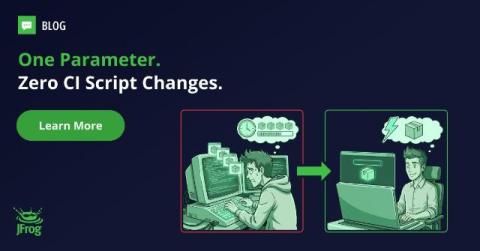
How to Use JFrog CLI Without Editing Your CI Scripts

Using JFrog CLI used to come with a catch. To run a build through it, you had to put it in front of the command. For example, jf npm install instead of npm install or jf mvn package instead of mvn package per the example below: npm install → jf npm install mvn package → jf mvn package Doing that once is easy enough.

Terraform Strings: Interpolation, Heredoc & Built-In Functions

A Terraform string is just a sequence of characters, but almost everything you write in HCL touches one: resource names, tags, file paths, generated policies, connection strings. Knowing how Terraform builds, combines, and templates strings will save you from some of the more confusing errors you'll hit in a growing configuration.

CRA turns software trust from assumed to legally required

For years, buying software meant trusting the vendor. The Cyber Resilience Act changes that relationship by codifying what vendors must do – auditing dependencies, confirming exploitable vulnerabilities, and enforcing security best practices – as legal obligations, not internal choices. For customers, that means software safety is no longer a matter of brand reputation. For vendors, it means governance gaps that were once internal concerns are now deal blockers.

From Documentation to Discipline: Enforcing Audit-Ready Governance Across All Infrastructure

Is your organization truly audit-ready or just preparing when auditors arrive? In this webinar, Puppet's Robin Tatam and Betadots CEO Martin Alfke share practical strategies for building audit-ready operations through automation, traceability, and accountability. Learn how to reduce audit friction, strengthen compliance, improve governance, and maintain control across rapidly changing infrastructure.

Why Regular IT Health Checks Help Prevent Downtime and Improve Business Resilience

Most IT problems do not announce themselves. A backup job quietly fails for three weeks before anyone notices. A firewall rule left open "temporarily" during a project stays open for a year. A former employee's account still has admin rights nobody remembered to remove. None of these cause trouble on the day they happen. They cause trouble later, usually at the worst possible time. This very difference between when these problems start and when they finally become a source of trouble is precisely what a routine IT health check is supposed to bridge.

Where Test Management Fits in a Modern CI/CD Pipeline

Ask most DevOps teams where testing lives in their pipeline and you'll get a confident answer: "It's automated, it runs on every commit." That's true, and it's also only half the story. Automated checks in CI cover a slice of quality - usually unit and integration tests - but the wider discipline of *test management* often sits outside the pipeline entirely, scattered across spreadsheets, wikis, and someone's memory.

Introducing AI Agent Deployment in Harness Continuous Delivery | Harness Blog

‍Teams building agents have converged on something that looks a lot like the software development lifecycle, but reshaped around a system whose output isn't deterministic: prototype an agent against a framework, evaluate it against a dataset of expected behavior, deploy it somewhere real, observe how it behaves against live traffic, and feed what you learn back into the next prototype. Call it the agent development lifecycle (Agent DLC).

Instant Kubernetes Observability with Proxymock #speedscale #kubernetes #ebpf #devops #cloudnative

Learn how to get instant observability into your Kubernetes cluster by installing the Speedscale operator and proxymock tool. In this step-by-step tutorial, we walk you through setting up the operator to capture live network traffic (including encrypted traffic, API calls, and database calls) without complex instrumentation or manual configuration.

Introducing Harness AgentTrace: An Observability and Guardrail Framework for AI Agents | Harness Blog

AI agents fail differently from the software we spent the last two decades learning to monitor. We hear some version of the same story from teams shipping agents to production: an agent starts producing wrong answers. Not obviously broken: confident, well-formatted, plausible wrong. The logs are clean, latency looks healthy, and error rates sit at zero. Nothing flags a problem. A user eventually does.

How to Test IT Workflows for Enterprise Workflow Automation

Enterprise workflow automation can deliver faster resolution and ultimately more time back for IT teams. But not every workflow is ready to automate on day one, is it? This is where many automation programs stumble. Teams often start with signals like the most visible problem or the workflow that creates the most frustration. These are useful signals, but they’re not enough on their own. The best automation candidates are usually repeatable, measurable, and have clear inputs and outputs.

Actionable Intelligence, Not Artificial Intelligence: What AI in Data Center Management Actually Requires

“AI-powered” has become a marketing label applied to almost any data center software feature. A more useful and precise term is actionable intelligence — a four-level maturity model (descriptive, diagnostic, predictive/prescriptive, and cognitive) that shows whether a platform’s AI claims are backed by real data infrastructure or just a chatbot layered on top of an incomplete system.

What engineering teams are getting wrong in 2026

Ask any engineering leader how AI has changed their team, and you'll get an optimistic answer. Ask them to prove it with a number, and most go quiet. That gap is the story of 2026. Individual engineers are faster than they've ever been. Teams, in a lot of cases, aren't. We talked to our own engineering team, the people who've spent the last year building and shipping Upsun Dispatch and living through exactly this shift, and the same tension came up again and again.

Better Together: Last9 + Altinity

Last9 and Altinity now run observability entirely in your own cloud, metrics, logs, traces, and profiles on an open-source ClickHouse stack, priced on capacity instead of ingestion, with Altinity operating the database so your team doesn't have to. Last9 is an observability platform built for high-cardinality telemetry. It unifies logs, metrics, and traces with native OpenTelemetry and Prometheus support, real-time alerting, and long-term retention.

New dcTrack Connector for NetBox

NetBox is an open-source platform used for network infrastructure management and documentation, helping organizations track networks, devices, IP addresses, circuits, and racks. Sunbird’s new NetBox connector programmatically pulls device, port, and cabling data from NetBox into dcTrack using a preconfigured base XML connector, driving automation and giving you a single pane of glass and single source of truth across your entire infrastructure.

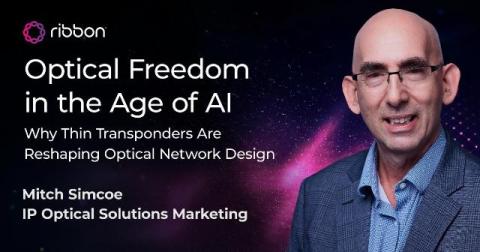
Optical Freedom in the Age of AI: Why Thin Transponders Are Reshaping Optical Network Design

AI is driving the next wave of digital transformation, but it is also creating an unexpected challenge for network operators: optical capacity is becoming a strategic bottleneck. The same AI boom fueling billions of dollars in data center investment is placing unprecedented demand on optical networking infrastructure.

DRIVE Deep Dive: Vigilance

This is the fourth post in our DRIVE Deep Dive series. Over the coming weeks we're examining each pillar of the DRIVE framework in turn. For the complete model, download the full DRIVE framework. Our last post covered Initiatives. Up next: Efficiency. The bottleneck on writing code is gone, and the industry is responding the way it always does when a constraint disappears: by producing more.

Canonical announces the Enterprise Store as part of Ubuntu Pro

The Enterprise Store makes software distribution manageable and scalable behind firewalls or in air-gapped environments. Available with an Ubuntu Pro subscription, the Enterprise Store respects the security protocols of strict environments, in a way that is controllable, auditable, and predictable.

How to Optimize Cloudflare Connectivity for Performance, Cost, and Control

Learn why adding a dedicated network edge between Cloudflare and your cloud can deliver faster, more predictable, cost-efficient traffic. There was a time when every user first connected to the corporate network before accessing business applications. The network perimeter was well defined, and IT controlled it; security was centralized behind firewalls, VPN concentrators, and proxy servers. Today, that perimeter no longer exists.

Introducing Harness Agent DLC: Extending your SDLC to AI Agents

Harness Agent DLC: Ship AI Agents to Production Safely Building an AI agent is easy. Getting one into production safely is where teams get stuck. Harness Agent DLC extends the software delivery lifecycle to AI agents, giving teams a clear path to evaluate, deploy, secure, observe, and optimize agents in production. Learn more: Because agents dynamically choose their own tools, APIs, and actions, their behavior can change every time they run. Harness Agent DLC gives engineering teams the controls needed to move beyond experiments and operate agents safely at scale.

Security at Scale: What Changes When Everyone Can Deploy using AI

In our first series post, The New Software Creator, we mapped out a structural shift in the industry: AI is turning non-technical team members into creators of software. In our second post, When Anyone Can Build Software, Deployment Governance Is What Keeps It Safe, we argued that deployment is the single control layer that can secure this explosion of output without choking innovation.

Your AI agents are lost: give them a graph

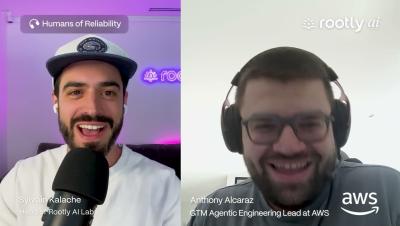
The biggest limitation facing enterprise AI agents may not be the model. It may be the context surrounding it. Anthony Alcaraz, Senior AI/ML Portfolio Growth Manager at AWS and co-author of O'Reilly's *Agentic GraphRAG*, joins Humans of Reliability to explain why reliable agents need more than a vector database and a large context window. They need structured knowledge they can navigate, memory they can prune, constraints they can follow, and feedback loops that help them improve.

Share packages across your workspace with internal packages

We launched Bitbucket Packages to give teams one place to manage code, pipelines, and artifacts, and we’ve been expanding it ever since, first with Maven and npm, then PyPI and NuGet. Every one of those packages has shared one trait: it lives inside a single repository and inherits that repository’s permissions. Most of the time, that’s exactly what you want. But it also means sharing a package across repositories has meant granting people access to source code they never needed to see.

Cortex Platform Walkthrough

In this video, Becka gives a guided tour of Cortex, the Engineering Operations Platform that runs mission control for your AI software factory. Learn how to centralize visibility, clarify ownership, and automate standards across your entire software ecosystem. What we cover: Why Cortex: Cortex is where engineering leaders run mission control for the AI software factory: the visibility, intelligence, and controls to keep teams shipping fast without letting accelerated output turn into accumulated risk to reliability, security, and cost.

Scanners aren't enough. Here's the layer most teams are missing.

Vulnerability scanners tell you what's wrong with what you already pulled. They don't stop a malicious package from entering your environment in the first place. A private registry with minimum release age policies adds that missing layer – packages newer than two or three days don't reach developers until the industry has had time to identify and remove malicious ones from public registries. Active campaigns like TeamPCP are targeting npm, PyPI, and Maven Central right now. The gate has to come before the scan. Cloudsmith provides that gate.

Don't add a read replica until you've read this

As the size and complexity of their relational database workload grows, every company eventually goes through the process of off-loading work on a read replica. It comes with lots of benefits, but at a cost of increased complexity. This article is about how we dealt with that, a lot of learnings, and some useful techniques. incident.io is an incident management product relied on by thousands of customers to be the thing that supports them through anything from a minor blip to a full outage.

Preparing for CIP-015: Building Operational Resilience Through Visibility, Detection, and Segmentation

Utility organizations preparing for CIP-015 should think beyond compliance. The organizations that will be best positioned are those investing in comprehensive network visibility, continuous operational intelligence, and segmentation to strengthen cyber resilience and operational continuity. This article explains what CIP-015 means, why it matters, and how Teneo helps utilities build a practical roadmap toward operational resilience.

How to Minimize Downtime During a Microsoft 365 Migration

Moving your organization's email, files, collaboration tools, and user accounts to Microsoft 365 is a major step toward a more flexible and secure workplace. Whether you're replacing an older email platform, merging companies, or reorganizing your IT environment, the migration process requires careful planning.

Why Communities Hate Data Centers and How DCIM Can Help

Across the United States, data center projects are being stalled, local governments are putting ordinances in place to limit data center buildouts, all because people hate data centers. Due to community pushback, in Q1 2026 alone, over $130 billion’s worth of AI data center projects has been blocked or delayed.

PostgreSQL and MariaDB autoscaling: how full-stack autoscaling closes the database gap

When platform providers talk about autoscaling, they usually mean one thing: application autoscaling, adding or removing web instances based on traffic. The pattern is well understood. Define a metric, set a threshold, and let the platform act on it. Most platforms still leave database capacity as a separate, mostly manual problem. Teams either pre-provision for the worst hour of the worst day, upgrade plans on a calendar, or wire together their own scaling logic on Kubernetes or RDS.

The True ROI of Cloud Migration: Modernization, and AI Unlock

For years, the cloud migration business case was framed around one comparison: “Will AWS be cheaper than our data center?” That question still matters, but it is no longer where the value is. The 2017-2024 wave of mass migration is largely complete. Most enterprise workloads are already in the cloud - often in a lift-and-shift state: oversized instances, commercial-OS BYOL, on-prem-shaped network designs, and legacy frameworks that block the next step.

Shipped: Take your AI cost table straight into your own reports

A design partner told us the AI Explorer table needed a way to get data out so it could be saved and shared elsewhere. Now you export the whole view in one click, cost, tokens, cache, and model count all included. The values come through as clean numbers, not text you have to scrub. It’s the same pattern as Explorer, so there’s nothing new to learn.

Software Release Management: A Practical Guide for Engineering Teams | Harness Blog

Software release management moves code through testing, approval, and into production with a clear rollback plan. 72% of organizations have hit a production incident from AI-generated code; developers now ship 63% faster (Harness, 2025). Effective release management needs defined stages, approval gates, automated testing, and the ability to roll back quickly. Feature flags, automated safety gates, and progressive delivery let teams ship faster and safer as AI raises code volume.

Custom deployment permissions for your environments (Beta)

You shouldn’t have to grant full repository admin rights just to let an engineer or release manager trigger a deployment. To solve the all-or-nothing access problem, Bitbucket Pipelines introduces custom deployment permissions (Beta). You can now gate specific environments to authorized users and groups, ensuring safer releases and easier compliance. Left: Add users and groups to gate deployments for this environment.

Shipped: Your Snowflake Data Share queries just got faster and cheaper

If you pull cost data from a CloudZero Snowflake Data Share, a request for just a few days of data could be surprisingly slow and expensive. Because of how the data was stored, Snowflake had to read far more than the days you asked for. You paid for that in query time and credits.

Bridging the AI context gap: Why your IDE needs a platform contract

Hosting an MCP (Model Context Protocol) server on Upsun lets AI IDEs like Cursor, Codex, Claude Code and Windsurf reach real infrastructure context (database schemas, service logs, environment variables), closing the gap between local coding assistants and your cloud environment.

Infrastructure as Code Isn't Enough: Why Database Delivery Must Evolve | Harness Blog

‍ For more than a decade, Infrastructure as Code (IaC) has transformed how engineering organizations build and operate systems. Infrastructure became programmable, provisioning became repeatable, and configuration became version-controlled. Teams gained the ability to automate environment creation, enforce policy consistently, and scale infrastructure operations far beyond what manual processes could support.

Tracing a memory leak bug in PID 1 and contributing an upstream fix: a Linux support story

Some memory leaks are straightforward to detect. A process allocates memory, forgets to free it, and grows until something breaks. This was not that kind of leak. This is the story of how Canonical Support helped a global retail organization trace the cause for an unusual memory leak originating in PID 1, the very first process started by the kernel during the system boot sequence. The memory footprint was 10 times higher than expected.

Microsoft's 570 Patches Just Armed Every Attacker

Microsoft patched 570 security vulnerabilities this Patch Tuesday — but every patch is also a public disclosure. The second those fixes drop, attackers know exactly where 570 weaknesses live. The only question that matters: can you find and patch them across your entire environment before someone exploits them? The speed of discovery is only increasing. Are you ready for the velocity of this new world? Let us know in the comments.

AI-Powered Ransomware Is Here: How Agentic AI Is Changing Cybersecurity

AI-powered ransomware is becoming a reality. Researchers recently demonstrated autonomous AI agents that can scout networks, steal credentials, and accelerate ransomware attacks. In this 60-second Zero Ticket Minute, learn what this means for cybersecurity, IT operations, and the future of agentic AI. Can AI also help stop these attacks? Watch to find out.

Cortex | Tabular Views Now in Public Beta

The World Cup is down to the final two, and so is Cortex's Coming Home Dashboard. In this Feature Friday, VP of Strategic Initiatives & Marketing Cristina Buenahora walks through an update on the Coming Home Dashboard she and Edward Spencer built a month ago, and the product update behind it. What she covers: Whether you're tracking brackets or tracking engineering maturity, the view's the same. Reach out to your CSM to try it.

You're already using AI without realizing it

You're already using AI without even thinking about it. That's the realization that kicks off this ShipTalk moment: Apple Maps quietly using on-device machine learning to learn your routes and driving habits — complete trust, zero thought. Which raises the real question: why aren't we there yet with AI in software delivery? The answer comes down to one word: guardrails. Consumer AI earned invisible trust. Shipping software hasn't — not until the guardrails catch up.

Why multicloud has become a governance decision

For most IT leaders, multicloud didn't arrive as a decision. It arrived as a fait accompli. A team chose AWS for one workload. Azure came in through a Microsoft enterprise agreement. A SaaS acquisition brought its own cloud dependencies. A DR requirement pointed to a second region with a different provider. Nobody declared a multicloud strategy; the organization just became one. Today, 87% of organizations run a multicloud strategy, balancing an average of 2.6 public cloud providers simultaneously.

Tealium's Dr. Martin Nettling on reviewing AI-generated work

Cortex co-founder and CTO Ganesh Datta sits down with Dr. Martin Nettling, Senior Director of Engineering and Head of QA at Tealium, to explore the distinction between trusting people and having confidence in tools, and why that difference matters as AI becomes part of every engineering workflow.

The Investigator That Remembers: Inside Klaudia Memory

There is a particular kind of incident every SRE team is familiar with. A common component of your stack, say your Redis database, starts misbehaving. Someone spends two hours tracing it back to a connection pool exhausted by a misconfigured client, the fix goes in, and everyone moves on, for today. The following Tuesday it happens again, and whoever is on call investigates it from scratch, because the person who solved it last week is asleep, on vacation, or working somewhere else now.

Identity and Permissions for AI Worker Agents in Harness | Harness Blog

When we launched Autonomous Worker Agents, governance inherited, not integrated, was the core promise: agents run inside the same pipelines, and inherit the same RBAC, policy, and audit trails already governing production, rather than getting security bolted on after the fact.

Harness + Cursor IDE: Accelerating Safe Software Delivery with AI Agents

While AI coding assistants help developers write code faster than ever, the traditional manual workflows for delivery, security, governance, and production readiness often create a bottleneck. In this demo, see how Cursor and Harness bridge this gap by turning AI-generated code into a safe, governed, and production-ready software delivery lifecycle right from your IDE.

UFO.Hosting Review: KVM Virtualization, NVMe Storage, and Network Performance for DevOps

For infrastructure teams and system administrators, the primary challenge of sourcing virtual private servers is rarely about finding the cheapest cores; it is about securing resource consistency. Too many VPS providers quietly overcommit their hypervisors, leading to volatile CPU steal rates, degraded disk I/O, and unpredictable application performance during peak hours.

Native macOS Monitoring: Logs, Sensors, GPU & Hardware Health

We’ve overhauled macOS monitoring in the latest Netdata release. Netdata already collects system metrics on Macs at per-second resolution; this release completes the picture with logs and hardware telemetry, areas that previously required users to run CLI tools like log show and powermetrics. The new collectors read this data through Apple’s own frameworks, allowing users to trace application and OS errors and catch hardware issues early.

Native, full-stack autoscaling on Upsun: PostgreSQL and MariaDB read replicas now autoscale

Application autoscaling has existed for years. Database autoscaling has lagged behind. Today, that changes on Upsun. Managed PostgreSQL and MariaDB read replicas now autoscale, joining worker autoscaling in production since March 2026. Apps, workers, and managed databases all autoscalead replicas saturate first, connection pools max, someone getse on one platform - natively, without a third-party database engine or a Kubernetes layer to operate. Three operational headaches just disappeared.

DevOps Platform Explained: Why Unified Wins Over Siloed Tools | Harness Blog

A DevOps platform unifies the entire software delivery lifecycle. Unlike standalone tools that automate individual tasks, a DevOps platform connects CI/CD, security, governance, artifact management, infrastructure, and engineering workflows into a single software delivery system. Tool sprawl creates operational complexity as engineering organizations scale.

The Ford assembly line lesson: parallels for AI transformation

Ford's competitors had the same electric motors he did. Most just swapped out the steam engine and kept the old factory layout, a costly mistake. Ford used the new tech to rebuild the plant around the flow of the car. Knowing how much power each machine drew, he knew his cost to produce a car, and made personal automobiles affordable for all.

Dynamic MCP Server Demo | Connect AI Agents to Enterprise Automation with Resolve Actions Pro 8.1

Learn how to create and deploy a Dynamic MCP Server in Resolve Actions Pro 8.1 and securely expose enterprise automation to AI assistants using the Model Context Protocol (MCP). In this walkthrough, you'll see how to configure an MCP server, publish automation runbooks, connect to Claude Desktop, and execute enterprise workflows directly from an AI assistant. With Dynamic MCP Servers, organizations can make existing automation instantly accessible to AI agents without rebuilding workflows.

AI vs. AI: from alert fatigue to agentic cybersecurity

AI is transforming cybersecurity on both sides of the battlefield. Attackers can now launch highly personalized phishing campaigns at scale and build malware capable of making autonomous decisions. At the same time, security teams are using AI agents to investigate alerts, reduce noise, and respond to threats faster. In this episode of Humans of Reliability, we speak with Nir Soudry, Head of R&D at 7AI, about the shift from alert fatigue to agentic cybersecurity.

How Puppet Helps with System Hardening

You've identified the risks, now it's time to fix them. In this walkthrough, see how Puppet helps you turn the results of your System Hardening Assessment into real-world improvements across your environment. Learn how to remediate common security and compliance gaps, enforce secure configurations at scale, and continuously maintain hardened systems without relying on manual effort.

Announcing the Harness CLI: Built for Humans and Agents | Harness Blog

---‍Key Takeaway: Today, we're launching the public beta of the Harness CLI: the single, officially supported command-line tool for the entire Harness platform. It replaces the older per-module CLIs with one binary, one grammar, and one auth flow across pipelines, CD, code, artifacts, IaCM, feature flags, governance, and audit. Designed for secure DevSecOps and enables terminal workflows for developers and deterministic execution for AI agents. ---

PagerDuty Announces Arnaud Lagarde, Vice President of EMEA

PagerDuty, Inc. announces the appointment of Arnaud Lagarde as vice president of EMEA. Lagarde will lead PagerDuty's next phase of growth in the EMEA region, bringing the entire incident management lifecycle to customers across EMEA to solve their biggest digital challenges.

Why colocation is becoming the foundation of sovereign AI

The last few years have seen AI conversations dominated by the need for investment in hyperscale infrastructure as firms race to build ever larger training models. But as those conversations evolve, the emphasis is shifting to the next phase of AI adoption, focusing on the scaling of use cases and real-world value. In line with this shift, organisations are looking beyond where AI is trained to the specifics of where it is actually used.

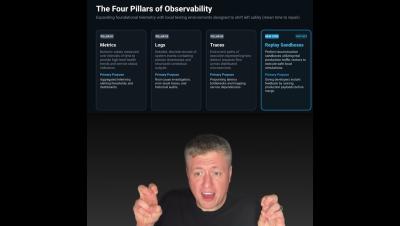
AI is Exposing Observability's Dirty Secret

The 3 pillars of observability are breaking. For years, dev teams relied on Logs, Metrics, and Traces to know when something went wrong. But now? AI agents are writing, deploying, and changing code in real-time. When an AI hallucination pushes a bug to production, standard monitoring sees nothing wrong.To survive the AI era, we need a 4th Pillar of Observability. Watch to find out what it is and why the old way of monitoring just became obsolete.

The Cost of Idle Resources in Your Data Center

Idle resources in your data center are a liability. Every unused server drawing power, every underutilized rack consuming cooling capacity, and every stranded port sitting dark on a switch represents money spent with no operational return. That's always been true for traditional compute. It's even more consequential as organizations invest in GPU infrastructure for AI workloads, where the hardware is an order of magnitude more expensive and the cost of underutilization scales accordingly.

Agentic Automation vs. Process Automation: What's the Difference?

Automation has always promised the same basic things: less work, faster resolution, and more consistency. What has changed is how much judgment automation can now apply before work begins. Traditional process automation is excellent at executing known steps. Agentic automation, though, adds a new layer: AI systems that can decide which action or workflow should happen next. That difference matters a whole lot.

Compliance Without Complexity: Introducing Harness Rego Policy Packs | Harness Blog

In the fast-paced world of modern software delivery, compliance is often a bottleneck. While our existing OPA-based Policy as Code feature has long empowered teams to encode complex authorization checks and enforce granular governance across their DevOps workflows, we know that starting from a blank page can be daunting. Security and governance teams struggle to keep up with the volume of releases, while developers often find the initial setup of these policies to be time-consuming.

Poisoning The Pipeline: How The Mastra AI Ecosystem Was Poisoned At The Registry Level | Harness Blog

The open-source landscape has witnessed another highly automated, ecosystem-level subversion. On June 17, 2026, a critical software supply chain attack struck the Mastra AI framework - a popular open-source TypeScript ecosystem used widely to build AI agents, workflows and RAG pipelines. By exploiting a compromised contributor account, threat actors successfully mass-published 144 malicious packages under the official @mastra npm scope.

AI Is Writing More Code Than Ever. Your Release Process Hasn't Kept Up. | Harness Blog

A new report from LeadDev and Harness makes one thing clear: AI coding tools have fundamentally changed how much code organizations are producing. What has not changed nearly fast enough is how that code gets released. The State of AI-Driven Software Releases 2026 report, based on responses from 500424 engineers across industries and company sizes, puts real numbers behind a problem that engineering leaders have been feeling for a while. AI is accelerating the code creation side of the SDLC.

Is It Time to Rethink Your Multicloud Strategy?

The original case for multicloud still holds — but the conditions around it have shifted significantly. Here's what you should be asking before your next cloud decision. Most organizations didn’t set out to have a multicloud strategy. They just accumulated one – a mix of providers, tools, and integrations built up over time as individual workload decisions compounded into something that now requires a strategy of its own.

Managing AI Agent Primitives Like Real Software Packages with APM and JFrog

AI agents are part of the modern development workflow. They write code, review pull requests, generate tests, call tools, interact with MCP servers, and help developers move faster. But behind every useful agent, there is something just as important as the model itself: the context that tells the agent how to behave. That context can include skills, prompts, instructions, hooks, commands, scripts, references, and MCP server definitions. In a small project, managing these primitives is pretty simple.

Enterprises are making their biggest AI bets blind

AI cost observability is the practice of measuring, attributing, and analyzing AI workload costs at the request, model, and workflow level in real time. It connects cloud infrastructure spend, inference and token costs, and business attribution (cost per feature, team, customer, or product) so engineering, finance, and product teams can see where AI spend goes and whether it creates value. On July 14, IBM had its worst trading day since 1987.

This is what cloud freedom looks like

Proprietary tech. Vendor lock-in. Pricing you can't predict. The hyperscaler model has defined cloud computing for years. Civo was built to change that. Civo CEO Mark Boost sets out the vision, a multi-cloud and hybrid cloud future built on open standards, full cloud parity, and genuine user choice. Public cloud, private cloud, and AI infrastructure that gives you total control over your data, your infrastructure, and your spend.

What is AI cost observability? A guide to tracking LLM and AI spend

AI cost observability is the practice of measuring, attributing, and analyzing AI workload costs at the request, model, and workflow level in real time. It connects cloud infrastructure spend, inference and token costs, and business attribution (cost per feature, team, customer, or product) so engineering, finance, and product teams can see where AI spend goes and whether it creates value.

The rise of dark code and the death of architectural intent

As Staff Engineers and Principal Architects, most of us have spent years thinking about long-term system health. We are considerate of the company’s business objectives and strategy, accumulation of technical debt, and operational risk. For us it is not about whether code works today, but whether the engineer who inherits it in three years will be able to understand what it was trying to do and why. That's what makes a codebase maintainable rather than just functional.

Eliminate Reliability Blind Spots in AWS, Azure, and GCP

Cloud resilience often feels like an uphill battle. When you’re overseeing hundreds of applications across different providers, identifying potential failure points manually is nearly impossible. You’re left trying to find the needle in a haystack—a needle that could take down your entire application at any moment. To truly protect your uptime, you have to break the cycle of reactive troubleshooting.

Why the U.S. Locked Down Fable and Mythos: AI, National Security, and the Workforce Squeeze

The U.S. just barred foreign nationals from accessing two advanced AI models — Fable and Mythos — citing national security. Around the same time, the Five Eyes intelligence alliance warned that AI-enabled cyberattacks are "months, not years" away. In Season 5 of ShipTalk, host Adam and co-host Martin dig into whether that warning is already overdue — and what it means for the people actually defending software.

Why the Netherlands Is a Strategic Hosting Location for EU-Focused Businesses

Selecting the optimal physical server location is one of the most critical infrastructure decisions for an expanding enterprise. For digital businesses serving European users, the Netherlands has firmly established itself as the digital gateway to the continent. Situated at the very core of Europe's telecommunication crossroads, Dutch infrastructure offers unprecedented network connectivity, stringent legal data protections, and low-latency throughput.

Top 5 Network Diagramming Tools for 2026: Ultimate Guide for IT Teams

Network diagramming is the backbone of successful IT infrastructure planning and troubleshooting. The right diagramming software saves organizations time and prevents costly errors, especially as systems grow in complexity and scale. Below, discover the five best tools for network diagramming in 2026, evaluated through rigorous criteria and supported by industry data, so you can confidently select the ideal platform for your needs.
Sponsored Post

Fixing 403 auth errors when you replay traffic

Trigger warning: this one is about Java, authentication, and Docker Compose files. If that is not your thing, I am sorry, but they are part of life and they are honestly not that hard to work with. Everything here is open source on our GitHub repo, so you can follow along. Recording an authenticated Java flow, replaying it, hitting the dreaded 403, and fixing it with a proxymock recommendation.

How We Secured AI Worker Agents in Harness | Harness Blog

When we launched Autonomous Worker Agents, the message we led with was simple: governance is inherited, not integrated. Agents don't get security bolted on after the fact. They inherit the OPA policies, RBAC, and audit trails already running your production pipelines. This post is about the layer underneath that promise: isolation. We let an Autonomous Worker Agent run shell commands and call APIs inside our pipelines.

AWS, GCP, Azure - We Pick The Best of Every Cloud

When your platform is tied to a single cloud, every move turns into a migration. This team decided it didn't have to be. In this clip, a Control Plane customer explains how separating their platform from the cloud provider underneath changed the math on infrastructure. Instead of being locked to one vendor, they can pick the best services from each cloud and move workloads to AWS without jumping through hoops. The kicker: a migration whose sheer scale would have "scared them off" becomes a non-event once your platform isn't welded to a single provider. Control Plane is an AI-native virtual cloud.

Code-Level Migration Assessment for AWS

Infrastructure assessment tools scan your servers and estimate migration cost based on CPU, memory, and storage. They do not read your application code. Applications that appear migration-ready at the infrastructure layer may contain thousands of lines of code that block cloud adoption. Without code-level visibility, teams cannot make accurate 6R decisions.

MySQL Query Optimization With dbForge Query Profiler

Learn how to optimize SQL queries in MySQL with Query Profiler in dbForge Studio for MySQL. This video shows how to monitor query execution plans , track resource consumption, identify performance bottlenecks , and validate query optimization results. Query Profiler helps developers, DBAs, and database engineers analyze query execution, find slow operations , review session statistics, compare profiling results, and improve MySQL database performance .

Redgate Monitor Product Updates - July 2026

This set of Redgate Monitor updates brings new AI-powered tooling into how teams work with their estate, alongside expanded coverage for Google Cloud SQL and Contained Availability Groups. Whether you're looking to get faster, insightful answers, plug Monitor into your own AI stack, extend monitoring to a new cloud platform, or keep job visibility intact through a failover, there's something here for you.

How the TLS handshake works, and why half of it is gone

Every HTTPS connection starts with a TLS handshake. It’s the security check, answering “are you who you say you are?” and “how are we going to keep this conversation secret?”. There’s a lot going on during the handshake, and there used to be even more before it all got hacked and removed. And that’s useful to understand, the modern TLS 1.3 handshake is short because everything else got compromised.

99% of database professionals are seeing AI benefits. So why are the security challenges increasing?

The numbers from the 2026 State of the Database Landscape: AI Edition are striking. 99% percent of respondents using AI report at least one measurable benefit for their database work. Automation is up, performance is improving, and three-quarters report significant cost savings. By almost any measure, AI is delivering. However, sitting alongside that near-universal positivity in the same dataset, security and privacy concerns have climbed to 64%. Regulatory compliance anxiety has risen to 40%.

IT on the 4th of July? Not with AI. | Zero Ticket Minute

What if your IT team could enjoy the Fourth of July without getting interrupted by password resets, VPN issues, and routine service requests? In this week's Zero Ticket Minute, see how agentic AI and automation help eliminate repetitive tickets so IT teams can enjoy the holiday while work gets done.

Puppetlabs Modules Now Have Tiered Review Cycles

If you've been watching the Puppetlabs namespace on the Forge (or waiting on a pull request you opened) you've likely noticed that the pace of inclusion of community pull requests and fixes into the module releases has slowed over the last several cycles. That isn't how we want to serve the community that built these modules with us. The team has been reviewing how we can improve and this post is our commitment to do better. Here are the steps we're taking now: Back to top.

Best VMware Alternatives in Indonesia for Growing Enterprises

If you're an IT manager in Indonesia, chances are you've had at least one awkward conversation with your CFO about VMware licensing costs. After Broadcom's acquisition of VMware, enterprises across Southeast Asia, including hundreds in Indonesia, started seriously asking: Is there a better way?

Why Network Visibility Starts at the Switch Layer

Every IT team strives to improve visibility dashboards, alerts, and efficient root cause analysis. Of course, we tend to believe that all this is achievable via software, install some monitoring platform and immediately see all processes happening inside the network. But it's not always the case. The software monitoring solution can only show what the network itself allows you to see and such visibility starts at the switch layer.

Code Flow Live: What's New and Why It Matters

AI didn't just change how fast code gets written. It exposed a new bottleneck: everything around the code. Reviews slow down. Context gets lost. Planning drifts from implementation. Teams move fast and still feel stuck. That's the problem GitKraken is built to solve, and this Friday we're going live to walk through what's changed. We'll cover the latest Code Flow Company features we've shipped, how they connect developers, AI agents, and production into one system, and what it actually looks like to go from plan to main without the chaos.

The DevOps Hiring Crunch: How Distributed Teams Are Closing the Gap

Ask any engineering leader what keeps them up at night and "who's covering the pager next Tuesday" is usually somewhere on the list. DevOps and SRE roles have become some of the hardest positions to fill in software, and the shortage is starting to show up in the metrics ops teams care about most: MTTR, alert fatigue, and how many people are burned out on the on-call rotation.

Slack overview video

The new Spike app for Slack brings incident response into the channel your team already works in. This walkthrough covers the @Spike AI assistant, the redesigned incident alert template, Statuspage syncing, and on-call overrides. To get started, head to Slack settings inside Spike and reconnect the app. Chapters Statuspage syncing is available on all plans. Spike is an incident response and on-call management platform. Alert routing, escalation policies, on-call schedules, and incident management, built for engineering teams.

Upgrade Your AWS Deploy Orb to Get Deploy Markers

Upgrade to the latest version of your AWS deploy orb to get automatic registration of deploy markers. This will give you instant access to deployment timeline, auto-rollback, and version comparison when something breaks — for about five minutes of effort. It will also switch you to OIDC, so there are no long-lived keys to manage. It’s a single version bump. Here’s how.

How Agentic AIOps & Autonomous IT Are Revolutionizing IT Operations | LogicMonitor + IBM

Discover how LogicMonitor and IBM, alongside Edwin AI, are transforming modern IT operations. In this panel discussion, Garth Fort (Chief Product Officer at LogicMonitor) and industry experts break down how businesses are moving past basic observability to embrace self-healing automation and autonomous IT across complex hybrid environments.

Why AI agents need a job description | The future of agentic AI in IT

An AI agent is only as useful as the job you can safely hand it. In this Zero Ticket Minute, Ian Coppock, Resolve Customer & Partner Marketing Manager, breaks down why enterprise AI is moving toward purpose-built agents with defined roles, scoped permissions, and real guardrails. That is the foundation for autonomous IT operations and Zero Ticket IT. Subscribe for weekly insights on AI, IT automation, and where enterprise operations are heading.

Cortex Scorecards + DRIVE: measure engineering org health, not just output

Most engineering metrics track individual output. DRIVE measures the health of the system as a whole. In this Feature Friday, Director of Customer Education and Delivery Taylor Schmidt walks through Cortex's DRIVE scorecard and dashboard, a framework covering five pillars: delivery, reliability, initiatives, vigilance, and efficiency.

Why features pass QA and still break in production

Database migrations are where the mock data problem shows up most clearly. A migration that adds an index to a table with 500 rows in the development database runs in milliseconds and passes every test. The same migration against a production table with 8 million rows locks the table for 90 seconds during peak traffic. Nobody saw it coming because nobody tested it against 8 million rows. This isn't an edge case.

IPoDWDM Router Solutions: A Modern Approach to Network Architecture

The relentless growth of data traffic, driven by cloud services, high-speed residential broadband, 5G mobility, and enterprise digitalization, places enormous pressure on network infrastructure. Service providers and large enterprises must scale capacity while simultaneously controlling costs and reducing operational complexity. In this environment, traditional network architectures are reaching their breaking point, creating an urgent need for a more efficient and integrated approach to transport.

Shai-Hulud style attacks need more than scanning

Pre-install scripts mean a malicious package can compromise a developer's laptop the moment it's pulled – no build, no deploy, no install required. That breaks the old model where scanning catches a bad package after the fact, when it's already too late. The fix is active policy enforcement at the point of pull, using signals like package age, signed provenance, and maintainer trust to filter out malicious packages before they ever land.

We rebuilt Spike app for Slack

The new Spike app for Slack brings incident response into the channel your team already works in. This walkthrough covers the @Spike AI assistant, the redesigned incident alert template, Statuspage syncing, and on-call overrides. To get started, head to Slack settings inside Spike and reconnect the app. Chapters Statuspage syncing is available on all plans. Spike is an incident response and on-call management platform. Alert routing, escalation policies, on-call schedules, and incident management, built for engineering teams.

PostgreSQL 19 Release: New Features, Release Date, and Upgrade Notes

With PostgreSQL 19 on the horizon, query planning could get smarter thanks to new query tools and faster maintenance. The release is still a few months away, but Beta 1 already shows where PostgreSQL is headed. Released on June 4, 2026, PostgreSQL 19 Beta 1 previews most of what’s planned for the final release.

AI writes code in seconds, but delivery still takes days

The pitch for AI coding was speed. Claude Code, Copilot, Cursor, whatever you’re running, they all generate business logic faster than you can review it. That part is real. But look at what happens after the code gets written and the numbers get ugly. CircleCI’s 2026 State of Software Delivery Report found AI drove a 59% increase in average throughput.

Building AI SRE Agents, Part 1: Start Local, Break Things, Learn Fast

The first stage of AI SRE maturity is a laptop, a throwaway cluster, and zero production access. Here’s how to set it up, and what to watch for. AI SRE (Site Reliability Engineering) agents are AI-powered systems that automate the most time-consuming parts of incident response: triaging alerts, correlating logs and metrics, generating root-cause hypotheses, and proposing remediation steps.

Boost Is Now In Public Preview

Today, we’re excited to announce that Boost is moving out of beta and into public preview. After months of building, breaking, and rebuilding inside JFrog’s own R&D organization, Boost is ready for the world. If you are currently running into token limits, unpredictable costs, or runaway usage from AI agents, Boost was built for you. It has already helped our teams reduce token spend while maintaining performance.

Why cloud repatriation is happening now

Cloud first was gospel for a decade. But the calculus has changed, and organisations are asking harder questions about where their workloads actually belong. In this clip, Civo Product Director Russ Smith breaks down the four forces that have converged to shift the default: spiralling bills that are no longer defensible at scale, the Broadcom acquisition that detonated VMware pricing overnight, sovereignty becoming a boardroom procurement requirement, and AI making new hardware brutally expensive.

How to Trace Microservices WITHOUT OpenTelemetry

Learn how to trace complex multi-hop transactions across microservices when OpenTelemetry isn't available or trace parents get lost. This quick tutorial demonstrates how to use full-text search in proxymock (a free CLI and UI tool) to isolate user journeys (like looking up a specific username) and instantly generate waterfall tracing views. Whether you are working locally or in a Kubernetes cluster, you can record API traffic, visualize multi-hop requests, and easily transition those captures into load or regression tests.

Is SQL Server really "too legacy to love"? | The Simple Talk Podcast

In a recent article, The Register suggested that SQL Server is “too lucrative to ditch, but too legacy to love” - but is that actually true? With many years’ SQL Server, PostgreSQL and Oracle experience between them, Steve Jones, Kellyn Gorman, Grant Fritchey, and Pat Wright offer their thoughts on the article, and the current state of SQL Server as a whole - including how it fares against other databases in 2026.

Application monitoring tools in 2026: APM, observability, and AI monitoring compared

Application monitoring tools track your application's health, speed, errors, and resource usage in real time. Also called APM tools or application performance monitoring software, these tools are essential for any team running production workloads. The leading options in 2026 are Datadog, New Relic, Dynatrace, Grafana, and Elastic APM for traditional workloads, plus Arize AI, LangSmith, and Weights & Biases for AI observability.

How to Migrate Terraform State Between Backends

Terraform state doesn't stay put forever. Teams outgrow local state files, consolidate multiple backends into one, switch cloud providers, or decide it's time to move off a platform that's no longer working for them - HCP Terraform's free tier ending and its resource-based pricing is a common trigger these days. Whatever the reason, the state file itself is the part everyone's afraid to touch, because it's the only record of what Terraform thinks your infrastructure actually is.

Managing Ubuntu on bare metal at scale

Modern infrastructure teams are expected to deliver cloud-like speed, consistency, and reliability, even when their workloads run on physical servers. Bare metal remains essential for many environments: private clouds, Kubernetes clusters, AI infrastructure, edge sites, regulated platforms, and large Ubuntu estates. But operating physical infrastructure at scale is difficult when provisioning, patching, monitoring, and lifecycle management are handled by disconnected tools and manual processes.

How to Streamline Your IT Inventory Storage

Managing corporate hardware stacks often leads to server rooms filled with tangled cords, old monitors, and dusty components. Stash areas get crowded quickly when legacy laptops pile up next to active spare parts. Clearing this extra clutter simplifies daily operations; it keeps your workspace safe and functional. Finding a systematic approach keeps track of your hardware assets without driving your desktop support team crazy.

Why UK Businesses are Shifting Away From the Public Cloud Cost Model

Over the past five years, one of the most consistently tracked figures in the UK business technology sector has been the flight from public cloud. Barclays' 2021 CIO survey revealed that 43% of enterprises plan to shift workloads away from public cloud. By 2024, that had grown to 83%.

How to Set Up Codex with CircleCI Plugin (Full Demo)

Learn how to connect OpenAI Codex to CircleCI so your coding agent can check pipelines, diagnose failed builds, fix bugs, and iterate until your CI pipeline is green. In this step-by-step demo, we walk through how to install and authenticate the CircleCI CLI, install the CircleCI plugin for Codex, validate your CircleCI configuration, and give Codex direct access to CI feedback. You’ll see how Codex can.

DORA measures delivery. DRIVE measures the organization behind it.

You can hit every DORA target and still be losing ground. Deploy frequency up, lead time down, change failure rate and MTTR both healthy, but underneath it could be hiding an organization slowly getting worse at turning work into reliable software. New services shipping without clear owners, an attack surface widening faster than anyone is tracking, on-call rotations quietly filling up, a migration that was supposed to close last quarter still limping along.

How to Build Enterprise AI Agents with Natural Language | Agent Lab Demo, Guardrails & AI Skills

Most enterprise AI agents take weeks to build. This one takes minutes. Watch how Agent Lab creates purpose-built agents with natural language, adds reusable skills, and sets guardrails before anything ships. From idea to production-ready in a single sitting.

AI ROI: From Adoption to Business Proof

AI adoption is easy to report. Business impact is harder to prove. Engineering leaders are under pressure to show what AI is actually changing — not just who is using it, but whether it is improving delivery, quality, developer experience, and business outcomes. This discussion between 3 engineering leaders explores how to move beyond vanity metrics, build a practical measurement approach, and communicate AI’s value to executives and CFOs with more credibility and less hype.

Make SBOM generation a build step, not a compliance project

Compliance work that lives outside the build pipeline becomes developer friction – and friction kills adoption. The simpler fix is to make SBOM generation a standard pipeline step via a reusable template, with output routed automatically to central storage and surfaced to the teams who need it. When developers can see their own license issues and vulnerability exposure without filing a ticket, compliance stops being a tax and starts being a byproduct of shipping.

How to Monitor AI Chats for Risky Content? | AirDroid Parental Control

Is your teen talking to AI chatbots in private? Kids aren’t only spending time on social media anymore — they’re also turning to AI chatbots for advice, stories, and emotional support. Our new Social Content Detection feature now supports AI apps like Character.AI, Gemini and ChatGPT, allowing you to monitor risky keywords and see context screenshots when something feels off. In this video, we'll cover.

GitLens 18.2: AI-Powered Merge Conflict Resolution for VS Code

Merge conflicts rarely make it into a sprint retrospective, but they should. They’re one of the most reliable ways to lose an hour of flow without anyone noticing it’s gone. Every developer expects them eventually, but almost nobody questions the workflow around resolving them.

Certificate deployments just got an easy mode

The old deployment flow expected a lot from you. You had to know what format your certificate needed to be in. You had to know where it should be stored on the target system. Then you had to review and customize a deployment script in a code editor before anything ran. It turns out most of you don’t want to do that. And fair enough, staring at a script editor when you just want a certificate on your Exchange server is a little intimidating.

Make Public Peering More Resilient with BFD and BGP Add-Path on MegaIX

Standard BGP can be slow to react. See how BFD and BGP Add-Path help improve uptime and path diversity on MegaIX. When peering on a public Internet Exchange (IX), standard BGP behavior can introduce delays during topology changes. But if you use MegaIX, there are workarounds. In this blog, we explain two lesser-used features available on MegaIX which maximize uptime and path diversity: Bidirectional Forwarding Detection (BFD) and BGP Add-Path.

Deployment strategies explained: types, trade-offs, and what each one actually costs

A deployment strategy is the method an engineering team uses to release new software to production. The six core deployment strategies are recreate (big bang), rolling update, blue-green, canary, A/B testing, and shadow deployment. Each trades off between downtime risk, rollback speed, infrastructure cost, and complexity. This guide covers all six along with what each strategy actually costs in cloud and AI infrastructure spend.

5 takeaways from the State of Software Delivery Q2 Pulse report

AI is pushing code volume up almost everywhere. Shipping it is still the hard part, and the gap between leaders and everyone else is getting wider. Today we’re releasing the 2026 State of Software Delivery Q2 Pulse report, a shorter check-in between our annual reports. We analyzed more than 20 million CircleCI workflows from March 2026 to see what’s changed since the comprehensive 2026 State of Software Delivery report we published in Q1.

How do you run AI when your data can't leave the network?

Highly classified environment. Strict compliance requirements. Data that can't leave the network. But still a real need for the competitive advantage AI delivers. Civo Director of Enterprise Cloud Solutions John Dietz addresses exactly that challenge and how Konstruct makes it possible to run Kubernetes, deploy your own models, and point Claude Code at your own internal private servers instead of public APIs.

Amit explains AO

Most enterprises have observability tools. What they often lack is a shared view between application and infrastructure teams. When application performance degrades, finding the root cause can be slow because the data lives in separate silos. Virtana brings application observability and infrastructure intelligence together in a single platform, helping teams identify issues faster, collaborate more effectively, and shift from reactive troubleshooting to proactive operations.

Is your data truly yours? Why data sovereignty in India matters more than ever

As businesses in India embrace the cloud, a critical question looms: Where does your data really live, and who controls it? India's cloud market is estimated at USD 26.43 billion in 2026, growing at 21% annually with projections reaching USD 68.82 billion by 2031. This rapid expansion underscores the strategic importance of cloud infrastructure in the country, but with growth comes growing urgency.

GitHub Copilot cost: what teams actually pay in 2026

The GitHub Copilot cost runs from $0 for the Free tier to $10/month for Pro, $39/month for Pro+, and $100/month for Max. Teams pay $19/user/month for Business and $39/user/month for Enterprise. The twist: on June 1, 2026 GitHub swapped fixed premium requests for usage-based AI Credits, so what those flat fees actually buy now depends on how hard you push the AI. The sticker price is the easy part. The part that ambushes finance is everything stacked on top of it.

How to enable post-quantum cryptography and TLS termination with HAProxy

Every time a client connects to your server, a small negotiation happens before a single byte of application data moves. That negotiation, the TLS handshake, is what makes encrypted web traffic possible. It's also at risk of being recorded. Not the content of your sessions, but the handshake itself. And that's enough. A well-resourced attacker doesn't need to break your encryption today.

DRIVE Deep Dive: Reliability

This is the second post in our DRIVE Deep Dive series. Over the coming weeks we're examining each pillar of the DRIVE framework in turn, and mapping DRIVE against the frameworks engineering leaders already run on, including DORA and SPACE. For the complete model, download the full DRIVE framework. Our last post covered Delivery. Up next: Initiatives. --- AI has removed the last real constraint on producing code, and organizations are shipping more of it than ever.

How to Evaluate an Agentic Process Automation Platform in 2026

Agentic AI has moved quickly from experimentation to enterprise planning. IT leaders are no longer asking whether AI agents can summarize tickets; they’re asking a more important question: Can agentic AI actually complete work consistently and measurably? That is where agentic process automation becomes critical.

What is digital transformation and why it is important?

A digital transformation can help a business thrive. Developing a strong technology stack that works for your business is essential for growth. Investing in a digital transformation means finding what works for your business and ensuring the best operations through your digital tools.

When Anyone Can Build Software, Deployment Governance Is What Keeps It Safe

This is Post 2 of The Governance Gap series. Post 1, "The New Software Creator," established that the most significant shift from AI isn't developer speed - it's that the population of builders has fundamentally expanded. Something quiet happened in most engineering organizations over the last 18 months.

Why individual AI adoption is breaking team-level throughput

There is a question a lot of engineering leaders are quietly sitting with right now: we have rolled out AI tools across the team, the developers seem faster, so why isn't more software actually shipping? It is a reasonable thing to consider. Pull requests are opening faster. Lines of code per sprint are up. The boilerplate that used to take full afternoons now takes minutes. By every local measure, the investment is paying off.

Driving Value from Puppet Metrics: Puppet Observability Data Connector

The Puppet Observability Data Connector is a premium Forge module included with Puppet Enterprise Advanced (PEA). This module provides a deeper dive into your Puppet agent reports. Visualizing these metrics gives you a great way to identify what is healthy and unhealthy in your environment.

Ubuntu Server: a platform made for enterprise scale

A platform is an environment that allows software to run smoothly across the infrastructure, runtime, and application layers. The key word there is “smoothly”: a good platform connects those layers so well that you don’t notice it. That’s what Ubuntu Server has become: the essential layer between bare metal and the apps running on top, continuously optimized across resource management, networking, and security. Ubuntu 26.04 LTS represents over 12 years of that work coming together.

Cut CI Environment Setup Time in Half with Chunk sidecar Snapshots

Waiting minutes for CI feedback while you're building with AI agents kills your momentum. Chunk sidecars snapshots let you freeze your environment after setup, so every boot skips the install and starts from a cached state instead of scratch. In this tutorial, we demo how to set up Chunk sidecars, snapshot it, and boot from that snapshot. We also benchmark the difference: a cold sidecar start took 45 seconds. Booting from the snapshot took 12 seconds. That's 30+ seconds saved on every run, multiplied across every developer, branch, agent, and session.

Rebuilding the CircleCI CLI from scratch

Every developer knows the moment: CI goes red, and you face a choice. Open the browser and click through the web UI to the run, the workflow, the job, the step, the log line. Or stay in the terminal, where the fix is going to happen anyway. The new CircleCI CLI exists so you can stay. It’s 1.0, it’s in beta, and it’s a ground-up rewrite in Go, not an iteration on the CLI we’ve shipped for years.

Megaport Achieves SOC 2 Type 2 Compliance

Here’s how Megaport’s new certification gives customers more confidence in the security, availability, and reliability of our platform. Trust is built into infrastructure long before anyone notices it. It sits behind the login screen, inside the change process, across the controls that keep systems protected and services available. It shows up in the quiet, operational work that customers rarely see but rely on every day.

Vulnerability scanners find problems. A firewall prevents them.

A vulnerability scanner tells you what's wrong with dependencies you've already pulled. A dependency firewall decides what enters your environment in the first place. Instead of pulling blindly from public registries, every request is proxied through the firewall – where policy controls what's permitted, threat intelligence flags malicious packages that scanners never see, and enforcement happens at the earliest possible point. Scanning what's already inside is too late.

They stopped shipping features for half a year, now they're thriving

When incidents pile up fast enough, every part of the company bleeds: support is fielding angry customers, AEs are on apology calls, and engineering is burning cycles on retrospectives instead of shipping. For Eran Kampf (VP of Engineering at Twingate, Co-founder Monday.com) where the product is the network, that was the moment he made a call most engineering leaders won't: stop all feature work for a quarter and fix reliability.

How to Set Up Claude Code with CircleCI MCP Server (Full Demo)

AI agents write code fast, but without a validation layer, fast just means faster bugs. In this video, we connect Claude Code to the CircleCI MCP server so Claude can trigger pipelines, pull build failures into context, and iterate until everything is green. No context switching. No copy-pasting logs.

Build Custom Field Templates for Application Assessments

Modernization assessments move faster when the structure is already in place. Instead of recreating custom fields, interview questions, and assessment workflows for every customer, you can use a custom field template to standardize how data is collected from the start. This guide shows you how to create a reusable Tidal Accelerator custom field template using Node.js and the Tidal API, so your assessments are easier to repeat, compare, and scale. So you’re starting a modernization practice.

One SSL certificate on multiple servers

Every certificate renewal automation tool has to answer one architecture question before it does anything else: where does the private key get generated? A reader who used to be “the certificate guy” at his organization emailed me this week to ask about exactly that: It’s the right instinct. It’s also how most automation tools work. Certbot generates the key on the server, builds a certificate signing request, and the private key never leaves the machine.

GPT-4 API cost 2026: pricing breakdown and how to estimate it

GPT-4 API pricing spans $0.10 to $30.00 per million input tokens across the model family. GPT-4.1 is the current recommended production model at $2.00 input / $8.00 output per million tokens. Legacy GPT-4 still runs at $30.00/$60.00 per million tokens -- 15x more expensive for no meaningful quality gain. For finance and engineering leaders accountable for AI spend, choosing the right GPT-4 variant is the single biggest cost lever on your bill.

Shipped: Give your Explorer filters & groupings room to scale

The controls at the top of Explorer are great for a simple question. But as your query grows with more group-bys or a stack of filters, those controls start eating into the vertical space you actually want for your data. Now you have the option to move filters and groupings into a dedicated left side panel, so a complex query has room to scale cleanly. Set it once and CloudZero keeps it that way.

Beyond safety and security: Why automotive open source demands dependability

In the traditional automotive world, teams often work in silos: the cybersecurity experts lock down the ports, the quality assurance teams hunt for bugs, and the functional safety engineers track the ISO 26262 compliance. At Canonical, we believe this fragmented workflow causes friction rather than collaboration. You cannot have a safe vehicle that isn’t secure, and you cannot have a secure vehicle running on poor quality code. This friction results in a slow and rigid development process.

Building an open source chain of trust: new research uncovers key blockers and ways forward

Canonical is pleased to share its latest research report, “The open source chain of trust.” Based on a survey of 500 DevOps professionals, the report highlights how organizations approach their open source software supply chains. While many companies are moving toward verifiable provenance and automated security workflows, internal misalignment and disjointed approaches remain serious challenges for most teams. Read the report.

How to patch 40 Drupal sites without 40 manual deployments

Standardizing the fleet: automated updates for multi-site management There's a specific kind of update that Drupal agencies and enterprise teams dread: a security release in something the whole fleet runs on, the PHP runtime, the database engine, or a shared service, with a patched version available now and a deadline attached. For a team managing a single site, moving to the patched version is an afternoon of work.

Modern IT Infrastructure for Business Continuity, Security and Operational Efficiency

Modern organizations rely on IT infrastructure for almost every part of daily operations. Communication, customer service, accounting, data storage, remote work, application hosting and internal collaboration all depend on stable digital systems. When infrastructure is reliable, employees can work efficiently and customers experience fewer disruptions. When it is outdated or poorly managed, even small technical issues can quickly affect the entire business.

Managing IPv4 Address Scarcity: Strategic Allocation for Enterprise Networks

The global IPv4 address space is finite. With the Internet Assigned Numbers Authority (IANA) exhausting its available addresses in 2011 and regional registries following suit shortly after, enterprise IT teams face an unprecedented challenge: how to manage networks and scale infrastructure when new IPv4 addresses simply cannot be created.

The Server-Room Weak Spots Hackers Count on You Ignoring

When people think about cybersecurity, they usually picture sophisticated malware, phishing emails, or hackers exploiting software vulnerabilities. In reality, many successful attacks begin with something much simpler: overlooked weaknesses inside the organization's own infrastructure. Server rooms, network closets, and IT equipment often receive less attention than cloud security, yet they remain some of the most valuable targets for attackers.

How Quality Methods Drive Operational Excellence

Operations teams chase the same goal across every sector. They want fewer defects, less rework, and steadier output. The methods that deliver this rarely come from new software alone. Alt text: Technician in safety glasses assembling an electronic circuit board with a precision tool in a factory.

The API tests passed. The database didn't.

We shipped v2 of a small products API on a Thursday. Green CI. Green replay. The new search endpoint worked. I went home feeling competent. Friday morning I ran the same traffic against both builds with proxymock and compared the SQL. v2 had added 80 queries on the same HTTP script. A per-product audit COUNT was firing inside the list handler. A startup migration had run ALTER TABLE and CREATE TABLE audit_log. Total DB time was up 70 ms on a demo that should have been boring.

Extending the Application Edge with F5 BIG-IP VE and Megaport Virtual Edge

Learn how F5 BIG-IP VE simplifies multicloud application delivery, security, and traffic management with MVE. As enterprise applications continue spreading across multiple clouds, the application edge is changing. A few years ago, application delivery was usually tied to a physical appliance sitting in a data center; today, applications are everywhere.

DevOps with Kubernetes: How to Reduce Cluster Toil and Complexity

Has Kubernetes made your DevOps team faster, or just busier? Most teams adopt it for speed and portability, and they get both. What arrives with it is a quieter cost: the operational weight of running the cluster day to day. That weight shows up in the manual work the platform was supposed to eliminate. A resource limit set incorrectly can waste infrastructure for months.

The entire cloud stack is just pizza and we can't unsee it

The acronym soup is the universal IT rite of passage. So we explained the whole stack with the one thing everyone already understands: pizza. From making the dough yourself to just opening the box, there’s a version for every level of “how much do you actually want to manage.” Alexis can give the full breakdown in the time it takes to decide what you'll order.

Trace without traces

A customer emailed on a Tuesday: checkout hung for ten seconds. I opened our tracing tool, punched in the time window, and got nothing. The trace was sampled out. We keep 1% of traces, like most shops with real traffic do. The one request that actually mattered was in the 99% we threw away. I spent twenty minutes admiring our observability stack before admitting it couldn’t answer a first-grader’s question: what happened to this person? Here’s what I know now.

Why compliance audits keep slowing your engineering team down

If you've shipped software in fintech, healthcare, or government, you probably know the specific dread of an upcoming compliance audit. Not because the software isn't secure, but because proving it is requires reconstructing a paper trail for decisions that were made in Jira tickets, Slack threads, and pull request comments over the last six months. The software is fine. The documentation of the software is the problem.

Designing the New Workloads Dashboard for Rancher

To meet community demand, we have restored the global workload overview in Rancher Manager. After previously removing the feature due to performance constraints, we prioritized user feedback and rebuilt it from the ground up. Powered by a new, optimized API, the updated UI is both highly scalable and resilient.

How Liftoff cut costs by 87% and latency by 75% with HAProxy

Liftoff, a mobile advertising company, processes 1.5 trillion bid requests every month. Their platform touches 275 million unique devices daily across 150 geographies. At that scale, the proxy layer is a core part of the business. For years, Liftoff relied on a managed enterprise proxy vendor. It worked, until it didn’t.

The golden path: security that works because it's the easy path

A golden path for dependency management isn't a policy document – it's a preconfigured private registry with upstream proxies covering every ecosystem your teams use, set as the default. Developers don't opt into security; they get it automatically by using the standard toolchain. The alternative is teams configuring their own controls, producing inconsistent postures and compounding risk across the org. If the secure path requires extra steps, developers will route around it. Make it the easiest option and the policy enforces itself.

Walkthrough: Puppet System Hardening Assessment

Is your infrastructure as secure as you think it is? In this walkthrough, see how aSystem Hardening Assessmenthelps organizations identify security gaps, uncover configuration risks, and prioritize remediation efforts across critical systems. You'll learn how teams can evaluate their environment against security best practices, gain visibility into potential vulnerabilities, and take actionable steps to strengthen their overall security posture.

ACP vs MCP: What's the difference for agentic coding?

An AI coding agent holds many conversations at once. Not only is the user prompting it, the agent also talks to the IDE, showing diffs and asking before it touches a file. At the same time it talks to tools, pulling a failing build or querying a database. Two open protocols standardize those conversations. This guide compares ACP vs MCP in practical terms: what each protocol does and when each applies. ACP (Agent Client Protocol) connects a code editor to an AI coding agent.

Cloud repatriation strategies: From public dependency to hybrid flexibility

For years, "move everything to the cloud" was the default. But the economics have shifted. Join Russell Smith to explore why enterprises are reconsidering their cloud strategies, and how modern private cloud platforms are changing the game. We'll cover the real costs of public cloud lock-in, achieving feature parity without the price premium, and how to navigate today's hardware constraints, especially if you've got existing infrastructure assets that can still deliver value.

To learn and improve, we cannot be afraid to fail

“Deployment stress doesn’t just come from high-profile public outages. It often starts much earlier, when a fear of failure seeps into team culture.” Rob Richardson, Software Craftsman Rob certainly knows the stress and embarrassment of public deployment failures. "But overall" he reflects, "I’ve had more stress in my career from internal failures.

Cloud repatriation strategies: From public dependency to hybrid flexibility

The phrase "cloud first" dominated IT strategy for the better part of a decade. It was gospel, practically unchallengeable, and for a lot of organizations, it was the right call. But something shifted between 2024 and 2026, and it shifted fast. Bills stopped being defensible. Vendor pricing imploded. Sovereignty stopped being a compliance checkbox and became a procurement requirement.
"SQL Server isn't slow - it's doing exactly what you told it to do" - a chat with David Klee

In this episode of the Redgate Simple Talk podcast, Kellyn Gorman is joined by veteran Data Platform Architect, David Klee, to talk all things SQL Server performance tuning. Learn why "it's slow" is the least useful thing anyone can tell a DBA, why you need a real baseline before diagnosing anything, and why a database is never 'just' a database - plus much more. Thanks to David for his time.

OpenAI API cost calculator: estimate your GPT spend before it estimates you

This OpenAI API cost calculator (also an AI inference calculator for o3/o4-mini thinking tokens) estimates your monthly OpenAI API pricing bill from three inputs: model, request volume, and average tokens per request. Toggle between standard, batch, and cached pricing and get your number in seconds. It also shows what the same workload costs on Claude and Gemini. For the full per-model rate card, see CloudZero's OpenAI API pricing guide.

Shipped: The Fastly spend that was hiding in plain sight

CDN and edge spend is easy to lose track of. Fastly bills on its own, off to the side of your cloud invoice – real money, often significant, sitting where none of your cost tooling reaches. So it stays its own island: a lump sum with no easy way to tie it back to the teams, products, and customers driving the traffic.

AI Summary Agent in Turbo360

Handed over an Azure integration environment you've never seen before? Turbo360's AI Resource Summary agent gives any support operator or engineer an instant plain-English overview of what a resource is, how it behaves, and what to watch out for - without needing to ask the developers. In this demo: Great for: IT operations teams, MSP NOCs, cloud support engineers, and anyone responsible for running integration workloads they didn't build.

Prepare for the EU AI Act with Harness AI Security | Harness Blog

Harness AI Security provides a unified control plane for AI discovery, risk visibility, and runtime protection, helping organizations operationalize key requirements of the EU AI Act. Instead of relying on manual audits or fragmented tooling, teams get continuous insight into how AI systems are built, exposed, and used, along with the evidence needed to demonstrate compliance.

You Can't Detect What You Never Collect: Telemetry Coverage in the Agentic SOC

Every detection rule, every threat hunt, every AI agent you deploy rests on one silent assumption: that the data describing an attack actually reached your tools. When it doesn’t, nothing above it can save you, and no one gets an alert that the data was missing. Security teams invest heavily in the sharp end of the stack: detection content, threat intelligence, response playbooks, and increasingly, AI agents to triage and investigate at machine speed.

Why Modern Data Centers Require Better Insulation Strategies for Continuous Uptime

From streaming platforms to banking networks, today's digital demands rest on advanced facilities that operate without pause. With companies relying heavily on constant connectivity, stability within these environments matters more than ever before. A short disruption might result not only in monetary setbacks but also slower workflows and weakened confidence among users. Although computing hardware, climate controls, and emergency energy sources typically dominate discussions, protective layering quietly contributes just as much to seamless performance.

How ITOps Can Automate Data Discovery for Rapid Privacy Request Fulfilment

For most organisations, managing data privacy compliance is traditionally viewed as a legal or governance function. However, when a Data Subject Access Request (DSAR) or Freedom of Information (FOI) application is submitted, the actual labour of retrieving that data falls squarely on IT operations. With the passing of the Privacy and Other Legislation Amendment Act 2024, Australian businesses are facing some of the most comprehensive federal privacy reforms in over a decade.

AI Agents Write Broken Code 49% of the Time #speedscale #AI #Coding #Tech #DevOps

AI agents write broken code nearly 50% of the time. By adding a traffic-based deterministic evaluation, Speedscale boosted unsupervised bug-fixing quality from 51% to 77% in just 5 minutes. This helped slash token costs and eliminate rework without human intervention. Learn more: speedscale.com.

Fix flaky tests with AI, and track future test work in Jira

In January we launched Tests in Bitbucket Pipelines – a single place to track, organize, and understand your test health over time. In April we added automatic flaky test detection so unreliable tests get flagged before they slow your team down. But spotting a problem is only half the battle. Day to day, your team still needs to act on a test – track it as work, clean it up, or route it to the right person.

How Norsk Tipping uses feature flags to govern their deployments

Norsk Tipping is Norway’s state-owned gaming operator, running 2,500 to 3,000 production releases a year across iOS, Android, web and backend systems. Like every regulated organisation at scale, the platform team has to hold two things in tension: maintain strict deployment controls that stand up to audit, and keep the path to production open so that 100 engineers can ship safely.

Managing DHCP Across Distributed Networks

Managing DHCP across distributed networks gets messy fast. Lease activity changes constantly. Naming conventions drift. Infrastructure changes happen independently across locations. Before long, your team no longer has a complete view of what’s happening across the network. What started as a straightforward service becomes a records problem with real operational consequences.

LogicMonitor and Edwin AI: Autonomous IT for Hybrid IT Environments

Autonomous IT starts now with LogicMonitor and Edwin AI, built to help IT teams monitor complex hybrid IT environments, discover root cause faster, reduce downtime, and prevent incidents before they impact revenue or brand reputation. See how LogicMonitor brings AI-powered IT operations, observability, and incident prevention together for modern infrastructure teams.

Sovereign cloud for financial services: Meeting FCA and PRA requirements with UK infrastructure

Financial services in the UK operates under one of the most demanding regulatory frameworks in the world. The FCA and PRA between them set expectations for operational resilience, outsourcing, data governance, and concentration risk that shape every infrastructure decision a regulated firm makes. Cloud adoption in the sector has happened, but it's happened under regulatory scrutiny that's grown steadily more pointed over the last several years.

Monitor DigitalOcean in Grafana with MetricFire

Monitoring your DigitalOcean infrastructure just got easier. MetricFire now integrates natively with DigitalOcean, so you can connect your account and start streaming metrics from Droplets, Load Balancers, Managed Databases, and more directly into Grafana. No agents. No setup overhead. No dashboard stitching. Get full visibility into your DigitalOcean infrastructure from one dashboard, live in minutes.

More Resilience, Less Overhead: How to Modernize Disaster Recovery Testing

• Disaster recovery planning is essential for ensuring digital services remain online in the face of catastrophic failures or outages. When a major digital infrastructure outage occurs, systems need to be set up to automatically respond and restore functionality as quickly as possible. But no matter how in-depth your disaster recovery plan is, it’s still only theoretical until it’s thoroughly tested under realistic failure conditions, which is why testing is often mandated by leadership and regulators.

Rundeck/RBA 6.0: Modernizing the foundation your automation runs on

This blog post is part of PagerDuty’s ongoing series on how we’re helping customers navigate their journey towards autonomous operations. Read on to learn about how PagerDuty’s Rundeck/RBA 6.0 recently announced in GA builds towards this vision.

Automating SonicWall Certificate Deployment with the SonicOS API

How do we keep our Sonicwall certificates up to date as certificate lifetimes get shorter? We’re already at 200 day certs with 100 then 47 day certificates coming soon. A certificate you used to touch once every year now needs replacing up to twelve times a year. Doing this by hand is out of the question, no one has the time. Even if they did, the frequent updates is just asking for mistakes. Luckily, this can be automated using the SonicOS API.

Don't 'control' your AI spend. Understand it and be intentional.

There’s a good interview making the rounds. BizTech sat down with IBM’s James Stevenson to talk about how financial institutions can get a handle on cloud and AI costs. The advice is solid: get visibility, kill idle resources, tighten governance, tag everything. And pull finance and engineering into the same room. I don’t disagree with it. But I read the whole piece and noticed where the gravity pulls: control costs, reduce waste, bring down spend. The headline says it (‘Q&A.

Shipped: Turn your Bifrost gateway into an AI spend meter

If you route model traffic through Bifrost, you already have the hard part: one place every AI call passes through, where the model, the tokens, and the cost are visible on the way past. It’s the cheapest spot in your stack to measure AI spend. What’s missing is everything downstream – today that usage only becomes “spend” weeks later, when the provider invoice lands as a lump sum you can’t break apart.

AI Tool Sprawl Is Killing Enterprise ROI | Why Orchestration Matters More Than AI Features

Enterprise AI adoption is accelerating, but are organizations actually solving business problems or just adding more tools? In this episode of Agents of IT, Fran Fernandez (Chief Product Officer at Resolve) and Zach Austin (Director of Product Marketing) explore one of the biggest challenges facing enterprise IT in 2026: AI tool sprawl. They discuss why many organizations struggle to demonstrate ROI from AI investments, how disconnected AI assistants create operational complexity, and why orchestration, automation, and context have become the real differentiators for enterprise AI success.

The most dangerous window is before threat intel knows about it

When a malicious package is first published, threat intelligence sources haven't flagged it yet – and every team pulling from a public registry is exposed during that entire window. The fix isn't faster scanning; it's a policy that holds new packages for a defined cooldown period before they're eligible to pull. By the time the window closes, the threat intelligence has caught up. Teams pulling direct from npm or PyPI have no equivalent enforcement layer – which is exactly how attacks like Shai-Hulud got in.

Harness Agents

Today, we're launching Autonomous Worker Agents, AI agents that run as governed pipeline steps inside Harness. They inherit OPA policies, RBAC, audit trails, and scoped credentials from the first run. And because they live inside your Harness pipelines, they reason using the Harness Knowledge Graph: your services, deployments, incidents, and policies.