Operations | Monitoring | ITSM | DevOps | Cloud

Icinga Web 2.14, Security Releases, and Module Updates

We are shipping a new batch of Icinga Web ecosystem releases today. Icinga Web 2.14 is the headline, bringing the baseline for two-factor authentication support, configurable password policies, a configurable Content Security Policy, and a round of developer tooling improvements that have been in the works for a while. Icinga Certificate Monitoring 1.4, Icinga Reporting 1.1, and Icinga PDF Export 0.13 join it with PHP 8.5 support across the board and a set of focused improvements for each module.

Six AI agent SDKs for enterprise Kubernetes, compared

There’s a question we hear constantly from platform and engineering leaders right now, “which agent SDK should we standardize on for our Kubernetes clusters?” The honest answer is that the question is slightly wrong, and the rest of this post explains why. But it’s a fair question, so let’s compare the contenders first.

You Can't Detect What You Never Collect: Telemetry Coverage in the Agentic SOC

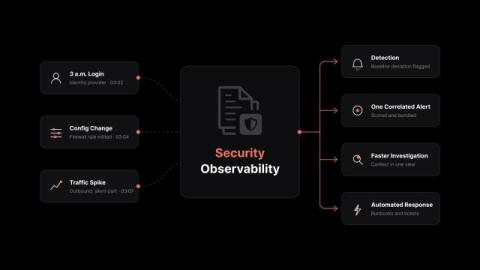
Every detection rule, every threat hunt, every AI agent you deploy rests on one silent assumption: that the data describing an attack actually reached your tools. When it doesn’t, nothing above it can save you, and no one gets an alert that the data was missing. Security teams invest heavily in the sharp end of the stack: detection content, threat intelligence, response playbooks, and increasingly, AI agents to triage and investigate at machine speed.

The golden path: security that works because it's the easy path

A golden path for dependency management isn't a policy document – it's a preconfigured private registry with upstream proxies covering every ecosystem your teams use, set as the default. Developers don't opt into security; they get it automatically by using the standard toolchain. The alternative is teams configuring their own controls, producing inconsistent postures and compounding risk across the org. If the secure path requires extra steps, developers will route around it. Make it the easiest option and the policy enforces itself.

Walkthrough: Puppet System Hardening Assessment

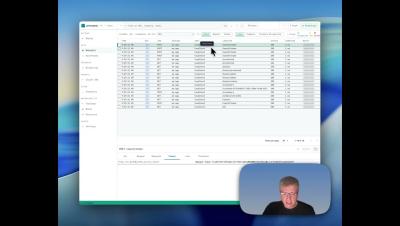
Is your infrastructure as secure as you think it is? In this walkthrough, see how aSystem Hardening Assessmenthelps organizations identify security gaps, uncover configuration risks, and prioritize remediation efforts across critical systems. You'll learn how teams can evaluate their environment against security best practices, gain visibility into potential vulnerabilities, and take actionable steps to strengthen their overall security posture.

How ITOps Can Automate Data Discovery for Rapid Privacy Request Fulfilment

For most organisations, managing data privacy compliance is traditionally viewed as a legal or governance function. However, when a Data Subject Access Request (DSAR) or Freedom of Information (FOI) application is submitted, the actual labour of retrieving that data falls squarely on IT operations. With the passing of the Privacy and Other Legislation Amendment Act 2024, Australian businesses are facing some of the most comprehensive federal privacy reforms in over a decade.

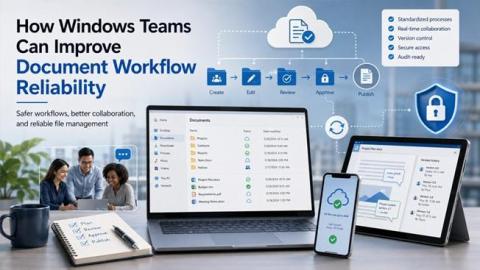
How Windows Teams Can Build Safer and More Reliable Document Workflows

In many organizations, document work still depends heavily on Windows devices. Teams create reports, edit spreadsheets, review presentations, exchange PDFs, and move files between desktops, laptops, shared drives, cloud folders, and mobile devices. Even when companies use modern collaboration platforms, the daily document workflow can still become messy if software choices, installation habits, file formats, and update processes are not managed carefully.

How Norsk Tipping uses feature flags to govern their deployments

Norsk Tipping is Norway’s state-owned gaming operator, running 2,500 to 3,000 production releases a year across iOS, Android, web and backend systems. Like every regulated organisation at scale, the platform team has to hold two things in tension: maintain strict deployment controls that stand up to audit, and keep the path to production open so that 100 engineers can ship safely.

Automating SonicWall Certificate Deployment with the SonicOS API

How do we keep our Sonicwall certificates up to date as certificate lifetimes get shorter? We’re already at 200 day certs with 100 then 47 day certificates coming soon. A certificate you used to touch once every year now needs replacing up to twelve times a year. Doing this by hand is out of the question, no one has the time. Even if they did, the frequent updates is just asking for mistakes. Luckily, this can be automated using the SonicOS API.