Operations | Monitoring | ITSM | DevOps | Cloud

AI Didn't Kill the SDLC. It Made It Harder to See

Whilst AI has compressed the visible stages of software delivery; requirements, validation, review and release discipline have not disappeared. They have been pushed into automation, runtime and governance. The real risk is not that the lifecycle is dead, but that organisations start acting as if accountability died with it.

Resilience Testing Is Non-Negotiable in the Enterprise SDLC | Harness Blog

Outages in distributed systems are inevitable, making resilience testing essential in the SDLC. It must be continuous, covering failures, load, and disasters. Delayed validation creates “resilience debt,” increasing risk. A holistic approach—combining chaos, load, and DR testing—plus cross-team collaboration and AI-driven insights improves reliability and reduces impact. Modern software delivery has dramatically accelerated.

Designing an automated SDLC control

For anyone shipping software in regulated industries, the word “control” gets thrown around all over. Compliance frameworks demand controls, auditors verify controls are used, engineering teams implement controls, and there are even Control Owners. But what exactly is a control? And more importantly, how do we design controls that actually serve their intended purpose while enabling rather than hindering delivery velocity?

An Open SDLC Controls Framework for Financial Services

How can financial institutions align on software delivery governance without slowing down innovation? At FINOS OSFF New York 2025, Deutsche Bank and Morgan Stanley introduced the new SDLC Governance Working Group — an open collaboration under FINOS to create a Common Controls Catalogue for software delivery. Kosli's Mike Long helped form and participates this group, contributing expertise in continuous compliance automation and controls engineering to connect the engineering and policy communities.

The new AI-driven SDLC

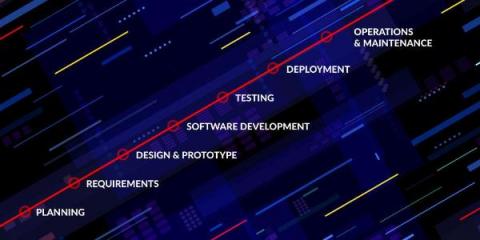
For decades, the software development life cycle (SDLC) has been the framework teams use to understand how software moves from idea to production. It breaks complex work into familiar phases: planning, design, development, testing, deployment, and maintenance. This structure gave organizations a shared way to coordinate teams, track progress, and build with confidence.
Sponsored Post

Accelerating Software Development: Modern SDLC Practices with AI and Automation

Modern software teams - especially in fast-paced SaaS startups - face constant pressure to deliver features quickly without compromising quality. The Software Development Life Cycle (SDLC) has evolved significantly in recent years, and embracing new AI-powered tools and automated workflows can dramatically increase a team's velocity. In this whitepaper, we'll explore how a small team of developers can work smarter and faster by integrating AI assistants, AI pair programming, modern Git workflows, and automated testing into their SDLC.

How to Strengthen Your SDLC Audit Trail with Improved Access Control in Kosli

Automating SDLC Governance is one of our key use cases. Kosli gathers all of the evidence your engineering teams need for change management and audit by recording every step in their SDLC, from commit to production, across all of their CI/CD tools. But robust SDLC governance doesn’t just depend on gathering all the necessary data - it also depends on controlling who can add to that data. And that’s exactly what our new access control feature solves.

Software Development Life Cycle: SDLC phases and best practices

The Software Development Lifecycle (SDLC) is a methodology that provides a structured process for developing high-quality software in a timely and cost-effective manner. The SDLC outlines software development as a series of tasks, creating a management framework focused on efficiency and quality. Software development is a tightly interwoven process that balances costs, deadlines, and capabilities.

Web Development Meets Cybersecurity: A Guide to Building Resilient Applications

Web applications are central to modern business operations, from retail and finance to education and healthcare. They provide users with seamless access to services and information, making them indispensable tools for organizations and consumers alike. However, this widespread reliance on web applications has also made them a prime target for cyberattacks. Cybercriminals exploit vulnerabilities in poorly developed or inadequately secured applications to steal sensitive data, disrupt operations, or damage reputations.

The high stakes of SDLC compliance: Lessons from EVE Online's battle of B-R5RB and Equifax

n our previous exploration of The Punchcard Paradigm, we traced the roots of modern compliance practices back to the early days of computing. We saw how the physical constraints of punchcards shaped programming practices and how those practices lingered long after the technology had evolved. Now, let’s dive deeper into why modern compliance is more critical than ever in today’s digital landscape.