Operations | Monitoring | ITSM | DevOps | Cloud

Sponsored Post

Ephemeral Environments Explained: From Creation to Cleanup

Ephemeral environments turn ideas into running systems in minutes, not days. They give every pull request a full-stack home with real URLs, real data, and production-grade routing. When a feature is approved or closed, the whole thing vanishes cleanly. That rhythm, create, test, update, pause, destroy, changes how teams ship software. This isn't just about speed. It's about tighter feedback with lower risk. It's about treating environments as code, enforcing repeatability, and keeping costs contained.

Why High-Cardinality Metrics Break Everything

High-cardinality metrics are one of those ideas that sound obviously right - until you try to use them in production. In theory, they promise precision. Instead of averages and rollups, you get specificity: per-request, per-userid, per-container, per-feature insights. The kind of detail we all immediately want when something is on fire. And then things start breaking. Not immediately. Not loudly.But quietly.

HAProxy's Year in Review #happynewyear #haproxy

Looking back at 2025, we can’t help but smile. More than just breakthrough technology, this year was defined by incredible collaboration. From the energy at our biggest HAProxyConf ever to the daily feedback that keeps us sharp, your engagement drives every innovation. We tackled some heavy lifting this year, but seeing how those solutions are already making a real difference for your infrastructure made it all worthwhile.

Amazon ECR Unpacked: How It Works And Why It Matters

If you are running containers on AWS, you need a secure place to store and share your images. Amazon ECR offers a managed registry that handles image storage, scanning, permissions, and versioning without extra configurations. In this guide, you’ll learn what Amazon ECR is, how it works, its features, real-world benefits, and pricing. We will also introduce you to a cost intelligence approach to keeping ECR costs under control.

10 Top Engineering Metrics For Measuring Software Engineering Success In 2026

Software engineers use engineering performance metrics to make informed decisions about their products, features, processes, and even their dev teams. In addition, measuring lets you know if you’re on track to meet your engineering goals. With so many tasks, data, and other information to monitor, how do you choose the right metrics to track? We’ll share that and more in this guide.

How AIOps Automation Will Redefine Enterprise IT in 2026

AIOps automation refers to the systems and intelligence that not only detect anomalies and correlate signals but also act. It closes the gap between “something looks off” and “it’s already been resolved.” Traditional AIOps focused on insight, but AIOps automation focuses on outcomes. It connects detection, decisioning, and execution into a unified operational flow.

Harness Dynamic Pipelines: Complete Adaptability, Rock Solid Governance

Harness Dynamic Pipelines offers an option to create pipelines, or pipeline stages, at runtime For a long time, CI/CD has been “configuration as code.” You define a pipeline, commit the YAML, sync it to your CI/CD platform, and run it. That pattern works really well for workflows that are mostly stable. But what happens when the workflow can’t be stable? In all of those cases, forcing teams to pre-save a pipeline definition, either in the UI or in a repo, turns into a bottleneck.

Resolve's Agents of IT podcast - Ep. 9 - Sean and Ari's Hot Takes 5 #aiautomation #itautomation

In this episode of Agents of IT, Sean Heuer, Resolve CCO, and Ari Stowe, Resolve COO, look back on 2025 and share their unfiltered hot takes on what really defined the year in IT. Yes, AI dominated every keynote and conference slide. But they dig deeper into what actually changed inside organizations. As more departments leaned on technology in new ways, IT teams faced a sharp increase in complexity, tooling sprawl, and operational pressure. The conversation explores how this shift reshaped IT’s role, stretched existing models, and set the stage for what comes next.

Peeking Under the Hood with Claude Code

Claude is one of the go-to AI-native code editors for developers. Because it’s a simple chatbot interface housed inside a familiar CLI, it provides a pretty smooth path between traditional IDEs and agentic AI. But what’s actually happening behind the scenes when you ask it to write code, generate a test, or debug an issue? Who and what is it talking to behind the scenes? Can I prevent data leakage or do I need to add another layer to my tin foil hat?

Essential KPIs for Software Development: Measure Success Effectively

In almost all industries, a standard set of KPIs helps to guide teams on whether they are doing the right things in the right ways, with the right outcomes. In software development, this has evolved significantly with industry-standard frameworks like DORA metrics (DevOps Research and Assessment), which have been validated across thousands of organizations worldwide. Some development frameworks, such as Agile, have some KPIs baked directly into them.

Top server monitoring tools for 2026: A comprehensive comparison guide

IT infrastructure is now hyper-distributed. We are in a scale-in-seconds era and that means, a typical IT landscape is spread across on-premises data centers, public clouds (AWS, Azure, GCP), containerized environments, and edge locations. With many components comes more points of failure. A single server outage can cascade into customer-facing incidents, SLA violations, and revenue loss measured in thousands per minute.

Kubernetes v1.35: The Release That Tackles the Industry's $100 Billion Waste Problem

Kubernetes v1.35 dropped a couple of weeks ago, and while the headlines focus on gang scheduling and in-place resizing going GA, there’s a bigger story here that every platform team needs to understand: Kubernetes is finally acknowledging that cluster utilization is fundamentally broken. At Komodor, we work with hundreds of organizations running Kubernetes at scale.

7 Kubernetes Predictions for 2026 - AI Will Push SRE to its Limit

As AI workloads shift from training to massive-scale inference, SRE teams are about to feel even more pressure. GPU-heavy computing is breaking the assumptions today’s clusters were built on, while enterprises are beginning to trust autonomous operations and cost pressure is pushing consolidation across the cloud-infrastructure stack.

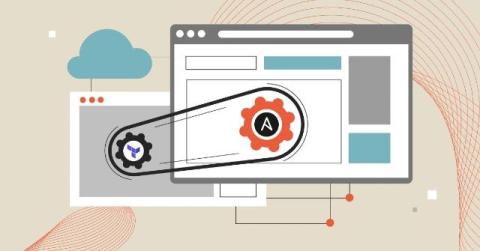
Ansible Vs. Terraform: What Are They And Which Is Best?

Choosing the right tool to manage your infrastructure can shape how fast your team moves and how reliable your systems become. Two names appear in almost every conversation: Ansible and Terraform. Both help you define, manage, and scale your environment. But they solve different problems and work in very different ways. One focuses on configuration. The other focuses on provisioning. Both are powerful. Both are widely used. And both can work together in the right stack.

From Firefighting to Foresight: Bright Beginnings for a New Year of IT Confidence

When I was invited to join one of our customer’s end-of-year team wrap-up sessions, it came as no surprise when the meeting opened with a familiar refrain: “Next year will be different. Next year, we’ll get ahead of the noise. Next year, tickets won’t pile up while we’re still triaging yesterday’s issues.

Unified Observability: What It Is and Why It Matters for Large Enterprises

Modern enterprises operate within a digital ecosystem of staggering complexity - spanning on-premises systems, private and public clouds, APIs, containers and SaaS platforms. Business-critical services often rely on a mix of legacy infrastructure and modern applications, each producing huge volumes of metrics, log messages, traces and events.

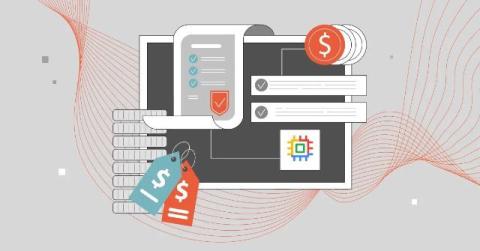
Google Cloud Compute Engine Pricing Guide

Virtual machines often represent the largest line item in a cloud bill. And for Google Cloud users, the Google Compute Engine (GCE) accounts for a large share of overall spend. GCE offers rich flexibility: you can choose specific machine types, scale up or down instantly, and match compute to load. But understanding how the pricing works is critical before you can unlock full value. On the surface, GCE looks simple. You pay for vCPU, memory, storage, and network.

[Webinar] Accelerating Kubernetes Intelligence: Cisco's Platform Evolution

Join Hasith Kalpage, Director of Platform Engineering , and Arthur Drozdov, Agentic AI Engineer, as they share how Cisco is using Komodor’s Klaudia Agentic AI to evolve its platform strategy, to unlock smoother developer experience, slash MTTR, and reduce bottlenecks across the enterprise. – Including a live demo of the CAIPE platform!

What's New in dbForge 2025.3: Enhanced Connectivity, Updated UI/UX, Newly Supported Syntax Constructs, and Much More!

How about ending this year on a major note? Enter dbForge 2025.3, our new release that covers the entire dbForge product line and brings lots of useful stuff to the table. This includes up-to-date connectivity options, a handful of UI/UX improvements, a wealth of newly supported syntax constructs, and a few more enhancements to make sure you start 2026 with your productivity at an all-time high. Without further ado, let’s take a look!

Building the Next Phase of Harness's AI Engineering Organization in India

Over the past year, Harness’s India organization has entered a new phase of growth – one defined not just by scale, but by increasing technical depth and impact. What began as steady expansion has turned into real momentum across engineering, product, and operations. Today, 480 people work in India, contributing across every major product area. In 2025 alone, the team in India grew by more than 75%, and now each core Harness product offering has a strong engineering presence in the region.

Building and deploying the Symfony ChatGPT app with Upsun

This blog post is based on a live presentation by Guillaume at a SymfonyCon 2023 on deploying applications with the Upsun platform-as-a-service. We utilized AI tools for transcription and to enhance the structure and clarity of the content. If you still use File Transfer Protocol (FTP) for deployment, this post is for you.

Top Synthetic Monitoring Solutions for Enterprise DevOps Teams

Legacy monitoring creates dangerous visibility gaps in the accelerated enterprise DevOps landscape, where release cycles count in hours, not weeks. For teams managing hundreds of microservices, complex cloud-native architectures, and global user bases, basic synthetic monitoring tools simply cannot scale. The top synthetic monitoring solutions for enterprise DevOps must function not as mere observability tools, but as proactive, integrated safety nets engineered for scale, security, and precision.

Document Automation Best Practices for DevOps Reporting and Compliance

DevOps has streamlined how teams build, test, and deploy software, but reporting and compliance often remain outside the automated pipeline. Release summaries, test reports, and audit records are still frequently created manually, pulled from scattered tools, and updated only when needed. This slows delivery and increases the risk of inconsistency, especially as systems and compliance requirements grow more complex. To scale DevOps sustainably, documentation can no longer be treated as an afterthought-it needs to become a reliable, automated output of the pipeline itself.

Bulletproofing your Symfony application for Black Friday

This blog is based on Thomás Di Luccio's talk "Bulletproofing for Black Friday" from the Symfony 2024 conference. Thomás is a Developer Relations Engineer at Upsun. We utilized AI tools for transcription and to enhance the structure and clarity of the content. Picture this: You're a small ticketing startup that just landed a major deal with a large venue. After months of building features and preparing for launch, the big day arrives—season ticket sales go live.

Invisible IT: The Best Technology You'll Never Notice

“Invisible IT” might sound like a marketing slogan, but it captures something every IT leader has quietly wanted for what feels like eons: a world where technology does its job without slowing anyone down. A world where support is proactive instead of reactive and where digital friction disappears before employees ever feel it. Invisible IT is about removing interruptions without disappearing IT teams.

What Is An AIOps Platform? AIOps Platform Definition And Deep Dive for 2026

If you’re running a SaaS business today, you’ve probably noticed the alarms never really stop. Logs. Alerts. Tickets. They pile up faster than many teams can triage them. Add multiple clouds, microservices, and AI-driven workloads, and suddenly, your “always-on” infrastructure feels like it’s always on fire. AIOps platforms promise to connect dots that human teams struggle to see fast enough. For engineers, these include surfacing root causes and outwitting outages.

Harness AI For Everything After Coding

AI didn’t just change how we write code. It changed everything that comes after. Application teams are shipping more code than ever with AI — but 70% of the work still happens after coding: testing, security, deployment, optimization, and keeping everything moving. As coding gets faster, delivery becomes the bottleneck. That’s where Harness comes in.

CTO Predictions for 2026: How AI Will Change Software Development | ShipTalk S4E7 Special Episode

In this special ShipTalk episode, host Dewan Ahmed (Principal Developer Advocate, Harness) sits down with @Harnessio Field CTO Nick Durkin for spicy—but practical—2026 predictions across AI, software delivery, DevSecOps, MLOps, and developer experience. Will we see the first “AI-caused meltdown”? Are AI “confidence scores” even trustworthy? Is 2026 the year of AI cleanup crews and recovery engineering? Nick’s take: the answer isn’t more gates—it’s guardrails, policy in the pipeline, and teams operating with the same “rulebook.”

Introducing Real-Time Conversations with Netdata AI

Over the past few months, we’ve seen incredible adoption of our AI Investigations and Insights reports. Teams are using them to automate the deep, thoughtful analysis required for complex post-mortems, capacity planning, and performance optimization. These comprehensive reports are fantastic when you need a well-researched, shareable document. But what about the moments during an investigation?

CTO Predictions for 2026: Special ShipTalk Episode with Nick Durkin

AI will not fix broken software delivery. It will expose it. By 2026, teams that win will use specialist AI agents, guardrails over gates, and security built directly into the pipeline. As we look toward 2026, it is becoming clear that AI is not just changing how code is written. It is changing how software delivery itself works. The real shift is happening at the intersection of AI, security, and developer experience, where speed, risk, and responsibility now collide.

Load Testing Kafka #speedscale #kafka #loadtesting

Message brokers are a critical component of modern distributed systems, facilitating asynchronous communication between services. Load testing message broker integrations requires special considerations since the interaction patterns differ from traditional HTTP-based APIs. Speedscale provides specialized tooling to help you load test applications that integrate with message brokers by.

How Domain Registration Affects Long-Term SEO Strategy

Domain registration is one of the first steps in establishing an online presence. The domain name you choose and register has a long-term impact on search engine optimization (SEO) through its influence on branding, user experience, trust, and credibility. A well-thought-out strategy at this stage will lay the groundwork for sustainable growth. By making informed decisions from the start, you can ensure that your domain continues to support SEO success as your business evolves.

From Waste to Asset: Transforming Inefficient Systems into Strategic Business Power

Is your technology working for you or against you? For many business leaders, the answer feels obvious. You see the symptoms every day: frequent downtime, slow performance that grinds productivity to a halt, and a constant stream of frustrating disruptions that pull your team away from their real work. These aren't just minor annoyances; they are significant financial liabilities.

Simplifying Microsoft Sentinel Integration: VirtualMetric DataStream Connectors in Content Hub

Microsoft Sentinel adoption often introduces unexpected complexity. While the platform delivers powerful SIEM and XDR capabilities, organizations frequently struggle with manual DCR configuration, inconsistent data quality, rising ingestion costs, and security risks associated with credential-based integrations. VirtualMetric DataStream is now available in the Microsoft Sentinel Content Hub, reducing the effort required to deploy normalized and cost-optimized data ingestion.

Building VC-ready AI companies: sustainability as an advantage

This blog post is based on a panel discussion about AI sustainability and investment trends, featuring insights from industry leaders at an AI conference. We utilized AI tools for transcription and to enhance the structure and clarity of the content. The AI investment is increasingly growing. While major tech companies plan to spend over $300 billion on AI infrastructure in 2025, investors are no longer just asking about powerful models or rapid scalability.

Making Azure Cost Management Clearer for MSPs: Forecasting, Visibility & Smarter Optimization

This video breaks down the core challenges MSPs face with Azure cost visibility, forecasting, and anomaly detection and how a smarter approach to optimization helps reduce unexpected spend across multi-tenant environments. If you're an MSP looking to simplify Azure cost management and improve clarity for your customers, this overview is a great place to start.

Do you still need wildcard certificates?

You’ve used wildcard certificates for years. It made your life easier. Once a year you’d renew your wildcard certificate, and copy it around to all the servers. It was way too complicated and expensive to get a unique certificate for every system. But now certificate lifetimes are shrinking to 47 days by 2029 and it’s not going to work anymore. You need to automate your certificates. Soon.

99%+ Accuracy on a Moving Target: Model Deprecation and Reliability with Not Diamond

Shipping systems powered by LLMs would be hard enough if the models stayed the same. But in reality, they don’t. Models get updated and deprecated at a pace traditional software wouldn’t. All while teams are still expected to hit reliability targets that look a lot like traditional SLAs.

How to build AI agents with n8n and relaxAI: Live webinar

You have the ideas, now learn how to turn them into production-ready AI agents. Join us on January 21st at 5:00 PM for a live webinar featuring Ben Norris, AI Engineer at Civo, and Sophia McKee, COO at Civo. We will demonstrate how to design, build, and deploy intelligent agents using n8n’s visual workflow automation platform, all powered by secure, UK-hosted infrastructure from relaxAI. You'll learn how to orchestrate tools, APIs, and LLMs to create scalable automations without needing deep coding expertise.

Calm Under Pressure: Ending the Year Without the Fire Drills

From the outside looking in, I have seen that year end in financial services is not for the faint-hearted. Markets tighten, trading volumes swell, payment systems hit their annual peak, and regulatory reporting deadlines stack up like dominoes. In this environment, even a few seconds of lag can mean missed trades, delayed transactions, frustrated clients, or worse, financial loss and reputational damage. This is precisely when IT needs to be at its calmest.

Theory to Turbulence: Building a Developer-Friendly E2E Testing Framework for Chaos Platform

Chaos fault validation must be safe, predictable, and measurable. High setup friction blocks adoption and slows feedback loops. API-driven execution beats manual YAML workflows. Real-time logs and smart target discovery speed debugging. Dual-phase validation ensures impact and recovery. Strong DX enables faster, scalable chaos testing. As an enterprise chaos engineering platform vendor, validating chaos faults is not optional — it’s foundational.

ShipTalk S4E6 | Beyond the Magic Box: Solving AI Hallucinations with Precision RAG

In this episode of the ShipTalk Podcast, host Dewan Ahmed (Principal Developer Advocate at Harness) sits down with Evgeny Ilinykh (Founder of GuidedMind.ai and former Tesla Engineering Manager) to move past the AI hype and get into the engineering reality of Retrieval-Augmented Generation (RAG). If your AI agents are hallucinating, the problem probably isn't your model—it’s your retrieval layer. Evgeny breaks down how to turn the "black box" of LLMs into a transparent, production-ready system that developers can actually trust.

A Look Back at 2025: Megaport's Biggest Updates

New capabilities, more capacity, global expansions, and plenty of exciting launches – it's been a big year for Megaport. Every year in the cloud world feels like a sprint. New architectures, new workloads, new ways to move data around. But when I look back at everything we delivered at Megaport this year, it’s clear why the pace felt so fast: We shipped a lot of things that genuinely change how people build and operate networks.

Cloud Efficiency Rate: A Clear Way To Measure Cloud Business Value

Cloud and AI spending is exploding, and every dollar counts. As companies race to innovate, they also face growing pressure to prove that their cloud investments are delivering real business value. That’s why CloudZero pioneered the Cloud Efficiency Rate (CER) metric, a unifying metric for quantifying cloud business value.

Top Signs Your Data Center Is Ready for a Server Upgrade: Why Refurbished Hardware Makes Sense

There comes a point when your servers start making everyday tasks feel slower than they should. Maybe you notice apps taking a little longer to load or routine jobs dragging more than usual. In a busy data center, this kind of shift pops up when the hardware starts falling behind.

SSIS Data Flow Components 3.2: Improved Security and Database Integration

We are pleased to announce the release of SSIS Data Flow Components Version 3.2. This latest version introduces significant updates to enhance compatibility with modern databases and bolster security features. As data management continues to evolve, we are committed to keeping SSIS Data Flow Components at the forefront of efficient, secure, and scalable data integration and making sure our users have the tools they need to confidently navigate the future of data workflows.

dotConnect 2025.1 Release: Built for speed. Designed for security.

We’re excited to announce dotConnect 2025.1, a major update that brings full support for the newest versions of.NET and Visual Studio. This release boosts performance with new batch update capabilities, adds built-in OAuth for easier cloud integration, and streamlines the product lineup by removing outdated technologies so developers can rely on a more modern, focused data access stack.

Looking back at 2025: Innovations that shaped DevOps and observability

The year 2025 has been exciting for Site24x7, packed with innovations designed to make monitoring smarter, faster, and more intuitive. From enhanced APM insights and deeper database observability to a more powerful log management experience and AI-driven plugin enhancements, we’ve focused on giving teams the tools they need to troubleshoot faster, gain clearer insights, and manage complex environments with ease. Let’s rewind and see our 2025 highlights.

AI Prediction for 2026

Every technology cycle comes with hype, backlash, and eventually… utility. AI is shaping up to be no different. As we head into 2026, the conversation is already shifting from “AI will replace everything” to “why isn’t this paying off yet?” This shift is heavily influenced by evolving market trends, as businesses and technologists respond to changes in customer behavior, operational patterns, and broader market conditions that shape expectations around AI.

DevEx matters for coding agents, too

The speed at which you can go from making a change in your code, to understanding if it actually works, has long been a popular topic of discussion (and often, humour) for engineers. This remains true in a world with AI. Developer experience isn't just important for humans anymore. Those agents we're all using hundreds of times a day? Feedback cycles matter just as much for them, if not more.

Real-Time Anomaly Detection For Cloud Cost Monitoring: Why It's The Future (And How It Works)

“Every engineering decision is a cost decision,” notes Ben Johnson, co-founder and CTO of Obsidian Security. That’s the reality of building modern SaaS products in the cloud. But as Ben points out, the answer isn’t to make engineers think long and hard about every dollar they spend. “You don’t want your team hesitating to solve risky technical problems because a choice might add $100 to the bill.

How to test application resiliency by simulating the Cloudflare December 2025 outage

This fall and winter have had their share of major outages (including AWS, Azure, and Cloudflare), and December was no exception. On December 5, 2025, Cloudflare suffered a 25-minute outage that served responses with HTTP 500 errors to about 28% of HTTP traffic served by Cloudflare. Since Cloudflare handles an average of 81 million HTTP requests per second, this represents a substantial chunk of internet traffic, including LinkedIn, Zoom, and Downdetector.

Migrations and Modernization

Learn how Cortex helps engineering organizations manage migrations and modernization—from moving on-prem systems to the cloud, to refactoring legacy services and adopting new architectures. Cortex provides the visibility, automation, and governance teams need to make complex migrations predictable, measurable, and faster. What you'll learn in this video.

Build a FIPS-enabled Ubuntu EKS image with EC2 image builder

A step-by-step demo using Ubuntu Pro and AWS Image Builder. In this video, we show how to create your own FIPS-enabled Ubuntu EKS image using EC2 Image Builder. The demo walks through creating an image pipeline, defining a recipe, and selecting a custom Ubuntu Pro AMI using SSM Parameter Store to automatically pull the latest available image. The process includes enabling FIPS updates on an Ubuntu Pro machine, validating that FIPS is enabled, and testing that the system is running in FIPS mode.

Streamlining Flyway Setup with the Guided Shadow Configuration

Guided Shadow Configuration removes the setup overhead of shadow databases in Flyway Desktop, allowing teams to adopt migrations-based workflows quickly and safely with minimal configuration. A Shadow Database is a disposable, ‘sandbox’ database that Flyway uses to generate and verify migration scripts.

Accelerating Sentinel data lake deployment | Webinar | VirtualMetric & Microsoft

Microsoft Sentinel data lake is becoming a core component of modern security architectures. In this on-demand webinar, Microsoft and VirtualMetric discuss how security teams can approach Sentinel data lake adoption to improve visibility, control cost, and prepare their data for AI-driven security workflows.

Lessons From The FinOps In Full Bloom Podcast: 6 Cloud Insights I Didn't Expect

Every time I step on set with a guest for FinOps In Full Bloom, I’m anticipating the lightbulb moments I know will pop up during the podcast. These are the conversations that reveal how curiosity and collaboration can spark real transformation in the cloud.

Transforming Symfony monolith to multi-apps: a step-by-step guide

This blog post is based on Florent Huck, Developer Advocate at Upsun, at SymfonyCon 2023. We utilized AI tools for transcription and to enhance the structure and clarity of the content. The journey from a single monolithic application to a multi-application architecture doesn't have to be daunting. At a recent developer conference, Florent from Upsun's Developer Relations team shared a practical step-by-step guide on how to refactor a monolith into multiple applications using Upsun.

Rovo Dev Auto Closing Vulnerabilities | Bitbucket Blitz | Atlassian

Learn how Atlassian uses Rovo Dev to automatically find and fix code vulnerabilities with Rovo Dev and Bitbucket. This capability saves our developers thousands of hours over three months and reduces issue resolution time by half, allowing them to focus on building software and solving problems for our customers. This technology is available to all of our customers. Learn how it works, and start using it yourself.

Text-to-Alert: Generating Netdata Alerts from Natural Language

Netdata has an incredibly powerful alerting engine. But this can sometimes be a double-edged sword: the flexibility to build incredibly specific, intelligent alerts is immense, but mastering its syntax can feel like learning a new language. We’ve heard this from so many of you. You tell us that configuring alerts is often the steepest part of the learning curve, a task that falls to the one “Netdata expert” on the team who has spent the time digging through the documentation.

Scaling Kubernetes GitOps with Fleet: Experiment Results and Lessons Learnt

Fleet, Rancher’s built-in GitOps engine, is designed to scale up to thousands of clusters. However, “how far” can it scale in a real world scenario, you might ask? Earlier this year, we wrote about the Fleet benchmark tool and we made a few discoveries that were very instructive, especially concerning resource consumption and its impact on deployments’ performances.

How LinkedIn modernized its massive traffic stack with HAProxy

Connecting nearly a billion professionals is no small feat. It requires an infrastructure that puts the user experience above everything else. At LinkedIn, this principle created a massive engineering challenge: delivering a fast, consistent experience across various use cases, from the social feed to real-time messaging and enterprise tools.

Generating EdgeOps Tasks with Code Assist

In this tutorial, we’ll show you how to use Copilot to streamline operations on your MCP server. Learn how Puppet’s Edge Code Assist helps you automate repetitive tasks, improve efficiency, and reduce errors, while keeping your infrastructure secure and compliant. Subscribe at ⁨‪@PerforcePuppet‬ Website: puppet.com LinkedIn: /perforce-puppet.

How To Connect Your Prometheus Server to a Grafana Datasource

Prometheus is one of the most popular open-source monitoring systems in the world. It’s lightweight, easy to deploy, and pairs beautifully with Grafana for dashboards and alerting. If you're running applications or infrastructure on Linux, Prometheus plus one of many Exporters (Redis, NVIDIA GPU, Nginx, etc.) gives you deep visibility into service performance - quickly and reliably.

KubeCon Atlanta 2025 & the AI-Native Shift

KubeCon + CloudNativeCon North America 2025 in Atlanta marked a definitive moment for cloud-native infrastructure. Over four days, celebrating the 10th anniversary of both CNCF and Kubernetes, more than 9,000 attendees witnessed the ecosystem’s evolution from container orchestration to AI-native operations. The conference delivered a clear message – AI workloads are no longer experimental.

Why the "artisanal" approach to coding is holding engineering teams back

(01:20) The hidden costs of artisanal development(03:41) What 1907 Detroit teaches us about DevOps(08:46) Golden Paths vs. rigid mandates(14:08) Aligning platform goals with business outcomes(19:26) Using constraints to drive creativity(26:13) Why platforms need a product mindset(33:23) Treating AI agents as junior engineers(39:55) Learning from common platform failures.

What Is DevSecOps? A Guide To Secure DevOps Workflows

Security used to be something teams added at the end of a release cycle. Engineering pushed code fast. Security teams reviewed it later. But this flow only worked when the software moved slowly. Modern cloud environments broke the old security model. Containers, microservices, APIs, and infrastructure as code now change too fast for security to sit outside delivery workflows.

Top SaaS Vendors DevOps Teams Should Monitor in 2025

Modern applications rely on dozens of third-party services to function properly. When these services fail, your application fails too. DevOps teams need to identify and monitor the top SaaS vendors that could impact their infrastructure and user experience. This guide covers the essential SaaS vendors DevOps teams should monitor, organized by category and criticality. We'll explore why each vendor matters and what specific aspects require monitoring.

IT infrastructure monitoring: Leaner, stronger, more intelligent, and a huge progression

IT infrastructure as a technology has leapfrogged in 2025 and Site24x7 is no exception. CTOs, SREs, sysadmins, and other IT personnel wanted more from server monitoring and observability tools—and we stepped up. We listened to you, the industry leaders in your respective spaces, and re-envisioned our product platforms. The result?

Guide to Connecting Dynamics 365 and Visual Studio With Devart ODBC

Integrating Dynamics 365 with Visual Studio should be simple. Yet, developers and solution architects often run into challenges when trying to establish a direct, standards-compliant connection. From dealing with fragmented integrations to handling complex data security requirements, these obstacles slow down development, increase maintenance costs, and hinder the full strategic use of CRM data.

How Oracle AI Transforms SQL Performance and Accuracy

Today, about 20-40% of developer time is spent on debugging and maintenance, which is why Oracle AI is redefining SQL optimization altogether. As AI-driven automation accelerates across the Oracle ecosystem, Oracle AI Database 26ai brings machine learning, generative AI, and real-time analytics directly into the SQL engine: reducing the need for manual tuning with built-in, AI-powered automation.

Connecting the future of aviation information exchange in Asia Pacific

Aviation across the Asia-Pacific (APAC) and Middle East (MID) regions continues to rebound and modernise, bringing new pressures on airlines, airports and air navigation service providers (ANSPs). This increase in air traffic, more complex airspace and the need for safer, more efficient operations mean that seamless, secure information exchange across borders is essential.

A framework for measuring effective AI adoption in engineering

These days, engineering leaders find themselves caught between a rock and a hard place. On paper, AI adoption looks like an unqualified success. Developers are shipping more code faster than ever, pull request volumes are up, and teams report feeling more productive. Their leaders rush to LinkedIn to share their plans to scale adoption because their teams are just so much more efficient. But then, the incidents and bug reports start piling up.

The 2025 Year in Review (and what's coming soon)

Every year is a big year for Bitbucket, but in 2025, we delivered transformative changes that cap off years of work to make Bitbucket Cloud the secure, scalable, cloud-first standard for large engineering teams around the world. Today, 15M developers build on Bitbucket, including all of Atlassian’s 10,000-strong engineering organization, and Bitbucket Pipelines runs more than 1 billion build minutes per month.

Knowledge Graph + RAG: A Unified Approach to DevOps Intelligence

Knowledge graphs and RAG (Retrieval-Augmented Generation) are complementary techniques for enhancing large language models with external knowledge, and each brings unique strengths for DevOps use cases. While they are often mentioned together, they are fundamentally different systems, and combining them delivers far better outcomes than relying on either approach alone.

How Enterprises Modernize and Migrate to the Cloud Safely with Harness Automation

Cloud migration is a multi-layer transformation involving infrastructure, CI/CD, governance, security, and cost management—not just application movement. Enterprises face unique migration challenges due to complex systems, parallel cloud operations, compliance requirements, and tool sprawl. Automation and standardization are critical to reducing risk, manual effort, and operational inconsistency during cloud-to-cloud migrations.

How to Connect Your MySQL Instance to a Grafana Datasource

Grafana’s MySQL datasource makes it easy to turn raw database rows into clean, interactive dashboards. Whether you're testing out a new monitoring setup or experimenting with time-series data, MySQL + Grafana gives you a powerful foundation for building visualizations quickly.

GUI testing using YARF | Ubuntu Summit 25.10 | Lightning talk

What do Ubuntu Engineers use to test things? In this talk, Tim Anderrson provides a closer look at YARF, a new internal tool used in Ubuntu Engineering for testing the desktop installer alongside other desktop applications. Tim shares a bit about how YARF works, what the Ubuntu Engineering team plan to use it for from an overarching perspective, and how they plan to integrate this tool with the community.

Friends of GNOME | Ubuntu Summit 25.10 | Lightning talk

In this talk, Cassidy gives us a look into GNOME, the open source desktop environment project. Cassidy explains how GNOME has developed over time, the support provided by donations, and what could come next for the project. About Cassidy Cassiy James Blaede is a GNOME Foundation Director, Flathub Contributor, and Co-founder & CXO of Elementary. Ubuntu Summit 25.10 is a showcase for the innovative and the ambitious.

Understanding Cloud Cost Elasticity: Aligning Spend With Value

In the cloud computing industry, we hear the word “scaling” a lot. We talk about scaling up resources to meet demand, scaling our teams, and scaling our platforms. What tends to get lost is whether your costs are scaling in proportion to the value you’re delivering. If those two metrics don’t move in tandem, it’s likely you’re leaving money on the table. It’s not enough to simply use the cloud.

Building Trust in AI-Powered Kubernetes Ops: Why "Good Enough" Is a Production Killer

The air in the operations world is thick with AI and LLMs. EVERY vendor is rushing to slap an “AI-powered” badge on their product. But here’s the uncomfortable truth: In high-stakes Kubernetes operations, one bad AI recommendation can destroy months of trust-building in an instant. We aren’t building a chatbot to suggest recipes. We are building systems that, armed with kubectl permissions, have the potential to take down production with a single, wrong command.

Cloud Cost Optimization Services Beyond Tools: Building A Sustainable Operating Model

If you’ve already worked through cloud cost optimization strategies, the fundamentals aren’t new. CloudZero’s State of Cloud Cost report shows that cloud cost optimization is now a priority for most organizations. We’ve also covered these foundations in depth, including how cloud cost optimization works in practice and how FinOps teams approach cost accountability. What’s less discussed is what happens next. Cloud environments don’t stand still. Architectures change.

Setting Up a Windows VM on Cycle

In the last few months we've made some changes to VMs that finally allow installing and running Windows on them. MS Paint on Cycle is finally a reality. To make Windows VMs work, we had to add a few things to the platform to support it. As always with Windows, there are some quirks, gotchas, and pain points. But in the guide below, I'll show you how we solved these issues in our recent platform update, and how to install and run a Windows Server 2025 VM on Cycle with full network connectivity.

Scaling faster and predictable cloud bills with Civo's FlexCore

How does Defense.com scale its SaaS security platform while keeping costs predictable? CEO Oliver Pinson-Roxburgh explains why Civo’s FlexCore was the only choice. FlexCore is engineered to deliver massive scalability and high performance, as milliseconds matter for real-time threat analysis, while ensuring UK Data Sovereignty and Compliance (ISO 27001). Crucially, FlexCore offers predictable pricing, eliminating the sudden, massive bills of larger providers. FlexCore delivers on-prem performance with public cloud scaling and simplicity.

Resolve Webinar: A Deep Dive into Scaling Autonomous Operations with Agentic AI

Enterprise IT teams are under growing pressure from complex, cross-functional workflows, rising alert noise, and overloaded ticket queues. Traditional ITSM automation, built on scripts, intents, and manual orchestration, can’t keep up. In this webinar replay, Resolve leaders break down how forward-thinking enterprises are scaling autonomous operations with agentic AI, delivering 2–5x faster resolutions and achieving 70%+ L1 deflection, without brittle scripts or intent models.

Resolve's Agents of IT podcast - Ep. 8 - Sean and Ari's Hot Takes #4

Everyone’s talking about generative AI. Few are doing it right. In this episode of Agents of IT, we break down what actually matters when bringing agentic AI into the enterprise. We challenge the myth of “AI readiness,” unpack the real build vs. buy decision, and explain why companies should stop building platforms and start building domain intelligence.

Breaking things fast: A new Approach to QA and testing

This post is based on Greg Qualls, Director of Product Marketing, presentation, "Accelerating QA and Testing," at SymfonyCon 2024. We utilized AI tools for transcription and to enhance the structure and clarity of the content. Before we dive in, I have over 18 years of experience in sales. If, at times, I sound like I'm trying to sell you something, please forgive me. I promise I'm not.

Build or buy, that is the question

For IT leaders who need to move fast without breaking governance. If you’re running IT for a bank, a SaaS company, or a Higher education institution, you’re carrying a brutal balancing act on your shoulders. On one side, your developers are pushing for autonomy, velocity, and the freedom to ship. On the other hand, you’re on the hook for governance, compliance, security, cost controls, and now that AI has entered the chat, innovation at scale.

How to Protect a Server from DDoS Attacks: 10 Practical Ways That Actually Work

DDoS attacks are no longer exotic weapons used only against banks, governments, or global tech giants. Today, a small online store, a SaaS startup, or even a personal blog running on a VPS can become a target. The barrier to launching an attack has dropped dramatically, while the damage such attacks can cause has only grown. Any server connected to the internet is exposed by default - the only real question is how prepared it is.

From Downtime to Stability: The Role of Managed IT in Modern Operations

Operational downtime has become one of the most expensive risks modern organizations face. A single system failure can halt workflows, expose security gaps, and drain revenue within hours. And as businesses in Long Beach & beyond grow more dependent on digital systems, the margin for IT failure keeps shrinking. Yet many operations teams still rely on reactive IT models, fixing issues only after they cause disruption.

Evidence as an Input

Evidence isn’t something you produce at the end — it’s something every control generates for the next one. In this video, Mike Long (CEO & Co-founder, Kosli) explains how vulnerability scans produce evidence tied to the artifact fingerprint and the policy file used, and how that evidence becomes an input to downstream controls like release approvals. This is the core of reusable, continuous compliance.

How the Best IT Help Desk Automation Gives Tickets the Context They Should've Had All Along

IT help desk automation has evolved far beyond scripts and workflow triggers. It refers to intelligent, agentic systems that enrich, triage, diagnose, and recommend or execute actions before a human ever touches the ticket. Modern automation gathers the context engineers normally have to hunt for and presents issues as decision-ready cases. In IT, we love predicting the end of things: data centers, passwords, and yes, tickets. Zero Ticket IT often gets misunderstood in that same category.

AI adoption is messy. Here's how engineering leaders are taming the chaos.

There's a moment every engineering leader hits when implementing AI where they realize that no one really knows what they're doing. Not your competitors. Not the consultants. Not even the executives pressuring you to show results yesterday. Everyone is figuring this out in real time, and beneath the confident vendor pitches and LinkedIn thought leadership, the truth is messier than anyone wants to admit.

AI & FinOps: The New Power Duo Driving Modern Profitability

FinOps teams have been expected to understand millions of dollars in cloud and AI spend using tools that a handful of (usually technical) specialists can operate. Dashboards, filters, exports, and SQL have been the norm. That era is over. CloudZero is now bringing AI directly into the FinOps workflow so anyone in the business can ask natural-language questions about cloud and AI spend, and get accurate answers back from the platform.

Preparing your eCommerce platform performance for Black Friday

This blog is based on an Upsun livestream discussion featuring Guillaume Moigneu, Field Engineer, and Thomas di Luccio, Product Manager at Upsun. The conversation was moderated by Greg Qualls. We utilized AI tools for transcription and to enhance the structure and clarity of the content. When Black Friday approaches, the stakes are high for eCommerce businesses.

Discover how to build AI-augmented applications with enterprise-grade security

IT leaders want AI that moves the needle without blowing up risk, cost, or changing control. Your teams need a path to productize AI features on top of existing apps, connect safely to external models, and satisfy audit requirements without slowing delivery. Those are the core buying criteria we hear from IT middle management: buy over build, predictable outcomes, and a strong compliance posture.

Why local internet traffic matters more than you think

Imagine sending a letter to your neighbour across the street, only for it to be routed through London or even Amsterdam before landing in their letterbox. This is effectively what happens to much of Scotland’s internet traffic. Despite physical proximity between users, businesses and services, digital data is frequently sent on needlessly long journeys, often leaving the country before reaching its destination.

Faster Code, Slower Delivery: The Agentic Coding Paradox in Regulated Enterprises

Imagine for a moment that agentic coding tools really do deliver on their promise. Code is written faster, tests are generated automatically, and refactors that once took days now take minutes. On paper, software delivery should accelerate dramatically. Now imagine you work in a regulated enterprise. The code is ready, but production is still days or weeks away.

The ROI of autonomous validation: How to unlock $1.8M in engineering value

Recently, we introduced autonomous validation as a new approach to CI/CD that brings adaptive, context-aware intelligence into the delivery pipeline. As AI increases both the volume and reach of code changes, teams are seeing more failures, longer queues, and rising maintenance costs. Traditional pipelines simply weren’t built for this level of velocity or variability.

Streamline Code Testing with Proxymock

Tired of complex setups and running out of memory just to test one component? Learn how to use Proxymock (a FREE tool) to solve your biggest testing headache: component isolation! This demo shows you how to record and mock interactions across a complex React, Golang, and PostgreSQL stack, allowing you to find bugs before they ever hit production. In This Demo: This strategy lets you easily isolate components, simulate customer behavior, and ensure quality with lightning-fast local testing.

How to Test Your React Frontend When the Backend Is Offline #speedscale #frontend #backend #coding

Software development is hard, especially when you have to ensure every component works together; it's an integration maze! And running a full stack (like React, Go, and Postgres) on your dev machine often means one thing: running out of memory! The Fix: We'll show you how to use Proxymock to record your components, effectively letting you run the frontend (or any component) completely isolated.

Ribbon & Comporium - A FiveYear Transformation to an AllIP Voice Network

From 2015 - 2020, Ribbon Communications and Comporium have partnered on a comprehensive modernization of Comporium’s voice infrastructure, replacing legacy switching systems with a fully IP‑based architecture built on Ribbon’s C20 Call Controller and Session Border Controllers (SBCs). This long‑term collaboration has enabled Comporium to enhance service reliability, streamline operations, and introduce a new generation of customer‑focused voice and unified communications offerings.

Heroku vs. Kubernetes

If you are deciding where to deploy a web app, you will almost always run into a choice between a platform like Heroku and running on Kubernetes. This article will compare Heroku and Kubernetes. They are two popular platforms for deploying and managing applications. This article breaks down the key differences in architecture, use cases, complexity, cost, and scalability to help engineers choose the right go-to platform for their needs.

Leading Open Source Teams w/ Daniel Roe

In this episode, Daniel Roe, Lead Maintainer of the Nuxt framework, discusses his journey from studying law and theology to leading a major open-source framework. He explains Nuxt's unique governance and how Nuxt manages contributions through volunteer-driven work, LLM-powered issue triage, and creating welcoming spaces for newcomers to open source. This week, our chat touches on a variety of topics including.

Why Release Control Takes Weeks

The industry standard for release control is painfully manual: long-form policy documents, ServiceNow forms, human approvals, meetings, and tickets that take days or even weeks to close. In this video, Mike Long (CEO & Co-founder, Kosli) explains the difference between manual release control and an automated, zero-trust model where evidence is collected automatically, provenance identifies the artifact, and approvals can be fully codified.

Harness Database DevOps Now Supports Google AlloyDB

Harness Database DevOps now natively supports Google AlloyDB, enabling enterprises to manage PostgreSQL-compatible schema changes with CI/CD, GitOps, and policy-driven governance. Teams gain faster, safer, and fully auditable database delivery while reducing operational risk and manual overhead across environments. As organizations double down on cloud modernization, Google Cloud’s AlloyDB for PostgreSQL is quickly becoming the preferred engine for mission-critical applications.

The Domain Management Framework Ops Teams Should Be Using in 2026

You've probably had that moment. A minor outage hits production, and after a few hours of head-scratching, someone traces it back to a domain issue. Expired records, a DNS change that didn't propagate, a forgotten subdomain pointing to nothing. It always seems small-until it's not. And in most Ops teams, domains are still treated like static assets when they're anything but.

Why Monitoring the Physical Environment Matters: From Data Centers to Factory Floors

Physical environment monitoring is the practice of measuring and tracking environmental conditions that directly affect equipment, people, and operational continuity. While digital systems dominate modern operations, physical conditions still determine whether those systems perform reliably or fail unexpectedly. A single temperature spike, humidity imbalance, or power fluctuation can undo layers of software redundancy.

How to Test Your React Frontend When the Backend Is Offline

Picture this: You’ve spent hours perfecting your React component. The animations are smooth, the responsive design works flawlessly, and you’re ready to test the user flow. You click “Submit” and… nothing happens. Or worse, you get a cryptic CORS error. The problem? Your backend isn’t running. Again.

The future home of open source | Ubuntu Summit 25.10

In this talk, Fintan Halpenny discusses the current state of open source forges, why GitHub is becoming more hostile, what other forges are out there, and why you should consider Radicle to be the next home for your open source project. About Fintan Fintan Halpenny (@fintohaps) has been a part of the Radicle project for 6 years, seeing the different twists and turns of this ever-evolving idea and protocol. When he’s not programming, he’s playing around with music, or looking at the world upside-down on his hands.

Building dbRosetta Part 6: Let's Make a Web Page

Once more in this series, we’re moving into areas where I’m not entirely comfortable. I haven’t built a PHP plugin and web page, ever. However, we’re going to put the LLM/AI and associated agents to work on this task. As with so much else when working with AI, it all starts with the prompt, so let’s go there.

Crafting a microservice that fits your needs

This blog is based on Haylee Millar's talk at the Symfony 2024 conference. Haley is a Product Engineer at Upsun. We utilized AI tools for transcription and to enhance the structure and clarity of the content. When faced with an aging system that needs new features, many development teams find themselves at a crossroads. Do you patch the old system and risk technical debt, or do you take the leap into microservices architecture?

The cloud the way you want it: Introducing cloud parity

For decades, there have been two incompatible worlds in cloud: Public (AWS, Google, Microsoft) and Private (VMware, Nutanix). Moving between them meant throwing everything away and re-architecting your systems. Civo is rewriting that script. This final thought from the Civo keynote at Civo Navigate London 2025 introduces Cloud Parity: the elimination of the public/private gap. It's just one way of working, with the same product, same API, and same support.

How the ACME protocol automates certificate issuance

In 2015, only about 40% of websites used HTTPS. Today HTTPS is used over 95% of the time. The ACME protocol made that shift possible. The Automatic Certificate Management Environment (ACME) protocol enables software to automatically prove domain control to a certificate authority without any human involvement. No more generating CSRs by hand. No more copy-pasting into web forms. No more waiting for validation emails. ACME largely solved certificate issuance.

Bright Ideas: Measuring the ROI of AI Adoption in Financial Services

If there is one truth I have learned working with financial services firms in 2025, it is this: AI is no longer optional, it is operational. From risk modeling to customer experience, algorithmic trading to automated compliance checks, AI is now embedded into the fabric of modern finance. But there is a second, quieter truth. AI only creates value when it is used responsibly, measurably, and at scale.

Cloud Cost Governance: Architecting Accountability And Business Value

Imagine this. A product team rolls out a change to improve reliability. The deployment succeeds. Traffic grows. Weeks later, cloud costs increase, and the finance team asks what changed. No one can point to a single decision or owner. This situation is common in cloud environments. Infrastructure scales automatically, and costs are shaped by technical choices made across engineering, data, and product teams. Most organizations review cloud spending after it has already occurred. Ownership is unclear.

Release Roundup 2025: Reliability across AI, on-prem, and applications

2025 was a stark reminder of why reliability is so critical in the tech sector. The year wrapped up with multiple high-profile outages across several major cloud providers, costing companies around the world billions of dollars. Building resilient systems has never been more of a priority, especially as we move into the era of agentic AI.

Resolve's Zero Ticket Minute - Ep. 3 #itautomation #aiautomation #agenticai

Agentic AI is changing IT fast. In this week’s Zero Ticket Minute, see how AI agents cut wait times, kill repetitive work, and boost the employee experience across every team. Less friction. Faster fixes. Smarter operations. Watch the full episode to see what's possible when tickets disappear.#AgenticAutomation.

dbForge AI Assistant Overview for SQL Developers

Meet dbForge AI Assistant — your AI-powered copilot for SQL coding, query optimization, explanations, troubleshooting, and conversion of natural language to SQL code. This overview shows how the Assistant works inside dbForge products and how it helps developers, DBAs, analysts, and teams increase productivity. Key features: Context-aware SQL generation Conversion of natural language to SQL Query optimization SQL explanations Troubleshooting and error insights AI chat for SQL-related questions Optional web search.

QuickBooks to Power BI: Devart's Alternative to Microsoft's Deprecated Connector

Microsoft officially pulled the plug on the native QuickBooks Power BI connector, triggering immediate reporting disruptions for many businesses. Automated refresh stopped working, dashboards went stale, and financial reporting pipelines that once ran in the background began to fail without warning. This changed daily finance operations. Finance teams were forced back into manual CSV exports, delayed updates, and fragile reporting workflows.

TOP MySQL ODBC Drivers 2026

ODBC MySQL drivers have become a critical layer in the performance, stability, and scalability of modern analytics systems. And the broader market confirms that shift. Forecasts now put the ODBC market segment at USD 4.38 billion by 2029, clear proof that this once-overlooked layer is becoming a priority inside enterprise data stacks. But what many teams still underestimate is the spread in quality of these tools. While ODBC drivers serve the same purpose, they do not all deliver the same results.

How to Handle Cloud Monitoring Overload?

Reduce alert noise by 70% through intelligent aggregation, clear ownership boundaries, and filtering metrics that don't map to user-facing issues. Monitoring starts with a straightforward goal: understand your system's health and identify issues before users notice them. You set up metrics, create dashboards, and configure some alerts. At first, it works well. Over time, your stack gets bigger and more complicated. New services get added.

SQL Compare & SQL Data Compare v16: Introducing SQL Server 2025 Support, Enhanced Security & More

SQL Compare and SQL Data Compare v16 introduces SQL Server 2025 support and improved credential security. Plus, SSMS 22 integration is coming soon. We have just released a new major version of SQL Compare and SQL Data Compare – version 16. This major version has two big items and one coming soon.

13 Real-World FinOps Insights From Anderson Oliveira

On a recent episode of FinOps In Full Bloom, host Thalia Elie sat down with Anderson Oliveira, a Senior FinOps Account Manager at CloudZero. With more than two decades in IT and deep FinOps expertise, Anderson brought clarity, humor, and a refreshingly human perspective to the conversation. Their chat covered everything from visibility and budgets to cultural friction and how to shift teams from resistance to results. Here are 13 insights and takeaways every FinOps-minded leader should hear.

AWS re:Invent 2025: 6 FinOps Signals That Mattered

This year’s AWS re:Invent was a blur of GPUs, LLMs, and infrastructure roadmap reveals — but for those listening between the keynotes, another story was unfolding. Between hallway chats, booth conversations, and live polls, a signal emerged from the noise: FinOps is growing up. Mature cloud teams aren’t just managing costs — they’re asking smarter, more strategic questions about value, forecasting, and engineering accountability.

How to use Gremlin's Reliability Report

Modern applications can easily include hundreds of discrete services, all of which need to be reliable in order for the application to function correctly. While running tests on a handful of critical services can lead to small reliability improvements, real impact requires testing and increased reliability visibility across your entire organization. That’s the logic behind the new, improved Reliability Reports within Gremlin.

JWT Rot: Why Traffic Replay Tests Expire #speedscale #jwt #trafficreplay #apitesting #testautomation

Are your traffic replay tests crumbling because of expired tokens? You've got JWT Rot! When recording production traffic for integration or load testing, the embedded JSON Web Tokens (JWTs) often have a short expiration date. Once those tokens expire, your entire test suite fails, rendering your valuable traffic snapshots useless. Stop wasting time re-recording traffic. Learn how to defeat JWT Rot and ensure your security and API tests run reliably every time!

Bitbucket: The Next Generation | Bitbucket | Atlassian

Today’s software development landscape is changing rapidly with the rise of AI, and Atlassian is reimagining how Bitbucket empowers teams to thrive in this new era. We’ve invested deeply to take Bitbucket to the next level, helping developers and leaders alike ship quality code faster, improve productivity, and collaborate seamlessly. Join us as we share all the exciting new innovations we’ve recently launched, as well as what we’re building for the future, including Data Residency. We’ll cover.

Fresh from AWS re:Invent: Supercharging HAProxy Community with AWS-LC Performance Packages

The timing couldn’t have been better. Last week, the tech world descended on Las Vegas for AWS re:Invent. It was the perfect venue to talk about cloud infrastructure, scale, and the future of application delivery. While we enjoyed talking shop at our booth, we didn't just bring swag and demos; we brought a significant performance improvement for our open-source community.

OTel Updates: OpenTelemetry Proposes Changes to Stability, Releases, and Semantic Conventions

Over the past year, the Governance Committee ran user interviews and surveys with organizations deploying OpenTelemetry at scale. A few patterns came up consistently: Stability levels aren't always obvious. When you install an OTel distribution, some components might be experimental or alpha without clear markers. This makes it harder to evaluate what's production-ready. Instrumentation libraries sometimes wait on semantic conventions.

SaaS Architecture Fundamentals: Design Principles, Best Practices, And Examples

As an engineer, engineering leader, or CTO, your architectural choices shape how fast your team builds products and how efficiently you manage technology costs. Your architecture determines how much control you have over data, infrastructure, and customization. The Software-as-a-Service (SaaS) model is one of the most common ways to deliver software reliably to users anywhere.

Why Cloud-Based Startups Dominate

If you've been following developments in the business world, you will have noticed that cloud-based startups are dominating. But why is this? Why is almost every new unicorn a business that's in the cloud that appears on people's iPhones? Why isn't it something in the physical world? That's the topic we're going to discuss in this article. We're going to explore why cloud-based startups are the way to go in 2025 and 2026 and how you can leverage them to your advantage.

Expert Insight: Why Carrier Neutral Data Centres Give UK Businesses Greater Network Control

The demands placed on digital infrastructure have changed. As businesses expand across regions, adopt cloud platforms, and face stricter compliance requirements, networks must evolve just as fast as the workloads they support. The rise of AI, distributed teams, and latency-sensitive applications has made agility a central requirement for performance and resilience. Without it, costs rise, migrations slow, and continuity becomes harder to guarantee.

How to Build Microservices With ASP.NET Core and EF Core

When a monolithic app starts to hit its limits, microservices are often the next step forward. They let you scale only what’s under pressure, keep changes local, and give teams the freedom to deploy on their own schedule. It’s no wonder the market for microservices is growing fast, from $1.93 billion in 2024 to a projected $11.36 billion by 2033. So how do you build microservices? In.NET, the process is surprisingly straightforward.

Gamifying FinOps (And CloudZero) For Better Adoption

In our increasingly online world, managing cloud, AI, and other tech spend has shifted from a good idea to an absolute necessity. But even when cost management is a priority, how do you get busy development teams and engineers actively engaged in the new practices? New initiatives are often viewed as more work on the team’s plate, which is an understandable deterrent to adoption. That leaves FinOps proponents struggling to get others on board.

The AI Cost Crisis: 'AI Cost Sprawl' Is Crashing Your Innovation (AI Cost Sprawl Explained + How To Fix It)

AI should speed up innovation, not inflate your cloud bill. But today, the biggest GenAI challenge for SaaS teams isn’t model quality; it’s cost. And increasingly, that cost comes from AI cost sprawl. That’s not because anyone is doing something wrong, but because AI operates differently from the cloud services we’ve all spent a decade learning how to manage.

Accelerating Our Mission to Bring AI to Everything After Code

Since launching Harness in 2017, we’ve been on a mission to unlock faster innovation by removing the bottlenecks that slow software engineering teams down. From day one, we believed that the biggest obstacles in engineering weren’t in writing code — they were in everything that followed.

Why cloud fragmentation is slowing teams down and how unified platforms solve it

Engineering teams today manage infrastructure spread across multiple clouds and tools. Whether this happened through gradual accumulation or deliberate strategy, the result is the same: complexity that slows teams down. Managing each cloud separately with different tools and workflows is a bottleneck to delivery speed, operational efficiency, and platform reliability.

Cutting tech debt at the source: how cloud application platforms put IT back on offense

For most Central IT leaders, tech debt isn't a surprise. It's the silent tax on every roadmap, every quarterly plan, every conversation about why things take so long. Modern cloud application platforms (true PaaS environments) give IT leaders a path to unwind years of accumulated complexity while simultaneously accelerating innovation. You no longer have to tolerate the tax.

Get more value out of your Cortex catalog with our MCP prompt library

You've set up the Cortex MCP and connected it to your AI assistant and IDE. You ask about service ownership, check a Scorecard or two, and it works. You're impressed by how much faster this is than clicking through the web UI. Now you're wondering what else you can do with it. I'm willing to bet we've hit a nerve with that "hypothetical" scenario. The Cortex MCP works exactly as designed, but it's deceptively difficult to know which questions to ask and when to ask them.

Sanitizing HTTP/1: a technical deep dive into HAProxy's HTX abstraction layer

HTTP/1.1 is a text-based protocol where the message framing is mixed with its semantics, making it easy to parse incorrectly. The boundaries between messages are very weak because there is no clear delimiter between them. Thus, HTTP/1.1 parsers are especially vulnerable to request smuggling attacks.

Intro to Jira Plans | Release management

Discover how Jira Plans simplifies release management, helping you coordinate complex projects with confidence. In this video, Product Manager Joe Nguyen demonstrates how you can use releases in Jira Plans to track progress, manage timelines, and ensure every release delivers value to your customers. Achieve smoother, more predictable releases that boost business outcomes. Timestamps.

The War Room of AI Agents: Why the Future of AI SRE is Multi-Agent Orchestration

We’ve all been there. It’s 2 AM, your phone is buzzing with alerts, and you’re suddenly thrust into an incident war room with a dozen other bleary-eyed engineers. The production environment is on fire, customers are affected, and everyone’s trying to piece together what went wrong. But here’s what makes these moments fascinating from a systems perspective – it’s rarely just one person silently fixing the issue in isolation.

How to launch a Deep Learning VM on Google Cloud

Setting up a local Deep Learning environment can be a headache. Between managing CUDA drivers, resolving Python library conflicts, and ensuring you have enough GPU power, you often spend more time configuring than coding. Google Cloud and Canonical work together to solve this with Deep Learning VM Images, which use Ubuntu Accelerator Optimized OS as the base OS. These are pre-configured virtual machines optimized for data science and machine learning tasks.

Capture and Use Network Response Data in AI Powered Testing

Learn how to capture and use response data from network calls to build smarter and more reliable AI-driven tests. This walkthrough covers the full workflow from configuring user actions to extracting backend responses, validating data, and creating dynamic test flows. You will also see how response data improves debugging visibility and supports data-driven automation. The video includes Ideal for developers, testers, and platform engineers looking to improve the accuracy and resilience of AI-powered test suites.

What I Learned From Building an eBPF-Based Traffic Capture Application

I just finished building Speedscale’s eBPF-based component to capture and analyze network traffic in a Kubernetes cluster, and it forced me to confront some uncomfortable truths about observability. While there were certainly some challenges along the way, particularly in dealing with Go applications, the approach was relatively straightforward.

The Indirect Cost Trap: Why Your Margins Look Better Than They Are (And How To Fix It)

When a SaaS company scales, something curious happens. The cloud bill grows. One team swears it’s Kubernetes. Another blames the Black Friday promo. But when you’re unsure whether that increase is tied to healthy SaaS growth or simply overspending, your margins are already at risk. That gap between what’s spent and what’s understood is where indirect costs live. Yet these costs rarely show up in dashboards. Well, until it’s too late.

The rhythm of reliability: inside Canonical's operational cadence

In software engineering, we often talk about the “iron triangle” of constraints: time, resources, and features. You can rarely fix all three. At many companies, when scope creeps or resources get tight, the timeline is often the first element of the triangle to slip. At Canonical, we take a different approach. For us, time is the fixed constraint. This isn’t just about strict project management. It is a mechanism of trust.

Harnessing the potential of 5G with Kubernetes: a cloud-native telco transformation perspective

Telecommunications networks are undergoing a cloud-native revolution. 5G promises ultra-fast connectivity and real-time services, but achieving those benefits requires an infrastructure that is agile, low-latency, and highly reliable. Kubernetes has emerged as a cornerstone for telecom operators to meet 5G demands.

Store Docker images in Bitbucket with Bitbucket Packages | Bitbucket Blitz | Atlassian

In this video, I’ll show you how to store your Docker images directly in Bitbucket using Bitbucket Packages, so your code, CI/CD, and container images all live in one place. Bitbucket Packages is a native Docker registry for Bitbucket. By keeping your images alongside your repositories and pipelines, you can reduce tech stack complexity and enhance your security posture by managing permissions in a single system, rather than juggling yet another external registry, such as Docker Hub or Artifactory.

What is cloud parity? The future of flexible and sovereign cloud computing

Back in 2024, I officially put a name to a concept at Civo we had been developing for many years. I called it cloud parity. When Civo was incepted, two completely different worlds existed, the public cloud dominated by Amazon, Microsoft and Google, and the private cloud dominated mainly by VMware.

Top Data Center Management Trends to Watch in 2026

The pace of change in data center operations shows no sign of slowing, and 2026 is shaping up to be another year of rapid evolution. AI-driven demand is accelerating, hybrid architectures are growing more complex, and capacity constraints are forcing teams to rethink how they plan and operate their environments. Against this backdrop, data center professionals are reassessing the tools, processes, and strategies they rely on every day.

Building dbRosetta Part 5: We Need an API

Because I don’t want to have to fight with our support team (they’re awesome, but busy) I decided that, initially, I’m going to host dbRosetta at ScaryDBA.com. I have full control of the web site, and I won’t be breaking Redgate Software entirely if I accidently do something silly. Before starting the process of developing our next prompt, or set of prompts, I discussed the project with CoPilot. We agreed to break the next part into two pieces.

How Self-Service Workflows Transform Developer Productivity

Forget the ticket queues and slow handoffs. Harness Workflows let developers spin up services, environments, and everyday ops tasks in minutes. It’s self-service that’s fast, safe, and actually fun to use. A developer once told me, half-joking and half-frustrated, “I spend more time waiting than coding.” It wasn’t the dramatic kind of waiting, like an hour-long debugging session or a blocked deployment at midnight.

CI/CD for Go Microservices on Scaleway Kubernetes with CircleCI

Development teams depend on microservices to build, deploy, and scale features independently. Microservices have become the backbone of modern, scalable applications. Scaleway’s managed Kubernetes service (Kubernetes Kapsule) offers a powerful, cost-effective platform for running containerized workloads in the cloud. It’s a great fit for startups and solo engineers who want to focus on shipping features, not managing infrastructure.

FinOps Insights for IT Leaders

FinOps insights for IT leaders often focus on cloud spend, but IT leaders know that real cost drivers extend across hybrid environments. Achieving clarity requires more than budget reports. It requires understanding how workloads behave over time, how performance and capacity shift, and where visibility gaps hide operational and financial risk. To support those efforts, we sat down with Tim Conley, creator of Galileo, to explore practical FinOps insights for IT leaders.

Outdated Python Could Be Costing You More Than You Think

Python is deeply embedded in modern infrastructure, but many organizations continue to run outdated Python across critical systems. Sticking with older runtimes may seem harmless, but it quickly piles up technical debt as teams spend more time maintaining fragile code and applying workarounds. Over time, that debt translates into a high financial drain.

Tracking Azure SQL changes with Azure Functions and CI/CD automation

Imagine being able to automatically detect when a high-value order is placed, then log it and notify your sales team – without manually accessing your app code. Azure SQL Trigger Functions make this possible. By automating the response to database changes as they happen, you can streamline operations, sync data, and power workflows in near real-time. Azure SQL Triggers, especially when combined with serverless functions, offers a powerful, low-maintenance way to respond to real-time data changes.

How ADP Modernized Feature Delivery With Harness (105% ROI Case Study)

In this customer success story, ADP leaders share how Harness Feature Management enabled them to move faster, innovate safely, and scale to millions of daily users across MyADP and the ADP Mobile app. Featuring: Chris Davis, VP of Development for MyADP & ADP Mobile Josh Steverson, Principal Engineer Patrick Laughlin, Principal Application Developer The Challenge ADP relied on multiple internally built systems — different tools for mobile, web, trunk-based development, and config.

The Last Mile - Why Banks Must Automate Trust to Gain Velocity

The financial service industry has spent years modernising their software delivery pipelines. Build and test cycles are fast, infrastructure is automated, and engineering capability is no longer the bottleneck. The slowdown now occurs at the end of the process: the last mile, where a change must prove it is safe before it can enter production. This final step is governed by a trust layer with people in it.

How to Track Down the Real Cause of Sudden Latency Spikes

Start with distributed tracing to find which service is slow, then use continuous profiling to see why the code is slow, and finally apply high-cardinality analysis to identify which users or conditions trigger the problem. It's 2 AM. Your phone buzzes. Users are reporting timeouts. The metrics dashboard shows p99 latency spiking from 200ms to 4 seconds, but everything looks normal—CPU at 60%, memory stable, no error spikes. A quick pod restart helps briefly, then latency climbs right back up.

Stop Treating Models Like Magic, Start Treating Them Like Binaries

In my previous posts, we discussed the where and the how of managing your ML assets. We showed you how JFrog Artifactory acts as a powerful, universal model registry (the “where”) and how the FrogML SDK serves as the gateway to get your models and metadata into it (the “how”). Now, let’s talk about the why.

FAQs, SchmAQs: The IT Automation Solution that Does the End-to-End Work for You

At some point in the last few decades, every enterprise convinced itself that the humble FAQ page was going to save IT. If you could just document everything (every how-to, every troubleshooting step, every tribal data nugget living in someone’s head) you could finally stop the ticket flood. The idea was for employees to self-service and avoid escalating to engineers while freely sharing knowledge across a de-siloed ecosystem. But of course, that’s not what actually happened.

Your Cloud Economics Pulse For December 2025

Welcome to December’s edition of CloudZero’s Cloud Economics Pulse — your monthly read on how cloud spend is shifting across providers, services, and AI workloads. No surprises here — November continued the quiet reshaping trend we’ve seen all year. Compute softened, data layers grew, and AI/ML hit its highest share yet. AWS extended its lead, Azure and GCP nudged upward, and the emerging “AI layer” of providers continued to take shape.

Marginal Cost for Engineers: 10 Architecture Decisions That Secretly Inflate Your Costs

A few months back, a backend team at a fast-growing SaaS company shipped what seemed like a harmless feature. Just a simple request validation layer. No new service. No major dependencies. No architectural shock. Yet two months later, their cloud costs had climbed 38% without any significant increase in traffic, storage, or compute load. What they’d missed was that the validation layer triggered a fan-out pattern.

Ephemeral Environment Testing: Do you need it?

Traditional testing methods often delay the software development lifecycle, as we have grown used to these outdated processes without considering alternatives. Ephemeral environments introduce a more efficient solution. They allow for the quick creation and dismantling of isolated testing environments. These isolated environments approach leads to faster and more productive development cycles while still delivering high-quality software to users.

Getting started with Cursor and CircleCI: Adding AI to CI/CD workflows

AI coding assistants have transformed how developers write and debug code. But there’s a gap: these assistants often can’t see what’s happening in your CI/CD pipelines. When a build fails, you’re still stuck switching tabs, hunting through logs, and copying error messages back into your editor. What if your AI assistant could talk directly to CircleCI? In this tutorial, you’ll learn how to connect Cursor, an AI-powered code editor, to CircleCI using the CircleCI MCP server.

HAProxy Enterprise WAF Protects Against React2Shell (CVE-2025-55182)

On December 3, 2025, the React team announced a critical security vulnerability in React Server Components (RSC). Identified as CVE-2025-55182 (and covering the now-duplicate CVE-2025-66478), this flaw allows unauthenticated attackers to execute arbitrary JavaScript code on backend servers.

Revolutionizing application security with the next-gen HAProxy Enterprise WAF

The state of web app, API, and AI service security is in constant flux, with threats seemingly lurking around every corner. For years, organizations have relied on web application firewalls (WAFs) as a critical layer of defense. HAProxy Technologies has long provided robust WAF solutions, including earlier versions such as the "Advanced WAF" and "ModSecurity WAF" — based on the popular open source WAF engine. These excelled against widely-known OWASP Top 10 threats.

New Relic Pricing: Monitoring Your Costs In 2026

New Relic provides full-stack observability and monitoring. It provides almost every type of system monitoring on a single platform. This includes monitoring tools for infrastructure, application performance monitoring (APM), synthetics, user, log, mobile, network, and Kubernetes components. DevOps, security, and business professionals use these capabilities to detect anomalies, analyze root causes, and fix software performance issues.

Perfect Forward Secrecy Made Your Private Keys Boring

For twenty years, a stolen private key was a disaster. It meant total compromise. Every encrypted conversation, password transmitted, API call ever made was readable. Traffic was being recorded all the time, “just in case” your private key leaked out. The NSA even had a name for it: “harvest now, decrypt later.” Record all the encrypted traffic today. Steal the private keys tomorrow. Decrypt everything retroactively.

Seeing Everything: Shedding Light on Shadow IT and AI Usage

I still remember the working with a leading insurance provider on an internal review of their IT estate and discovering a team quietly using an unapproved SaaS tool to speed up their reporting. It wasn’t malicious, they were trying to solve a problem faster. But as we stared at the dashboard, I could see the CIO’s mind racing: What data had they uploaded? Was it encrypted? Were they still compliant?

Data Centre Security Checklist: Executive Oversight for Compliance & Continuity

Compliance requirements and rising risk standards have raised the stakes for data centre security. Without assurance that facilities can resist disruption and protect data, organisations face increased exposure to audit failure, downtime, and reputational damage. For executives and auditors, data centre security is part of wider governance and risk management. Oversight means confirming that physical safeguards, environmental systems, and compliance frameworks are in place and can be trusted.

DBA vs Developer Dynamics: Bridging the Gap with Database DevOps

Developer velocity and DBA caution are not opposing forces, they reflect two essential priorities that historically lacked a shared process. Database DevOps eliminates tension by introducing automated validation, approvals, and visibility that allow developers to move fast while DBAs safeguard performance and reliability. With platforms like Harness, database change becomes a collaborative workflow instead of a conflict, turning release cycles into a partnership built on trust and predictability.

Developer-ready Ubuntu on Qualcomm IoT platforms | Ubuntu Summit 25.10

Qualcomm and Canonical have partnered to provide organizations and developers with a reliable, security-focused, high performance, certified operating system platform. The GA release of Ubuntu on Qualcomm Dragonwing platforms for both Desktop and Server is now available, offering the ability to create, test, and customize your use cases on-device.

How telco companies can reduce 5G infrastructure costs with modern open source cloud-native technologies

5G continues to transform the telecommunications landscape, enabling massive device density, edge computing, and new enterprise use cases. However, operators still face significant cost pressures: from accelerating RAN modernization and 5G SA rollouts to energy demands and the shift to cloud-native network functions (CNFs). As telcos redesign their infrastructure strategies, open source has become a key lever to reduce costs, increase flexibility, and accelerate innovation.

Cloud cost crisis: 90% of Indian businesses face unexpected bills

Cloud promised simplicity. Instead, Indian businesses are paying for surprises! This video reveals key findings from our Cost of Cloud 2025 research, which exposes a massive cloud cost crisis for Indian organizations: The issue isn't cloud adoption, it's a lack of clarity, predictability, and control. Civo is built for the future: simple, predictable, locally compliant cloud.

Data Visualization Trends 2025: Why AI-Generated Charts Are Gaining Traction in DevOps

Data visualization in DevOps has undergone a dramatic shift over the past few years, evolving from static dashboards into dynamic, context-aware systems that update as quickly as pipelines themselves. As teams manage more logs, metrics, dependencies, and distributed environments than ever before, the demand for faster insight continues to grow. That's one reason many engineering groups have started turning to tools like an AI graph generator to automate routine visualizations and surface patterns that humans often miss when juggling multiple services.

Blue/Green Deployment: The Two House Trick for Stress-Free Releases

You know that feeling right before you deploy? The mix of excitement, dread, and the quiet hope that production behaves this time? Yeah — we’ve all been there. That’s why we are big fans of blue-green deployment. It’s one of those DevOps patterns that sounds fancy but is actually just good engineering hygiene — and it can save your morning/afternoon/evening or let’s be honest, your late night.

Shopify Outage 2025: Rise of the Commerce Kaiju

It was a normal day in the land of eCommerce. Birds were singing, dashboards were loading, and merchants everywhere felt cautiously optimistic. Then the ground trembled. A tiny glitch. A flicker. A warning log no one read. And suddenly— BOOM! Shopify burst out of the digital ocean like a gigantic scaly beast that woke up on the wrong side of the server rack. Checkouts froze mid-purchase. Product pages stopped producting. Merchants stared blankly at blank screens. The Commerce Kaiju had arrived.

Which Observability Tool Helps with Visibility Without Overspend

If you’re trying to control observability spend without cutting visibility, the platforms that usually offer the best cost balance at enterprise scale are Last9, Grafana Cloud, Elastic, and Chronosphere — depending on the shape of your telemetry and the level of operational ownership you want.

Your Guide To Inference Cost (And Turning It Into Margin Advantage)

AI adoption is exploding, but margins aren’t. In fact, an MIT analysis reports that 95% of organizations have yet to see measurable ROI from GenAI. This gap becomes obvious as soon as teams push a model into production and usage begins to scale. For most workloads, the pressure comes after training. Every message, call, query, completion, or retrieval triggers compute behind the scenes. That real-time execution is what AI inference is all about.

AWS Batch On EKS: Streamlining Containerized Workloads

Machine learning pipelines are getting heavier by the day. From model training to large-scale inference and data preprocessing, compute demands are scaling faster than teams can manage. Kubernetes clusters groan under unpredictable job spikes. Static infrastructure wastes money when workloads slow down. The result? Organizations are perpetually chasing flexibility, automation, and cost efficiency. AWS has quietly built a solution to establish that balance.

PagerDuty Becomes Newest AWS Software Partner to Earn Resilience Competency

As enterprise system failures cost businesses an estimated $400 billion annually in lost revenue and productivity, PagerDuty announced it has achieved the Amazon Web Services (AWS) Resilience Services Competency in the software category - becoming one of the first AWS Software Partners to earn the designation. This achievement validates PagerDuty's ability to help enterprises architect, deploy and maintain mission-critical systems that can withstand failures and recover rapidly with minimal business disruption.
Sponsored Post

IT Ops vs DevOps: Same Goal, Different Mindset

The debate around IT Ops vs DevOps often creates confusion about whether these are competing approaches or complementary ones. While both aim to deliver reliable, efficient technology services, they approach this goal from fundamentally different perspectives. Understanding these differences helps organizations build stronger technology teams and choose the right operational model.

Cost Optimization Is Now Part of the SRE Playbook

In the era of cloud-native architectures, Site Reliability Engineering (SRE) has matured from a discipline focused purely on uptime to a sophisticated practice of efficient reliability. The key driver for this evolution is an undeniable truth: cloud spend has become intrinsically linked to system stability.

The Agentic Solution Making AI's Value Clear to IT, Execs, and Customers

Leaders in every industry are investing heavily in AI. Shocking, I know. Operations teams are modernizing infrastructure and automating workflows while boards are asking for faster returns. And yet, for all the investment, one question still lingers: where’s the value? The truth is that most enterprises have a translation problem, not necessarily ‘just’ a visibility problem. Executives see AI as a growth strategy, but IT sees it as operational complexity.

Automate infrastructure operations with Datadog Infrastructure Management

Many organizations struggle to track how their cloud infrastructure changes over time. Modern environments span tens of thousands of resources across hundreds of accounts and multiple clouds. Application teams add new services and regions at a rapid pace, increasing the number and variety of resources that need to be managed. These shifts can cause infrastructure configurations to drift from a well-architected state, increasing the risk of service reliability issues and unexpected cloud spend.

Building dbRosetta Part 4: Automating a CI Database Build

Since I’m starting development with the dbRosetta database, and since I’m way more comfortable with databases than with code, I’m going to continue within the database sphere for a bit as we build out dbRosetta. My next step is to work with the AI to get a pipeline in place to take our database code and deploy it to Azure Flex Server.

Protect Against Critical Unauthenticated RCE in React & Next.js (CVE-2025-55182) with Traceable WAF

A critical, unauthenticated Remote Code Execution (RCE) vulnerability, CVE-2025-55182, has been discovered in React Server Components and Next.js with the maximum severity rating of 10.0. The article highlights that Traceable by Harness WAF provided immediate, proactive protection against this vulnerability class through multi-layered defenses like Server Side Template Injection (SSTI) and Node.js Injection attack rules, even before the CVE was officially disclosed.

From AI to quick-deploy applications: Mark Shuttleworth and Randy Holloway discuss technology trends

‎‎ Subscribe. Trusted open source for everyone. Mark Shuttleworth, Canonical’s founder and CEO, sits down with Randy Holloway, Global GTM Leader at Microsoft, to discuss the current technology landscape. They explore AI’s impact on organizations and how open source in the public cloud is helping teams innovate.

OTel Updates: Unroll Processor Now in Collector Contrib

Some log sources bundle multiple events into a single record before shipping them. This is common with VPC flow logs, CloudWatch exports, and certain Windows endpoint collectors. While this batching approach is efficient for transport, it creates challenges when you need to filter, search, or correlate individual events. When a log record contains an array of 47 events, your analytics tool sees one entry instead of 47 distinct records.

Marginal Cost Explained: The KPI Every SaaS CFO Cares About (But You Rarely Track)

Ask a SaaS team how they measure cloud efficiency, and you’ll hear familiar things. Total cloud spend. Average cost per customer. Maybe a breakdown of spend by service. All useful, but rather wobbly. Now ask, “What does it cost you to serve one more customer?” That’s when the room goes quiet. And that’s often where cloud economics gets really wobbly. Because that number, your marginal cost, is what actually determines your margins. Not your total cloud bill.

Scaling with Wildcard Certificates: Why Modern Infrastructure Benefits

Managing TLS certificates at scale is one of those operational tasks that starts simple and quickly grows into a sprawling problem. As organizations adopt microservices, multi-tenant architectures, and globally distributed load balancers, the number of domains and subdomains they support can expand dramatically. Each certificate then requires its own lifecycle management: Wildcard certificates offer a powerful solution to this growing complexity.

Secure by Default: Why AI-Driven Delivery Needs a Rethink

AI speeds delivery but expands risk. Teams need context, verification, behavior detection, and learning to stay secure by default. Software delivery has been accelerating for more than a decade, and the arrival of AI has pushed us into an entirely new velocity class. Code generation, configuration scaffolding, infrastructure suggestions, remediation hints, and deployment decisions now involve AI. It participates in every stage of the delivery pipeline. On the surface, this feels like progress.

Harness AI November 2025 Updates: AWS Integration, Database DevOps, & Enterprise-Grade AI Across the SDLC

November was another big month for Harness AI, with new capabilities that deepen our work with AWS, bring AI-native automation to the database, and keep our model stack on the cutting edge across the SDLC.

Efficiency at any scale: How HAProxy maximizes the benefits of modern multi-core CPUs

Unlock peak load balancing performance with HAProxy! In this blog post, we'll explore how HAProxy intelligently harnesses the power of modern multi-core CPUs while navigating challenging architectural complexities like NUMA. Discover how HAProxy leverages optimized multithreading and provides automatic CPU binding to deliver both unparalleled efficiency and speed, ensuring your load balancing is faster than ever.

Top 10 DevOps Consulting Companies in 2026

If you're leading a technology or product in 2026, you're probably under pressure from all sides. Your business needs faster releases, fewer outages, and tighter security. At the same time, your teams are juggling legacy systems, growing cloud bills, and a constant stream of change requests. You know DevOps can help, but turning "we should do DevOps" into a reliable, repeatable delivery engine is harder than it sounds.

AI Governance

Discover how Cortex helps organizations unlock AI excellence by bringing structure, visibility, and governance to teams that are building AI and machine learning models. As companies scale their AI initiatives, Cortex becomes the single source of truth for all ML and AI assets, ensuring reliable versioning, ownership, compliance, and responsible AI practices. What you'll learn in this video.

What Is IT Compliance? IT Compliance Technology + Standards to Lower Your Compliance Risk

IT compliance is a broad discipline that ensures your organization’s systems operate in line with privacy, security, and regulatory expectations. Security and compliance teams use technical controls and automation to monitor, correct, and maintain compliance across the entire IT estate. Without a solid IT compliance management strategy, your organization faces elevated risks, from security breaches and downtime to financial penalties and legal consequences.

Enabling the Puppet Infra Assistant MCP Server for Code Assist

Unlock the full potential of your Puppet infrastructure with this quick guide on enabling the Puppet Infra Assistant MCP Server for Code Assist. In just 2 minutes, learn how to streamline your coding process and enhance your development workflow. Whether you're a seasoned developer or just starting with Puppet, this video provides easy to follow steps to get you up and running. TIMESTAMPS Subscribe at ⁨‪@PerforcePuppet‬ Website: puppet.com LinkedIn: /perforce-puppet.

Database DevOps vs. Database Migration Systems and Why You Need Both

Database DevOps and migration systems solve different parts of the same workflow - one enables collaboration, governance, and automation while the other delivers structured, versioned schema execution. Using both eliminates release friction by aligning developers, DBAs, and CI/CD pipelines with full auditability and rollback safety. Harness converges these capabilities to make database changes seamless, compliant, and production-ready by design. Every developer knows this story.

CI/CD for Cloudflare Pages using CircleCI and Wrangler

When building static websites with tools like Next.js, getting your content live should be just as seamless as writing it. But in practice, deployment can quickly become a manual chore, especially when testing, caching, and previews are involved. That’s why this guide shows you how to set up a CI/CD pipeline with CircleCI, Cloudflare Pages, and Wrangler. You will use the pipeline to deploy a static Next.js site only when your tests pass.

Cortex Wrapped 2025: The Year of AI Excellence

Every December, Spotify launches its infamous Wrapped campaign, which sends millions of users into a frenzy about their listening habits. They become pseudo data scientists and analyze how frequently they listen to their guilty pleasures, their kids' terrible playlists, or the music they love that nobody else has heard of yet. We love this tradition, so we're bringing it to Cortex.

Simplify container management with Bitbucket Packages (now GA)

We’re excited to announce the general availability (GA) of Bitbucket Packages, a native container registry built into Bitbucket Cloud. With this launch, you can now manage your source code, CI/CD pipelines, and now, container images all within Bitbucket. This means less context switching, simplified permission management, and a more cost-effective way for your team to manage container artifacts.

When Trust Becomes Your Strongest Security Protocol

Managing IT for Witherslack Group does keep me up at night sometimes. Keeping our data secure is an ongoing challenge. When I say our data is sensitive, I mean a breach could genuinely destroy lives. We care for some of the UK's most vulnerable children: young people who have experienced sexual exploitation, kids whose parents cannot know their location, children from backgrounds most people could not imagine.

Introducing a More Flexible On-Call Schedule

Today, we are introducing some new on-call features: Add Gaps to on-call, Scheduled Layers, Handoff Days, and more. Flexibility in on-call schedules has been the single focus point in this release. These features give you much finer control over when people are on-call, how handoffs work, and what your schedule looks like around holidays and time off.

Resolve's Agents of IT podcast - Ep. 7 - Prasad Watve

From batch scripts to AI coworkers, automation has evolved. In this episode of Agents of IT, Prasad Watve, Head of Automation Services at Tietoevry Tech Services, shares how IT has moved from manual scripting to agentic AI that learns, acts, and collaborates like part of your team. Hear how digital FTEs are reshaping service delivery, why Zero Ticket IT is closer than ever, and what skills IT leaders need to thrive in the AI era.

Terraform Variable Management at Scale: Centralizing IaC with Variable Sets and Provider Registry in Harness IaCM

This article examines how enterprises can eliminate configuration drift, strengthen security, and streamline Terraform and OpenTofu workflows through centralized variable management and secure provider distribution. It highlights how Harness IaCM’s Variable Sets and Provider Registry bring consistency, governance, and automation to IaC at scale while transforming how platform teams manage configuration, secrets, and custom integrations across every environment.

Level Up Your Container Security: Introducing the JFrog Kubelet Credential Provider

Amazon Elastic Kubernetes Service (Amazon EKS) is a fully managed, compliant Kubernetes service that simplifies running, managing, and scaling containerized applications. EKS automatically handles the availability and scalability of the Kubernetes control plane, allowing teams of any size or skill level to focus on building and deploying production-ready applications across diverse environments, including AWS, on-premises, and at the edge.

AI Maturity

Learn how Cortex helps engineering organizations unlock AI excellence by measuring, standardizing, and improving how teams adopt and use AI coding assistants like GitHub Copilot, Cursor, and Claude. Cortex enables organizations to mature their AI practices—not just adopt AI tools, but adopt them safely, consistently, and with measurable engineering impact. What you’ll learn in this video.

AI Readiness

Discover how Cortex helps engineering organizations unlock AI excellence by building the strong, reliable foundation needed for safe and scalable AI adoption. Cortex goes beyond just giving developers access to AI tools; it ensures your teams are ready to use AI safely, reliably, and at scale. What You’ll Learn in This Video: With Cortex, teams gain visibility into engineering practices, track compliance across services, and create a repeatable framework for safe AI innovation. By automating accountability and enforcing standards, Cortex helps organizations adopt AI with confidence, not risk.

Your Enterprise Knowledge Management Platform Is Lying to You

Somewhere along the line, enterprises convinced themselves that buying the right “knowledge management platform” would finally fix all of the chaos. Once the tool went in, engineers would magically find the right troubleshooting steps, documentation would stay current, and institutional knowledge would move cleanly across teams without anyone having to chase it down.

Bitbucket's new look: user experience and navigation updates coming soon

We’re giving Bitbucket a fresh new look and more streamlined navigation as part of Atlassian’s broader visual system journey. Teams and workflows have improved, and Bitbucket is changing with them. Our goal is to make it faster to find your work, clearer to understand what’s happening, and more enjoyable to use every day—without disrupting what you already know and love. This update aligns Bitbucket with Atlassian’s modern, unified design, and will launch in early 2026.

Your AI Needs Git Context. Meet GitKraken MCP

Give your AI-assistants and agents the repo context they need with GitKraken MCP. Now bundled with GitLens for IDEs. Give your agents full Git context, streamline decisions, and work faster across VS Code, Cursor, and your favorite AI tools. See how MCP connects your repos, providers, and Git into one smart, seamless layer if Git intelligence your agents and you can use. Perfect for developers building with AI. Perfect for teams who want clarity, speed, and zero context loss.

Managing cloud infrastructure with AI assistant and Upsun MCP server

Artificial intelligence is changing the way we execute our everyday operations. AI assistants are incredibly intelligent; they can write code, explain complex concepts, and answer any question you throw at them. However, they can't execute actions on their own. If you ask your AI assistant to “create a backup of my database,” it may provide you with clear instructions, run the CLI commands directly or in some cases, even trigger actions through connected agent workflows.

Mastering AI Spend With CloudZero And LiteLLM

The AI landscape today feels a lot like the early days of the cloud: exciting, fast-moving, and completely fragmented. Every week, engineering teams are experimenting with dozens of large language models (LLMs) from providers like OpenAI, Anthropic, Google, Mistral, Meta, and beyond. They’re tweaking prompts, testing model performance, swapping context windows, and even running multiple models in parallel to figure out which one works best for each unique use case.

Harness and Amazon Team Up to Bring AI-Powered DevOps to Your IDE

Today, we’re excited to announce our expanded partnership with Amazon, bringing together the power of Amazon Kiro, Amazon Q Developer, and Harness SaaS on AWS to revolutionize how your team builds, troubleshoots, secures, and deploys software. This collaboration is designed to deliver a seamless, intelligent, and scalable software delivery experience for all AWS customers.

Top Browser Monitoring Features Every DevOps Team Should Prioritize in 2026

In 2026, digital performance is more critical than ever. Users expect web applications to load instantly, respond flawlessly, and support complex interactions without delay. For DevOps teams, this means browser monitoring is no longer optional—it’s a foundational capability for ensuring availability, speed, and reliability across modern web experiences.

Optimize Kubernetes cluster cost with Datadog Cluster Autoscaler

Running Kubernetes at scale almost always means paying for more compute than you need. To protect reliability, platform and application teams typically overprovision nodes early in development and keep scaling up as they add features and workloads. They are often reluctant to move to smaller or different instance types without a clear picture of how those changes will affect performance or availability. The result is a fleet of underutilized nodes that silently inflate your cloud bill.

Cortex and Rootly partner to help teams turn incidents into continuous improvement

For many engineering teams, an incident is a chaotic, all-hands-on-deck event. Once the incident is resolved, everyone returns to their regular work and the valuable lessons from the incident are often lost. The result is a cycle of repeated failures and engineer burnout, where incidents are something to be survived, not learned from. At Cortex, our mission is to help engineering organizations build a culture of continuous improvement.

Reliability at Scale: A Conversation with DevOps Leader Ivan Battimiello

For more than a decade, Ivan Battimiello has been building and scaling distributed engineering systems across Europe and the United States. With experience ranging from game development to full-stack engineering and DevOps leadership, he has led operational transformations for global teams, implemented modern reliability frameworks, and introduced advanced automation practices that dramatically reduced system failures.

What's Next for NaaS? Top Trends for 2026

Learn how private connectivity, regional hubs, and AI-driven automation are defining the next evolution of enterprise networking in 2026. 2026 is shaping up to be a big year for networking. We’re moving past the ideas of being simply connected – now, networks are becoming intelligent. As we see our customers lean into AI, multicloud, and automation in every corner of their operations, the way they connect everything is changing just as fast.

KubeCon NA 2025: Universal Mesh, federation, and the end of the "mesh tax"

At KubeCon, we asked a simple question at our booth: "How much is your service mesh costing you?" The answers were eye-opening. Engineers shared stories of 40% resource overhead, multi-second latency spikes during peak traffic, and infrastructure bills that had nearly doubled since mesh adoption. One architect told us they were spending more time managing their mesh than building features.

All Is Calm, All Is Compliant: Staying Audit-Ready Through the Year-End Rush

As the year winds down, I find that most cybersecurity and compliance teams are focused on closing projects, hitting targets, and maybe even planning a well-earned break. But regulators? They don’t take holidays. FCA, PRA, GDPR – they remain vigilant, and so should you. For IT leaders, this season often feels like walking a tightrope: balancing operational demands with the relentless need for compliance.

From FinOps for AI to AI-Native FinOps

One year ago, at AWS re:Invent, we launched CloudZero Advisor, a free, standalone AI assistant that enables anyone to ask questions about cloud spend in plain language. It was the first experiment of its kind in FinOps, a chance to see what people really wanted to know when cost data finally became conversational. Over the past year, Advisor has become a learning engine.

Information as a Strategic Weapon: Building the Architecture of Advantage

Information dominance has become key to battlefield success. The evolution from Network-Centric Warfare to Multi-Domain Operations (MDO) and JADC2 is all about connecting drones, sensors, weapon-systems and decision-makers, across land, air, sea, cyber, and space… in real time. Read about the journey, principles and building blocks, and how Ribbon Communications’ solutions are in the middle of it.

Stop tool sprawl - Welcome to Terraform/OpenTofu support

Provisioning cloud resources shouldn’t require a second stack of tools. With Qovery’s new Terraform and OpenTofu support, you can now define and deploy your infrastructure right alongside your applications. Declaratively, securely, and in one place. No external runners. No glue code. No tool sprawl.

Data control with CivoStack Enterprise: Beyond the air-gap debate

When an organization talks about sovereignty it is usually about where its data lives, who can touch it and how it is protected. Adding air‑gap to the discussion often turns the conversation into a binary: either the system is completely cut off from the outside world or it isn’t. In practice the reality sits somewhere in between.

How To Migrate Away From DogStatsD Using Telegraf

Datadog is a popular monitoring platform, and one of its key components is DogStatsD which is a customized extension of the original open-source StatsD protocol. DogStatsD adds powerful features like tagging, histograms, and distributions, but it also introduces vendor lock-in. This is because DogStatsD metrics follow a specific wire format that many other monitoring platforms do not natively support.

Get 97% faster feedback with Smarter Testing by CircleCI

Fast feedback is the foundation of software delivery at scale. Long build and test cycles break developer focus, turning simple changes into momentum-killing pauses. Studies show that recovering from these interruptions can take twenty minutes or longer. Multiply that by dozens of commits per day and context‑switching time quickly turns into days of lost productivity.

Stop choosing between fast incident response and secure access

Every production system will eventually break. It's not pessimism, it's just reality. That's why engineers go on-call, and why companies invest heavily in incident response tooling. But here's the problem: the moment an engineer goes on call, they typically need elevated access to production systems, databases, and sensitive customer data. And that elevated access? It's often permanent, overly broad, and a security nightmare waiting to happen.

Staging Environments Explained: Why Staging Is Essential for Safe, Reliable Software Releases

A staging environment is the final checkpoint before any software update goes live, a production-like space where bugs, performance issues, and integration failures can be caught before they impact real users. In this video, we break down what a staging environment is, why it’s critical, and how it helps ensure smooth, predictable deployments.

Monitor Everything is an Anti-Pattern!

Bullshit and nonsense. But let’s take it from the beginning. The industry’s story goes something like this: Then, in the same breath: You see the contradiction already, right? The same industry that tells you “collect less, simplify, trust the experts” is also the industry where: This isn’t an observability strategy. It’s observability by hindsight. Right. Good. Now we’re having fun.

ShipTalk S4E5 | How to Build Real-World ML for 2D Drawings | Marina Petzel (Senior ML Engineer)

What does it actually take to ship AI into a 40+ year old product used by millions of professionals? In this episode of ShipTalk, Dewan Ahmed (Principal Developer Advocate, Harness) chats with Marina Petzel, Senior ML Engineer and AI Productivity Lead at Autodesk, about building and shipping practical AI, not just flashy demos.

Ubuntu Summit 25.10 | Opening remarks

Canonical's Founder and CEO, Mark Shuttleworth, welcomes the attendees of the Ubuntu Summit 25.10. He highlights the interdependence of the open source ecosystem and the role of Ubuntu as both an aggregator and an innovator. He also discusses key partnerships across silicon, cloud, ISVs, and the Ubuntu community, and introduces a new global grassroots strategy leading into future summits.

9 Monitoring Tools That Deliver AI-Native Anomaly Detection

The observability market has moved beyond manual threshold-setting. Modern platforms use statistical algorithms, machine learning, and causal AI to detect anomalies automatically. Some work immediately after deployment. Others train on your data for better accuracy. Each approach has technical trade-offs worth understanding. This guide compares how nine monitoring solutions handle automated anomaly detection and root cause analysis.

Make Data-Driven Decisions with Warehouse Native Experimentation

As organizations accelerate their AI-driven development, the need for trustworthy and transparent experimentation is greater than ever. Warehouse Native Experimentation keeps analysis where the data already lives, enabling teams to validate features with metrics and reliable SQL logic. The result is faster iteration with less risk, and decisions rooted in the same source of truth the business already trusts.

Digital sovereignty: US sanctions and the control of European cloud

"There's a big potential kill switch sitting on his desk." This clip from our Digital Sovereignty Panel exposes a fundamental threat: how US geopolitical interests can compel cloud providers like Microsoft to suspend services, even for international organizations. Panelist Johan David Michels discusses the shocking case of the ICC prosecutor, Karim Khan, whose work email was withdrawn by Microsoft following US sanctions. This illustrates the fundamental lack of digital sovereignty over data hosted by US hyperscalers.

Best Cyber Monday VPS Deals 2025: How to Evaluate Real Value Beyond Discounts

December brings a flood of Cyber Monday VPS deals, each promising unbeatable savings. The challenge isn't finding deals. It's identifying which ones deliver actual long-term value versus temporary promotional pricing that evaporates after a few billing cycles. This guide evaluates Cyber Monday VPS deals using three core metrics: total cost over realistic usage periods, included features versus add-on fees, and management requirements that impact your team's time investment.