Easily Deploy Multiple Environments with Terraform via Qovery
A short video to explain how to deploy a Terraform module with Qovery. I also take the time to explain how to inject Terraform output values into Qovery. Resources.


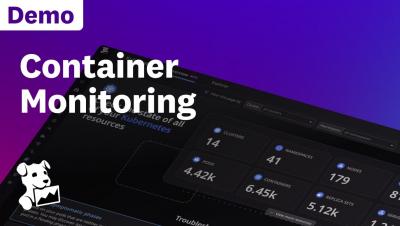
Monitoring tools aid DevOps teams in finding and resolving performance issues more quickly. With the popularity of Kubernetes and Docker continuing to grow, it's critical to establish proper container monitoring and log management practices early on. This is no simple task. Docker container monitoring is quite difficult. Creating a strategy and a suitable monitoring system is not at all easy.
Businesses around the world are increasingly turning to container technology to streamline the process of deploying and managing complex, cloud native applications. Containers bundle all necessary dependencies into a single package, offering portability, speed, security, scalability, and ease of management, making them the preferred choice over traditional virtual machines (VMs).
Moving towards a Kubernetes platform might seem a simple move. You’ll ask your smartest engineers to get started. They will love a move towards cloud and container technology. However, if you want to realize maximum benefit as you start using a platform like Kubernetes, there is more to it.
Life at a startup often feels like a 100-meter sprint, head down, and focused until you cross the finish line. Only then do you really know what you have achieved. While a startup's work is never finished, every year we take a pause to reflect on what we have achieved over the past twelve months. And boy, was 2022 a good one!
This 2022 was an incredible year for Epinio, SUSE’s application development engine for Kubernetes, enabling developers to go from Code to URL in one push. We removed many dependencies in the first few months, increasing the deployment speed and shortening the development feedback loop. We standardized the installation process with Helm, dropping the original installer. We added many new features, such as Services, allowing developers to provision custom resources autonomously.
Microsoft Azure Monitor allows customers to get critical details about their Azure cloud environments and services. The API for Azure Monitor can be a great way for teams to pull this information into their own storage systems for further analysis. However, it can be an overwhelming amount of data to process. Sysdig can help with this problem and eliminate time and effort. Here is how we do it …
Microservices are loosely coupled software that provides flexibility and scalability to a cloud environment. However, securing this open architecture from vulnerabilities and malicious actors can be challenging without a service mesh. This blog post will demonstrate how you can create an Istio and Calico integration to establish a service mesh that will manipulate HTTP traffic in the application layer.
These three IAM security misconfiguration scenarios are rather common. Discover how they can be exploited, but also, how easy it is to detect and correct them. Identity and access management (IAM) misconfigurations are one of the most common concerns in cloud security. Over the last few years, we have seen how these security holes put organizations at increased risk of experiencing serious attacks on their Cloud accounts.
With 34% of cloud developers facing difficulties when calculating how much their cloud provider is going to charge them each month, it is essential to prioritize cloud cost management. This concept surrounds the process of monitoring, controlling, and optimizing an organization’s cloud service spend. By having the correct cloud cost management strategies in place, organizations are able to eliminate unnecessary expenses through optimizing resource allocation and cost-saving strategies.
I’m excited to announce the general availability of the SUSE NeuVector container security platform version 5.1. With the 5.1 release, customers will benefit from more efficient and powerful vulnerability scanning and admission controls across multiple clusters through centralized enterprise scanning, auto-scaling scanners and support for the new Kubernetes (1.25+) pod security admission (PSA) standard. The release also supports the Cilium network plug-in.
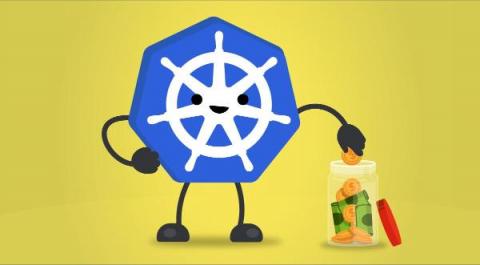
As companies start their Kubernetes and cloud-native journey, cloud infrastructures and services grow at a rapid pace. This happens all too often as organizations shift left without thorough controls, which can lead to overallocating and overspending on their Kubernetes environments. Organizations running workloads in the cloud can put budgets at risk when they lack information about key facts.
As we enter the holiday season, online shopping and payment systems are gearing up for higher traffic and workloads. Ensuring that these applications can handle the increased demand without slowing down or crashing is critical for providing a smooth and efficient experience for customers. One way to improve the performance and reliability of these applications is by using chiselled Ubuntu images in your containerised deployment.
The structured nature of Kubernetes enables a repeatable and scalable means of deploying and managing services and applications. This has led to widespread adoption across market verticals for both on-premises and cloud deployment models. The autonomous nature of Kubernetes operation, however, demands comprehensive, fully-converged observability and security. This is uniquely possible today using the Elastic platform.
Enterprises are increasingly adopting Kubernetes. In fact, Gartner estimates that by 2026 more than 90% of global organizations will be running containerized applications in production, an increase from fewer than 40% in 2020. And IDC reports that 80% of new workloads are being developed in containers.
A new version of Rancher Desktop with the experimental Allowed Images feature and several other improvements has just been released!
When it comes to creating new Pods from a ReplicationController or ReplicaSet, ServiceAccounts for namespaces, or even new EndPoints for a Service, kube-controller-manager is the one responsible for carrying out these tasks. Monitoring the Kubernetes controller manager is fundamental to ensure the proper operation of your Kubernetes cluster. If you are in your cloud-native journey, running your workloads on top of Kubernetes, don’t miss the kube-controller-manager observability.
Tigera provides the industry’s only active Cloud-Native Application Security Platform (CNAPP) for containers and Kubernetes. Available as a fully managed SaaS (Calico Cloud) or a self-managed service (Calico Enterprise), the platform prevents, detects, troubleshoots, and automatically mitigates exposure risks of security issues in build, deploy, and runtime stages across multi-cluster, multi-cloud, and hybrid deployments.
At Civo, we have always sought to expand people’s understanding of technology. From setting up an academy to help people get to grips with Kubernetes to running developer events around the world, we firmly believe that the benefits of technology should be accessible to everyone. There is a growing global community in the tech sector that is focused on a new way of doing things. This community is united by a conviction that these changes must be done for the benefit of all.
It should surprise no one that Kubernetes uptake is growing and will continue to do so. The wildly popular container orchestration platform’s continuous development is fueled by broad adoption. This will continue in 2023 as more companies, teams and individuals embrace it as a platform for innovation, building new applications and scaling existing ones faster than ever before.
K3s and Rancher Kubernetes Engine (RKE2) are two Kubernetes distributions from the SUSE Rancher container platform. Either project can be used to run a production-ready cluster; however, they target different use cases and consequently possess unique characteristics. This article will explain the similarities and differences between the projects. You’ll learn when it makes sense to use RKE2 instead of K3s and vice versa.
Kubernetes is a continuously evolving technology strongly supported by the open source community. In the last What’s new in Kubernetes 1.25, we mentioned the latest features that have been integrated. Among these, one may have great potential in future containerized environments because it can provide interesting forensics capabilities and container checkpointing.
As today’s enterprises shift to the cloud, Kubernetes has emerged as the de facto platform for running containerized microservices. And while Kubernetes operates as a single cluster, enterprises inevitably run their applications on a complex, often confusing, architecture of multiple clusters deployed to a hybrid of multiple cloud providers and private data centers. This approach creates a lot of problems. How do your services find each other? How do they communicate securely?
Kubernetes Lens is an integrated development environment (IDE) that allows users to connect and manage multiple Kubernetes clusters on Mac, Windows, and Linux platforms. It is an intuitive graphical interface that allows users to deploy and manage clusters directly from the console. It provides dashboards that display key metrics and insights into everything running on a cluster, including deployments, configurations, networking, storage, and access control.
When moving production workloads to a new containerized environment, application traffic management (ATM) can become complex. This is especially true for organizations that are transitioning workloads to Kubernetes, as managing traffic requires load balancing and configuring other Kubernetes networking components, such as ingress and ingress controllers.
2022 was another year of innovation and growth for SUSE’s Enterprise Container Management business. We introduced significant upgrades to our Rancher and NeuVector products, launched new open source projects and matured others. Exiting 2022, Rancher remains the industry’s most widely adopted container management platform and SUSE remains the preferred vendor for enabling enterprise cloud native transformation. Here’s a quick look at a few key themes from 2022.
Pods are ephemeral. And they are meant to be. They can be seamlessly destroyed and replaced if using a Deployment. Or they can be scaled at some point when using Horizontal Pod Autoscaling (HPA). This means we can’t rely on the Pod IP address to connect with applications running in our containers internally or externally, as the Pod might not be there in the future.
This article was originally published in The New Stack and is reposted here with permission. A Helm chart can simplify our lives and enable us to see what is happening with our K3s cluster using an external system. Lightweight Kubernetes, known as K3s, is an installation of Kubernetes half the size in terms of memory footprint. Do you need to monitor your nodes running K3s to know the status of your cluster?
Join Mark Boost, Dinesh Majrekar, and Saiyam Pathak to discuss the current state of the cloud industry and why costs are so high, how to take steps to reduce your spend, and looking at how Civo can help.
Want to try out Mattermost, but don’t have sufficient infrastructure or the time? Here is a guide on how to deploy Mattermost using minikube in five minutes.
If you're involved in deploying and managing applications and servers, you know that it is a complex and resource-intensive process. Container orchestration platforms help automate the deployment, scaling, and management of your applications, but the challenges don’t stop there. Everything from the way applications communicate, down to the underlying infrastructure they run on, exposes vulnerabilities, complexities, and builds up technical debt.
We recently held a webinar, “Find Value at the Edge: Innovation Opportunities and Use Cases,” where Forrester Principal Analyst Michele Pelino was our guest speaker. After the event, we held a Q&A with Pelino highlighting edge infrastructure solutions and benefits. Here’s a look into the interview.
Today we’re pleased to announce the availability of Kubewarden 1.4.0. Kubewarden is an open source security policy engine. This 1.4.0 version brings some minor fixes to our controller and helm charts and two new interesting features.
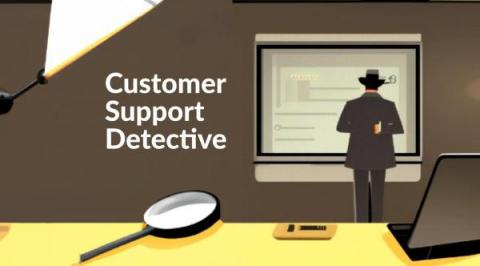
I open my laptop and look over my cases while I slurp down my first cup of coffee. Most of my backlog is waiting on customer updates, or bug fixes. Two of my cases have been marked for closure. Not a bad start for a Monday! A pod CrashLoopBackoff issue was resolved by bumping up memory requests, and the missing metrics issue was solved after applying some Prometheus annotations to the customer’s nginx pods. I notate and close both cases. No sooner do I hear the beep of the badge scanner.
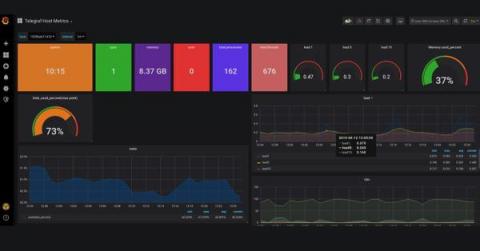
This tutorial describes how to install the Telegraf plugin as a data-collection interface with InfluxDB 1.7 and Docker. In Part 1 of this tutorial series, we covered the steps to install InfluxDB 1.7 on Docker for Linux instances. We describe in Part 2 how to install the Telegraf plugin as a data-collection interface with InfluxDB 1.7 and Docker.