Mailchimp
Not subscribed to OpsMatters Newsletter


The Network Operations Center (NOC)— the powerful, centralized epicenter that supervises, monitors, and maintains network availability—is the core of the network infrastructure. It’s up to the NOC to keep large, complex networks running reliably.
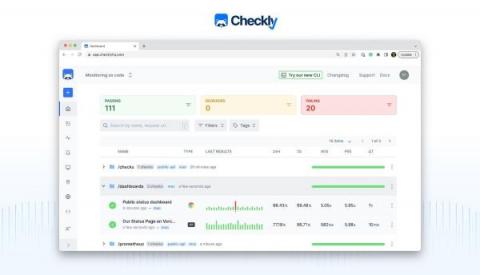
This post will introduce Checkly, the synthetic monitoring solution, and their monitoring as code approach. This guest post was written by Hannes Lenke, the CEO, and co-founder of Checkly. First, thanks to Birol and the ilert team for the opportunity to introduce Checkly. ilert recently announced discontinuing its uptime monitoring feature and worked with us on an integration to ensure that existing customers could migrate seamlessly. So, what is monitoring as code and Checkly?
Today’s modern enterprise WAN is a mix of public internet, cloud provider networks, SD-WAN overlays, containers, and CASBs. This means that as we develop a network visibility strategy, we must go where no engineer has gone before to meet the needs of how applications are delivered today.
Infrastructure performance management (IPM) is the process and associated tools for ensuring the overall health of your entire IT ecosystem so it operates at optimal levels. Because your infrastructure supports your entire enterprise—from daily operations to strategic initiatives—the stakes are high.
The basic goal of log management is to make log data easy to locate and understand so that users can identify how their services are performing and troubleshoot more quickly. Logging as a Service, or LaaS, takes log management a step further by providing a solution that seamlessly scales and manages your log data via cloud-native architecture.
Chasing down critical information in disparate systems of record while trying to resolve an incident can make an already stressful situation even more taxing. Extra clicks, extra logins, copy/paste, socializing that information with other responders–it all wastes time and introduces more room for human error. Now PagerDuty customers can use Custom Fields on Incidents to enrich their incident data.