Operations | Monitoring | ITSM | DevOps | Cloud

How Latitude.sh, Wasabi, and Megaport Unlock Cost-Effective Multicloud

Learn how to reduce cloud costs without sacrificing performance by integrating Latitude.sh's compute, Wasabi's storage, and Megaport's private network into your multicloud architecture. IT teams are under increasing pressure to reduce costs without sacrificing performance or scalability in their cloud infrastructure. I’ve had several customers bring up a need for reducing compute cost and storage costs, the need for custom hardware specs, and the like.

Data Center Digital Twin: Modeling, Planning, and Visualization of All Your Sites

To manage today’s complex and distributed data center environments, data center professionals need more than spreadsheets, static diagrams, and siloed monitoring tools. They need a real-time and interactive view of their infrastructure, a data center digital twin. Modern Data Center Infrastructure Management (DCIM) software makes this possible. Far beyond basic monitoring or asset tracking, DCIM software delivers a true digital twin.

How to Make the Most of Your Auvik Demo

A live demo is one of the easiest ways to see if Auvik fits your network management needs. In just one session, a product expert walks you through core workflows, highlights features that matter to your team, and answers your toughest questions — no setup required. If you’re thinking about switching network monitoring solutions, a demo can be more helpful than a trial.

Cribl and Palo Alto Networks Launch Partnership with Cortex XSIAM Integration

Cribl’s powerful data processing engine is designed specifically for IT and Security teams, enabling organizations to take control of their ever-growing data volumes. By simplifying the management, processing, and analysis of telemetry data, such as logs, metrics, and traces, generated across complex digital environments. This empowers organizations with the choice, control, and flexibility to manage and analyze data, allowing them to adapt to evolving needs and strategies.

How to keep Ingress NGINX Controller metric volumes manageable and still meaningful

The Ingress NGINX Controller is a widely used Kubernetes component for managing HTTP and HTTPS traffic routing. While it provides powerful observability through Prometheus metrics, it’s also notorious for generating an excessively high number of time series. The root cause lies in how the controller labels its metrics—tracking requests across multiple dimensions such as ingress name, host, path, status code, and upstream response times.

Is There Really ROI for Moving Your Voice Network to Cloud Native?

As an operations leader, you are constantly asked to do more with fewer resources. Join us on April 29th to learn how your peers are successfully leveraging cloud native and end-to-end automation to minimize manual labor and lower OpEx. Many of our customers have expressed their challenges in swiftly launching new services, maintaining compliance, or managing subscriber churn. How does one maintain business continuity in the face of expertise shortages and security concerns?

How Console Connect is empowering data centre partners with enhanced connectivity

The digital landscape is evolving at a rapid pace, and businesses are constantly seeking agile, high-performance connectivity solutions to stay ahead. Recognising this, data centres are shifting beyond their traditional role of offering just space and power. Today, they must deliver real-time access to clouds, other data centres, and applications.

Extending the Capabilities of DX Unified Infrastructure Management: Release 23.4 CU4

Release 23.4 Cumulative Update 4 (CU4) for DX Unified Infrastructure Management (DX UIM) adds significant improvements to the product’s security stance and extends technical currency to support modern infrastructures. The release builds on the proven track record of DX UIM to deliver enterprise-ready capabilities and monitoring coverage, while meeting the highest standards for security, scalability, and performance.

Why you need Internet Performance Monitoring (IPM)

A few decades ago, monitoring your application was simple—everything ran on-premises, and performance issues were easier to pinpoint. But today, applications are built on globally distributed services, running across internal and external systems in the cloud, all connected through the Internet. In a world where the Internet is now your network, traditional APM (Application Performance Monitoring) isn’t enough. It only focuses on code and infrastructure, leaving critical blind spots that impact performance, availability, and user experience.

Breaking Down Silos with Correlation and Context

In modern IT environments, data is abundant, but clarity is rare. Enterprises deploy dozens of monitoring tools to collect metrics, events, and logs from across the network, yet when something goes wrong, teams still scramble to connect the dots. Why? Because these data streams exist in siloes, isolated by format, source, or system.

The State of Routing Security: Progress, Challenges, and Measurement

Kentik's Director of Internet Analysis, Doug Madory, explores the current landscape of BGP routing security. He discusses key progress made in Route Origin Validation (ROV), common pitfalls like AS-SET nesting, and ongoing challenges faced by the networking industry. With real-world examples and detailed traffic analysis from Kentik's extensive NetFlow data, Doug shares his insights and recommendations for NetOps professionals who want to improve their routing security practices. Watch this webinar replay to learn the latest methods for securing the global internet.

How HTTPS (HTTP) Proxies Differ from SOCKS5: Understanding Protocol Differences

A proxy server functions as a go-between for the client and the destination server. It's commonly used to bypass content restrictions, boost online security, and improve anonymity. There are several types of proxy protocols available, with HTTP and SOCKS being among the most widely used. But how exactly do they differ-and how should you decide which one to use?

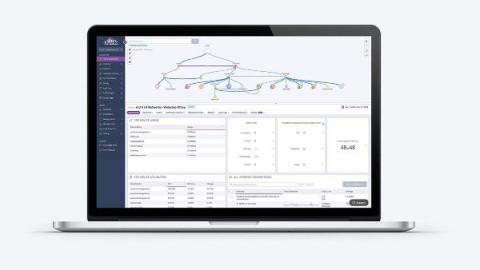
How does observability enhance operations in cloud native voice networks?

The 17th century saw the onset of the Scientific Revolution. It was a time of knowledge explosion. During this time, scientific practices were still evolving, with no universally accepted protocols for data collection and analysis. Individuals documented any observation, resulting in the collection of massive amounts of information, but much of it was hard to leverage to draw useful conclusions. The development of the scientific method provided a common approach to capturing and analyzing data.

Lessons Learned in LLM Prompt Security: Securing AI with AI

AI is no longer just a buzzword. According to a 2024 McKinsey survey, 72% of companies now use AI in at least one area of their business. By 2027, nearly all executives expect their organizations to use generative AI for both internal and external purposes. However, with this rapid adoption comes significant security risks. As organizations rush to implement AI solutions, many overlook a critical vulnerability: prompt security.

Four Ways to Connect Your Clouds

Learn how to connect your cloud environments without sacrificing speed, security, or cost efficiency. Businesses aren’t sticking to just one cloud provider anymore. Maybe you’re running apps on AWS, storing data in Google Cloud, and using Azure for AI workloads. It makes sense – each provider has its own strengths. But now you’ve got another challenge: How do you connect them all efficiently without running into performance issues, high costs, or security risks?

How to find Network Visibility Gaps: Strategies to Ensure Resilience and Performance

As IT infrastructures grow more complex, visibility and resilience have never been more critical. With hybrid IT, remote workforces, and distributed services, your network extends far beyond the data center or cloud—it spans the internet. Traditional monitoring tools leave blind spots that impact user experience and lead to costly downtime. To stay ahead, modern network performance monitoring (NPM) must evolve.

The Scourge of Excessive AS-SETs

An AS-SET is a special object that represents a group of ASNs and forms the basis for IRR-based route filtering. However, many AS-SETs in circulation today have grown so big that they effectively whitelist much of the routing table, rendering them ineffective. According to recent analysis, there are currently 2,192 AS-SETs which expand to over 1,000 ASNs each! In this blog post, we’ll describe what an AS-SET is, its role in route filtering, and how to deal with excessively large AS-SETs.

Obkio's 2025 Pricing Updates: Investing in a Stronger, Smarter Network Monitoring Solution

For the first time in over 3 and a half years, we’re updating our pricing. Starting June 1st, new pricing will apply to all new purchases, upgrades, and renewals and will be reflected in upcoming billing statements. This change comes as we roll out a wave of powerful new features and improvements designed to help you monitor and optimize network performance better than ever before. We know pricing updates are never taken lightly, and neither is your trust in us.

Cloud Migration Benefits: Why Switching Network Management to the Cloud Makes Sense

Migrating your network infrastructure and management tools to the cloud offers tremendous advantages for modern businesses. As legacy on-premise data centers face growing limitations, shifting critical IT resources into robust cloud platforms provides the agility, efficiency, and innovation needed to stay competitive. This article explores the many benefits of cloud migration, including the financial, operational, and strategic upsides.

Optimize AWS Transit Gateway Usage

AWS Transit Gateway simplifies network architecture by connecting multiple VPCs and on-premises networks through a centralized hub—but it's easy to incur unnecessary costs if not managed properly. Learn how Kentik provides deep visibility into your AWS Transit Gateway usage, quickly highlighting expensive or inefficient traffic patterns. Using Kentik's Data Explorer, we show how to identify unnecessary intra-VPC traffic that's adding costs and potentially degrading performance.

Top Linode Alternatives for 2025: Why Kamatera Stands Out for DevOps Teams

Businesses continuously explore alternatives to Linode to discover cloud hosting solutions that align perfectly with their diverse needs. Alternative platforms like AWS, Amazon, OVHcloud, and Kamatera offer varied options in terms of pricing, features, and performance capabilities. Shifting to these alternatives might provide better integration options, improved customer support, or pricing benefits suited for different business scales. This exploration enables organizations to secure a cloud platform that meets their specific requirements and supports their growth trajectory effectively.

AI's Dark Side: Crafting the Perfect Phishing Email

Phishing just got an upgrade. In this clip from our Fireside Chat, Oliver Spence breaks down how attackers are now using AI to write perfectly-toned, convincing phishing emails — and even mimic voices for vishing attacks. No more broken English. AI voice cloning is here. Phishing emails are getting harder to spot. This is how AI is quietly changing the game on the offensive side — and why businesses need to rethink their everyday defenses.

How to Troubleshoot Internet Connectivity Issues for IT Pros

A reliable Internet connection is the lifeblood of nearly every organization. From seamless video conferences to uninterrupted data transfers and smooth online operations, the modern business world depends on a steady flow of data. However, as IT professionals know all too well, even the most robust networks can encounter connectivity issues that disrupt productivity and cause frustration.

Making VMware Cloud Foundation Environments Part of Your Network Observability Picture

Private cloud solutions like VMware Cloud Foundation (VCF) are rapidly gaining traction as organizations seek the benefits of on-premises control with cloud-enabled agility. While these offerings deliver significant benefits, they also introduce significant challenges for network operations teams striving to maintain optimal user experiences.

Differences Between RemotePC Attended Access and Dameware Attended Access

In today’s interconnected world, remote support solutions are essential for businesses and IT teams to assist users effectively. Among these solutions, RemotePC and SolarWinds Dameware are leading tools offering attended access capabilities. However, choosing the right tool requires thoroughly understanding its unique features, advantages, and ideal use cases. This article provides an in-depth comparison of RemotePC attended access and Dameware attended access.

Colo is not dead. | Uplink Podcast | Episode 4

Colo is not dead. Forget cloud-only strategies—AI is driving a resurgence in colocation and a rethink of what hybrid infrastructure really means. AI has flipped the script on how we think about digital infrastructure. In this episode, we’re joined by TierPoint SVP Don Schuett to explore how the surge in AI demand has fundamentally reshaped the data center industry—impacting everything from hardware design to real estate strategy.

The Hidden Cost of DIY AI in Network Operations

While AI offers powerful benefits for network operations, building an in-house AI solution presents major challenges, particularly around complex data engineering, staffing specialized roles, and maintaining models over time. The effort required to handle real-time telemetry, retrain models, and manage evolving environments is often too great for most IT teams.

Simplifying cloud connectivity: Console Connect now available on OCI Marketplace

Oracle Cloud Infrastructure (OCI) customers can now seamlessly purchase Console Connect services directly from the OCI Marketplace using Oracle Universal Credits. As the first FastConnect partner to offer services on the Oracle Marketplace, Console Connect provides a suite of cloud connectivity solutions designed to enhance the speed, reliability, and performance of data connections to Oracle Cloud.

How Much Network Capacity Should Businesses Maintain

Network capacity: So, how much network capacity does your business actually need? The answer depends on your users, applications, and growth plans. Today, we’ll calculate your network capacity requirements, avoid common pitfalls, and ensure smooth operations — whether your team is in-office, remote, or hybrid.

Beyond the Horizon - Backup Gets Smart

In this behind-the-scenes conversation from Empower 2025 in Berlin, N-able Head Nerd Eric Harless catches up with Stefan Voss, VP of Prudoct Management at Cove, to unpack what's new and what’s next for cloud-based data protection. From executive summary reports and billing APIs to Google Workspace backup and AI-powered recovery assurance, this episode is packed with insights for MSPs aiming to drive efficiency, reduce risk, and scale smarter.

Remote Desktop File Transfer: Securely Move Files Between Desktops

Remote desktop file transfer allows people to transfer files between remote desktops and local machines quickly—and it is more vital than ever. IT teams rely on remote desktop tools to access servers, while remote employees use these tools for file transfers when working from home or collaborating with colleagues at other locations.

IoT Implementation For Small Businesses: How To Get Started

The Internet of Things (IoT) is reshaping how businesses operate, and it's not just for tech giants or large-scale manufacturers. Small businesses now have access to affordable, scalable IoT solutions that can open new doors to smarter decision-making and improved customer experiences. Adopting IoT can feel unfamiliar at first, especially when you're juggling daily operations with limited resources. But with the right approach, it can become a powerful tool for growth, offering better control over your business and unlocking valuable data-driven insights.

How to Detect Insider Threats: An In-Depth Guide

Cybersecurity threats don’t exclusively come from external attackers—insider threats must also be considered and mitigated. Insider threats come from employees, contractors or business partners who have legitimate access to IT systems to fulfill business functions. They have access to data and systems that are valuable to cyberattackers or would cause reputational damage if disclosed outside the organization. For example, an insider could leak private company information.

Beyond the Horizon - Backup Gets Smart

In this behind-the-scenes conversation from Empower 2025 in Berlin, your hosts catch up with Stefan to unpack what's new and what’s next for cloud-based data protection, automation, and AI in the MSP space. From executive summary reports and billing APIs to Google Workspace backup and AI-powered recovery assurance, this episode is packed with insights for MSPs aiming to drive efficiency, reduce risk, and scale smarter. Whether you're navigating cloud migrations, looking for ways to simplify invoicing, or just curious about the future of SaaS protection — this quick but impactful episode has you covered.

What Is High Availability in SQL Server?

Developed by Microsoft in the 1980s, SQL Server is a relational database management system designed to help store, retrieve, and manage data. SQL Server’s strong data processing capabilities, robust security, and high scalability make it an excellent option for enterprise environments that need to process high volumes of advanced analytics, transactions, and more. Data availability is vital for businesses of all sizes, so organizations strive for high availability (HA).

Cloud-Based Network Management: Benefits & How it Works

Managing networks has never been more complex—more devices, more remote work, and more security challenges. Traditional on-premise solutions can struggle to keep up, requiring constant maintenance and on-site troubleshooting. That’s why businesses are shifting to cloud-based network management, which provides real-time visibility, automation, and remote access to keep networks running smoothly.

Choosing the Right Transport Protocol: TCP vs. UDP vs. QUIC

A decision-making framework breaking down the strengths, weaknesses and ideal use cases to help users choose the proper protocol for their systems. Initially published in The New Stack We often think of protocol choice as a purely technical decision, but it's a critical factor in the user experience and how your application is consumed. This is a high-impact business decision, making it crucial for the technical team to first understand the business situation and priorities.

How to Migrate from SolarWinds to Auvik Without Downtime

Switching from one network management system (NMS) to another is a big decision for IT teams and MSP businesses. An NMS is the central hub for everything from network troubleshooting deep dives to planning hardware refresh cycles and enabling quarterly business reviews (QBRs). And even if a different platform is clearly a better fit for your organization than your current NMS, it’s important to consider the operational overhead of actually making the switch.

On-Premise to Cloud Migration Step-by-Step Guide for Network Management

Cloud adoption has reached a tipping point — 98% of U.S. organizations have already migrated at least some business operations to the cloud. Global cloud spending is projected to reach $1.3 trillion by 2025 as companies rapidly embrace off-premise solutions, with 63% of IT decision-makers reporting accelerated cloud migration plans over the past 12 months.

On-Premise vs. Cloud Network Management: Which Is Right for Your Business?

Deciding between on-premise vs. cloud solutions is one of the biggest IT infrastructure choices businesses face today. Both options come with their own advantages and trade-offs. The right choice depends on your company’s needs, resources, and long-term growth plans. In this guide, we’ll break down the key differences between on-premise and cloud-based network management, covering factors like cost, security, scalability, and ongoing management.

How a cloud-based SaaS platform like Site24x7 makes network monitoring easy

It's a beautiful day. You're settling in with your morning coffee, feeling positive, and ready to take on the tasks of the day. Emails are trickling in, orders are processing, customers are happy, and everything is running like clockwork—until abruptly, it isn't. Willfully, your network decides it's time it took a coffee break, too. Pages won't load, transactions hang mid-air, and the entire office looks at you like you personally unplugged the internet simply because you sneezed at the wrong time.

HAProxy vs NGINX Performance: A Comprehensive Analysis

When architecting high-performance infrastructure capable of handling substantial traffic loads, the choice of load balancer is a critical decision that can significantly impact system reliability, performance, and cost-efficiency. Among the leading contenders, HAProxy and NGINX stand out as mature, battle-tested solutions with distinct strengths and characteristics.

HAProxy goes big at KubeCon London 2025

Last week, the cloud-native jamboree that is KubeCon descended on London, UK (my home city), and HAProxy Technologies set out to be the life of the party. This year’s event was our biggest yet, so we brought our A-game – with a huge booth, a lot to show off, and thousands and thousands of T-shirts to fold and give away.

Examining Network Architectures: Kubernetes and Cycle

In a world of managed services, details can often be skipped, overlooked, ignored, or just plain avoided. And in many cases, that's fine. But if you're here, reading this, then I will take it for granted that these things interest you, and I welcome you to join me on this journey of exploration, looking under the hood of two prominent container orchestration platforms on the market: Cycle and Kubernetes.

AI That Matters: Driving Real Outcomes in Network Operations

AI can be a transformative tool in network operations — but only when it’s tied to clear, measurable outcomes. Rather than chasing hype, IT and NetOps teams should focus on solving specific operational challenges like reducing MTTR, cutting costs, and stabilizing infrastructure. AI has real potential when strategically applied, and when aligned with business goals, it becomes a powerful ally in modern network operations.

Can Your Network Monitoring Tool Keep Up? | Obkio

A while ago, your company chose a network monitoring tool that worked perfectly — back when most employees worked in the office, networks were centralized, applications ran on-premise, and "the cloud" was just a buzzword. But today? Your network has evolved (SD-WAN, remote work, SaaS apps), while your monitoring tool hasn’t. Now, false alerts flood your team, troubleshooting takes hours instead of minutes, and your tool only monitors your network devices but offers zero visibility into performance from the end-user perspective or critical cloud-based apps.


TCP Monitoring With AppNeta: Why Expanded Support is a Game Changer

Broadcom continues to expand the capabilities of AppNeta by Broadcom, offering ongoing enhancements in features and value. With the introduction of TCP protocol support, users can now achieve more streamlined setup processes and deeper visibility into modern network paths. These enhancements help eliminate blind spots and improve monitoring accuracy across complex network environments. Review this post to learn more about these valuable new capabilities.

How to Justify Switching Network Management Solutions to Your Leadership Team

Switching network management solutions can be a scary proposition, even when the system you have isn’t working well. After all, network management is the cornerstone of visibility, security, and IT operations, and if something is working “well enough” today, then leadership can be change-averse. However, sticking with a network management platform that isn’t a good fit for your environment can lead to waste, administrative overhead, visibility gaps, and reduced network reliability.

Cloud Pathfinder: A Key to Cloud Network Intelligence

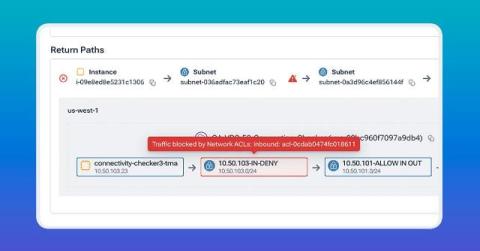
Cloud Pathfinder simplifies cloud troubleshooting by visually mapping connectivity paths between cloud endpoints and integrating the power of AI, identifying where and why traffic is being blocked. By analyzing cloud configuration metadata, it provides instant, actionable insights into routing and security issues — saving engineers hours of manual work.

Beyond Their Intended Scope: DDoS Mitigation Leak

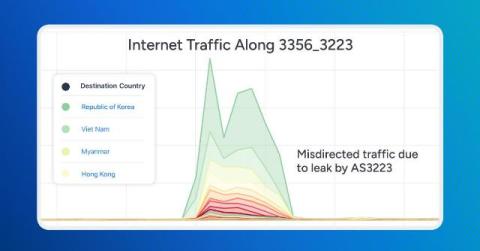
In this edition of Beyond Their Intended Scope, we take a look at last week’s BGP leak by a DDoS mitigation company which impacted networks around the world. We look at the impacts in both BGP and traffic data, and discuss how RFC 9234’s “Only to Customer” BGP Path Attribute could have helped.

How to View and Understand VPC Flow Logs

If you're running workloads in AWS, you've probably heard about VPC Flow Logs. These logs are your eyes and ears for network traffic in your Virtual Private Cloud, and knowing how to check them properly can save you hours of troubleshooting headaches. Whether you're tracking down connectivity issues or monitoring for suspicious activity, this guide will walk you through checking VPC flow logs step by step, with practical examples you can apply today.

Envoy vs HAProxy: Which Proxy Server Is Right for Your Infrastructure?

Choosing between Envoy and HAProxy isn't just about picking a proxy server. It's about deciding which tool will handle your traffic, balance your loads, and keep your services running when everything else wants to crash. If you're a DevOps engineer or system admin weighing these options, you're in the right place.

Comprehensive Guide to Log Aggregation Techniques and Tools

Logs can provide vital insights to help you monitor system health, pinpoint and resolve issues, and improve cybersecurity. They capture real-time errors and record information about events and other system activities, shedding light on everything from application performance to security threats. However, managing logs can be overwhelming. To get the most out of your logs, you need to aggregate them into a centralized system where they can be organized, searched, and analyzed effectively.

Monitoring, Observability, and Operational Resilience - SolarWinds TechPod 097

In this episode of SolarWinds TechPod, hosts Chrystal Taylor and Sean Sebring explore the key differences between monitoring and observability with guest Jeff Stewart, GVP of Product Management at SolarWinds. Observability goes beyond traditional monitoring, offering AI-driven insights and a holistic view of system health. Like understanding the anatomy of the body, observability reveals how IT systems are interconnected—where one issue can ripple across the entire environment.

Addressing configuration management in legacy network systems

Legacy network systems keep many enterprises running, but let's be honest—they can be a nightmare to secure. Misconfigurations, outdated protocols, security gaps, or even easy passwords make them easy targets for attackers. If upgrading isn't an option (for financial reasons or because you do not have the resources to refurbish the monolith that your legacy network has become), how do you lock them down? That's where Site24x7 comes in.

VDI vs VPN: Which Remote Access Solution is Best for Your Business?

The shift toward remote work has made reliable and secure access to company resources more important than ever. As organizations explore different solutions to address these needs, two popular technologies stand out: Virtual Desktop Infrastructure and Virtual Private Networks, or VDI and VPN. Both offer distinct benefits for connecting employees to critical systems, but the differences between them can significantly impact your business operations.

SD-WAN and MPLS: Weighing the Similarities, Differences, and Benefits

Compare these two leading networking technologies so you can decide which is best for your organization. In 2025, Software-Defined Wide Area Networking (SD-WAN) is considered an essential part of many organizations’ network fabric. But what about Multiprotocol Label Switching (MPLS)? Has this trusty routing technique been made redundant by the increasing uptake of SD-WAN? What are the differences and similarities between SD-WAN and MPLS? And are there valid reasons to use both?

Application Logging Best Practices for Network Technicians: A Comprehensive Guide

If you need to monitor your application’s health, troubleshoot issues quickly, and ensure compliance with various security policies, application logging is compulsory. Without proper logging, identifying the root cause of failures, tracking suspicious activity, or optimizing application performance will become significantly more challenging, if not impossible.

10 Factors Affecting Your Network Performance & How to Fix Them

If your network feels sluggish, you're not alone. After years of battling slow connections, dropped calls, and frustrated end-users, I’ve learned one thing: network performance issues always have a root cause. Maybe your VoIP calls keep cutting out. Maybe cloud apps take forever to load. Or maybe your team complains about "the network being slow" — again. The problem? Networks don’t slow down for no reason.

Accelerate Your Network Automation with Muse Automation Platform

In today’s fast-paced digital landscape, network automation has become a vital tool for service providers seeking to enhance efficiency, reduce operational costs, and improve customer satisfaction. Muse, a platform developed by Ribbon Communications, stands at the forefront of this transformation. This blog post summarizes how Muse leverages low-code platforms to streamline and automate network operations to drive profitability in IP Optical Networks.

Why network observability is a boardroom priority for CEOs

Finances, strategy, and market expansion are all common CEO concerns. However, CEOs also need to focus on automatic advanced observability across highly dynamic environments. Network observability has become a boardroom discussion point because downtime directly impacts business performance. Observability helps reduce costs and enhance service quality. But what is network observability? Is observability truly necessary if you have a monitoring solution in place?

The Future of AI Consumption with Chris Sharp, CTO of Digital Realty | Uplink Podcast | Episode 1

What powers the AI revolution? Digital Realty CTO Chris Sharp joins us to explore the evolution of data centers—from invisible infrastructure to the epicenter of next-gen compute. How did data centers transform from invisible infrastructure to the epicenter of the AI revolution? In this fascinating conversation with Chris Sharp, Chief Technology Officer at Digital Realty, we explore the remarkable evolution of digital infrastructure over the past two decades.

Data Center Boom: Navigating the Hottest Industry in the World | Uplink Podcast | Episode 2

How did data centers become one of the hottest industries on the planet? DataBank CEO Raul Martynek joins us to break down the explosive growth of digital infrastructure—and what it really takes to scale in the AI era. The data center industry stands at the epicenter of today's technology revolution, experiencing what industry veterans call "the best market ever seen." In this revealing conversation with DataBank's CEO, we dive deep into the forces driving unprecedented growth in digital infrastructure and why this sector has become perhaps the hottest industry globally.

The future of Kubernetes networking: Cilium and other CNIs with Canonical Kubernetes

Choosing the right Container Network Interface (CNI) for Kubernetes is critical to achieving optimal performance, security, and scalability. With the launch of Canonical Kubernetes LTS (long-term support) last month, Canonical decided to integrate Cilium as the default CNI in order to reflect our commitment to delivering a modern, security-maintained, high-performance Kubernetes experience.

Essential Steps for Troubleshooting Network Problems

Everyone has a story about that one road trip where traffic got backed up, making people late to the event. When you have network connectivity problems, your information highway gets clogged up, making it difficult for users to access resources efficiently. While network troubleshooting strategies may seem simple, a lot of nuance and complexity lies in the activities when you dig into your data.

Calico Whisker, Your New Ally in Network Observability

With the upcoming release of Calico v3.30 on the horizon, we are excited to introduce Calico Whisker, a simple yet powerful User Interface (UI) designed to enhance network observability and policy debugging. If you’ve ever struggled to make sense of network flow logs or troubleshoot policies in a complex Kubernetes cluster, Whisker is your friend!

Announcing Cloud Pathfinder: Network GPS for Infrastructure Teams

Today, we’re excited to launch Cloud Pathfinder, an AI-powered path assessment service built into Kentik Journeys. Read on to learn how Cloud Pathfinder gives you instant, turn-by-turn insight into cloud routing—mapping out every hop, gateway, VPC/VNet, and attachment along the way.

G2 Names Progress WhatsUp Gold a Leader in Network Traffic Analysis Grid Report

G2 has unveiled the leaders in the Network Traffic Analysis Grid Report, and the Progress WhatsUp Gold solution is one of them. Over 100+ G2 users have indicated that they are satisfied with WhatsUp Gold Network Traffic Analysis (NTA) and its numerous other features. The report states that 88% of users would highly recommend the WhatsUp Gold solution. In their quarterly reports, G2 will display leaders in particular technology sectors.