Operations | Monitoring | ITSM | DevOps | Cloud

The latest News and Information on Business Intelligence, Reporting and related technologies.

Power BI Dashboard Best Practices for Data Engineers and BI Developers

A strong Power BI dashboard is not built solely on visuals. For data engineers and BI developers, the dashboard is the final expression of a much larger analytics system. Its quality depends on the data model's structure, the discipline of the transformation layer, the clarity of the DAX logic, the dataset's performance, and the security model governing access.

10 Best Snowflake Monitoring Tools (Updated 2026)

Snowflake is a cloud data platform designed for large-scale analytics, data warehousing, and data processing. It allows teams across an organization to run multiple data workloads on a single platform without managing infrastructure. Snowflake’s architecture is also unique. Compute and storage are completely independent and highly elastic. However, Snowflake’s per-second pricing and elastic compute model make costs highly sensitive to usage.

Business intelligence plugins for Grafana: what's next

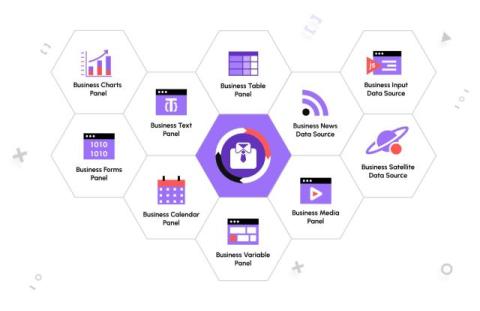
Volkov Labs has been a longtime partner to Grafana Labs, with co-founder Mikhail Volkov contributing to Grafana in the early stages of the OSS project. On Sept. 26, the Florida-based company that recently created a suite of business intelligence (BI) plugins for Grafana announced it had been acquired. In light of the news, Grafana Labs committed to taking over the maintenance and development of their popular business intelligence (BI) plugin suite.

From Market Noise to Clear Strategy: How AI Is Changing Business Intelligence

Modern businesses are drowning in data. Every click, transaction, customer interaction, and campaign generates information. Yet having more data does not automatically lead to better decisions. In fact, many organizations struggle because they are surrounded by insights but lack clarity. Reports contradict each other, dashboards multiply, and teams spend more time interpreting data than acting on it. This gap between data and direction is where artificial intelligence is reshaping business intelligence.

The Evolution of Business Intelligence in the Digital Age

In the digital economy, the pace of change has accelerated beyond what traditional business models were designed to handle. Decision-making, once based largely on historical trends and executive intuition, has evolved into a real-time, data-informed process that touches every layer of an organization. This transformation marks the new era of business intelligence, where the ability to generate insights is not just a competitive advantage-it's a basic necessity.

Business Intelligence (BI): What It Means for Your Organization

Data drives the modern business world, and organizations capable of leveraging it effectively maintain a significant edge over their competition. Business Intelligence (BI) has emerged as a critical tool, enabling companies to turn raw data into actionable insights. But what exactly is BI? This blog explores everything you need to know about business intelligence, from its components to use cases, to implementation strategies.

5 Key Functions of Intelligent Agents in Business Intelligence

Competition in the markets is constantly increasing. Most business owners are forced to look for new ways to optimize their processes. Making more informed decisions is becoming an essential task for strategic firms. This is where business analytics comes to the rescue. Specialists analyze data based on the provided reports (for example, through dashboards or visualization). For enterprises, such optimization plays a key role, which contributes to.

15 Cloud Business Intelligence Tools: Organized By Category

Data overload. Poor decision-making. Inefficient processes. Limited real-time insights. These are just a few of the many challenges an organization would face without business intelligence (BI). Yet traditional BI has its own set of challenges, including complexity, cost, data diversity, and more. These limitations have led businesses to seek a more affordable and efficient solution — the cloud. This article explains cloud business intelligence (cloud BI), how it works, and its benefits.

5 Reasons to Pursue a DBA in Business Intelligence

A DBA (Doctorate of Business Administration) is a terminal degree that integrates crucial leadership skills, theoretical coursework, and applied research. It's meant for those with a business-related master's degree or MBA and keen on advancing their careers. Earning a DBA in business intelligence comes with multiple rewards. Discussed below are five reasons to pursue a DBA in business intelligence.