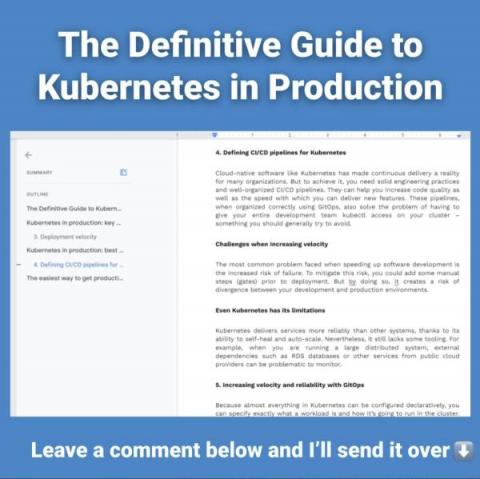
Containers and microservices have revolutionized the way applications are deployed on the cloud. Since its launch in 2014, Kubernetes has become a de-facto standard as a container orchestration tool. In this tutorial, you will learn how to deploy a Node.js application on Azure Kubernetes Service (AKS) with continuous integration and continuous deployment (CI/CD).
This is the second piece in a series about automated diagnostics, a common use case for the PagerDuty Process Automation portfolio. In the last piece, we talked about the basics around automated diagnostics and how teams can use the solution to reduce escalations to specialists and empower responders to take action faster. In this blog, we’re going to talk about some basic diagnostics examples for components that are most relevant to our users.
We are happy to announce the first minor release of Kubewarden v1.0: v1.1.1 is now available! For those of you new to Kubewarden, it is a policy manager for Kubernetes.
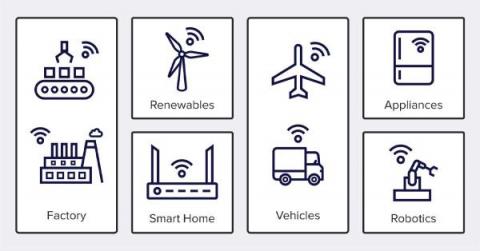
Developers are always trying to improve the reliability and performance of their software, while at the same time reducing their own costs when possible. One way to accomplish this is edge computing and it’s gaining rapid adoption across industries. According to Gartner, only 10% of data today is being created and processed outside of traditional data centers.
It’s time for another publication of What’s New in Sysdig in 2022! I’m in charge of the “What’s new in Sysdig” blog for the month of July! Hello, I’m Tom Linkin, a Sr. Solutions Engineer based in the Poconos up in Pennsylvania. I joined the incredible group of people at Sysdig nine months ago and have been helping support sales in the greater NYC region ever since.
Kubernetes, Prometheus, and Grafana are a trio of technologies that have transformed cloud native development. However, despite how powerful these three technologies are, developers still face gaps in the process of implementing a mature Kubernetes environment.
Kubernetes has quickly grown in popularity, also due to its flexibility and power as a container orchestration system. It can scale virtually indefinitely, which has enabled it to provide the backbone for many of the world’s most popular online services. Plus, it is accessible and easy to set up. But, Kubernetes also comes with a few challenges in production.
Cilium is a Container Network Interface (CNI) for securing and load-balancing network traffic in your Kubernetes environment. As a CNI provider, Cilium extends the orchestrator’s existing network capabilities by giving teams more control over how they build their applications and monitor traffic. For example, vanilla Kubernetes installations typically rely on traditional firewalls and Linux-based network utilities like iptables to filter pod-to-pod traffic by an IP address or port.
In Part 1, we looked at some key metrics for monitoring the health and performance of your Cilium-managed Kubernetes clusters and network. In this post, we’ll look at how Hubble enables you to visualize network traffic via a CLI and user interface. But first, we’ll briefly look at Hubble’s underlying infrastructure and how it provides visibility into your environment.
AWS provides multiple ways to deploy containerized applications. From small, ready-made WordPress instances on Lightsail, to managed Kubernetes clusters running hundreds of instances across multiple availability zones. When deciding on the architecture of your application, you should consider building it serverless. Being free from (virtual) server management enables you to focus more on your unique business logic while reducing your operational costs and increasing your speed to market.
Hyperconverged infrastructure (HCI) is a data center architecture that uses software to provide a scalable, efficient, cost-effective way to deploy and manage resources. HCI virtualizes and combines storage, computing, and networking into a single system that can be easily scaled up or down as required.
With the latest releases of Kubewarden v1.1.0 and the verify-image-signatures policy, it’s now possible to use GithubActions or KeylessPrefix for verifying images. Read our previous blog post if you want to learn more about how to verify container images with Sigstore using Kubewarden.
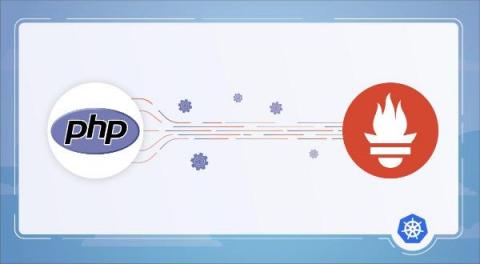
PHP is one of the most popular open source programming languages on the internet, used for web development platforms such as Magento, WordPress, or Drupal. In addition to all PHP bases, PHP-FPM is the most popular alternative implementation of PHP FastCGI. It has additional features which are really useful for high-traffic websites. In this article, you’ll learn how to monitor PHP-FPM with Prometheus.
Distributed systems open us up to myriad complexities due to their microservices architecture. There are always little problems that arise in the system. Therefore, engineering teams must be able to determine how to prioritize the challenges. Viewing logs and metrics of such systems enables engineers to know the shared state of the system components, thereby informing the decision-making on what challenge needs to be solved most immediately.
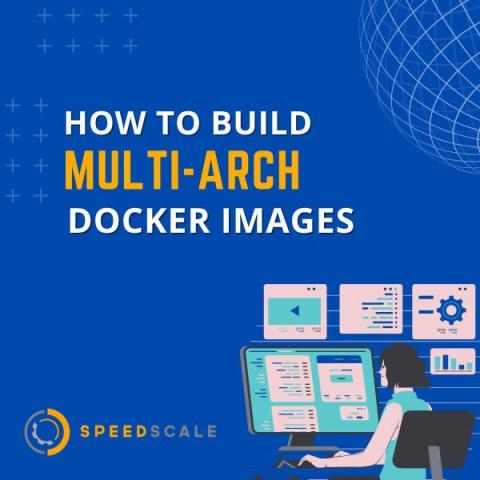
With ARM based dev machines and servers becoming more common, it is become increasingly important to build Docker images that support multiple architectures. This guide will show you how to build these Docker images on any machine of your choosing.
Docker is a platform as a service product. With Docker, you can easily deploy applications into Docker containers. Containers are software "packages" that bundle together an application's source code with its libraries, configurations, and dependencies. This helps software run more consistently on different machines. To use Docker containers, you need to understand how Docker networking works. Below, we'll answer the question: "what is Docker network host?". We'll also take a look to see how it works.
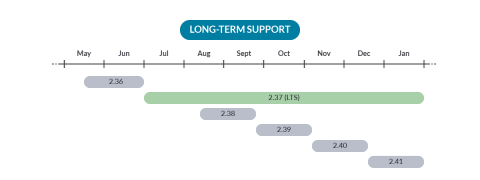
Prometheus 2.37 is out and brings exciting news: this is the first long-term supported release. It’ll be supported for at least six months.
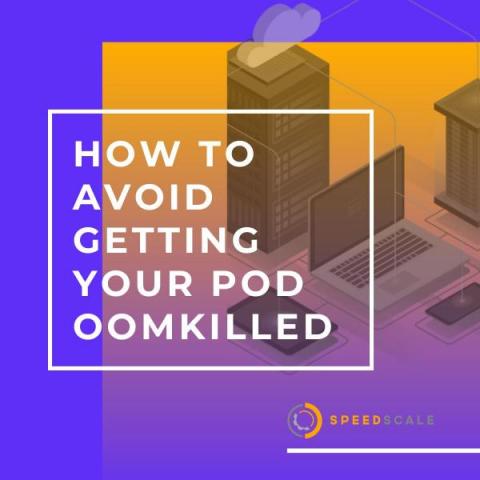
In this blog, understand why your pod has OOMKilled errors when provisioning Kubernetes resources and how Speedscale can aid with automated testing. When creating production-level applications, enterprises want to ensure the high availability of services. This often results in a lengthy development process that requires extensive testing for the applications or a new release.
Today, we are excited to announce support for Amazon CloudWatch Metric Streams. This support will enable our customers to ingest metrics from AWS CloudWatch in real time, increase metric and state fidelity and time to ingestion while decreasing MTTR, and support cloud metrics at scale without the need to customize or re-configure new AWS service metrics. In this blog, we dig deep into.
Kubernetes is an open source platform that, through a central API server, allows controllers to watch and adjust what’s going on. The server interacts with all the nodes to do basic tasks like start containers and pass along specific configuration items such as the URI to the persistent storage that the container requires. But Kubernetes can quickly get complicated. So, let’s look at Vanilla Kubernetes — the nickname for a a K8s setup that’s as basic and elementary as it gets.
If your organization is embracing cloud-native practices, then breaking systems into smaller components or services and moving those services to containers is an essential step in that journey. Containers allow you to take advantage of cloud-hosted distributed infrastructure, move and replicate services as required to ensure your application can meet demand, and take instances offline when they’re no longer needed to save costs.
Arm processors have become increasingly popular in recent years, providing energy-efficient, cost-effective processing power to both mobile and cloud computing ecosystems. As a part of this growth, more and more organizations are choosing to leverage the many benefits of Arm-based architectures for their containerized workloads. Today, Google Cloud announced its Arm-based Tau T2A virtual machines (VMs), which you can also use to run workloads in Google Kubernetes Engine (GKE).
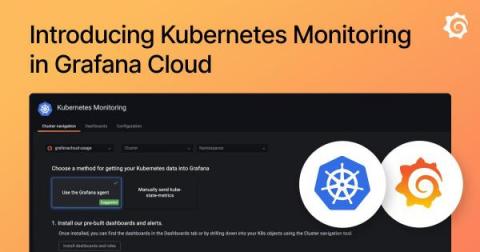
Kubernetes has quickly become the standard container orchestration technology for developers and companies who want to deploy at scale, iterate quickly, and manage a large number of applications and services. At Grafana Labs, we recognized the need for something more powerful for our users to be able to successfully keep an eye on everything happening inside their clusters.
As announced in past blog posts, Kubewarden has 100% coverage of the deprecated, and soon to be removed, Kubernetes PSPs. If everything goes as expected the PSPs will be removed in Kubernetes v1.25 due for release on 23rd August 2022. The Kubewarden team has written a script that leverages the migration tool written by AppVia, to migrate PSP automatically. The tool is capable of reading PSPs YAML and can generate the equivalent policies in many different policy engines.
With the launch of the Cycle Partner Program, we are committing to making it easier for companies to work with Cycle by creating more transparent and predictable relationships, offering training, resources, incentives, and benefits, some of which will roll out over time as the program evolves. Interested in partnering with Cycle? Contact our partner lead to schedule a meeting.
According to recent surveys and reports on the industry, Kubernetes and containers are more popular than ever. Containers and serverless functions are being mainstream and ubiquitous – with a more than 300% increase in container production usage in the past 5 years. This trend is especially true for large organizations, which are often using managed platforms and services.
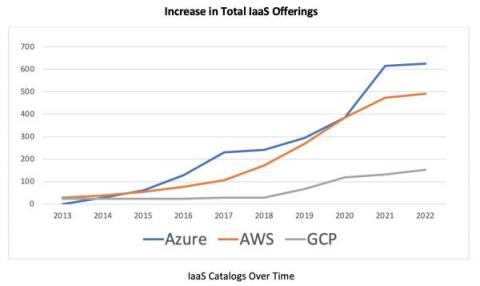
So, you’re looking for the right instance type for your public cloud workload, but how do you decide? Major cloud providers such as Amazon Web Services (AWS), Microsoft Azure Cloud and Google Cloud Platform (GCP) now offer such a large catalog of IaaS instances that it can become difficult to make sense of it all.
When you think of TDD, you might lean towards Test-Driven-Development. Though in Tomasz Manugiewicz’s ACE 2022 talk, the ‘T’ in TDD could also mean Trust e.g Trust-Driven-Development. The talk, boils down to if there is trust, there is autonomy. If there is autonomy, creativity flourishes. Building trust is done incrementally, incremental success builds success. Software engineering is a team sport and an exercise in iteration.
In this issue of the Calico Community Spotlight series, I’ve asked Jintao Zhang from API7.ai to share his experience with Kubernetes and Calico Open Source. API7.ai is an open-source infrastructure software company that helps businesses manage and visualize business-critical traffic, such as APIs and microservices to accelerate business decisions through data.
Modern application deployments rely heavily on containerization for its scalability, availability and ease of maintenance. Legacy applications implemented before the containerization era often use monolithic, hardware-centric architectures that are difficult to scale and manage. These legacy applications may have multiple services bundled into the same deployment unit without a logical grouping.
Today, we’re excited to announce the release of Cycle’s new pricing model! With this new model, we aim to make our pricing far more straightforward and better suited for larger deployments and customers. While our current pricing model solved the needs of our customers for the last few years, we’ve learned enough that it’s now time to make a change. Before talking about the new model, let’s dive into how we got here.
In June, we hosted our online meetup with ContainIQ surrounding k8s monitoring and observability. You can catch up on the discussion between Matthew Lenhard (Co-founder & CTO of ContainIQ) and Kai Hoffman (Developer Advocate at Civo) here if you missed it. Meanwhile, Kamesh Sampath from our Developer Advocate demo program explains how Civo’s speed and developer experience is great to work with in our latest Civo Shorts.