Operations | Monitoring | ITSM | DevOps | Cloud

12 Best Docker Container Monitoring Tools

Monitoring systems help DevOps teams detect and solve performance issues faster. With Docker and Kubernetes steadily on the rise, it’s important to get container monitoring and log management right from the start. This is no easy feat. Monitoring Docker containers is very complex. Developing a strategy and building an appropriate monitoring system is not simple at all.
Troubleshooting services on Google Kubernetes Engine by example

Applications fail. Containers crash. It’s a fact of life that SRE and DevOps teams know all too well. To help navigate life’s hiccups, we’ve previously shared how to debug applications running on Google Kubernetes Engine (GKE). We’ve also updated the GKE dashboard with new easier-to-use troubleshooting flows. Today, we go one step further and show you how you can use these flows to quickly find and resolve issues in your applications and infrastructure.

Announcing Support for GKE Autopilot

Google Kubernetes Engine (GKE) is the preferred way to run Kubernetes on Google Cloud as it removes the operational overhead of managing the control plane. Earlier today, Google Cloud announced the general availability of GKE Autopilot, which manages your cluster’s entire infrastructure—both the control plane and worker nodes—so that you can spend more time building your applications.

Sysdig contributes Falco's kernel module, eBPF probe, and libraries to the CNCF

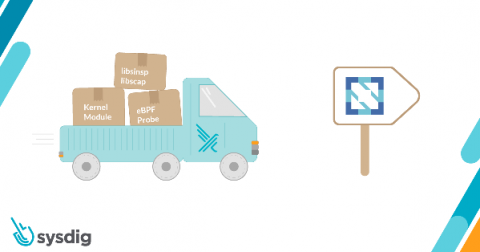
Today, I’m excited to announce the contribution of the sysdig kernel module, eBPF probe, and libraries to the Cloud Native Computing Foundation. The source code of these components will move into the Falco organization and be hosted in the falcosecurity github repository. These components are at the base of Falco, the CNCF tool for runtime security and de facto standard for threat detection in the cloud.

What's new in Sysdig - February 2021

Welcome to another monthly update on what’s new from Sysdig. Our team continues to work hard to bring great new features to all of our customers, automatically and for free! We hope you all managed to make it through January, and happy Lunar New Year! February welcomes the launch of our always-popular fourth annual Sysdig Container Security and Usage report, which looks at how global Sysdig customers of all sizes and industries are using and securing container environments.

Sysdig achieves Red Hat Vulnerability Scanner Certification

Image vulnerability scanning is a critical first line of defense for security with containers and Kubernetes. Today, Red Hat recognized Sysdig as a certified Red Hat security partner based on our work to standardize on Red Hat’s published security data with Sysdig Secure.

Container Monitoring: Essential Tools + Best Practices

In the Modern era of application development, businesses move towards building highly available, fault-tolerant, zero downtime applications to make the user experience and performance smoother and better. One of the essential steps in that process is containerization and orchestration of an application. A Container Monitoring process is as vital as containerizing your application.

Feature Spotlight: Golden Signals

As a team we have spent many years troubleshooting performance problems in production systems. Applications have gotten so complex you need a standard methodology to understand performance. Fortunately right now there are a couple of common frameworks we can borrow from: Despite using different acronyms and terms, they fortunately are all different ways of describing the same thing.

Splunking AWS ECS Part 2: Sending ECS Logs To Splunk

Welcome to part 2 of our blog series, where we go through how to forward container logs from Amazon ECS and Fargate to Splunk. In part 1, "Splunking AWS ECS Part 1: Setting Up AWS And Splunk," we focused on understanding what ECS and Fargate are, along with how to get AWS and Splunk ready for log routing to Splunk’s Data-to-Everything platform.

How to reduce your AWS bill up to 60%

Let’s face it. Once you have consumed your free credit, AWS costs an arm and a leg. This is the price to pay for high-quality services. But how can you reduce your costs without sacrificing quality? This post will show you how to reduce your bill by up to 60% by combining four built-in features in Qovery. There are three categories of costs on AWS. The “data transfer”, the “compute”, and the “storage” costs.

Rancher Online Meetup - Feb 2020 - Longhorn 1.1 and Rancher

Join Rancher and SUSE at our next global meetup where we focus on the latest release from of CNCF Sandbox project Longhorn and its benefits for Rancher users. When used with Rancher, Longhorn 1.1 provides Kubernetes users with a reliable Kubernetes-native persistent storage solution from core to cloud to edge. This meetup will be hosted by Adrian Goins (Director of Community, SUSE). You will also hear directly from Sheng Yang (Principal Developer, Longhorn) and William Jimenez (Product Manager, Longhorn).

Kubernetes admission controllers in 5 minutes

Admission controllers are a powerful Kubernetes-native feature that helps you define and customize what is allowed to run on your cluster. As watchdogs, they can control what’s going into your cluster. They can manage deployments requesting too many resources, enforce pod security policies, and even block vulnerable images from being deployed. In this article, you’ll learn what admission controllers are in Kubernetes and how their webhooks can be used to implement image scanning.

Shielding your Kubernetes runtime with image scanning and the Sysdig Admission Controller

Implementing image scanning on a Kubernetes admission controller is an interesting strategy to apply policies that need Kubernetes context, and create a last line of defense for your cluster. You are probably following the image scanning best practices already, detecting vulnerabilities and misconfigurations before they can be exploited. However, not everything you deploy goes through your CI/CD pipeline or known registries. There are also third-party images and, sometimes, manual deploys.

How to monitor Amazon ECS with Elastic Observability

With an increasing number of organizations migrating their applications and workloads to containers, the ability to monitor and track container health and usage is more critical than ever. Many teams are already using the Metricbeat docker module to collect Docker container monitoring data so it can be stored and analyzed in Elasticsearch for further analysis. But what happens when users are using Amazon Elastic Container Service (Amazon ECS)? Can Metricbeat still be used to monitor Amazon ECS? Yes!

The Coralogix Operator: A Tale of ZIO and Kubernetes

As our customers scale and utilize Coralogix for more teams and use cases, we decided to make their lives easier and allow them to set up their Coralogix account using declarative, infrastructure-as-code techniques. In addition to setting up Log Parsing Rules and Alerts through the Coralogix user interface and REST API, Coralogix users are now able to use modern, cloud-native infrastructure provisioning platforms.

Industry-First Pay-as-you-go SaaS Platform for Kubernetes Security and Observability

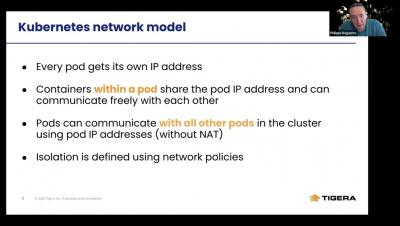
We are excited to introduce Calico Cloud, a pay-as-you-go SaaS platform for Kubernetes security and observability. With Calico Cloud, users only pay for services consumed and are billed monthly, getting immediate value without upfront investment.

Splunking AWS ECS Part 1: Setting Up AWS And Splunk

It’s no secret that Amazon Web Services is a powerhouse Cloud provider, and one of the market pioneers in Cloud operations. They do, after all, power some of the world’s biggest and most modern systems we all use and love today. It’s natural then that they attract a lot of users both big and small to deliver high quality and effective solutions. With growing user demand comes the need for new methods of visibility and intelligence.

Monitoring Challenges Emerge as Agencies Embrace Container Technology

Container technology is catching on big-time in the federal government as agencies such as the USDA and the National Institutes of Health look to containers to simplify software development and reduce costs. Containers offer enormous advantages over traditional “waterfall” application development processes. A containerized approach makes it easier for developers to create and deploy software faster and with fewer errors.

Runtime security in Azure Kubernetes Service

Runtime security for Azure Kubernetes Service (AKS) environments requires putting controls in place to detect unexpected and malicious behavior across your applications, infrastructure, and cloud environment. Runtime threats include things like: Even if you’re taking advantage of tools like container image vulnerability scanning, Kubernetes pod security policies, and Kubernetes network policies with AKS, not every risk will be addressed.

Benefits of containers for enterprises

Within just five years, Kubernetes and containers have redefined how software is deployed. Researchers expect the container market to grow by 30% year over year to become a 5 billion industry by 2022. But what is the reason behind this mass adoption of container technology in the enterprise? Download whitepaper Containers are more resource efficient than virtual machines or other legacy app architectures.

Getting started with Kubernetes audit logs and Falco

As Kubernetes adoption continues to grow, Kubernetes audit logs are a critical information source to incorporate in your Kubernetes security strategy. It allows security and DevOps teams to have full visibility into all events happening inside the cluster. The Kubernetes audit logging feature was introduced in Kubernetes 1.11.

Do Edge Applications Need Stateful Storage?

Kubernetes applications are increasingly making their way to the edge and embedded computing. Storage will quickly follow as the applications that rely on this edge infrastructure become more advanced and naturally carry more state. According to a study by McKinsey and Company, a “connected car” processes up to 25GB of data per hour.

New year, New York, new CivoStack

When we first started our managed Kubernetes beta, we knew utilising K3s as the Kubernetes distribution of choice was the right move. Not only is it light-weight and quick to deploy, K3s has features ideally suited for the scenarios we envisioned our users would encounter. It’s important for us to make sure any service we offer is 100% compatible with industry standards, and K3s allows us to do just that but with simplicity and speed for our users.

Talking Shipa - "What's New in 1.2?"

Shipa is excited to launch our new webcast series, Talking Shipa. To kick this series off, we sat down with Shipa Founder and CEO, Bruno Andrade, to discuss the release of Shipa Application Management Framework for Kubernetes, version 1.2. In this video, Bruno spends a few minutes with us to talk about the new features and improvements that are packed into this new release.

Operationalizing Kubernetes

Organizations have now seen the value of building microservices. They are delivering applications as discrete functional parts, each of which can be delivered as a container or service and managed separately. But for every application, there are more parts to manage than ever before, especially at scale, and that’s where many turn to an orchestrator for help.

Rancher Online Meetup: January 2021 - k3d: Local Development with K3s Made Easy

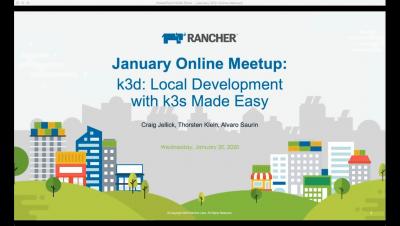
In this meetup we'll show you how to get productive developing locally on Kubernetes with the help of k3d which lets you spin up a K3s cluster on your laptop. We'll guide you through a full development setup including the k3d CLI, the awesome new vscode-k3d plugin and synergy with tools like Skaffold or Tilt.

Portainer recommends MicroK8s for effortless deployment

Portainer is an open source tool that allows for container deployment and management without the need to write code. In their recent publication, ‘How to deploy Portainer on MicroK8s’, the Portainer team share with the community how easy and fast it is to deploy Portainer on MicroK8s. In fact, the entire process only requires a single command! For a step-by-step walkthrough of the process, take a look at Portainer’s 5 minute video below. Install MicroK8s

AI in telecom: an overview for data scientists

I have seen many junior data scientists and machine learning engineers start a new job or a consulting engagement for a telecom company coming from different industries and thinking that it’s yet another project like many others. What they usually don’t know is that “It’s a trap!”. I spent several years forging telecom data into valuable insights, and looking back, there are a couple of things I would have loved to know at the beginning of my journey.

Detecting MITRE ATT&CK: Defense evasion techniques with Falco

The defense evasion category inside MITRE ATT&CK covers several techniques an attacker can use to avoid getting caught. Familiarizing yourself with these techniques will help secure your infrastructure. MITRE ATT&CK is a comprehensive knowledge base that analyzes all of the tactics, techniques, and procedures (TTPs) that advanced threat actors could possibly use in their attacks. Rather than a compliance standard, it is a framework that serves as a foundation for threat models and methodologies.

Real-time monitoring of Formula 1 telemetry data on Kubernetes with Grafana, Apache Kafka, and Strimzi

Data streaming is important for getting insights in real time and reacting to events as fast as possible. Its application is wide, from banking transactions and website click analytics to IoT devices and motorsports. The last example represents a really interesting use case.

Protecting Against the Unpatched Kubernetes Vulnerability (CVE-2020-8554)

CVE-2020-8554 is a vulnerability that allows Kubernetes Services to intercept cluster traffic to any IP address. Users who can manage services can exploit the vulnerability to carry out man-in-the-middle (MITM) attacks against pods and nodes in the cluster. All Kubernetes versions including the latest release (v1.20) are vulnerable to this attack. If your cluster is multi-tenant, or allows unprivileged users to create and update services, you are impacted.

Kubernetes Observability Challenges: The Need for an AI-Driven Solution

Kubernetes provides abstraction and simplicity with a declarative model to program complex deployments. However, this abstraction and simplicity create complexity when debugging microservices in this abstract layer. The following four vectors make it challenging to troubleshoot microservices.