Operations | Monitoring | ITSM | DevOps | Cloud

The latest News and Information on CyberSecurity for Applications, Services and Infrastructure, and related technologies.

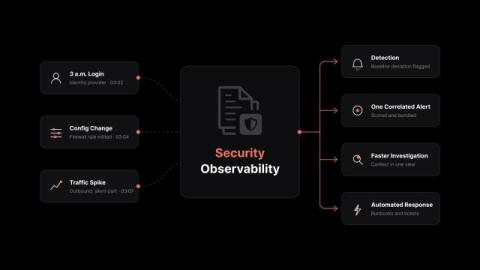
What is Cribl Guard background detection?

Security and compliance teams need to know exactly what sensitive data is flowing through their environments and where it’s going. ​​Because surprise PII is no one’s favorite kind of surprise. Meanwhile, upstream teams are shipping new apps, changing schemas, adding fields, and generally moving fast. However, you can only manage and protect the data you currently know of and expect. But sensitive data has a habit of showing up where no one expected it…

Modern Phishing Is Slipping Past SOCs. Here's How to Stop It Early

Most phishing attacks today do not look dangerous at first. They use trusted platforms, familiar login pages, and encrypted traffic that appears completely normal to security tools. For SOCs, that creates a serious operational problem: the team may see something suspicious, but confirming real risk often takes too long, giving attackers time to steal credentials and move into business-critical systems.

Improved SSO setup and logging

We’ve made several improvements to Single Sign-On (SSO) in StatusGator to make authentication easier to configure and easier to monitor. As a reminder the StatusGator dashboard includes SAML-based SSO on all plan tiers, even our free plan. This update introduces a simplified SSO setup flow along with a new Audit logs tab that provides visibility into authentication activity.

How to verify certificate renewal actually worked

On May 21, 2019, LinkedIn’s URL shortener went down. The certificate had expired. Millions of people cried out in terror when they couldn’t click on AI link bait. The interesting part: LinkedIn had renewed the certificate ten days earlier. The renewal succeeded. The certificate just never made it to the server. The renewed cert existed somewhere, but the server still served the old one. Most certificate automation is built to prevent the “I forgot to renew” problem.

Apono integration for Grafana: Enabling Just-in-Time access for data sources

Ben Avner is the Head of Ecosystem and Strategic Alliances at Apono, where he leads the company’s global partner strategy and technology alliances. He focuses on building and scaling strategic partnerships that drive product innovation, partner-influenced pipeline, and long-term growth. A former founder and engineer, Ben brings a strong technical foundation and a builder’s mindset, combined with experience across marketing, product partnerships, and go-to-market strategy.

Vulnerability Scanning vs. Penetration Testing: Know the Difference

Cyber security isn't a one-size-fits-all solution, and for many UK business owners, the terminology can feel overwhelming. Identifying the right way to protect digital assets is essential to maintaining a strong security posture. Two of the most common methods for assessing risk are vulnerability scanning and penetration testing, but they serve very different purposes.

Accelerate Vulnerability Remediation with Atatus: From Detection to Secure Deployment

In microservices and cloud-native environments, vulnerabilities buried in transitive dependencies or runtime behaviors can go undetected for weeks. During that time, your attack surface keeps expanding and production systems remain exposed. The longer remediation is delayed, the greater the risk of exploitation, compliance failures, and operational disruption.

Who Owns Endpoint Management? Defining Security and IT Governance

Endpoint management is one of the most critical — and most contested — areas of enterprise governance. Every organization depends on endpoints, yet many still struggle to answer a fundamental question: who actually owns these devices? In many environments, IT and security teams are both confident they’re doing the right thing, yet still talk past each other. Security looks at a scanner and sees 10,000 critical vulnerabilities; IT looks at a patch report and sees everything deployed.

Autonomous Endpoint Management

Autonomous Endpoint Management or AEM is an intelligent endpoint management that leverages AI-driven automation, predictive analytics and proactive protection. Automation built on trust. Intelligence designed to empower. Protection delivered. AI‑driven, autonomous management in a unified platform Intelligent, self-healing endpoints ensure consistent uptime and dependable performance. Streamline IT operations through unified automation and consolidation, empowering IT teams to shift from routine tasks to strategic priorities.

Top 8 Digital Sales Room Tools for Deal Momentum in 2026

What is a Digital Sales Room? It is a secure, personalized online space where sales teams and buyers collaborate throughout the entire deal cycle. Instead of scattered emails, attachments, and disconnected calls, a Digital Sales Room (DSR) centralizes proposals, pricing, contracts, product demos, and communication in one interactive environment. In 2026, businesses across B2B sectors rely on these tools to maintain deal momentum, shorten sales cycles, and increase close rates in increasingly competitive markets.