Operations | Monitoring | ITSM | DevOps | Cloud

The latest News and Information on CyberSecurity for Applications, Services and Infrastructure, and related technologies.

Introducing Controls in Kosli

Defining a control in a policy document is easy. Proving that every build was evaluated against it - and that nothing non-compliant ever reached production - is the hard part. Kosli's new Controls feature closes that gap. Every control is defined in Kosli, every build is evaluated against it, and deployments are gated automatically when the evidence isn't there. That means: Every control decision is recorded as evidence, build by build Coverage shows exactly where a control is enforced across your environments.

Scaling Globally: Corporate Compliance for Tech Startups

Expanding your tech business into new markets brings massive growth opportunities. It requires careful management of international laws to avoid heavy fines. Smart founders prepare their framework early to stay ahead of global regulators. Managing these rules protects your business during international expansion.

Certificate deployments just got an easy mode

The old deployment flow expected a lot from you. You had to know what format your certificate needed to be in. You had to know where it should be stored on the target system. Then you had to review and customize a deployment script in a code editor before anything ran. It turns out most of you don’t want to do that. And fair enough, staring at a script editor when you just want a certificate on your Exchange server is a little intimidating.

Save the Address, Save the Cloud (KubeVirt VM Migration Story)

Kubernetes is built for containers, and it’s been doing that since it used to run docker as an engine for its containers. But what if you want to add VMs to the mix? After all, containers are ephemeral and don’t require fixed IPs as they shift the identity toward labels, but VMs on the other hand are tied to IP addresses and in some cases MAC addresses. This brings us to this blog about VM migration and IP preservation.

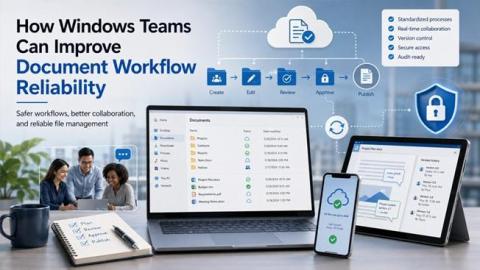
How Windows Teams Can Improve Document Workflow Reliability

For many organizations, documents are still at the center of daily work. Project plans, internal reports, client proposals, onboarding files, invoices, meeting notes, and compliance records often move between multiple people, devices, and departments before they are considered complete. When a team depends heavily on Windows devices, a reliable document workflow becomes more than a matter of convenience. It directly affects productivity, security, accountability, and operational continuity.

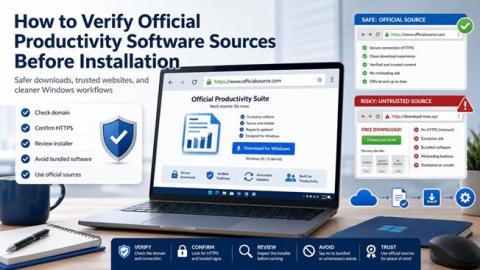
How to Verify Official Productivity Software Sources Before Installation

Productivity software is part of almost every modern workplace. Teams rely on document editors, spreadsheet tools, presentation software, PDF utilities, collaboration apps, and cloud-based platforms to complete daily work. Because these tools are so common, many users install them quickly without spending enough time checking where the installer came from.

How Small Businesses Can Meet Federal Cybersecurity Standards Without Breaking the Bank

Federal contractors face a stark reality: without proper cybersecurity controls, they risk losing access to government contracts worth billions of dollars annually. The Cybersecurity Maturity Model Certification (CMMC) framework has transformed from a voluntary best practice into a mandatory requirement, forcing small businesses to either adapt or exit the federal marketplace entirely.

How ID Card Printers Strengthen Security and Streamline Operations

Modern organizations face mounting pressure to secure facilities, protect sensitive data, and verify identities quickly. ID card printers have evolved from simple badge-making tools into sophisticated security infrastructure that integrates with access control systems, biometric authentication, and digital identity platforms.

How to scale access control in Grafana Cloud

One of the primary reasons organizations adopt Grafana Cloud is to create a single pane of glass across the data they collect from self-hosted systems, cloud providers, and third-party platforms. Bringing those signals together enables richer correlations, reduces tool sprawl, and makes it easier for teams to understand what's happening across their environment. But as observability grows and becomes more centralized, access management becomes more important.