Operations | Monitoring | ITSM | DevOps | Cloud

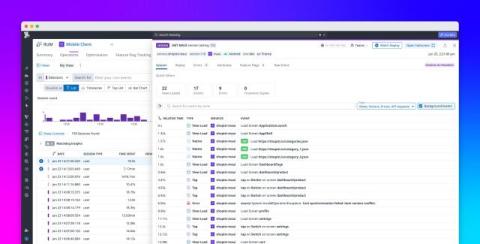
Capturing HTTP Request and Response Bodies in .NET Traces with PHI Redaction

> Standard OTel.NET instrumentation captures headers, status codes, and timing — not request or response bodies. Here's how to add body capture to your traces while keeping PHI out of your observability backend. Prathamesh works as an evangelist at Last9, runs SRE stories - where SRE and DevOps folks share their stories, and maintains o11y.wiki - a glossary of all terms related to observability.

Top 5 Salesforce ADO.NET Providers for 2026

Choosing your Salesforce ADO.NET provider is more than ticking boxes; it’s the foundation of how your.NET apps interact with Salesforce data. That’s why this decision requires careful consideration of critical features, like ORM support, Entity Framework compatibility, query flexibility, and security. However, this process is far from simple; many providers don’t provide enough concrete details upfront.

Top 5 Oracle ADO.NET Providers for 2026

When you build a.NET app that runs on Oracle, think of your Oracle ADO.NET provider as the engine under the hood. It powers how efficiently your connections run, determining speed, stability, and how smoothly your app deploys. Pick the right provider, and your app hums: fast and reliable. Choose the wrong one? That’s when you hit sluggish performance, driver incompatibilities, deployment headaches, or lack of advanced ORM support. To avoid that, we’ve broken down what works.

dotConnect for Zoho CRM | Connect Zoho CRM to .NET Apps Easily

Bring Zoho CRM data into your.NET applications with dotConnect for Zoho CRM—a fast, reliable ADO.NET provider built for secure and efficient connectivity. Set up in minutes using a Windows installer or NuGet, then explore and manage your CRM data from Visual Studio. This video walks you through connecting via Server Explorer, authenticating with Interactive OAuth, running queries through standard ADO.NET workflows, and integrating with popular ORMs like EF Core and Dapper.

New dotConnect and Entity Developer Release: EF Core 10, AI Vector Types, and Expanded Database Compatibility

We are thrilled to announce a set of product updates across our dotConnect data providers and Entity Developer. The new release adds support for Entity Framework Core 10, introduces AI-focused vector data types across major databases, and extends compatibility with the newest platform capabilities such as SQL Server 2025, Oracle 26ai, and Microsoft Entra authentication.

.NET vs ASP.NET: How to Choose the Right Technology for Your Product

Microsoft has developed many tools for software development. .NET and ASP.NET are among the most widely used. Although the two may sound similar, they have different purposes in development projects. .NET is an application platform for development across environments, while ASP.NET is used for developing web applications only. By March 5, 2026, ASP.NET was actively used worldwide, with notable adoption in the United States and Turkey, and it powered 4.5% of all websites whose server-side programming language was known.

OpenTelemetry support for .NET 10: A behind-the-scenes look

At Grafana Labs, we are fully committed to the open source OpenTelemetry project and are actively engaged with the OTel community. Many Grafanistas spend a large proportion of their time contributing directly to OpenTelemetry upstream projects, helping make observability more powerful, reliable, and accessible for everyone as part of our big tent philosophy.

Cross-Platform .NET That Powers Web and Mobile Futures

Technology leaders face strong pressure every day. Delivery speed matters. Security must stay solid. Budgets face limits that rarely move. Teams must release digital products that scale with demand and adapt to change. Each delay risks losing users and fading trust. Each wrong platform choice adds years of cost.

.NET Web API Monitoring: REST, ASP.NET & WCF Compared

Modern.NET applications rely on three primary Web API architectures: lightweight REST APIs, middleware-driven ASP.NET Core Web APIs, and contract-heavy WCF SOAP services. Each exposes functionality over HTTP, but each behaves very differently in production. More importantly, each architecture fails in different ways, which means teams must monitor them differently to maintain reliability, uptime, and predictable performance.

A better way to monitor your AI agents in .NET apps

We launched agent monitoring earlier this year, allowing our users to instrument LLM usage and tool calls in their applications. However, we only had Agent Monitoring support for Python and JavaScript. We’ve been working on creating an Agent Monitoring SDK for.NET — specifically for Microsoft.Extensions.AI.Abstractions.