Operations | Monitoring | ITSM | DevOps | Cloud

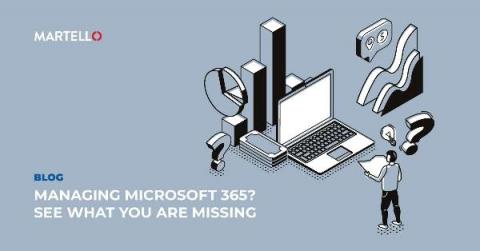
Managing Microsoft 365? See What You're Missing

If a customer has an issue with any part of Microsoft 365, MSPs just don’t have the native visibility to identify the root cause, let alone respond to and remediate the problem. Most of the time, it’s little more than checking Microsoft’s Service Health status to see if Microsoft knows it’s having a problem.
How to set up synthetic monitoring at scale with Grafana Cloud

While unit testing and integration testing can give you insight into the individual functionalities of an application, “at times you need some sort of monitoring or testing mechanism which also simulates a user’s behavior to test how the application would work or look to an actual user in the world,” says Grofers Software Development Engineer Yashvardhan Kukreja. That’s where synthetic monitoring comes in.

Create alerts from your logs, available now in Preview

Being alerted to an issue with your application before your customers experience undue interruption is a goal of every development and operations team. While methods for identifying problems exist in many forms, including uptime checks and application tracing, alerts on logs is a prominent method for issue detection. Previously, Cloud Logging only supported alerts on error logs and log-based metrics, but that was not robust enough for most application teams.

Root out the odd operation with Operations Breakdown

Transactions are sent when your service receives a request and sends a response, like an API call or a page load. Within each transaction is a series of operations. We built Operations Breakdown to help you, the developer, quickly see how much time was spent in each operation within a transaction. Why? Simple, so you can address the operations with the longest duration and likely causing annoying performance issues for your customer.

Observability with Zero Code Instrumentation? Meet eBPF

Current observability practice is largely based on manual instrumentation, which requires adding code in relevant points in the user’s business logic code to generate telemetry data. This can become quite burdensome and create a barrier to entry for many wishing to implement observability in their environment. This is especially true in Kubernetes environments and microservices architecture.

HCL Technologies - Key Takeways with Nexthink

Employees in today’s corporations are dependent on properly functioning technology in order to get their work done and realize their business objectives. User experience can affect outcomes positively or negatively. The IT team at HCL Technologies turned to Nexthink to grant them insight into their client’s user experience and facilitate proactive responses to issues affecting users.

Real User Monitoring: Past, Present and Future

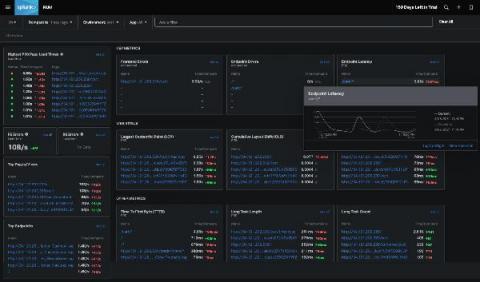
Most front-end developers and practitioners are familiar with real user monitoring (RUM) tools as a means to understand how end-users are perceiving the performance of applications. Few people, however, are aware of the history of the RUM market, going back more than two decades. Over the years, as the internet has evolved with new technologies, RUM tools have evolved in lock-step to cater to the ever changing needs and use cases of engineering teams.

Testing strategies for Step Functions

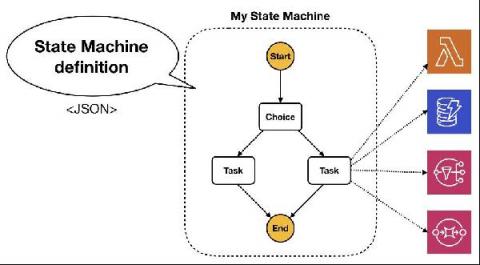
AWS Step Functions is a powerful orchestration service that lets you model even the most complex business workflows. It packs a great visualization tool (which you can also use to design your workflows visually now!) and can integrate with many AWS services directly, including Lambda, DynamoDB, and API Gateway. It’s one of my favorite AWS services and I often use it to model complex or business-critical workflows.

Monitoring and Improving Employee Experience In Virtual Desktop (DaaS/VDI) Environments (Part 2)

In our last blog post on monitoring employee experience, we discussed the challenges most organizations face when trying to ensure optimal end user experience in Daas/VDI environments. We also discussed how the Catchpoint platform is uniquely positioned to help our customers monitor employee experience efficiently - In the second part of the series, we discuss a real customer use case.