Operations | Monitoring | ITSM | DevOps | Cloud

Using the New Flux Usage API to Calculate Pricing for InfluxDB Cloud

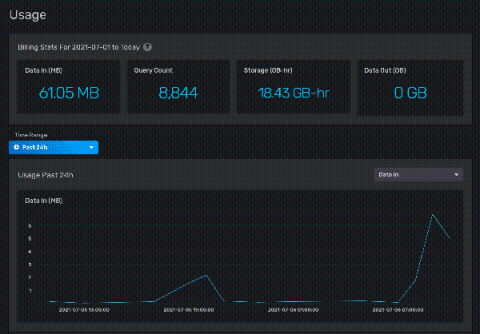
InfluxDB Cloud offers a transparent usage-based pricing model that only charges users on the work performed, with no minimums or long-term commitments. This puts YOU in charge of what you spend. However, with four separate pricing vectors, it’s not always easy to see exactly where that cost is going, or how to estimate your potential spend based on your data usage.
API 2.0: TruSTAR Operationalizes Data Orchestration and Normalization for a New Era in Intelligence Management

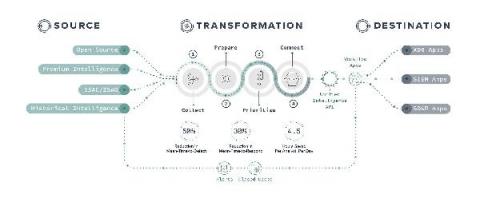
Today we released API 2.0, the latest version of TruSTAR’s API-First Intelligence Management Platform. This new version continues our commitment to simplify and streamline intelligence for automation in enterprise security intelligence management, and breaks through long-standing industry limitations around operationalizing data orchestration and normalization.

SaaS Plus, a new way of monitoring your Infrastructure with Pandora FMS

With Pandora FMS SaaS monitoring you can start operating almost instantly, using our Enterprise technology, thanks to any of our certified partners who offer this service. This allows you to focus exclusively on the operational aspects, control costs and growth from the very first minute, without having to invest in training, licenses, management, updates, initial implementation, etc. Let’s cut to the chase.

Integration Spotlight: Catchpoint and Slack, More Than A Collaboration Tool

Slack is one of the most popular tools for communication and collaboration used by large enterprises as well as small organizations. One of the amazing features of Slack is its ability to work with other tools to provide additional functionality that would not be readily available otherwise. Catchpoint integrates with Slack to provide our customers with enhanced performance monitoring and incident management. In this blog post, we look at the recent updates in the Catchpoint-Slack integration.

How To Efficiently Monitor Your Web Application

On one hand, organizations are increasingly relying on web applications to engage customers and deliver value across multiple touchpoints. On the other hand, the complexity of web application environments has intensified significantly due to the prevalence of microservices architecture, content delivery networks (CDNs), and load balancing, among others. At the same time, end users expect a web application to be highly responsive, available around the clock, and accessible from anywhere on any device.

Calico eBPF Data Plane Deep-Dive

Sometimes the best way to understand something is to take it apart and see how it works. This blog post will help you take the lid off your Calico eBPF data plane based Kubernetes cluster and see how the forwarding is actually happening. The bonus is, unlike home repairs, you don’t even have to try to figure out how to put it back together again! The target audience for this post is users who are already running a cluster with the eBPF data plane, either as a proof-of-concept or in production.

Monitoring Outliers vs. Unbalanced Services

LogicMonitor currently provides a solution for monitoring groups of nodes with the same functionality, which we call services. With companies moving towards more auto-scalable and transient architecture, LogicMonitor is able to continually monitor these services, which are always changing. We also needed a way of determining if these nodes are being used effectively. It can become an unnecessary cost if there are multiple underutilized nodes.

How to visualize your business performance with cohort tables using Grafana and BigQuery

Grafana presents some of the most versatile tools for visualizing and understanding the real-time performance and reliability of systems, regardless of where your data lives. But one question our customers frequently ask is, “Can I use Grafana to understand the health and performance of my business?” More often than not, our answer is yes.

Top 7 API Monitoring Tools for Your Business in 2021

As APIs are so important for connecting modern cloud applications, keeping an eye on their availability and speed is essential if you want to give a great user experience. A good API monitoring tool can assist you in developing dependable APIs by detecting and fixing issues before they reach your users. If you're looking for a solution like this, look no further. In this article, we looked at some of the top API monitoring tools available today.

Visualize live dependencies with the Request Flow Map

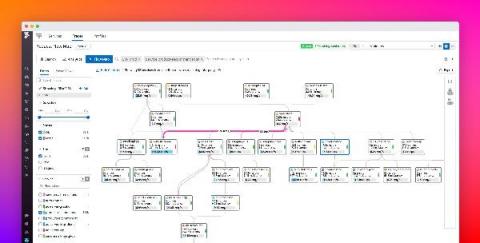
Modern applications are often composed of countless distributed services, which makes it difficult to understand dependencies, isolate bottlenecks, and remediate errors. Datadog APM helps you tackle this complexity by allowing you to search and analyze 100 percent of your traces in real time. But without a dynamic view of your architecture, it can still be challenging to contextualize a specific request without getting lost in the details.