Operations | Monitoring | ITSM | DevOps | Cloud

How Vanguard used Observability to Accelerate and De-risk their Cloud Migration

Rich Anakor, chief solutions architect at Vanguard, is on a small team with a big goal: Give Vanguard customers a better experience by enabling internal engineering teams to better understand their massively complex production environment—and to do that quickly across the entire organization, in the notoriously slow-moving financial services industry. They also had a big problem: The production environment itself.


Citrix Tips for Troubleshooting

I recently saw a user asking on EUC Slack “is there a Domain controller response time in ?”. Unfortunately for him, his choice of monitoring product doesn’t include such metrics. However, it did make me wonder if Citrix admins are aware of the importance of getting metrics about Domain Controllers, simply because many EUC monitoring tools fail to monitor them.

Contextual Information: The Missing Piece in The AIOps Puzzle and How to Fix It

AIOps as a function is steadily gaining popularity, even climbing the Gartner Hype Cycle. Today’s observability tools go beyond merely monitoring to perform proactive remediation of events and incidents. However, what many of them lack is context. For instance, consider a regular AIOps solution that identifies an anomaly in system behavior. It will raise an alarm and a remediation workflow will do its job.

Trending: A Seismic Shift in the Way We Present your Data

Eagle-eyed RapidSpike users will have noticed a big update to the app went live recently, with a major improvement to our Page Overview dashboard . Going back to September 2020, when we launched “RapidSpike Version 2” , we had great plans for the Page Overview – but they never quite materialised. Team efforts were focussed elsewhere and we did little to improve the old Page Overview or the data we displayed.

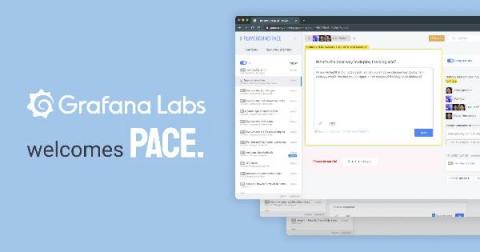
Grafana Labs welcomes the Pace.dev team, experts in building tools with great developer experience

As we look to the future of Grafana Labs and our products, we are keen to expand the ways in which we can help engineering teams build, maintain, and operate great software. We believe we can only achieve this by paying careful attention to the developer experience and the challenges faced in the real world of engineering.

Announcing the RemoteWrite SDK for Custom Metrics in Python, Go & More

We’re proud to announce the creation of a new RemoteWrite SDK to support custom metrics from applications using Golang (Go), Python, and Java, with many more on the way. Each SDK will have automatic, continuous deployment of updates. Using these integrations, Prometheus users can send metrics directly to Logz.io using the RemoteWrite protocol without sending them to Prometheus first.

Introduction to Custom Metrics in Python with the Logz.io RemoteWrite SDK

We just announced the creation of a new RemoteWrite SDK to support custom metrics from applications using several different languages. This tutorial will give a quick rundown of how to use the Python SDK. Using these integrations, Prometheus users can send metrics directly to Logz.io using the RemoteWrite protocol without sending them to Prometheus first. Each SDK, while for a separate language, is each capable of working with frameworks like Thanos, Cortex, and of course M3DB.

Sponsored Post

Webinar featuring IDC's Mark Leary: Make your IT operations future-proof with the Branch of One architecture

At the start of the pandemic, IT organizations had to undergo radical changes to support remote work. Given the urgency to shift to remote operations, IT admins opted for band-aid solutions to retain business continuity and stay connected to the core of their networks from remote locations. But now, many organizations are moving toward hybrid workforce options with employees choosing to work from both their home and office locations.

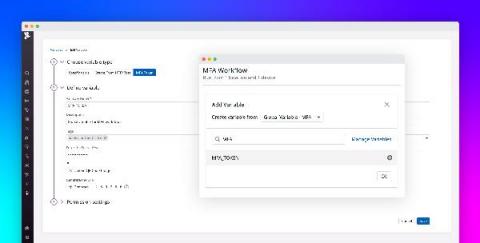
Introducing multi-factor authentication in Datadog Synthetic tests

Multi-factor authentication (MFA) is an increasingly popular method for securing user accounts that requires users to provide two or more pieces of identifying information when logging into an application. This information can consist of unique verification links or codes sent to the user’s phone or email address, as well as time-based one-time passwords (TOTPs) generated by authenticator applications or hardware.

How to Instrument a Java App Running in Amazon EKS

As we start to see big moves from monolith deployments to microservices, the adoption of Kubernetes has become top of mind for many SREs. Organizations can leverage the open-source system to automate deployments, scale, and manage containers, making Kubernetes one of the primary solutions for delivering workloads. However, maintaining the system can be difficult and, in some cases, overwhelming.