Operations | Monitoring | ITSM | DevOps | Cloud

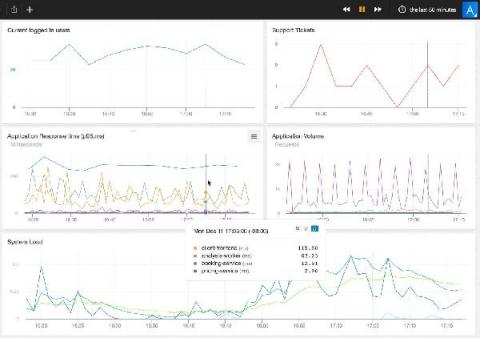
Why You Should Stop Hoarding Metrics

Serverless lets you deploy applications far away in a data center of a cloud provider. This relieves you of the lion’s share of operational burdens. The more you buy into your cloud provider’s ecosystem, the less you have to do yourself: no more OS updates or database bugfix installations. But you still need to do some operation-related work on your own. For instance, monitoring your application to know what’s going on in that far away data center.

Assessing the Quality of Service from ISPs

Before you can achieve access to any cloud service a connection to the internet is required. Sounds simple enough, however, the challenge lies not only with the internet connection itself, but the provider of the service as well. Not all internet service providers (ISPs) and pathways to the internet are created equally which makes assessing and understanding the quality of the service you’re on a critical step toward maintaining business productivity.

A Complete Guide to Understand HTTP Status Codes

whenever we go to a website, whether it's an online store to buy clothes or to check the status of our bank account, we need to type the URL into the browser. When you click on the relevant page, a request is sent to the server, and the server always responds with the HTTP three-digit code. This HTTP status code tells us if our request was successfully completed or whether there was an error that prevented the server from serving the content that users or visitors were trying to access.

Apache Monitoring: Best Tools and Key Metrics to Track Web Server Performance

The Apache HTTP Server (httpd) is a widely used, open-source web server application. Because you can easily customize it through modules, it has become the go-to choice of both individuals powering their personal blogs and enterprises running high-traffic websites and web apps. It’s a well-known fact that with high traffic, the performance of Apache web servers can take a hit, experiencing bottlenecks as your traffic scales up, which will lead to delayed responses.

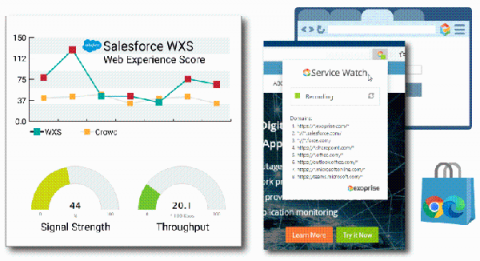
Web Experience Monitoring for End-Users

Exploring the Internet and accessing SaaS applications via a web browser such as Google Chrome, Firefox, or Microsoft Edge is commonplace today. At times, end-users visiting apps through multiple channels face performance issues of slow Wi-Fi (Network) speed, increased page response times (TTFB), and long page load times resulting in end-user dissatisfaction and frustration.

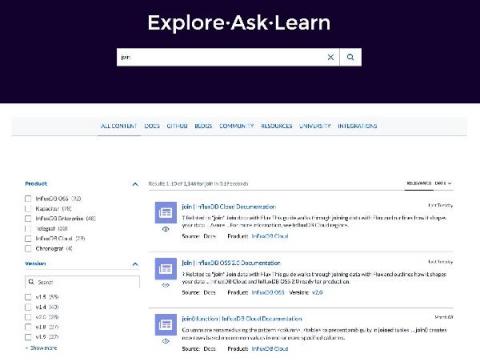
Introducing InfluxData Support

When learning a new technology stack or language, access to good documentation, tutorials, and support is critical to lower the barrier to adoption and enable users to take advantage of the tools themselves. At InfluxData, we support our users by providing the following resources. Searching through all of these resources and more, like GitHub issues, can be time-consuming and difficult. In response, the support team at InfluxData has recently created InfluxData Support.

Taking Inventory of Your Google Cloud

Splunk Cloud Architect Paul Davies recently authored and released the GCP Application Template, a blueprint of visualizations, reports, and searches focused on Google Cloud use cases. Many of the reports included in his application require Google Cloud asset inventory data to be periodically generated and sent into Splunk. But HOW exactly do you craft that inventory generation pipeline so you can "light-up" Paul's application dashboards and reports?

The Secret to a Successful Hybrid Application Migration

Planning a hybrid application migration? There’s plenty to deal with already, and now your manager wants to know—how are you going to make sure that the migration is a success? The secret is to take a subjective judgment and turn it into an objective one. As you probably know, there is no way that you can guarantee a problem-free migration. Don’t leave it up solely to how your boss or anyone else feels about the migration.