Operations | Monitoring | ITSM | DevOps | Cloud

Coralogix vs Sumo Logic: Support, Pricing, Features & More

Coralogix and Sumo Logic are two different answers to the same observability platform decision. Where Coralogix processes telemetry in flight, stores it in your own Amazon Simple Storage Service (S3) bucket, and prices on data ingested, Sumo Logic keeps data in vendor-managed storage and, under its Flex model, bills for data scanned at query time. Both platforms have introduced pricing and artificial intelligence (AI) changes in the past year, and those changes have widened the difference between them.

Coralogix vs New Relic: Comparison Guide (2026)

Coralogix and New Relic both cover the full observability surface, but they charge for it and store it in different ways. One prices purely on data ingested and writes telemetry to a bucket you own, while the other combines ingest pricing with per-user licensing and retains data in its own backend. This guide covers how the two platforms compare on core features, pricing structure, AI observability, archiving and retention, security coverage, and support, then shows when each one is the stronger choice.

What Is Agentic Observability? The Complete Guide for Enterprise Engineering Teams

TL;DR Agentic observability uses AI agents to autonomously investigate incidents, identify root causes, and take action in production environments. Unlike traditional monitoring (which alerts and waits) or AIOps (which assists human analysis), agentic platforms conduct the investigation themselves. Key capabilities include autonomous incident triage, evidence-backed root cause analysis, alert noise reduction, and governed remediation.

Logz.io Webinar Recap: A Four-Step Blueprint for Faster Root Cause Analysis

Incident investigations take so long not because the fix is hard, but because finding the right fix is. Most engineers spend 20 to 60 minutes just understanding what’s wrong before they can act, not fixing anything, just trying to see the full picture. The framework that changes this has four steps: Orient, Isolate, Hypothesize, and Verify, and the order matters more than the tools.

Your AI isn't underperforming. Your data foundation is.

New research reveals why Australian businesses are entering the new financial year with bigger AI budgets and the same unsolved problem. One in three Australian businesses exceeded their AI budget last year. Yet, half of them plan to increase AI spending again this year. Yet the behaviour that caused those budget overruns remains largely unaddressed.

Why Is Root Cause Analysis So Hard for IT Teams to Get Right?

In this video, learn what Root Cause Analysis (RCA) is and why it's essential for preventing recurring IT incidents instead of repeatedly fixing the same symptoms. Discover how effective RCA helps IT teams identify the real source of problems, reduce downtime, and improve operational resilience. In this video, you'll learn: Contact Us sales@motadata.com Resources Follow Us on Social Media.

Reduce CDN log costs with searchable archives

Engineering teams that manage high-volume log sources, such as content delivery network (CDN) edges, streaming platforms, and authentication systems, often have to make a difficult retention tradeoff. Indexing every event keeps logs searchable during investigations, audits, and postmortems, but it can make long-term retention expensive.

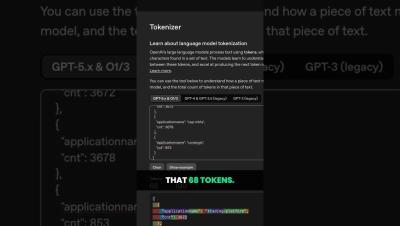
Where did all my Claude Code tokens go?

Most teams judge their AI coding agent on two things: the monthly bill and a feeling. The bill tells you what you spent and the feeling tells you whether it seems to be helping, but neither one tells you what the agent actually did. As these tools move into the critical path of how software ships, that gap is starting to matter. I wanted to replace the feeling with something I could measure and understand what shapes of work affects this bill, so I decided to run an experiment on myself.

Help Desk or Service Desk: Which Does Your Business Need?

In this video, learn the key differences between a Help Desk and a Service Desk and why choosing the right approach can significantly impact the growth and efficiency of your IT support operations. Discover when a help desk is enough, when a service desk becomes essential, and how modern IT teams can scale support effectively. In this video, you'll learn: Contact Us sales@motadata.com Resources.

The Four Pillars of AI Observability in 90 Seconds

AI applications can behave unpredictably, potentially leading to errors such as hallucinations or data leaks, even when classic monitoring indicates a successful response. To effectively monitor AI systems, four key areas should be focused on. Implementing these pillars can enhance trust in AI deployments, help manage costs, and identify safety issues before they impact users.

How Does SNMP Keep an Eye on Every Device on Your Network?

In this video, learn what SNMP (Simple Network Management Protocol) is and why it remains one of the most important technologies for network monitoring. Discover how SNMP helps IT teams collect device health metrics, receive real-time alerts, and monitor thousands of network devices from a single platform. In this video, you'll learn: Contact Us sales@motadata.com Resources Follow Us on Social Media.

Builder in the loop: Tony Rogers on stress-testing AURA before production

Builder in the loop is a Mezmo interview series focused on the engineers, product leaders, and operators shaping AURA, an open-source, MCP-native agent harness for production operations. This installment features Tony Rogers, whose work on AURA is less about building new features and more about trying to break them before users can.

What Is a CMDB, and Why Is It Called the Heart of ITSM?

In this video, discover why a Configuration Management Database (CMDB) is considered the heart of IT Service Management (ITSM). Learn how a CMDB helps IT teams understand dependencies, assess change impact, accelerate incident resolution, and build a reliable foundation for service management processes.

The AI bill arrived. Now what?

There was a time when “Opus” meant a classical composition and “Sonnet” was fourteen lines of Shakespeare you definitely did not read before the test. Now they’re model tiers, and every new release rewrites the economics of your engineering org whether you’re ready or not. Currently, your monthly total hides the crucial information you need to control and justify AI spend.

Which AI-Powered Observability Tools Accelerate Root Cause Analysis (RCA)?

TL;DR Choosing the right AI-powered observability platform isn’t about who has the most AI features. It’s about which platform helps your team identify root causes faster and spend less time investigating incidents. Here’s the short version: Logz.io + OrionIQ: Autonomous AI agents investigate incidents, perform root cause analysis, and surface next steps. Open standards, Kubernetes-ready, and deploys in as little as a week.

The Data Plane Reality: OTel Scales, While Topology UX Lags

OpenTelemetry won the architectural standards battle. At scale, though, telemetry breaks more like plumbing than code. It breaks quietly, across a graph, with a blast radius you don’t understand until it’s expensive. With over 65% of organizations now running more than 10 collectors in production, hybrid deployments across Kubernetes and VMs are accelerating fast. Telemetry standardization is no longer a project milestone. It is a baseline expectation.

Working as a remote engineer at Cribl | Building the AI Platform for Telemetry

Learn what it’s like to work as an engineer at Cribl, a remote-first company building the AI platform for IT and security data. In this recruiting video, Cribl’s engineering and support leaders share how fully distributed teams collaborate, solve hard data problems, and grow their careers while working from around the world. You’ll hear from managers and leaders in site reliability engineering, security incubation, and technical support about.

3 Signs Your Network Monitoring Is Failing You

Are users reporting issues before your monitoring tools do? Are critical alerts getting lost in the noise? Does root cause analysis take hours instead of minutes? These are 3 signs your network monitoring is failing. Discover how modern observability helps teams detect issues faster and resolve them with confidence.

Why Does Network Topology Decide How Fast Your Network Recovers?

In this video, learn why network topology plays a critical role in network resilience, troubleshooting, and recovery. Discover how understanding network dependencies, eliminating single points of failure, and maintaining clear visibility can help IT teams reduce downtime and accelerate incident response. In this video, you'll learn.

9 Powerful Log Monitoring Best Practices to Follow in 2026

How many of your last five incidents were already sitting in the logs before anyone noticed? Most teams already collect more than enough log data. The problem starts with what happens next, and the same four gaps show up almost everywhere: This guide covers the log monitoring best practices that close those gaps. It walks through how to collect, structure, correlate, retain, and secure logs, so monitoring becomes a steady process and not a scramble during the next incident.

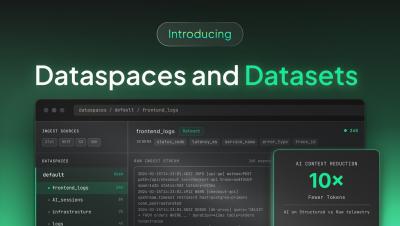
Introducing Datspaces and Datasets

Dataspaces and Datasets | The Structured Data Layer for Teams and AI | Coralogix Dataspaces and Datasets from Coralogix: the structured data layer teams and AI were waiting for. Turn a single query into a reusable dataset, share it across teams, and keep dashboards fast as your data scales. In this video: Timestamps: Dataspaces and Datasets are available now in Coralogix. Whether you're building dashboards, running background queries, or powering AI agents with telemetry data, Dataspaces give your organization a governed, high-performance data architecture that scales with your teams.

Eight best practices for a successful cloud migration strategy

Moving to the cloud is one of the most consequential decisions an IT organization makes. A successful cloud migration strategy sets the foundation for how your business scales, innovates, and competes. But too often, cloud migration initiatives stall, underperform, or force organizations to repatriate applications back on-premises because the groundwork wasn’t laid correctly.

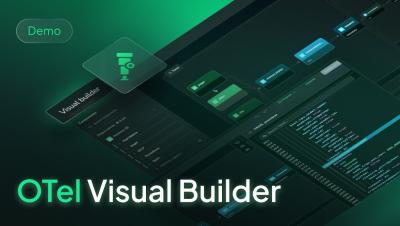
Use This OTel Processor to Prevent Your Dashboards From Breaking

A semantic-convention rename (http.method → http.request.method) can silently break your RED metrics — no errors, just gaps in dashboards and alerts. The OpenTelemetry Collector's schema processor fixes it: put it first in your pipeline and it normalizes attribute names no matter what each service emits. Migration mode writes BOTH the old and new names, so you get zero-downtime upgrades while queries keep working.

Un-observable AI is Un-trustworthy AI

Recently, someone talked Chipotle’s customer support agent into reversing a linked list – a task completely unrelated to burritos in any way. Screenshots circulated, people laughed, but underneath the joke sat a sharper question. If a production support agent will do that on a public channel, what else will it do that nobody is screenshotting? The bug is funny. The trust gap behind it is not.

How to create User-Defined Datasets in Coralogix

Learn how to create a user-defined dataset in Coralogix and route telemetry data into it using TCO policies with granular DataPrime expressions. In this walkthrough, you'll learn how to:• Create a new dataset with its own schema, permissions, retention, and cost visibility• Configure PBAC settings for governed access control• Route data using DataPrime expressions in TCO policies• Fan out events to multiple datasets from a single source.

How to Reduce MTTR: 5 Proven Strategies for Enterprise IT Teams

Every minute of downtime impacts your business. Mean Time to Resolution (MTTR) measures how quickly your team can resolve incidents and restore services. In this video, learn 5 proven ways to reduce MTTR using unified observability, AI-powered alert correlation, automated runbooks, and ITSM integration to resolve incidents faster and minimize downtime. In this video, you'll learn.
How AI is Reshaping IT Operations Management

AI is transforming IT operations through automated incident response, intelligent event correlation, predictive analytics, and agentic AI. But while technology is evolving rapidly, human judgment and strategic decision-making remain essential. In this video, explore what's changing in IT operations, what isn't, and how IT leaders can prepare for an AI-driven future with AIOps, observability, and automation. Learn how Motadata helps organizations build smarter, more proactive IT operations.

Federated Search | From Silos to Insight | Azure Blob Schema Discovery with Splunk's Crawler

This walk-through shows how Splunk's Cloud can discover schema and partition keys for Microsoft Azure Blob Storage datasets and create searchable Splunk managed tables. Once the data is mapped, analysts can use Splunk Federated Search to query Azure Blob data where it lives, bringing cloud-resident logs into security, observability, and operational work-flows without re-ingesting the data.

Balance AI innovation and governance with Sumo Logic AI and ML apps

AI is changing how teams work. Developers are generating code faster, security teams are automating investigations, and employees across the business are using AI tools to accelerate research, content creation, and decision-making. But this adoption comes with a catch. As usage explodes, it introduces a new set of security risks: a rapidly expanding attack surface, faster attack timelines, potential data exposure, and an alarming lack of visibility into how these tools are being used.

What is Automated Patch Management?

Learn why manual patch management creates unnecessary risk for IT teams and how automated patch management helps organizations improve security, compliance, and operational efficiency. Discover how automation eliminates repetitive tasks, reduces human error, prioritizes critical vulnerabilities, and accelerates patch deployment across the entire IT environment.

Store and search high-volume logs with ClickHouse and Datadog

As teams scale AI and agentic workloads, log volumes can grow fast. That growth can force teams into a difficult trade-off: Keep logs searchable in their existing workflows, or store them cost-effectively for longer periods. For teams that rely on logs during incident response, compliance reviews, and long-running investigations, losing either affordability or searchability can slow down troubleshooting. Datadog and ClickHouse are partnering to help remove that trade-off.

Native ASIM Ingestion for Microsoft Sentinel, Now in Bindplane

If you're sending security data to Microsoft Sentinel, you now have a faster path. A new ASIM mode lands your logs directly in Sentinel's native ASIM tables: no custom tables to predefine, no schema to design before data flows. We added ASIM mode to the Microsoft Sentinel destination, backed by a new ASIM standardization processor that converts raw logs to ASIM in the pipeline and routes each record to the table it belongs in. Here's how it works, and why we built it this way.

Monitor Memory Where Allocations Occur

Kubernetes dashboards often mask a system infrastructure failure. When a critical application crashes, it often points to an Out-of-Memory event. Even while standard CPU metrics appear completely healthy. This quick walkthrough shows you how Coralogix integrates continuous memory profiling directly into your production environment. We pair OpenTelemetry trace data with continuous background sampling via the Async Profiler. It helps teams isolate resource heavy code paths before they trigger system degradation.

Color-coded log monitoring for simplified log analysis

Modern production environments generate massive volumes of logs every day. As systems become more distributed and cloud-native, that volume only increases. The real challenge isn’t collecting logs—it’s identifying what matters fast enough to act using effective log visualization. Most log views fail at this point. Every entry looks the same, forcing engineers to scan them manually and interpret lines under pressure.

Claude Code Observability at Scale: How We Did It With Bindplane

At Bindplane, we iterate fast. One of the most important tools we've adopted across our organization is Claude Code. It helps every team here build solutions to complex problems with both speed and precision. But speed without visibility is a liability. We needed a reliable way to monitor and audit how Claude Code was being used across our team. Luckily, we build the best platform on the market for data in motion.

How to debug REST Collector APIs with Cribl REST Collector Diagnostics

This video introduces the new REST Collector Diagnostics feature in Cribl, which helps you troubleshoot API collection issues faster. It’s designed for observability and data engineers who use REST Collector to pull data from external APIs and need deeper visibility into HTTP requests, responses, and errors.

How to Build a Cost-Effective Log Retention Strategy

Nearly every home has that drawer or doom corner where you store all those items that you don’t need every day but that you still want to keep for those “just in case moments.” If you’re a document connoisseur, you may have financial documents that go back years because an accountant once warned you that an IRS audit would require seven years of back documentation. In short, you have a lot of documents that you may or may not need taking up a lot of room in your home.

Cribl Search Pack for Zscaler: Setup & security dashboard walkthrough

Learn how to install and configure the Cribl Search Pack for Zscaler, then walk through prebuilt dashboards for your Zscaler security logs. This video is for security engineers, Zscaler administrators, and SOC/observability teams using Cribl Search to monitor and investigate Zscaler activity. In this walkthrough, you’ll see: If you need a reminder or want to share feedback on the pack, you can always refer to the README bundled with the pack or reach out to the Cribl team.

Logs told me something broke. Traffic showed me what.

Here’s a problem I run into constantly: something breaks in production, I can see the 500 errors in my logs, but I can’t reproduce it locally. The trace shows me the dependency graph but not the actual request that failed. This is especially painful in microservices. I was looking at a CNCF example the other day (a simple demo app, like 4 pods) and it already had so many cross-service dependencies that understanding what broke required looking at the whole system at once.

How LivePerson optimized Logstash and Kafka performance on GCP through benchmarking

By benchmarking five GCP machine types across both Logstash and Kafka, LivePerson's observability team found that infrastructure selection (not just pipeline configuration) is one of the highest-leverage cost optimization decisions at scale.

Observability Summit NA 2026: What the Community Is Thinking About

Two days in Minneapolis with the OpenTelemetry community, talking about where telemetry pipelines are headed and what the AI wave is doing to them. Two topics dominated everything: AI and cost reduction. Not as separate conversations, either. The more the community talked about AI telemetry, the more the cost question followed right behind it. I joined Diana Todea from VictoriaMetrics and Antonio Jimenez Martinez from Cisco ThousandEyes on the Telemetry That Matters panel.

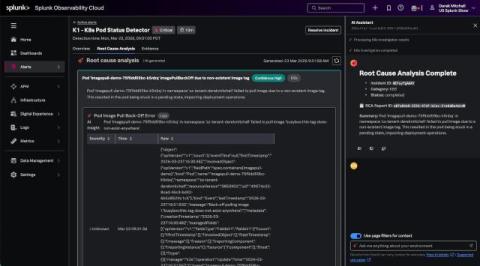
Splunk Observability at Cisco Live: Agentic Observability for the AI Era

Observability has always been about seeing clearly under pressure. But the pressure has changed. Applications are more distributed. Kubernetes environments keep expanding. Digital experiences depend on services, APIs, networks, third-party providers, and now AI models and agents that can make decisions faster than a human team can review every signal.

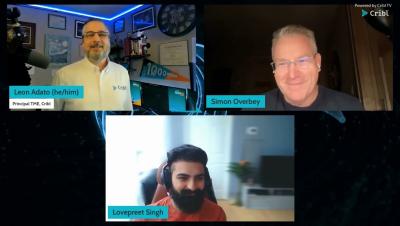
The Observability Journey: Getty Images and Cribl

I recently sat down with Simon Overbey and Lovepreet Singh - the Engineering Manager and systems engineer (respectively) at Getty Images to talk about their experiences implementing Cribl. After getting a rundown of the pre-Cribl environment (described above) I asked to jump straight to the end, the net benefits. If the "before" was a terrifying tidal wave of cost and complexity, what did the "after" look like?

Federated Search | From Silos to Insight | Azure Blob Schema Discovery with Splunk's Crawler

This walk-through shows how Splunk's Cloud can discover schema and partition keys for Microsoft Azure Blob Storage datasets and create searchable Splunk managed tables. Once the data is mapped, analysts can use Splunk Federated Search to query Azure Blob data where it lives, bringing cloud-resident logs into security, observability, and operational work-flows without re-ingesting the data.

DataPrime at ingest (DPXL): See the impact of any routing decision

TCO policies have always been one of the most impactful cost levers in Coralogix. Route business-critical data to High, push monitoring data to Medium, archive compliance logs to Low. With the addition of DataPrime expressions (DPXL) – a subset of the DataPrime query language designed for inline filtering at ingest – that routing became even more precise, matching on any field in the event payload, not just application, subsystem, and severity.