Operations | Monitoring | ITSM | DevOps | Cloud

Four types of incident alerts every team should know

Not every incident alert needs the same kind of response. One incident may need to wake someone up right away. Another may simply need to be picked up when the team starts work in the morning. Without a clear way to tell them apart, every incident feels equally urgent. That usually adds noise and makes incident response decisions harder than they need to be. This is where two questions help: In this guide, we’ll discuss what those questions mean and the four combinations that follow.

How to use an SRE agent to reduce downtime

An alert in the middle of the night warns of a potential business failure. Manual incident response becomes more complex due to the overwhelming data from distributed and dynamic digital services. With an SRE agent, your engineering team can cut through alert clutter. They can sort through various signals quicker, decreasing burnout and achieving faster, more affordable resolutions. Operational resilience will see its next evolution with Agentic AI.

What Is Network Operations Center (NOC)

Quick Answer A Network Operations Center (NOC) — pronounced “knock” — is a centralized physical or virtual facility where IT professionals monitor, manage, and maintain an organization’s network infrastructure on a 24/7/365 basis. The NOC serves as the nerve center for detecting incidents, coordinating responses, and ensuring maximum network availability and performance.

Agentic ITOps is here. Here's what early movers are doing.

We recently brought together IT operations leaders from across financial services, healthcare, airlines, media, and other industries for BigPanda 26, our annual customer event. The theme that emerged above all others during the event’s conversations is that our industry is no longer debating whether AI belongs in ITOps. The debate now is about how quickly it can be implemented, how to measure it, and who’s accountable when it acts. Here are some key learnings from BigPanda 26.

GitHub Outages 2025 - 2026: Reliability Analysis and Outage History

Hashicorp's co-founder Mitchell Hashimoto decided to pull out his Ghostty project from GitHub in April 2026 due to GitHub's reliability issues. He did this after 18 years of using GitHub, saying that GitHub "is no longer a place for serious work". GitHub has experienced a significant decline in reliability over the past 6 months, and Hashimoto is not alone in expressing this sentiment.

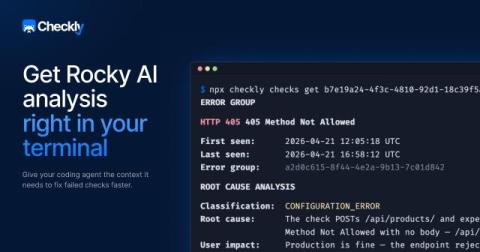
Two AI agents, one incident: Rocky AI comes to the terminal

A Playwright Check fails at 2 am. The login flow is broken. Until today, that alert triggered a human to get up, open the Checkly dashboard, copy Rocky AI root cause analysis (RCA), and then tell an agent to get to work. There were two AI agents, one incident, and no way for them to talk to each other. The extended checkly checks and new checkly rca CLI commands close that gap. Your coding agent can now pull Rocky AI's analysis into its ongoing work, read the diagnosis, and go fix the code.

Why do you need incident alerting? (And why monitoring alone isn't enough)

Monitoring tools track what’s happening across your systems and send a Slack message or email when something looks off. But they don’t call anyone and they don’t escalate the incident. If that Slack message goes unseen at 3 AM on a Saturday, the incident just sits there until someone opens their dashboard. Incident alerting fills this gap. When an incident triggers, it contacts the right person directly through a phone call or their preferred channel.

Why Service Architecture Matters: A Practical Guide

It’s 2 a.m. An alert fires. You acknowledge it, pull up the monitoring dashboard, and immediately hit a wall: Which team owns this? What services does it impact? Worse: this is the third time this month you’ve been paged for the same issue, and you still don’t have a clear path to fix it. What should take minutes stretches into hours of Slack threads, escalation guesswork, and frantic context gathering.

Future-Proof your services with agentic AI Operations Cloud

Digital services are the engine of your modern business, but keeping them running feels like a constant battle. The rapid increase in the volume and speed of operational data is a direct result of growing architectures and more intricate workloads. Alert fatigue is causing your teams to be slow and reactive in addressing incidents, and this is a surefire path to burnout. The pace of this new reality is beyond what traditional, human-led processes can match.

Who's on call? How Claude helped us calculate this 2,500x faster

Schedules are a core part of any on-call system. In ours, they define who to page and when. But people use them in lots of other ways too: checking their next shift, asking for cover while at the gym, keeping a Slack user group up to date, or updating a Linear triage responsibility. For many of our customers, they’re one of the main ways they interact with our product, and as they’re such a foundational part of On-call, it’s very important they work well.

SLAs, SLOs, SLIs, and KPIs

The incident is over. The service is back up. The monitoring dashboard is green, the on-call engineer has stood down, and the post-incident review is on the calendar for Thursday. But there is a question that separates good operations teams from great ones: do you actually know what that incident cost you in terms of reliability commitments? Whether you breached an SLO. Whether a customer-facing SLA is now at risk.

Automate your critical workflows with AI agents in 5 steps

Many teams remain bogged down by operational chaos and manual drudgery, even with access to a variety of automation solutions. These tools often operate in silos, creating disconnected islands of automation that require significant human effort to bridge. Agentic AI offers a path forward, creating a cohesive system that can intelligently and autonomously handle complex operational workflows.

Why Response Speed Is the New Bedside Manner: What Hospitals Can Learn from Patient Behavior Research

When we talk about patient experience in hospitals, the conversation usually centers on clinical outcomes, bedside manner, or discharge satisfaction scores. But a growing body of research suggests that something far more basic, how quickly and clearly a care team communicates, may matter just as much. This isn’t just true inside the hospital walls.

Alert Fatigue: The Silent Reliability Killer in Modern IT Operations

By Doreen Jacobi, CEO of Derdack Corp Modern IT environments generate a high volume of alerts intended to improve detection and response. However, increasing alert volume does not necessarily improve operational outcomes. Alert fatigue is not simply a function of quantity. It is a predictable consequence of how humans process repeated stimuli, manage limited cognitive resources, and make decisions under sustained load.

What is IT incident management? How does agentic ITOps help?

Imagine you’re in the middle of a critical project, and suddenly, your system crashes. Or it’s the middle of the night, and your server goes down, affecting countless users. While no enterprise can avoid all IT incidents, how you handle them can significantly reduce their impact. Fast, effective IT incident management is critical, as major incidents are increasingly costly.

SRE agent vs. traditional engineer: 7 key differences

The role of a Site Reliability Engineer (SRE) is evolving. The focus has shifted from simply working harder during an outage; A new kind of teammate is here to help: the SRE Agent. But what are the key differences when you compare an SRE agent versus a traditional site reliability engineer? This isn’t just a superficial change. It signifies a fundamental alteration in how teams construct and sustain dependable services.

Do Hospitals Still Use Pagers in 2026? Why They're Not Secure (And What's Replacing Them)

Are hospitals still using pagers in 2026? The answer might surprise you. In this video, we break down why hospital pagers are still used today, the security risks of pagers, and whether they meet HIPAA compliance standards. While pagers have long been trusted for their reliability, many healthcare organizations are now re-evaluating their role in modern clinical communication. We also explore why pagers are considered insecure, including the lack of encryption, no read receipts, and limited communication capabilities, all of which can impact patient care and coordination.

Do Hospitals Still Use Pagers in 2026? Pager Replacements

Remember the small rectangular devices that could receive short messages? Some may think of it as an outdated device that people have long forgotten about, while others still use it to this day. Pagers, although becoming less and less relevant, are still used by many large hospitals that deem them an essential tool for their day-to-day critical communication. But in 2026, are there pager replacements in the market?

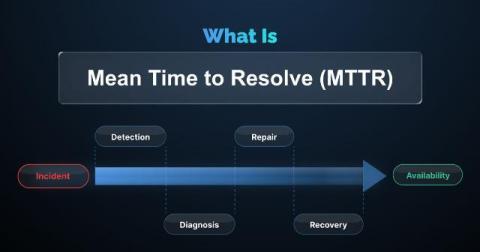
What Is Mean Time to Resolve (MTTR)? (And How to Improve It)

Every minute a network incident goes unresolved costs your company money. Lost productivity, missed SLAs, degraded user experience, and, in other cases, direct revenue loss. For IT teams and network admins, the pressure to resolve incidents fast isn't just operational, it's existential.

13 Best Incident Management Software Compared in 2026

Every minute of downtime costs your organization money. Sometimes a lot of money. Gartner puts the average cost of IT downtime at roughly $5,600 per minute, and that number climbs fast when a major incident hits and your team is still scrambling to figure out who owns the problem. That’s where incident management software earns its keep. When something breaks at 2 a.m., you don’t want to be hunting through email threads figuring out who’s on call.

Best Call Routing Software for On-Call Teams in 2026 (After-Hours & Emergency Routing)

Most teams don’t go looking for “call routing software.” They’re trying to solve something more immediate: calls coming in after hours, no clear owner, and something important getting missed.

What does using AI for post-mortems actually mean?

Everyone is using AI to help with post-mortems now. The pitch is obvious: post-mortems are time-consuming, the blank page is brutal, and AI is very good at producing structured, confident-sounding documents quickly. We're not here to push back on that. We've built AI into our own post-mortem experience, pulling your Slack thread, timeline, PRs, and custom fields together and giving your team a meaningful starting point in seconds. We think that's genuinely valuable, and the teams using it agree.

How it feels to run an incident with AI SRE

We've been building the broader incident.io platform for several years now, and one thing we've learned is that UX matters more here than almost anywhere else. When an incident fires, there's no room for poorly designed interfaces or fumbling through features you haven't touched in a while. The product has to be ergonomic: easy to pick up, easy to navigate, with the right things at your fingertips at exactly the right moment. We've put a lot of effort into this over the last 5 years.

From Static Response to Dynamically Adaptive Resilience

Organizations face an overwhelming mix of digital disruptions: service outages, security incidents, infrastructure failures, all happening faster and with greater complexity than ever before. At the same time, expectations have changed. It’s no longer enough to detect issues quickly or simply notify the right people. The real challenge is what happens next. How do you move from signal to action fast enough, coordinated enough, and with the right decisions at every step?

The Shift from Reactive to Proactive Incident Management: What AI Actually Makes Possible

Why enterprise operations teams stop chasing incidents and start preventing them Most enterprise operations teams are faster than they were three years ago. Alert routing is automated. On-call schedules are managed through platforms rather than spreadsheets. MTTR has come down as tooling has improved. On the metrics that measure reactive performance, progress is visible. What has not meaningfully changed is the rate at which the same incidents recur.

MCP Apps: On Call Compensation Report and Service Dependency Graph

This April, PagerDuty's MCP server expands with powerful new capabilities across Analytics & Reporting and Business Services. Teams can now surface aggregate incident data, service metrics, and team metrics — giving operators instant access to the operational insights that matter most. On the Business Services side, the release adds business service dependencies, subscriber management, impacted services analysis, and priority mapping. Rounding out the release are two new MCP Apps (on our experimental branch): Service Dependency graph. and an On-call Compensation report.

Why post-mortem action items die

You can run the best debrief of your life. Honest timeline, blameless tone, real insights. People leave the room nodding. And then nothing happens. This is the last mile problem of post-mortems - and it's an easy trap to fall into. When you've just been through a stressful incident, getting it back up is the priority. Once it's over, the post-mortem itself can feel like the finish line. You've documented what happened, been honest about it, identified what went wrong. It feels like the work is done.

In the Age of AI, Taste Isn't About Aesthetics

AI can generate a UI in seconds. So what do designers actually bring to the table? Marcela, Principal Product Designer at Rootly and former Founding Designer at Ramp, has spent 20 years in design. Her answer: taste isn't about aesthetics or crafting pleasant interactions. It's about asking the uncomfortable questions, and choosing the right problem, not the easiest one.

PagerDuty Invests in the AI-First Operations and Resilience of Healthcare and Crisis Response Organizations

At PagerDuty, we believe operational excellence and social impact are inseparable. As AI rapidly transforms how nonprofits operate, our AI and agentic technology empower mission-driven teams to automate complexity and focus their limited resources on what matters most: delivering reliable services that create meaningful impact at scale.

Why IncidentHub's Alerting is Better than Other Status Page Aggregators'

IncidentHub tracked 48000 SaaS and Cloud outages in 2025. The average organization depends on 100+ SaaS apps, making third-party vendor monitoring a crucial aspect of risk management and business continuity for almost all modern organizations. Better SaaS outage alerting is about monitoring the right parts of your third-party services, and routing alerts to the right people at the right time.

SIGNL4 Update: Stakeholder Communication and Signl Status Notifications

When incidents happen, they rarely stay contained. Customers, partners, and internal stakeholders are often affected – but too often, they’re informed late or not at all. In critical situations, that lack of communication can quickly turn into real business risk. With our latest SIGNL4 release, we’re changing that.

Incident Response Is Broken Without Stakeholders in the Loop

Yet status pages are not enough for modern incident communication. In incident response, the conversation has traditionally centered on speed and resolution – how quickly teams can detect, escalate, and fix issues. But in practice, incidents don’t exist in a vacuum. They ripple outward, affecting customers, executives, partners, compliance teams, and even public perception. That broader circle – the stakeholders – is often underserved by conventional tooling.

Introducing the BigPanda L1 Agent: An autonomous L1 operator for your enterprise

Every enterprise IT leader facing the spiraling complexity of modern IT environments has a version of the same conversation. How can we manage the increasing complexity of more services, more dependencies, and more layers of observability and monitoring? Their answer would add headcount to the NOC, sign another Global System Integrator contract, and buy your organization another year.

The Runbook Problem: How AURA Documents What Teams Don't Have Time to Write

Runbooks are rarely missing because teams don't value them. They're usually missing because incident response, follow-up, and platform work compete for the same limited time. By the time an issue is resolved, the knowledge is fresh, but the window to document it is already closing. That gap creates familiar failure modes: over-reliance on senior engineers, slower handoffs, and less confidence for whoever is on call next.

Top Hospital Mass Notification Software: OnPage (2026 Guide)

We’ve all seen scenes in Grey’s Anatomy where a Code Silver or a Code Purple is announced, and suddenly everyone is seeking cover or springing into action. But how are these critical alerts actually communicated inside hospitals? Behind the scenes, mass notification systems power the rapid, coordinated delivery of these codes, ensuring patients, staff and the larger community are made aware of the situation to keep them safe.

CEO Fireside at HumanX: Resilience at the Speed of Change

PagerDuty CEO and Chairperson Jennifer Tejada in conversation on April 8, 2026 at HumanX in San Francisco with Honeycomb CEO Christine Yen and journalist Jennifer Strong, show how observability and real-time response help builders spot issues sooner, fix them faster, and learn from every incident.

Best Emergency Mass Notification Solution for Businesses: OnPage (2026 guide)

When a critical incident or emergency strikes, businesses rely on well-defined incident response procedures to accelerate remediation. Incident response teams are on standby, and each responder understands their role in restoring services and minimizing customer impact. However, organizations often overlook an equally critical requirement: real-time communication with all stakeholders during incidents. This is not just an operational gap, it is increasingly a compliance and risk management requirement.

AI Didn't Change the Game, It Just Exposed Your Bottlenecks w/ Ganesh Datta (CTO, Cortex)

Every engineering org says they want to improve reliability — but most can't even agree on what "good" looks like. Ganesh Datta, Co-Founder and CTO of Cortex, has spent the better part of a decade helping companies confront that gap.

From Alerting Tool to Critical Communication Platform

Modern operations don’t break down only because alerts are misconfigured or missed. They break down when systems are difficult to manage, slow to adapt, or lack visibility into what’s actually happening in real time. Across industries, teams are managing an increasing volume of critical events. Critical System Alerts. After-hours urgent calls from patients, clients or even emergency lines. Voicemails. Answering service calls, Emergency notifications. Time-sensitive clinical communication.

How to Prevent and Resolve Incidents Using Model Context Protocol (MCP)

The rapid pace of modern software development, fueled by AI-driven coding and accelerated deployment cycles, has resurfaced a challenge that many development teams already struggled with: the speed of incident response must now match the speed of change. Every day, teams ship code faster than ever, which inevitably increases the risk of a new issue making it to production. The traditional approach—where engineers waste time jumping between disconnected tools—is no longer sustainable.

Updated Web Management Console Demo | On-Call Management, Hospital Communication & Call Routing

See the next-generation OnPage Enterprise Web Management Console in action, built to simplify on-call scheduling, incident alerting, critical communication workflows and post-event reporting. In this demo, we walk through how teams can: Manage on-call schedules and escalation pathsSend and track critical alerts in real timeGain visibility into alert activity, read rates, and response timelinesConfigure contact groups and communication workflowsUse the new Lines Management module to set up call routing, menus, and rules through a self-service interface.

Best Secure Messaging Apps for Healthcare Workers (2026 Buyer's Guide): OnPage

Secure messaging apps for healthcare workers are platforms designed to enable HIPAA-compliant communication, real-time collaboration and coordination, and urgent alerting across clinical teams for timely response. In modern hospitals, communication is no longer just about sending messages. It’s about ensuring the right person receives the right information and acts on it quickly.