Operations | Monitoring | ITSM | DevOps | Cloud

Alerting Software: 10 Must-Have Capabilities

Author: Matthes Derdack Businesses rely on countless systems, applications, and services to operate without disruptions. Whether it is cloud infrastructure, manufacturing equipment, IoT devices, healthcare platforms, or enterprise applications, every second of downtime can impact revenue, customer trust, and operational efficiency.

How to Set Up SIGNL4 in Under 5 Minutes | Quick Start Guide

Getting started with SIGNL4 is fast and simple. In this video, we show you how to set up a new SIGNL4 account in under 5 minutes so you can start receiving critical alerts and managing incidents right away. Whether you're new to incident management or looking for a faster way to implement mobile alerting and on-call scheduling, SIGNL4 makes onboarding effortless. Follow along step-by-step and see how quickly your team can be up and running.

Turn Alerts into Action: Why Modern Operations Need More Than Monitoring

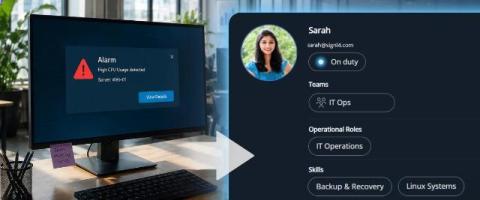
Modern ops stacks are very good at detecting problems. From IT infrastructure and cloud platforms to industrial systems, cybersecurity tools, and IoT environments, monitoring technologies generate alerts the moment something goes wrong. But there is a critical problem modern operations teams still struggle with: Detection does not ensure response. And that gap is becoming one of the biggest operational risks organizations face today.

When an incident hits, who stays in the loop?

Your IT team gets alerted - but stakeholders? They’re left checking status pages or chasing updates. There’s a better way. With SIGNL4 Active Stakeholder Communication, everyone stays informed automatically — without adding extra work for your team. Send real-time updates instantly via push notifications Create stakeholder groups for different scenarios Track exactly who was notified — and when.

Alert Fatigue: The Silent Reliability Killer in Modern IT Operations

By Doreen Jacobi, CEO of Derdack Corp Modern IT environments generate a high volume of alerts intended to improve detection and response. However, increasing alert volume does not necessarily improve operational outcomes. Alert fatigue is not simply a function of quantity. It is a predictable consequence of how humans process repeated stimuli, manage limited cognitive resources, and make decisions under sustained load.

Incident Response Is Broken Without Stakeholders in the Loop

Yet status pages are not enough for modern incident communication. In incident response, the conversation has traditionally centered on speed and resolution – how quickly teams can detect, escalate, and fix issues. But in practice, incidents don’t exist in a vacuum. They ripple outward, affecting customers, executives, partners, compliance teams, and even public perception. That broader circle – the stakeholders – is often underserved by conventional tooling.

SIGNL4 Update: Stakeholder Communication and Signl Status Notifications

When incidents happen, they rarely stay contained. Customers, partners, and internal stakeholders are often affected – but too often, they’re informed late or not at all. In critical situations, that lack of communication can quickly turn into real business risk. With our latest SIGNL4 release, we’re changing that.

Still writing Manual Postmortem Reports? Do it in one click with SIGNL4!

Stop wasting hours on postmortem incident reports. With SIGNL4’s new Postmortem Report feature, you can generate a complete incident review in seconds — directly from any alert. See who acknowledged or resolved the alert Track response times instantly View full notification history (with delivery status) AI-generated summary for fast insights No more manual documentation. No more missing details.

Eliminating Manual Steps in Alerting Processes

Many alerting processes still rely heavily on manual work. In some situations, this is necessary – for example, when human approval is required. However, in many operational and incident-response scenarios, manual handling is simply the result of outdated workflows. In these cases, automation can significantly improve response times, efficiency, and reliability.