Operations | Monitoring | ITSM | DevOps | Cloud

Sponsored Post

Bunnyshell: The Best Qovery Alternative for Modern Cloud Deployment

When it comes to automating DevOps processes and managing cloud environments, both Bunnyshell and Qovery have gained significant traction. While both platforms provide multi-cloud deployment, automation, and developer-friendly interfaces, there are key differences between the two. Bunnyshell offers several advanced features that make it a standout alternative to Qovery, particularly for teams seeking more control, flexibility, and efficiency in managing their cloud environments.

The SaaS Magic Number: How To Calculate And Use It

You can assess your company’s financial health using a number of SaaS metrics, depending on the type of business you are in. Among the most useful is the SaaS Magic Number. So, why is it called the SaaS Magic Number, and how do you calculate it? And why is it so important to track your SaaS Magic Number regularly?

Tidal's Integrated Suite: The Future of Cloud Migration

Cloud migration is a rapidly growing market, projected to reach $1.3 trillion in 2025 (Gartner). Yet, 74% of migrations exceed budget and timeline expectations (IDC). Why? Because cloud migration isn’t just a technical shift—it’s a strategic business transformation requiring coordinated planning across applications, infrastructure, networks, and finances.

Monitor the performance of queues and topics with Azure Service Bus

Azure Service Bus is a fully managed enterprise message broker that enables asynchronous messaging between distributed applications. It is designed to decouple application components, allowing them to communicate reliably, securely, and at scale. With Datadog’s Azure Service Bus integration, you can.

How to prevent performance bottlenecks in Google Compute Engine: CPU spikes, RAM waste, and network overload

Cloud computing is all about efficiency. You need to get the most out of your resources without overspending or causing performance issues. For example, if you’re running virtual machines in Google Compute Engine, you need to size your instances correctly, optimize your workloads, and monitor your network traffic to prevent unexpected failures. However, when resources aren’t properly managed, things can quickly spiral out of control.

Your guide to cloud modernization: from basics to best practices

Being in the cloud is table stakes in 2025, and simply lifting and shifting workloads to the cloud barely scratches the surface of what's possible. Yet many engineering teams find themselves managing glorified data centers in the cloud—missing out on key capabilities like auto-scaling, serverless computing, and cloud-native security features. Cloud modernization is the true game-changer for turning legacy systems into agile, scalable architectures.

16 Cloud migration risks and how to solve them

Cloud infrastructure powers everything from streaming services to enterprise databases, yet many organizations still run critical workloads on legacy systems. With the cloud migration market projected to reach $806.41 billion by 2029, growing at a CAGR of 28.24%, organizations of all sizes are racing to modernize their infrastructure and applications. This shift means companies need to stay competitive in a landscape where agility and scalability are non-negotiable.

A Guide To GCP Regions (And How They Affect Your Costs)

Google Cloud Platform (GCP) launched in April 2008 with Google App Engine. This developer-centric Platform as a Service (PaaS) offering allowed developers to build and host web applications on Google’s cloud infrastructure. Initially, App Engine only supported Python, but in 2009, Google added Java support, offering more programming flexibility. In 2010, GCP expanded further with Cloud Storage, its second major cloud product.

Optimizing Every Layer: From Cloud to On-Premises

As digital infrastructures become more complex, businesses need an agile, unified platform that spans traditional on-premises systems to modern cloud-native environments. At Virtana, our latest feature updates across Global View, Container Observability, and Infrastructure Observability are designed to empower you to optimize every layer of your IT ecosystem.

Microsoft 365 Backup 2026: What It Covers, What It Costs, and Where the Gaps Are

Protecting your organization’s data within Microsoft 365 is crucial to ensure business continuity, compliance, and resilience against threats like accidental deletions, cyberattacks, and data corruption. Implementing a comprehensive backup strategy safeguards your critical information and facilitates rapid recovery when needed.

An aerial view of your Azure DevOps, GitHub Actions, and Jenkins pipeline landscape

Most engineering teams today have a multiplicity of tools to meet all of the different challenges they face. Some people characterize this as a problem and describe it as 'tool sprawl'. At SquaredUp, we just see it as a fact of life that no tool can excel at every job and engineers will want to choose the best tool for each task. Many companies have multiple toolchains spread across different teams and departments.
Sponsored Post

Monitoring for operations of SAP S/4HANA Cloud, public edition

"Do I need to monitor SAP S/4HANA Cloud, public edition?" is the question many SAP customers are asking right now as projects are going live. As an SaaS product run by SAP, customers get access only through a public website, and SAP are responsible for the availability of that website and the hardware resources. The places where traditional monitoring focussed either aren't relevant, aren't visible, or superficially aren't the customer's problem anymore. Does that mean there is no need to monitor anything in SAP S/4HANA Cloud, public edition?

AI On A Budget: Low-Cost Strategies For Running AI In The Cloud

AI costs can spiral out of control before you know it. One day you’re building an AI feature that promises to bring in a solid chunk of revenue for the company. The next day you’re obsessing over an astronomically high cloud bill that will significantly eat into your profits — or consume them entirely. To help you solve this problem, we brought in Jeremy Daly, Director of Research (and AI cost management guru) at CloudZero.

LightMesh + AWS: Secure Subnet Discovery and Unified IPAM at Scale

LightMesh now integrates with AWS, providing automated discovery and unified management of your cloud networking resources. This powerful integration eliminates fragmented visibility across VPCs and regions, giving you real-time insights into your entire AWS infrastructure through a single, intuitive platform.

Better CloudWatch Metrics in Honeycomb with the OpenTelemetry Collector

CloudWatch metrics can be a very useful source of information for a number of AWS services that don’t produce telemetry as well as instrumented code. There are also a number of useful metrics for non-web-request based functions, like metrics on concurrent database requests. We use them at Honeycomb to get statistics on load balancers and RDS instances. The Amazon Data Firehose is able to export directly to Honeycomb as well, which makes getting the data into Honeycomb straightforward.

Top 6 EC2 rightsizing recommendations that you can't ignore

Imagine a day at work where you realize that your team’s youngest developer has failed to kill a compute instance; the bill spikes and the budget is breached. Rightsizing recommendations would come to the rescue and play a crucial role in such situations by identifying underutilized, overutilized, or mismanaged resources and suggesting corrective actions.

Debugging performance issues in Azure Service Bus

Azure Service Bus is a critical messaging service for building scalable cloud applications, but performance bottlenecks can lead to delayed message processing, throttling, or even dropped messages. It is essential to identify and resolve these issues to maintain smooth application workflows and prevent downtime. This blog explores common Azure Service Bus performance problems, provides step-by-step debugging strategies, and highlights how proactive monitoring can prevent recurring issues.

Global View: Optimizing Every Layer with Innovative New Capabilities for On-Premise

Managing a hybrid IT environment is more complex than ever, requiring real-time visibility, automation, and intelligent cost control across cloud and on-premises infrastructure. Virtana’s latest innovations help organizations streamline operations, optimize costs, and enhance security, validating that every layer of IT—whether in the cloud or on-prem—operates at peak efficiency.

Container Observability: Optimizing Every Layer with Innovative New Capabilities for Kubernetes & Windows

Managing containerized workloads and Windows environments requires more than just basic monitoring—it demands deep observability to prevent performance bottlenecks, optimize costs, and accelerate troubleshooting. Virtana’s latest Container Observability enhancements provide IT teams with greater control, visibility, and analytics across Kubernetes and Windows-based workloads.

Infrastructure Observability: Optimizing Every Layer with Innovative New Capabilities

Modern IT environments are complex, spanning on-premises, cloud, and hybrid infrastructures. Without deep observability at every layer, performance bottlenecks, inefficiencies, and troubleshooting challenges can drain resources and impact business outcomes. Virtana’s latest Infrastructure Observability enhancements are designed to eliminate blind spots, automate performance tuning, and simplify IT operations.

2025 Redshift Pricing Guide: Cost Factors And Savings Tips

The Amazon Redshift data cloud provides a fast, secure, and widely accessible data warehouse solution. It is an ideal platform for performing complex analytics and processing large data sets. In addition to supporting multi-parallel processing (MPP), Redshift is also a type of Online Analytical Processing (OLAP) database. Yet, one of Redshift’s main selling points is its cost-effectiveness over alternatives like Snowflake and BigQuery. Is this the case? What is the actual cost of Amazon Redshift?

Announcing Densify's Latest Release: Smarter Kubernetes Automation, Built for the Enterprise

To coincide with KubeCon Europe 2025, we’re excited to announce the latest release of Densify’s Kubernetes optimization engine, Kubex, which delivers full-stack resource management and seamless automation resource optimization at enterprise scale. This release delivers the advanced controls enterprises have been asking for—without sacrificing the intelligence and precision that sets Densify apart.

AI Cost Optimization Strategies For AI-First Organizations

Not long ago, our co-founder and CTO, Erik Peterson, shared some insights on AI spending. He shared how AI costs currently fall under the write-off-friendly world of R&D. He also acknowledged why DevOps teams might feel it’s too early to start optimizing AI costs. As the saying goes, “Premature optimization is the root of all evil.” But after more than a decade of software development, Erik knows that eventually, research, experimentation, and big ideas need to deliver real returns.

Anbox Cloud 1.25.0: new features, improvements and updates

In this video, Anbox team covers new features and changes in Anbox Cloud 1.25.0 release: What is Anbox Cloud? Anbox Cloud lets you run virtualized Android environments securely, at any scale, to any device letting you focus on your use case. Run Android in system containers, not emulators, on AWS, OCI, Azure, GCP or your private cloud with ultra low streaming latency. Chapters for Easy Navigation.

2025 OneDrive Licensing Changes

Microsoft recently announced significant changes to its OneDrive licensing and storage policies, affecting organizations that heavily rely on cloud storage solutions. Starting January 27, 2025, unlicensed OneDrive accounts—those without assigned user licenses—will be automatically archived after 93 days, rendering them inaccessible unless covered by retention policies or legal holds.

A Beginner's Guide to the 7 Types of Cloud Storage

In 2024, cloud infrastructure service revenues climbed to $330 billion, demonstrating its growing importance for personal, business, and enterprise use. That being said, there are many types of cloud storage, and not all of them are the same and not all of them will suit your needs. Some cloud services can be too complex, costly, or lack the needed features to run your business efficiently.

Q&A with Waseem Aslam, Pulsant Data Centre Manager

With ten years at Pulsant, Waseem Aslam, Data Centre Manager, has climbed the ranks from engineer to leader, embracing challenges and innovation along the way. In this Q&A, he shares insights into his journey, the supportive Pulsant culture that kept him motivated, and the opportunities that have shaped his career.

Proactive Monitoring: How Engineers Use CloudWatch to Save Customers Money

At MetricFire, we love talking with engineers about their tech stacks, SRE challenges, and how they approach infrastructure monitoring. Recently, we had a great chat with Yoimer Roman from a Latin American cloud consulting company, that helps clients make smarter business decisions by leveraging AWS CloudWatch monitoring. Yoimer wears many hats: mentoring his team on all things AWS, designing custom cloud environments, and bridging the gap between technical challenges and non-technical stakeholders.

Cloud migration security: Risks, strategies, and best practices

Whether you’re migrating from on-premises to the cloud, between cloud providers, or to more advanced cloud architectures, each path shares common security challenges that must be addressed head-on. With the right approach, you can actually enhance your security posture during migration. In this article, we'll dig into practical approaches to cloud migration security, covering everything from initial planning to post-migration maintenance.

How to cut IT complexity, stop outages, and scale without the stress

In today’s fast-paced digital world, IT managers face mounting challenges in keeping their teams efficient, their infrastructure scalable, and their applications running without disruption. Traditional hosting providers often exacerbate these challenges by operating as black boxes—offering little transparency and leaving IT teams scrambling when something goes wrong. At Upsun, we believe IT leaders should demand more from their infrastructure solutions.

AWS ALB vs ELB: Which load balancer is right for you?

Load balancers play a key role in Amazon Web Services (AWS) systems by maintaining traffic distribution, detecting server issues, and redirecting client requests to available servers without any downtime. But, choosing the right AWS load balancer can be daunting, as it’s essential for optimizing your application performance and scalability. Depending on your use case, you may find that an Elastic Load Balancer (ELB) or Application Load Balancer (ALB) better suits your needs.

AI Costs In 2025: A Guide To Pricing, Implementation, And Mistakes To Avoid

AI costs haven’t been a major factor in cloud computing — until now. For example, AI demands massive data processing and storage, such as for training Large Language Models (LLMs) and generative AI. Additionally, AI workloads require parallel processing, which traditional instances struggle to handle — forcing companies to invest in specialized (and expensive) GPUs to get the job done.
Sponsored Post

What Are Cloud Development Environments?

Especially, if you have a globally distributed team, CDEs give you a smoother developer experience just by its online nature. Instead of wrestling with conflicting dependencies, trudging with inconsistent local setups, or waiting for your code to compile, you have a powerful, instantly accessible development environment in the cloud. CDEs remove typical limitations like hardware and scalability. You can quickly get started with minimal setup and configuration, but confidently move forward due to the flexibility and customization features CDEs provide.

Achieving Business Continuity with Managed IT Services and Cloud Security Solutions

The digital world is evolving rapidly, and businesses must always stay up and running. Any disruption—from cyberattacks, hardware failures, or natural disasters—can cause financial losses and harm a company’s reputation. This is why business continuity is essential. Managed IT services and cloud security solutions help businesses stay operational even during unexpected events.

LightMesh + Azure: Real-Time IPAM and VNet Visibility in Minutes

As Azure environments scale, network complexity multiplies. Expanding subscriptions create visibility challenges that traditional approaches can’t handle. LightMesh simplifies cloud network management, delivering the comprehensive visibility and control teams need to navigate complexity with confidence.

AWS EFS Pricing Guide: Manage Your Storage Costs Effectively

Amazon Web Services (AWS) offers a suite of cloud storage services. Among the most widely adopted are Amazon S3 and Amazon EBS, known for their robust scalability, performance, and flexibility for a wide range of workloads. However, AWS also offers Amazon Elastic File System (EFS). This is a serverless file storage service for workloads that need shared, scalable storage for use with AWS services and on-premises resources.

10 Cloud Provisioning Tools To Drive Infrastructure Innovation

Cloud provisioning involves defining, setting up, and allocating cloud resources — such as compute power, networking, and storage — so they’re ready for use in your organization. Provisioning used to be slow and error-prone. Not anymore; it’s a streamlined, hands-off process now. But it doesn’t happen on its own. You need the right cloud provisioning tools to automate and optimize the process.

A Northern Ren-AI-ssance

As the UK's most geographically diverse digital infrastructure provider, Pulsant champions regional thinking. Every day, there’s a push for technological innovation to go beyond the M25 and drive the brightest businesses nationwide. This has led to our focus on the Northern Powerhouse. We have invested extensively in data centres across Manchester, Rotherham and Newcastle.

Boost Magento performance: scale, optimize, and speed up your ecommerce store

Looking to maximize the performance of your Magento or Adobe Commerce store? In this deep-dive session, Platform.sh experts Jared Wright and Jerry’s Ida share best practices for optimizing infrastructure, caching strategies, database tuning, and deployment processes. Learn how to scale for high-traffic events like Black Friday Discover Magento-specific optimizations for caching, Redis, and MySQL Reduce downtime with efficient deployment strategies Use tools like Blackfire to track and improve performance.

FinOps As A Service: How To Do Cloud Finance For Smarter Spending

We’ve covered the fundamentals of FinOps in several guides on this blog, including FinOps 101, the FinOps maturity journey (as outlined by the FinOps Foundation), and more. But if you need a quick refresher, no worries. We’ve linked key guides on what FinOps is, why it matters, and how to make it work for you in “Related reads” in the next section.

Optimizing AWS NAT Gateway Usage

AWS NAT gateways are essential but costly—especially when they're underutilized or overused. In this Kentik walkthrough, we'll show you how to quickly identify unnecessary NAT gateway expenses and optimize your cloud infrastructure spending. Learn to analyze traffic patterns, pinpoint problematic gateways, and achieve cost-effective network visibility using Kentik's Data Explorer.

Why your IT fails at 3 AM (and how to fix it)

In this insightful webinar, Corey Dockendorf and Michael Riley delve into the critical challenges facing IT leaders today. They tackle three main issues: the lack of visibility with traditional hosting providers, scaling infrastructure efficiently without increasing complexity, and keeping IT teams focused, productive, and well-rested. Learn how modern cloud application platforms and PaaS solutions can transform your operations, enhance transparency, and optimize performance. Discover practical insights, real-life examples, and strategies to improve your IT workflow and leverage smarter solutions for better business outcomes.

Is Cloud Still King? The Shifting Landscape of Infrastructure

Believe it or not, we are in the middle of one of the biggest cloud repatriation movements of the past decade. More than ever, companies are rushing to find infrastructure solutions that better suit their needs. Over the past decade, hyperscalers have dominated the market, generating trust and, in some cases, overconfidence in software development. Drawn in by promises of reliability, ease of use, and ultimate flexibility, teams turned to providers like AWS, GCP, and Azure.

Azure AI Agent Services in Azure AI Foundry

This podcast features Alex Pshul, Microsoft MVP, discussing Azure AI agents, a new technology related to Microsoft's Azure platform. The conversation covers various aspects of Azure AI, including the development and functionality of AI agents, their applications, and the underlying technologies involved. Time stamps: Introduction of Guests (00:00:00) Overview of Azure AI Agents (00:01:10) Creating AI Agents (00:03:00) Functionality and Use Cases of AI Agents (00:04:00) Future of AI Agents (00:05:00) Demo and Code Examples (00:06:00) Cautions and Recommendations (00:37:00)

Best practices for optimal infrastructure performance with Magento

Authored by Upsun Magento specialists, Stephanie Daugherty and Jared Wright. Magento is a powerful eCommerce platform that drives thousands of online stores worldwide. Its flexible, scalable, and feature-rich environment makes it a top choice for retailers across diverse industries. However, Magento’s extensive feature set and complexity can create performance bottlenecks—especially as businesses scale.

Cloud Storage vs Local Storage Cost: Everything You Need to Know

Although the importance and growth of cloud storage is rapidly increasing, local storage may still have its place for personal or business use, as it still offers some advantages over cloud storage. Many consider the deciding factor for their storage solution to be cost. For this reason, we will explore cloud storage vs local storage cost throughout this article, among other features which could save money, (or increase costs), based on comparing these two storage models.

Product Release Notes February 2025

Last week, the FinOps Foundation released its latest installment of the State of FinOps report. This year’s theme: Cloud+. Fortunately for all of us, Cloud+ isn’t yet another streaming service to add to an already infinite list. In the FinOps Foundation’s parlance, Cloud+ refers to all the non-public-cloud spending — e.g., SaaS, AI — that you’d want to group under the broad umbrella of “cloud spending.”

Enhancing Observability with the OTEL Framework and Virtana

In today’s rapidly evolving technological landscape, observability has become essential for supporting robust, efficient systems. According to Gartner’s report “Preparing for the Future of Observability” from September 2024, OpenTelemetry (OTEL) is emerging as the standard framework for collecting telemetry data across different application pipelines.

Introducing Civo FlexCore: A New Era for Private Cloud

The cloud landscape is evolving, and at Civo, we are committed to pushing boundaries and reimagining cloud infrastructure. At our recent Civo Navigate event in San Francisco, we unveiled a significant step forward in this mission—Civo FlexCore, a game-changing private cloud solution designed to bring the simplicity and efficiency of the public cloud to on-premises environments. For too long, enterprises have struggled with the limitations and costs imposed by hyperscale cloud providers.

13 Cloud Migration Best Practices: 2025 guide

Cloud migration involves transferring digital assets, services, databases, applications, and IT resources from on-premises infrastructure to cloud environments. A well-executed cloud migration can reduce operational costs, improve scalability, enhance flexibility, and boost performance. Organizations can shift from capital-intensive infrastructure to more predictable pay-as-you-go expenses while scaling resources to match needs.

Cycle Video Walkthrough: Securing Private Network Access with Cloudflare Tunnel

Cycle was built to be a powerful, security focused container orchestration platform that is a more user friendly alternative to Kubernetes. One way it achieves this is by making complex, yet secure networking easy to achieve. By combining Cycle's private networks, known as environments, with Cloudflare Tunnel, teams can further enhance their network security and reliability.

Cloud Architecture: Building Smart, Cost-Efficient Systems

Cloud computing offers many advantages over on-premises environments, including scalability, flexibility, and cost-efficiency. Yet, simply using a “lift and shift” strategy — moving your application as-is from an on-premise environment to the cloud with minimal modification can lead to several issues (such as inefficient design, bloated costs, etc.). If you design software or applications for the cloud, it is often best to consider making them cloud-native.

20 Key CFO Dashboards And KPIs: What Matters Most In 2025

Your job as a Chief Financial Officer (CFO) carries a lot of weight, regardless of the size and industry of your organization. You are also directly accountable for ensuring your company’s financial health by providing accurate, up-to-date, and actionable insights. If your revenue comes from recurring subscriptions, SaaS metrics form the backbone of your business. They measure your profitability and growth, provide financial reporting and forecasting, and provide guidance on maximizing ROI.

Getting started with Azure DevOps dashboards

Azure DevOps and its extensive feature set helps teams plan smarter, collaborate better, and ship faster. With several integrated features such as Azure Pipelines or Azure Repos, it gives you the flexibility to use just what you need to complement your existing workflows. However, as your usage of Azure DevOps grows, you might find that monitoring and observing key CI/CD metrics across these services gets increasingly challenging.

Cloud Computing Reimagined: The Game-Changing Truth

At Civo Navigate San Francisco 2025, our experts shared their insights on how to reimagine the cloud through cutting-edge solutions and advancements. Featuring CTO Dinesh Majrekar and Chief Innovation Officer Josh Mesout, this session explores Civo's multi-cloud strategy and the pivotal role of private cloud in a hybrid future.

Amazon EKS Auto Mode

EKS Auto Mode is a huge step forward in managing your EKS clusters by automating complex tasks, enhancing cost efficiency, simplifying management, and ensuring resource optimization. These features make Kubernetes more accessible and manageable, particularly for organizations looking to leverage containerized environments without the overhead of extensive manual configuration and management.

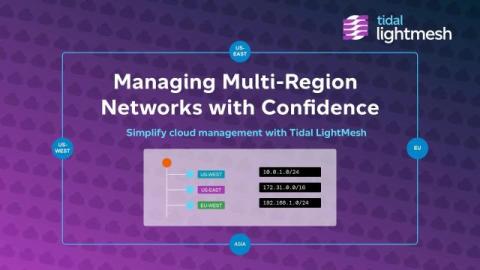
Managing Multi-Region Networks with Confidence

Managing cloud networks today is like navigating a city without street signs—unpredictable and chaotic. As enterprises expand their cloud presence, they face a surge in IP addresses across regions, leaving traditional methods like spreadsheets and fragmented tools unable to keep up. Modern cloud infrastructure demands smarter, more scalable network management to tackle challenges such as IP sprawl, inconsistent configurations, and lack of visibility.

How To Share Large Video Files For Free Online

Finding a free service that meets all your needs can be challenging, as some features may be hidden behind paywalls or other restrictions, making it hard for you to find a decent way to share large video files for free. Fortunately, this article offers the perfect solution for you to share large video files for free. Even better, you can share files for free, securely, and privately with the options we offer.

Top Cloud Cost News From February 2025

There’s no doubt about it: The cloud cost landscape changes quickly. It seems like every month brings new updates from the cloud providers and several new resources you can use to master FinOps within your organization. Here are the top cloud cost news headlines you may have missed from February 2025: Read on for the details.

Forget the Hype-Kelsey Hightower on What's Next in AI & Cloud Computing

Kelsey Hightower takes the stage at Civo Navigate San Francisco 2025 to explore the evolving world of AI, cloud computing, and Kubernetes. In this insightful discussion, he shares his thoughts on data sovereignty, AI adoption, security challenges, and the future of cloud technology. Recently joining Civo as a Board Director, Kelsey discusses his vision for reimagining cloud computing, the impact of AI agents, and what developers need to focus on in an increasingly AI-driven world.

The Benefits of Cloud Based Restaurant Management Software

The operations of restaurants undergo transformation through cloud based restaurant management software which delivers time-efficient scalable economical solutions. Cloud-based solutions operate differently from traditional systems because they do not need hardware maintenance on-site or on-premises servers. Through this technology the business leadership of restaurants can view their data through any location to gain live operational information.

Understanding Cloud Infrastructure: A Beginner's Guide

Cloud infrastructure essentially consists of a set of virtual tools and resources that help deliver cloud-based services and products. Cloud infrastructure frees companies from building their own physical data centers. Instead, they rent computing capacity on a need-by-need basis. But let’s not get ahead of ourselves. In this post, we’ll define cloud infrastructure and examine cloud computing types, delivery models, and more.

SharePoint vs. OneDrive vs. Teams

Microsoft 365 offers multiple file storage solutions—SharePoint, OneDrive, and Teams—each designed for different use cases. However, many organizations struggle to determine where to store files and how to manage document collaboration efficiently. Choosing the wrong storage location can lead to content sprawl, security risks, and version control issues.

The State Of FinOps 2025: Cloud+, AI Visibility, And Other Key Takeaways

The FinOps Foundation just released the sixth installment of its annual State of FinOps report. The 2025 installment contains a few key themes: In this blog, we give a little more detail on each, highlighting key statistics and takeaways from the State of FinOps 2025.

Unlock Passive Income with Smart Cloud Mining: The Future of Cryptocurrency Investment

In the fluctuating cryptocurrency market, AI cloud mining is gradually emerging as a new choice for investors. Compared to traditional mining, cloud mining is favored for its straightforward operations and substantial gains.

Leveraging Digital Transformation Strategies for a Competitive Edge

Indeed, change is the order of the day in organizations, especially in the current world that is characterized by high levels of competitive forces. New technologies seem to be revolutionizing the various sectors by improving how organizations operate as well as how they attend to their customers. Failure to adopt these advancements means that the organization's stand be pushed to the dustbins and a new organization that is more efficient takes over.

7 Snowflake Alternatives To Cut Your Cloud Costs

The Snowflake data cloud provides storage, reporting, and analytics for organizations that rely on data to run their day-to-day operations. Since its launch from stealth mode in 2014, Snowflake has become a top data warehouse solution for its manageability, superior scalability, always-on data security, advanced analytics, and robust accessibility. But Snowflake isn’t perfect.

EC2 Monitoring: A Practical Guide for AWS Engineers

Monitoring your EC2 instances shouldn’t be complicated or exhausting. Yet, too often, engineers find themselves troubleshooting issues in the middle of the night, searching for the root cause of an unexpected failure. Whether you're managing a few instances or hundreds spread across multiple regions, effective EC2 monitoring helps you stay ahead of problems instead of constantly reacting to them. And if you've ever dealt with a critical alert at an inconvenient hour, you know how important that is.

What's new with AWS for 2025

Amazon Web Services (AWS) holds onto the top spot with a 30% share of the global cloud infrastructure market. Despite fierce competition, AWS remains the leader by consistently driving innovation in AI and cloud computing. In this blog, we explore the latest advancements, from global infrastructure expansion to enhancements in cloud services’ availability and performance, as well as what AWS has planned for 2025.

Cloud Costs Out of Control? Civo Has the Answer!

Join Mark Boost as he kicks off Civo Navigate San Francisco 2025, setting the stage for two days of tech innovation and insights. Discover Civo’s mission to create a simpler, fairer, and better-value cloud solution, challenging the dominance of hyperscalers. Mark unveils his vision for a true multi-cloud future and introduces Civo’s latest innovations: Flexcore and RelaxAI. He then welcomes Kelsey Hightower to the stage for a major announcement—his new role as Civo’s Board Director—before diving into the crucial role of private cloud solutions in today’s evolving landscape.

Azure Tagging: A Comprehensive Guide for Technophiles

Introduction: Businesses and enterprises with complex settings and backgrounds may find Azure resource management uneasy. Resource tags in Azure help manage environments competently. They improve the visibility and governance of cloud resources by organizing, tracking, and optimizing them. This post may scrutinize Azure tags and find ways to maximize the benefits of resource management.

How Cloud Computing Powers the Modern Internet

The way we use the internet today is vastly different from what it was just a decade ago. From high-speed video streaming and social media to cloud gaming and e-commerce, everything happens in real-time. But have you ever wondered what makes all of this possible? The answer lies in cloud computing-the backbone of modern digital services. Cloud computing provides the power, speed, and scalability needed to keep the internet running smoothly. It enables businesses to store massive amounts of data, process information instantly, and deliver online services without interruptions.

The ultimate guide to cloud-native application performance monitoring with AWS, GCP, and Azure

The rapid adoption of cloud-native applications has revolutionized how businesses innovate, scale, and optimize costs. These applications leverage microservices, containers, and serverless functions, allowing seamless collaboration across multiple platforms like AWS, GCP, and Azure. However, managing performance in such a distributed environment presents challenges such as latency, security risks, and cost-inefficiencies.