Monitoring large scale serverless applications
You can find more resources and articles about serverless on our blog: https://dashbird.io/blog/


The latest News and Information on Monitoring for Websites, Applications, APIs, Infrastructure, and other technologies.
You can find more resources and articles about serverless on our blog: https://dashbird.io/blog/
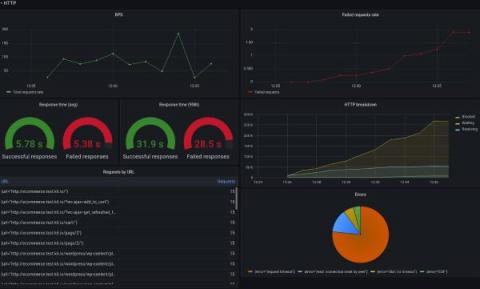
While there is a lot of focus on the three pillars of observability to provide insight into application performance in production, load testing is the other side of the observability story. By using the open source load testing tool k6 — which Grafana Labs acquired earlier this year — developers can simulate real-world traffic to test the reliability and performance of software changes and new features, not to mention flag performance issues before impacting end users.
We’re delighted to announce that we’ve acquired Specto, a powerful mobile profiling tool from ex-Facebook mobile experts who share our determination for building developer-first performance monitoring products that actually suit the modern dev stack.
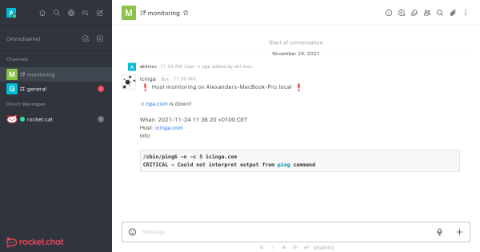
About one year ago the NETWAYS colleagues showed you how to let Icinga 2 notify users through XMPP/Jabber. Now it’s time to also cover the somewhat more fancy Rocket.Chat.
Elastic APM is a free, open and powerful observability tool that provides intelligence into application performance for a myriad of production applications (e.g., throughput, error rates, latency, resource usage, transaction traces). You can now enable Elastic APM integration to gain deep insight into the performance behaviors of your Elastic Enterprise Search deployment!
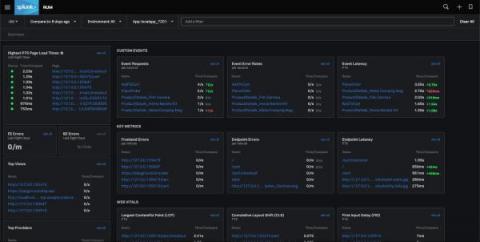
With a 70% increase in internet usage, and digital teams adopting cloud-native technologies at a rapid rate, the importance of measuring customer experience on digital properties is not just a technical problem, but a business imperative. Frontend developers and SREs use Real User Monitoring (RUM) to understand critical components of their end-user experience, like how quickly users see content, when a page becomes interactive, and a page's visual stability.
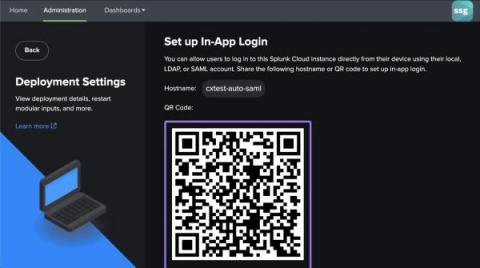
After checking out the Get Started with Connected Experiences blog, you’ll be an expert on 1) how your Splunk data gets to mobile, (2) how to unlock mobile for your Splunk instance, and (3) how user management works. So, with this blog, I’d say it’s time to talk about the many login methods users can leverage with their Splunk instance on mobile.
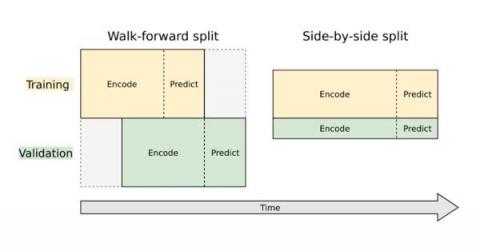
Wouldn’t it be nice to be able to perfectly predict the future? We are a long way from being able to do that, but that is basically the goal of anybody working in the data science field — take a bunch of historical data and then try to make future predictions based on that data.
There was a time when standing up a website or application was simple and straightforward and not the complex networks they are today. Web developers or administrators did not have to worry or even consider the complexity of distributed systems of today. The recipe was straightforward. Do you have a database? Check. Do you have a web server? Check. Great, your system was ready to be deployed.