
Operations | Monitoring | ITSM | DevOps | Cloud

Sponsored Post

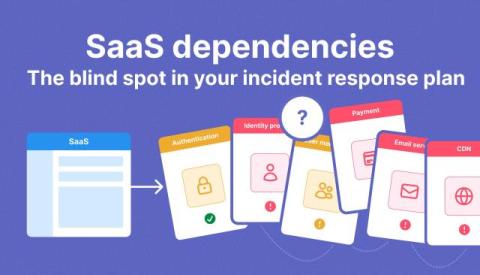
SaaS dependencies: the blind spot in your Incident response plan

So let's talk about the incidents that weren't yours to fix. It's 12:26 UTC on August 14, 2026. Outbound email starts bouncing. Inbound messages from partners stop arriving. Your team checks the obvious things first: mail server logs, recent deploys, firewall rules, your own DNS zone records. Everything on your side looks clean. By 12:48 UTC, an Early Warning Signal by StatusGator has already flagged a spike in reports pointing at Proofpoint. But if you're not watching for that signal, you don't know it exists yet.
Sponsored Post

Eliminate Data Transfer Fees from Your AWS Log Costs

As businesses generate, capture, and seek to analyze more data than ever before, they often find themselves limited by high data storage costs, expensive data processing fees, and high management overhead. For organizations who wish to expand their log analytics programs and become more data-driven, maximizing cost efficiency has become a critical operational objective.

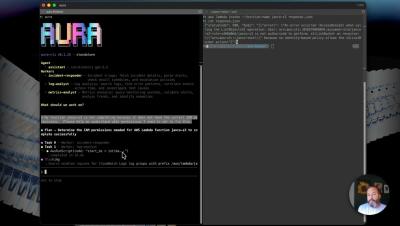
S3 Access Denied: AI SRE Agent AURA Finds the Missing Permission

The bucket is right there and the function still cannot read it. AURA reads the failure, names the one missing action, and returns the policy to add. A permissions failure gives you the symptom and not the action name. The usual path is reading the error, guessing which actions the execution role is short, and widening the policy until the call goes through. Greg hands AURA a Lambda function that fails when it tries to reach an S3 bucket. AURA identifies the missing ListBucket permission on that particular bucket and returns the minimum policy needed to allow it.

Incident Response Automation: A Practical Playbook

A stage-by-stage playbook for automating incident response: what to automate at detection, triage, and remediation, what to deliberately leave manual, and a checklist to run against your current setup. Sejal Pandey works on content and growth at Last9, writing about observability, reliability, and SRE practices.

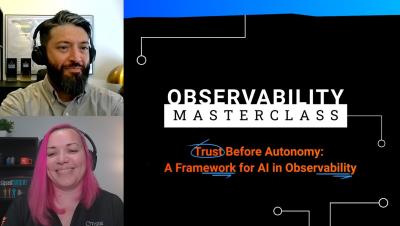
Observability Masterclass | Trust Before Autonomy: A Framework for AI in Observability

How to Prepare for Human-in-the-Loop AI in Observability AI is rapidly reshaping IT operations, but pushing forward blindly introduces massive risks. To scale automation safely, your teams need the right foundation in place. Join SolarWinds experts for a tactical session on how to strengthen data quality, eliminate tool fragmentation, and establish clear governance guardrails. Discover how to confidently transition from human-managed workflows to safe, guided AI autonomy.

Cribl On Your Coffee Break Episode 1

In this first episode (or at least the first REAL episode, yesterday’s “episode 0” doesn’t count) of Cribl on your coffee break, Leon does what we all do when we unwrap a shiny new data, telemetry, observability, or monitoring tool: He takes the shortest path to jamming some data into that thing and seeing what it looks like. Is it sophisticated? Nuanced? Well-thought-out? Hell no! But it scratches an itch. There will be time to do more real-world stuff tomorrow.

Smarter Device Refresh Decisions with Teneo Managed Digital Employee Experience (DEX)

How do you know which employee devices really need to be replaced? Teneo Managed Digital Employee Experience (DEX) gives IT teams the visibility and data they need to make smarter device refresh decisions based on actual device health and user experience.

Why Most Enterprise AI Agent Programs Overspend, and What Actually Fixes It

Enterprise AI agent programs overspend because leaders optimize token costs, which represent just 20-25% of variable run costs. Human oversight accounts for 70-75%. The real fix is reducing exception rates and embedding governance directly into agent execution from the start.